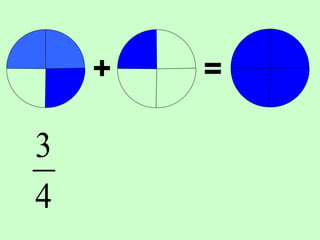
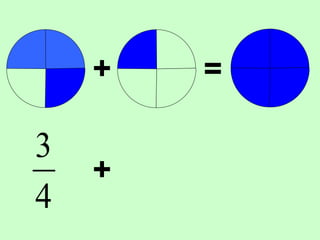
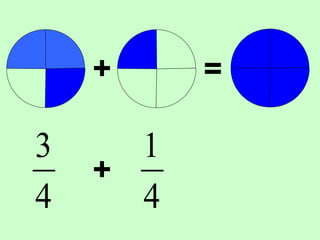
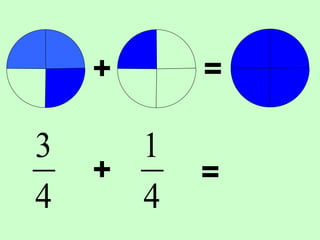
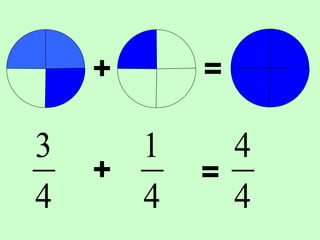
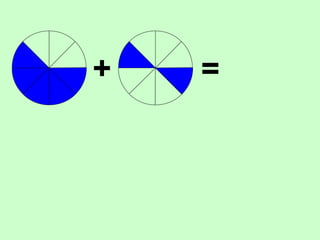
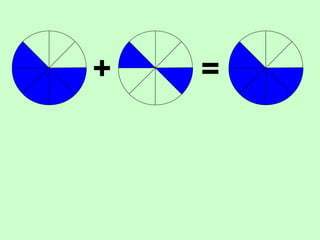
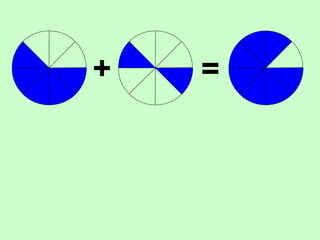
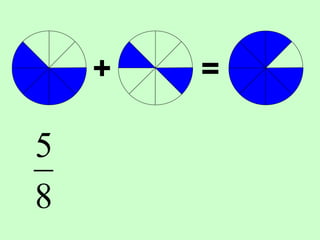
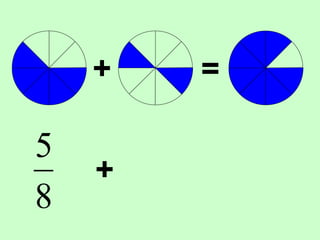
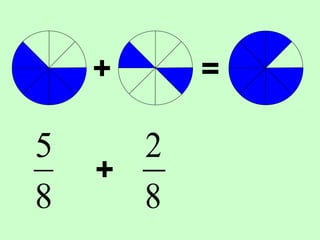
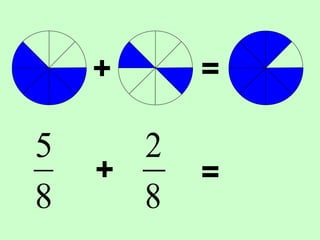
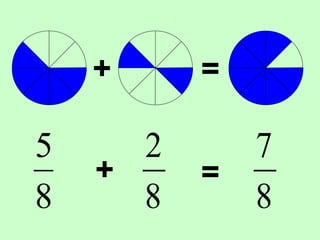
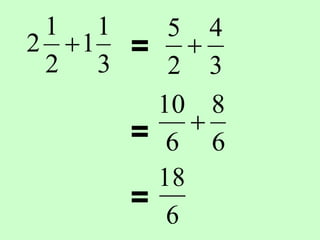
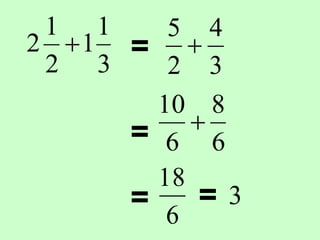
Adding Fractions
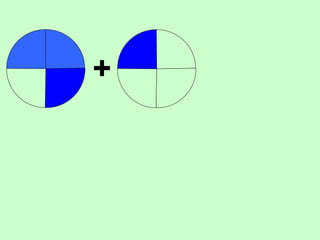
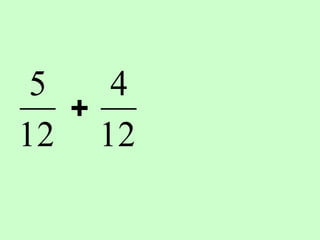
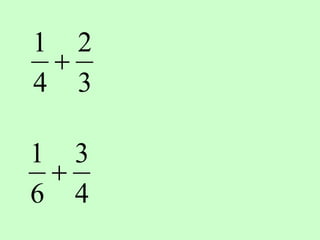
+
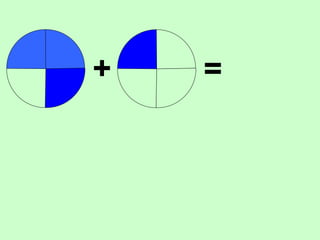
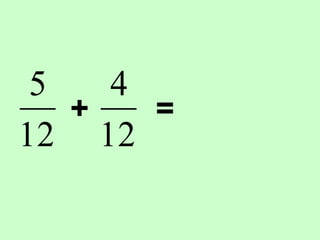
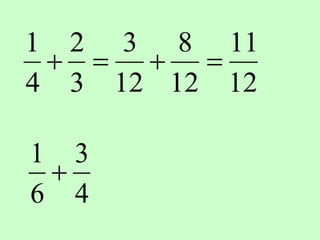
+ =
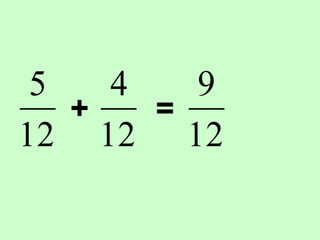
+ =
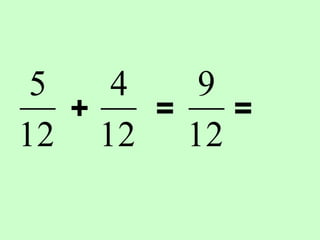
+ =
4
3
+ =
4
3
+
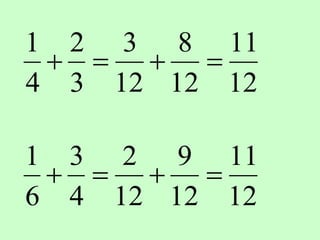
+ =
4
3
4
1
+
+ =
4
3
4
1
+ =
+ =
4
3
4
1
+ =
4
4
+ =
4
3
4
1
+ =
4
4
1
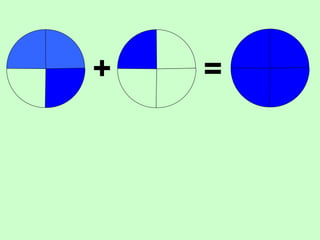
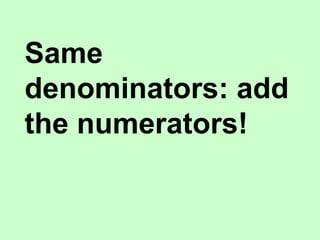
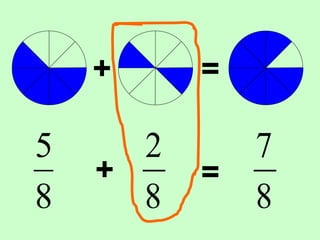
Same
denominators: add
the numerators!
+
+ =
+ =
+ =
+ =
8
5
+ =
8
5
+
+ =
8
5
8
2
+
+ =
8
5
8
2
+ =
+ =
8
5
8
2
+ =
8
7
+ =
8
5
8
2
+ =
8
7
+ =
8
5
4
1
+ =
8
7
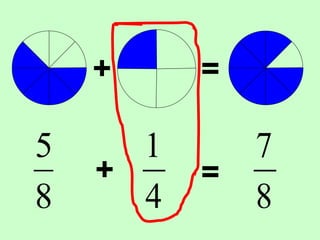
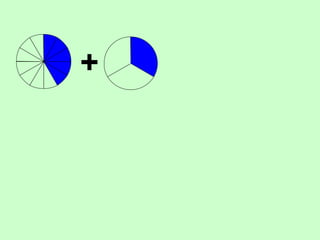
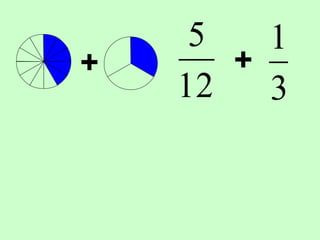
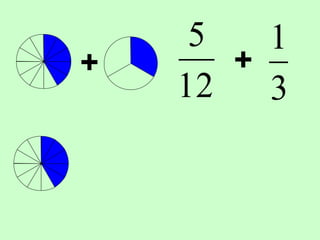
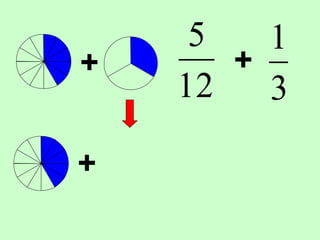
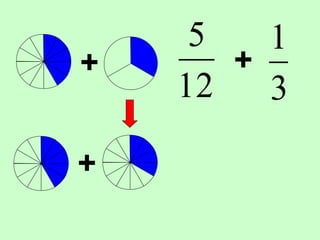
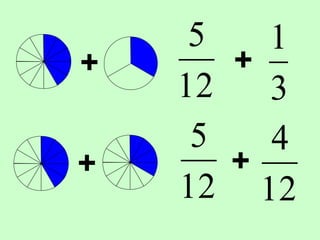
If the denominators
are different, find
equivalent fractions,
then add numerators
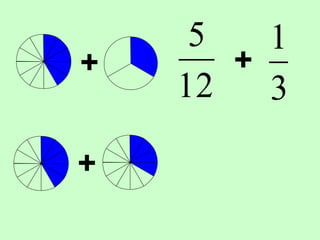
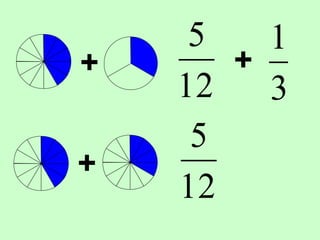
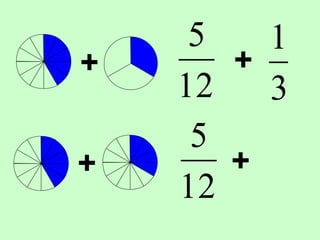
+
+
12
5
+
3
1
+
12
5
+
3
1
+
+
12
5
+
3
1
+
+
12
5
+
3
1
+
+
12
5
+
3
1
+
+
12
5
+
3
1
12
5
+
+
12
5
+
3
1
12
5
+
+
+
12
5
+
3
1
12
5
+
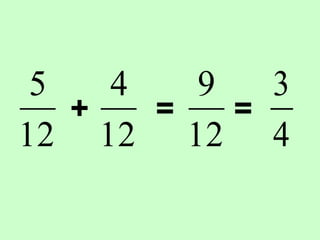
12
4
12
5
+
12
4
12
5
+
12
4
=
12
5
+
12
4
12
9
=
12
5
+
12
4
12
9
= =
12
5
+
12
4
12
9
= =
4
3
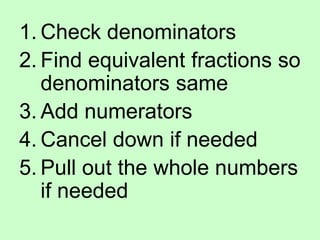
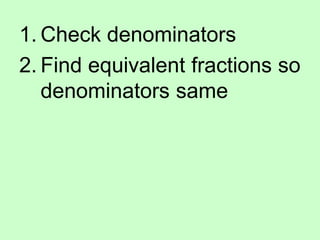
1. Check denominators
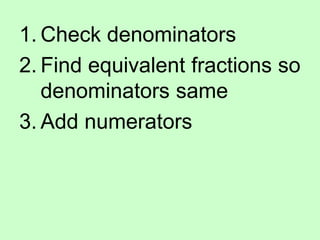
2. Find equivalent fractions so
denominators same
1. Check denominators
2. Find equivalent fractions so
denominators same
3. Add numerators
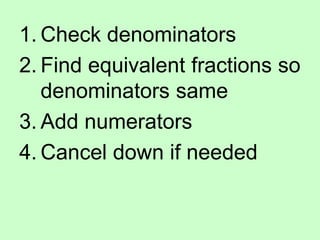
1. Check denominators
2. Find equivalent fractions so
denominators same
3. Add numerators
4. Cancel down if needed
1. Check denominators
2. Find equivalent fractions so
denominators same
3. Add numerators
4. Cancel down if needed
5. Pull out the whole numbers
if needed
Your turn…
10
3
5
2

4
3
8
7

10
7
10
3
10
4
10
3
5
2

4
3
8
7

10
7
10
3
10
4
10
3
5
2

8
5
1
8
13
8
6
8
7
4
3
8
7

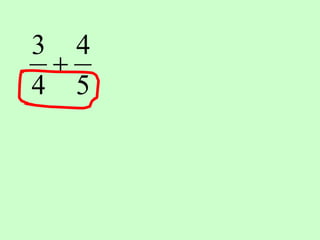
Sometimes, you
have to change both
denominators…
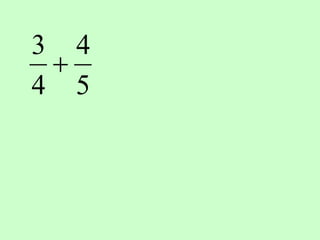
5
4
4
3

5
4
4
3

5
4
4
3

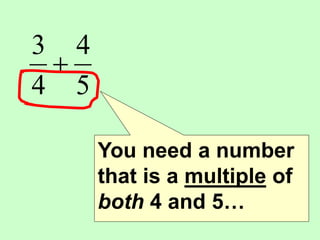
You need a number
that is a multiple of
both 4 and 5…
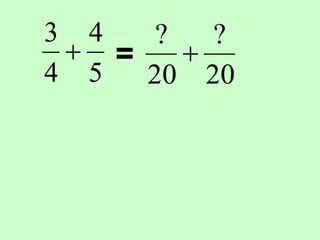
5
4
4
3
 =
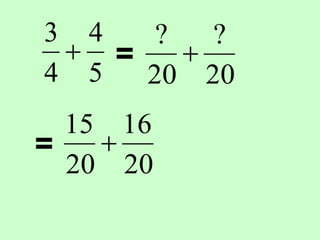
20
?
20
?

5
4
4
3
 =
20
?
20
?

=
20
16
20
15

5
4
4
3
 =
20
?
20
?

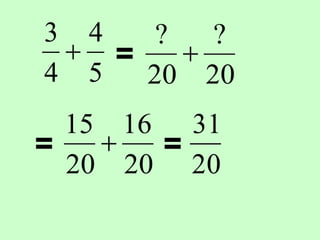
=
20
16
20
15
 =
20
31
5
4
4
3
 =
20
?
20
?

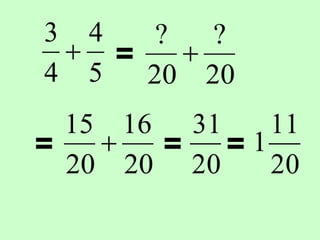
=
20
16
20
15
 =
20
31
=
20
11
1
1. Check denominators
2. Find ‘common
denominator’ (LCM)
1. Check denominators
2. Find ‘common
denominator’ (LCM)
3. Add numerators
1. Check denominators
2. Find ‘common
denominator’ (LCM)
3. Add numerators
4. Cancel down if needed
1. Check denominators
2. Find ‘common
denominator’ (LCM)
3. Add numerators
4. Cancel down if needed
5. Pull out the whole numbers
if needed
Your turn…
4
3
6
1

3
2
4
1

12
11
12
8
12
3
3
2
4
1

4
3
6
1

12
11
12
9
12
2
4
3
6
1

12
11
12
8
12
3
3
2
4
1

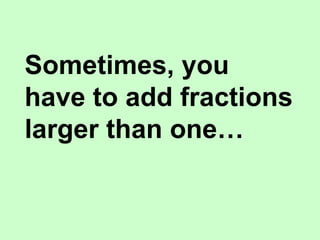
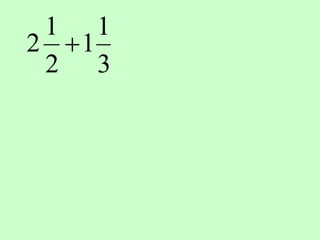
Sometimes, you
have to add fractions
larger than one…
3
2
1
2
1
2 
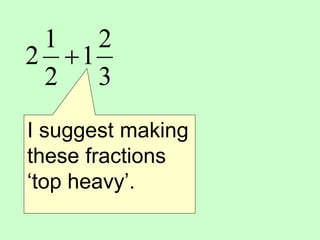
I suggest making
these fractions
‘top heavy’.
3
1
1
2
1
2 
3
1
1
2
1
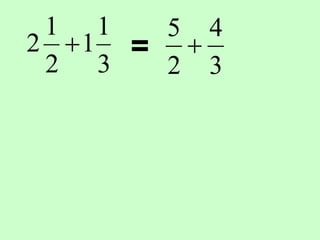
2  =
3
4
2
5

3
1
1
2
1
2  =
3
4
2
5

6
8
6
10
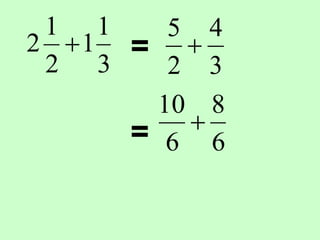
=
3
1
1
2
1
2  =
3
4
2
5

6
8
6
10
=
= 6
18
3
1
1
2
1
2  =
3
4
2
5

6
8
6
10
=
= 6
18
= 3
Now find an exercise in
the book or a work-
sheet and practice!

Adding Fractions: traditional approach