MACHINE DESIGN
Factor of safety and
its selecction
BY DENIS SORENG
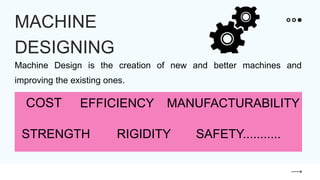
Machine Design is the creation of new and better machines and
improving the existing ones.
MACHINE
DESIGNING
COST EFFICIENCY MANUFACTURABILITY
STRENGTH RIGIDITY SAFETY...........
FACTOR OF SAFETY
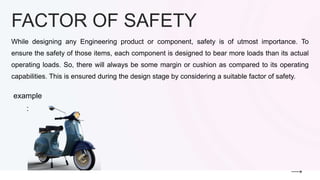
While designing any Engineering product or component, safety is of utmost importance. To
ensure the safety of those items, each component is designed to bear more loads than its actual
operating loads. So, there will always be some margin or cushion as compared to its operating
capabilities. This is ensured during the design stage by considering a suitable factor of safety.
example
:
WAYS TO EXPRESS
FOS
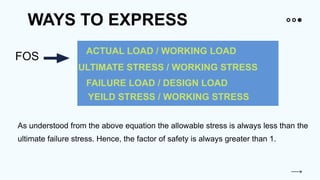
ACTUAL LOAD / WORKING LOAD
YEILD STRESS / WORKING STRESS
FAILURE LOAD / DESIGN LOAD
ULTIMATE STRESS / WORKING STRESS
As understood from the above equation the allowable stress is always less than the
ultimate failure stress. Hence, the factor of safety is always greater than 1.
ductile britile
yeild stress / working stress ultimate stress / working stress
SIGNIFICANCE
EXAMPLE
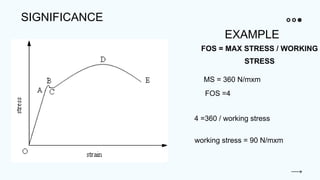
FOS = MAX STRESS / WORKING
STRESS
MS = 360 N/mxm
FOS =4
4 =360 / working stress
working stress = 90 N/mxm
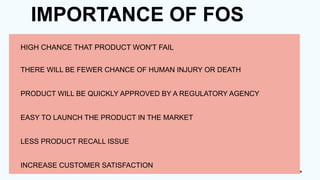
IMPORTANCE OF FOS
HIGH CHANCE THAT PRODUCT WON'T FAIL
THERE WILL BE FEWER CHANCE OF HUMAN INJURY OR DEATH
PRODUCT WILL BE QUICKLY APPROVED BY A REGULATORY AGENCY
EASY TO LAUNCH THE PRODUCT IN THE MARKET
LESS PRODUCT RECALL ISSUE
INCREASE CUSTOMER SATISFACTION
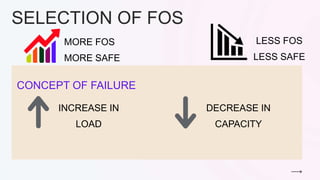
SELECTION OF FOS
MORE FOS
MORE SAFE
CONCEPT OF FAILURE
LESS FOS
LESS SAFE
INCREASE IN
LOAD
DECREASE IN
CAPACITY
FACTORS AFFECTING FOS
UNPREDICTABLE LOADS
FATIGUE
CREEP
THERMAL STRESS
MANUFACTURING COMPENSATION
MATERIAL PROPERTIES
WORKING ENVIROMENT
POSSIBLE MISUSE
ETC . . . .
Design factor VS safety factor
Design factor is basically how much load a part is REQUIRED to
withstand and the safety factor is the amount of load a part could
ACTUALLY be able to withstand. So the design factor is the
minimum requirement and safety factor is the limit beyond which
the part will fail. At the minimum, the safety factor can be equal to
the design factor.
The margin of safety is the measure of excess structural capability. It is
the additional load beyond the design load after which the part fails. If
the margin of safety is 0, then the product will fail when it reaches its
design load. If the margin of safety is 1, then the part can withstand
load more than its design load. And if the margin of safety is -1, then
the part will fail even before reaching its design load.
MARGIN OF SAFETY
Margin of Safety = ( Failure load / Design load )-1 OR
= Factor Of Safety-1
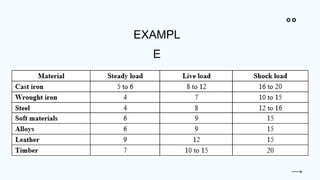
EXAMPL
E
We just can not compromise on the factor of safety. Because it
affects the product and users who use that product. Having said
that we also should not do over-engineering which eventually
increases the product cost. We need to find an optimal value of the
factor of safety to design a great product.
CONCLUSION
Thank you!
Let me know if you have
questions or clarifications.

FACTOR OF SAFETY AND ITS SELECTION

  • 1.
    MACHINE DESIGN Factor ofsafety and its selecction BY DENIS SORENG
  • 2.
    Machine Design isthe creation of new and better machines and improving the existing ones. MACHINE DESIGNING COST EFFICIENCY MANUFACTURABILITY STRENGTH RIGIDITY SAFETY...........
  • 3.
    FACTOR OF SAFETY Whiledesigning any Engineering product or component, safety is of utmost importance. To ensure the safety of those items, each component is designed to bear more loads than its actual operating loads. So, there will always be some margin or cushion as compared to its operating capabilities. This is ensured during the design stage by considering a suitable factor of safety. example :
  • 4.
    WAYS TO EXPRESS FOS ACTUALLOAD / WORKING LOAD YEILD STRESS / WORKING STRESS FAILURE LOAD / DESIGN LOAD ULTIMATE STRESS / WORKING STRESS As understood from the above equation the allowable stress is always less than the ultimate failure stress. Hence, the factor of safety is always greater than 1.
  • 5.
    ductile britile yeild stress/ working stress ultimate stress / working stress
  • 6.
    SIGNIFICANCE EXAMPLE FOS = MAXSTRESS / WORKING STRESS MS = 360 N/mxm FOS =4 4 =360 / working stress working stress = 90 N/mxm
  • 7.
    IMPORTANCE OF FOS HIGHCHANCE THAT PRODUCT WON'T FAIL THERE WILL BE FEWER CHANCE OF HUMAN INJURY OR DEATH PRODUCT WILL BE QUICKLY APPROVED BY A REGULATORY AGENCY EASY TO LAUNCH THE PRODUCT IN THE MARKET LESS PRODUCT RECALL ISSUE INCREASE CUSTOMER SATISFACTION
  • 8.
    SELECTION OF FOS MOREFOS MORE SAFE CONCEPT OF FAILURE LESS FOS LESS SAFE INCREASE IN LOAD DECREASE IN CAPACITY
  • 9.
    FACTORS AFFECTING FOS UNPREDICTABLELOADS FATIGUE CREEP THERMAL STRESS MANUFACTURING COMPENSATION MATERIAL PROPERTIES WORKING ENVIROMENT POSSIBLE MISUSE ETC . . . .
  • 10.
    Design factor VSsafety factor Design factor is basically how much load a part is REQUIRED to withstand and the safety factor is the amount of load a part could ACTUALLY be able to withstand. So the design factor is the minimum requirement and safety factor is the limit beyond which the part will fail. At the minimum, the safety factor can be equal to the design factor.
  • 11.
    The margin ofsafety is the measure of excess structural capability. It is the additional load beyond the design load after which the part fails. If the margin of safety is 0, then the product will fail when it reaches its design load. If the margin of safety is 1, then the part can withstand load more than its design load. And if the margin of safety is -1, then the part will fail even before reaching its design load. MARGIN OF SAFETY Margin of Safety = ( Failure load / Design load )-1 OR = Factor Of Safety-1
  • 12.
  • 13.
    We just cannot compromise on the factor of safety. Because it affects the product and users who use that product. Having said that we also should not do over-engineering which eventually increases the product cost. We need to find an optimal value of the factor of safety to design a great product. CONCLUSION
  • 14.
    Thank you! Let meknow if you have questions or clarifications.