Justin Lafferty is a San Francisco Bay Area-based writer
with experience in:
Managing social media, Writing , blogging,
Live event coverage, Editing and Photography.
He has reported for the San Diego Union-Tribune, San
Francisco Chronicle, Contra Costa Times, as well
as websites such as InsideFacebook.com, Sports Illustrated
On Campus and Patch.com.
Currently, Justin is the Editor of Inside Facebook, a leading
independent blog providing in-depth analysis about the
world's biggest social network.
Read the original article here: http://bit.ly/1epkMO7
Justin Lafferty
Facebook on Monday introduced a new design for
Facebook pages, making things such as key
performance indicators more easily visible for
managers, and location info easier to find for fans.
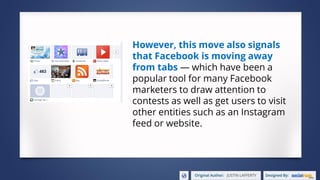
However, this move also signals
that Facebook is moving away
from tabs — which have been a
popular tool for many Facebook
marketers to draw attention to
contests as well as get users to visit
other entities such as an Instagram
feed or website.
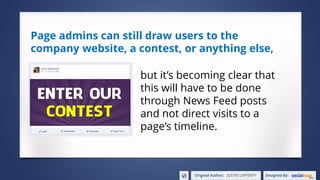
but it’s becoming clear that
this will have to be done
through News Feed posts
and not direct visits to a
page’s timeline.
Page admins can still draw users to the
company website, a contest, or anything else,
When many page admins and marketers saw the new
design, they wondered, “Where did the tabs go?”
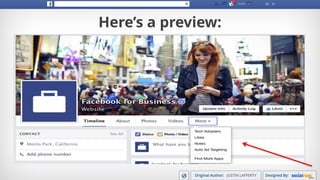
Tabs will still be
supported, but they will
be tucked into the
“More” module and
without images.
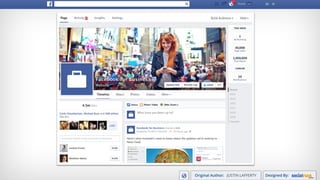
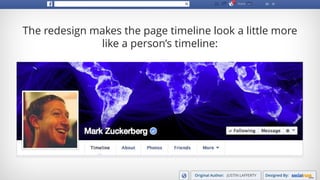
Here’s a preview:
The redesign makes the page timeline look a little more
like a person’s timeline:
While some marketers will see this is a ploy by Facebook to get
pages to invest more in advertising, this move could be evidence
that users aren’t that likely to visit a page’s timeline and would
rather engage with a brand by seeing content in their News Feed.
Does this mean more
advertising to get into
more users’ News Feeds?
Well, that’s up to the individual
pages. Facebook may be free for
users, but much like any other
platform, it’s going to cost either
time or money (or both) if you’re
looking to grow your business or
generate sales through Facebook.
Facebook offers companies and marketers several
ways to get a message out to their fans.
While it’s important to have all
pertinent (and fresh) information on
the page’s timeline, most fans likely
won’t click to view the page after they
like it.
If they do come back, it will be a
rare instance.
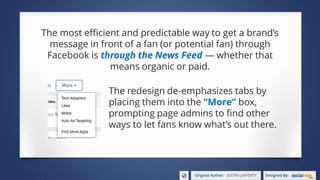
The most efficient and predictable way to get a brand’s
message in front of a fan (or potential fan) through
Facebook is through the News Feed — whether that
means organic or paid.
The redesign de-emphasizes tabs by
placing them into the “More” box,
prompting page admins to find other
ways to let fans know what’s out there.
It’s not a malicious move to get
more ad revenue; it’s Facebook
trying to get pages to post better
content and calls to action in the
News Feed, where fans eyeballs
are most likely to be.
However, Facebook PMD Woobox doesn’t
think this is a death knell for tabs.
In a recent blog post, the company gave their
take on how marketers can still use Facebook
tabs in light of this redesign:
“Page Admins are concerned that their page tabs will no longer be
relevant, and won’t be visible to their fans. However, when you
look at a side-by-side comparison, you will notice that the new tab
links are much closer in proximity to the News Feed – the old
timeline had a whole lot of real estate between page tabs and
page posts, which is where engagement occurs. The new layout
places the tab links directly above the News Feed and the simple,
non-cluttered layout grabs your attention!”
To read Justin's full article,
Click here.

Facebook Updated Timeline

  • 2.
    Justin Lafferty isa San Francisco Bay Area-based writer with experience in: Managing social media, Writing , blogging, Live event coverage, Editing and Photography. He has reported for the San Diego Union-Tribune, San Francisco Chronicle, Contra Costa Times, as well as websites such as InsideFacebook.com, Sports Illustrated On Campus and Patch.com. Currently, Justin is the Editor of Inside Facebook, a leading independent blog providing in-depth analysis about the world's biggest social network. Read the original article here: http://bit.ly/1epkMO7 Justin Lafferty
  • 3.
    Facebook on Mondayintroduced a new design for Facebook pages, making things such as key performance indicators more easily visible for managers, and location info easier to find for fans.
  • 5.
    However, this movealso signals that Facebook is moving away from tabs — which have been a popular tool for many Facebook marketers to draw attention to contests as well as get users to visit other entities such as an Instagram feed or website.
  • 6.
    but it’s becomingclear that this will have to be done through News Feed posts and not direct visits to a page’s timeline. Page admins can still draw users to the company website, a contest, or anything else,
  • 7.
    When many pageadmins and marketers saw the new design, they wondered, “Where did the tabs go?” Tabs will still be supported, but they will be tucked into the “More” module and without images.
  • 8.
  • 9.
    The redesign makesthe page timeline look a little more like a person’s timeline:
  • 10.
    While some marketerswill see this is a ploy by Facebook to get pages to invest more in advertising, this move could be evidence that users aren’t that likely to visit a page’s timeline and would rather engage with a brand by seeing content in their News Feed. Does this mean more advertising to get into more users’ News Feeds?
  • 11.
    Well, that’s upto the individual pages. Facebook may be free for users, but much like any other platform, it’s going to cost either time or money (or both) if you’re looking to grow your business or generate sales through Facebook.
  • 12.
    Facebook offers companiesand marketers several ways to get a message out to their fans. While it’s important to have all pertinent (and fresh) information on the page’s timeline, most fans likely won’t click to view the page after they like it. If they do come back, it will be a rare instance.
  • 13.
    The most efficientand predictable way to get a brand’s message in front of a fan (or potential fan) through Facebook is through the News Feed — whether that means organic or paid. The redesign de-emphasizes tabs by placing them into the “More” box, prompting page admins to find other ways to let fans know what’s out there.
  • 14.
    It’s not amalicious move to get more ad revenue; it’s Facebook trying to get pages to post better content and calls to action in the News Feed, where fans eyeballs are most likely to be.
  • 15.
    However, Facebook PMDWoobox doesn’t think this is a death knell for tabs. In a recent blog post, the company gave their take on how marketers can still use Facebook tabs in light of this redesign:
  • 16.
    “Page Admins areconcerned that their page tabs will no longer be relevant, and won’t be visible to their fans. However, when you look at a side-by-side comparison, you will notice that the new tab links are much closer in proximity to the News Feed – the old timeline had a whole lot of real estate between page tabs and page posts, which is where engagement occurs. The new layout places the tab links directly above the News Feed and the simple, non-cluttered layout grabs your attention!”
  • 17.
    To read Justin'sfull article, Click here.