Facebook
Marketing:​ ​A
Comprehensive
Guide​ ​for​ ​Beginners
Facebook​ ​is​ ​​big​.​ ​As​ ​the​ ​largest​ ​social​ ​network​ ​in​ ​the​ ​world,​ ​it​ ​has​ ​more​ ​than​ ​1.23​ ​billion​ ​active​ ​users,
62%​ ​of​ ​whom​ ​log​ ​in​ ​on​ ​a​ ​daily​ ​basis.
Think​ ​about​ ​this:
Facebook​ ​went​ ​from​ ​being​ ​unknown​ ​a​ ​little​ ​over​ ​a​ ​decade​ ​ago​ ​to​ ​​billions​​ ​of​ ​people​ ​using​ ​it​ ​today.
Has​ ​there​ ​ever​ ​been​ ​a​ ​success​ ​like​ ​Facebook?
And​ ​perhaps​ ​more​ ​importantly,​ ​with​ ​that​ ​momentum,​ ​do​ ​you​ ​think​ ​there​ ​will​ ​be​ ​anything​ ​that​ ​will​ ​stop
it?​ ​Will​ ​it​ ​go​ ​from​ ​billions​ ​of​ ​active​ ​users​ ​to​ ​millions​ ​or​ ​even​ ​thousands​ ​over​ ​the​ ​next​ ​decade?
Probably​ ​not.​ ​Facebook​ ​is​ ​here​ ​to​ ​stay.
And​ ​with​ ​such​ ​a​ ​large​ ​user​ ​base,​ ​ignoring​ ​Facebook​ ​really​ ​isn’t​ ​an​ ​option​ ​for​ ​most​ ​marketers.​ ​You
can​ ​bet​ ​your​ ​ideal​ ​market​ ​is​ ​using​ ​Facebook​ ​nearly​ ​every​ ​day.​ ​The​ ​question​ ​is:​ ​how​ ​do​ ​you​ ​target​ ​all
of​ ​those​ ​users​ ​with​ ​your​ ​marketing?
The​ ​good​ ​news​ ​is​ ​that​ ​the​ ​Facebook​ ​advertising​ ​platform​ ​allows​ ​you​ ​to​ ​zero​ ​in​ ​and​ ​specify​ ​the​ ​type
of​ ​people​ ​you’re​ ​looking​ ​for.​ ​You​ ​can​ ​target​ ​by​ ​location,​ ​demographics,​ ​and​ ​interests.
In​ ​this​ ​guide,​ ​I’ll​ ​show​ ​you​ ​the​ ​basics​ ​of​ ​how​ ​to​ ​use​ ​Facebook​ ​to​ ​your​ ​advantage.​ ​The​ ​guide​ ​is​ ​aimed
at​ ​the​ ​beginner​ ​who​ ​wants​ ​an​ ​introduction​ ​into​ ​marketing​ ​their​ ​business​ ​on​ ​the​ ​world’s​ ​largest​ ​social
network.
Who’s​ ​On​ ​Facebook?
Facebook​ ​may​ ​have​ ​started​ ​out​ ​as​ ​a​ ​social​ ​network​ ​for​ ​college​ ​students,​ ​but,​ ​by​ ​now,​ ​nearly
everyone​ ​with​ ​an​ ​internet​ ​connection​ ​is​ ​using​ ​it.​ ​The​ ​minimum​ ​age​ ​requirement​ ​is​ ​13,​ ​and​ ​there​ ​is
reason​ ​to​ ​believe​ ​it​ ​is​ ​being​ ​used​ ​by​ ​all​ ​other​ ​age​ ​groups.
Facebook​ ​doesn’t​ ​publicly​ ​release​ ​data​ ​on​ ​their​ ​most​ ​popular​ ​age​ ​group,​ ​but​ ​a​ ​survey​ ​by​ ​Pew
showed​ ​that​ ​​social​ ​networking​ ​is​ ​most​ ​popular​ ​with​ ​the​ ​18-29​ ​age​ ​group​.​ ​Its​ ​popularity​ ​decreases
with​ ​age.​ ​It​ ​is​ ​least​ ​popular​ ​with​ ​those​ ​65​ ​and​ ​older.
I​ ​can​ ​assure​ ​you​ ​that,​ ​no​ ​matter​ ​what​ ​age​ ​group​ ​you’re​ ​targeting,​ ​there​ ​will​ ​be​ ​more​ ​than​ ​enough​ ​of
those​ ​users​ ​on​ ​Facebook.
How​ ​Can​ ​You​ ​Market​ ​on​ ​Facebook?
Facebook​ ​has​ ​three​ ​tools​ ​(pages,​ ​ads,​ ​and​ ​groups)​ ​that​ ​can​ ​be​ ​used​ ​by​ ​anyone.​ ​Each​ ​of​ ​these
options​ ​has​ ​its​ ​own​ ​purpose,​ ​and​ ​they​ ​can​ ​be​ ​combined​ ​for​ ​greater​ ​reach.
Pages
Facebook​ ​pages​ ​are​ ​similar​ ​to​ ​profiles,​ ​but​ ​for​ ​businesses,​ ​organizations,​ ​and​ ​public​ ​figures.​ ​Users
can​ ​“Like”​ ​a​ ​page,​ ​which​ ​means​ ​they’ll​ ​automatically​ ​receive​ ​updates​ ​from​ ​that​ ​page​ ​in​ ​their​ ​news
feed.​ ​Users​ ​also​ ​have​ ​the​ ​option​ ​to​ ​“Like”​ ​a​ ​page​ ​but​ ​not​ ​follow​ ​it.​ ​(Users​ ​also​ ​can​ ​follow​ ​some
profiles.)
While​ ​profiles​ ​require​ ​a​ ​mutual​ ​relationship​ ​between​ ​friends,​ ​pages​ ​can​ ​be​ ​liked​ ​by​ ​anyone,​ ​without
a​ ​requirement​ ​for​ ​the​ ​page​ ​creator​ ​to​ ​accept​ ​a​ ​fan.​ ​They​ ​also​ ​don’t​ ​have​ ​a​ ​restriction​ ​on​ ​the​ ​number
of​ ​friends/fans​ ​they​ ​can​ ​have​ ​(unlike​ ​profiles,​ ​which​ ​are​ ​limited​ ​to​ ​5,000​ ​friends).
Advantages:​ ​Pages​ ​are​ ​free​ ​and​ ​easy​ ​to​ ​set​ ​up.
Disadvantages:​ ​It​ ​can​ ​be​ ​hard​ ​to​ ​get​ ​a​ ​foothold​ ​and​ ​build​ ​a​ ​fan​ ​base​ ​with​ ​a​ ​page.
Ads
Facebook​ ​offers​ ​a​ ​fantastic​ ​targeted​ ​advertising​ ​platform.​ ​You​ ​can​ ​create​ ​ads​ ​targeted​ ​at​ ​specific
geographic​ ​areas,​ ​ages,​ ​education​ ​levels,​ ​and​ ​even​ ​the​ ​types​ ​of​ ​devices​ ​used​ ​for​ ​browsing.
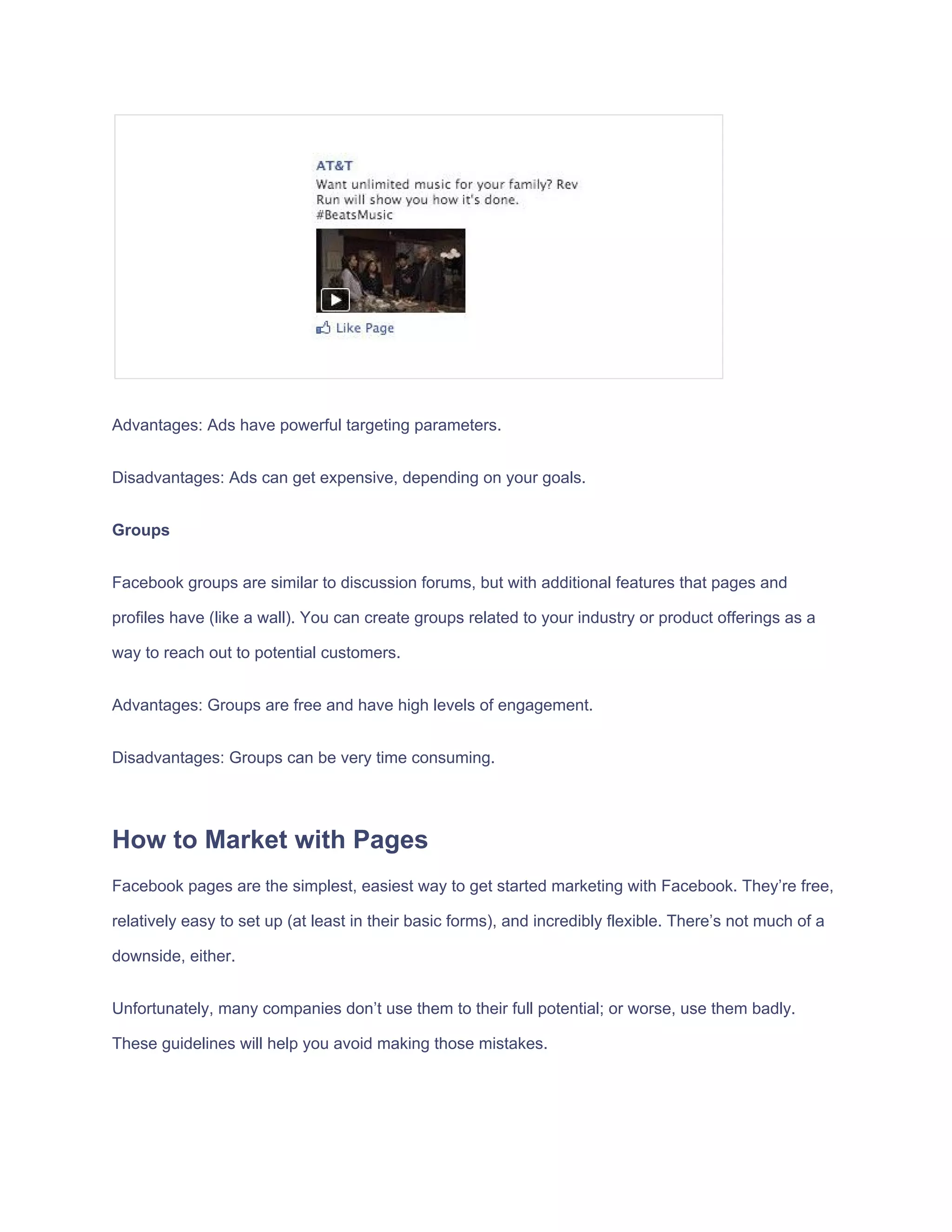
Facebook​ ​also​ ​lets​ ​users​ ​close​ ​ads​ ​they​ ​don’t​ ​like​ ​and​ ​“Like”​ ​a​ ​page​ ​right​ ​beneath​ ​an​ ​advertisement:
Advantages:​ ​Ads​ ​have​ ​powerful​ ​targeting​ ​parameters.
Disadvantages:​ ​Ads​ ​can​ ​get​ ​expensive,​ ​depending​ ​on​ ​your​ ​goals.
Groups
Facebook​ ​groups​ ​are​ ​similar​ ​to​ ​discussion​ ​forums,​ ​but​ ​with​ ​additional​ ​features​ ​that​ ​pages​ ​and
profiles​ ​have​ ​(like​ ​a​ ​wall).​ ​You​ ​can​ ​create​ ​groups​ ​related​ ​to​ ​your​ ​industry​ ​or​ ​product​ ​offerings​ ​as​ ​a
way​ ​to​ ​reach​ ​out​ ​to​ ​potential​ ​customers.
Advantages:​ ​Groups​ ​are​ ​free​ ​and​ ​have​ ​high​ ​levels​ ​of​ ​engagement.
Disadvantages:​ ​Groups​ ​can​ ​be​ ​very​ ​time​ ​consuming.
How​ ​to​ ​Market​ ​with​ ​Pages
Facebook​ ​pages​ ​are​ ​the​ ​simplest,​ ​easiest​ ​way​ ​to​ ​get​ ​started​ ​marketing​ ​with​ ​Facebook.​ ​They’re​ ​free,
relatively​ ​easy​ ​to​ ​set​ ​up​ ​(at​ ​least​ ​in​ ​their​ ​basic​ ​forms),​ ​and​ ​incredibly​ ​flexible.​ ​There’s​ ​not​ ​much​ ​of​ ​a
downside,​ ​either.
Unfortunately,​ ​many​ ​companies​ ​don’t​ ​use​ ​them​ ​to​ ​their​ ​full​ ​potential;​ ​or​ ​worse,​ ​use​ ​them​ ​badly.
These​ ​guidelines​ ​will​ ​help​ ​you​ ​avoid​ ​making​ ​those​ ​mistakes.
Profile​ ​Photo​ ​and​ ​Cover​ ​Image
Your​ ​profile​ ​photo​ ​should​ ​be​ ​your​ ​logo.​ ​Simple​ ​as​ ​that.
The​ ​cover​ ​image​ ​is​ ​a​ ​different​ ​story.​ ​It’s​ ​really​ ​up​ ​to​ ​you​ ​to​ ​decide​ ​what​ ​to​ ​put​ ​here.​ ​Some​ ​use
photos​ ​of​ ​employees,​ ​while​ ​others​ ​use​ ​fancy​ ​artwork​ ​and​ ​put​ ​their​ ​contact​ ​information​ ​in​ ​the​ ​cover
image.​ ​Pick​ ​a​ ​photo​ ​that​ ​will​ ​enhance​ ​your​ ​page​ ​and​ ​draw​ ​the​ ​eye​ ​of​ ​your​ ​visitors.
“About”​ ​Section
The​ ​“About”​ ​section​ ​is​ ​prominently​ ​placed​ ​right​ ​below​ ​your​ ​company​ ​logo.​ ​This​ ​is​ ​your​ ​chance​ ​to​ ​tell
anyone​ ​coming​ ​to​ ​your​ ​page​ ​what​ ​your​ ​business​ ​does.
Make​ ​sure​ ​you​ ​put​ ​good​ ​information​ ​here,​ ​telling​ ​people​ ​what​ ​you’re​ ​company​ ​does,​ ​why​ ​you’re
different,​ ​and​ ​other​ ​interesting​ ​details.​ ​If​ ​you​ ​can,​ ​take​ ​the​ ​time​ ​to​ ​write​ ​it​ ​specifically​ ​for​ ​your
Facebook​ ​audience.​ ​You​ ​can​ ​copy​ ​the​ ​text​ ​from​ ​the​ ​“About”​ ​page​ ​of​ ​your​ ​website​ ​or​ ​blog,​ ​if​ ​you’re​ ​in
a​ ​pinch.​ ​Be​ ​sure​ ​to​ ​fill​ ​in​ ​all​ ​of​ ​your​ ​data​ ​under​ ​“Basic​ ​Info.”
Just​ ​remember​ ​to​ ​keep​ ​it​ ​friendly​ ​and​ ​informal.​ ​A​ ​casual​ ​tone​ ​usually​ ​works​ ​best​ ​on​ ​Facebook.​ ​Here
are​ ​a​ ​few​ ​good​ ​examples:
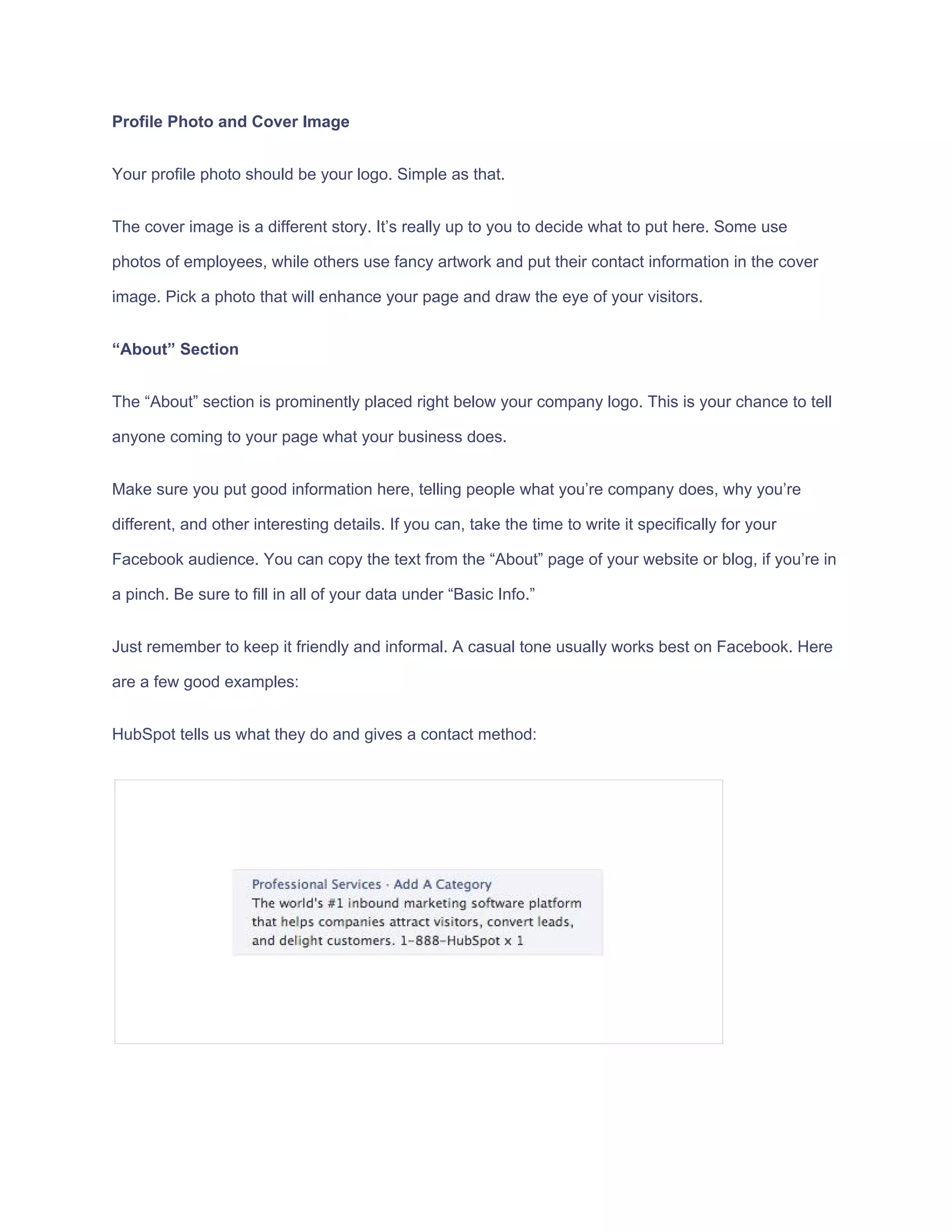
HubSpot​ ​tells​ ​us​ ​what​ ​they​ ​do​ ​and​ ​gives​ ​a​ ​contact​ ​method:
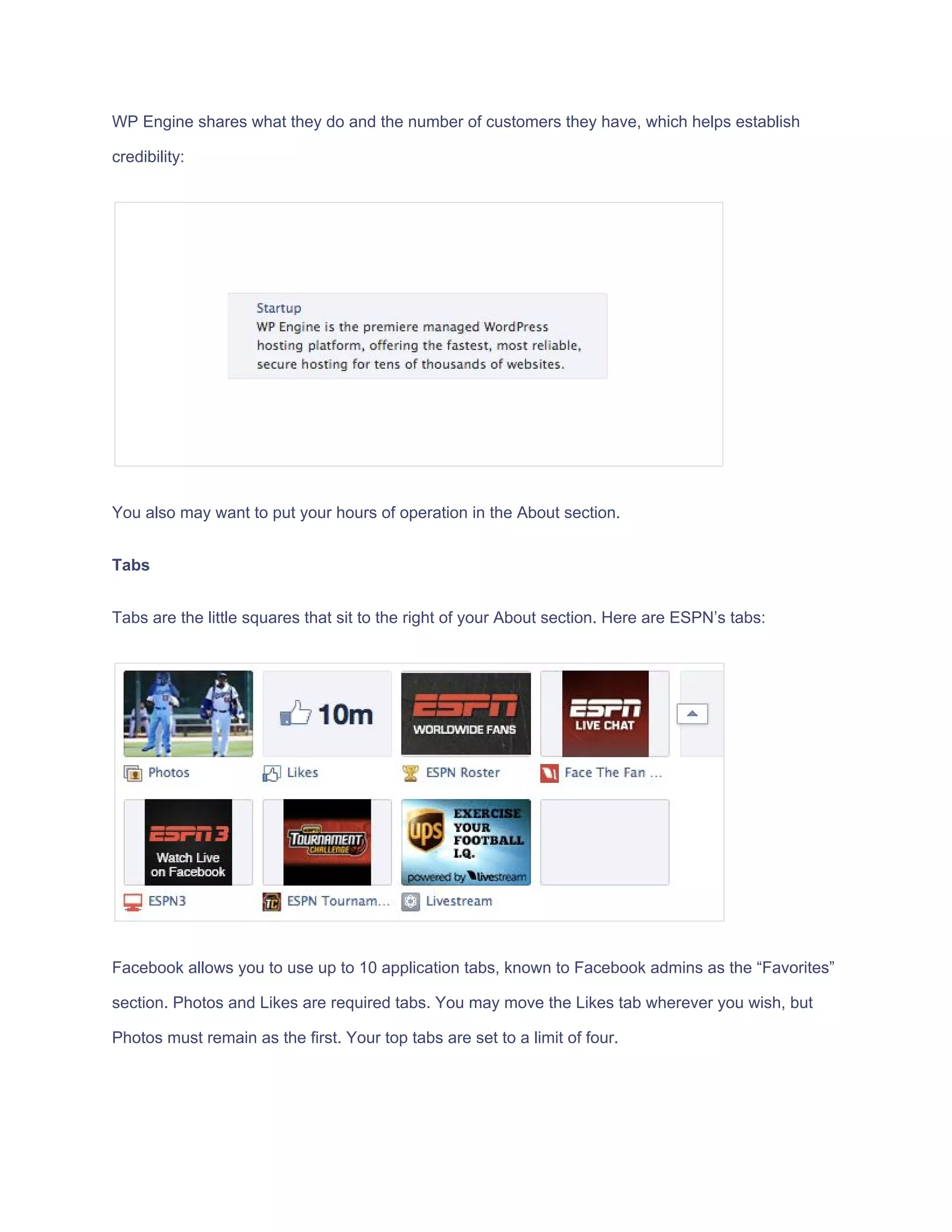
WP​ ​Engine​ ​shares​ ​what​ ​they​ ​do​ ​and​ ​the​ ​number​ ​of​ ​customers​ ​they​ ​have,​ ​which​ ​helps​ ​establish
credibility:
You​ ​also​ ​may​ ​want​ ​to​ ​put​ ​your​ ​hours​ ​of​ ​operation​ ​in​ ​the​ ​About​ ​section.
Tabs
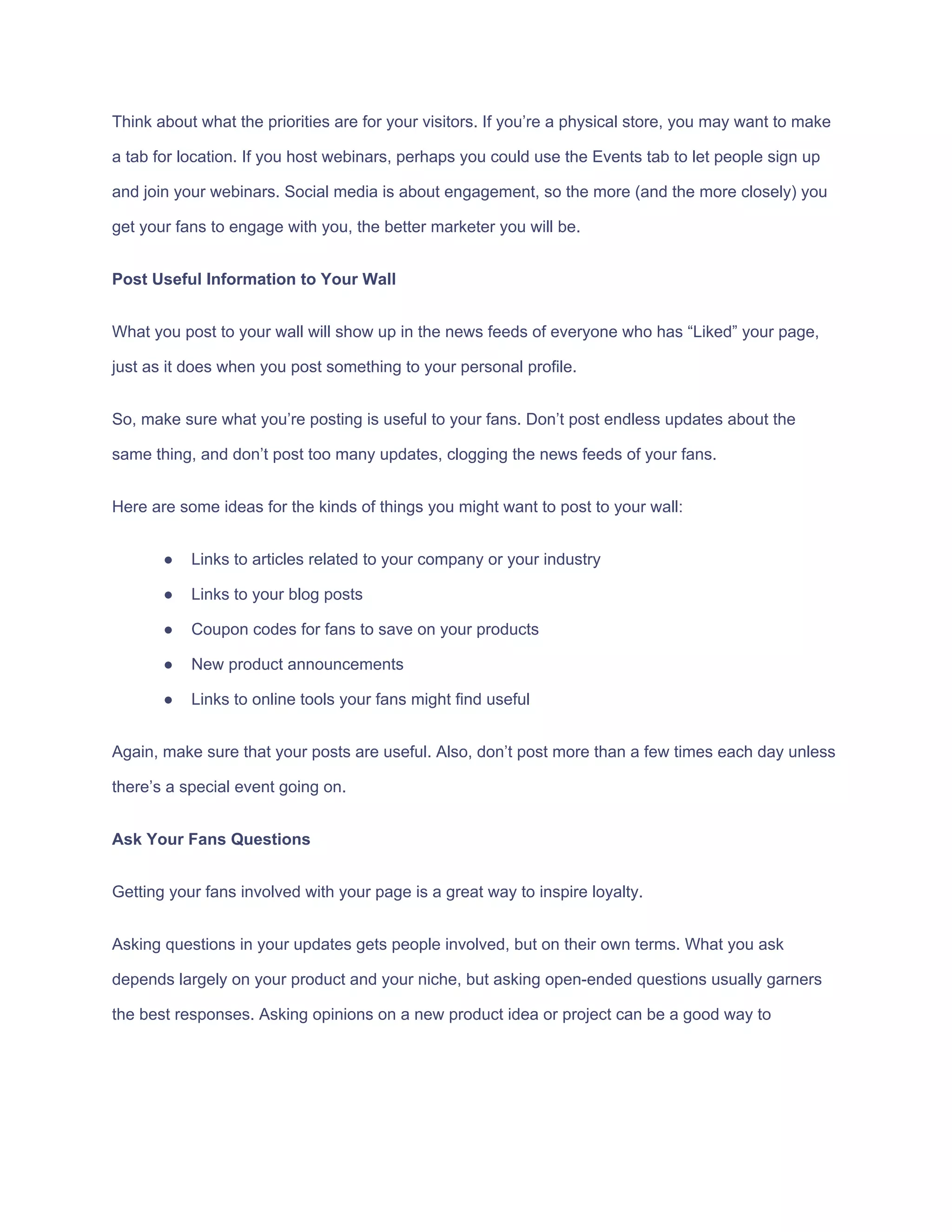
Tabs​ ​are​ ​the​ ​little​ ​squares​ ​that​ ​sit​ ​to​ ​the​ ​right​ ​of​ ​your​ ​About​ ​section.​ ​Here​ ​are​ ​ESPN’s​ ​tabs:
Facebook​ ​allows​ ​you​ ​to​ ​use​ ​up​ ​to​ ​10​ ​application​ ​tabs,​ ​known​ ​to​ ​Facebook​ ​admins​ ​as​ ​the​ ​“Favorites”
section.​ ​Photos​ ​and​ ​Likes​ ​are​ ​required​ ​tabs.​ ​You​ ​may​ ​move​ ​the​ ​Likes​ ​tab​ ​wherever​ ​you​ ​wish,​ ​but
Photos​ ​must​ ​remain​ ​as​ ​the​ ​first.​ ​Your​ ​top​ ​tabs​ ​are​ ​set​ ​to​ ​a​ ​limit​ ​of​ ​four.
Think​ ​about​ ​what​ ​the​ ​priorities​ ​are​ ​for​ ​your​ ​visitors.​ ​If​ ​you’re​ ​a​ ​physical​ ​store,​ ​you​ ​may​ ​want​ ​to​ ​make
a​ ​tab​ ​for​ ​location.​ ​If​ ​you​ ​host​ ​webinars,​ ​perhaps​ ​you​ ​could​ ​use​ ​the​ ​Events​ ​tab​ ​to​ ​let​ ​people​ ​sign​ ​up
and​ ​join​ ​your​ ​webinars.​ ​Social​ ​media​ ​is​ ​about​ ​engagement,​ ​so​ ​the​ ​more​ ​(and​ ​the​ ​more​ ​closely)​ ​you
get​ ​your​ ​fans​ ​to​ ​engage​ ​with​ ​you,​ ​the​ ​better​ ​marketer​ ​you​ ​will​ ​be.
Post​ ​Useful​ ​Information​ ​to​ ​Your​ ​Wall
What​ ​you​ ​post​ ​to​ ​your​ ​wall​ ​will​ ​show​ ​up​ ​in​ ​the​ ​news​ ​feeds​ ​of​ ​everyone​ ​who​ ​has​ ​“Liked”​ ​your​ ​page,
just​ ​as​ ​it​ ​does​ ​when​ ​you​ ​post​ ​something​ ​to​ ​your​ ​personal​ ​profile.
So,​ ​make​ ​sure​ ​what​ ​you’re​ ​posting​ ​is​ ​useful​ ​to​ ​your​ ​fans.​ ​Don’t​ ​post​ ​endless​ ​updates​ ​about​ ​the
same​ ​thing,​ ​and​ ​don’t​ ​post​ ​too​ ​many​ ​updates,​ ​clogging​ ​the​ ​news​ ​feeds​ ​of​ ​your​ ​fans.
Here​ ​are​ ​some​ ​ideas​ ​for​ ​the​ ​kinds​ ​of​ ​things​ ​you​ ​might​ ​want​ ​to​ ​post​ ​to​ ​your​ ​wall:
● Links​ ​to​ ​articles​ ​related​ ​to​ ​your​ ​company​ ​or​ ​your​ ​industry
● Links​ ​to​ ​your​ ​blog​ ​posts
● Coupon​ ​codes​ ​for​ ​fans​ ​to​ ​save​ ​on​ ​your​ ​products
● New​ ​product​ ​announcements
● Links​ ​to​ ​online​ ​tools​ ​your​ ​fans​ ​might​ ​find​ ​useful
Again,​ ​make​ ​sure​ ​that​ ​your​ ​posts​ ​are​ ​useful.​ ​Also,​ ​don’t​ ​post​ ​more​ ​than​ ​a​ ​few​ ​times​ ​each​ ​day​ ​unless
there’s​ ​a​ ​special​ ​event​ ​going​ ​on.
Ask​ ​Your​ ​Fans​ ​Questions
Getting​ ​your​ ​fans​ ​involved​ ​with​ ​your​ ​page​ ​is​ ​a​ ​great​ ​way​ ​to​ ​inspire​ ​loyalty.
Asking​ ​questions​ ​in​ ​your​ ​updates​ ​gets​ ​people​ ​involved,​ ​but​ ​on​ ​their​ ​own​ ​terms.​ ​What​ ​you​ ​ask
depends​ ​largely​ ​on​ ​your​ ​product​ ​and​ ​your​ ​niche,​ ​but​ ​asking​ ​open-ended​ ​questions​ ​usually​ ​garners
the​ ​best​ ​responses.​ ​Asking​ ​opinions​ ​on​ ​a​ ​new​ ​product​ ​idea​ ​or​ ​project​ ​can​ ​be​ ​a​ ​good​ ​way​ ​to
convince​ ​your​ ​fans​ ​that​ ​your​ ​company​ ​cares​ ​about​ ​what​ ​they​ ​want.​ ​Getting​ ​more​ ​engagement​ ​on​ ​a
post​ ​may​ ​also​ ​help​ ​you​ ​​reach​ ​the​ ​top​ ​of​ ​the​ ​Facebook​ ​News​ ​Feed​.
Don’t​ ​Spam
Spam​ ​is​ ​one​ ​of​ ​the​ ​quickest​ ​ways​ ​to​ ​lose​ ​fans.​ ​If​ ​you​ ​do​ ​nothing​ ​but​ ​send​ ​out​ ​promotional​ ​blurbs
about​ ​your​ ​company,​ ​without​ ​ever​ ​adding​ ​anything​ ​of​ ​value,​ ​then​ ​you’re​ ​going​ ​to​ ​have​ ​a​ ​hard​ ​time
getting​ ​and​ ​keeping​ ​fans.
Before​ ​you​ ​send​ ​out​ ​any​ ​update,​ ​ask​ ​yourself​ ​if​ ​it​ ​honestly​ ​adds​ ​value​ ​to​ ​the​ ​conversation.​ ​If​ ​not,
don’t​ ​send​ ​it.
Study​ ​Your​ ​Statistics​ ​and​ ​Results
Facebook​ ​offers​ ​some​ ​really​ ​great​ ​analytics​ ​for​ ​pages.​ ​Pay​ ​attention​ ​to​ ​them.​ ​If​ ​you​ ​see​ ​a​ ​big​ ​surge
in​ ​fans​ ​(or​ ​a​ ​drop​ ​off),​ ​look​ ​at​ ​what​ ​you’ve​ ​posted​ ​recently​ ​and​ ​see​ ​if​ ​you​ ​can​ ​figure​ ​out​ ​a​ ​reason​ ​for
the​ ​trend.​ ​Then,​ ​post​ ​more​ ​of​ ​that​ ​kind​ ​of​ ​content​ ​(or​ ​less,​ ​if​ ​you’re​ ​losing​ ​fans).
Targeted​ ​Advertising
Because​ ​it​ ​gathers​ ​so​ ​much​ ​demographic​ ​information​ ​about​ ​its​ ​users,​ ​Facebook​ ​has​ ​one​ ​of​ ​the​ ​best
targeted​ ​advertising​ ​programs​ ​online.​ ​You​ ​can​ ​target​ ​users​ ​based​ ​on​ ​virtually​ ​anything​ ​you​ ​might
find​ ​in​ ​their​ ​profiles,​ ​as​ ​well​ ​as​ ​track​ ​your​ ​success​ ​with​ ​each​ ​segment.
Ads​ ​can​ ​be​ ​run​ ​on​ ​a​ ​per-impression​ ​or​ ​per-click​ ​basis.​ ​Facebook​ ​shows​ ​you​ ​what​ ​bids​ ​are​ ​for​ ​ads
similar​ ​to​ ​yours,​ ​so​ ​you​ ​know​ ​if​ ​your​ ​bid​ ​is​ ​in​ ​line​ ​with​ ​others​ ​in​ ​your​ ​industry.​ ​You​ ​also​ ​can​ ​set​ ​daily
limits​ ​so​ ​there’s​ ​no​ ​risk​ ​of​ ​blowing​ ​your​ ​budget.
Types​ ​of​ ​Facebook​ ​Ads
There​ ​are​ ​a​ ​number​ ​of​ ​ad​ ​subtypes​ ​you​ ​can​ ​choose​ ​from.
You​ ​can​ ​create​ ​ads​ ​that​ ​direct​ ​to​ ​your​ ​Facebook​ ​page,​ ​or​ ​to​ ​a​ ​site​ ​not​ ​on​ ​Facebook.​ ​You​ ​can​ ​create
ads​ ​to​ ​promote​ ​a​ ​Facebook​ ​event,​ ​complete​ ​with​ ​an​ ​RSVP​ ​link.​ ​You​ ​can​ ​create​ ​ads​ ​for​ ​mobile​ ​app
installs​ ​and​ ​app​ ​engagement.
Users​ ​Can​ ​Hide​ ​Your​ ​Ad
Facebook​ ​used​ ​to​ ​offer​ ​the​ ​option​ ​to​ ​“Like”​ ​any​ ​advertisement​ ​on​ ​Facebook.​ ​Not​ ​anymore.​ ​People
can​ ​“Like”​ ​an​ ​advertisement​ ​(if​ ​it’s​ ​that​ ​type)​ ​or​ ​hide​ ​the​ ​ad.​ ​Upon​ ​closing​ ​an​ ​ad,​ ​Facebook​ ​asks​ ​the
user​ ​to​ ​specify​ ​why​ ​they​ ​didn’t​ ​like​ ​it.
It’s​ ​valuable​ ​information,​ ​providing​ ​insight​ ​into​ ​why​ ​your​ ​ads​ ​might​ ​not​ ​be​ ​doing​ ​very​ ​well.
Powerful​ ​Targeting​ ​Options
As​ ​already​ ​mentioned,​ ​Facebook​ ​has​ ​some​ ​of​ ​the​ ​most​ ​powerful​ ​targeting​ ​tools​ ​of​ ​any​ ​online
advertising​ ​program.
You​ ​can​ ​target​ ​by​ ​virtually​ ​anything​ ​on​ ​a​ ​user’s​ ​profile.​ ​You​ ​might​ ​start​ ​with​ ​the​ ​location,​ ​if​ ​that’s
important.​ ​You​ ​can​ ​specify​ ​either​ ​city,​ ​zip​ ​code,​ ​county,​ ​or​ ​state.​ ​This​ ​works​ ​particularly​ ​well​ ​for​ ​local
businesses.​ ​From​ ​there,​ ​you​ ​can​ ​choose​ ​basic​ ​demographics,​ ​including​ ​relationship​ ​status,​ ​age,
workplace,​ ​education​ ​(including​ ​major​ ​and​ ​years​ ​of​ ​attendance),​ ​birthday,​ ​and​ ​much​ ​more.
You​ ​can​ ​target​ ​ads​ ​to​ ​people​ ​who​ ​have​ ​recently​ ​moved.​ ​So,​ ​if​ ​you​ ​own​ ​a​ ​gym​ ​in​ ​Scottsdale​ ​and
want​ ​to​ ​find​ ​all​ ​the​ ​individuals​ ​who​ ​recently​ ​moved​ ​to​ ​the​ ​area,​ ​you​ ​can​ ​target​ ​your​ ​ads​ ​and​ ​ad​ ​copy
to​ ​those​ ​individuals.
You​ ​also​ ​can​ ​target​ ​people​ ​based​ ​on​ ​their​ ​interests.​ ​Say,​ ​for​ ​example,​ ​you​ ​have​ ​a​ ​product​ ​that’s
targeted​ ​at​ ​baseball​ ​fans.​ ​You​ ​could​ ​enter​ ​baseball​ ​in​ ​the​ ​Interests​ ​field.
Or,​ ​maybe​ ​you’ve​ ​written​ ​a​ ​book​ ​and​ ​you’re​ ​sure​ ​that​ ​people​ ​who​ ​like​ ​another​ ​certain​ ​book​ ​will​ ​like
yours.​ ​Enter​ ​the​ ​book’s​ ​title​ ​under​ ​Interests,​ ​and​ ​you’ll​ ​specifically​ ​target​ ​those​ ​users.
You​ ​even​ ​can​ ​target​ ​a​ ​private​ ​list​ ​of​ ​users.​ ​If​ ​you​ ​have​ ​a​ ​list​ ​of​ ​email​ ​addresses​ ​of​ ​people​ ​that​ ​you
want​ ​to​ ​target,​ ​you​ ​can​ ​use​ ​Facebook’s​ ​ads​ ​manager​ ​to​ ​target​ ​just​ ​those​ ​people.​ ​So,​ ​if​ ​you​ ​run​ ​a
SaaS​ ​business​ ​and​ ​have​ ​200​ ​people​ ​on​ ​your​ ​“prospect​ ​list,”​ ​you​ ​can​ ​use​ ​their​ ​email​ ​addresses​ ​to
target​ ​them​ ​with​ ​ads​ ​in​ ​Facebook.
Customize​ ​Your​ ​Ads
The​ ​other​ ​big​ ​advantage​ ​to​ ​tightly-targeted​ ​ads​ ​is​ ​that​ ​you​ ​can​ ​create​ ​different​ ​ads​ ​for​ ​different
demographic​ ​groups.​ ​Better-targeted​ ​ads​ ​are​ ​going​ ​to​ ​garner​ ​better​ ​results.
If​ ​you’re​ ​targeting​ ​baseball​ ​fans,​ ​you​ ​might​ ​create​ ​individual​ ​ads​ ​for​ ​different​ ​popular​ ​teams.​ ​You
could​ ​have​ ​one​ ​ad​ ​specifically​ ​aimed​ ​at​ ​Red​ ​Sox​ ​fans,​ ​one​ ​at​ ​Yankees​ ​fans,​ ​and​ ​another​ ​at​ ​Cubs
fans,​ ​and​ ​then​ ​have​ ​those​ ​ads​ ​shown​ ​only​ ​to​ ​people​ ​who​ ​have​ ​indicated​ ​in​ ​their​ ​Interests​ ​that​ ​they
are​ ​fans​ ​of​ ​those​ ​teams.
Or,​ ​let’s​ ​say​ ​you’ve​ ​targeted​ ​people​ ​based​ ​on​ ​their​ ​love​ ​of​ ​a​ ​particular​ ​book.​ ​You​ ​could​ ​mention​ ​that
book​ ​in​ ​the​ ​ad​ ​itself​ ​to​ ​make​ ​it​ ​more​ ​likely​ ​to​ ​catch​ ​their​ ​attention.​ ​Create​ ​different​ ​ads​ ​for​ ​different
books,​ ​and​ ​then​ ​target​ ​accordingly.
Conclusion
Facebook​ ​isn’t​ ​just​ ​powerful.​ ​It’s​ ​flexible.​ ​No​ ​matter​ ​what​ ​type​ ​of​ ​company​ ​you​ ​run,​ ​it​ ​has​ ​enough
different​ ​marketing​ ​options​ ​that​ ​you​ ​can​ ​tailor​ ​your​ ​marketing​ ​efforts​ ​to​ ​fit​ ​your​ ​company,​ ​your
budget,​ ​and​ ​your​ ​time​ ​constraints.
Yes,​ ​it​ ​can​ ​take​ ​some​ ​time​ ​to​ ​get​ ​to​ ​know​ ​all​ ​of​ ​its​ ​features,​ ​but​ ​it’s​ ​worth​ ​it.​ ​Facebook​ ​still​ ​is​ ​growing
at​ ​a​ ​rapid​ ​pace,​ ​and​ ​every​ ​day​ ​it​ ​becomes​ ​a​ ​more​ ​indispensable​ ​part​ ​of​ ​social​ ​media​ ​marketing.
It’s​ ​also​ ​important​ ​to​ ​strike​ ​while​ ​the​ ​iron​ ​is​ ​hot.​ ​For​ ​the​ ​moment,​ ​companies​ ​that​ ​are​ ​savvy​ ​about
Facebook​ ​marketing​ ​still​ ​enjoy​ ​an​ ​early-adopter​ ​advantage.​ ​Once​ ​more​ ​traditional​ ​marketers​ ​start
transitioning​ ​into​ ​the​ ​space,​ ​competition​ ​will​ ​increase,​ ​advertising​ ​prices​ ​will​ ​rise,​ ​and​ ​users​ ​will
become​ ​much​ ​pickier.
If​ ​Facebook​ ​is​ ​not​ ​a​ ​current​ ​part​ ​of​ ​your​ ​marketing​ ​campaign,​ ​it​ ​should​ ​be.​ ​Set​ ​aside​ ​some​ ​time​ ​to
tinker​ ​around,​ ​start​ ​a​ ​few​ ​test​ ​campaigns,​ ​and​ ​see​ ​what​ ​happens.​ ​Like​ ​anything,​ ​it​ ​takes​ ​practice​ ​to
get​ ​good​ ​at​ ​it.

Facebook marketing a comprehensive guide for beginners

  • 2.
  • 3.
    Facebook​ ​is​ ​​big​.​​As​ ​the​ ​largest​ ​social​ ​network​ ​in​ ​the​ ​world,​ ​it​ ​has​ ​more​ ​than​ ​1.23​ ​billion​ ​active​ ​users, 62%​ ​of​ ​whom​ ​log​ ​in​ ​on​ ​a​ ​daily​ ​basis. Think​ ​about​ ​this: Facebook​ ​went​ ​from​ ​being​ ​unknown​ ​a​ ​little​ ​over​ ​a​ ​decade​ ​ago​ ​to​ ​​billions​​ ​of​ ​people​ ​using​ ​it​ ​today. Has​ ​there​ ​ever​ ​been​ ​a​ ​success​ ​like​ ​Facebook? And​ ​perhaps​ ​more​ ​importantly,​ ​with​ ​that​ ​momentum,​ ​do​ ​you​ ​think​ ​there​ ​will​ ​be​ ​anything​ ​that​ ​will​ ​stop it?​ ​Will​ ​it​ ​go​ ​from​ ​billions​ ​of​ ​active​ ​users​ ​to​ ​millions​ ​or​ ​even​ ​thousands​ ​over​ ​the​ ​next​ ​decade? Probably​ ​not.​ ​Facebook​ ​is​ ​here​ ​to​ ​stay. And​ ​with​ ​such​ ​a​ ​large​ ​user​ ​base,​ ​ignoring​ ​Facebook​ ​really​ ​isn’t​ ​an​ ​option​ ​for​ ​most​ ​marketers.​ ​You can​ ​bet​ ​your​ ​ideal​ ​market​ ​is​ ​using​ ​Facebook​ ​nearly​ ​every​ ​day.​ ​The​ ​question​ ​is:​ ​how​ ​do​ ​you​ ​target​ ​all of​ ​those​ ​users​ ​with​ ​your​ ​marketing? The​ ​good​ ​news​ ​is​ ​that​ ​the​ ​Facebook​ ​advertising​ ​platform​ ​allows​ ​you​ ​to​ ​zero​ ​in​ ​and​ ​specify​ ​the​ ​type of​ ​people​ ​you’re​ ​looking​ ​for.​ ​You​ ​can​ ​target​ ​by​ ​location,​ ​demographics,​ ​and​ ​interests. In​ ​this​ ​guide,​ ​I’ll​ ​show​ ​you​ ​the​ ​basics​ ​of​ ​how​ ​to​ ​use​ ​Facebook​ ​to​ ​your​ ​advantage.​ ​The​ ​guide​ ​is​ ​aimed at​ ​the​ ​beginner​ ​who​ ​wants​ ​an​ ​introduction​ ​into​ ​marketing​ ​their​ ​business​ ​on​ ​the​ ​world’s​ ​largest​ ​social network. Who’s​ ​On​ ​Facebook? Facebook​ ​may​ ​have​ ​started​ ​out​ ​as​ ​a​ ​social​ ​network​ ​for​ ​college​ ​students,​ ​but,​ ​by​ ​now,​ ​nearly everyone​ ​with​ ​an​ ​internet​ ​connection​ ​is​ ​using​ ​it.​ ​The​ ​minimum​ ​age​ ​requirement​ ​is​ ​13,​ ​and​ ​there​ ​is reason​ ​to​ ​believe​ ​it​ ​is​ ​being​ ​used​ ​by​ ​all​ ​other​ ​age​ ​groups.
  • 4.
    Facebook​ ​doesn’t​ ​publicly​​release​ ​data​ ​on​ ​their​ ​most​ ​popular​ ​age​ ​group,​ ​but​ ​a​ ​survey​ ​by​ ​Pew showed​ ​that​ ​​social​ ​networking​ ​is​ ​most​ ​popular​ ​with​ ​the​ ​18-29​ ​age​ ​group​.​ ​Its​ ​popularity​ ​decreases with​ ​age.​ ​It​ ​is​ ​least​ ​popular​ ​with​ ​those​ ​65​ ​and​ ​older. I​ ​can​ ​assure​ ​you​ ​that,​ ​no​ ​matter​ ​what​ ​age​ ​group​ ​you’re​ ​targeting,​ ​there​ ​will​ ​be​ ​more​ ​than​ ​enough​ ​of those​ ​users​ ​on​ ​Facebook. How​ ​Can​ ​You​ ​Market​ ​on​ ​Facebook? Facebook​ ​has​ ​three​ ​tools​ ​(pages,​ ​ads,​ ​and​ ​groups)​ ​that​ ​can​ ​be​ ​used​ ​by​ ​anyone.​ ​Each​ ​of​ ​these options​ ​has​ ​its​ ​own​ ​purpose,​ ​and​ ​they​ ​can​ ​be​ ​combined​ ​for​ ​greater​ ​reach. Pages Facebook​ ​pages​ ​are​ ​similar​ ​to​ ​profiles,​ ​but​ ​for​ ​businesses,​ ​organizations,​ ​and​ ​public​ ​figures.​ ​Users can​ ​“Like”​ ​a​ ​page,​ ​which​ ​means​ ​they’ll​ ​automatically​ ​receive​ ​updates​ ​from​ ​that​ ​page​ ​in​ ​their​ ​news feed.​ ​Users​ ​also​ ​have​ ​the​ ​option​ ​to​ ​“Like”​ ​a​ ​page​ ​but​ ​not​ ​follow​ ​it.​ ​(Users​ ​also​ ​can​ ​follow​ ​some profiles.) While​ ​profiles​ ​require​ ​a​ ​mutual​ ​relationship​ ​between​ ​friends,​ ​pages​ ​can​ ​be​ ​liked​ ​by​ ​anyone,​ ​without a​ ​requirement​ ​for​ ​the​ ​page​ ​creator​ ​to​ ​accept​ ​a​ ​fan.​ ​They​ ​also​ ​don’t​ ​have​ ​a​ ​restriction​ ​on​ ​the​ ​number of​ ​friends/fans​ ​they​ ​can​ ​have​ ​(unlike​ ​profiles,​ ​which​ ​are​ ​limited​ ​to​ ​5,000​ ​friends). Advantages:​ ​Pages​ ​are​ ​free​ ​and​ ​easy​ ​to​ ​set​ ​up. Disadvantages:​ ​It​ ​can​ ​be​ ​hard​ ​to​ ​get​ ​a​ ​foothold​ ​and​ ​build​ ​a​ ​fan​ ​base​ ​with​ ​a​ ​page. Ads Facebook​ ​offers​ ​a​ ​fantastic​ ​targeted​ ​advertising​ ​platform.​ ​You​ ​can​ ​create​ ​ads​ ​targeted​ ​at​ ​specific geographic​ ​areas,​ ​ages,​ ​education​ ​levels,​ ​and​ ​even​ ​the​ ​types​ ​of​ ​devices​ ​used​ ​for​ ​browsing. Facebook​ ​also​ ​lets​ ​users​ ​close​ ​ads​ ​they​ ​don’t​ ​like​ ​and​ ​“Like”​ ​a​ ​page​ ​right​ ​beneath​ ​an​ ​advertisement:
  • 5.
    Advantages:​ ​Ads​ ​have​​powerful​ ​targeting​ ​parameters. Disadvantages:​ ​Ads​ ​can​ ​get​ ​expensive,​ ​depending​ ​on​ ​your​ ​goals. Groups Facebook​ ​groups​ ​are​ ​similar​ ​to​ ​discussion​ ​forums,​ ​but​ ​with​ ​additional​ ​features​ ​that​ ​pages​ ​and profiles​ ​have​ ​(like​ ​a​ ​wall).​ ​You​ ​can​ ​create​ ​groups​ ​related​ ​to​ ​your​ ​industry​ ​or​ ​product​ ​offerings​ ​as​ ​a way​ ​to​ ​reach​ ​out​ ​to​ ​potential​ ​customers. Advantages:​ ​Groups​ ​are​ ​free​ ​and​ ​have​ ​high​ ​levels​ ​of​ ​engagement. Disadvantages:​ ​Groups​ ​can​ ​be​ ​very​ ​time​ ​consuming. How​ ​to​ ​Market​ ​with​ ​Pages Facebook​ ​pages​ ​are​ ​the​ ​simplest,​ ​easiest​ ​way​ ​to​ ​get​ ​started​ ​marketing​ ​with​ ​Facebook.​ ​They’re​ ​free, relatively​ ​easy​ ​to​ ​set​ ​up​ ​(at​ ​least​ ​in​ ​their​ ​basic​ ​forms),​ ​and​ ​incredibly​ ​flexible.​ ​There’s​ ​not​ ​much​ ​of​ ​a downside,​ ​either. Unfortunately,​ ​many​ ​companies​ ​don’t​ ​use​ ​them​ ​to​ ​their​ ​full​ ​potential;​ ​or​ ​worse,​ ​use​ ​them​ ​badly. These​ ​guidelines​ ​will​ ​help​ ​you​ ​avoid​ ​making​ ​those​ ​mistakes.
  • 6.
    Profile​ ​Photo​ ​and​​Cover​ ​Image Your​ ​profile​ ​photo​ ​should​ ​be​ ​your​ ​logo.​ ​Simple​ ​as​ ​that. The​ ​cover​ ​image​ ​is​ ​a​ ​different​ ​story.​ ​It’s​ ​really​ ​up​ ​to​ ​you​ ​to​ ​decide​ ​what​ ​to​ ​put​ ​here.​ ​Some​ ​use photos​ ​of​ ​employees,​ ​while​ ​others​ ​use​ ​fancy​ ​artwork​ ​and​ ​put​ ​their​ ​contact​ ​information​ ​in​ ​the​ ​cover image.​ ​Pick​ ​a​ ​photo​ ​that​ ​will​ ​enhance​ ​your​ ​page​ ​and​ ​draw​ ​the​ ​eye​ ​of​ ​your​ ​visitors. “About”​ ​Section The​ ​“About”​ ​section​ ​is​ ​prominently​ ​placed​ ​right​ ​below​ ​your​ ​company​ ​logo.​ ​This​ ​is​ ​your​ ​chance​ ​to​ ​tell anyone​ ​coming​ ​to​ ​your​ ​page​ ​what​ ​your​ ​business​ ​does. Make​ ​sure​ ​you​ ​put​ ​good​ ​information​ ​here,​ ​telling​ ​people​ ​what​ ​you’re​ ​company​ ​does,​ ​why​ ​you’re different,​ ​and​ ​other​ ​interesting​ ​details.​ ​If​ ​you​ ​can,​ ​take​ ​the​ ​time​ ​to​ ​write​ ​it​ ​specifically​ ​for​ ​your Facebook​ ​audience.​ ​You​ ​can​ ​copy​ ​the​ ​text​ ​from​ ​the​ ​“About”​ ​page​ ​of​ ​your​ ​website​ ​or​ ​blog,​ ​if​ ​you’re​ ​in a​ ​pinch.​ ​Be​ ​sure​ ​to​ ​fill​ ​in​ ​all​ ​of​ ​your​ ​data​ ​under​ ​“Basic​ ​Info.” Just​ ​remember​ ​to​ ​keep​ ​it​ ​friendly​ ​and​ ​informal.​ ​A​ ​casual​ ​tone​ ​usually​ ​works​ ​best​ ​on​ ​Facebook.​ ​Here are​ ​a​ ​few​ ​good​ ​examples: HubSpot​ ​tells​ ​us​ ​what​ ​they​ ​do​ ​and​ ​gives​ ​a​ ​contact​ ​method:
  • 7.
    WP​ ​Engine​ ​shares​​what​ ​they​ ​do​ ​and​ ​the​ ​number​ ​of​ ​customers​ ​they​ ​have,​ ​which​ ​helps​ ​establish credibility: You​ ​also​ ​may​ ​want​ ​to​ ​put​ ​your​ ​hours​ ​of​ ​operation​ ​in​ ​the​ ​About​ ​section. Tabs Tabs​ ​are​ ​the​ ​little​ ​squares​ ​that​ ​sit​ ​to​ ​the​ ​right​ ​of​ ​your​ ​About​ ​section.​ ​Here​ ​are​ ​ESPN’s​ ​tabs: Facebook​ ​allows​ ​you​ ​to​ ​use​ ​up​ ​to​ ​10​ ​application​ ​tabs,​ ​known​ ​to​ ​Facebook​ ​admins​ ​as​ ​the​ ​“Favorites” section.​ ​Photos​ ​and​ ​Likes​ ​are​ ​required​ ​tabs.​ ​You​ ​may​ ​move​ ​the​ ​Likes​ ​tab​ ​wherever​ ​you​ ​wish,​ ​but Photos​ ​must​ ​remain​ ​as​ ​the​ ​first.​ ​Your​ ​top​ ​tabs​ ​are​ ​set​ ​to​ ​a​ ​limit​ ​of​ ​four.
  • 8.
    Think​ ​about​ ​what​​the​ ​priorities​ ​are​ ​for​ ​your​ ​visitors.​ ​If​ ​you’re​ ​a​ ​physical​ ​store,​ ​you​ ​may​ ​want​ ​to​ ​make a​ ​tab​ ​for​ ​location.​ ​If​ ​you​ ​host​ ​webinars,​ ​perhaps​ ​you​ ​could​ ​use​ ​the​ ​Events​ ​tab​ ​to​ ​let​ ​people​ ​sign​ ​up and​ ​join​ ​your​ ​webinars.​ ​Social​ ​media​ ​is​ ​about​ ​engagement,​ ​so​ ​the​ ​more​ ​(and​ ​the​ ​more​ ​closely)​ ​you get​ ​your​ ​fans​ ​to​ ​engage​ ​with​ ​you,​ ​the​ ​better​ ​marketer​ ​you​ ​will​ ​be. Post​ ​Useful​ ​Information​ ​to​ ​Your​ ​Wall What​ ​you​ ​post​ ​to​ ​your​ ​wall​ ​will​ ​show​ ​up​ ​in​ ​the​ ​news​ ​feeds​ ​of​ ​everyone​ ​who​ ​has​ ​“Liked”​ ​your​ ​page, just​ ​as​ ​it​ ​does​ ​when​ ​you​ ​post​ ​something​ ​to​ ​your​ ​personal​ ​profile. So,​ ​make​ ​sure​ ​what​ ​you’re​ ​posting​ ​is​ ​useful​ ​to​ ​your​ ​fans.​ ​Don’t​ ​post​ ​endless​ ​updates​ ​about​ ​the same​ ​thing,​ ​and​ ​don’t​ ​post​ ​too​ ​many​ ​updates,​ ​clogging​ ​the​ ​news​ ​feeds​ ​of​ ​your​ ​fans. Here​ ​are​ ​some​ ​ideas​ ​for​ ​the​ ​kinds​ ​of​ ​things​ ​you​ ​might​ ​want​ ​to​ ​post​ ​to​ ​your​ ​wall: ● Links​ ​to​ ​articles​ ​related​ ​to​ ​your​ ​company​ ​or​ ​your​ ​industry ● Links​ ​to​ ​your​ ​blog​ ​posts ● Coupon​ ​codes​ ​for​ ​fans​ ​to​ ​save​ ​on​ ​your​ ​products ● New​ ​product​ ​announcements ● Links​ ​to​ ​online​ ​tools​ ​your​ ​fans​ ​might​ ​find​ ​useful Again,​ ​make​ ​sure​ ​that​ ​your​ ​posts​ ​are​ ​useful.​ ​Also,​ ​don’t​ ​post​ ​more​ ​than​ ​a​ ​few​ ​times​ ​each​ ​day​ ​unless there’s​ ​a​ ​special​ ​event​ ​going​ ​on. Ask​ ​Your​ ​Fans​ ​Questions Getting​ ​your​ ​fans​ ​involved​ ​with​ ​your​ ​page​ ​is​ ​a​ ​great​ ​way​ ​to​ ​inspire​ ​loyalty. Asking​ ​questions​ ​in​ ​your​ ​updates​ ​gets​ ​people​ ​involved,​ ​but​ ​on​ ​their​ ​own​ ​terms.​ ​What​ ​you​ ​ask depends​ ​largely​ ​on​ ​your​ ​product​ ​and​ ​your​ ​niche,​ ​but​ ​asking​ ​open-ended​ ​questions​ ​usually​ ​garners the​ ​best​ ​responses.​ ​Asking​ ​opinions​ ​on​ ​a​ ​new​ ​product​ ​idea​ ​or​ ​project​ ​can​ ​be​ ​a​ ​good​ ​way​ ​to
  • 9.
    convince​ ​your​ ​fans​​that​ ​your​ ​company​ ​cares​ ​about​ ​what​ ​they​ ​want.​ ​Getting​ ​more​ ​engagement​ ​on​ ​a post​ ​may​ ​also​ ​help​ ​you​ ​​reach​ ​the​ ​top​ ​of​ ​the​ ​Facebook​ ​News​ ​Feed​. Don’t​ ​Spam Spam​ ​is​ ​one​ ​of​ ​the​ ​quickest​ ​ways​ ​to​ ​lose​ ​fans.​ ​If​ ​you​ ​do​ ​nothing​ ​but​ ​send​ ​out​ ​promotional​ ​blurbs about​ ​your​ ​company,​ ​without​ ​ever​ ​adding​ ​anything​ ​of​ ​value,​ ​then​ ​you’re​ ​going​ ​to​ ​have​ ​a​ ​hard​ ​time getting​ ​and​ ​keeping​ ​fans. Before​ ​you​ ​send​ ​out​ ​any​ ​update,​ ​ask​ ​yourself​ ​if​ ​it​ ​honestly​ ​adds​ ​value​ ​to​ ​the​ ​conversation.​ ​If​ ​not, don’t​ ​send​ ​it. Study​ ​Your​ ​Statistics​ ​and​ ​Results Facebook​ ​offers​ ​some​ ​really​ ​great​ ​analytics​ ​for​ ​pages.​ ​Pay​ ​attention​ ​to​ ​them.​ ​If​ ​you​ ​see​ ​a​ ​big​ ​surge in​ ​fans​ ​(or​ ​a​ ​drop​ ​off),​ ​look​ ​at​ ​what​ ​you’ve​ ​posted​ ​recently​ ​and​ ​see​ ​if​ ​you​ ​can​ ​figure​ ​out​ ​a​ ​reason​ ​for the​ ​trend.​ ​Then,​ ​post​ ​more​ ​of​ ​that​ ​kind​ ​of​ ​content​ ​(or​ ​less,​ ​if​ ​you’re​ ​losing​ ​fans). Targeted​ ​Advertising Because​ ​it​ ​gathers​ ​so​ ​much​ ​demographic​ ​information​ ​about​ ​its​ ​users,​ ​Facebook​ ​has​ ​one​ ​of​ ​the​ ​best targeted​ ​advertising​ ​programs​ ​online.​ ​You​ ​can​ ​target​ ​users​ ​based​ ​on​ ​virtually​ ​anything​ ​you​ ​might find​ ​in​ ​their​ ​profiles,​ ​as​ ​well​ ​as​ ​track​ ​your​ ​success​ ​with​ ​each​ ​segment. Ads​ ​can​ ​be​ ​run​ ​on​ ​a​ ​per-impression​ ​or​ ​per-click​ ​basis.​ ​Facebook​ ​shows​ ​you​ ​what​ ​bids​ ​are​ ​for​ ​ads similar​ ​to​ ​yours,​ ​so​ ​you​ ​know​ ​if​ ​your​ ​bid​ ​is​ ​in​ ​line​ ​with​ ​others​ ​in​ ​your​ ​industry.​ ​You​ ​also​ ​can​ ​set​ ​daily limits​ ​so​ ​there’s​ ​no​ ​risk​ ​of​ ​blowing​ ​your​ ​budget. Types​ ​of​ ​Facebook​ ​Ads There​ ​are​ ​a​ ​number​ ​of​ ​ad​ ​subtypes​ ​you​ ​can​ ​choose​ ​from.
  • 10.
    You​ ​can​ ​create​​ads​ ​that​ ​direct​ ​to​ ​your​ ​Facebook​ ​page,​ ​or​ ​to​ ​a​ ​site​ ​not​ ​on​ ​Facebook.​ ​You​ ​can​ ​create ads​ ​to​ ​promote​ ​a​ ​Facebook​ ​event,​ ​complete​ ​with​ ​an​ ​RSVP​ ​link.​ ​You​ ​can​ ​create​ ​ads​ ​for​ ​mobile​ ​app installs​ ​and​ ​app​ ​engagement. Users​ ​Can​ ​Hide​ ​Your​ ​Ad Facebook​ ​used​ ​to​ ​offer​ ​the​ ​option​ ​to​ ​“Like”​ ​any​ ​advertisement​ ​on​ ​Facebook.​ ​Not​ ​anymore.​ ​People can​ ​“Like”​ ​an​ ​advertisement​ ​(if​ ​it’s​ ​that​ ​type)​ ​or​ ​hide​ ​the​ ​ad.​ ​Upon​ ​closing​ ​an​ ​ad,​ ​Facebook​ ​asks​ ​the user​ ​to​ ​specify​ ​why​ ​they​ ​didn’t​ ​like​ ​it. It’s​ ​valuable​ ​information,​ ​providing​ ​insight​ ​into​ ​why​ ​your​ ​ads​ ​might​ ​not​ ​be​ ​doing​ ​very​ ​well. Powerful​ ​Targeting​ ​Options As​ ​already​ ​mentioned,​ ​Facebook​ ​has​ ​some​ ​of​ ​the​ ​most​ ​powerful​ ​targeting​ ​tools​ ​of​ ​any​ ​online advertising​ ​program. You​ ​can​ ​target​ ​by​ ​virtually​ ​anything​ ​on​ ​a​ ​user’s​ ​profile.​ ​You​ ​might​ ​start​ ​with​ ​the​ ​location,​ ​if​ ​that’s important.​ ​You​ ​can​ ​specify​ ​either​ ​city,​ ​zip​ ​code,​ ​county,​ ​or​ ​state.​ ​This​ ​works​ ​particularly​ ​well​ ​for​ ​local businesses.​ ​From​ ​there,​ ​you​ ​can​ ​choose​ ​basic​ ​demographics,​ ​including​ ​relationship​ ​status,​ ​age, workplace,​ ​education​ ​(including​ ​major​ ​and​ ​years​ ​of​ ​attendance),​ ​birthday,​ ​and​ ​much​ ​more. You​ ​can​ ​target​ ​ads​ ​to​ ​people​ ​who​ ​have​ ​recently​ ​moved.​ ​So,​ ​if​ ​you​ ​own​ ​a​ ​gym​ ​in​ ​Scottsdale​ ​and want​ ​to​ ​find​ ​all​ ​the​ ​individuals​ ​who​ ​recently​ ​moved​ ​to​ ​the​ ​area,​ ​you​ ​can​ ​target​ ​your​ ​ads​ ​and​ ​ad​ ​copy to​ ​those​ ​individuals. You​ ​also​ ​can​ ​target​ ​people​ ​based​ ​on​ ​their​ ​interests.​ ​Say,​ ​for​ ​example,​ ​you​ ​have​ ​a​ ​product​ ​that’s targeted​ ​at​ ​baseball​ ​fans.​ ​You​ ​could​ ​enter​ ​baseball​ ​in​ ​the​ ​Interests​ ​field. Or,​ ​maybe​ ​you’ve​ ​written​ ​a​ ​book​ ​and​ ​you’re​ ​sure​ ​that​ ​people​ ​who​ ​like​ ​another​ ​certain​ ​book​ ​will​ ​like yours.​ ​Enter​ ​the​ ​book’s​ ​title​ ​under​ ​Interests,​ ​and​ ​you’ll​ ​specifically​ ​target​ ​those​ ​users.
  • 11.
    You​ ​even​ ​can​​target​ ​a​ ​private​ ​list​ ​of​ ​users.​ ​If​ ​you​ ​have​ ​a​ ​list​ ​of​ ​email​ ​addresses​ ​of​ ​people​ ​that​ ​you want​ ​to​ ​target,​ ​you​ ​can​ ​use​ ​Facebook’s​ ​ads​ ​manager​ ​to​ ​target​ ​just​ ​those​ ​people.​ ​So,​ ​if​ ​you​ ​run​ ​a SaaS​ ​business​ ​and​ ​have​ ​200​ ​people​ ​on​ ​your​ ​“prospect​ ​list,”​ ​you​ ​can​ ​use​ ​their​ ​email​ ​addresses​ ​to target​ ​them​ ​with​ ​ads​ ​in​ ​Facebook. Customize​ ​Your​ ​Ads The​ ​other​ ​big​ ​advantage​ ​to​ ​tightly-targeted​ ​ads​ ​is​ ​that​ ​you​ ​can​ ​create​ ​different​ ​ads​ ​for​ ​different demographic​ ​groups.​ ​Better-targeted​ ​ads​ ​are​ ​going​ ​to​ ​garner​ ​better​ ​results. If​ ​you’re​ ​targeting​ ​baseball​ ​fans,​ ​you​ ​might​ ​create​ ​individual​ ​ads​ ​for​ ​different​ ​popular​ ​teams.​ ​You could​ ​have​ ​one​ ​ad​ ​specifically​ ​aimed​ ​at​ ​Red​ ​Sox​ ​fans,​ ​one​ ​at​ ​Yankees​ ​fans,​ ​and​ ​another​ ​at​ ​Cubs fans,​ ​and​ ​then​ ​have​ ​those​ ​ads​ ​shown​ ​only​ ​to​ ​people​ ​who​ ​have​ ​indicated​ ​in​ ​their​ ​Interests​ ​that​ ​they are​ ​fans​ ​of​ ​those​ ​teams. Or,​ ​let’s​ ​say​ ​you’ve​ ​targeted​ ​people​ ​based​ ​on​ ​their​ ​love​ ​of​ ​a​ ​particular​ ​book.​ ​You​ ​could​ ​mention​ ​that book​ ​in​ ​the​ ​ad​ ​itself​ ​to​ ​make​ ​it​ ​more​ ​likely​ ​to​ ​catch​ ​their​ ​attention.​ ​Create​ ​different​ ​ads​ ​for​ ​different books,​ ​and​ ​then​ ​target​ ​accordingly. Conclusion Facebook​ ​isn’t​ ​just​ ​powerful.​ ​It’s​ ​flexible.​ ​No​ ​matter​ ​what​ ​type​ ​of​ ​company​ ​you​ ​run,​ ​it​ ​has​ ​enough different​ ​marketing​ ​options​ ​that​ ​you​ ​can​ ​tailor​ ​your​ ​marketing​ ​efforts​ ​to​ ​fit​ ​your​ ​company,​ ​your budget,​ ​and​ ​your​ ​time​ ​constraints. Yes,​ ​it​ ​can​ ​take​ ​some​ ​time​ ​to​ ​get​ ​to​ ​know​ ​all​ ​of​ ​its​ ​features,​ ​but​ ​it’s​ ​worth​ ​it.​ ​Facebook​ ​still​ ​is​ ​growing at​ ​a​ ​rapid​ ​pace,​ ​and​ ​every​ ​day​ ​it​ ​becomes​ ​a​ ​more​ ​indispensable​ ​part​ ​of​ ​social​ ​media​ ​marketing. It’s​ ​also​ ​important​ ​to​ ​strike​ ​while​ ​the​ ​iron​ ​is​ ​hot.​ ​For​ ​the​ ​moment,​ ​companies​ ​that​ ​are​ ​savvy​ ​about Facebook​ ​marketing​ ​still​ ​enjoy​ ​an​ ​early-adopter​ ​advantage.​ ​Once​ ​more​ ​traditional​ ​marketers​ ​start
  • 12.
    transitioning​ ​into​ ​the​​space,​ ​competition​ ​will​ ​increase,​ ​advertising​ ​prices​ ​will​ ​rise,​ ​and​ ​users​ ​will become​ ​much​ ​pickier. If​ ​Facebook​ ​is​ ​not​ ​a​ ​current​ ​part​ ​of​ ​your​ ​marketing​ ​campaign,​ ​it​ ​should​ ​be.​ ​Set​ ​aside​ ​some​ ​time​ ​to tinker​ ​around,​ ​start​ ​a​ ​few​ ​test​ ​campaigns,​ ​and​ ​see​ ​what​ ​happens.​ ​Like​ ​anything,​ ​it​ ​takes​ ​practice​ ​to get​ ​good​ ​at​ ​it.