EYE MONITORED WHEEL CHAIR
Under the Esteemed Guidance of
SRI R.V.SREEHARI M.E.,
ASSOCIATE PROFESSOR ,DEPT OF E.C.E
BATCH MEMBERS:
K Guru Prasad Reddy (129Y5A0410)
P Sudheer (119Y1A0479)
S Prasanna Kumar (119Y1A0492)
P Gopi (119Y1A0483)
G Sabareesh Goud (129Y5A0406)
KSRM COLLEGE OF ENGINEERING,KADAPA
CONTENTS:
1:INTRODUCTION
2:DESIGN OVERVIEW
3:SOFTWARE DESIGN
4:HARDWARE DESIGN
5:MECHANICAL DESIGN
6:TESTING AND RESULTS
7:CONCLUSIONS
INTRODUCTION:
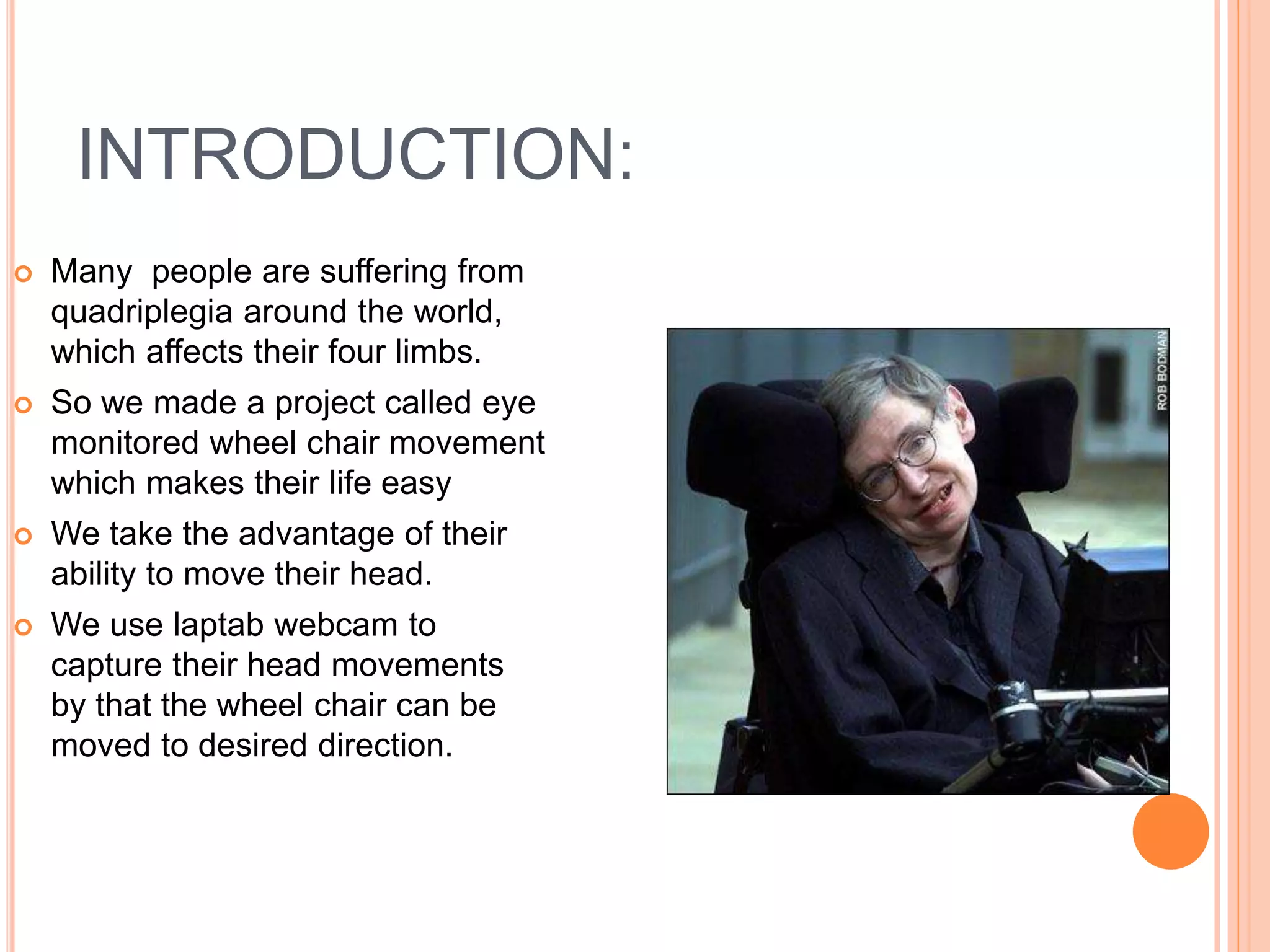
 Many people are suffering from
quadriplegia around the world,
which affects their four limbs.
 So we made a project called eye
monitored wheel chair movement
which makes their life easy
 We take the advantage of their
ability to move their head.
 We use laptab webcam to
capture their head movements
by that the wheel chair can be
moved to desired direction.
DESIGN OVERVIEW:
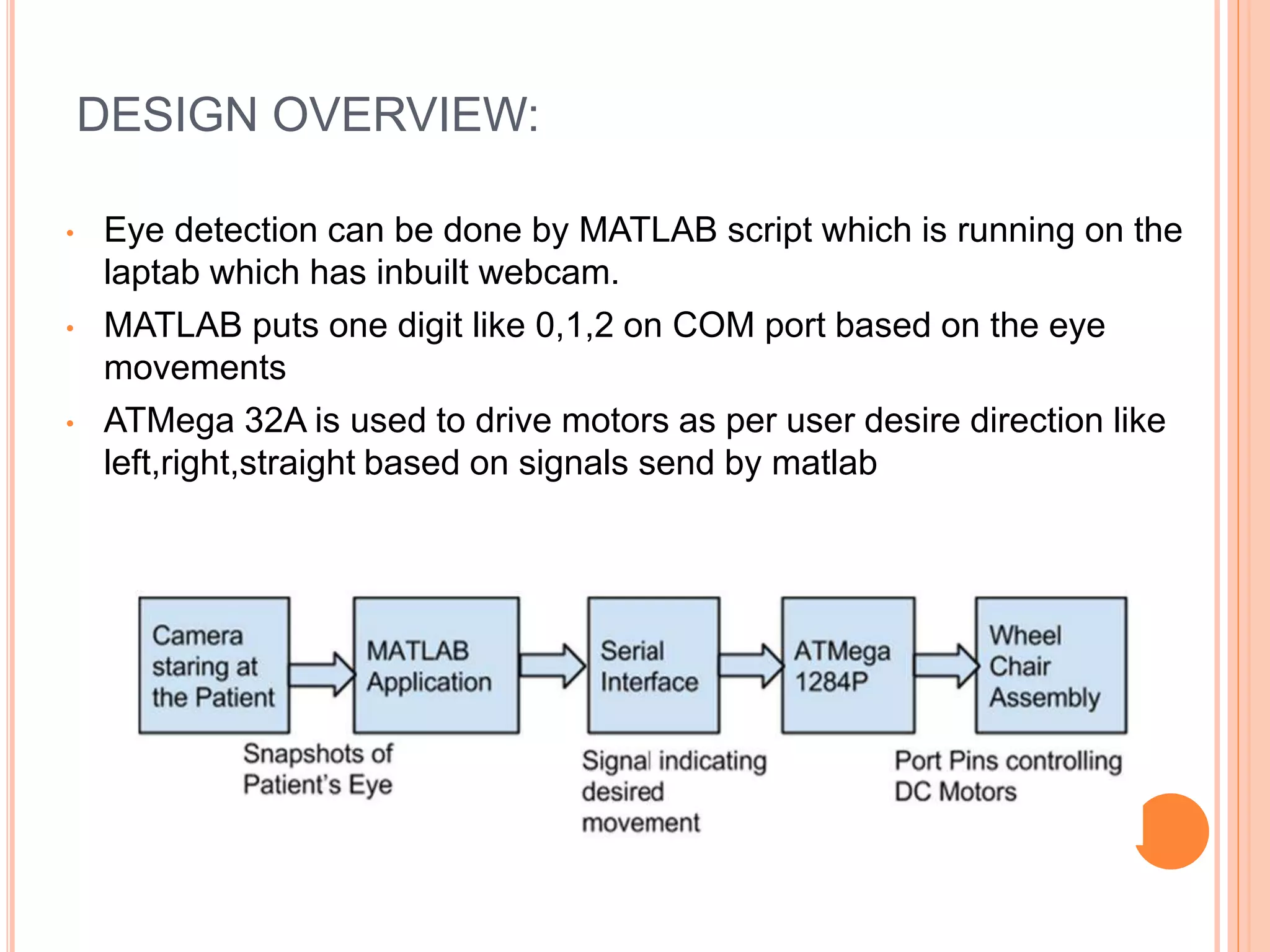
• Eye detection can be done by MATLAB script which is running on the
laptab which has inbuilt webcam.
• MATLAB puts one digit like 0,1,2 on COM port based on the eye
movements
• ATMega 32A is used to drive motors as per user desire direction like
left,right,straight based on signals send by matlab
SOFTWARE DESIGN:
 Initialization of COM port for serial communication.
 Capturing of image for every 25th frame.
 Changing image from RGB to gray level and
enhancing the image.
 Detection of the person’s eye in image using viola-
jones algorithm.
 Detection of the eye movement by comparing the
present position of eye with previous position.
 Placing one digit data on the COM port based on the
eye movements.
(A) MATLAB COMPONENT
 Code developed in AVR
studio.
 Hex file generated using
AVR studio.
 Hex file dumped into
Microcontroller using
extreme burner software
(B) FIRMWARE DESIGN
HARDWARE DESCRIPTION
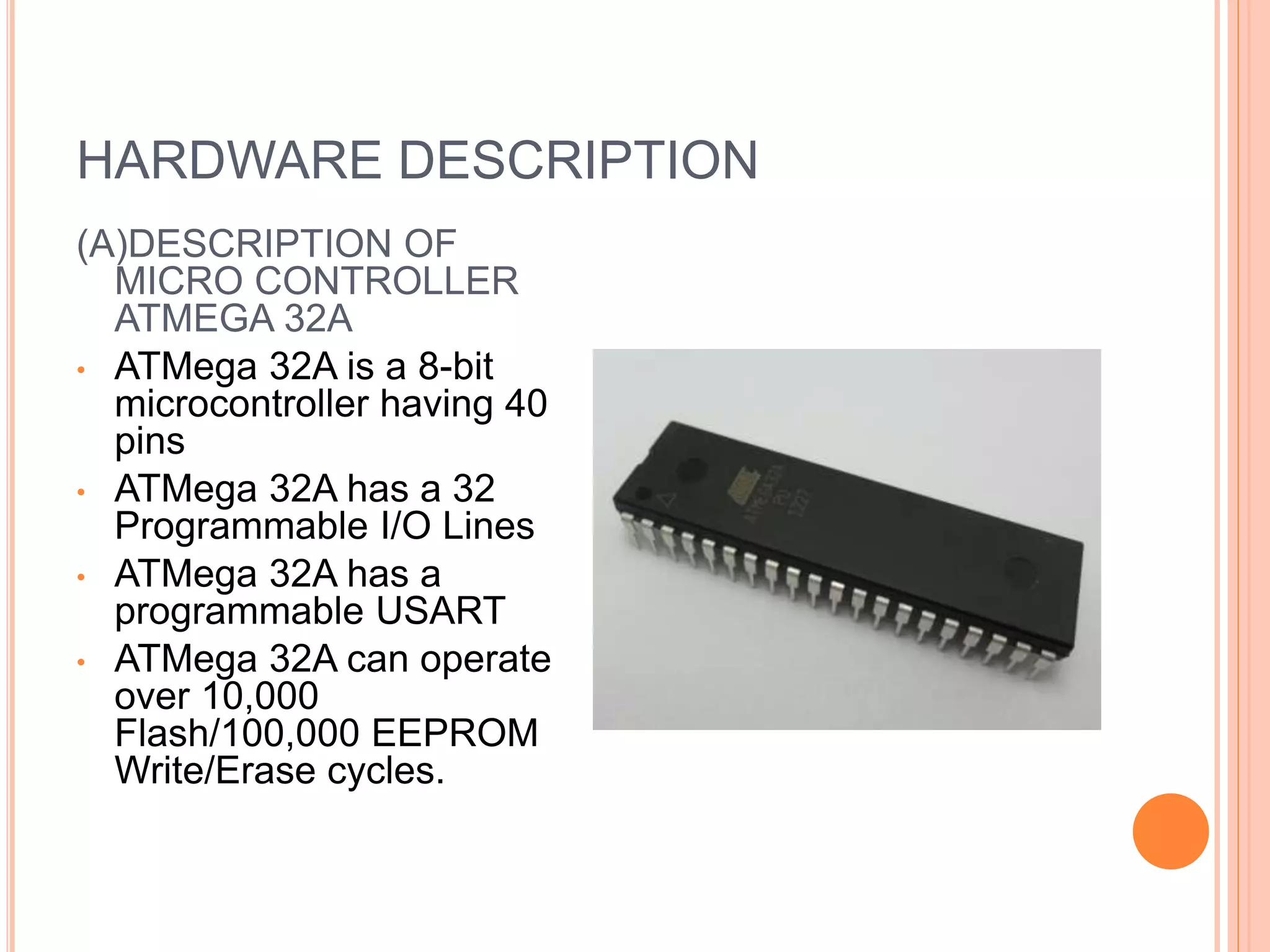
(A)DESCRIPTION OF
MICRO CONTROLLER
ATMEGA 32A
• ATMega 32A is a 8-bit
microcontroller having 40
pins
• ATMega 32A has a 32
Programmable I/O Lines
• ATMega 32A has a
programmable USART
• ATMega 32A can operate
over 10,000
Flash/100,000 EEPROM
Write/Erase cycles.
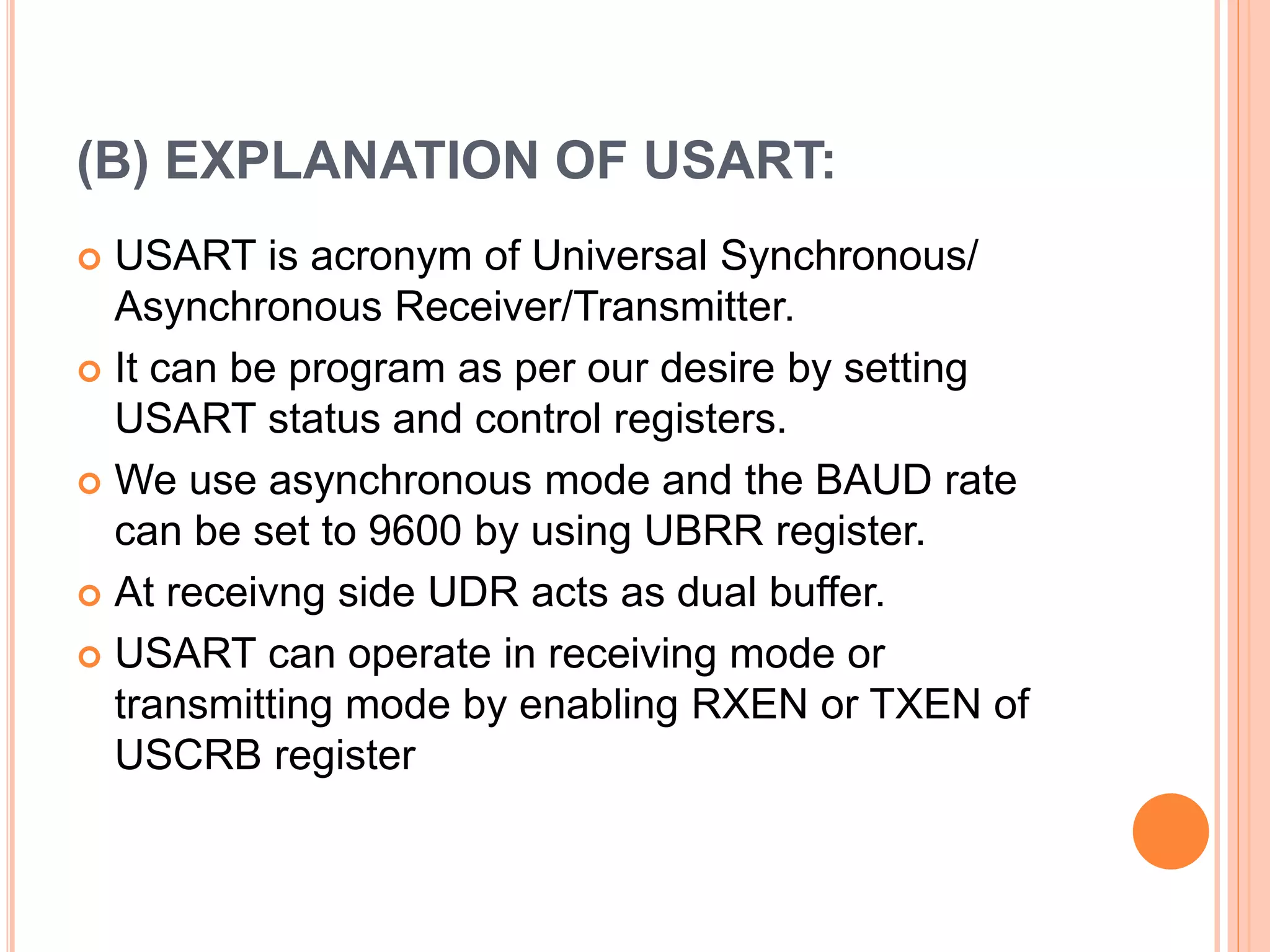
(B) EXPLANATION OF USART:
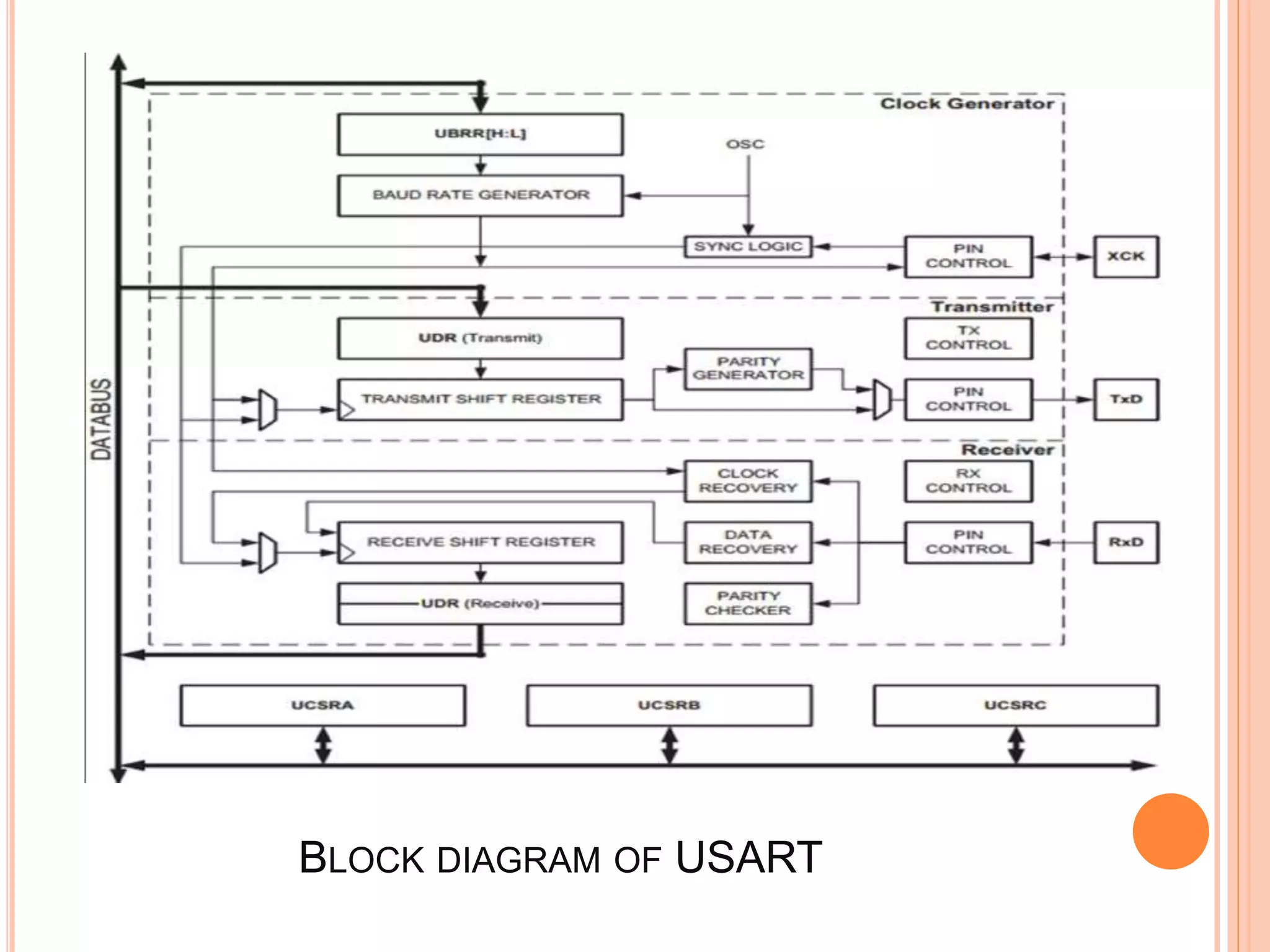
 USART is acronym of Universal Synchronous/
Asynchronous Receiver/Transmitter.
 It can be program as per our desire by setting
USART status and control registers.
 We use asynchronous mode and the BAUD rate
can be set to 9600 by using UBRR register.
 At receivng side UDR acts as dual buffer.
 USART can operate in receiving mode or
transmitting mode by enabling RXEN or TXEN of
USCRB register
BLOCK DIAGRAM OF USART
MECHANICAL DESIGN
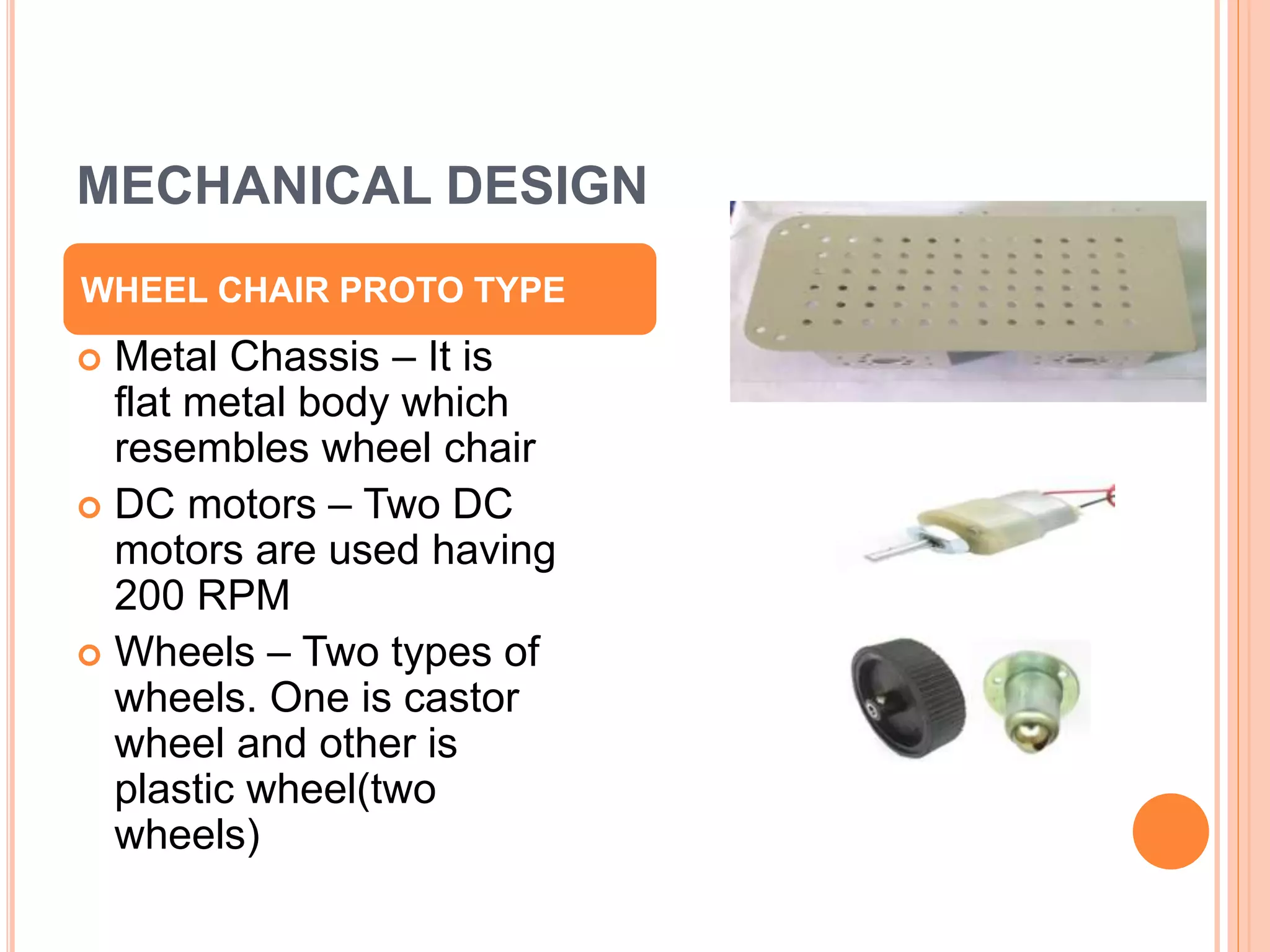
 Metal Chassis – It is
flat metal body which
resembles wheel chair
 DC motors – Two DC
motors are used having
200 RPM
 Wheels – Two types of
wheels. One is castor
wheel and other is
plastic wheel(two
wheels)
WHEEL CHAIR PROTO TYPE
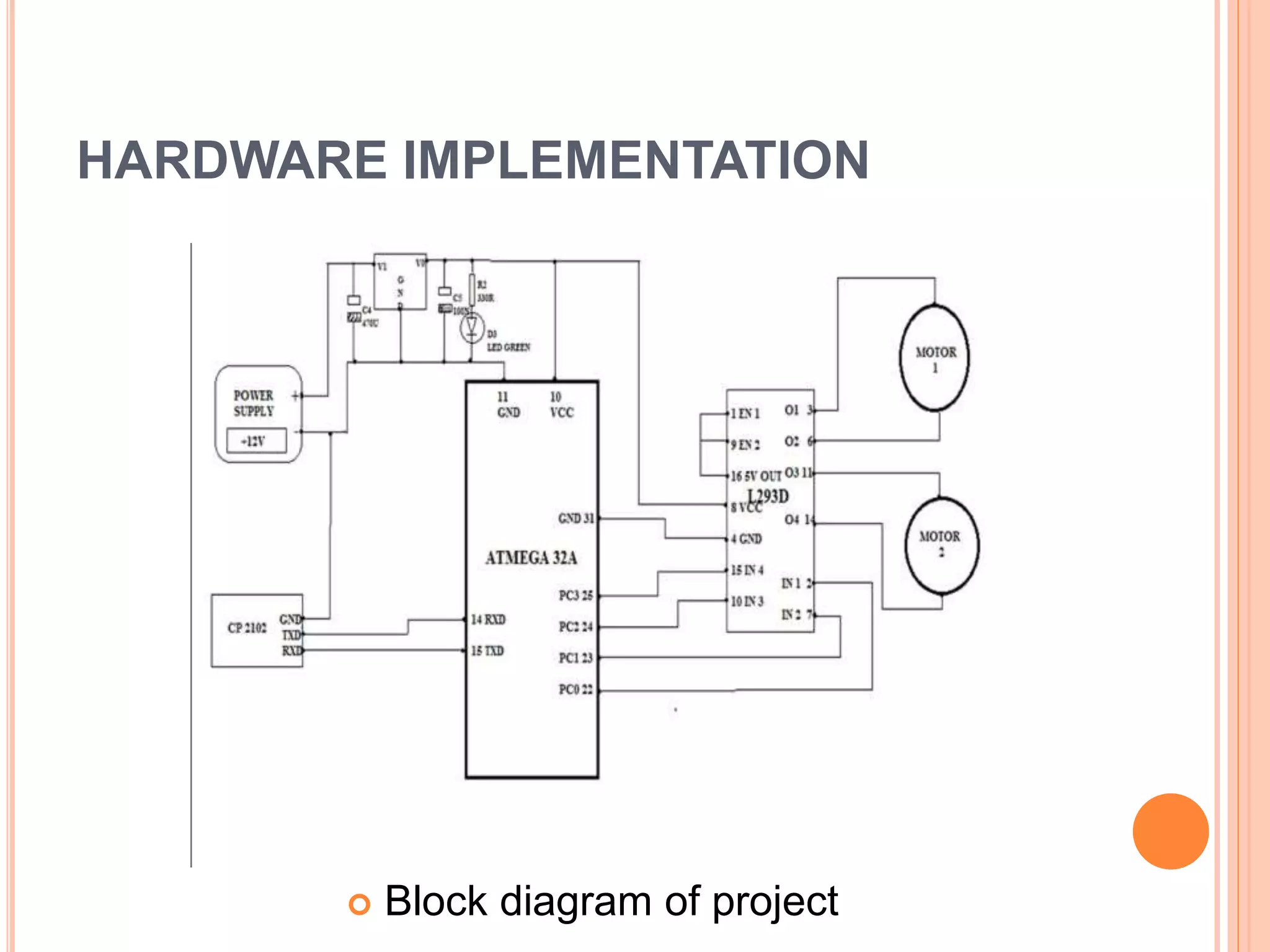
HARDWARE IMPLEMENTATION
 Block diagram of project
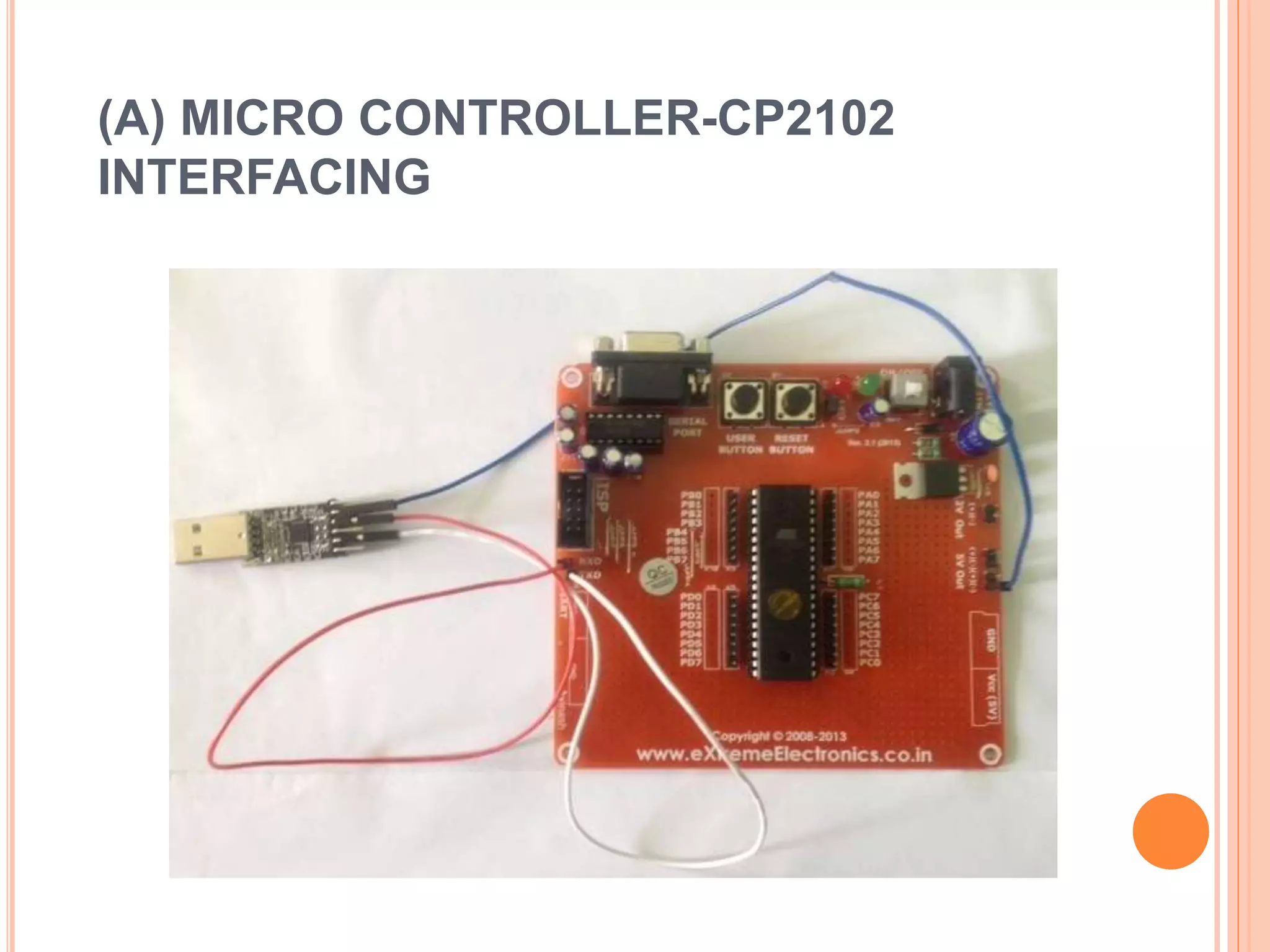
(A) MICRO CONTROLLER-CP2102
INTERFACING
CP2102
 CP2102 is a interfacing device between computer
and microcontroller
 CP2102 carry one digit data put on COM port by
MATLAB using RS-232 standard
 It also converts RS-232 voltage levels into TTL
voltage levels
 CP2102 has RXD,TXD,DTR,VBUS,GND,3V3 pins
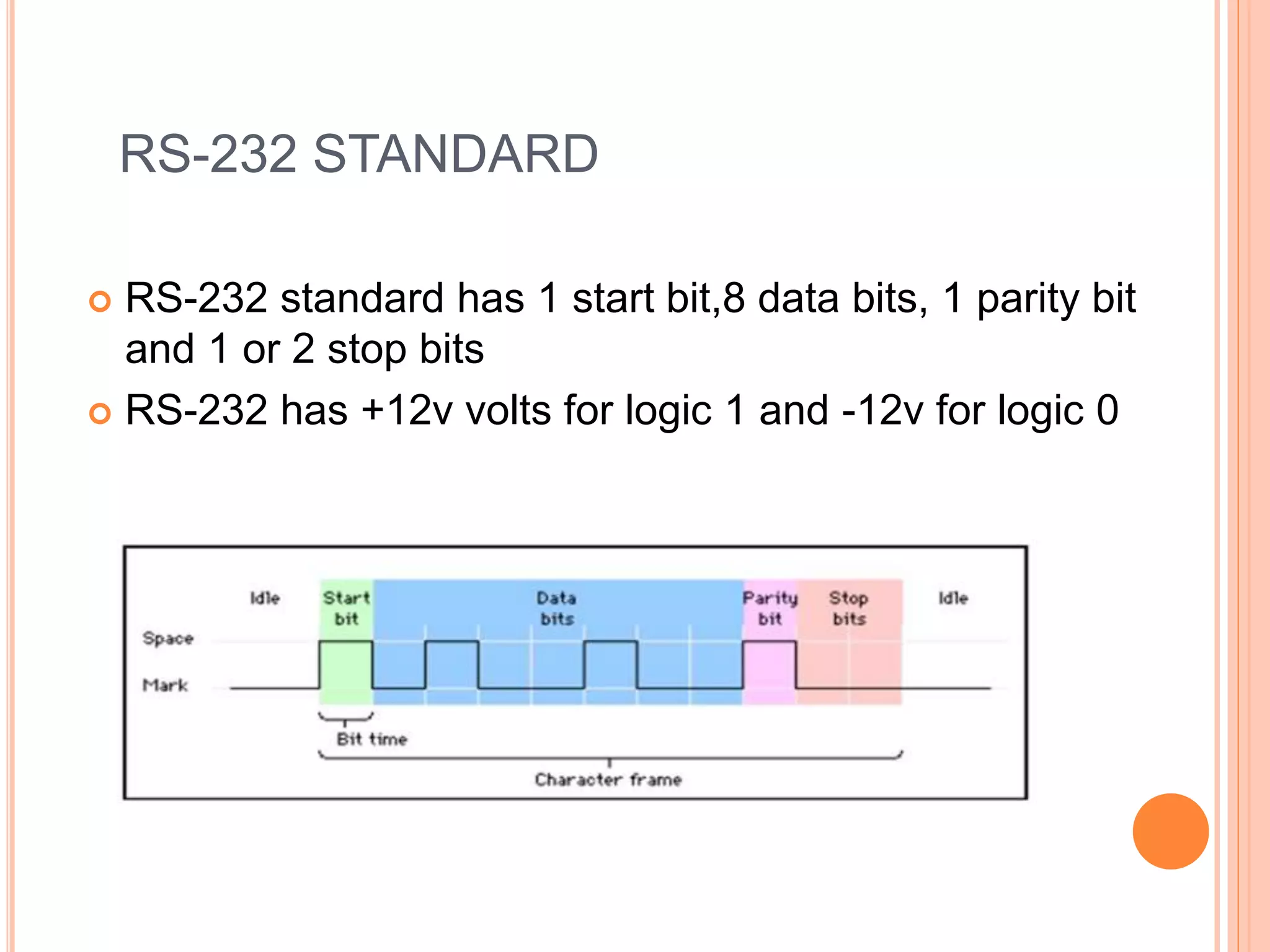
RS-232 STANDARD
 RS-232 standard has 1 start bit,8 data bits, 1 parity bit
and 1 or 2 stop bits
 RS-232 has +12v volts for logic 1 and -12v for logic 0
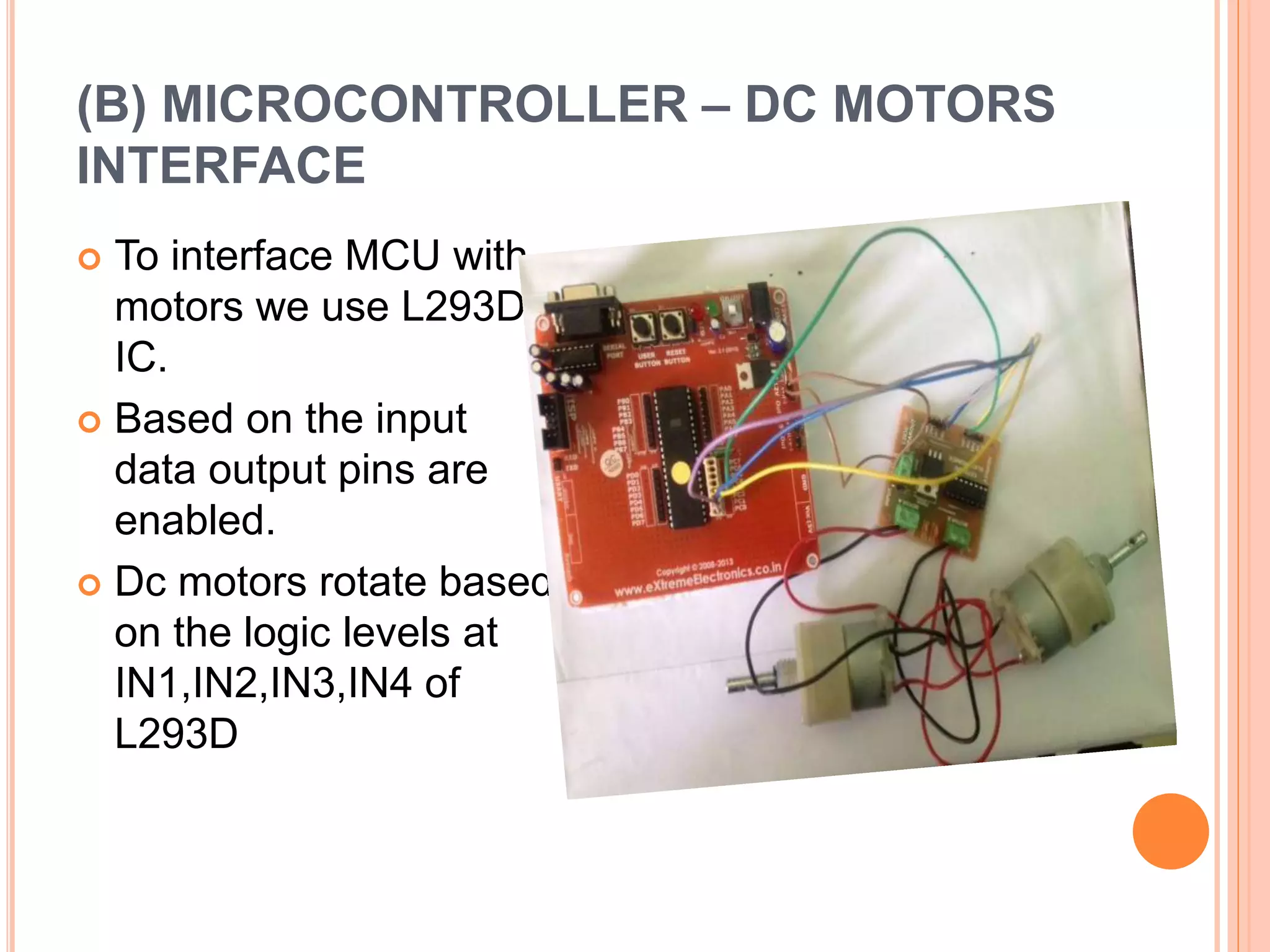
(B) MICROCONTROLLER – DC MOTORS
INTERFACE
 To interface MCU with
motors we use L293D
IC.
 Based on the input
data output pins are
enabled.
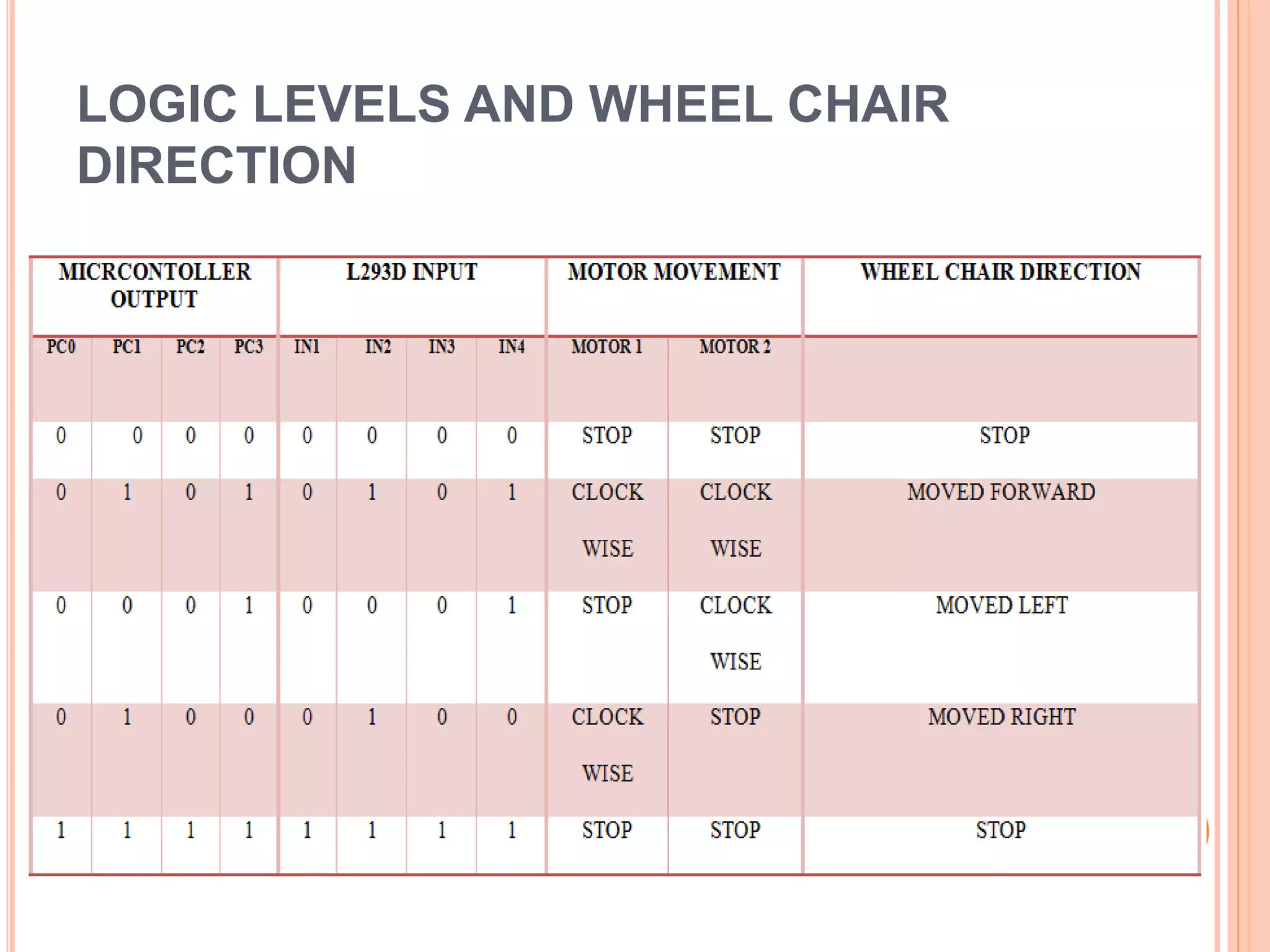
 Dc motors rotate based
on the logic levels at
IN1,IN2,IN3,IN4 of
L293D
LOGIC LEVELS AND WHEEL CHAIR
DIRECTION
 h
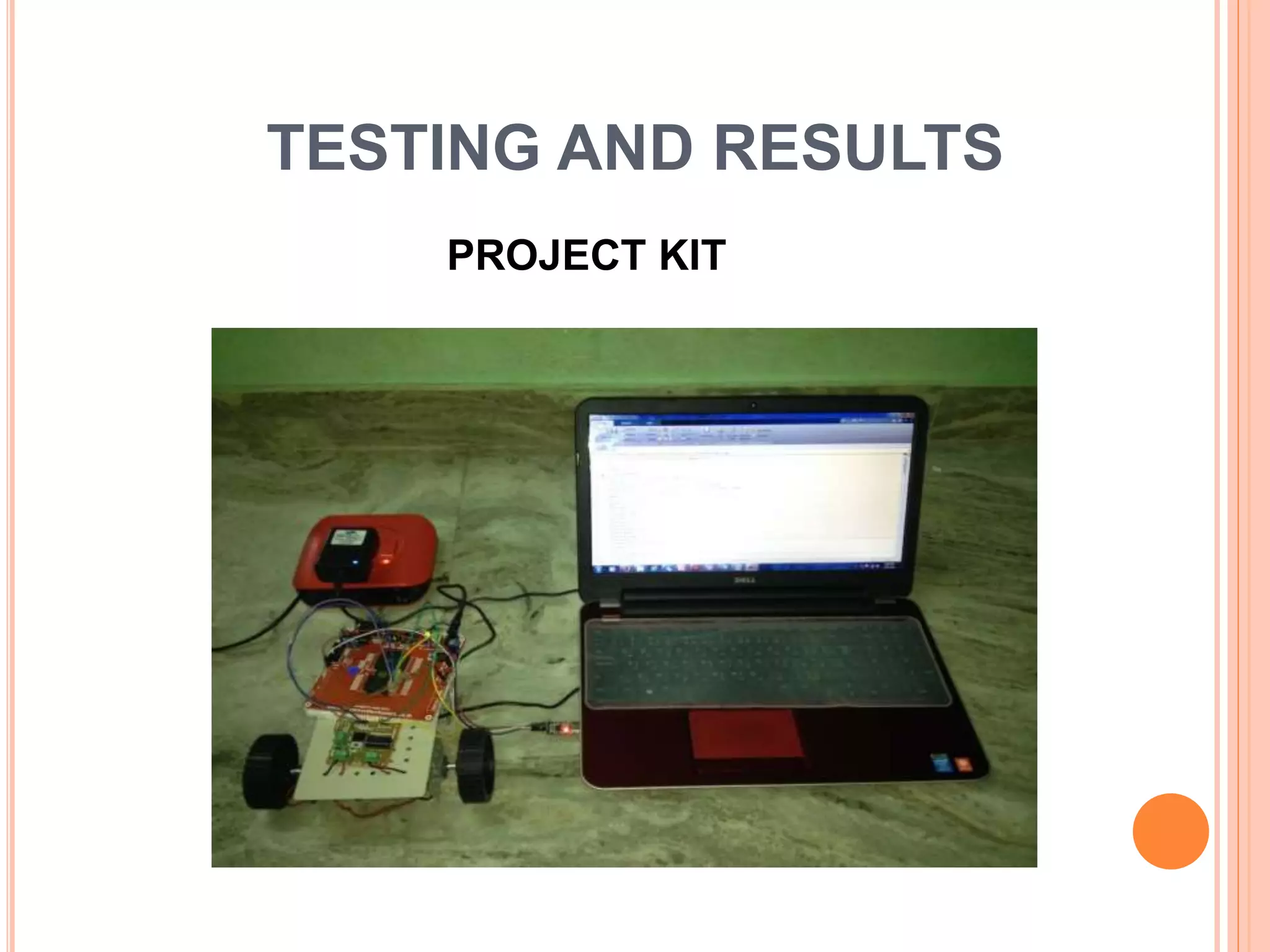
TESTING AND RESULTS
PROJECT KIT
 Testing strategy – x, y, length,
height of valid eye are
displayed on the debug
screen.
 Speed of execution – This is
the limitation of our project. We
can take image for every 15th
frame but cannot process at
that speed.
 Accuracy – can get almost
86% accuracy with coordinates
of eye that are set in threshold
limits
SAFETY FEATURES
 Controlled speed of detection and wheel chair drive.
 Eye height and width threshold.
 Controlled movement in either direction for limited time
period.
 Less jerk, by incorporating delay in the wheel chair drive.
 Halt control using blink detection.
CONCLUSION
 System functions at an accuracy of 70 – 90%.
 Person’s eye can easily detected by using viola- jones
algorithm without detecting of things mostly have face like
features.
• Lot of work needs to be done before making the product
commercially viable.
• Need to work on wheel chair movement when the person is just
casually glaring in different directions.
• We can incorporate certain sequences for turning ON and OFF
electrical devices or door locks.
• Lot of safety precautions need to be incorporated.
PERFORMANCE
FUTURE MODIFICATIONS
REFERENCES:
 1. S. Tameemsultana and N. Kali Saranya, “Implementation of Head and Finger
 Movement Based Automatic Wheel Chair”, Bonfring International Journal of Power
Systems
 and Integrated Circuits, vol. 1, Special Issue, pp 48-51, December 2011.
 2. Manuel Mazo, Francisco J. Rodriguez, Jose L, Lazaro, Jesus Urena, Juan C. Garcia,
 Enrique Santiso, Pedro Revenga and J. Jesus Garcia, “Wheelchair for Physically
Disabled
 People with Voice, Ultrasonic and Infrared Sensor Control “, Autonomous Robots, vol.2,
no.
 3, pp. 203-224 ,Sep 1995.
 3. Tabasum Shaikh, Naseem Farheen Sayyed, Shaheen Pathan, “Review of Multilevel
 Controlled Wheelchair”, 4th National Conference On Electronic Technologies, pp. 275-
 279, April 2013.
 4. Motor Controller circuitry –
 http:// en.wikipedia.org/wiki/Motor controller
 5. Voila Jones Algorithm -
 http://en.wikipedia.org/wiki/Viola%E2%80%93Jones_object_detection_framework
 6. Cascade Object Detector –
 http://www.mathworks.com/help/vision/ref/vision.cascadeobjectdetector-class.html
THANK YOU
ANY QUIRIES ???

Eye Monitored wheel Chair by using Matlab

  • 1.
    EYE MONITORED WHEELCHAIR Under the Esteemed Guidance of SRI R.V.SREEHARI M.E., ASSOCIATE PROFESSOR ,DEPT OF E.C.E BATCH MEMBERS: K Guru Prasad Reddy (129Y5A0410) P Sudheer (119Y1A0479) S Prasanna Kumar (119Y1A0492) P Gopi (119Y1A0483) G Sabareesh Goud (129Y5A0406) KSRM COLLEGE OF ENGINEERING,KADAPA
  • 2.
    CONTENTS: 1:INTRODUCTION 2:DESIGN OVERVIEW 3:SOFTWARE DESIGN 4:HARDWAREDESIGN 5:MECHANICAL DESIGN 6:TESTING AND RESULTS 7:CONCLUSIONS
  • 3.
    INTRODUCTION:  Many peopleare suffering from quadriplegia around the world, which affects their four limbs.  So we made a project called eye monitored wheel chair movement which makes their life easy  We take the advantage of their ability to move their head.  We use laptab webcam to capture their head movements by that the wheel chair can be moved to desired direction.
  • 4.
    DESIGN OVERVIEW: • Eyedetection can be done by MATLAB script which is running on the laptab which has inbuilt webcam. • MATLAB puts one digit like 0,1,2 on COM port based on the eye movements • ATMega 32A is used to drive motors as per user desire direction like left,right,straight based on signals send by matlab
  • 5.
    SOFTWARE DESIGN:  Initializationof COM port for serial communication.  Capturing of image for every 25th frame.  Changing image from RGB to gray level and enhancing the image.  Detection of the person’s eye in image using viola- jones algorithm.  Detection of the eye movement by comparing the present position of eye with previous position.  Placing one digit data on the COM port based on the eye movements. (A) MATLAB COMPONENT
  • 6.
     Code developedin AVR studio.  Hex file generated using AVR studio.  Hex file dumped into Microcontroller using extreme burner software (B) FIRMWARE DESIGN
  • 7.
    HARDWARE DESCRIPTION (A)DESCRIPTION OF MICROCONTROLLER ATMEGA 32A • ATMega 32A is a 8-bit microcontroller having 40 pins • ATMega 32A has a 32 Programmable I/O Lines • ATMega 32A has a programmable USART • ATMega 32A can operate over 10,000 Flash/100,000 EEPROM Write/Erase cycles.
  • 8.
    (B) EXPLANATION OFUSART:  USART is acronym of Universal Synchronous/ Asynchronous Receiver/Transmitter.  It can be program as per our desire by setting USART status and control registers.  We use asynchronous mode and the BAUD rate can be set to 9600 by using UBRR register.  At receivng side UDR acts as dual buffer.  USART can operate in receiving mode or transmitting mode by enabling RXEN or TXEN of USCRB register
  • 9.
  • 10.
    MECHANICAL DESIGN  MetalChassis – It is flat metal body which resembles wheel chair  DC motors – Two DC motors are used having 200 RPM  Wheels – Two types of wheels. One is castor wheel and other is plastic wheel(two wheels) WHEEL CHAIR PROTO TYPE
  • 11.
  • 12.
  • 13.
    CP2102  CP2102 isa interfacing device between computer and microcontroller  CP2102 carry one digit data put on COM port by MATLAB using RS-232 standard  It also converts RS-232 voltage levels into TTL voltage levels  CP2102 has RXD,TXD,DTR,VBUS,GND,3V3 pins
  • 14.
    RS-232 STANDARD  RS-232standard has 1 start bit,8 data bits, 1 parity bit and 1 or 2 stop bits  RS-232 has +12v volts for logic 1 and -12v for logic 0
  • 15.
    (B) MICROCONTROLLER –DC MOTORS INTERFACE  To interface MCU with motors we use L293D IC.  Based on the input data output pins are enabled.  Dc motors rotate based on the logic levels at IN1,IN2,IN3,IN4 of L293D
  • 16.
    LOGIC LEVELS ANDWHEEL CHAIR DIRECTION  h
  • 17.
  • 18.
     Testing strategy– x, y, length, height of valid eye are displayed on the debug screen.  Speed of execution – This is the limitation of our project. We can take image for every 15th frame but cannot process at that speed.  Accuracy – can get almost 86% accuracy with coordinates of eye that are set in threshold limits
  • 19.
    SAFETY FEATURES  Controlledspeed of detection and wheel chair drive.  Eye height and width threshold.  Controlled movement in either direction for limited time period.  Less jerk, by incorporating delay in the wheel chair drive.  Halt control using blink detection.
  • 20.
    CONCLUSION  System functionsat an accuracy of 70 – 90%.  Person’s eye can easily detected by using viola- jones algorithm without detecting of things mostly have face like features. • Lot of work needs to be done before making the product commercially viable. • Need to work on wheel chair movement when the person is just casually glaring in different directions. • We can incorporate certain sequences for turning ON and OFF electrical devices or door locks. • Lot of safety precautions need to be incorporated. PERFORMANCE FUTURE MODIFICATIONS
  • 21.
    REFERENCES:  1. S.Tameemsultana and N. Kali Saranya, “Implementation of Head and Finger  Movement Based Automatic Wheel Chair”, Bonfring International Journal of Power Systems  and Integrated Circuits, vol. 1, Special Issue, pp 48-51, December 2011.  2. Manuel Mazo, Francisco J. Rodriguez, Jose L, Lazaro, Jesus Urena, Juan C. Garcia,  Enrique Santiso, Pedro Revenga and J. Jesus Garcia, “Wheelchair for Physically Disabled  People with Voice, Ultrasonic and Infrared Sensor Control “, Autonomous Robots, vol.2, no.  3, pp. 203-224 ,Sep 1995.  3. Tabasum Shaikh, Naseem Farheen Sayyed, Shaheen Pathan, “Review of Multilevel  Controlled Wheelchair”, 4th National Conference On Electronic Technologies, pp. 275-  279, April 2013.  4. Motor Controller circuitry –  http:// en.wikipedia.org/wiki/Motor controller  5. Voila Jones Algorithm -  http://en.wikipedia.org/wiki/Viola%E2%80%93Jones_object_detection_framework  6. Cascade Object Detector –  http://www.mathworks.com/help/vision/ref/vision.cascadeobjectdetector-class.html
  • 22.
  • 23.