Scientific Inquiry &
   Experimental Design
How do we solve problems in science?
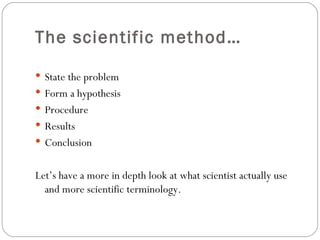
The scientific method…

 State the problem
 Form a hypothesis
 Procedure
 Results
 Conclusion


Let’s have a more in depth look at what scientist actually use
  and more scientific terminology.
Experimental Design                  vs. Scientific
Method

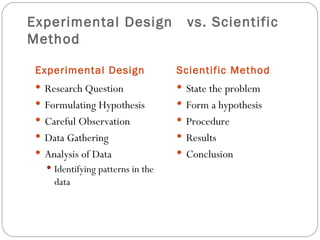
 Experimental Design               Scientific Method
  Research Question                State the problem
  Formulating Hypothesis           Form a hypothesis
  Careful Observation              Procedure
  Data Gathering                   Results
  Analysis of Data                 Conclusion
    Identifying patterns in the
     data
Types of Experimental Design
          Different research questions require
           different experimental designs.

            Descriptive Investigations


            Experimental Research Design
Descriptive Investigations
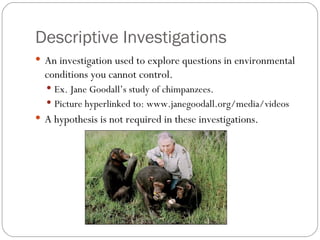
 An investigation used to explore questions in environmental
  conditions you cannot control.
   Ex. Jane Goodall’s study of chimpanzees.
   Picture hyperlinked to: www.janegoodall.org/media/videos
 A hypothesis is not required in these investigations.
Experimental Research Design
 Can be used when focused on a single variable.
 Conditions can be controlled.
 Determines the cause of a problem.


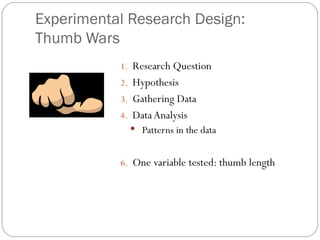
 Ex.: Thumb Wars
Experimental Research Design:
Thumb Wars
           1. Research Question
           2. Hypothesis
           3. Gathering Data
           4. Data Analysis
              Patterns in the data


           6. One variable tested: thumb length
Experimental Research Design
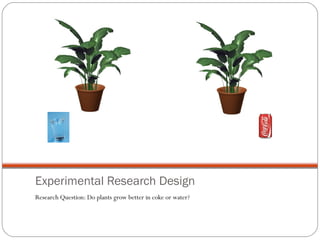
Research Question: Do plants grow better in coke or water?
Do plants grow better in coke or water?
 Research Question: Do plants grow better in coke or water?

 Hypothesis Ex: Plants will grow better in water because
  plants need water to live.

 Gathering Data: Controlled experiment with one
  independent variable.
   Independent Variable: Type of liquid given to plants
   Dependent Variable: Measured growth of each plant
   Constants: Conditions kept the same (such as amount of liquid,
    type of plant, soil, amount of sunlight)
Do plants grow better in coke or water?
(cont.)
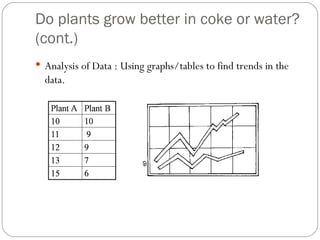
 Analysis of Data : Using graphs/tables to find trends in the
  data.

Experimental design presentation

  • 1.
    Scientific Inquiry & Experimental Design How do we solve problems in science?
  • 2.
    The scientific method… State the problem  Form a hypothesis  Procedure  Results  Conclusion Let’s have a more in depth look at what scientist actually use and more scientific terminology.
  • 3.
    Experimental Design vs. Scientific Method Experimental Design Scientific Method  Research Question  State the problem  Formulating Hypothesis  Form a hypothesis  Careful Observation  Procedure  Data Gathering  Results  Analysis of Data  Conclusion  Identifying patterns in the data
  • 4.
    Types of ExperimentalDesign  Different research questions require different experimental designs.  Descriptive Investigations  Experimental Research Design
  • 5.
    Descriptive Investigations  Aninvestigation used to explore questions in environmental conditions you cannot control.  Ex. Jane Goodall’s study of chimpanzees.  Picture hyperlinked to: www.janegoodall.org/media/videos  A hypothesis is not required in these investigations.
  • 6.
    Experimental Research Design Can be used when focused on a single variable.  Conditions can be controlled.  Determines the cause of a problem.  Ex.: Thumb Wars
  • 7.
    Experimental Research Design: ThumbWars 1. Research Question 2. Hypothesis 3. Gathering Data 4. Data Analysis  Patterns in the data 6. One variable tested: thumb length
  • 8.
    Experimental Research Design ResearchQuestion: Do plants grow better in coke or water?
  • 9.
    Do plants growbetter in coke or water?  Research Question: Do plants grow better in coke or water?  Hypothesis Ex: Plants will grow better in water because plants need water to live.  Gathering Data: Controlled experiment with one independent variable.  Independent Variable: Type of liquid given to plants  Dependent Variable: Measured growth of each plant  Constants: Conditions kept the same (such as amount of liquid, type of plant, soil, amount of sunlight)
  • 10.
    Do plants growbetter in coke or water? (cont.)  Analysis of Data : Using graphs/tables to find trends in the data.