Experiential Knowledge Creation
Processes in the Higher Education
    Teaching-Learning process

         Didiosky Benítez, MSc
           Dalgys Pérez, PhD
         Frederik Questier, PhD
            Chang Zhu, PhD
Knowledge acquired through life experiences
is one of the most important sources for
innovation in organizations, including higher
education institutions
Research Questions

1. What processes underlie the creation of knowledge
   derived from teaching and learning experiences in
   the Higher Education teaching-learning process?

2. How they are connected to innovation in Higher
   Education?
Summary
•   Basic concepts on experiential knowledge
•   Experiential knowledge creation processes
•   Enabling conditions
•   Principles to encourage innovation in Higher
    Education teaching-learning processes
Experiential knowledge
Refers to things perceived from concrete experiences,
things tacitly (or implicitly) learned or acquired after a
period of reflection on experiences
                           (Eraut 1994; Storkerson 2009)
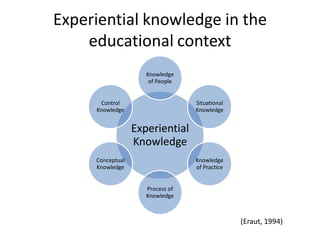
Experiential knowledge in the
    educational context
                     Knowledge
                      of People


      Control                     Situational
     Knowledge                    Knowledge


                  Experiential
                  Knowledge
     Conceptual                   Knowledge
     Knowledge                    of Practice


                     Process of
                     Knowledge


                                                (Eraut, 1994)
Experiential knowledge in the Higher
Education teaching-learning process

     In Teaching                  In Learning


              Experiential Knowledge
Experiential knowledge
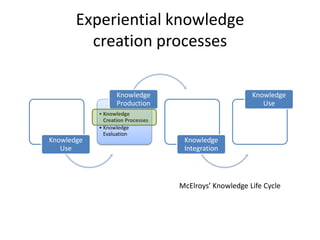
         creation processes

                   Knowledge                            Knowledge
                   Production                              Use
            • Knowledge
              Creation Processes
            • Knowledge
              Evaluation
Knowledge                           Knowledge
   Use                              Integration


                                   McElroys’ Knowledge Life Cycle
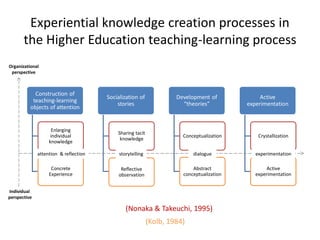
Experiential knowledge creation processes in
       the Higher Education teaching-learning process
Organizational
 perspective


            Construction of
                                       Socialization of             Development of             Active
           teaching-learning
                                           stories                    “theories”          experimentation
          objects of attention


                    Enlarging
                                           Sharing tacit
                    individual                                        Conceptualization       Crystallization
                                            knowledge
                   knowledge

              attention & reflection        storytelling                  dialogue           experimentation

                    Concrete                 Reflective                   Abstract               Active
                   Experience               observation               conceptualization      experimentation


Individual
perspective

                                               (Nonaka & Takeuchi, 1995)
                                                           (Kolb, 1984)
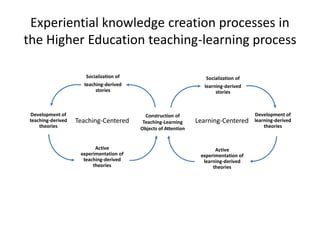
Experiential knowledge creation processes in
the Higher Education teaching-learning process

                       Socialization of                              Socialization of
                      teaching-derived                              learning-derived
                           stories                                       stories


 Development of                             Construction of                             Development of
 teaching-derived   Teaching-Centered      Teaching-Learning     Learning-Centered      learning-derived
     theories                             Objects of Attention                              theories


                           Active                                       Active
                     experimentation of                           experimentation of
                      teaching-derived                             learning-derived
                          theories                                     theories
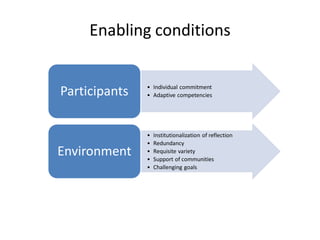
Enabling conditions

               • Individual commitment
Participants   • Adaptive competencies


               •   Institutionalization of reflection
               •   Redundancy
Environment    •
               •
                   Requisite variety
                   Support of communities
               •   Challenging goals
Experiential knowledge creation processes
can be used as a useful framework to
encourage innovation in the Higher Education
teaching-learning process
• Teaching-learning approaches should
  develop        learner’s    adaptive
  competencies and commitment

• Teaching-learning approaches should
  plan reflection activities

• Teaching-learning approaches should
  support the development of informal
  communities
• Stories, theories and social networks (around
  stories and theories) should be considered
  foundational concepts for the development of ICT
  that support teaching-learning approaches
  looking for innovations
• Academic program assessments should consider
  the use of measures and methods supported on
  the social network analysis of stories and theories
Thank You!
    didiosky@uclv.edu.cu
     dalgys2@uclv.edu.cu
frederik.questier@vub.ac.be
   chang.zhu@vub.ac.be

Experiential Knowledge Creation Processes

  • 1.
    Experiential Knowledge Creation Processesin the Higher Education Teaching-Learning process Didiosky Benítez, MSc Dalgys Pérez, PhD Frederik Questier, PhD Chang Zhu, PhD
  • 2.
    Knowledge acquired throughlife experiences is one of the most important sources for innovation in organizations, including higher education institutions
  • 3.
    Research Questions 1. Whatprocesses underlie the creation of knowledge derived from teaching and learning experiences in the Higher Education teaching-learning process? 2. How they are connected to innovation in Higher Education?
  • 4.
    Summary • Basic concepts on experiential knowledge • Experiential knowledge creation processes • Enabling conditions • Principles to encourage innovation in Higher Education teaching-learning processes
  • 5.
    Experiential knowledge Refers tothings perceived from concrete experiences, things tacitly (or implicitly) learned or acquired after a period of reflection on experiences (Eraut 1994; Storkerson 2009)
  • 6.
    Experiential knowledge inthe educational context Knowledge of People Control Situational Knowledge Knowledge Experiential Knowledge Conceptual Knowledge Knowledge of Practice Process of Knowledge (Eraut, 1994)
  • 7.
    Experiential knowledge inthe Higher Education teaching-learning process In Teaching In Learning Experiential Knowledge
  • 8.
    Experiential knowledge creation processes Knowledge Knowledge Production Use • Knowledge Creation Processes • Knowledge Evaluation Knowledge Knowledge Use Integration McElroys’ Knowledge Life Cycle
  • 9.
    Experiential knowledge creationprocesses in the Higher Education teaching-learning process Organizational perspective Construction of Socialization of Development of Active teaching-learning stories “theories” experimentation objects of attention Enlarging Sharing tacit individual Conceptualization Crystallization knowledge knowledge attention & reflection storytelling dialogue experimentation Concrete Reflective Abstract Active Experience observation conceptualization experimentation Individual perspective (Nonaka & Takeuchi, 1995) (Kolb, 1984)
  • 10.
    Experiential knowledge creationprocesses in the Higher Education teaching-learning process Socialization of Socialization of teaching-derived learning-derived stories stories Development of Construction of Development of teaching-derived Teaching-Centered Teaching-Learning Learning-Centered learning-derived theories Objects of Attention theories Active Active experimentation of experimentation of teaching-derived learning-derived theories theories
  • 11.
    Enabling conditions • Individual commitment Participants • Adaptive competencies • Institutionalization of reflection • Redundancy Environment • • Requisite variety Support of communities • Challenging goals
  • 12.
    Experiential knowledge creationprocesses can be used as a useful framework to encourage innovation in the Higher Education teaching-learning process
  • 13.
    • Teaching-learning approachesshould develop learner’s adaptive competencies and commitment • Teaching-learning approaches should plan reflection activities • Teaching-learning approaches should support the development of informal communities
  • 14.
    • Stories, theoriesand social networks (around stories and theories) should be considered foundational concepts for the development of ICT that support teaching-learning approaches looking for innovations
  • 15.
    • Academic programassessments should consider the use of measures and methods supported on the social network analysis of stories and theories
  • 16.
    Thank You! didiosky@uclv.edu.cu dalgys2@uclv.edu.cu frederik.questier@vub.ac.be chang.zhu@vub.ac.be