Advantages
&
Disadvantage
What is
Expanding
Globally
means ?
Mode of
Operations
2 Major
Problems
while Going
Global
How they
Choose
Country ?
Why
Companies
Go Global ?
Internationalization
 The international marketplace offers a
world of business opportunities for
companies seeking to sell or source
products worldwide.
 Not only can you tap into a world
marketplace of 7 billion people, but
according to business.gov, companies
that do international business grow
faster and fail less often than companies
that don't.
Internationalization is a cluster of International Strategies
required / adopted by an organization to market their
products/ services beyond the domestic boundaries.
Why Companies Go Global ?
Active
Reasons
Additional
Resources
Expanding
Market
Leveraging
Existing
Products, Skills
Realizing Cost
Economies
Reactive
Reasons
International
Demand
International
Competition
Trade Barriers
Policy
Regulations
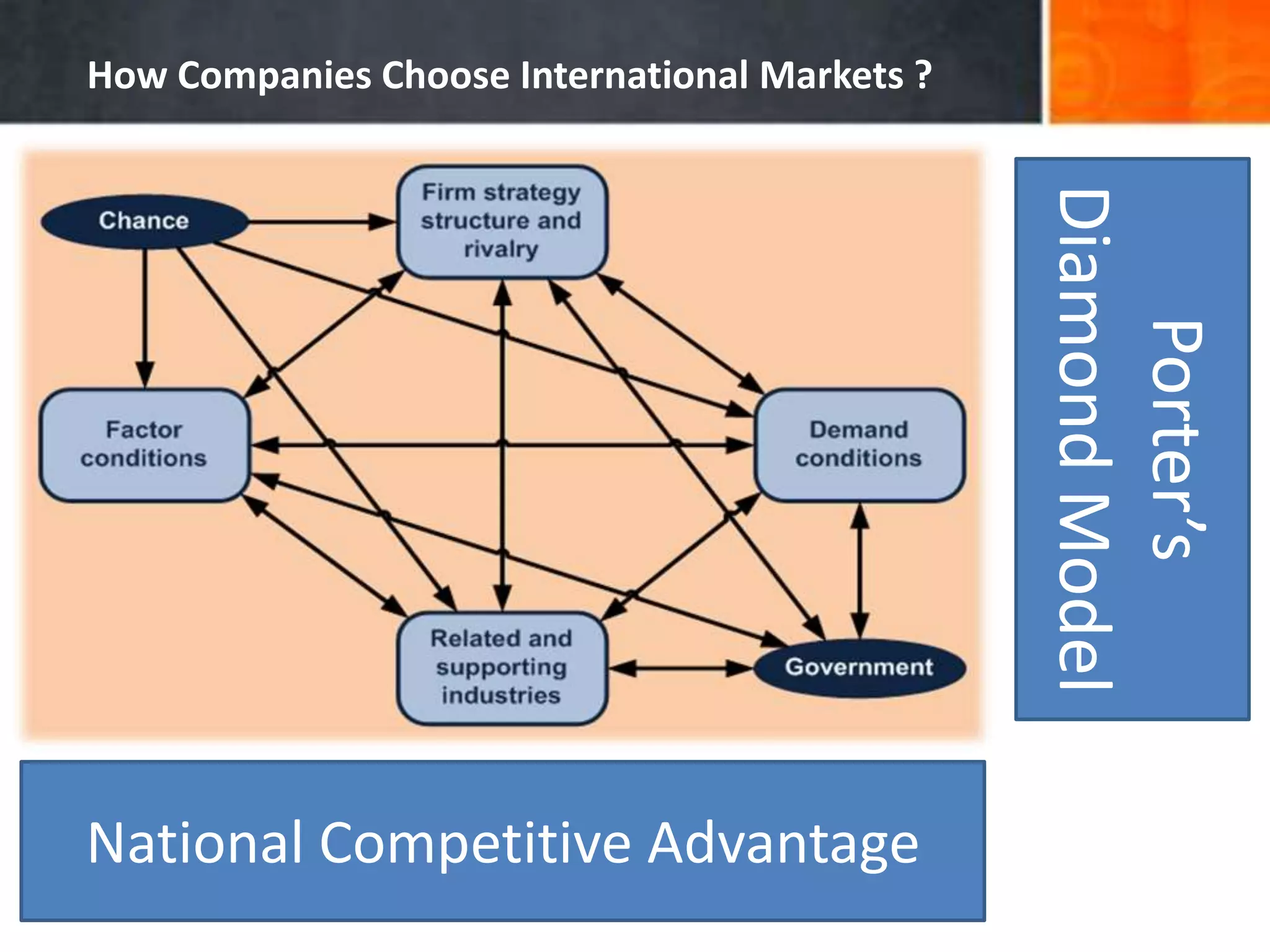
How Companies Choose International Markets ?
Porter’s
DiamondModel
National Competitive Advantage
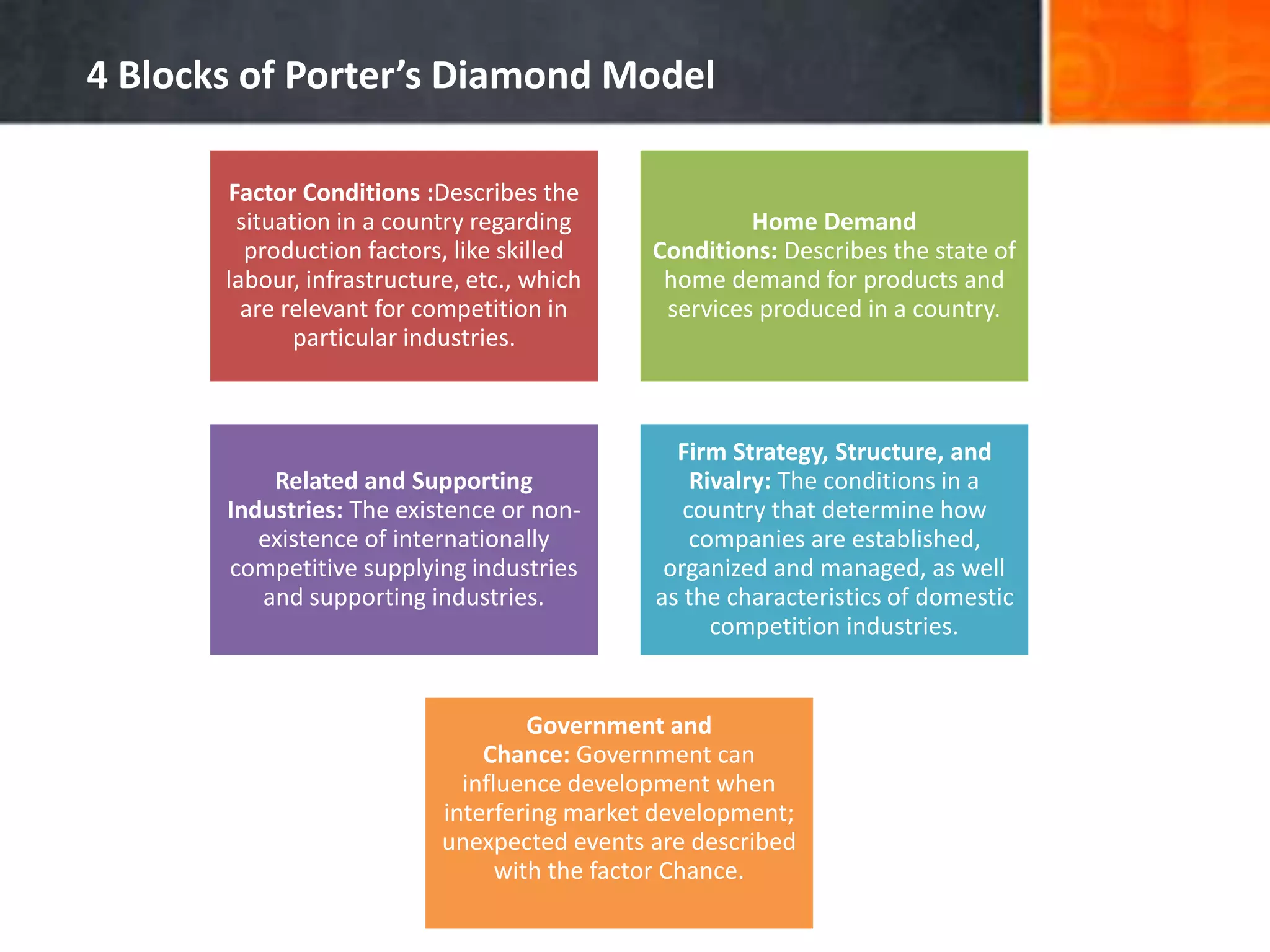
4 Blocks of Porter’s Diamond Model
Factor Conditions :Describes the
situation in a country regarding
production factors, like skilled
labour, infrastructure, etc., which
are relevant for competition in
particular industries.
Home Demand
Conditions: Describes the state of
home demand for products and
services produced in a country.
Related and Supporting
Industries: The existence or non-
existence of internationally
competitive supplying industries
and supporting industries.
Firm Strategy, Structure, and
Rivalry: The conditions in a
country that determine how
companies are established,
organized and managed, as well
as the characteristics of domestic
competition industries.
Government and
Chance: Government can
influence development when
interfering market development;
unexpected events are described
with the factor Chance.
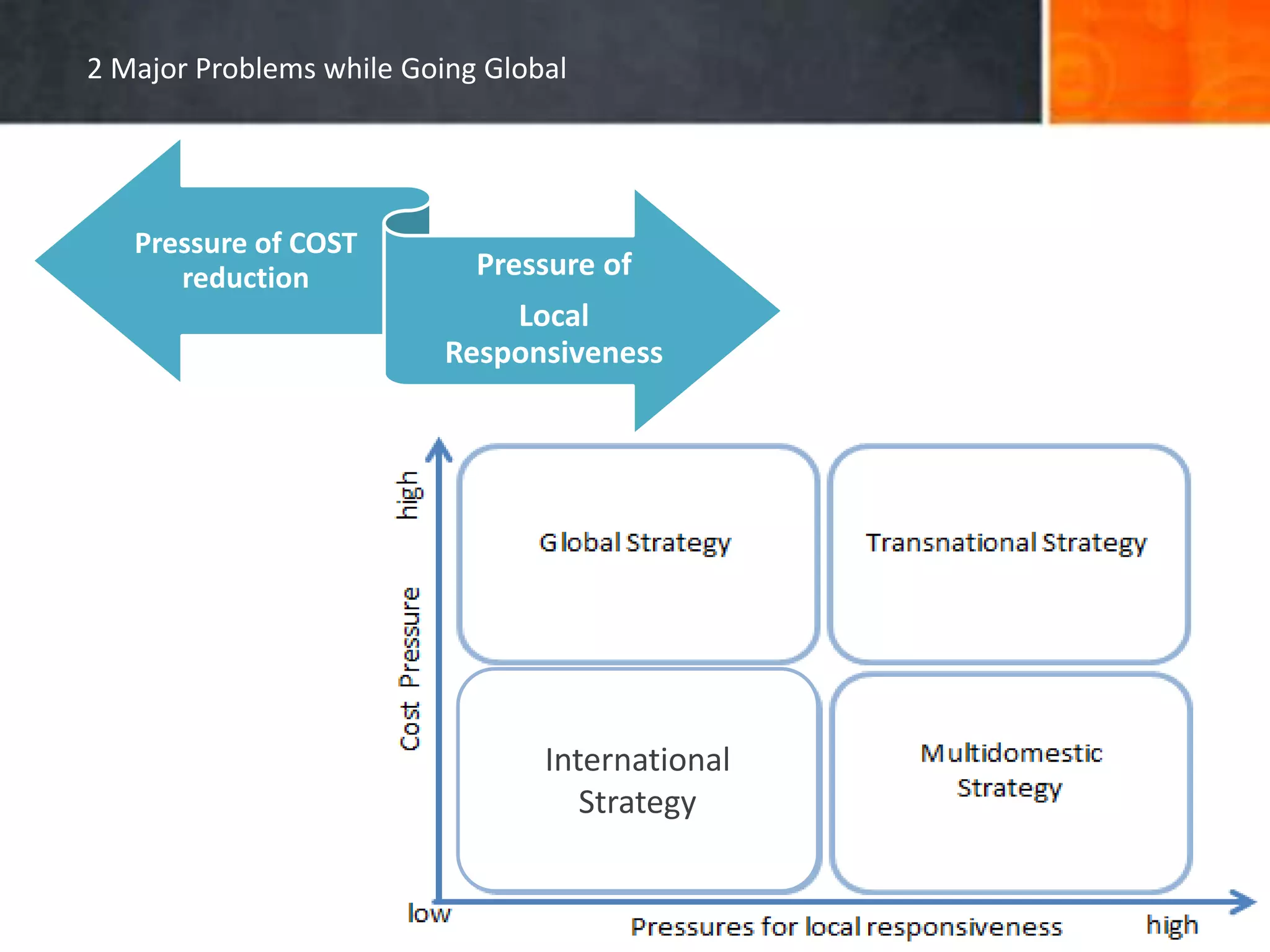
2 Major Problems while Going Global
Pressure of COST
reduction Pressure of
Local
Responsiveness
International
Strategy
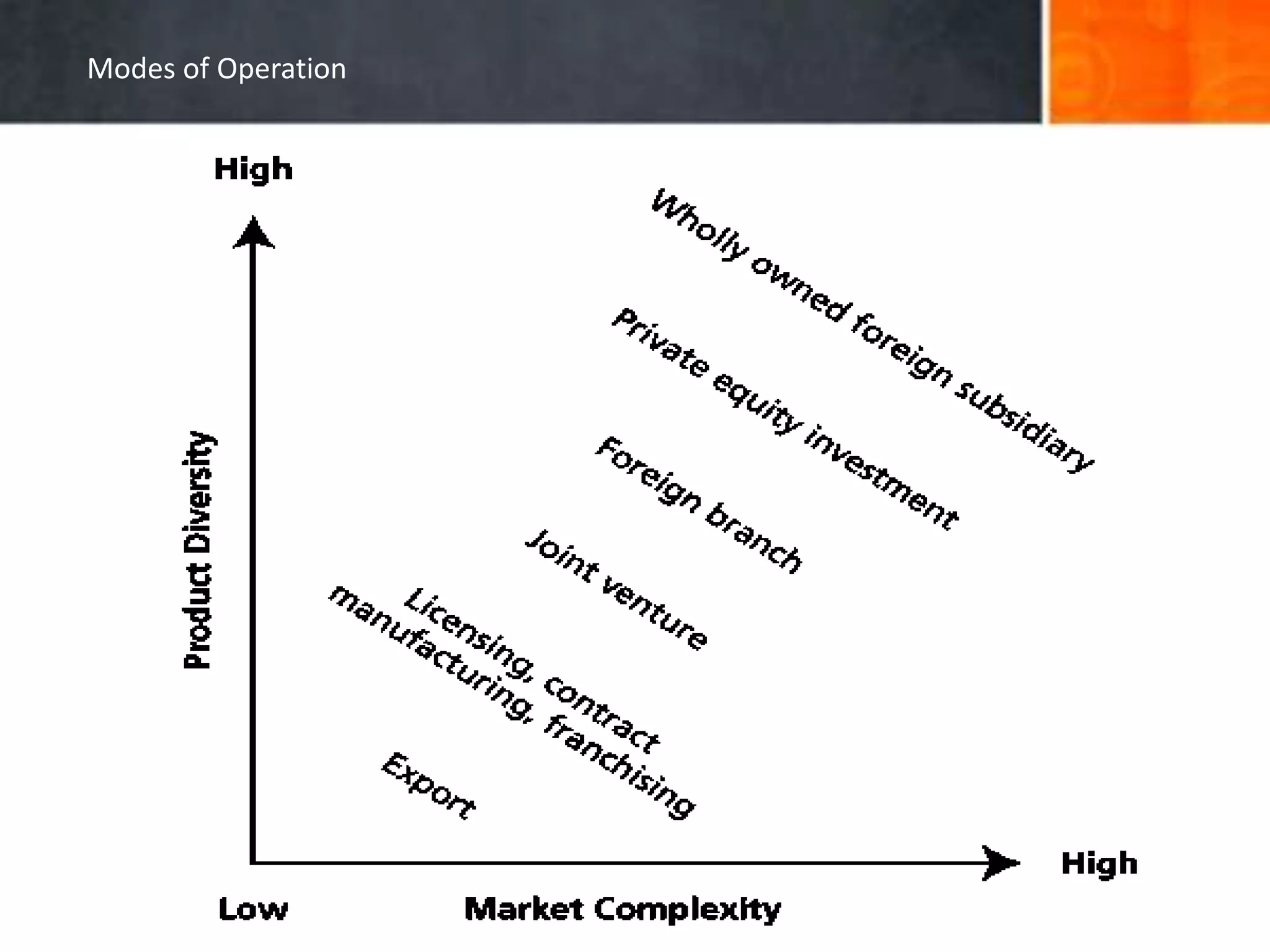
Modes of Operation
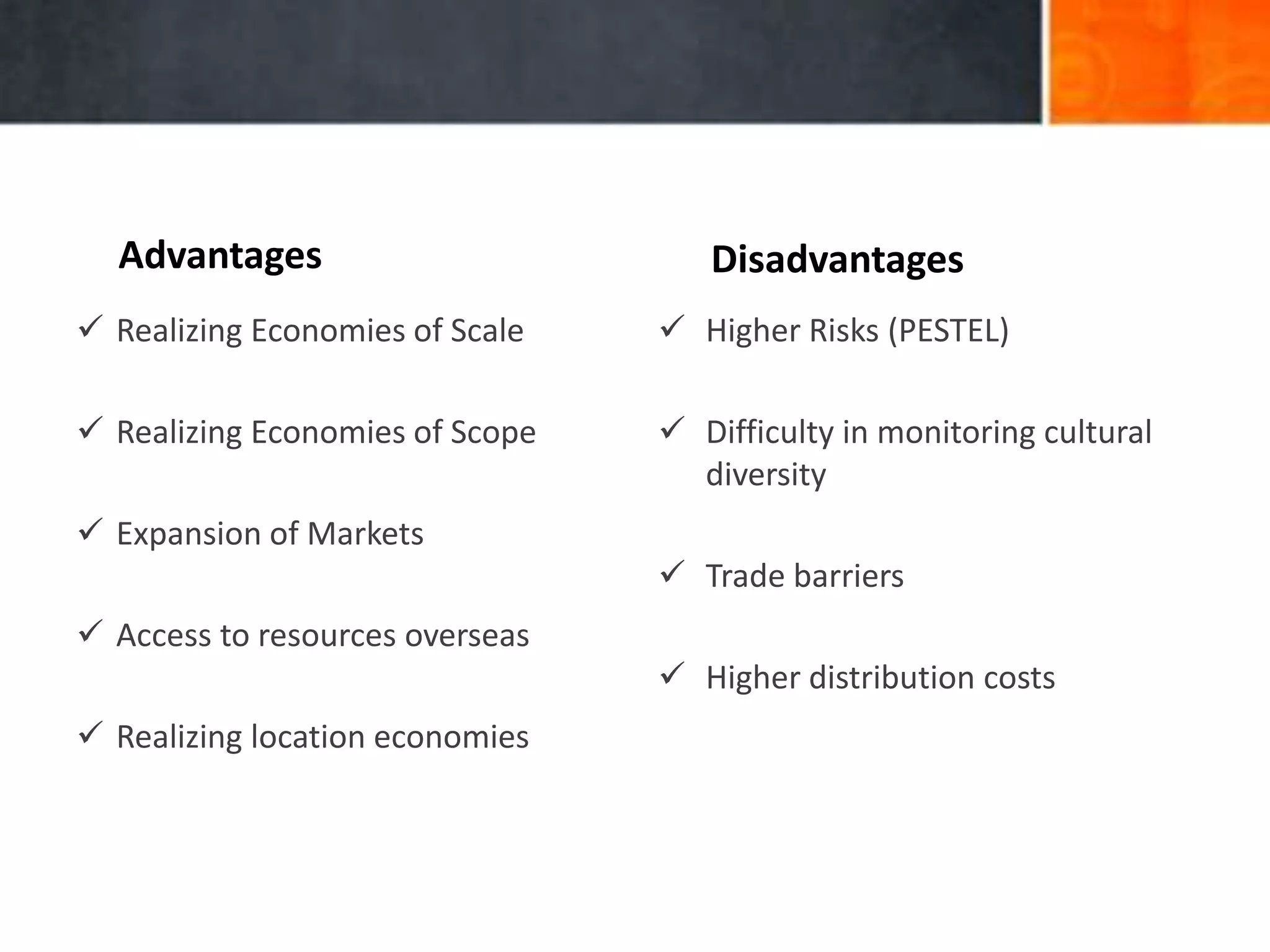
Advantages Disadvantages
 Realizing Economies of Scale
 Realizing Economies of Scope
 Expansion of Markets
 Access to resources overseas
 Realizing location economies
 Higher Risks (PESTEL)
 Difficulty in monitoring cultural
diversity
 Trade barriers
 Higher distribution costs
Kashyap Shah
Anubhuti Gupta
Harsh Jain
Divya Saxena
Prepared & Presented By,
Group- : Section-C

Expansion Strategy through Internationalization

  • 2.
    Advantages & Disadvantage What is Expanding Globally means ? Modeof Operations 2 Major Problems while Going Global How they Choose Country ? Why Companies Go Global ?
  • 3.
    Internationalization  The internationalmarketplace offers a world of business opportunities for companies seeking to sell or source products worldwide.  Not only can you tap into a world marketplace of 7 billion people, but according to business.gov, companies that do international business grow faster and fail less often than companies that don't. Internationalization is a cluster of International Strategies required / adopted by an organization to market their products/ services beyond the domestic boundaries.
  • 4.
    Why Companies GoGlobal ? Active Reasons Additional Resources Expanding Market Leveraging Existing Products, Skills Realizing Cost Economies Reactive Reasons International Demand International Competition Trade Barriers Policy Regulations
  • 5.
    How Companies ChooseInternational Markets ? Porter’s DiamondModel National Competitive Advantage
  • 6.
    4 Blocks ofPorter’s Diamond Model Factor Conditions :Describes the situation in a country regarding production factors, like skilled labour, infrastructure, etc., which are relevant for competition in particular industries. Home Demand Conditions: Describes the state of home demand for products and services produced in a country. Related and Supporting Industries: The existence or non- existence of internationally competitive supplying industries and supporting industries. Firm Strategy, Structure, and Rivalry: The conditions in a country that determine how companies are established, organized and managed, as well as the characteristics of domestic competition industries. Government and Chance: Government can influence development when interfering market development; unexpected events are described with the factor Chance.
  • 7.
    2 Major Problemswhile Going Global Pressure of COST reduction Pressure of Local Responsiveness International Strategy
  • 8.
  • 9.
    Advantages Disadvantages  RealizingEconomies of Scale  Realizing Economies of Scope  Expansion of Markets  Access to resources overseas  Realizing location economies  Higher Risks (PESTEL)  Difficulty in monitoring cultural diversity  Trade barriers  Higher distribution costs
  • 10.
    Kashyap Shah Anubhuti Gupta HarshJain Divya Saxena Prepared & Presented By, Group- : Section-C