Exodontia 
Dr V.RAMKUMAR 
CONSULTANT DENTAL&FACIOMAXILLARY 
SURGEON 
REG NO:4118 TAMILNADU-INDIA(ASIA)
There are three techniques available for 
removal of teeth. 
 The forceps technique (closed method) 
 Elevator technique, 
 Open method (transalveolar extraction)
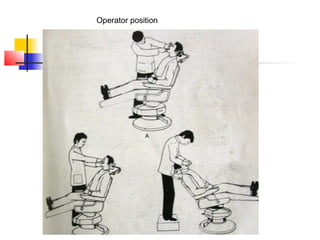
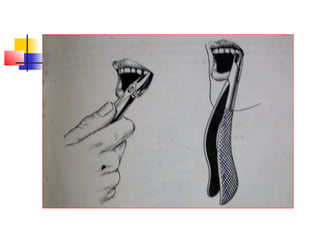
Operator position
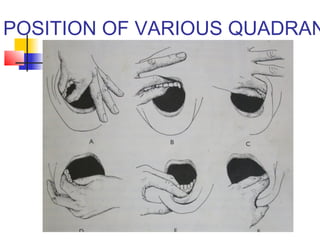
POSITION OF VARIOUS QUADRANT
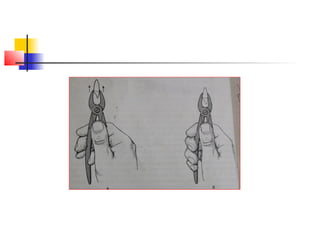
Forceps
Forceps Technique 
Indications 
 Fairly mobile teeth, 
 Extraction of single tooth, 
 Extraction of multiple teeth which are scattered. 
Contraindications 
 In complicated extractions, 
 Deformed roots, 
 Hard tissue pathology of roots like hyper-cementosis 
etc. 
 Badly destroyed teeth.
Advantages – 
 It causes the least amount of trauma. 
 Promotes retention of a satisfactory blood clot. 
 Favours rapid healing.
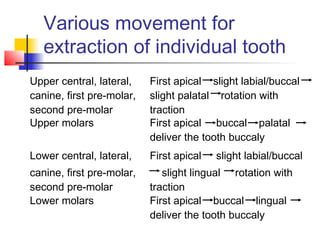
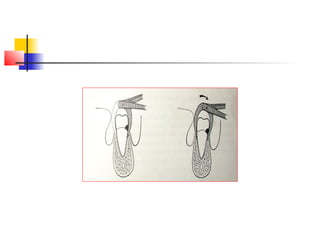
Various movement for 
extraction of individual tooth 
Upper central, lateral, 
canine, first pre-molar, 
second pre-molar 
First apical slight labial/buccal 
slight palatal rotation with 
traction 
Upper molars First apical buccal palatal 
deliver the tooth buccaly 
Lower central, lateral, 
canine, first pre-molar, 
second pre-molar 
First apical slight labial/buccal 
slight lingual rotation with 
traction 
Lower molars First apical buccal lingual 
deliver the tooth buccaly
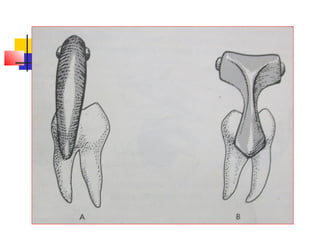
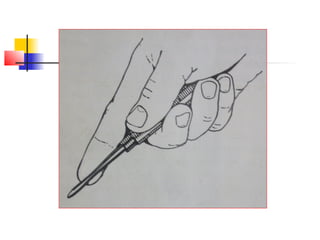
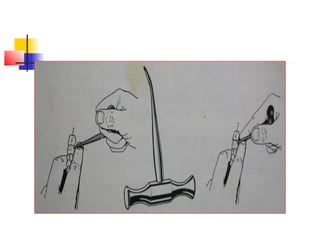
Elevators
Elevator technique 
Indications – 
 To luxate teeth which cannot be engaged by 
beaks of forceps ex: impacted, malposed or 
grossly destructed teeth. 
 To remove roots
Contraindications – 
 Damaging of even extraction of adjacent 
tooth. 
 Fracture of maxilla or mandible. 
 Fracture of the alveolar process. 
 Injuring the soft tissue if proper care is not 
taken. 
 Penetrating into the maxillary sinus, during 
extraction of maxillary posterior teeth. 
 Forcing a maxillary root into the maxillary 
sinus or forcing the apical third of the root of 
the lower third molar into the mandibular 
canal or into submaxillary or 
pterygomandibular space depending upon the 
position of the impacted third molar.
Rules to be followed when using an Elevator – 
 Never use an adjacent tooth as a fulcrum 
unless that tooth is also to be removed. 
 Never use the buccal plate at the gingival line 
as fulcrum except in third molars. 
 Never use lingual plate as fulcrum at the 
gingival line. 
 Always use finger guards to protect the 
patient in case the elevator slips. 
 Use interseptal bone as fulcrum. 
 Avoid using an elevator to laxate a tooth 
which has a tooth distal to it.
According to use 
1. Elevators designed to remove the entire 
tooth. 
2. Elevators designed to remove roots broken 
off at the gingival line. 
3. Elevators designed to remove roots broken 
off halfway to the apex. 
4. Elevators designed to remove the apical 
third of the root (apical fragment ejectors). 
5. Elevators designed to reflect to 
mucoperiosteum (periosteal elevators).
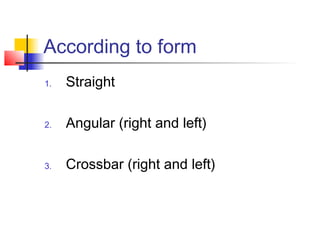
According to form 
1. Straight 
2. Angular (right and left) 
3. Crossbar (right and left)
Transalveolar extraction 
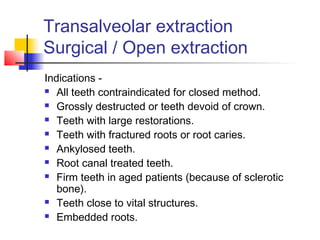
Surgical / Open extraction 
Indications - 
 All teeth contraindicated for closed method. 
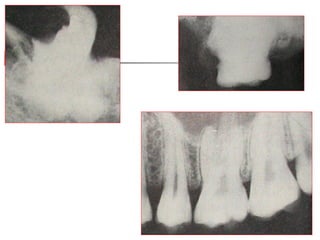
 Grossly destructed or teeth devoid of crown. 
 Teeth with large restorations. 
 Teeth with fractured roots or root caries. 
 Ankylosed teeth. 
 Root canal treated teeth. 
 Firm teeth in aged patients (because of sclerotic 
bone). 
 Teeth close to vital structures. 
 Embedded roots.
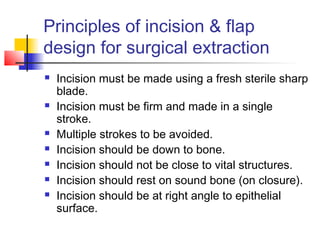
Principles of incision & flap 
design for surgical extraction 
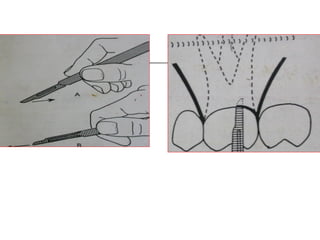
 Incision must be made using a fresh sterile sharp 
blade. 
 Incision must be firm and made in a single 
stroke. 
 Multiple strokes to be avoided. 
 Incision should be down to bone. 
 Incision should not be close to vital structures. 
 Incision should rest on sound bone (on closure). 
 Incision should be at right angle to epithelial 
surface.
Contd.. 
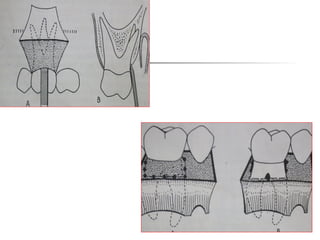
 Flap should provide adequate access to the 
surgical area. 
 Base of the flap must be broader than the apex. 
 Acute angulations while making incisions 
avoided. 
 Preferably the width of the flap should be twice 
its height. 
 Incisions should be raised in one sweep to avoid 
button holes. 
 Tissues should be handled gently. 
 Adequate hemostasis is very essential.
Principles of surgical removal 
of roots 
 Root has to be located either clinically or 
radiographically 
 Incision 
 Bone removal (good vision and access to the 
root)
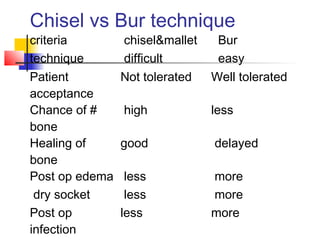
Chisel vs Bur technique 
criteria chisel&mallet Bur 
technique difficult easy 
Patient 
acceptance 
Not tolerated Well tolerated 
Chance of # 
bone 
high less 
Healing of 
bone 
good delayed 
Post op edema less more 
dry socket less more 
Post op 
less more 
infection
Thank You

Exodotia786

  • 1.
    Exodontia Dr V.RAMKUMAR CONSULTANT DENTAL&FACIOMAXILLARY SURGEON REG NO:4118 TAMILNADU-INDIA(ASIA)
  • 2.
    There are threetechniques available for removal of teeth.  The forceps technique (closed method)  Elevator technique,  Open method (transalveolar extraction)
  • 3.
  • 4.
  • 5.
  • 6.
    Forceps Technique Indications  Fairly mobile teeth,  Extraction of single tooth,  Extraction of multiple teeth which are scattered. Contraindications  In complicated extractions,  Deformed roots,  Hard tissue pathology of roots like hyper-cementosis etc.  Badly destroyed teeth.
  • 7.
    Advantages – It causes the least amount of trauma.  Promotes retention of a satisfactory blood clot.  Favours rapid healing.
  • 8.
    Various movement for extraction of individual tooth Upper central, lateral, canine, first pre-molar, second pre-molar First apical slight labial/buccal slight palatal rotation with traction Upper molars First apical buccal palatal deliver the tooth buccaly Lower central, lateral, canine, first pre-molar, second pre-molar First apical slight labial/buccal slight lingual rotation with traction Lower molars First apical buccal lingual deliver the tooth buccaly
  • 13.
  • 14.
    Elevator technique Indications–  To luxate teeth which cannot be engaged by beaks of forceps ex: impacted, malposed or grossly destructed teeth.  To remove roots
  • 15.
    Contraindications – Damaging of even extraction of adjacent tooth.  Fracture of maxilla or mandible.  Fracture of the alveolar process.  Injuring the soft tissue if proper care is not taken.  Penetrating into the maxillary sinus, during extraction of maxillary posterior teeth.  Forcing a maxillary root into the maxillary sinus or forcing the apical third of the root of the lower third molar into the mandibular canal or into submaxillary or pterygomandibular space depending upon the position of the impacted third molar.
  • 16.
    Rules to befollowed when using an Elevator –  Never use an adjacent tooth as a fulcrum unless that tooth is also to be removed.  Never use the buccal plate at the gingival line as fulcrum except in third molars.  Never use lingual plate as fulcrum at the gingival line.  Always use finger guards to protect the patient in case the elevator slips.  Use interseptal bone as fulcrum.  Avoid using an elevator to laxate a tooth which has a tooth distal to it.
  • 17.
    According to use 1. Elevators designed to remove the entire tooth. 2. Elevators designed to remove roots broken off at the gingival line. 3. Elevators designed to remove roots broken off halfway to the apex. 4. Elevators designed to remove the apical third of the root (apical fragment ejectors). 5. Elevators designed to reflect to mucoperiosteum (periosteal elevators).
  • 18.
    According to form 1. Straight 2. Angular (right and left) 3. Crossbar (right and left)
  • 21.
    Transalveolar extraction Surgical/ Open extraction Indications -  All teeth contraindicated for closed method.  Grossly destructed or teeth devoid of crown.  Teeth with large restorations.  Teeth with fractured roots or root caries.  Ankylosed teeth.  Root canal treated teeth.  Firm teeth in aged patients (because of sclerotic bone).  Teeth close to vital structures.  Embedded roots.
  • 23.
    Principles of incision& flap design for surgical extraction  Incision must be made using a fresh sterile sharp blade.  Incision must be firm and made in a single stroke.  Multiple strokes to be avoided.  Incision should be down to bone.  Incision should not be close to vital structures.  Incision should rest on sound bone (on closure).  Incision should be at right angle to epithelial surface.
  • 25.
    Contd..  Flapshould provide adequate access to the surgical area.  Base of the flap must be broader than the apex.  Acute angulations while making incisions avoided.  Preferably the width of the flap should be twice its height.  Incisions should be raised in one sweep to avoid button holes.  Tissues should be handled gently.  Adequate hemostasis is very essential.
  • 26.
    Principles of surgicalremoval of roots  Root has to be located either clinically or radiographically  Incision  Bone removal (good vision and access to the root)
  • 27.
    Chisel vs Burtechnique criteria chisel&mallet Bur technique difficult easy Patient acceptance Not tolerated Well tolerated Chance of # bone high less Healing of bone good delayed Post op edema less more dry socket less more Post op less more infection
  • 29.