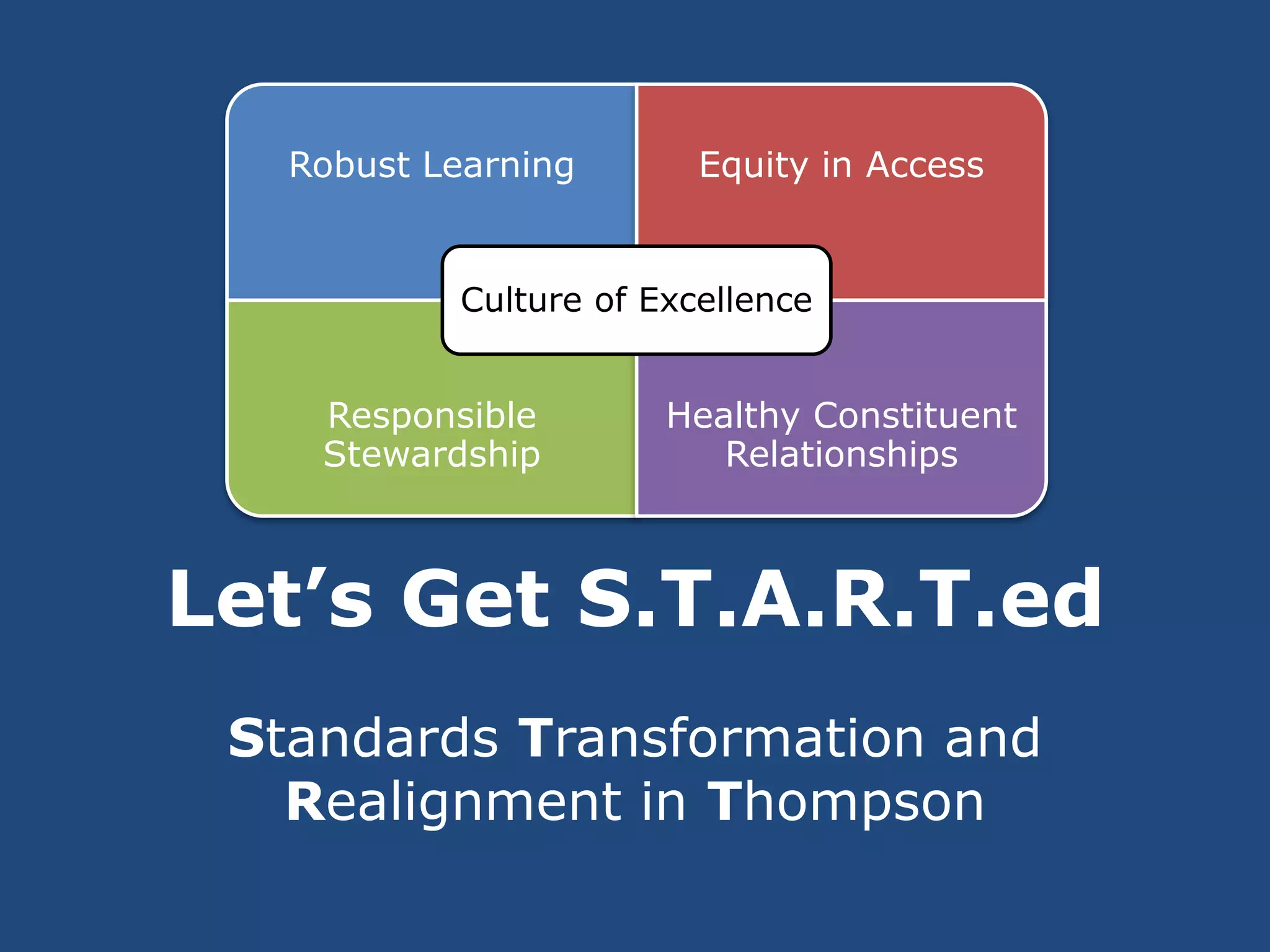
Robust Learning       Equity in Access


           Culture of Excellence


    Responsible        Healthy Constituent
    Stewardship           Relationships


Let’s Get S.T.A.R.T.ed
 Standards Transformation and
   Realignment in Thompson
• The Context for Change


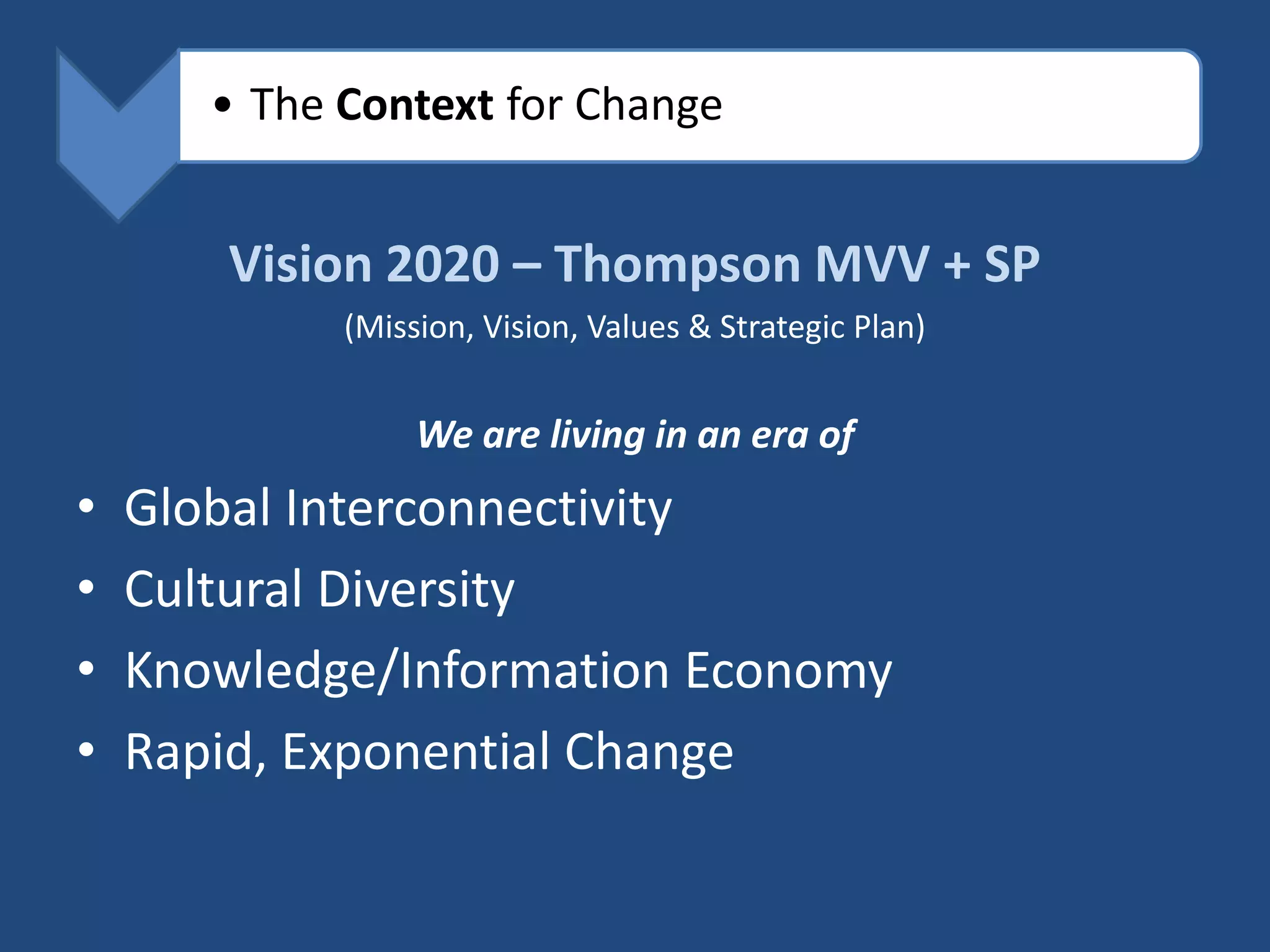
       Vision 2020 – Thompson MVV + SP
             (Mission, Vision, Values & Strategic Plan)


                  We are living in an era of
•   Global Interconnectivity
•   Cultural Diversity
•   Knowledge/Information Economy
•   Rapid, Exponential Change
• The Context for Change


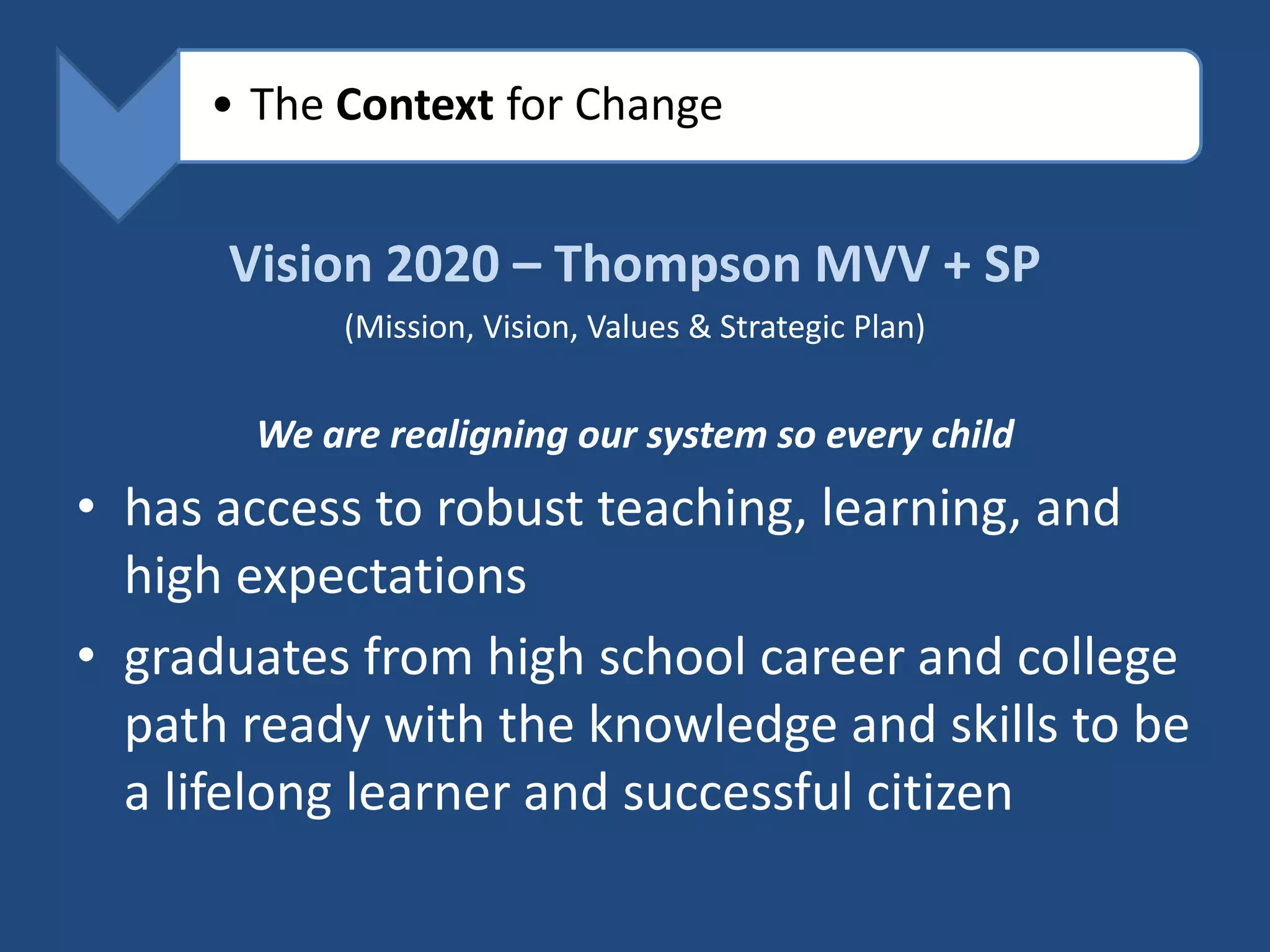
      Vision 2020 – Thompson MVV + SP
            (Mission, Vision, Values & Strategic Plan)


       We are realigning our system so every child
• has access to robust teaching, learning, and
  high expectations
• graduates from high school career and college
  path ready with the knowledge and skills to be
  a lifelong learner and successful citizen
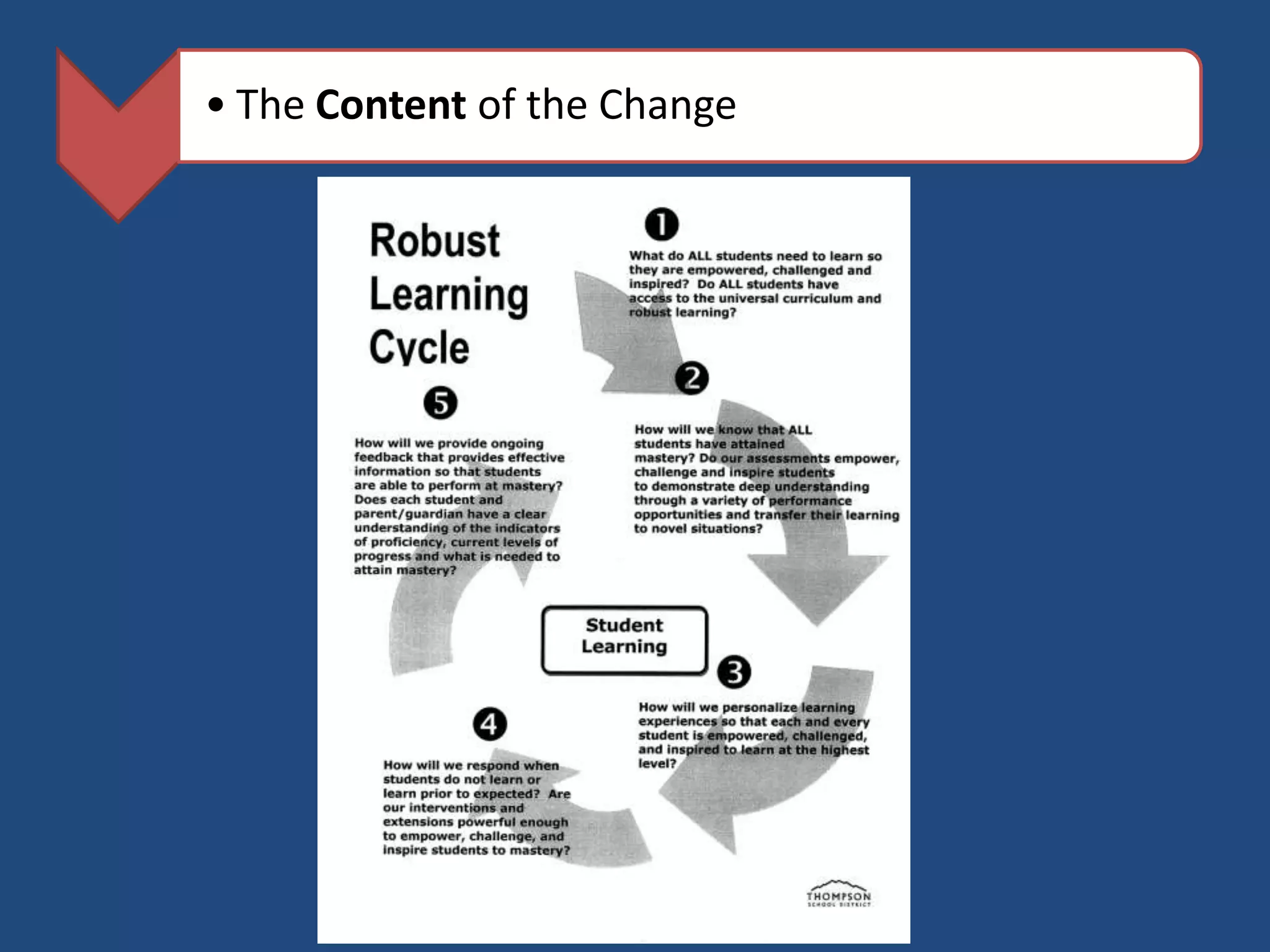
• The Content of the Change


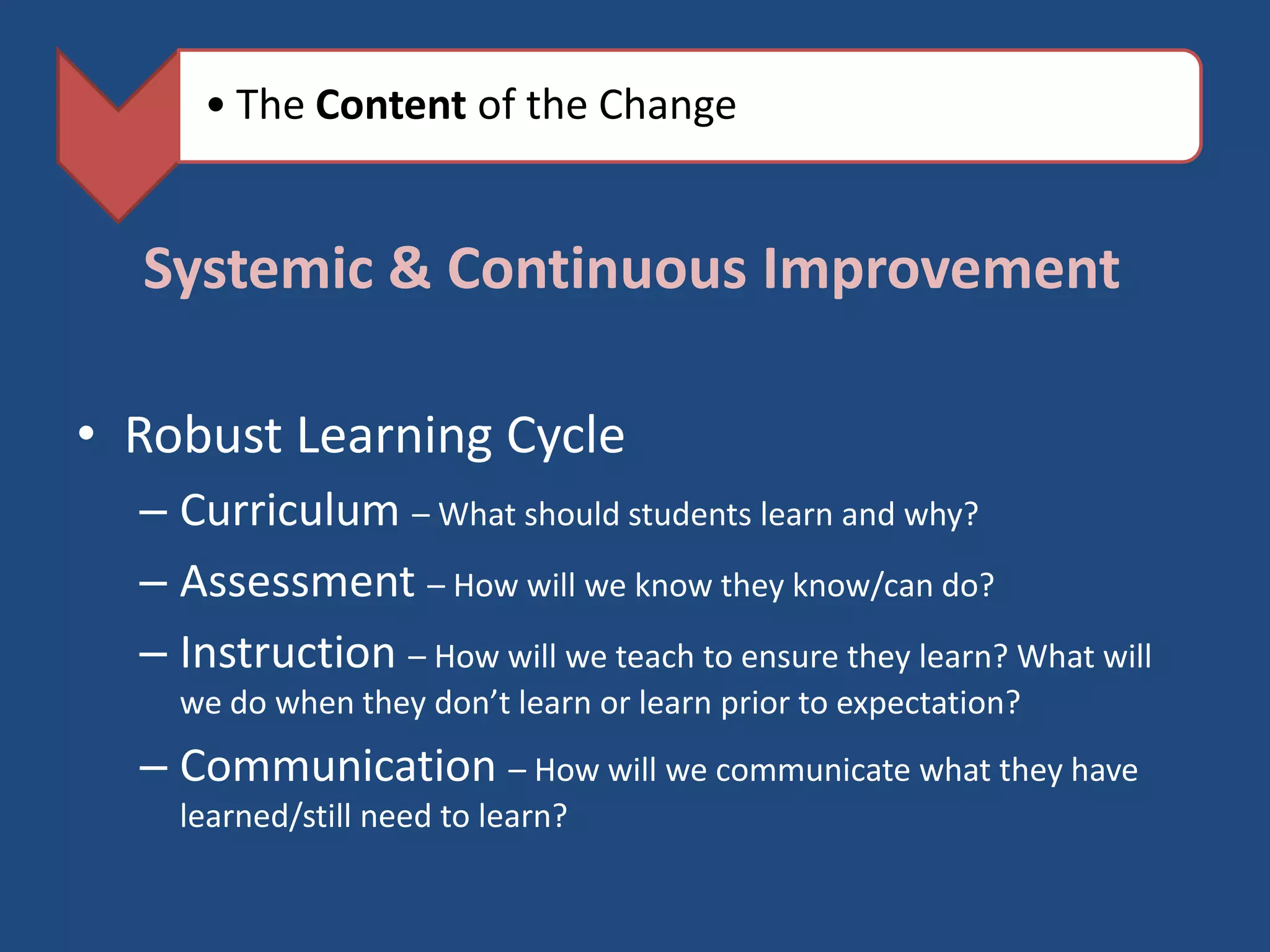
  Systemic & Continuous Improvement

• Robust Learning Cycle
  – Curriculum – What should students learn and why?
  – Assessment – How will we know they know/can do?
  – Instruction – How will we teach to ensure they learn? What will
    we do when they don’t learn or learn prior to expectation?
  – Communication – How will we communicate what they have
    learned/still need to learn?
• The Content of the Change
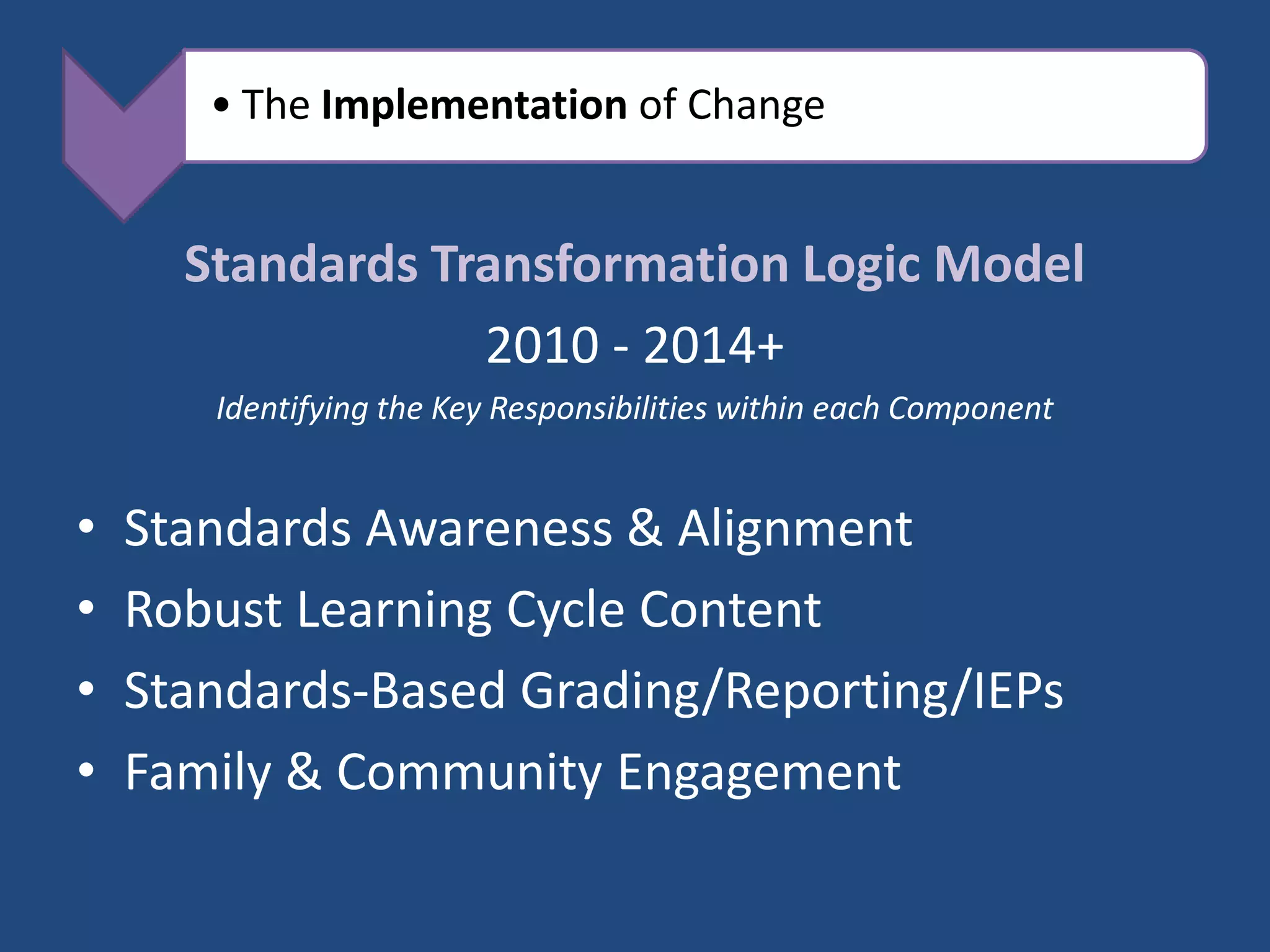
• The Implementation of Change


      Standards Transformation Logic Model
                  2010 - 2014+
       Identifying the Key Responsibilities within each Component


•   Standards Awareness & Alignment
•   Robust Learning Cycle Content
•   Standards-Based Grading/Reporting/IEPs
•   Family & Community Engagement
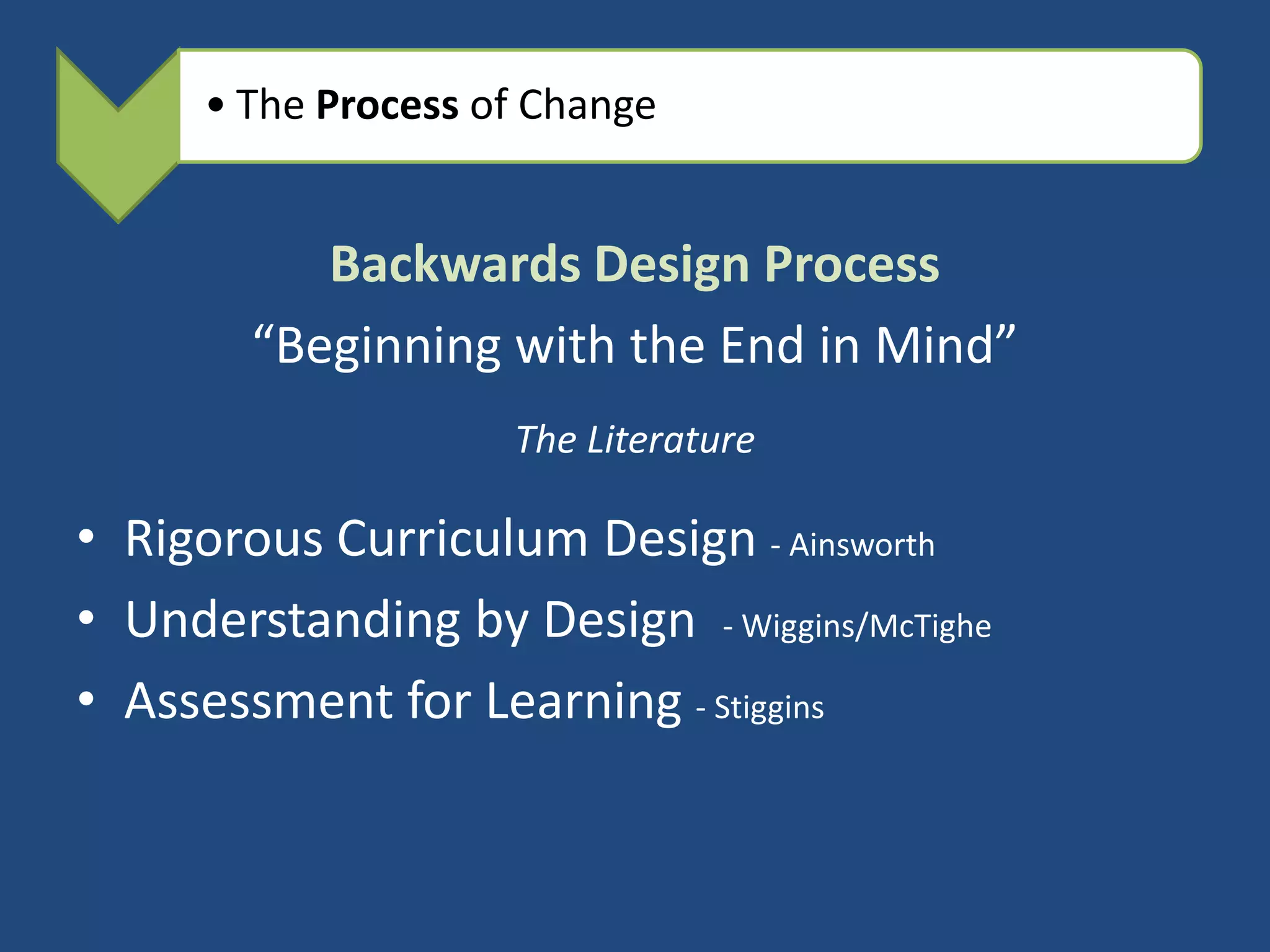
• The Process of Change


           Backwards Design Process
        “Beginning with the End in Mind”
                     The Literature

• Rigorous Curriculum Design - Ainsworth
• Understanding by Design - Wiggins/McTighe
• Assessment for Learning - Stiggins
Thompson School District

    Rigorous
   Curriculum
     Design
Rigorous Curriculum Defined
  A rigorous curriculum is an inclusive set
  of the following intentionally aligned
  components organized into sequenced
  units of study:

  Clear learning outcomes
  Matching assessments
  Engaging learning experiences
  Instructional strategies
Rigorous Curriculum Defined
A rigorous curriculum serves as both
the detailed road map and the high
quality delivery system for ensuring
that all students achieve the desired
end: the attainment of their
designated grade or course specific
standards within a particular content
area.
A Rigorous Curriculum Design
  Supports the Robust Learning Cycle
1. What do all students need to know and be
   able to do? (Standards)
2. How do we teach so that all students
   learn? (Instruction)
3. How will we know if they have learned it?
   (Assessment)
4. What will we do if they don’t know or
   come to us already knowing?
   (Differentiation and Enrichment)
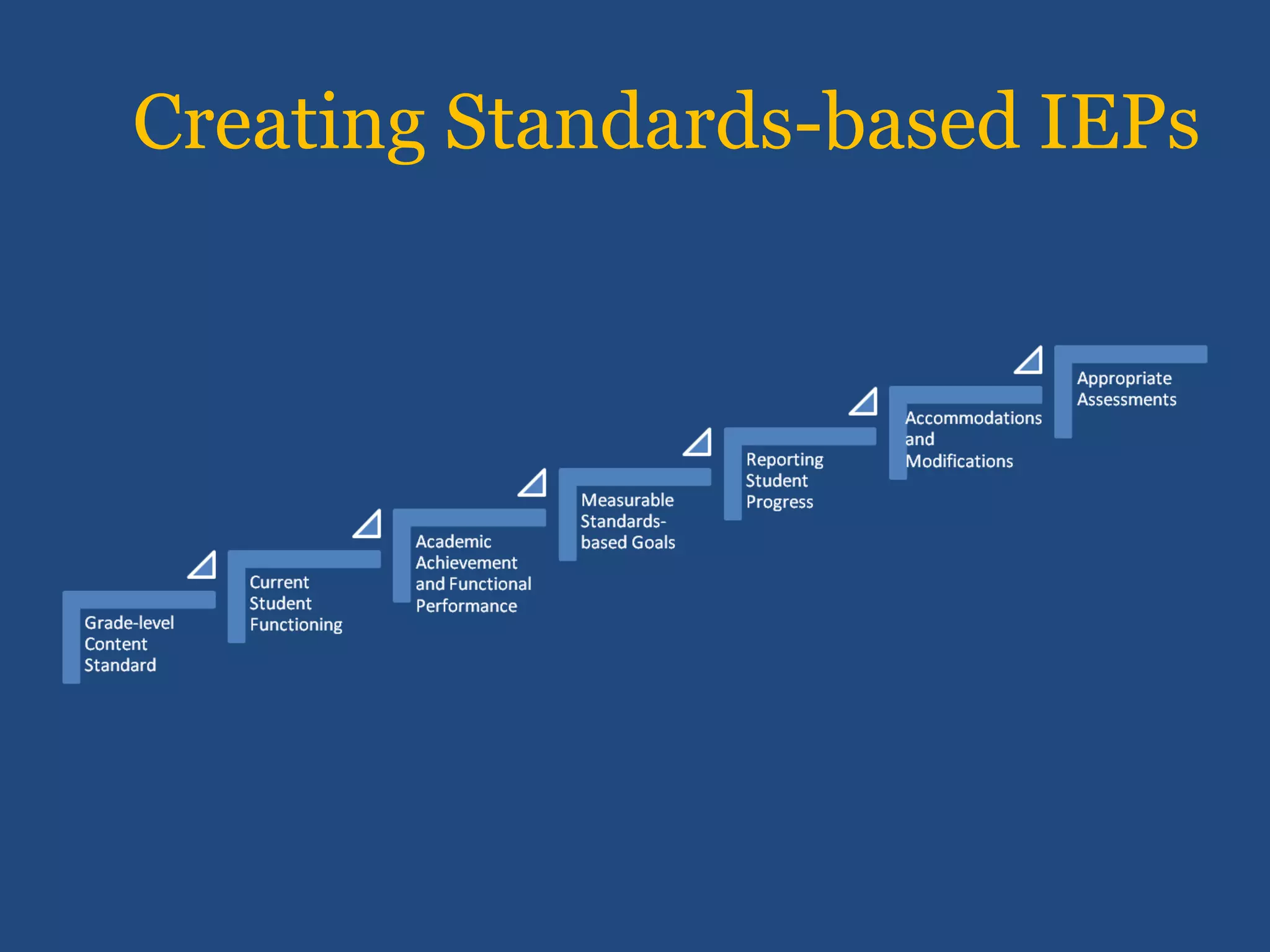
7 Steps to Standards-based IEPs

This 7 step process can help school personnel to:
a.) consider each student’s strengths and needs
to develop goals focused on closing the gap
between the student’s levels of academic
achievement and grade level standards; and

b.) use data to make decisions.
Goals
To support IEP teams to develop documents that, when
  implemented, provide access to the general
  curriculum and enable students to demonstrate
  academic achievement linked to grade-level content.

To guide IEP teams to make informed decisions about
  each student’s strengths and needs and how the
  student is performing in relation to the state’s grade-
  level content standards for the grade in which the
  student is enrolled.
Creating Standards-based IEPs

1. Consider the grade-level content
   standards for the grade the student is
   currently enrolled.

  •What is the intent of the content standard?
  •What is the content standard saying that the
     student must know and be able to do?
Creating Standards-based IEPs

2. Examine student data to determine where
   the student is functioning in relation to
   the grade-level standards.
•   Has the student been taught content aligned with
    grade-level standards?
•   Has the student been provided appropriate
    instructional scaffolding to attain grade-level
    expectations?
•   Were the lessons and materials used to teach the
    student aligned with state grade-level standards?
•   Was the instruction evidence-based?
Creating Standards-based IEPs

3. Develop the present level of academic
   achievement and functional performance.
•   What does the progress monitoring data tells us?
•   What programs, accommodations, and/or interventions
    have been successful?
•   What does the previous IEP tell us?
•   How does the student's disability affect participation
    and progress in the general curriculum?
•   What supports does the student need to learn the
    knowledge and attain the skills to progress in the
    general curriculum?
•   What does the gap analysis tell us?
Creating Standards-based IEPs

4. Develop measurable goals aligned with
   grade-level academic content standards.
•   What are the student’s needs as identified in the
    present level of performance?
•   Does the goal have a specific timeframe?
•   What can the student reasonably be expected to
    accomplish in one school year?
•   Are the conditions for meeting the goal addressed?
•   How will the outcome of the goal be measured?
Creating Standards-based IEPs

5. Assess and report the student’s progress
   throughout the year.

•   How does the student demonstrate what he/she knows
    on classroom, district and state assessments?
•   Are a variety of assessments used to measure progress?
•   How will progress be reported to parents?
Creating Standards-based IEPs

6. Identify specially designed instruction
   including accommodations and/or
   modifications needed to access and
   progress in the general education
   curriculum.
•   What accommodations are needed to enable the
    student to access the knowledge in the general
    education curriculum?
•   What accommodations have been used with the student
    and were they effective?
•   Has the complexity of the material been changed in
    such a way that the content has been modified?
Creating Standards-based IEPs

7. Determine the most appropriate
   assessment option.
•   What accommodations are allowed on district and state
    assessments?
•   Are those accommodations currently being used in the
    classroom?
•   What can be learned from the student’s previous state
    and district assessment results?
Expectations

1. All staff must be actively involved in the
   standards transformation.

2. This process will require reflection and
   adjustment to current practices.
3. Exemplar standards-based IEPs by 2014.
Questions?

Exceptional student services rigorous curriculum design

  • 1.
    Robust Learning Equity in Access Culture of Excellence Responsible Healthy Constituent Stewardship Relationships Let’s Get S.T.A.R.T.ed Standards Transformation and Realignment in Thompson
  • 2.
    • The Contextfor Change Vision 2020 – Thompson MVV + SP (Mission, Vision, Values & Strategic Plan) We are living in an era of • Global Interconnectivity • Cultural Diversity • Knowledge/Information Economy • Rapid, Exponential Change
  • 3.
    • The Contextfor Change Vision 2020 – Thompson MVV + SP (Mission, Vision, Values & Strategic Plan) We are realigning our system so every child • has access to robust teaching, learning, and high expectations • graduates from high school career and college path ready with the knowledge and skills to be a lifelong learner and successful citizen
  • 4.
    • The Contentof the Change Systemic & Continuous Improvement • Robust Learning Cycle – Curriculum – What should students learn and why? – Assessment – How will we know they know/can do? – Instruction – How will we teach to ensure they learn? What will we do when they don’t learn or learn prior to expectation? – Communication – How will we communicate what they have learned/still need to learn?
  • 5.
    • The Contentof the Change
  • 6.
    • The Implementationof Change Standards Transformation Logic Model 2010 - 2014+ Identifying the Key Responsibilities within each Component • Standards Awareness & Alignment • Robust Learning Cycle Content • Standards-Based Grading/Reporting/IEPs • Family & Community Engagement
  • 7.
    • The Processof Change Backwards Design Process “Beginning with the End in Mind” The Literature • Rigorous Curriculum Design - Ainsworth • Understanding by Design - Wiggins/McTighe • Assessment for Learning - Stiggins
  • 8.
    Thompson School District Rigorous Curriculum Design
  • 9.
    Rigorous Curriculum Defined A rigorous curriculum is an inclusive set of the following intentionally aligned components organized into sequenced units of study: Clear learning outcomes Matching assessments Engaging learning experiences Instructional strategies
  • 10.
    Rigorous Curriculum Defined Arigorous curriculum serves as both the detailed road map and the high quality delivery system for ensuring that all students achieve the desired end: the attainment of their designated grade or course specific standards within a particular content area.
  • 11.
    A Rigorous CurriculumDesign Supports the Robust Learning Cycle 1. What do all students need to know and be able to do? (Standards) 2. How do we teach so that all students learn? (Instruction) 3. How will we know if they have learned it? (Assessment) 4. What will we do if they don’t know or come to us already knowing? (Differentiation and Enrichment)
  • 12.
    7 Steps toStandards-based IEPs This 7 step process can help school personnel to: a.) consider each student’s strengths and needs to develop goals focused on closing the gap between the student’s levels of academic achievement and grade level standards; and b.) use data to make decisions.
  • 13.
    Goals To support IEPteams to develop documents that, when implemented, provide access to the general curriculum and enable students to demonstrate academic achievement linked to grade-level content. To guide IEP teams to make informed decisions about each student’s strengths and needs and how the student is performing in relation to the state’s grade- level content standards for the grade in which the student is enrolled.
  • 14.
  • 15.
    Creating Standards-based IEPs 1.Consider the grade-level content standards for the grade the student is currently enrolled. •What is the intent of the content standard? •What is the content standard saying that the student must know and be able to do?
  • 16.
    Creating Standards-based IEPs 2.Examine student data to determine where the student is functioning in relation to the grade-level standards. • Has the student been taught content aligned with grade-level standards? • Has the student been provided appropriate instructional scaffolding to attain grade-level expectations? • Were the lessons and materials used to teach the student aligned with state grade-level standards? • Was the instruction evidence-based?
  • 17.
    Creating Standards-based IEPs 3.Develop the present level of academic achievement and functional performance. • What does the progress monitoring data tells us? • What programs, accommodations, and/or interventions have been successful? • What does the previous IEP tell us? • How does the student's disability affect participation and progress in the general curriculum? • What supports does the student need to learn the knowledge and attain the skills to progress in the general curriculum? • What does the gap analysis tell us?
  • 18.
    Creating Standards-based IEPs 4.Develop measurable goals aligned with grade-level academic content standards. • What are the student’s needs as identified in the present level of performance? • Does the goal have a specific timeframe? • What can the student reasonably be expected to accomplish in one school year? • Are the conditions for meeting the goal addressed? • How will the outcome of the goal be measured?
  • 19.
    Creating Standards-based IEPs 5.Assess and report the student’s progress throughout the year. • How does the student demonstrate what he/she knows on classroom, district and state assessments? • Are a variety of assessments used to measure progress? • How will progress be reported to parents?
  • 20.
    Creating Standards-based IEPs 6.Identify specially designed instruction including accommodations and/or modifications needed to access and progress in the general education curriculum. • What accommodations are needed to enable the student to access the knowledge in the general education curriculum? • What accommodations have been used with the student and were they effective? • Has the complexity of the material been changed in such a way that the content has been modified?
  • 21.
    Creating Standards-based IEPs 7.Determine the most appropriate assessment option. • What accommodations are allowed on district and state assessments? • Are those accommodations currently being used in the classroom? • What can be learned from the student’s previous state and district assessment results?
  • 22.
    Expectations 1. All staffmust be actively involved in the standards transformation. 2. This process will require reflection and adjustment to current practices. 3. Exemplar standards-based IEPs by 2014.
  • 23.

Editor's Notes