EXAMPLE EMBEDDING
   Using Examples in Software Development

                              Ohad Barzilay
          Blavatnik School of Computer Science, Tel-Aviv University, Israel

 PhD research under the supervision of:
 Amiram Yehudai, Blavatnik School of Computer Science, Tel-Aviv University, Israel
 Orit Hazzan, Department of Education in Technology and Science, Technion, Israel


                    AlphaGeeks #4:
December 2009
                    Drink beer while talking about software and technology
It’s the practices, stupid
2


       "I've taken things I've done that have worked well
        and things I've seen done that worked well and
        distilled them to what I think is their purest, most
        'extreme' form“
                         [Kent Beck, “Extreme Programming Explained: Embrace Change”]


                     Can we do the same?
               Beautiful Code
               Leading Programmers Explain How They Think
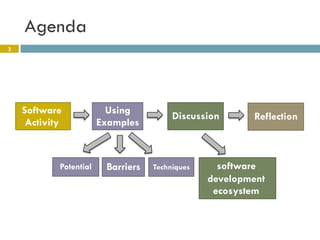
Agenda
3


    Software              Using
                                         Discussion      Reflection
     Activity           Examples


            Potential    Barriers   Techniques     software
                                                 development
                                                  ecosystem
Software Activity
4


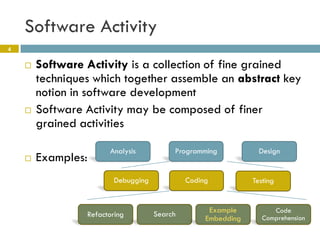
       Software Activity is a collection of fine grained
        techniques which together assemble an abstract key
        notion in software development
       Software Activity may be composed of finer
        grained activities

                       Analysis          Programming            Design
       Examples:
                        Debugging            Coding           Testing


                                    Search         Example          Code
                 Refactoring                      Embedding      Comprehension
Refactoring
5
                   much more than an activity
       Refactoring is a disciplined technique for
        restructuring an existing body of code, altering its
        internal structure without changing its external
        behavior [www.refactoring.com/]

       Although refactoring code has been performed
        informally for years, William Opdyke's 1993 Ph.D.
        dissertation is the first known resource to specifically
        examine refactoring
Appreciating Refactoring
6


      The mere identification of refactoring promoted the
        following important processes:
       Provided name and definition for the activity

       Laid the foundations for building a catalogue

       Enabled the development of software tools

       Promoted new coding practices

       Influenced the development process


    These various aspects serve as an ecosystem that exploits the use of
      refactoring systematically and methodically to leverage its full
             potential and eliminate its pitfalls and deficiencies
Looking for
                                       Goal: Extracting activities
“The Next Refactoring”                 involved with “coding”
7

                                  Observations
                                               Secondary tools for
                                               Data gathering
                               Data Analysis          Literature
                                                        Secondary
                                                        research
                             Identifying software activities

                         Characterizing activity with respect
                                  to the ecosystem

                             Feeding the results back to
                                   the organization
What We Do - Summary
8


                  professional developers at work

                  things with no “official” name (activities)

                        those things with respect to the
        software development ecosystem

                  the software organization how to enhance
        productivity by better exploiting the characterized
        activities
Example Embedding
9


       Example Embedding is the notion of using an
        already existing code fragment (the example)
        within a new context

       We argue that productivity benefits from using
        examples habitually and correctly in example
        supportive environment

       Examples could be used more systematically more
        extensively and more effectively to exploit their
        full potential
Benefits of Example Usage

   Productivity increase
     Better code, faster coding
     Nothing starts from scratch


   The code written is more reusable
       More explicit, better documented and tested

   Examples promote learning
           “* by example”

   Unified design is better enforced
We know all that. Don’t we?
11

     We identify:

        Lack of awareness to example existence
            It is not part of the development routine
            Some developers use examples only on certain contexts but not
             on others (e.g. only on C# but never for cshell)
            Some developers use examples only on certain scale


        Lack of awareness that examples serves various purposes
            Examples are not only relevant for learning, but also for using
            Capturing the spirit of the design
We know all that. Don’t we? (2)
12

     We identify:

        Lack of dexterity required for Example Embedding
            It requires different skills (which sometimes considered inferior
             than doing it old-school)
            “It would be faster to write it by myself than to search-
             evaluate-embed a maybe non existing example”

        Lack of browsable/searchable/trustable/relevant example
         repositories
            The Internet is sometimes not an option (e.g. copyright)
            “Can I trust the guy who wrote it?”
We know all that. Don’t we? (3)
13


     We identify:

        Example Complexity
          A single example might me scattered all over the code
          The example may have hidden side effects, implicit contract
          Example misuse


        Cultural and organizational barriers
          “Not invented here” syndrome
          Copyright issues
Example Embedding Applied
14


        Building example set
        Reference application
        Hansel and Gretel
        StackOverflow.com
        Using examples to solve syntax errors
        Embedding examples as 3rd party code
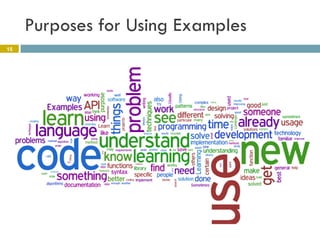
Purposes for Using Examples
15
Reflection
16


        Rethink and examine
         professional creations
         during and after the
         accomplishment of the
         creation process

        Reflective Practitioner
         [Schön, 1983,1987]
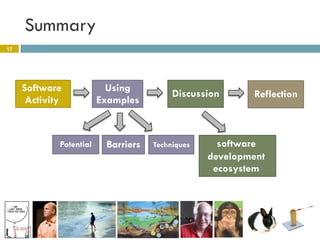
Summary
17


     Software              Using
                                          Discussion      Reflection
      Activity           Examples


             Potential    Barriers   Techniques     software
                                                  development
                                                   ecosystem
18      Thank you!

 Comments?


     More comments?

Alphageeks #4: Example Embedding By Ohad Barzilay

  • 1.
    EXAMPLE EMBEDDING Using Examples in Software Development Ohad Barzilay Blavatnik School of Computer Science, Tel-Aviv University, Israel PhD research under the supervision of: Amiram Yehudai, Blavatnik School of Computer Science, Tel-Aviv University, Israel Orit Hazzan, Department of Education in Technology and Science, Technion, Israel AlphaGeeks #4: December 2009 Drink beer while talking about software and technology
  • 2.
    It’s the practices,stupid 2  "I've taken things I've done that have worked well and things I've seen done that worked well and distilled them to what I think is their purest, most 'extreme' form“ [Kent Beck, “Extreme Programming Explained: Embrace Change”] Can we do the same? Beautiful Code Leading Programmers Explain How They Think
  • 3.
    Agenda 3 Software Using Discussion Reflection Activity Examples Potential Barriers Techniques software development ecosystem
  • 4.
    Software Activity 4  Software Activity is a collection of fine grained techniques which together assemble an abstract key notion in software development  Software Activity may be composed of finer grained activities Analysis Programming Design  Examples: Debugging Coding Testing Search Example Code Refactoring Embedding Comprehension
  • 5.
    Refactoring 5 much more than an activity  Refactoring is a disciplined technique for restructuring an existing body of code, altering its internal structure without changing its external behavior [www.refactoring.com/]  Although refactoring code has been performed informally for years, William Opdyke's 1993 Ph.D. dissertation is the first known resource to specifically examine refactoring
  • 6.
    Appreciating Refactoring 6 The mere identification of refactoring promoted the following important processes:  Provided name and definition for the activity  Laid the foundations for building a catalogue  Enabled the development of software tools  Promoted new coding practices  Influenced the development process These various aspects serve as an ecosystem that exploits the use of refactoring systematically and methodically to leverage its full potential and eliminate its pitfalls and deficiencies
  • 7.
    Looking for Goal: Extracting activities “The Next Refactoring” involved with “coding” 7 Observations Secondary tools for Data gathering Data Analysis Literature Secondary research Identifying software activities Characterizing activity with respect to the ecosystem Feeding the results back to the organization
  • 8.
    What We Do- Summary 8  professional developers at work  things with no “official” name (activities)  those things with respect to the software development ecosystem  the software organization how to enhance productivity by better exploiting the characterized activities
  • 9.
    Example Embedding 9  Example Embedding is the notion of using an already existing code fragment (the example) within a new context  We argue that productivity benefits from using examples habitually and correctly in example supportive environment  Examples could be used more systematically more extensively and more effectively to exploit their full potential
  • 10.
    Benefits of ExampleUsage  Productivity increase  Better code, faster coding  Nothing starts from scratch  The code written is more reusable  More explicit, better documented and tested  Examples promote learning  “* by example”  Unified design is better enforced
  • 11.
    We know allthat. Don’t we? 11 We identify:  Lack of awareness to example existence  It is not part of the development routine  Some developers use examples only on certain contexts but not on others (e.g. only on C# but never for cshell)  Some developers use examples only on certain scale  Lack of awareness that examples serves various purposes  Examples are not only relevant for learning, but also for using  Capturing the spirit of the design
  • 12.
    We know allthat. Don’t we? (2) 12 We identify:  Lack of dexterity required for Example Embedding  It requires different skills (which sometimes considered inferior than doing it old-school)  “It would be faster to write it by myself than to search- evaluate-embed a maybe non existing example”  Lack of browsable/searchable/trustable/relevant example repositories  The Internet is sometimes not an option (e.g. copyright)  “Can I trust the guy who wrote it?”
  • 13.
    We know allthat. Don’t we? (3) 13 We identify:  Example Complexity  A single example might me scattered all over the code  The example may have hidden side effects, implicit contract  Example misuse  Cultural and organizational barriers  “Not invented here” syndrome  Copyright issues
  • 14.
    Example Embedding Applied 14  Building example set  Reference application  Hansel and Gretel  StackOverflow.com  Using examples to solve syntax errors  Embedding examples as 3rd party code
  • 15.
    Purposes for UsingExamples 15
  • 16.
    Reflection 16  Rethink and examine professional creations during and after the accomplishment of the creation process  Reflective Practitioner [Schön, 1983,1987]
  • 17.
    Summary 17 Software Using Discussion Reflection Activity Examples Potential Barriers Techniques software development ecosystem
  • 18.
    18 Thank you! Comments? More comments?