??????????????????????????????
??????????????????????????????
??????????????????????????????
??????????????????????????????
??????????????????????????????
??????????????????????????????
??????????????????????????????
?????????????????????
Questioning
Skills
for the
Classroom
nagaRAJU
??????????????????????????????
??????????????????????????????
??????????????????????????????
??????????????????????????????
??????????????????????????????
??????????????????????????????
??????????????????????????????
??????????????????????????????
What AreWe Going to Learn?
? Why do we ask questions?
? What are good questioning skills?
? How effective are our questioning skills?
? What are various types of questions?
? How to acquire good questioning skills?
nagaRAJU
??????????????????????????????
??????????????????????????????
??????????????????????????????
??????????????????????????????
??????????????????????????????
??????????????????????????????
??????????????????????????????
??????????????????????????????
“If I had an hour to solve a problem
and my life depended on the answer,
I would spend the first 55 minutes
figuring out the proper questions to ask.
For if I knew the proper questions,
I could solve the problem
in less than 5 minutes.”
nagaRAJU
Why Do We Ask Questions?
??????????????????????????????
??????????????????????????????
??????????????????????????????
??????????????????????????????
??????????????????????????????
??????????????????????????????
??????????????????????????????
??????????????????????????????nagaRAJU
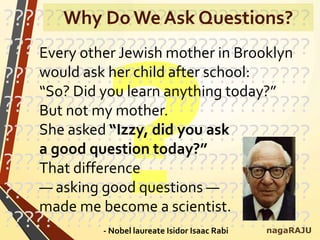
Why Do We Ask Questions?
Every other Jewish mother in Brooklyn
would ask her child after school:
“So? Did you learn anything today?”
But not my mother.
She asked “Izzy, did you ask
a good question today?”
That difference
— asking good questions —
made me become a scientist.
- Nobel laureate Isidor Isaac Rabi
??????????????????????????????
??????????????????????????????
??????????????????????????????
??????????????????????????????
??????????????????????????????
??????????????????????????????
??????????????????????????????
??????????????????????????????nagaRAJU
Why Do We Ask Questions?
to create clarity
to diagnose difficulties
to continue dialogue
to evaluate performance
to achieve success
to create agreement
to inspire confidence
to increase competence
to empower students
to spark ideas, solutions
to expand vision
to fuel
 Analytical thinking
 Critical thinking
 Reflective thinking
 Creative thinking
??????????????????????????????
??????????????????????????????
??????????????????????????????
??????????????????????????????
??????????????????????????????
??????????????????????????????
??????????????????????????????
??????????????????????????????
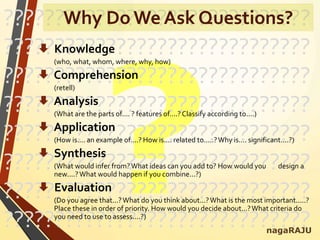
 Knowledge
(who, what, whom, where, why, how)
 Comprehension
(retell)
 Analysis
(What are the parts of.... ? features of....?Classify according to....)
 Application
(How is.... an example of....? How is.... related to.....?Why is.... significant....?)
 Synthesis
(What would infer from?What ideas can you add to? How would you design a
new....?What would happen if you combine...?)
 Evaluation
(Do you agree that...?What do you think about...?What is the most important.....?
Place these in order of priority. How would you decide about...?What criteria do
you need to use to assess....?)
nagaRAJU
Why Do We Ask Questions?
??????????????????????????????
??????????????????????????????
??????????????????????????????
??????????????????????????????
??????????????????????????????
??????????????????????????????
??????????????????????????????
??????????????????????????????
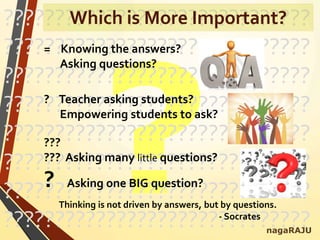
= Knowing the answers?
Asking questions?
? Teacher asking students?
Empowering students to ask?
???
??? Asking many little questions?
? Asking one BIG question?
nagaRAJU
Which is More Important?
Thinking is not driven by answers, but by questions.
- Socrates
??????????????????????????????
??????????????????????????????
??????????????????????????????
??????????????????????????????
??????????????????????????????
??????????????????????????????
??????????????????????????????
??????????????????????????????
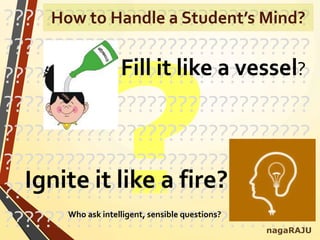
Fill it like a vessel?
Ignite it like a fire?
nagaRAJU
How to Handle a Student’s Mind?
Who ask intelligent, sensible questions?
??????????????????????????????
??????????????????????????????
??????????????????????????????
??????????????????????????????
??????????????????????????????
??????????????????????????????
??????????????????????????????
??????????????????????????????
Do you
 begin, continue & close with questions
 use simple, precise language?
 ask open-ended questions?
 involve all students, planTPS?
 acknowledge all responses?
 avoid being judgmental?
 paraphrase / rephrase correct answers?
 encourage student questions?
nagaRAJU
What are Good Questioning Skills?
??????????????????????????????
??????????????????????????????
??????????????????????????????
??????????????????????????????
??????????????????????????????
??????????????????????????????
??????????????????????????????
??????????????????????????????
 What kind of questions can be
answered instantly?
 What kind of questions need
much longer to answer?
 What kind of questions need a
whole life time to answer?
 Why should a teacher know
this difference?
nagaRAJU
DoYou Allow WaitTime?
??????????????????????????????
??????????????????????????????
??????????????????????????????
??????????????????????????????
??????????????????????????????
??????????????????????????????
??????????????????????????????
??????????????????????????????nagaRAJU
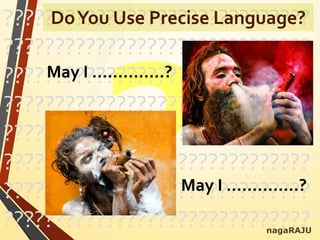
DoYou Use Precise Language?
May I …………..?
May I …………..?
??????????????????????????????
??????????????????????????????
??????????????????????????????
??????????????????????????????
??????????????????????????????
??????????????????????????????
??????????????????????????????
??????????????????????????????nagaRAJU
CanYou Ask Good Questions?
1. Since this morning.
2. I was getting ready.
3. She can't be at home.
4. Has just gone to school.
5. A coffee, please.
6. Raju is teaching grammar at the moment.
7. I think it’s just another masala movie.
8. I usually get up at 7 o'clock.
9. No, he is single.
10. It’s interesting.
??????????????????????????????
??????????????????????????????
??????????????????????????????
??????????????????????????????
??????????????????????????????
??????????????????????????????
??????????????????????????????
??????????????????????????????
 Be open minded
 Ask only relevant, useful, specific questions
 Ask logical, informed questions
 Don’t embarrass
 Don’t be aggressive
 Don’t be argumentative
 Don’t interrupt, learn to listen
 Don’t ramble, avoid hyperbole
nagaRAJU
What are Questioning Manners?
??????????????????????????????
??????????????????????????????
??????????????????????????????
??????????????????????????????
??????????????????????????????
??????????????????????????????
??????????????????????????????
??????????????????????????????
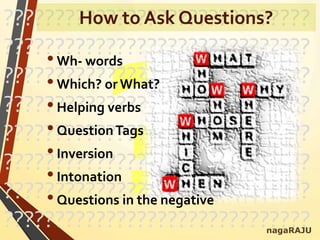
•Wh- words
•Which? or What?
•Helping verbs
•QuestionTags
•Inversion
•Intonation
•Questions in the negative
nagaRAJU
How to Ask Questions?
??????????????????????????????
??????????????????????????????
??????????????????????????????
??????????????????????????????
??????????????????????????????
??????????????????????????????
??????????????????????????????
??????????????????????????????
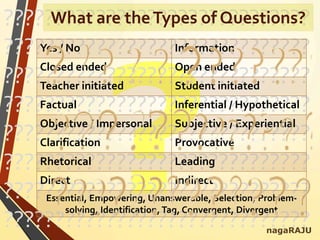
Yes / No Information
Closed ended Open ended
Teacher initiated Student initiated
Factual Inferential / Hypothetical
Objective / Impersonal Subjective / Experiential
Clarification Provocative
Rhetorical Leading
Direct Indirect
Essential, Empowering, Unanswerable, Selection, Problem-
solving, Identification, Tag, Convergent, Divergent
nagaRAJU
What are theTypes of Questions?
??????????????????????????????
??????????????????????????????
??????????????????????????????
??????????????????????????????
??????????????????????????????
??????????????????????????????
??????????????????????????????
??????????????????????????????
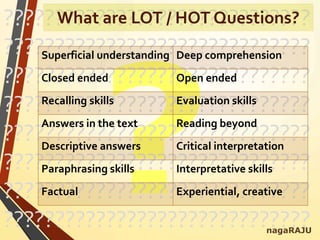
Superficial understanding Deep comprehension
Closed ended Open ended
Recalling skills Evaluation skills
Answers in the text Reading beyond
Descriptive answers Critical interpretation
Paraphrasing skills Interpretative skills
Factual Experiential, creative
nagaRAJU
What are LOT / HOT Questions?
??????????????????????????????
??????????????????????????????
??????????????????????????????
??????????????????????????????
??????????????????????????????
??????????????????????????????
??????????????????????????????
??????????????????????????????
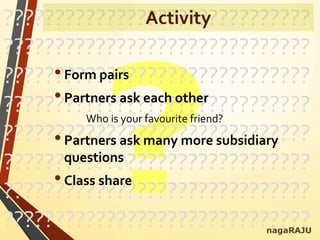
•Form pairs
•Partners ask each other
Who is your favourite friend?
•Partners ask many more subsidiary
questions
•Class share
nagaRAJU
Activity
??????????????????????????????
??????????????????????????????
??????????????????????????????
??????????????????????????????
??????????????????????????????
??????????????????????????????
??????????????????????????????
??????????????????????????????
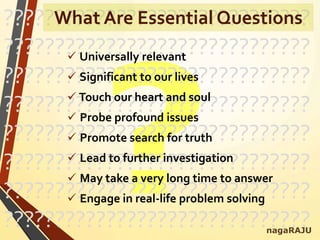
 Universally relevant
 Significant to our lives
 Touch our heart and soul
 Probe profound issues
 Promote search for truth
 Lead to further investigation
 May take a very long time to answer
 Engage in real-life problem solving
nagaRAJU
What Are Essential Questions
??????????????????????????????
??????????????????????????????
??????????????????????????????
??????????????????????????????
??????????????????????????????
??????????????????????????????
??????????????????????????????
??????????????????????????????
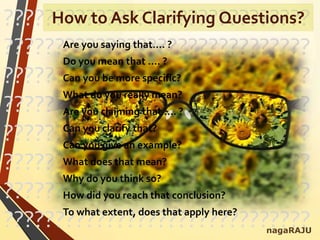
Are you saying that…. ?
Do you mean that …. ?
Can you be more specific?
What do you really mean?
Are you claiming that …. ?
Can you clarify that?
Can you give an example?
What does that mean?
Why do you think so?
How did you reach that conclusion?
To what extent, does that apply here?
nagaRAJU
How to Ask Clarifying Questions?
??????????????????????????????
??????????????????????????????
??????????????????????????????
??????????????????????????????
??????????????????????????????
??????????????????????????????
??????????????????????????????
??????????????????????????????nagaRAJU
How toTeach Classroom Questions?
What does the word _____ mean?
What is the English word for ______?
What's the meaning of ____ inTelugu?
How do you say ____ in English?
How do you spell the word _____ ?
How do you pronounce the word ___ ?
??????????????????????????????
??????????????????????????????
??????????????????????????????
??????????????????????????????
??????????????????????????????
??????????????????????????????
??????????????????????????????
??????????????????????????????
•What do you think?
•Why do you think that?
•How do you know that?
•Can you tell me more?
•What questions do you still have?
nagaRAJU
What are Some Powerful Questions?
??????????????????????????????
??????????????????????????????
??????????????????????????????
??????????????????????????????
??????????????????????????????
??????????????????????????????
??????????????????????????????
??????????????????????????????
• Never ask just for the sake of it
• Ask only if you are prepared to listen and respond
• Avoid big words
• Avoid intimidating
• Involve the audience
(do you think that?, have you considered?)
• Go narrow first, then broaden
• Follow up with ‘why’ or ‘how’
• Accept “I don’t know” as an answer
• What could be a next good tip?
nagaRAJU
How to Ask Better Questions?
??????????????????????????????
??????????????????????????????
??????????????????????????????
??????????????????????????????
??????????????????????????????
??????????????????????????????
??????????????????????????????
??????????????????????????????nagaRAJU
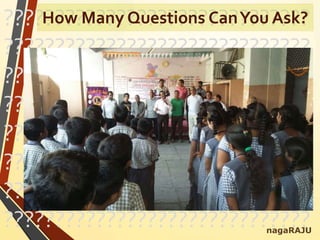
How Many Questions CanYou Ask?
??????????????????????????????
??????????????????????????????
??????????????????????????????
??????????????????????????????
??????????????????????????????
??????????????????????????????
??????????????????????????????
??????????????????????????????nagaRAJU
Send your comments to
lionnagaraju@gmail.com
This slideshow is available at
www.authorstream.com/tag/lionnagaraju
www.slideshare.net/lionnagaraju
Thank you

Questioning Skills for the Classroom

Editor's Notes

  • #2 In a traditional classroom, the teacher is the center of attention, the owner of knowledge and information. Teachers often ask questions of their students to gauge comprehension, but it’s a passive model that relies on students to absorb information they need to reproduce on tests. What would happen if the roles were flipped and students asked the questions? Coming up with the right question involves vigorously thinking through the problem, investigating it from various angles, turning closed questions into open-ended ones and prioritizing which are the most important questions to get at the heart of the matter. There are three outcomes. One is that students are more engaged. Second, they take more ownership, which for teachers is a huge thing. And the third outcome is they learn more – we see better quality work.
  • #3 How do we learn? What are some quick and practical tips for asking effective questions?
  • #6 “Ask and you shall receive,” says the Bible. Ask, and every human being has been conditioned to do what they are asked to do, say the psychologists. Even your mother won’t give you anything, unless you ask. Ask, and according to the law of averages, you’ll get Enough “yes's” to guarantee your success, say the sales managers. Asking is the quickest, easiest and surest ways to get people to do what you want them to do. Good questions help the person you are asking. Asking intelligent questions causes people to think profoundly. Leading to the emergence of new ideas, new answers and new possibilities.
  • #8 When you are answering questions, you may be on the highway, but someone else is doing the driving. Powerful questions - Smart Questions , Essential Questions, are the foundation for Information Power , Engaged Learning and Information Literacy. Every intellectual field is born out of a cluster of questions to which answers are either needed or highly desirable Questions define tasks, express problems and delineate issues. Answers signal full stop in thought. Only when an answer generates a further question does thought continue its life The quality of the questions students ask determines the quality of the thinking they are doing. No questions = no understanding Superficial questions = superficial understanding
  • #9 The greatest novels, the greatest plays, the greatest songs and the greatest paintings all explore essential questions in some manner
  • #12 Two monks, both heavy smokers, were unable to stop smoking during prayers. To solve this dilemma, they each wrote a letter to the Pope and asked for his ruling. Three weeks later they found, to their surprise, that the Pope had given only one of them permission to smoke. On comparing their letters, they found the explanation. The first monk had asked, “May I smoke during prayers?” and the answer was, “No.” The second monk, however, had framed his question differently: “May I pray while I am smoking?” Questions should be worded carefully. Otherwise, they can backfire.
  • #16 Indirect Questions: More formal and more polite - Do you know...; I wonder / was wondering if ....; Can you tell me...; I'm not sure...; I don't know...) 1. Convergent questions: What, where, who, and when questions get a person to clarify the specifics of what he or she is thinking. Converging questions can be important when time is of the essence or you are dealing with someone who is theoretical. 2. Divergent or expansive questions: Why and what if questions ask a person to expand on what he or she is thinking. Divergent questions can be important when you need someone to see the larger context of a position. 3. Integrating questions: If…then what questions demonstrate an attempt to find common ground between opposing positions. This builds trust and encourages compromise, which is important in situations where the stakes are high for both sides.
  • #19 Children have a genuine reason to complain why they are expected to know answers to all questions while their own questions are discouraged.
  • #22 What do you think? Instead of Do you think this or that?