WELCOME
STRUCTURE OF ECOSYSTEM
PRESENTED BY :
[RAHUL KUMAR (1322232)]
PRESENTATION ON
WHAT IS AN ECOSYSTEM
Definition
 An ecosystem is a community of living and non-living things
that interact with each other in a particular environment.
 Living things: plants, animals and microorganism.
 non-living things: Air, Water, Soil etc.
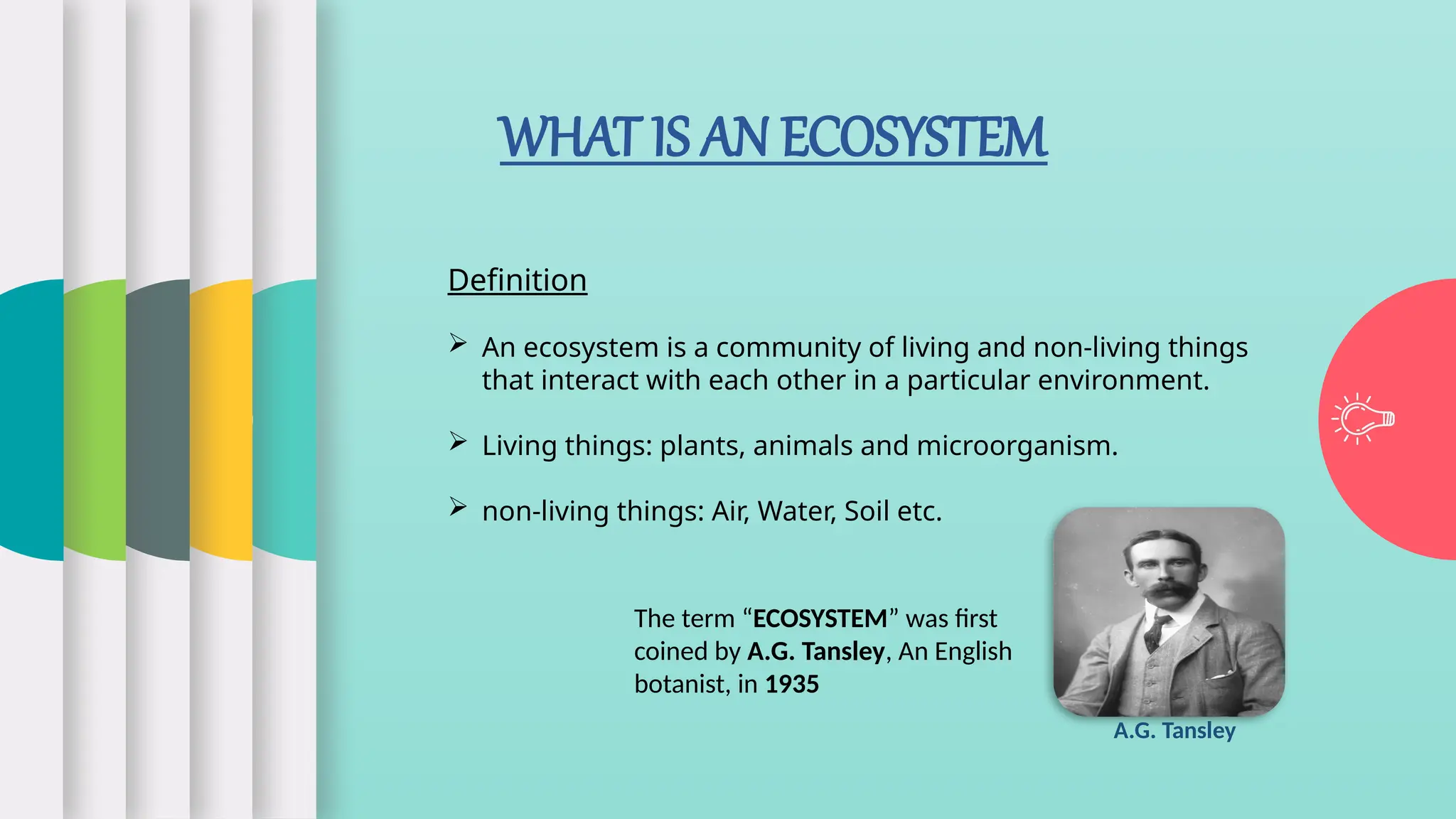
The term “ECOSYSTEM” was first
coined by A.G. Tansley, An English
botanist, in 1935
A.G. Tansley
STRUCTURE OF AN ECOSYSTEM
Here, the term Structure refers to the various
components of an Ecosystem.
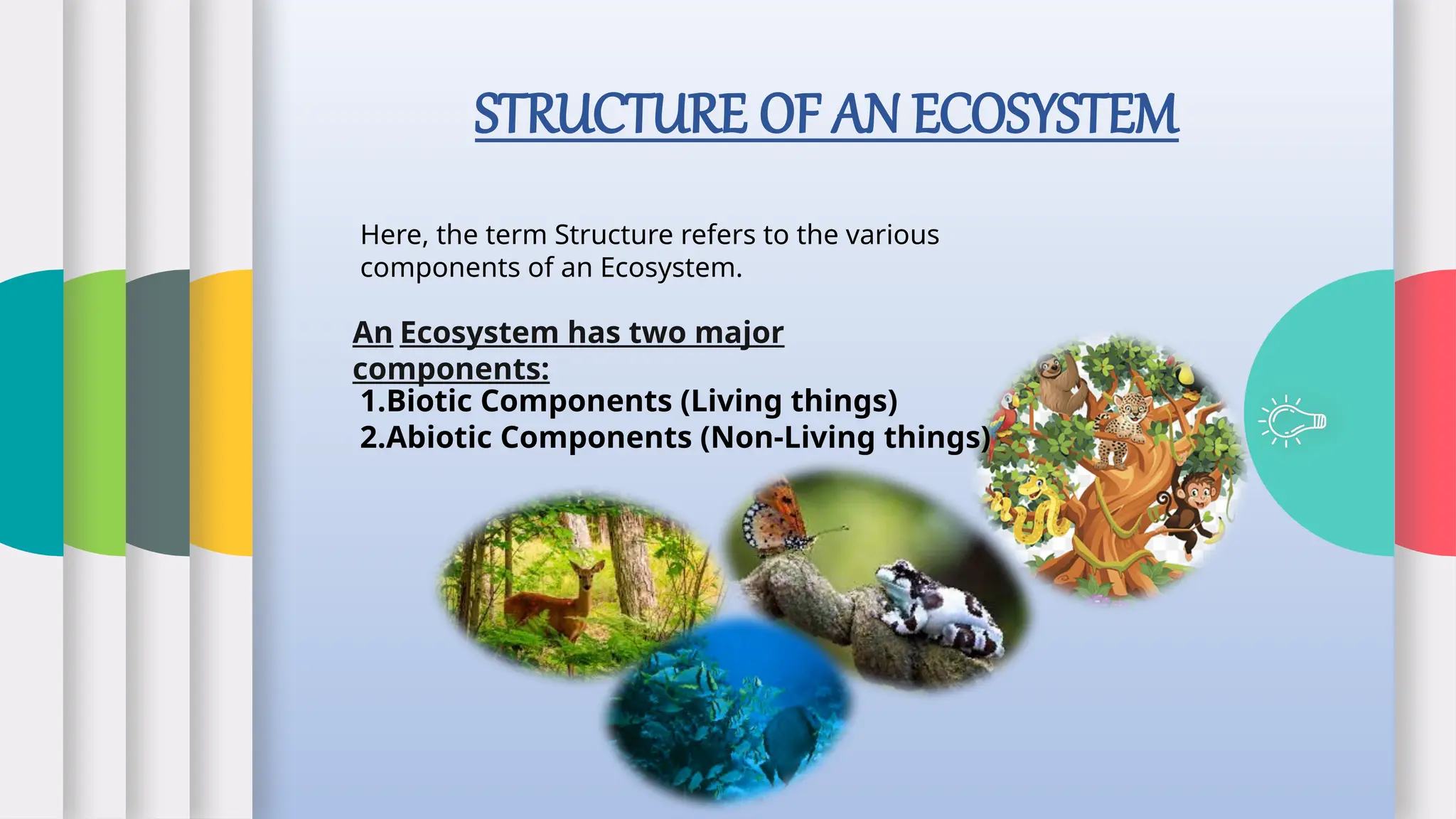
An Ecosystem has two major
components:
1.Biotic Components (Living things)
2.Abiotic Components (Non-Living things)
1. BIOTIC COMPONENTS:
 Biotic Structures refer to the living organisms in an ecosystem,
including plants, animals, fungi, bacteria, and other
microorganisms.
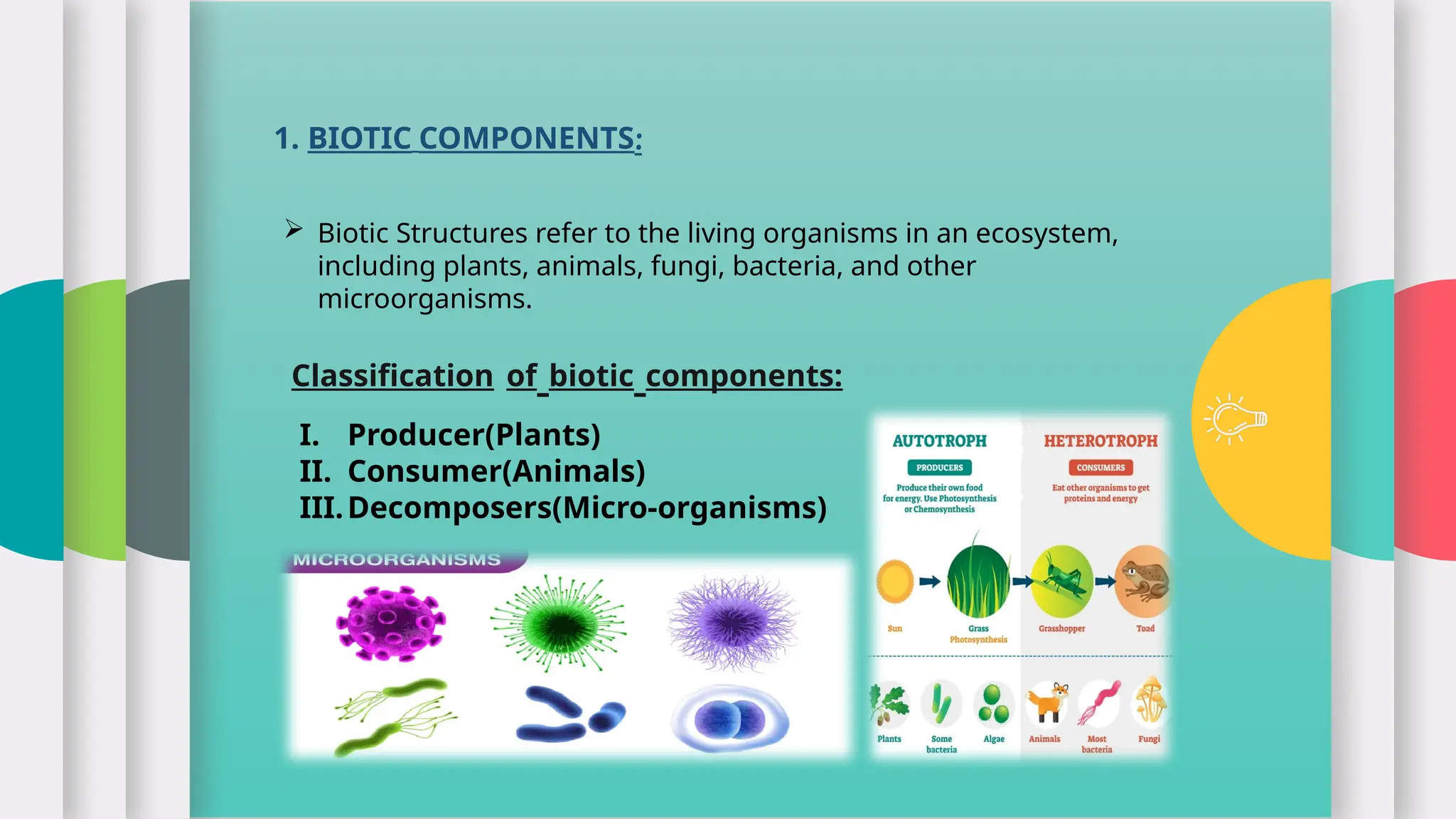
Classification of biotic components:
I. Producer(Plants)
II. Consumer(Animals)
III.Decomposers(Micro-organisms)
I. PRODUCERS(Autotrophs):
 Producers are organisms that can make their own food
using sunlight, water, and carbon dioxide.
Examples: All green plants, trees, algae.
 They are the base of the food chain in an ecosystem and
provide energy and nutrients to all other organisms.
 Producers synthesize their food themselves through
photosynthesis.
[AUTOTROPHS- “Self-feeders”]
II. CONSUMERS(Heterotrophs):
 Consumers are organisms that depend on other organisms for
food.
 They cannot make own food.
There are three main types of Consumers:
I. Herbivores
II. Carnivores
III.Omnivores
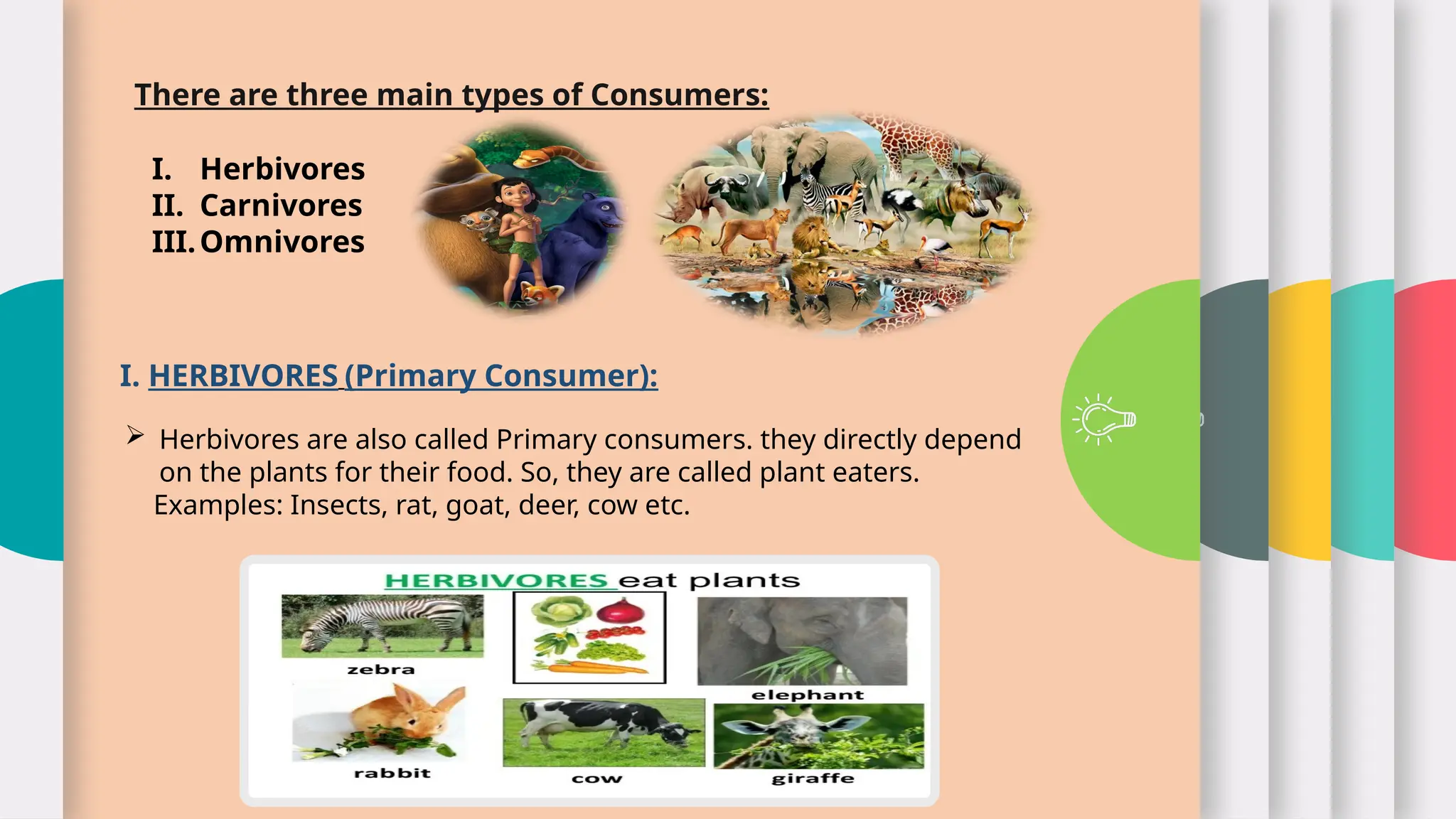
I. HERBIVORES (Primary Consumer):
 Herbivores are also called Primary consumers. they directly depend
on the plants for their food. So, they are called plant eaters.
Examples: Insects, rat, goat, deer, cow etc.
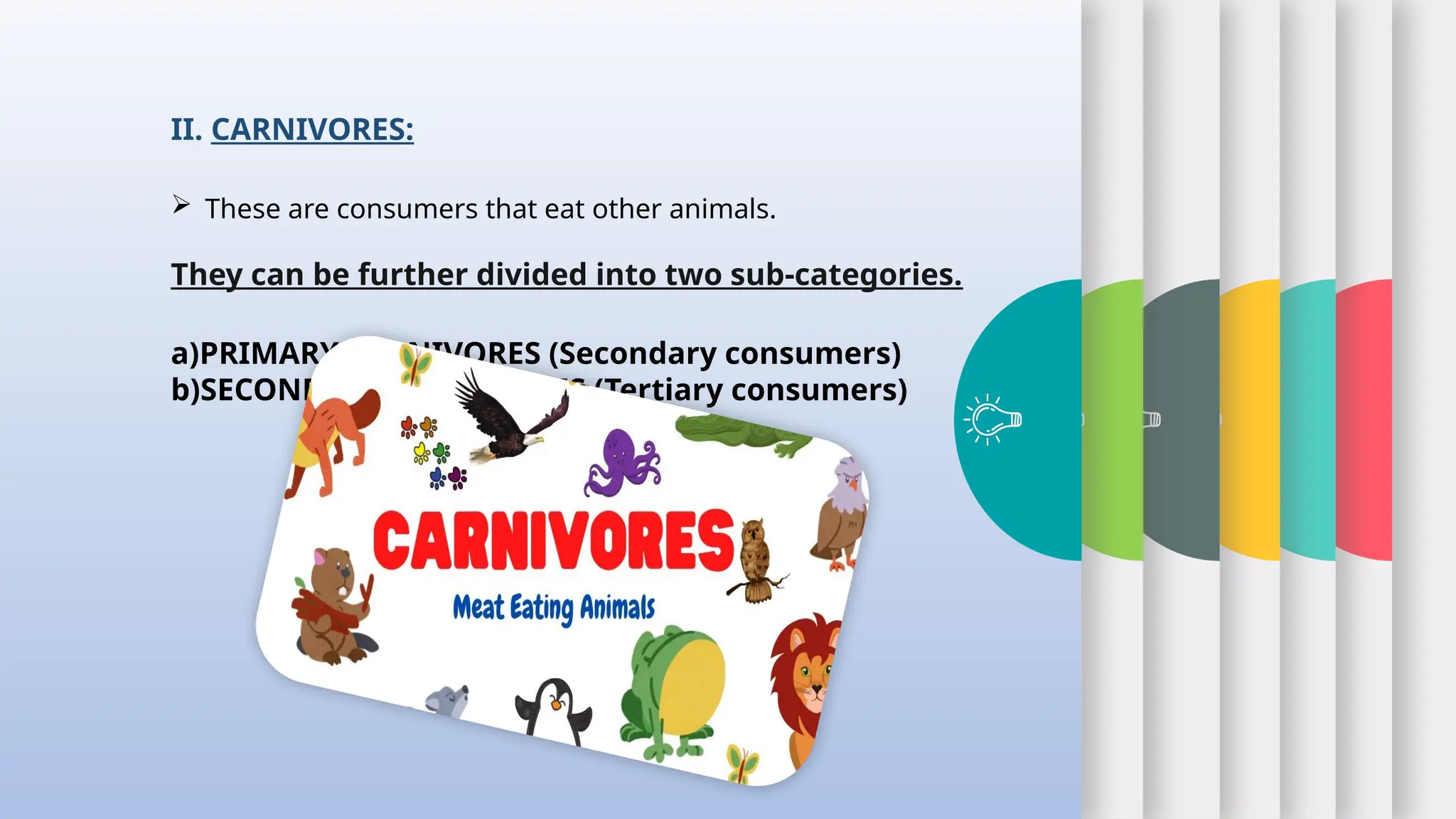
II. CARNIVORES:
 These are consumers that eat other animals.
They can be further divided into two sub-categories.
a)PRIMARY CARNIVORES (Secondary consumers)
b)SECONDARY CARNIVORES (Tertiary consumers)
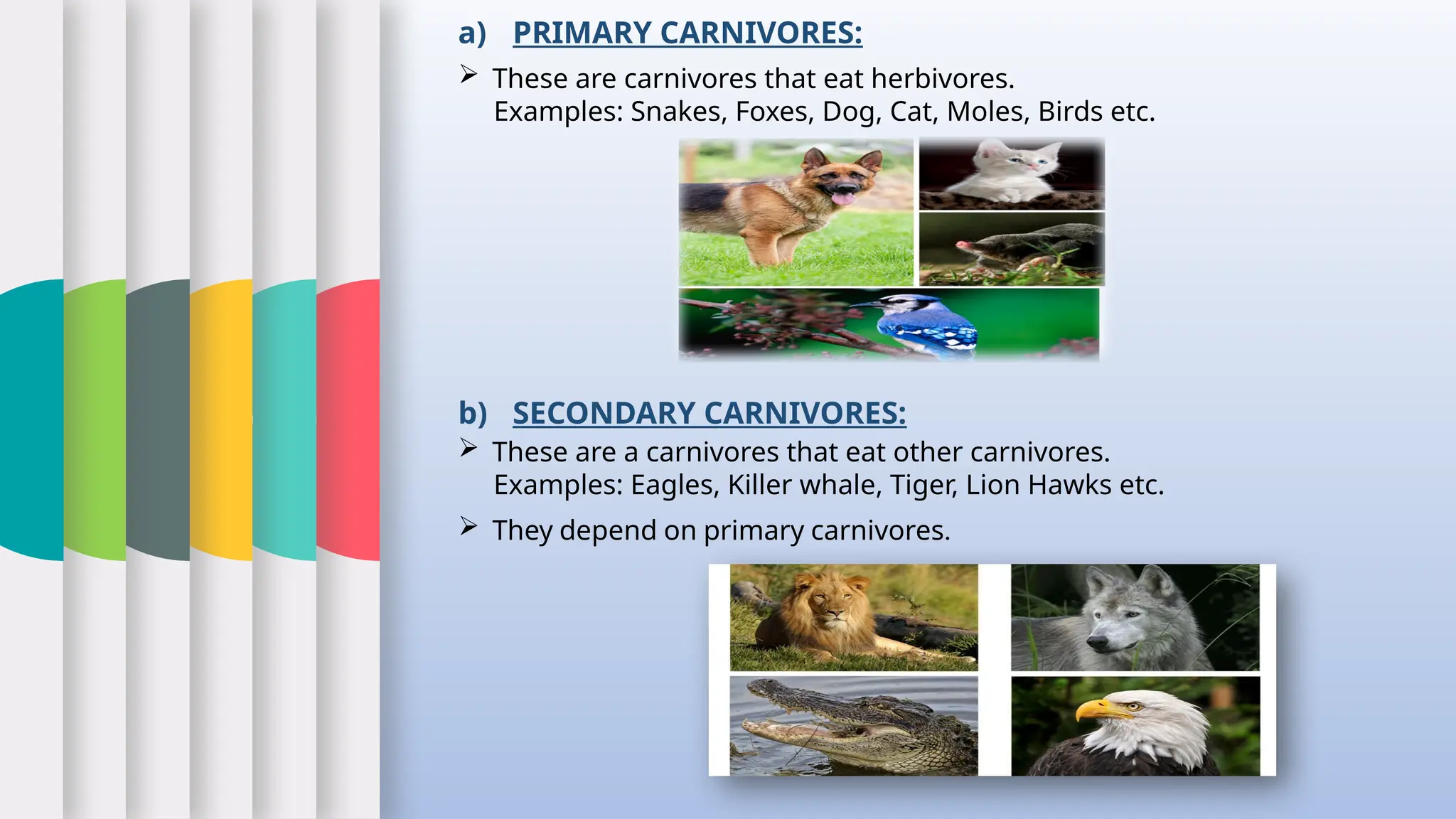
b) SECONDARY CARNIVORES:
 These are a carnivores that eat other carnivores.
Examples: Eagles, Killer whale, Tiger, Lion Hawks etc.
 They depend on primary carnivores.
 These are carnivores that eat herbivores.
Examples: Snakes, Foxes, Dog, Cat, Moles, Birds etc.
a) PRIMARY CARNIVORES:
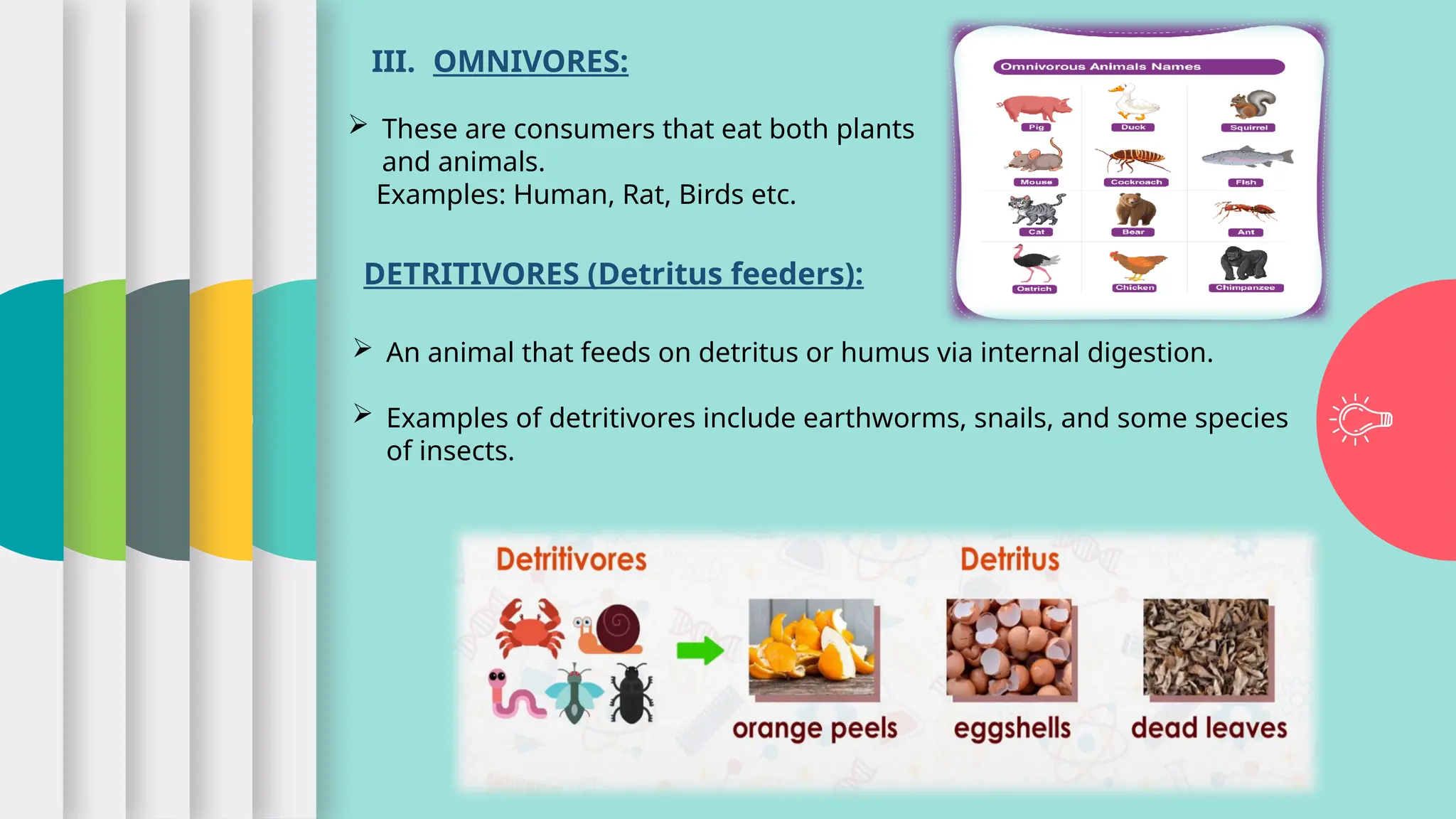
III. OMNIVORES:
 These are consumers that eat both plants
and animals.
Examples: Human, Rat, Birds etc.
DETRITIVORES (Detritus feeders):
 An animal that feeds on detritus or humus via internal digestion.
 Examples of detritivores include earthworms, snails, and some species
of insects.
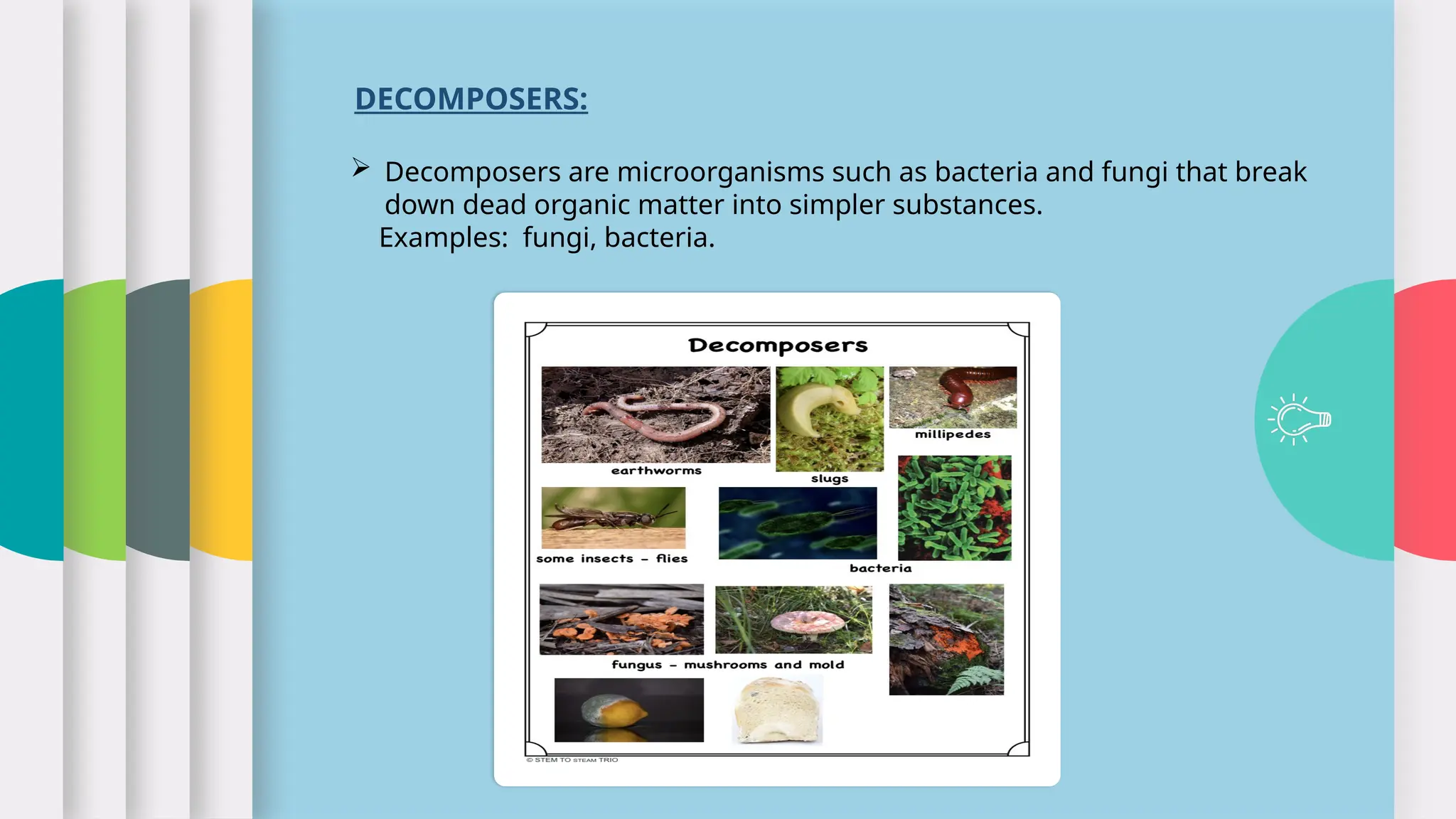
DECOMPOSERS:
 Decomposers are microorganisms such as bacteria and fungi that break
down dead organic matter into simpler substances.
Examples: fungi, bacteria.
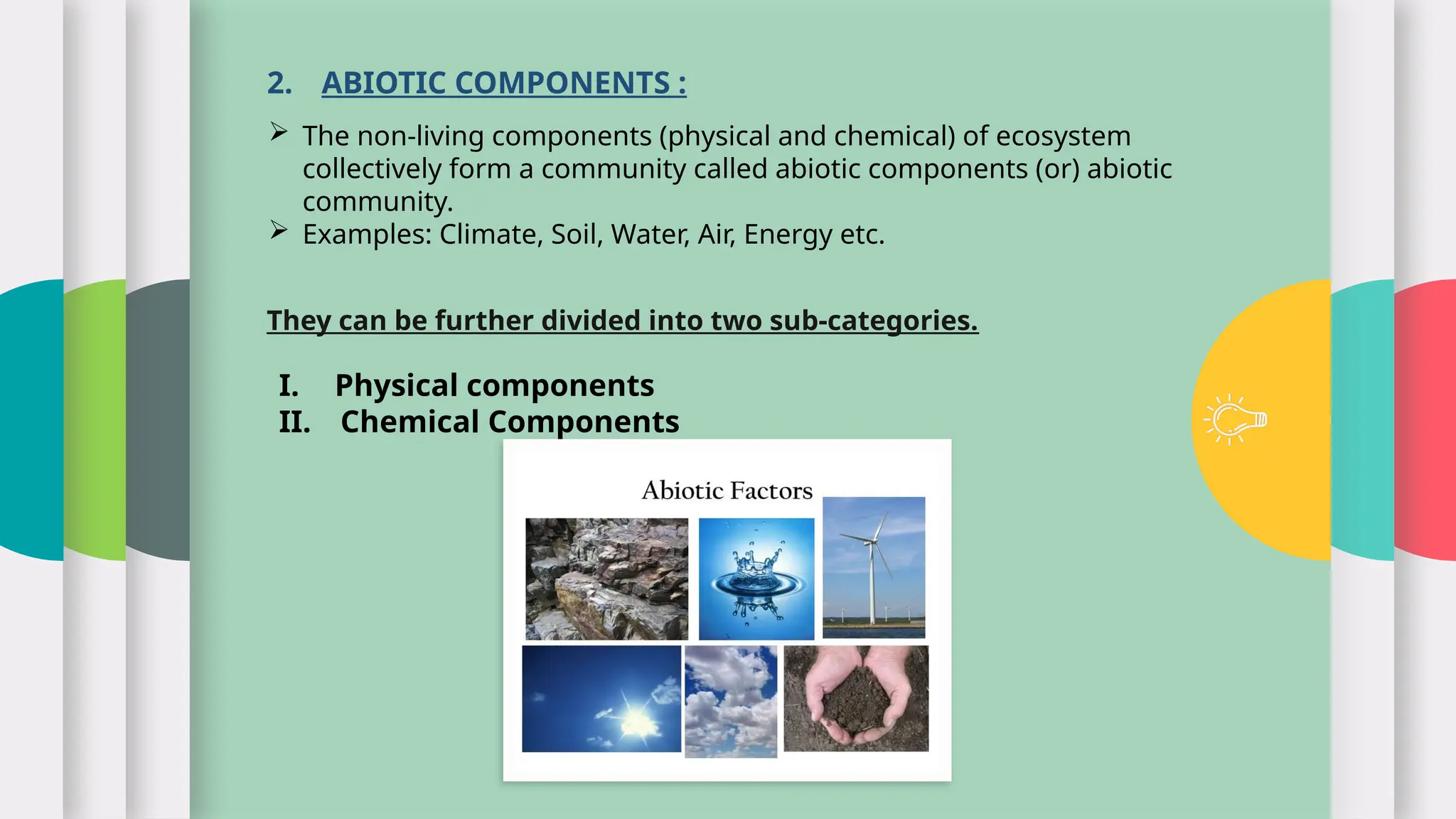
2. ABIOTIC COMPONENTS :
 The non-living components (physical and chemical) of ecosystem
collectively form a community called abiotic components (or) abiotic
community.
 Examples: Climate, Soil, Water, Air, Energy etc.
They can be further divided into two sub-categories.
I. Physical components
II. Chemical Components
 They are the sources of essential nutrients.
• Organic substances: Protein, lipids, carbohydrates, etc.
• Inorganic substances: All macro elements (C,H, O, Al, N, Cu) and few
other elements.
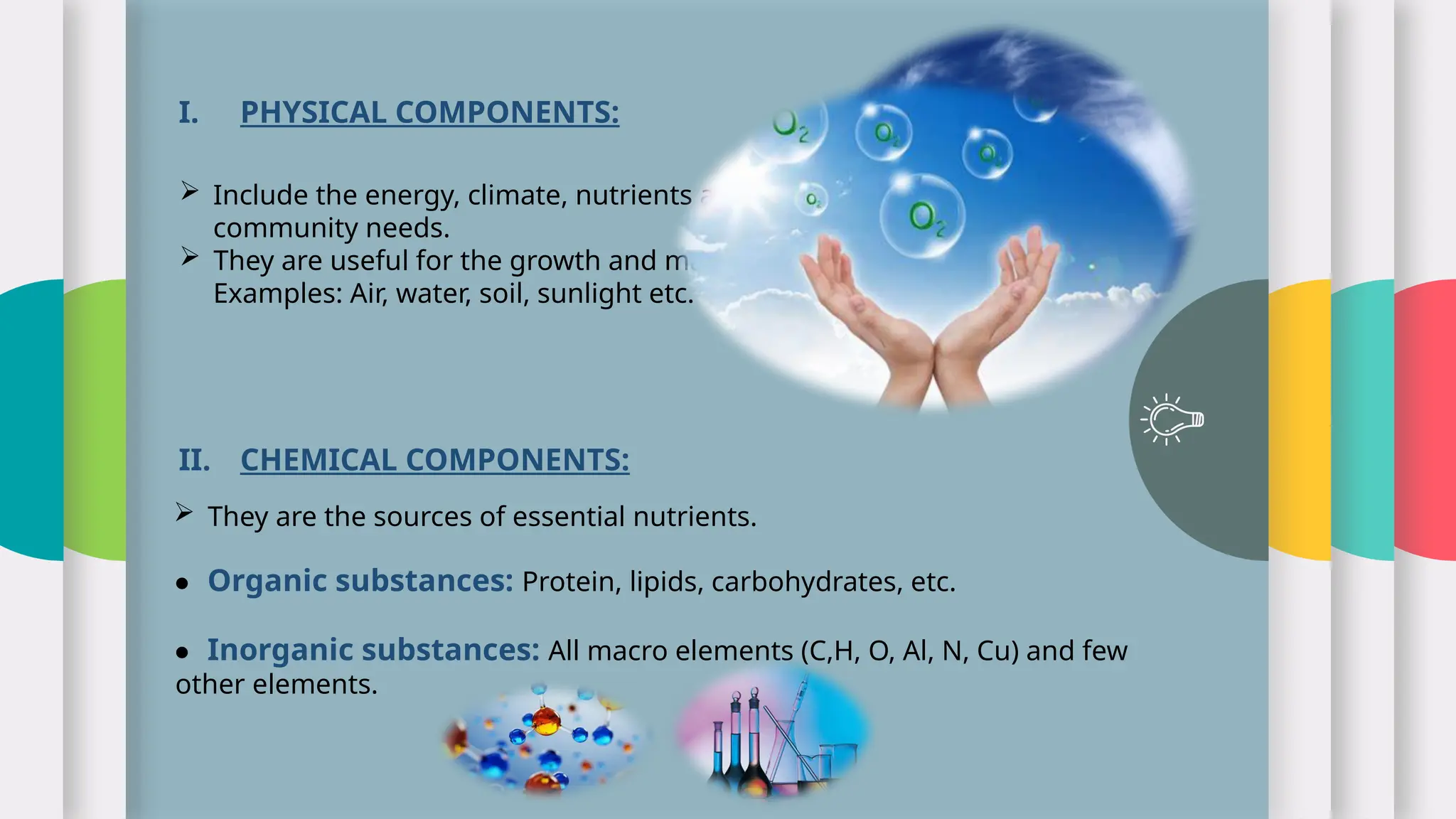
I. PHYSICAL COMPONENTS:
 Include the energy, climate, nutrients and living space that the biological
community needs.
 They are useful for the growth and maintenance of it member.
Examples: Air, water, soil, sunlight etc.
II. CHEMICAL COMPONENTS:
THANK-YOU FOR YOUR TIME
AND ATTENTION🙂🙂.
contact Me:
https://x.com/Rahullibraz https://www.linkedin.com/in/rahullibraz/ rahul.leox@gmail.com

Structure of Ecosystem

  • 1.
    WELCOME STRUCTURE OF ECOSYSTEM PRESENTEDBY : [RAHUL KUMAR (1322232)] PRESENTATION ON
  • 2.
    WHAT IS ANECOSYSTEM Definition  An ecosystem is a community of living and non-living things that interact with each other in a particular environment.  Living things: plants, animals and microorganism.  non-living things: Air, Water, Soil etc. The term “ECOSYSTEM” was first coined by A.G. Tansley, An English botanist, in 1935 A.G. Tansley
  • 3.
    STRUCTURE OF ANECOSYSTEM Here, the term Structure refers to the various components of an Ecosystem. An Ecosystem has two major components: 1.Biotic Components (Living things) 2.Abiotic Components (Non-Living things)
  • 4.
    1. BIOTIC COMPONENTS: Biotic Structures refer to the living organisms in an ecosystem, including plants, animals, fungi, bacteria, and other microorganisms. Classification of biotic components: I. Producer(Plants) II. Consumer(Animals) III.Decomposers(Micro-organisms)
  • 5.
    I. PRODUCERS(Autotrophs):  Producersare organisms that can make their own food using sunlight, water, and carbon dioxide. Examples: All green plants, trees, algae.  They are the base of the food chain in an ecosystem and provide energy and nutrients to all other organisms.  Producers synthesize their food themselves through photosynthesis. [AUTOTROPHS- “Self-feeders”] II. CONSUMERS(Heterotrophs):  Consumers are organisms that depend on other organisms for food.  They cannot make own food.
  • 6.
    There are threemain types of Consumers: I. Herbivores II. Carnivores III.Omnivores I. HERBIVORES (Primary Consumer):  Herbivores are also called Primary consumers. they directly depend on the plants for their food. So, they are called plant eaters. Examples: Insects, rat, goat, deer, cow etc.
  • 7.
    II. CARNIVORES:  Theseare consumers that eat other animals. They can be further divided into two sub-categories. a)PRIMARY CARNIVORES (Secondary consumers) b)SECONDARY CARNIVORES (Tertiary consumers)
  • 8.
    b) SECONDARY CARNIVORES: These are a carnivores that eat other carnivores. Examples: Eagles, Killer whale, Tiger, Lion Hawks etc.  They depend on primary carnivores.  These are carnivores that eat herbivores. Examples: Snakes, Foxes, Dog, Cat, Moles, Birds etc. a) PRIMARY CARNIVORES:
  • 9.
    III. OMNIVORES:  Theseare consumers that eat both plants and animals. Examples: Human, Rat, Birds etc. DETRITIVORES (Detritus feeders):  An animal that feeds on detritus or humus via internal digestion.  Examples of detritivores include earthworms, snails, and some species of insects.
  • 10.
    DECOMPOSERS:  Decomposers aremicroorganisms such as bacteria and fungi that break down dead organic matter into simpler substances. Examples: fungi, bacteria.
  • 11.
    2. ABIOTIC COMPONENTS:  The non-living components (physical and chemical) of ecosystem collectively form a community called abiotic components (or) abiotic community.  Examples: Climate, Soil, Water, Air, Energy etc. They can be further divided into two sub-categories. I. Physical components II. Chemical Components
  • 12.
     They arethe sources of essential nutrients. • Organic substances: Protein, lipids, carbohydrates, etc. • Inorganic substances: All macro elements (C,H, O, Al, N, Cu) and few other elements. I. PHYSICAL COMPONENTS:  Include the energy, climate, nutrients and living space that the biological community needs.  They are useful for the growth and maintenance of it member. Examples: Air, water, soil, sunlight etc. II. CHEMICAL COMPONENTS:
  • 13.
    THANK-YOU FOR YOURTIME AND ATTENTION🙂🙂. contact Me: https://x.com/Rahullibraz https://www.linkedin.com/in/rahullibraz/ rahul.leox@gmail.com