ENVIRONMENT AND HUMAN
HEALTH
Sijo.A
ENVIRONMENT AND HUMAN HEALTH
• Environment and human health are intricately
related.
• A good environment is an indication of healthy
human beings and a developed nation.
• Now polluted atmosphere has become a serious
threat to the very existence of human species.
• Pollution growth and intensification of man’s
activities on various fronts like agricultural
development, urbanisation and industrialisation
all over the world have created a hazardous
environment.
• The environment is under constant
interference by human bound activities.
• The effect of environment on human health
are generally accounted in the following
terms-
1) The extent to which environmental
conditions lead to shortening of life.
2) The extent to which environment induced
disability or impairment is found, and
3) The extent to which the biological potential
of an individual is reduced.
ENVIRONMENTAL FACTORS
• The various environmental factors which
affect human health are-
1) Overpopulation
2) Pollution
3) Urbanisation
4) Degradation of natural resources
Over population
• Population explosion is the most important
cause of all environmental problems. It leads
to poverty, over exploitation of resources and
environmental degradation.
pollution
• Any change in the environment which directly
or indirectly affects the welfare of the human
beings is called pollution.
• But air pollution, water pollution and solid
waste pollution are of prime concern.
• Other kinds of pollution like nuclear hazards
also cause problems related to the health.
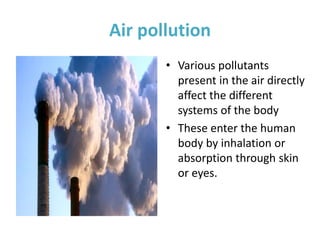
Air pollution
• Various pollutants
present in the air directly
affect the different
systems of the body
• These enter the human
body by inhalation or
absorption through skin
or eyes.
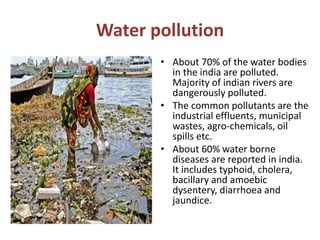
Water pollution
• About 70% of the water bodies
in the india are polluted.
Majority of indian rivers are
dangerously polluted.
• The common pollutants are the
industrial effluents, municipal
wastes, agro-chemicals, oil
spills etc.
• About 60% water borne
diseases are reported in india.
It includes typhoid, cholera,
bacillary and amoebic
dysentery, diarrhoea and
jaundice.
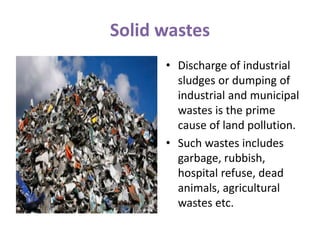
Solid wastes
• Discharge of industrial
sludges or dumping of
industrial and municipal
wastes is the prime
cause of land pollution.
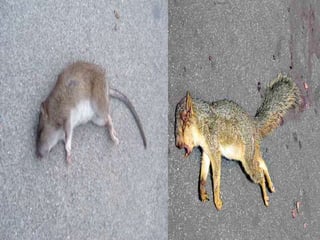
• Such wastes includes
garbage, rubbish,
hospital refuse, dead
animals, agricultural
wastes etc.
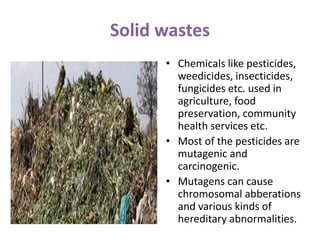
Solid wastes
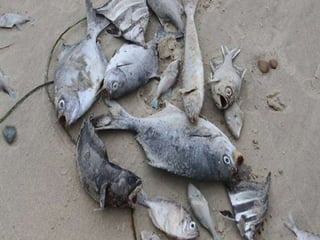
• Chemicals like pesticides,
weedicides, insecticides,
fungicides etc. used in
agriculture, food
preservation, community
health services etc.
• Most of the pesticides are
mutagenic and
carcinogenic.
• Mutagens can cause
chromosomal abberations
and various kinds of
hereditary abnormalities.
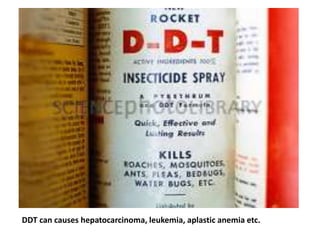
DDT can causes hepatocarcinoma, leukemia, aplastic anemia etc.
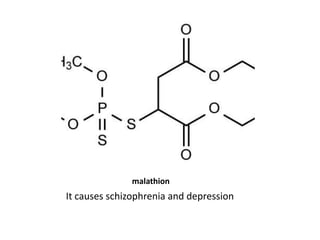
malathion
It causes schizophrenia and depression
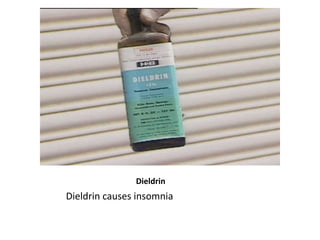
Dieldrin
Dieldrin causes insomnia
Marathion
It causes muscular weakness and
delayed paralysis.
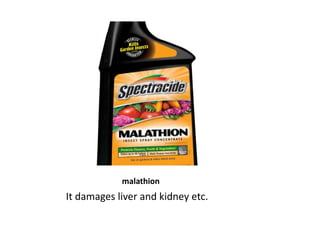
malathion
It damages liver and kidney etc.
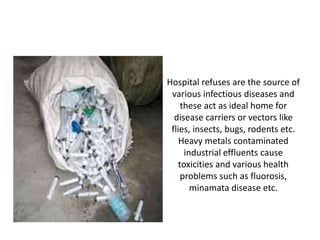
Hospital refuses are the source of
various infectious diseases and
these act as ideal home for
disease carriers or vectors like
flies, insects, bugs, rodents etc.
Heavy metals contaminated
industrial effluents cause
toxicities and various health
problems such as fluorosis,
minamata disease etc.
urbanisation
• Increase in urbanisation adversely affects the
ecological balance. It not only causes
deforestation but also increases uncontrolled
discharge of municipal wastes.
• Most indian cities have about 40% population
which leads to deteriorating life quality and
poor health services and flourishing of
communicable diseases.
• These area lack basic amenities and are
disease prone. As such the down troden areas
of the cities are the prime source of infectious
diseases.
Degradation of natural
resources
 Loss of natural resources adversly affects the
quality of human life, e.g. deforestation
results in biodiversity loss because
biodiversity is essential for maintaining the
basic life supporting process.
 A number of medicines procured from
various life forms are essential for human
health.
THE CONCLUSION
 As such clean and green environment is the
life of life. A time to take corrective steps is
still there, if taken care of. Now a new
concept of development is needed that
emphasises the relation between human
beings and nature.
 A sustainable development is the only
solution to save human life and health.
Thank you……..Thank
you….

Evs environment and human health

  • 1.
  • 2.
    ENVIRONMENT AND HUMANHEALTH • Environment and human health are intricately related. • A good environment is an indication of healthy human beings and a developed nation. • Now polluted atmosphere has become a serious threat to the very existence of human species. • Pollution growth and intensification of man’s activities on various fronts like agricultural development, urbanisation and industrialisation all over the world have created a hazardous environment.
  • 3.
    • The environmentis under constant interference by human bound activities. • The effect of environment on human health are generally accounted in the following terms- 1) The extent to which environmental conditions lead to shortening of life. 2) The extent to which environment induced disability or impairment is found, and 3) The extent to which the biological potential of an individual is reduced.
  • 4.
    ENVIRONMENTAL FACTORS • Thevarious environmental factors which affect human health are- 1) Overpopulation 2) Pollution 3) Urbanisation 4) Degradation of natural resources
  • 5.
    Over population • Populationexplosion is the most important cause of all environmental problems. It leads to poverty, over exploitation of resources and environmental degradation.
  • 6.
    pollution • Any changein the environment which directly or indirectly affects the welfare of the human beings is called pollution. • But air pollution, water pollution and solid waste pollution are of prime concern. • Other kinds of pollution like nuclear hazards also cause problems related to the health.
  • 7.
    Air pollution • Variouspollutants present in the air directly affect the different systems of the body • These enter the human body by inhalation or absorption through skin or eyes.
  • 8.
    Water pollution • About70% of the water bodies in the india are polluted. Majority of indian rivers are dangerously polluted. • The common pollutants are the industrial effluents, municipal wastes, agro-chemicals, oil spills etc. • About 60% water borne diseases are reported in india. It includes typhoid, cholera, bacillary and amoebic dysentery, diarrhoea and jaundice.
  • 9.
    Solid wastes • Dischargeof industrial sludges or dumping of industrial and municipal wastes is the prime cause of land pollution. • Such wastes includes garbage, rubbish, hospital refuse, dead animals, agricultural wastes etc.
  • 10.
    Solid wastes • Chemicalslike pesticides, weedicides, insecticides, fungicides etc. used in agriculture, food preservation, community health services etc. • Most of the pesticides are mutagenic and carcinogenic. • Mutagens can cause chromosomal abberations and various kinds of hereditary abnormalities.
  • 14.
    DDT can causeshepatocarcinoma, leukemia, aplastic anemia etc.
  • 15.
  • 16.
  • 17.
    Marathion It causes muscularweakness and delayed paralysis.
  • 18.
  • 19.
    Hospital refuses arethe source of various infectious diseases and these act as ideal home for disease carriers or vectors like flies, insects, bugs, rodents etc. Heavy metals contaminated industrial effluents cause toxicities and various health problems such as fluorosis, minamata disease etc.
  • 20.
    urbanisation • Increase inurbanisation adversely affects the ecological balance. It not only causes deforestation but also increases uncontrolled discharge of municipal wastes. • Most indian cities have about 40% population which leads to deteriorating life quality and poor health services and flourishing of communicable diseases. • These area lack basic amenities and are disease prone. As such the down troden areas of the cities are the prime source of infectious diseases.
  • 21.
    Degradation of natural resources Loss of natural resources adversly affects the quality of human life, e.g. deforestation results in biodiversity loss because biodiversity is essential for maintaining the basic life supporting process.  A number of medicines procured from various life forms are essential for human health.
  • 22.
    THE CONCLUSION  Assuch clean and green environment is the life of life. A time to take corrective steps is still there, if taken care of. Now a new concept of development is needed that emphasises the relation between human beings and nature.  A sustainable development is the only solution to save human life and health.
  • 23.