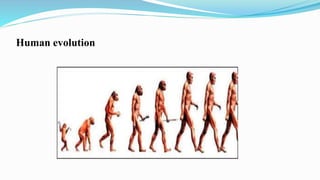
Human evolution
What is evolution?
 Human evolution began in Africa about six million years ago and it describes the
very long process that our ancestors went through to ultimately become modern
humans.
 Evolution means the changes that occur in a population over time. In this
definition, a “population” means a group of the same species that share a specific
location and habitat.
 Evolutionary changes always occur on the genetic level.
 In other words, evolution is a process that results in changes that are passed on
or inherited from generation to generation. It does not, for example, describe
how people can change their muscle mass by lifting weights.
Scienticfic discipline
 The study of human evolution involves several scientific disciplines
 Physical anthropology
 primatology
 archaeology
 paleontology
 ethology
 linguistics
 embryology
 genetics
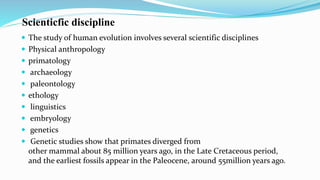
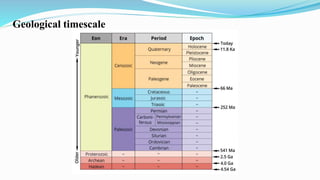
 Genetic studies show that primates diverged from
other mammal about 85 million years ago, in the Late Cretaceous period,
and the earliest fossils appear in the Paleocene, around 55million years ago.
Geological timescale
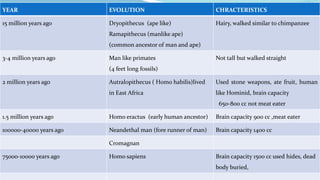
YEAR EVOLUTION CHRACTERISTICS
15 million years ago Dryopithecus (ape like)
Ramapithecus (manlike ape)
(common ancestor of man and ape)
Hairy, walked similar to chimpanzee
3-4 million years ago Man like primates
(4 feet long fossils)
Not tall but walked straight
2 million years ago Autralopithecus ( Homo habilis)lived
in East Africa
Used stone weapons, ate fruit, human
like Hominid, brain capacity
650-800 cc not meat eater
1.5 million years ago Homo eractus (early human ancestor) Brain capacity 900 cc ,meat eater
100000-40000 years ago Neandethal man (fore runner of man) Brain capacity 1400 cc
Cromagnan
75000-10000 years ago Homo sapiens Brain capacity 1500 cc used hides, dead
body buried,
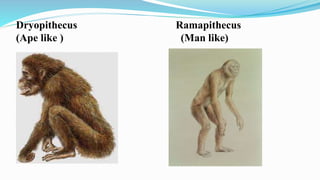
Dryopithecus Ramapithecus
(Ape like ) (Man like)
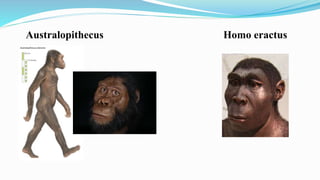
Australopithecus Homo eractus
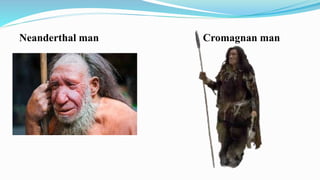
Neanderthal man Cromagnan man
Homo sapiens
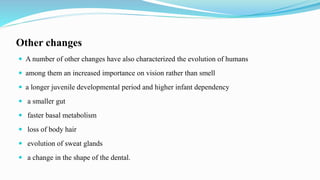
Anatomical changes
 Human evolution from its first separation from the last common
ancestor of humans and chimpanzeesis characterized by a number
of
 morphological
 developmental
 physiological
 behaviora changes
 The most significant of these adaptations are
 bipedalism
 increased brain size
Other changes
 A number of other changes have also characterized the evolution of humans
 among them an increased importance on vision rather than smell
 a longer juvenile developmental period and higher infant dependency
 a smaller gut
 faster basal metabolism
 loss of body hair
 evolution of sweat glands
 a change in the shape of the dental.
First fossils
 Neanderthal remains were discovered in a limestone quarry in 1856
 Neanderthal fossils had been discovered in Gibraltar even earlier, but it was originally
claimed that these were human remains of a creature suffering some kind of illness.
Despite the 1891 discovery by Eugène Dubois of what is now called Homo
erectus at Java it was only in the 1920s when such fossils were discovered in Africa
Evidence
 . The main source of knowledge about the evolutionary process has traditionally been
the fossil record
 but since the development of genetics beginning in the 1970s, DNA analysis has
come to occupy a place of comparable importance
 The studies of ontogeny, phylogeny and especially evolutionary developmental
biology of both vertebrates and invertebrates offer considerable insight into the
evolution of all life
Evidence from molecular biology
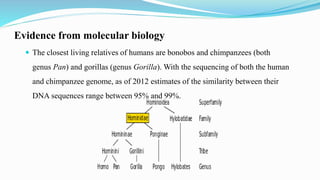
 The closest living relatives of humans are bonobos and chimpanzees (both
genus Pan) and gorillas (genus Gorilla). With the sequencing of both the human
and chimpanzee genome, as of 2012 estimates of the similarity between their
DNA sequences range between 95% and 99%.
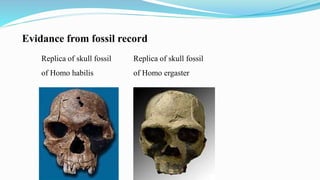
Evidance from fossil record
Replica of skull fossil
of Homo habilis
Replica of skull fossil
of Homo ergaster
Evolution of genus Homo
 The earliest documented representative of the genus Homo is Homo habilis, which evolved
around 2.8 million years ago.
 Homo habilis lived from about 2.8 to 1.4 Ma. The species evolved in South and East Africa in
the Late Pliocene or Early Pleistocen.
 The first fossils of Homo erectus were discovered by Dutch physician Eugene Duboisin 1891
on the Indonesian island of Java.
 H. antecessor is known from fossils from Spain and England that are dated 1.2 Ma–500 ka.
 H. cepranensis refers to a single skull cap from Italy, estimated to be about 800,000 years old.
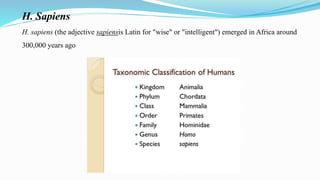
H. Sapiens
H. sapiens (the adjective sapiensis Latin for "wise" or "intelligent") emerged in Africa around
300,000 years ago
 References:
 Ambrose, S. H. (1998). Late Pleistocene human population bottlenecks, volcanic
winter, and differentiation of modern humans. Journal of Human Evolution, 34(6),
623-651.
 Bruner, E. (2007). Cranial shape and size variation in human evolution: structural
and functional perspectives. Child's Nervous System, 23(12): 1357-1365.
 Dunbar, R. I. (1992). Neocortex size as a constraint on group size in
primates. Journal of Human Evolution, 22(6): 469-493.
 Leonard, W. R., Snodgrass, J. J., & Robertson, M. L. (2007). Effects of brain
evolution on human nutrition and metabolism. Annu. Rev. Nutr., 27: 311-327.
 Potts, R. (2012). Evolution and environmental change in early human
prehistory. Annual Review of Anthropology, 41: 151-167.
 Tavaré, S., Marshall, C. R., Will, O., Soligo, C., & Martin, R. D. (2002). Using the
fossil record to estimate the age of the last common ancestor of extant
primates. Nature, 416(6882): 726.
 Zalmout, I. S., Sanders, W. J., MacLatchy, L. M., Gunnell, G. F., Al-Mufarreh, Y. A.,
Ali, M. A., ... & Matari, A. H. (2010). New Oligocene primate from Saudi Arabia
and the divergence of apes and Old World monkeys. Nature, 466(7304): 360.
Evolution of Homo sepiens

Evolution of Homo sepiens

  • 2.
  • 3.
    What is evolution? Human evolution began in Africa about six million years ago and it describes the very long process that our ancestors went through to ultimately become modern humans.  Evolution means the changes that occur in a population over time. In this definition, a “population” means a group of the same species that share a specific location and habitat.  Evolutionary changes always occur on the genetic level.  In other words, evolution is a process that results in changes that are passed on or inherited from generation to generation. It does not, for example, describe how people can change their muscle mass by lifting weights.
  • 4.
    Scienticfic discipline  Thestudy of human evolution involves several scientific disciplines  Physical anthropology  primatology  archaeology  paleontology  ethology  linguistics  embryology  genetics  Genetic studies show that primates diverged from other mammal about 85 million years ago, in the Late Cretaceous period, and the earliest fossils appear in the Paleocene, around 55million years ago.
  • 5.
  • 6.
    YEAR EVOLUTION CHRACTERISTICS 15million years ago Dryopithecus (ape like) Ramapithecus (manlike ape) (common ancestor of man and ape) Hairy, walked similar to chimpanzee 3-4 million years ago Man like primates (4 feet long fossils) Not tall but walked straight 2 million years ago Autralopithecus ( Homo habilis)lived in East Africa Used stone weapons, ate fruit, human like Hominid, brain capacity 650-800 cc not meat eater 1.5 million years ago Homo eractus (early human ancestor) Brain capacity 900 cc ,meat eater 100000-40000 years ago Neandethal man (fore runner of man) Brain capacity 1400 cc Cromagnan 75000-10000 years ago Homo sapiens Brain capacity 1500 cc used hides, dead body buried,
  • 7.
  • 8.
  • 9.
  • 10.
  • 11.
    Anatomical changes  Humanevolution from its first separation from the last common ancestor of humans and chimpanzeesis characterized by a number of  morphological  developmental  physiological  behaviora changes  The most significant of these adaptations are  bipedalism  increased brain size
  • 13.
    Other changes  Anumber of other changes have also characterized the evolution of humans  among them an increased importance on vision rather than smell  a longer juvenile developmental period and higher infant dependency  a smaller gut  faster basal metabolism  loss of body hair  evolution of sweat glands  a change in the shape of the dental.
  • 14.
    First fossils  Neanderthalremains were discovered in a limestone quarry in 1856  Neanderthal fossils had been discovered in Gibraltar even earlier, but it was originally claimed that these were human remains of a creature suffering some kind of illness. Despite the 1891 discovery by Eugène Dubois of what is now called Homo erectus at Java it was only in the 1920s when such fossils were discovered in Africa
  • 15.
    Evidence  . Themain source of knowledge about the evolutionary process has traditionally been the fossil record  but since the development of genetics beginning in the 1970s, DNA analysis has come to occupy a place of comparable importance  The studies of ontogeny, phylogeny and especially evolutionary developmental biology of both vertebrates and invertebrates offer considerable insight into the evolution of all life
  • 16.
    Evidence from molecularbiology  The closest living relatives of humans are bonobos and chimpanzees (both genus Pan) and gorillas (genus Gorilla). With the sequencing of both the human and chimpanzee genome, as of 2012 estimates of the similarity between their DNA sequences range between 95% and 99%.
  • 17.
    Evidance from fossilrecord Replica of skull fossil of Homo habilis Replica of skull fossil of Homo ergaster
  • 18.
    Evolution of genusHomo  The earliest documented representative of the genus Homo is Homo habilis, which evolved around 2.8 million years ago.  Homo habilis lived from about 2.8 to 1.4 Ma. The species evolved in South and East Africa in the Late Pliocene or Early Pleistocen.  The first fossils of Homo erectus were discovered by Dutch physician Eugene Duboisin 1891 on the Indonesian island of Java.  H. antecessor is known from fossils from Spain and England that are dated 1.2 Ma–500 ka.  H. cepranensis refers to a single skull cap from Italy, estimated to be about 800,000 years old.
  • 19.
    H. Sapiens H. sapiens(the adjective sapiensis Latin for "wise" or "intelligent") emerged in Africa around 300,000 years ago
  • 20.
     References:  Ambrose,S. H. (1998). Late Pleistocene human population bottlenecks, volcanic winter, and differentiation of modern humans. Journal of Human Evolution, 34(6), 623-651.  Bruner, E. (2007). Cranial shape and size variation in human evolution: structural and functional perspectives. Child's Nervous System, 23(12): 1357-1365.  Dunbar, R. I. (1992). Neocortex size as a constraint on group size in primates. Journal of Human Evolution, 22(6): 469-493.  Leonard, W. R., Snodgrass, J. J., & Robertson, M. L. (2007). Effects of brain evolution on human nutrition and metabolism. Annu. Rev. Nutr., 27: 311-327.
  • 21.
     Potts, R.(2012). Evolution and environmental change in early human prehistory. Annual Review of Anthropology, 41: 151-167.  Tavaré, S., Marshall, C. R., Will, O., Soligo, C., & Martin, R. D. (2002). Using the fossil record to estimate the age of the last common ancestor of extant primates. Nature, 416(6882): 726.  Zalmout, I. S., Sanders, W. J., MacLatchy, L. M., Gunnell, G. F., Al-Mufarreh, Y. A., Ali, M. A., ... & Matari, A. H. (2010). New Oligocene primate from Saudi Arabia and the divergence of apes and Old World monkeys. Nature, 466(7304): 360.