EVOLUTION OF HEART
By
Qudrat ullah
Student of uos subcampus
bhakkar
Two types of invertebrates
i. Simple invertebrates
ii. Complex invertebrates
Unicellular
Simple multicellular
No specialized cells
No tissues
No organs
Specialized cells
Muscular pumping
Presence of organs
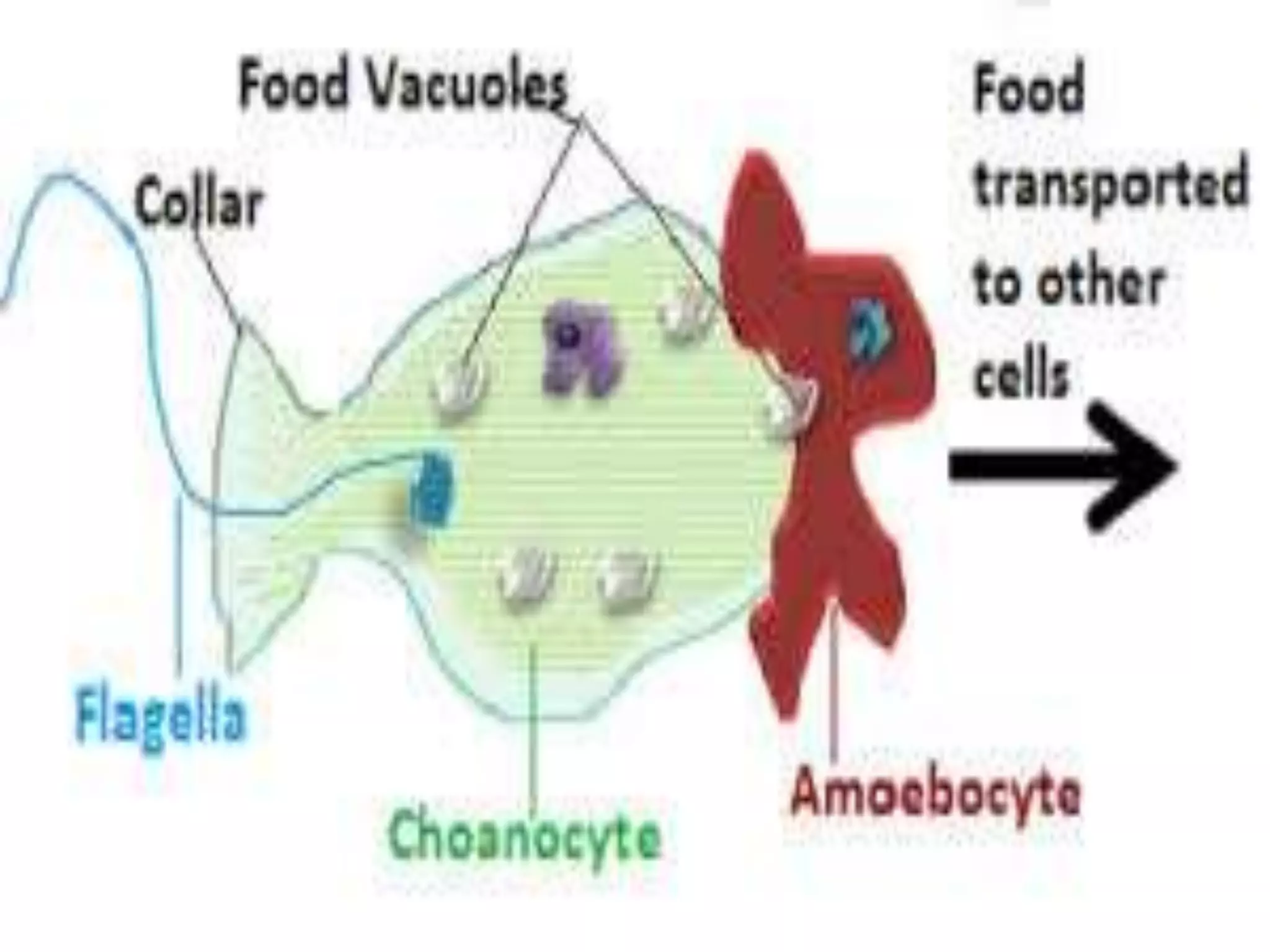
 First organism with specialized cells
 Contain layers of specialized cells
 Amoebocytes:
Move with in walls of sponge
and carry food to other cells.

These amoebocytes are considered as
precursors to Cardiac muscle cells or
myocardiocytes.
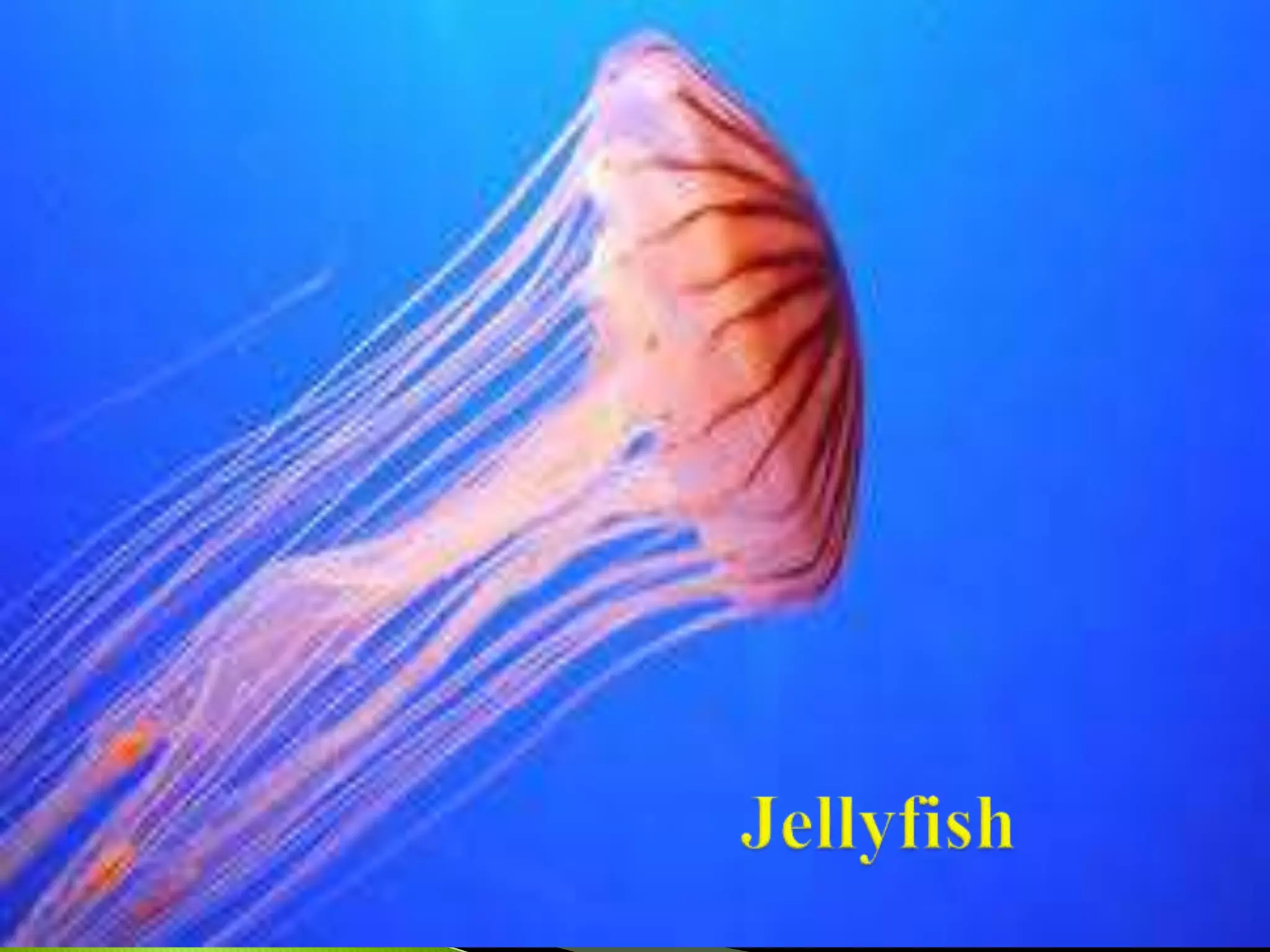
 First organism with muscular tissues.
 Presence of muscles in oral cavity as
pump for one way flow of water.
 Due to this the origins of the heart
pump are believed to have started
with the pumping of a jellyfish.
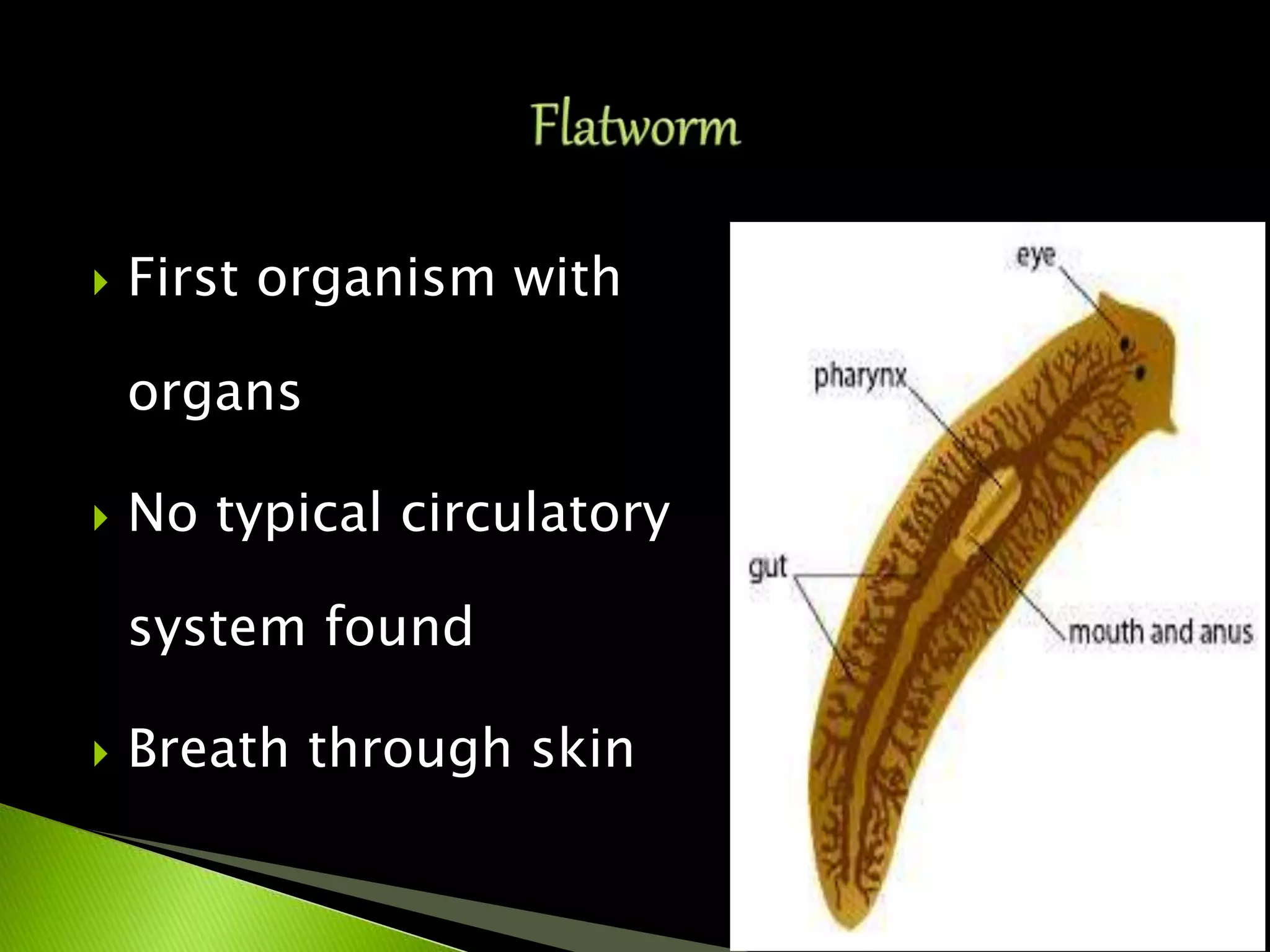
 First organism with
organs
 No typical circulatory
system found
 Breath through skin
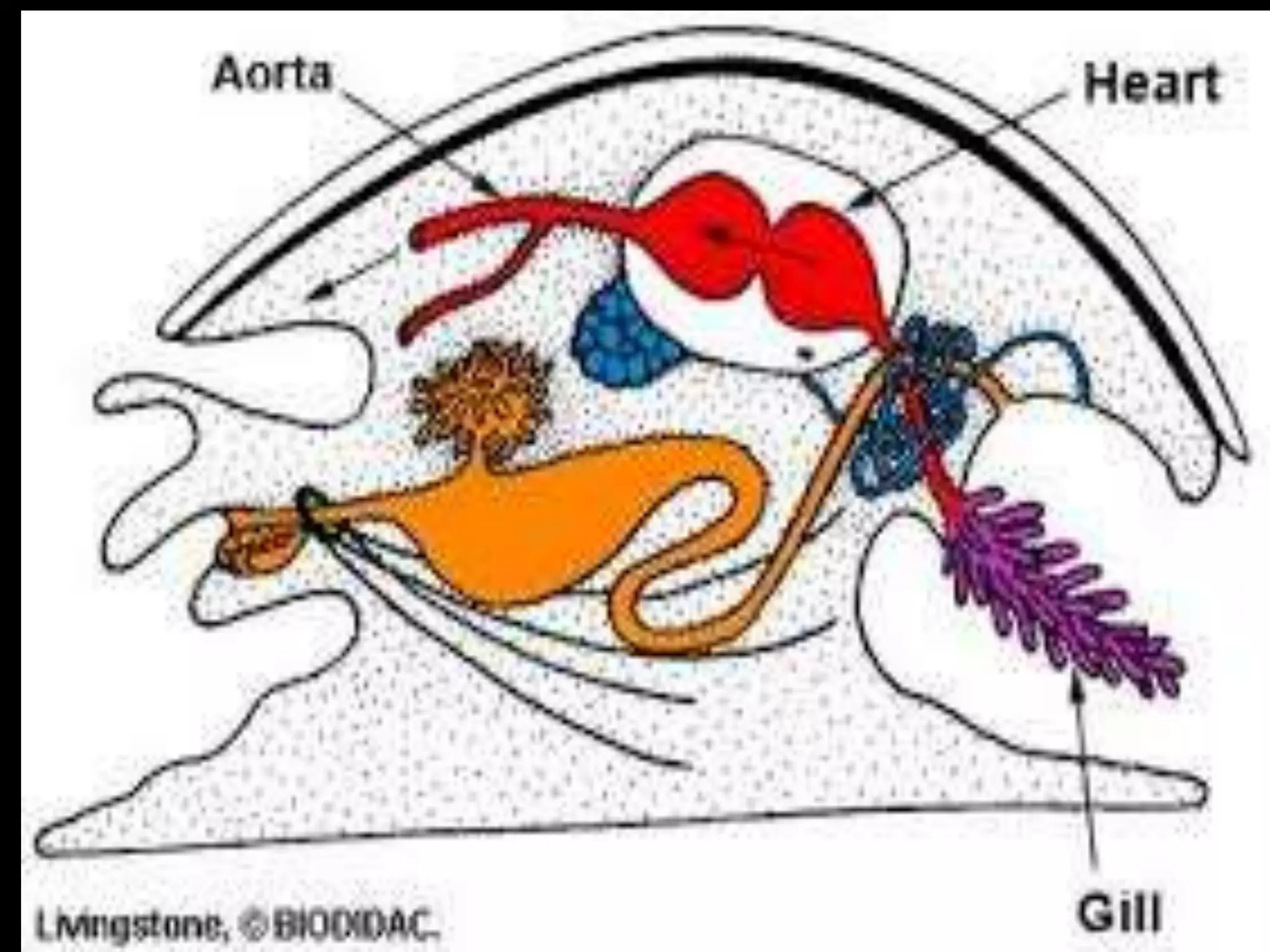
 Dorsal vessel (heart) muscular areas
for pumping.
 Open circulatory system.
 No blood vessels or very few.
Accessory heart:
In addition to the dorsal vessel
insects have accessory heart that
supply body appendages with
hemolymph.
 No actual heart.
 These muscular regions are
the precursors to our
complex human heart.
first animals with a two-
chamber heart consisting
of a ventricle and an
atrium.
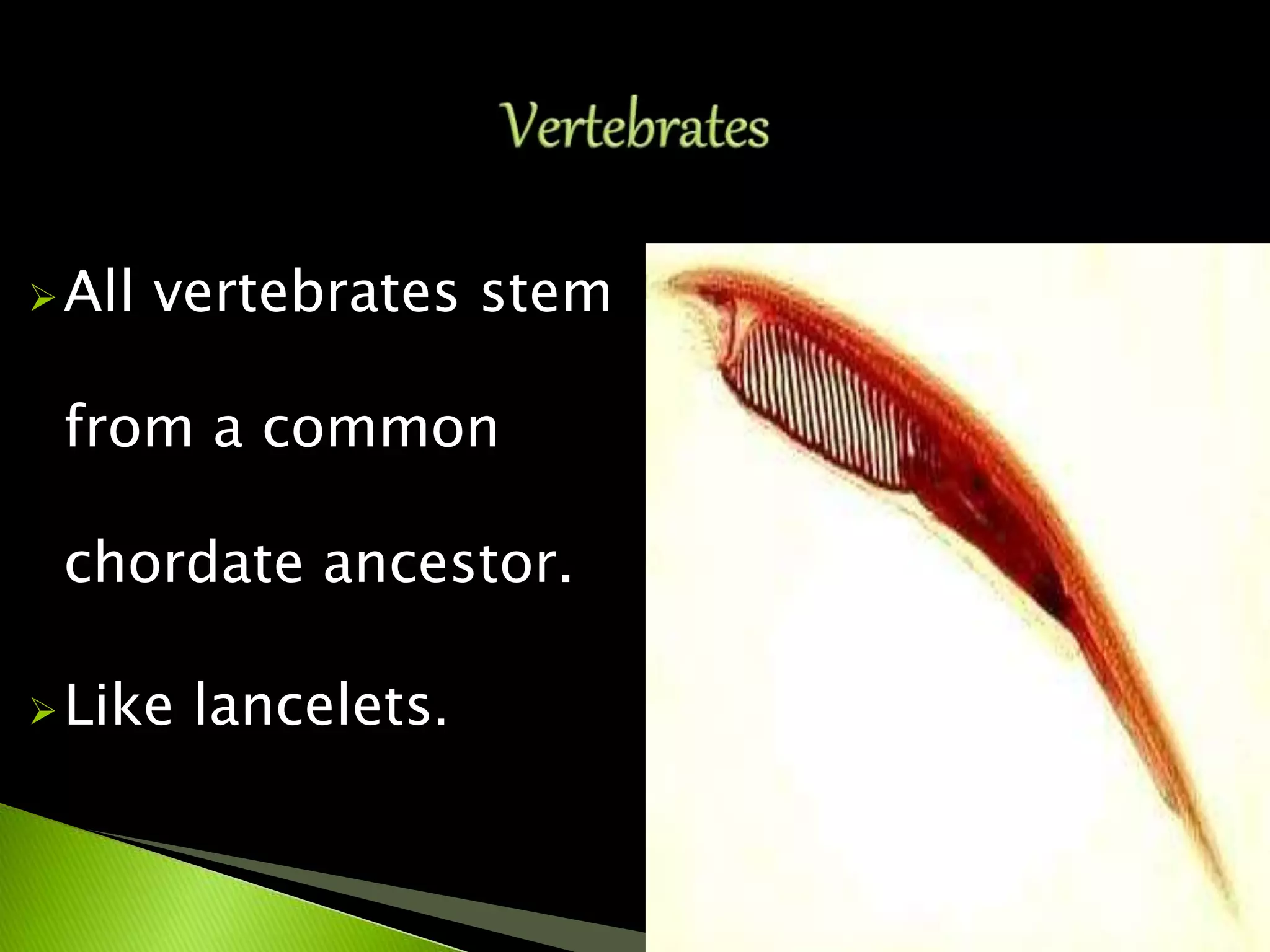
All vertebrates stem
from a common
chordate ancestor.
Like lancelets.
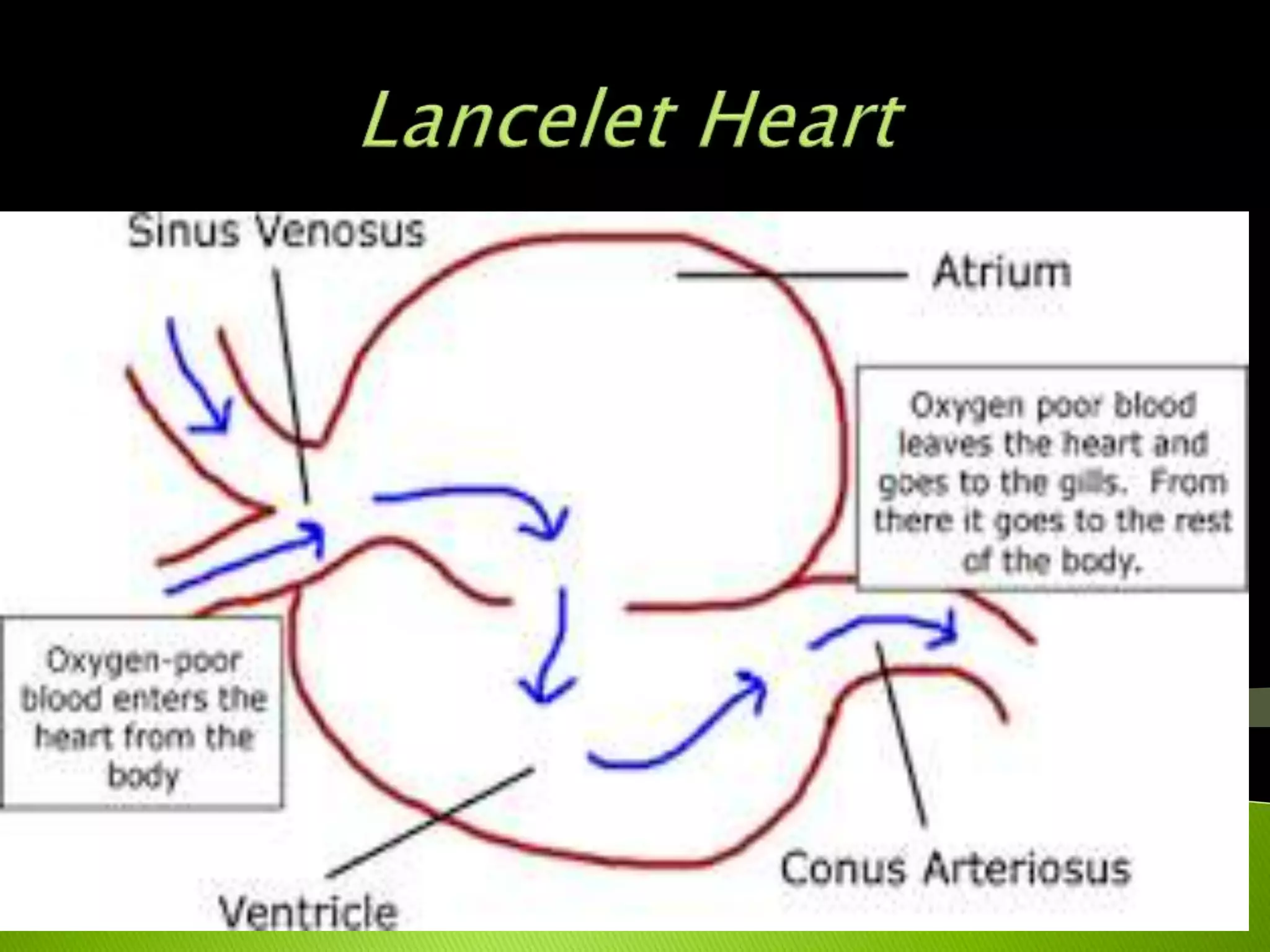
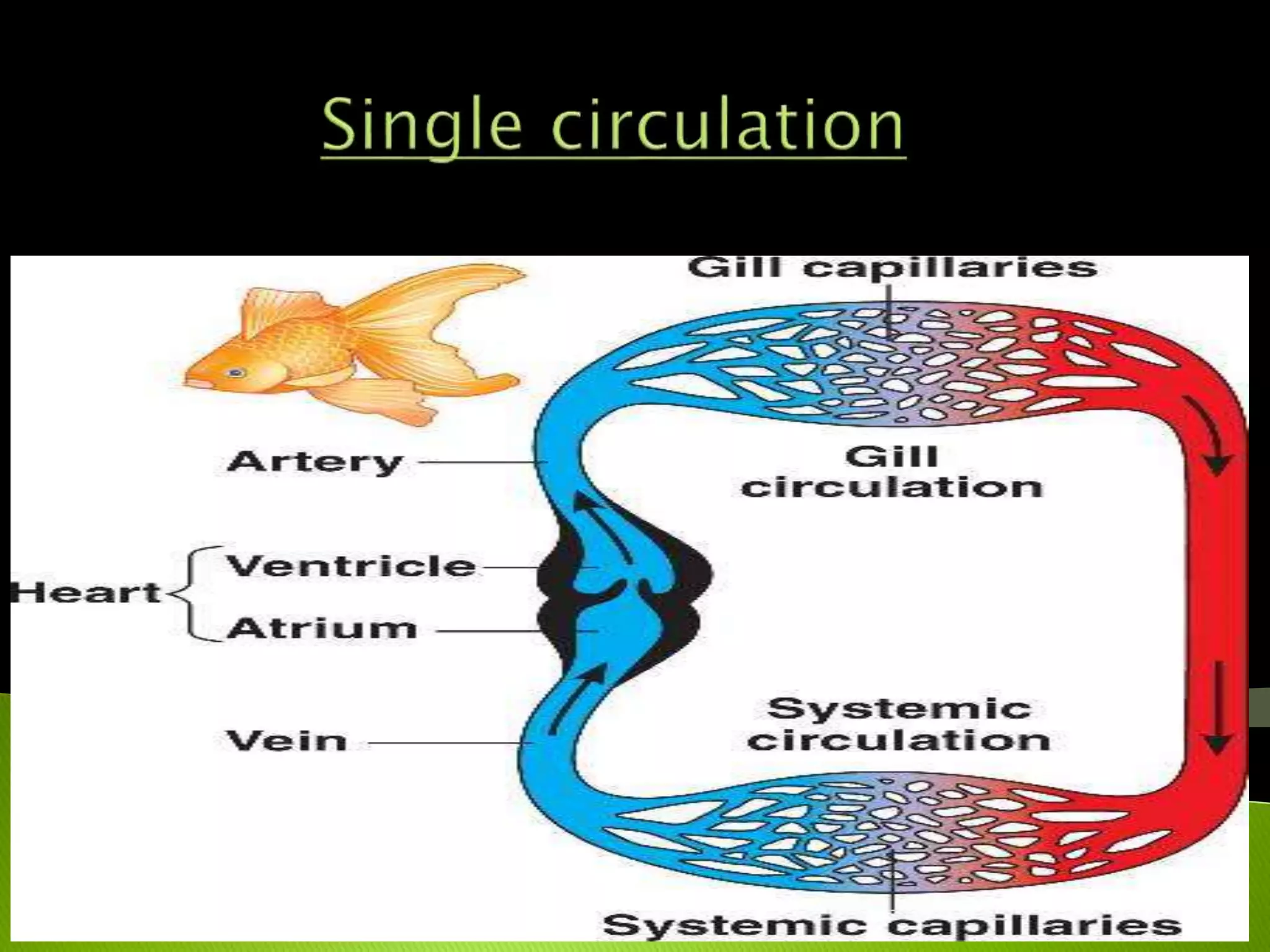
 Closed circulatory system.
 two chamber heart.
 Oxygen transported by only
one vessel via gills.
 Single circulation.
 Three chamber heart
 Two atria and one ventricle
 Two atria.
 Two ventricles partially
divided.
 Incomplete septum.
 Four chamber heart
 Two atria and two
ventricles
 Double circulation.
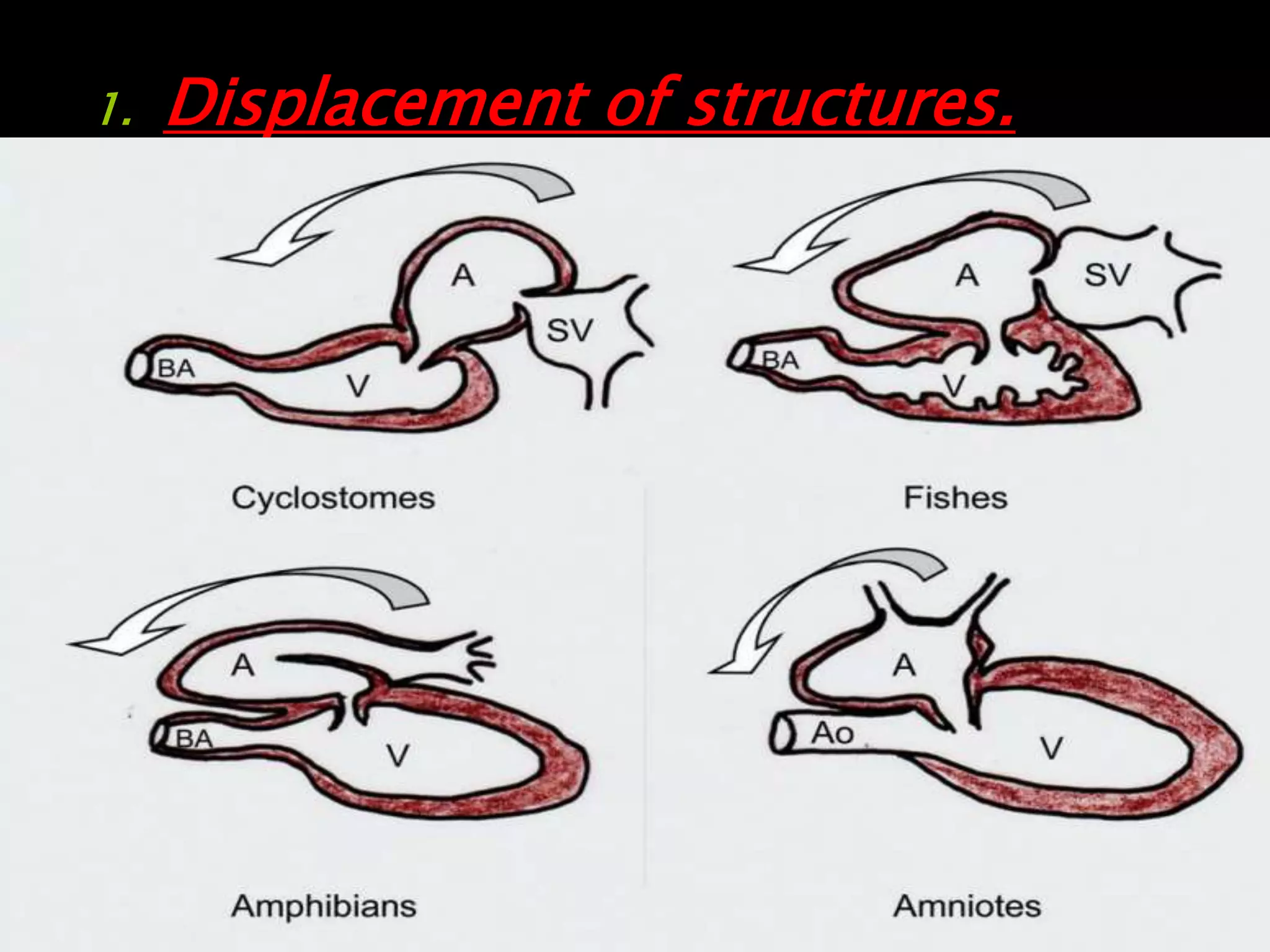
1. Displacement of structures.
1. Formation of septum between
atria(amphibians).
2. Formation of septum between
ventricle(crocodiles)
3. Disappearance of the sinus
venosus and the conus
arteriosus (birds and
mammals).
Evolution of heart by qudratullah

Evolution of heart by qudratullah

  • 1.
    EVOLUTION OF HEART By Qudratullah Student of uos subcampus bhakkar
  • 2.
    Two types ofinvertebrates i. Simple invertebrates ii. Complex invertebrates
  • 3.
  • 4.
  • 5.
     First organismwith specialized cells  Contain layers of specialized cells  Amoebocytes: Move with in walls of sponge and carry food to other cells.  These amoebocytes are considered as precursors to Cardiac muscle cells or myocardiocytes.
  • 7.
     First organismwith muscular tissues.  Presence of muscles in oral cavity as pump for one way flow of water.  Due to this the origins of the heart pump are believed to have started with the pumping of a jellyfish.
  • 9.
     First organismwith organs  No typical circulatory system found  Breath through skin
  • 10.
     Dorsal vessel(heart) muscular areas for pumping.  Open circulatory system.  No blood vessels or very few. Accessory heart: In addition to the dorsal vessel insects have accessory heart that supply body appendages with hemolymph.
  • 11.
     No actualheart.  These muscular regions are the precursors to our complex human heart.
  • 13.
    first animals witha two- chamber heart consisting of a ventricle and an atrium.
  • 15.
    All vertebrates stem froma common chordate ancestor. Like lancelets.
  • 18.
     Closed circulatorysystem.  two chamber heart.  Oxygen transported by only one vessel via gills.  Single circulation.
  • 20.
     Three chamberheart  Two atria and one ventricle
  • 21.
     Two atria. Two ventricles partially divided.  Incomplete septum.
  • 23.
     Four chamberheart  Two atria and two ventricles  Double circulation.
  • 26.
    1. Displacement ofstructures.
  • 27.
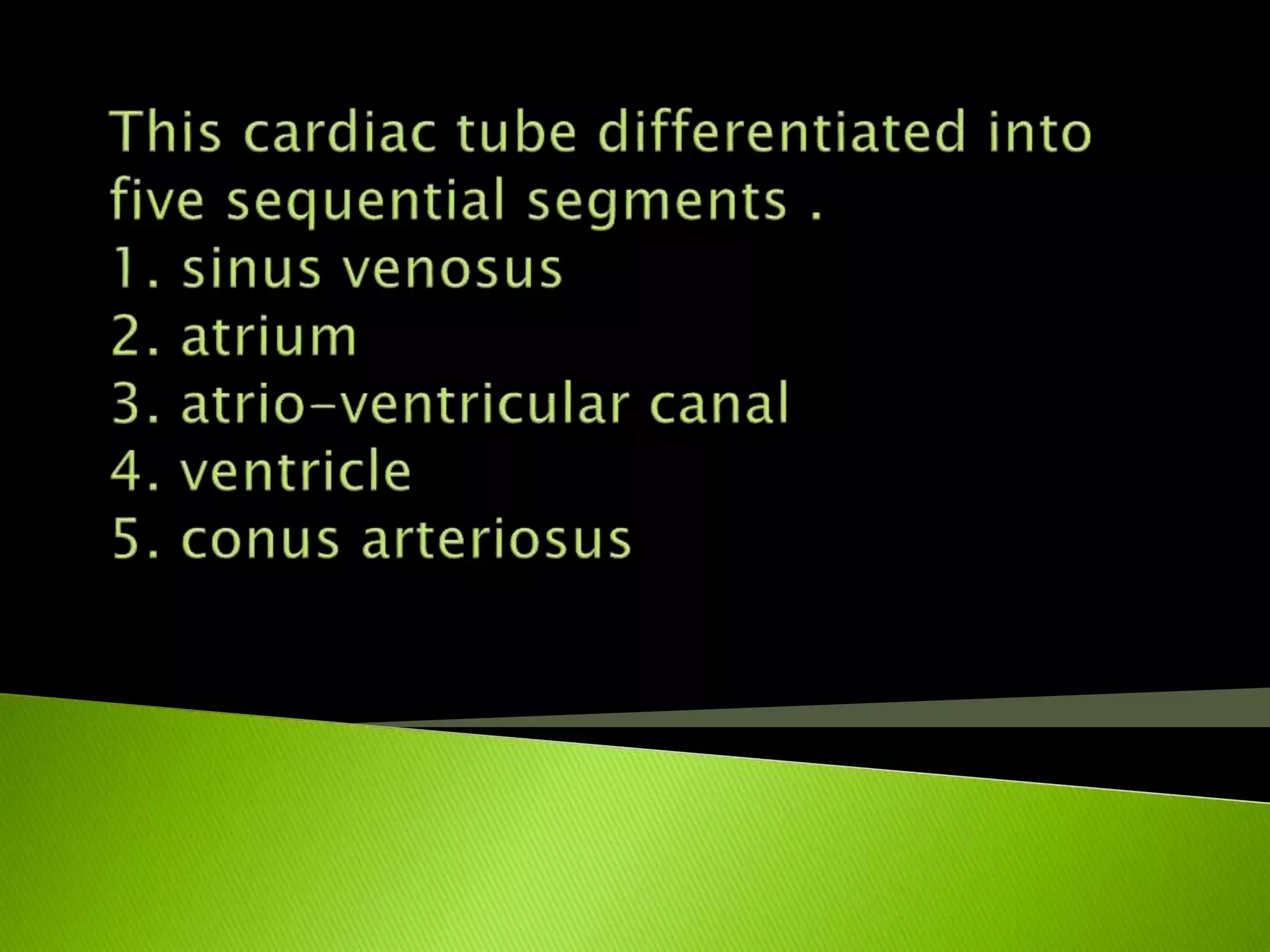
    1. Formation ofseptum between atria(amphibians). 2. Formation of septum between ventricle(crocodiles) 3. Disappearance of the sinus venosus and the conus arteriosus (birds and mammals).