Evolution of Computers
-seems interesting!
Introduction
• Computers have become an important part of
everyday life.
• Their origins go way back to 2400 B.C .
• First computer in 1944
- ENIAC
- Weighed 5 tons.
First Generation Computers
• 1940 - 1956
• Magnetic drums & Vacuum tubes
• Machine Language
• Traits
- Huge size
- Large amount of heat
First Generation Computers
• Some computers of this generation:-
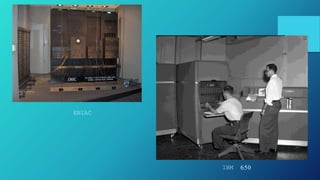
o ENIAC
o EDVAC
o UNIVAC
o IBM-701
o IBM-650
ENIAC
IBM 650
Second Generation Computers
• 1956 - 1963
• Core Memory & Transistors
• Assembly Language
• Improvements
- Reduced heat generation and electricity
consumption.
- Significant decrease in size and increase
in speed.
Second Generation Computers
• Some computers of this generation:-
o IBM 1620
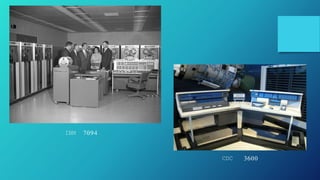
o IBM 7094
o CDC 1604
o CDC 3600
o UNIVAC 1108
IBM 7094
CDC 3600
Third Generation Computers
• 1964 - 1971
• Integrated circuits,monitors,keyboards
• High Level Languages(COBOL ,FORTRAN,etc.)
• Improvements
- Smaller & Powerful processors
- Increased reliability, speed, etc.
Third Generation Computers
• Some computers of this generation:-
o IBM-360 series
o Honeywell-6000 series
o PDP(Personal Data Processor)
o IBM-370/168
o TDC-316
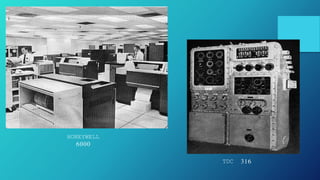
HONEYWELL
6000
TDC 316
Fourth Generation Computers
• 1971 - 1980
• VLSI circuits
• High Level Languages(C ,C++,etc.)
• Improvements
- Emergence of pipeline processing
- Improved networking
- More powerful, compact, reliable, affordable and
Fourth Generation Computers
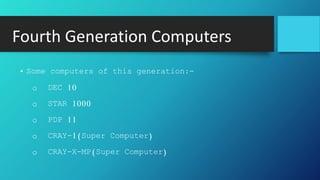
• Some computers of this generation:-
o DEC 10
o STAR 1000
o PDP 11
o CRAY-1(Super Computer)
o CRAY-X-MP(Super Computer)
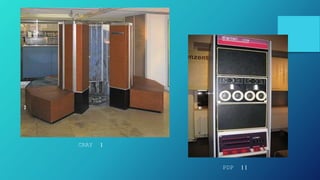
CRAY 1
PDP 11
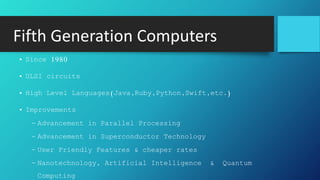
Fifth Generation Computers
• Since 1980
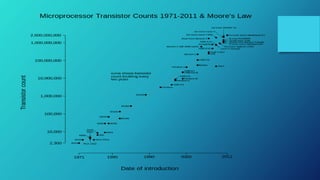
• ULSI circuits
• High Level Languages(Java,Ruby,Python,Swift,etc.)
• Improvements
- Advancement in Parallel Processing
- Advancement in Superconductor Technology
- User Friendly Features & cheaper rates
- Nanotechnology, Artificial Intelligence & Quantum
Computing
Fifth Generation Computers
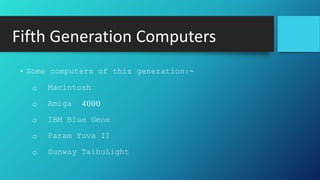
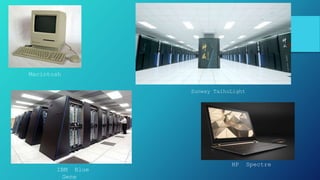
• Some computers of this generation:-
o Macintosh
o Amiga 4000
o IBM Blue Gene
o Param Yuva II
o Sunway TaihuLight
Macintosh
IBM Blue
Gene
Sunway TaihuLight
HP Spectre
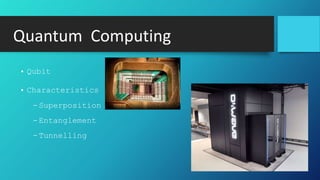
Quantum Computing
• Qubit
• Characteristics
- Superposition
- Entanglement
-Tunnelling
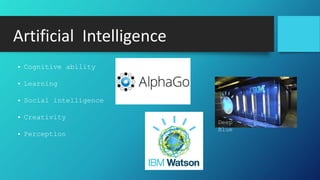
Artificial Intelligence
• Cognitive ability
• Learning
• Social intelligence
• Creativity
• Perception
Deep
Blue
Games are kind of microcosm of the outside world that's why games
wereinvented that's why humans find it fun to playThere's a rich history of computer tackling board games
It started with games like backgammon drafts and then finally there
was deep
blue in 97 that be cash bar for chess which is also a huge watershed
moment
for game AI since then the really big remaining sort of Holy Grail if
you like
has been go. In chess number of possible moves about 20 for the
average positionand Go it's about 200
Another way of viewing the complexity of go is that the number of
possible
configurations of the board is more than the number of atoms in the
universeIf you ask a great go player why they played a particular move
sometimes they'll just tell you it felt right and so you can wear you
can think
of it is that goes a much more intuitive game whereas chest is a
much more logicbased gameAlpha GO is our program to actually try and crack go
We played the european champion fenway and a five-game matchWe have an estimate how strong a program is of course you never
know when youplay a human player
they do all sorts of very interesting creative things that your
programs not
necessarily do so there's always an unknown when we play the first
gameI lose
I think he was a bit stunned off to the first game and I think he was
unsure as
to whether he had prepared enough or whether the program was
really strong
Well I think after first game maybe it don't like fight it like play
slowly soIts why begin the second gameI fight, I do mistakes sometimesI see uh, maybe I'm rightIt's why for another game I fight all the timeNow its complicated now its complicated but I lose all my games
Alpha go won 5-0 which is the first time ever a program has beat a
professionalplayeryeah
The way I see where we are now is that we've beaten the european
champion now andThe next step for us is to try and challenge the legendary playerLee Sedol you can think of is the roger federer of Go
We used to talk about what if we could eventually crack go and have
a programthat could beat the world champion
then we must have invented some generic general-purpose algorithm
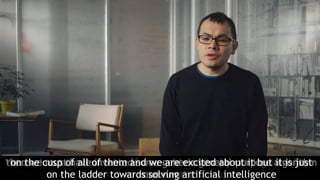
so maybe we're
on the cusp of all of them and we are excited about it but it is just
one runon the ladder towards solving artificial intelligence

Evolution of computers

  • 1.
  • 2.
    Introduction • Computers havebecome an important part of everyday life. • Their origins go way back to 2400 B.C . • First computer in 1944 - ENIAC - Weighed 5 tons.
  • 3.
    First Generation Computers •1940 - 1956 • Magnetic drums & Vacuum tubes • Machine Language • Traits - Huge size - Large amount of heat
  • 4.
    First Generation Computers •Some computers of this generation:- o ENIAC o EDVAC o UNIVAC o IBM-701 o IBM-650
  • 5.
  • 6.
    Second Generation Computers •1956 - 1963 • Core Memory & Transistors • Assembly Language • Improvements - Reduced heat generation and electricity consumption. - Significant decrease in size and increase in speed.
  • 7.
    Second Generation Computers •Some computers of this generation:- o IBM 1620 o IBM 7094 o CDC 1604 o CDC 3600 o UNIVAC 1108
  • 8.
  • 9.
    Third Generation Computers •1964 - 1971 • Integrated circuits,monitors,keyboards • High Level Languages(COBOL ,FORTRAN,etc.) • Improvements - Smaller & Powerful processors - Increased reliability, speed, etc.
  • 10.
    Third Generation Computers •Some computers of this generation:- o IBM-360 series o Honeywell-6000 series o PDP(Personal Data Processor) o IBM-370/168 o TDC-316
  • 11.
  • 12.
    Fourth Generation Computers •1971 - 1980 • VLSI circuits • High Level Languages(C ,C++,etc.) • Improvements - Emergence of pipeline processing - Improved networking - More powerful, compact, reliable, affordable and
  • 13.
    Fourth Generation Computers •Some computers of this generation:- o DEC 10 o STAR 1000 o PDP 11 o CRAY-1(Super Computer) o CRAY-X-MP(Super Computer)
  • 14.
  • 15.
    Fifth Generation Computers •Since 1980 • ULSI circuits • High Level Languages(Java,Ruby,Python,Swift,etc.) • Improvements - Advancement in Parallel Processing - Advancement in Superconductor Technology - User Friendly Features & cheaper rates - Nanotechnology, Artificial Intelligence & Quantum Computing
  • 17.
    Fifth Generation Computers •Some computers of this generation:- o Macintosh o Amiga 4000 o IBM Blue Gene o Param Yuva II o Sunway TaihuLight
  • 18.
  • 19.
    Quantum Computing • Qubit •Characteristics - Superposition - Entanglement -Tunnelling
  • 20.
    Artificial Intelligence • Cognitiveability • Learning • Social intelligence • Creativity • Perception Deep Blue
  • 21.
    Games are kindof microcosm of the outside world that's why games wereinvented that's why humans find it fun to playThere's a rich history of computer tackling board games It started with games like backgammon drafts and then finally there was deep blue in 97 that be cash bar for chess which is also a huge watershed moment for game AI since then the really big remaining sort of Holy Grail if you like has been go. In chess number of possible moves about 20 for the average positionand Go it's about 200 Another way of viewing the complexity of go is that the number of possible configurations of the board is more than the number of atoms in the universeIf you ask a great go player why they played a particular move sometimes they'll just tell you it felt right and so you can wear you can think of it is that goes a much more intuitive game whereas chest is a much more logicbased gameAlpha GO is our program to actually try and crack go We played the european champion fenway and a five-game matchWe have an estimate how strong a program is of course you never know when youplay a human player they do all sorts of very interesting creative things that your programs not necessarily do so there's always an unknown when we play the first gameI lose I think he was a bit stunned off to the first game and I think he was unsure as to whether he had prepared enough or whether the program was really strong Well I think after first game maybe it don't like fight it like play slowly soIts why begin the second gameI fight, I do mistakes sometimesI see uh, maybe I'm rightIt's why for another game I fight all the timeNow its complicated now its complicated but I lose all my games Alpha go won 5-0 which is the first time ever a program has beat a professionalplayeryeah The way I see where we are now is that we've beaten the european champion now andThe next step for us is to try and challenge the legendary playerLee Sedol you can think of is the roger federer of Go We used to talk about what if we could eventually crack go and have a programthat could beat the world champion then we must have invented some generic general-purpose algorithm so maybe we're on the cusp of all of them and we are excited about it but it is just one runon the ladder towards solving artificial intelligence