The True Story of the
Theory of Evolution
Or Fitzroy, Fickle Fuegians, and Funny,
Feathered Finches
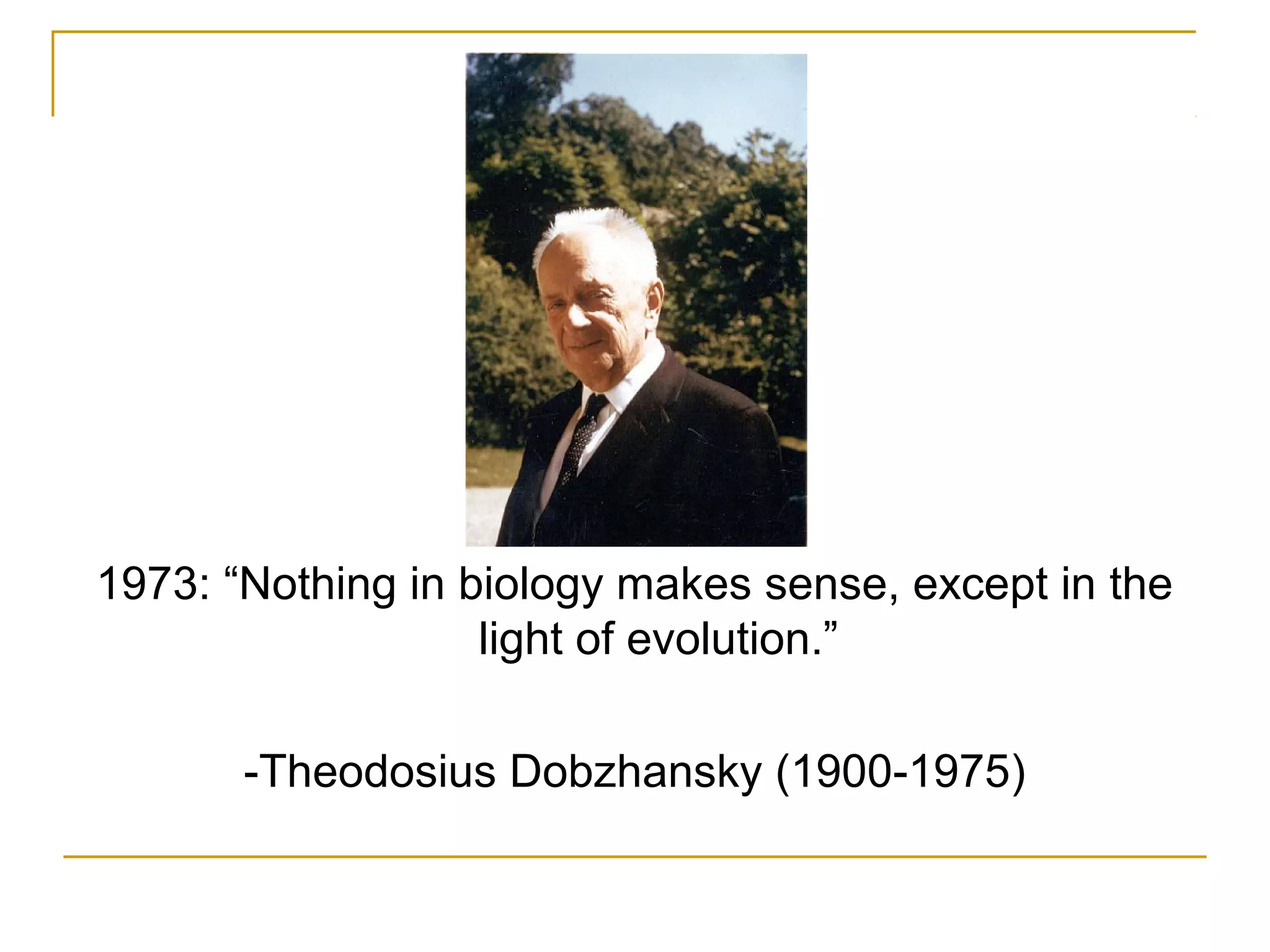
1973: “Nothing in biology makes sense, except in the
light of evolution.”
-Theodosius Dobzhansky (1900-1975)
Evolution, Pre-Darwin
 Beginnings in Ancient Greece
 Species are changeable… Variation occurs!
 Selective breeding utilized already
 “Artificial Selection”
 Widely accepted in early-1800s: Lamarck’s
Theory of Acquired Characteristics
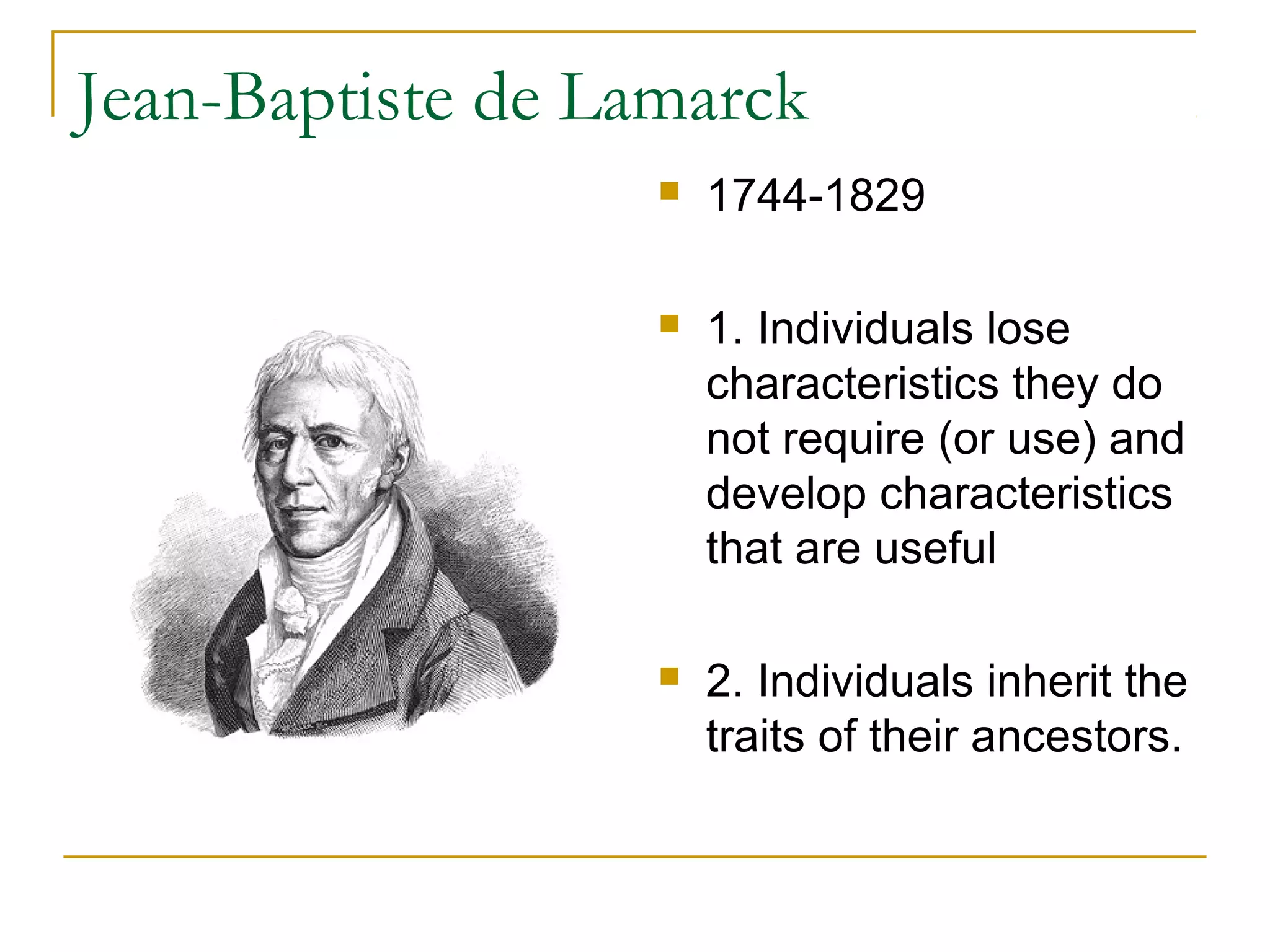
Jean-Baptiste de Lamarck
 1744-1829
 1. Individuals lose
characteristics they do
not require (or use) and
develop characteristics
that are useful
 2. Individuals inherit the
traits of their ancestors.
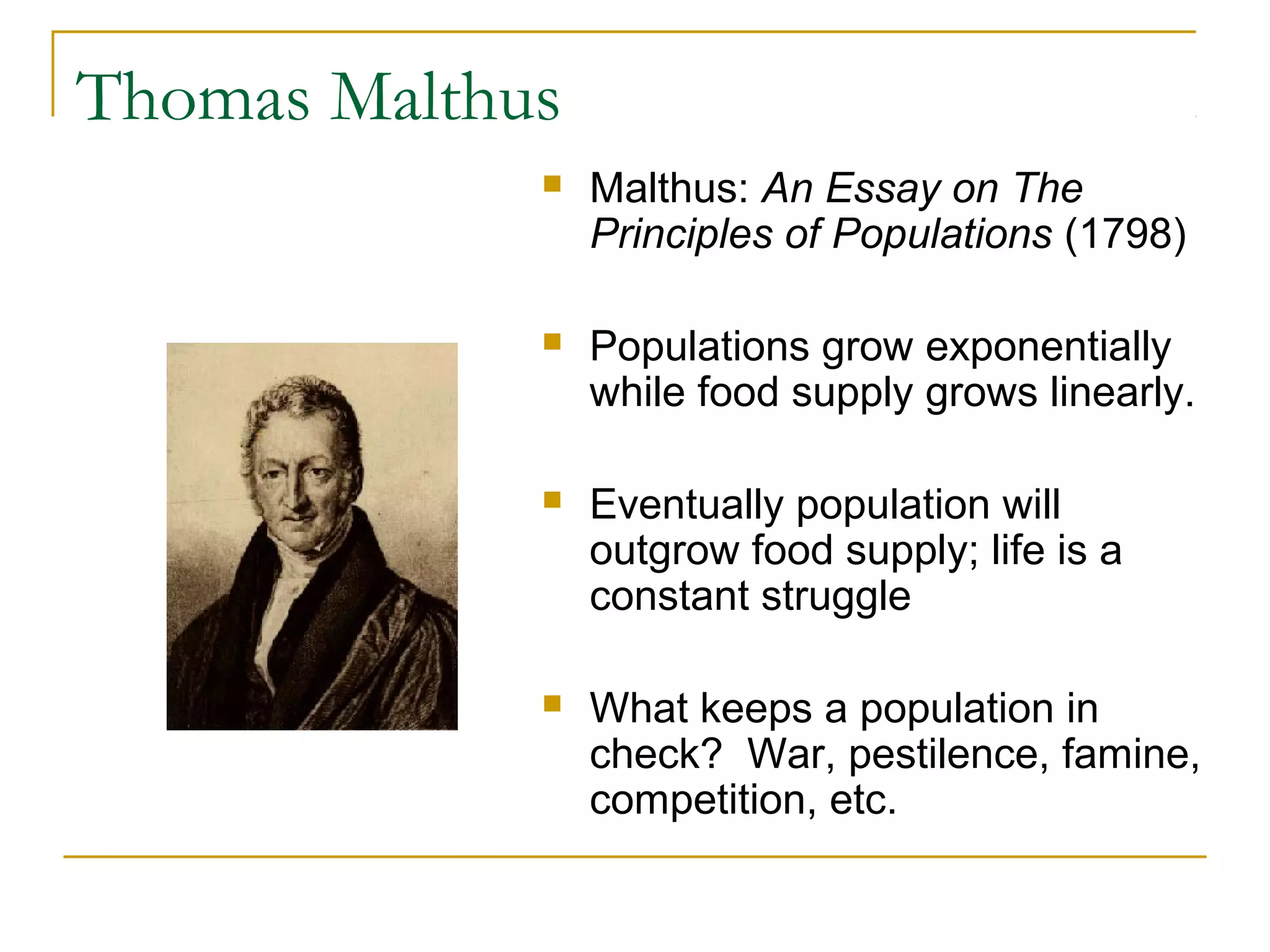
Thomas Malthus
 Malthus: An Essay on The
Principles of Populations (1798)
 Populations grow exponentially
while food supply grows linearly.
 Eventually population will
outgrow food supply; life is a
constant struggle
 What keeps a population in
check? War, pestilence, famine,
competition, etc.
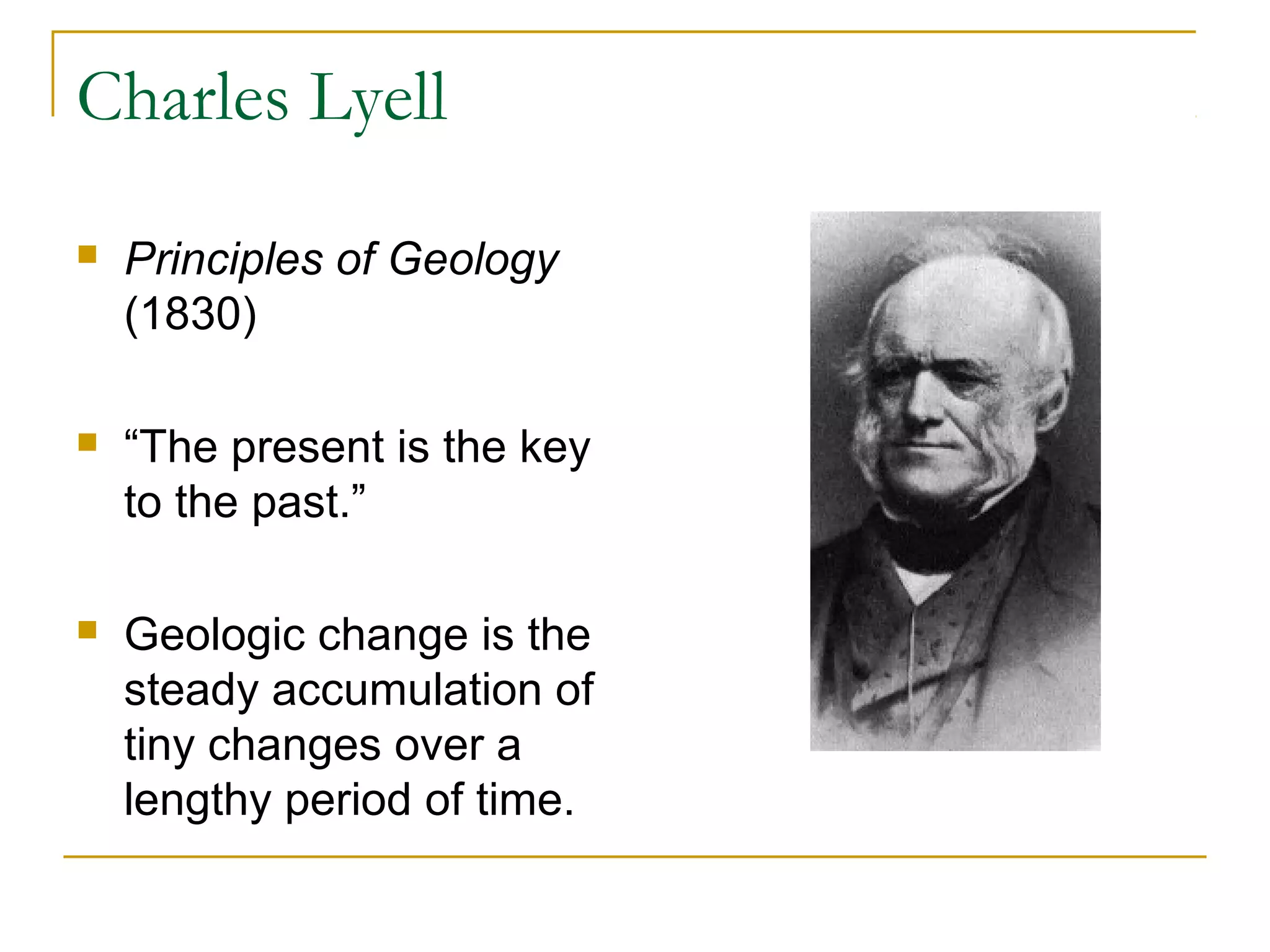
Charles Lyell
 Principles of Geology
(1830)
 “The present is the key
to the past.”
 Geologic change is the
steady accumulation of
tiny changes over a
lengthy period of time.
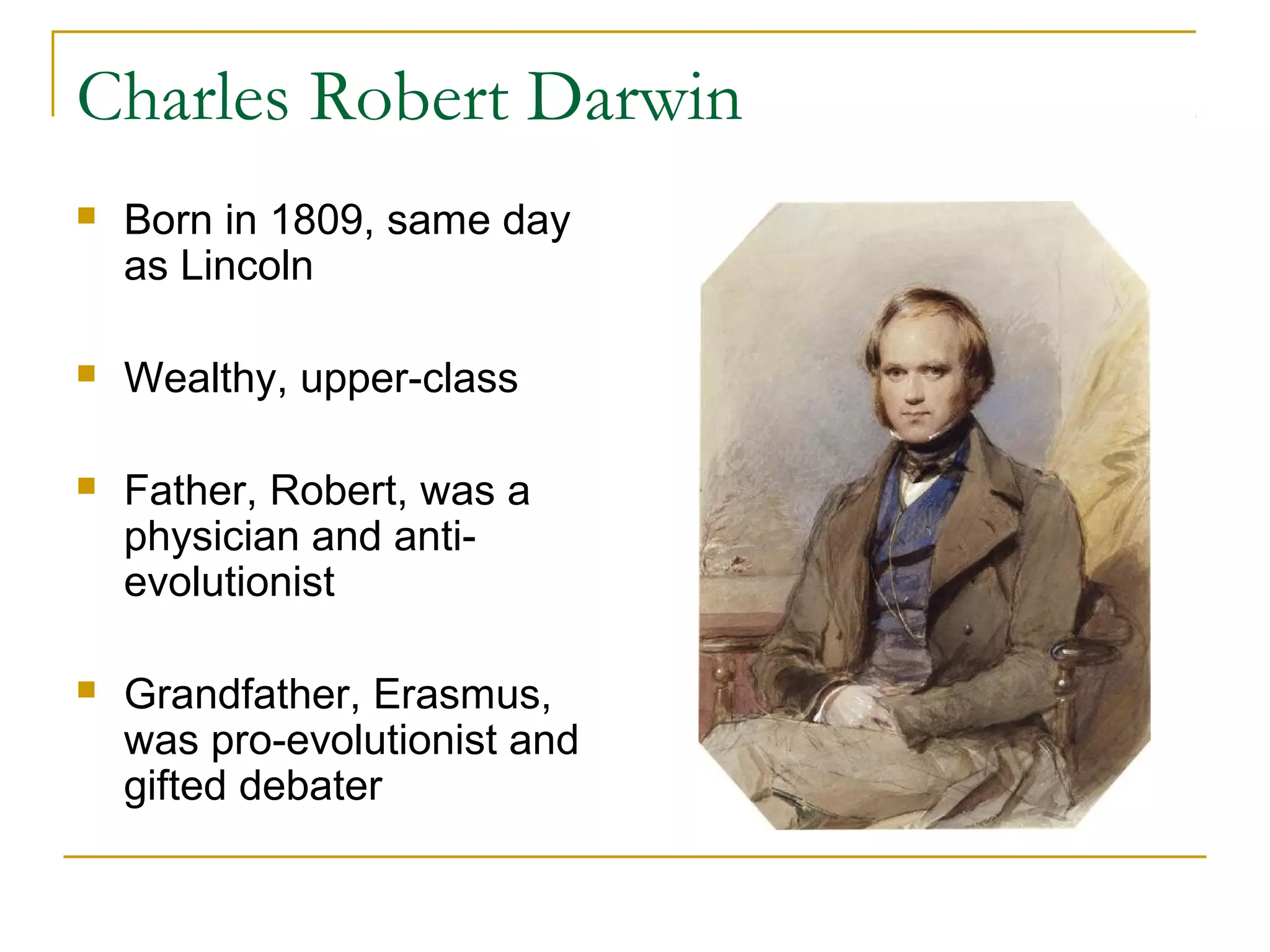
Charles Robert Darwin
 Born in 1809, same day
as Lincoln
 Wealthy, upper-class
 Father, Robert, was a
physician and anti-
evolutionist
 Grandfather, Erasmus,
was pro-evolutionist and
gifted debater
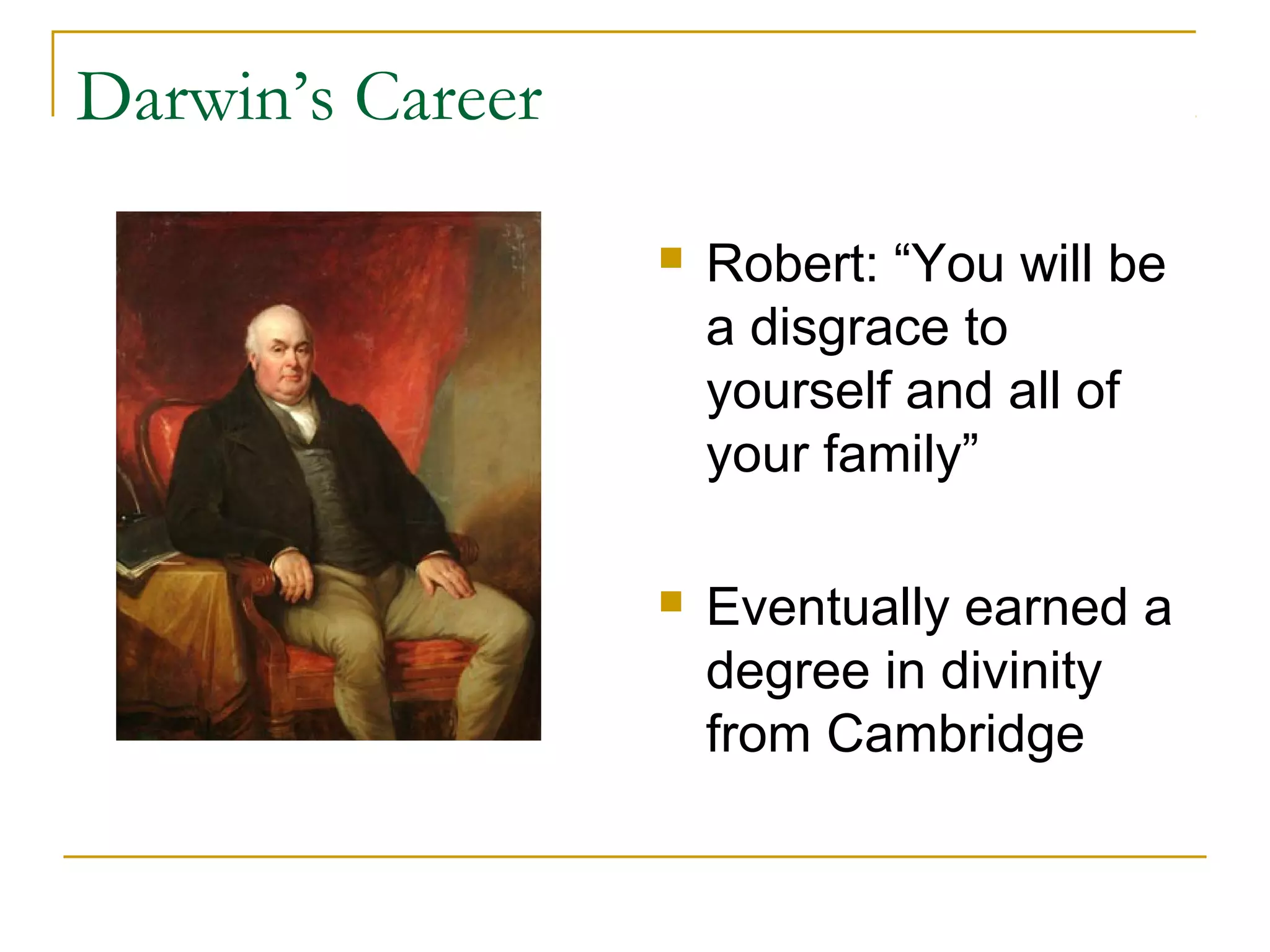
Darwin’s Career
 Robert: “You will be
a disgrace to
yourself and all of
your family”
 Eventually earned a
degree in divinity
from Cambridge
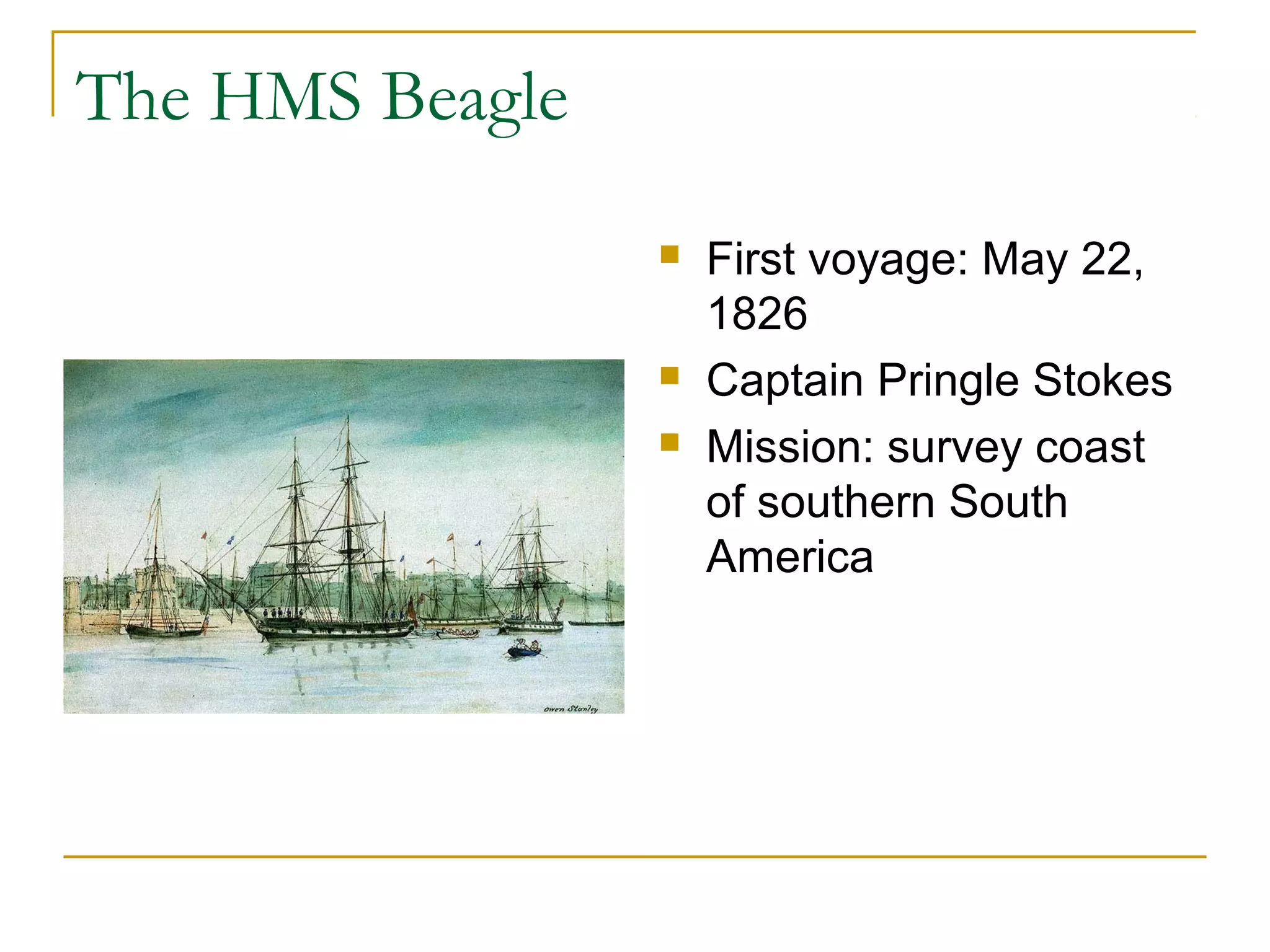
The HMS Beagle
 First voyage: May 22,
1826
 Captain Pringle Stokes
 Mission: survey coast
of southern South
America
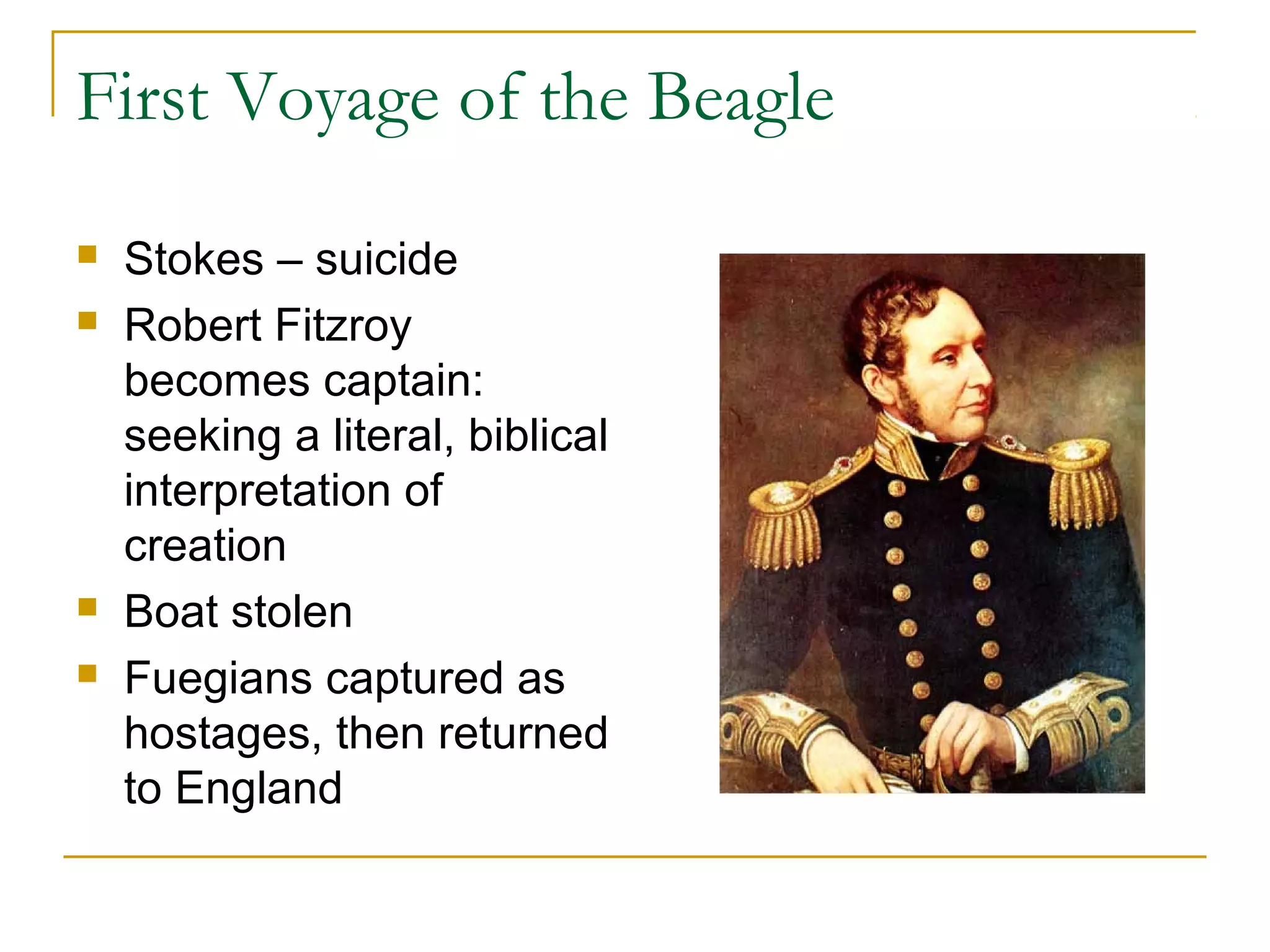
First Voyage of the Beagle
 Stokes – suicide
 Robert Fitzroy
becomes captain:
seeking a literal, biblical
interpretation of
creation
 Boat stolen
 Fuegians captured as
hostages, then returned
to England
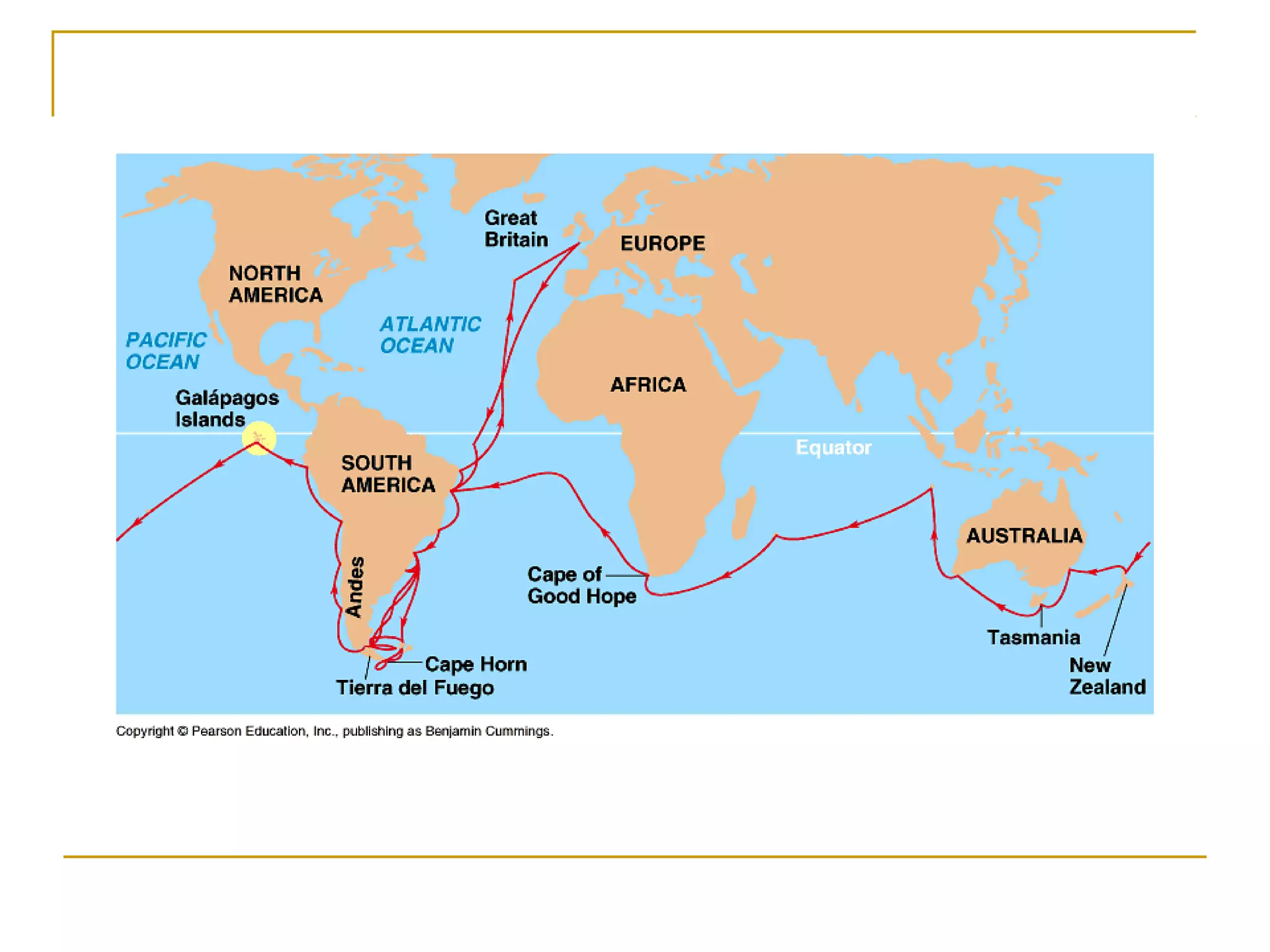
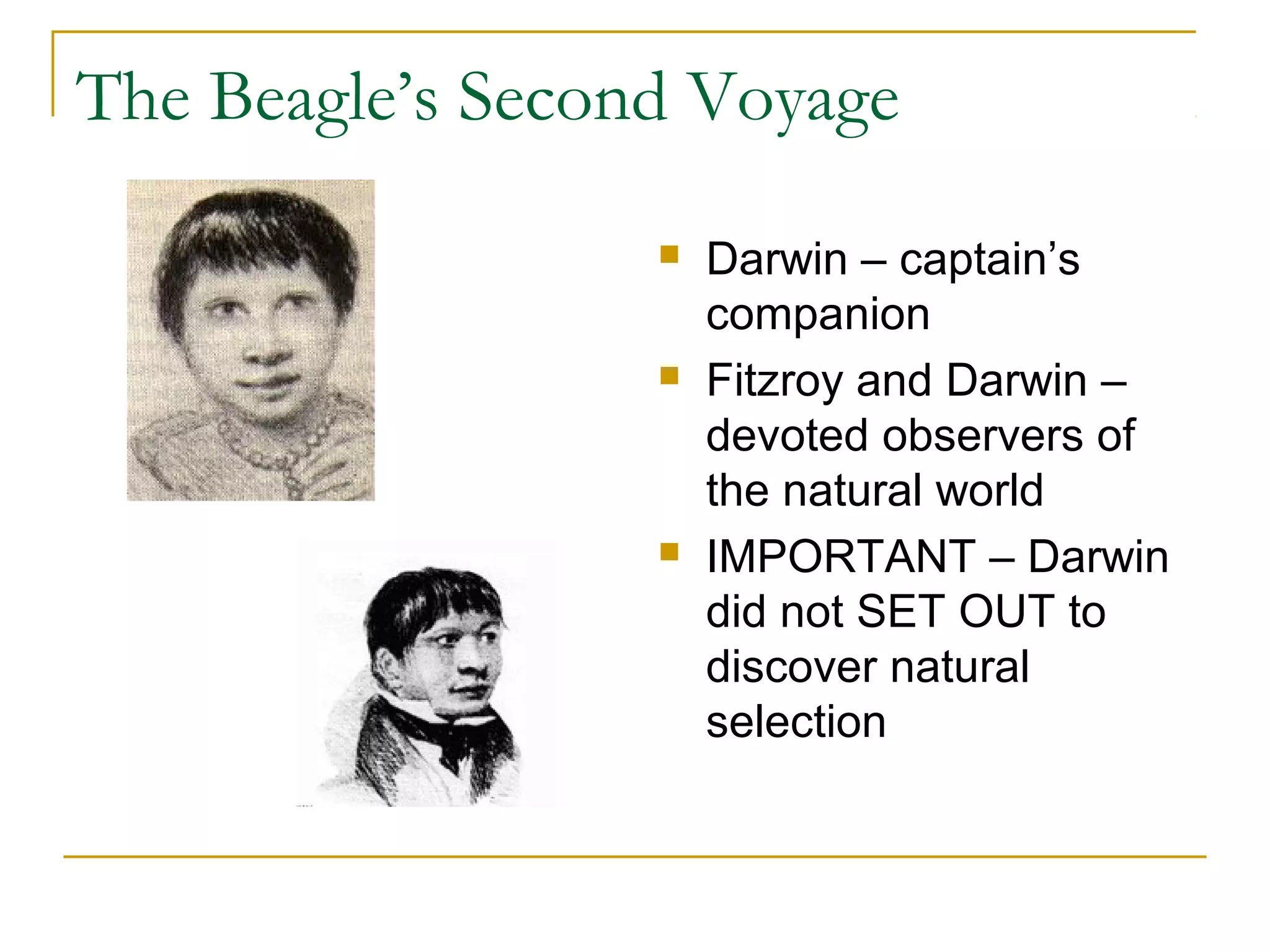
The Beagle’s Second Voyage
 Darwin – captain’s
companion
 Fitzroy and Darwin –
devoted observers of
the natural world
 IMPORTANT – Darwin
did not SET OUT to
discover natural
selection
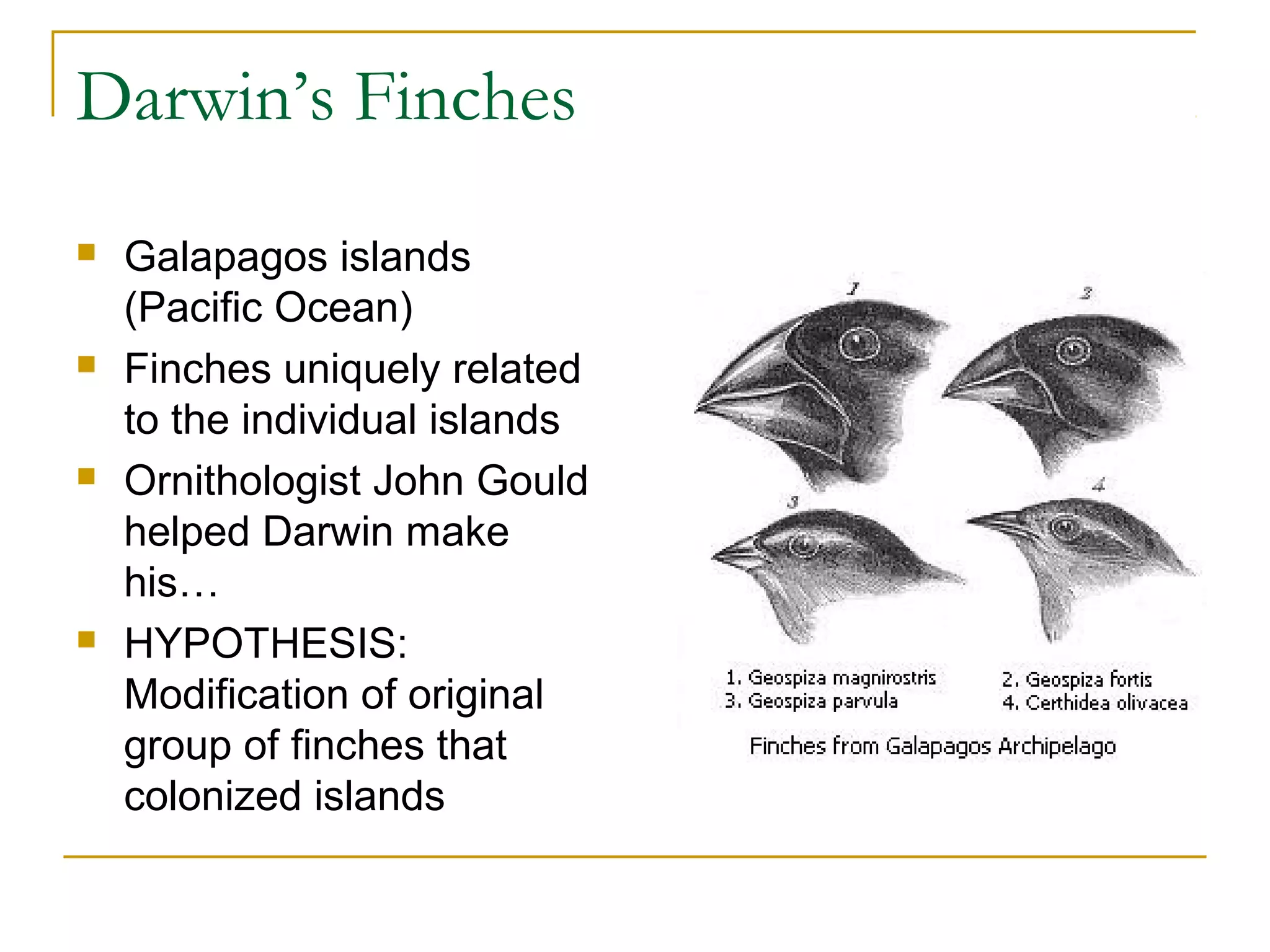
Darwin’s Finches
 Galapagos islands
(Pacific Ocean)
 Finches uniquely related
to the individual islands
 Ornithologist John Gould
helped Darwin make
his…
 HYPOTHESIS:
Modification of original
group of finches that
colonized islands
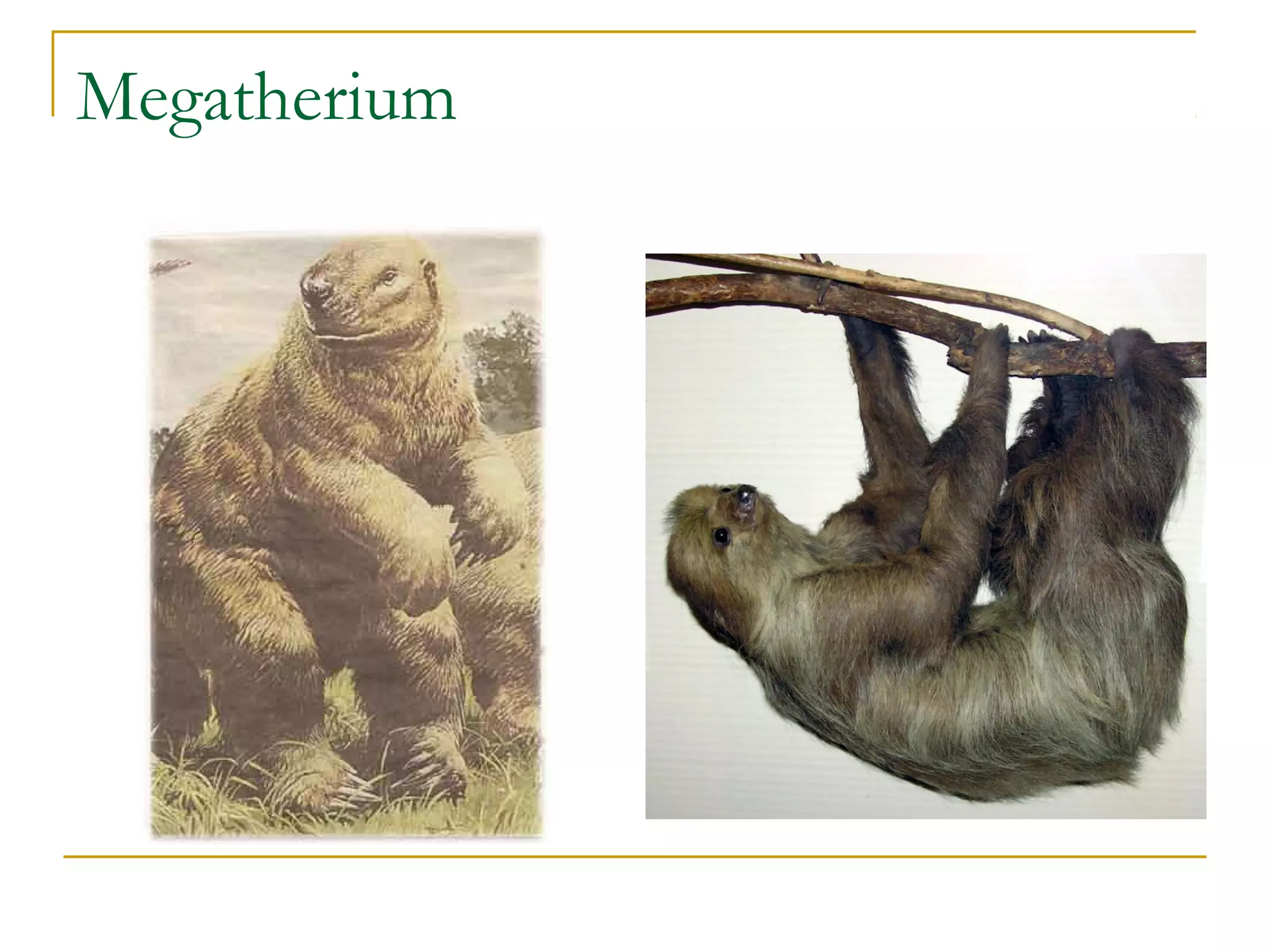
Megatherium
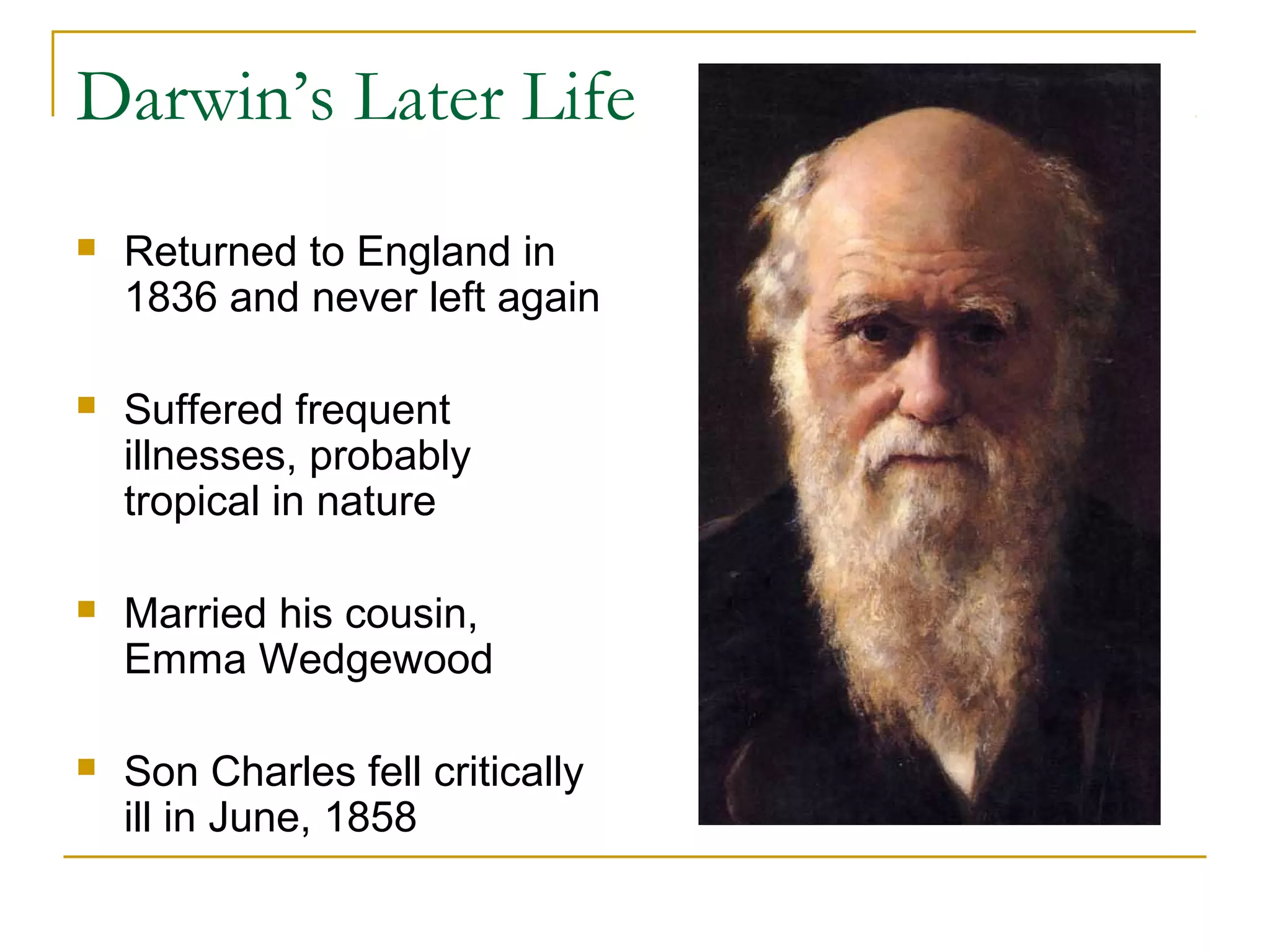
Darwin’s Later Life
 Returned to England in
1836 and never left again
 Suffered frequent
illnesses, probably
tropical in nature
 Married his cousin,
Emma Wedgewood
 Son Charles fell critically
ill in June, 1858
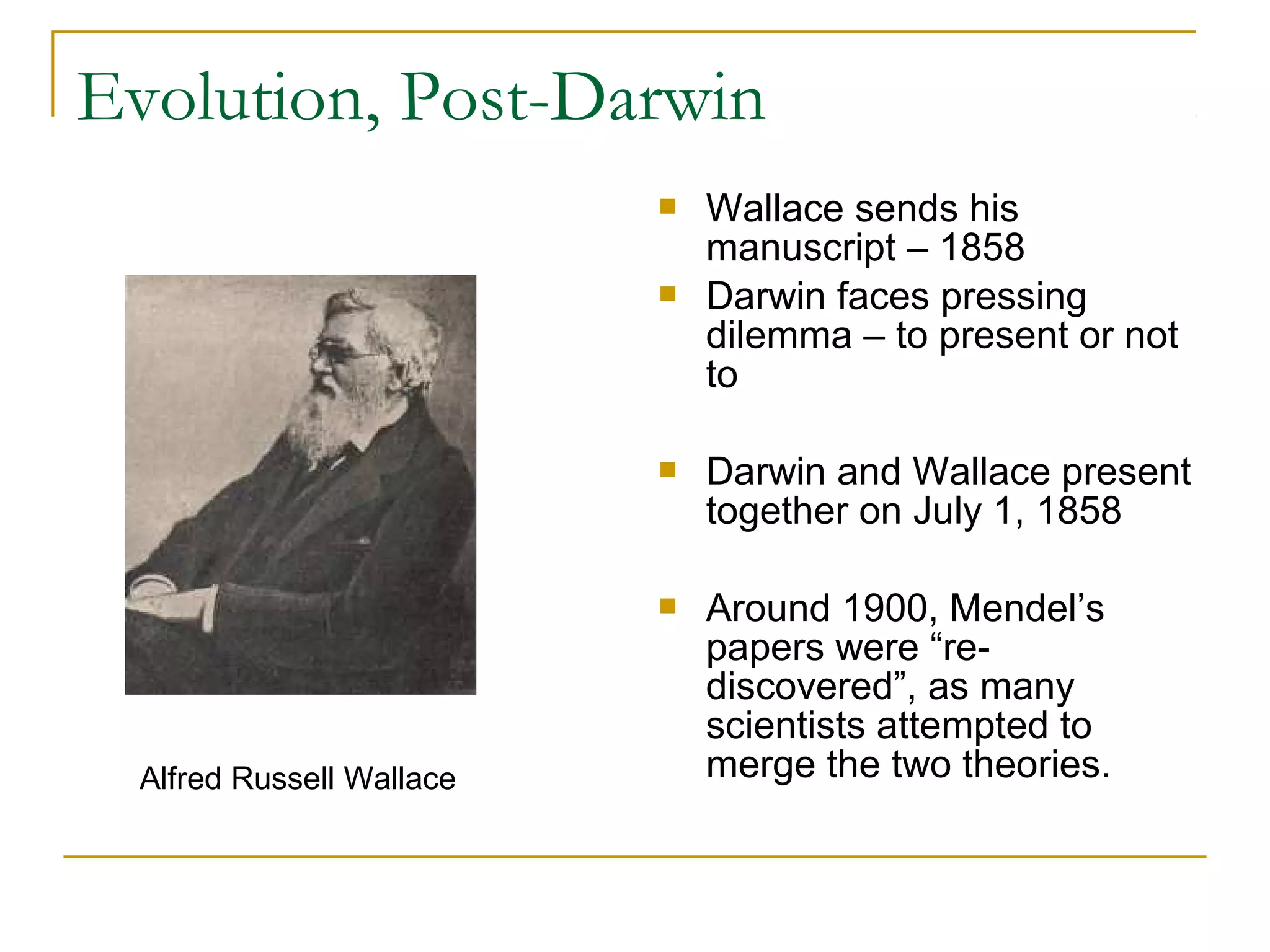
Evolution, Post-Darwin
 Wallace sends his
manuscript – 1858
 Darwin faces pressing
dilemma – to present or not
to
 Darwin and Wallace present
together on July 1, 1858
 Around 1900, Mendel’s
papers were “re-
discovered”, as many
scientists attempted to
merge the two theories.Alfred Russell Wallace
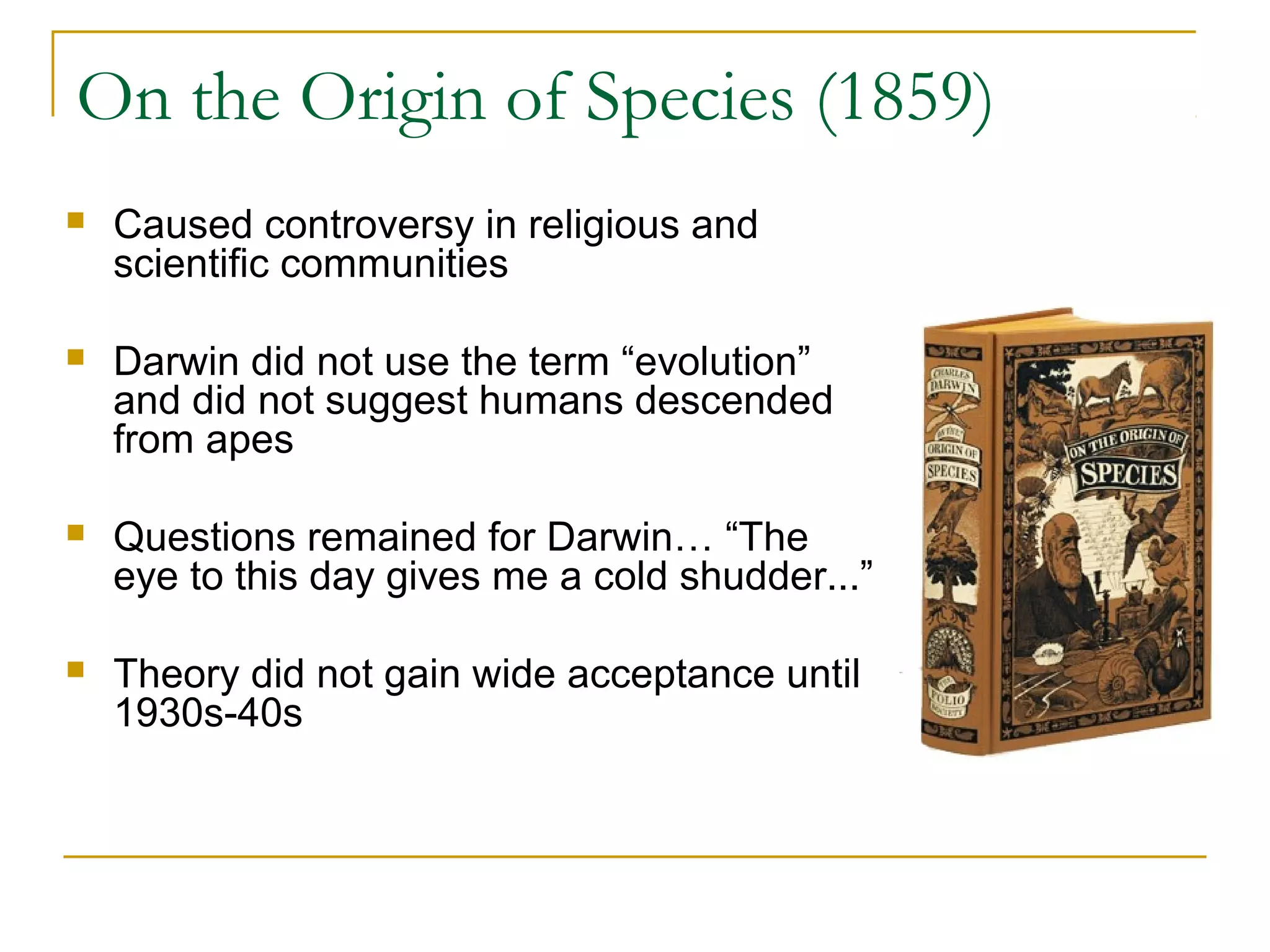
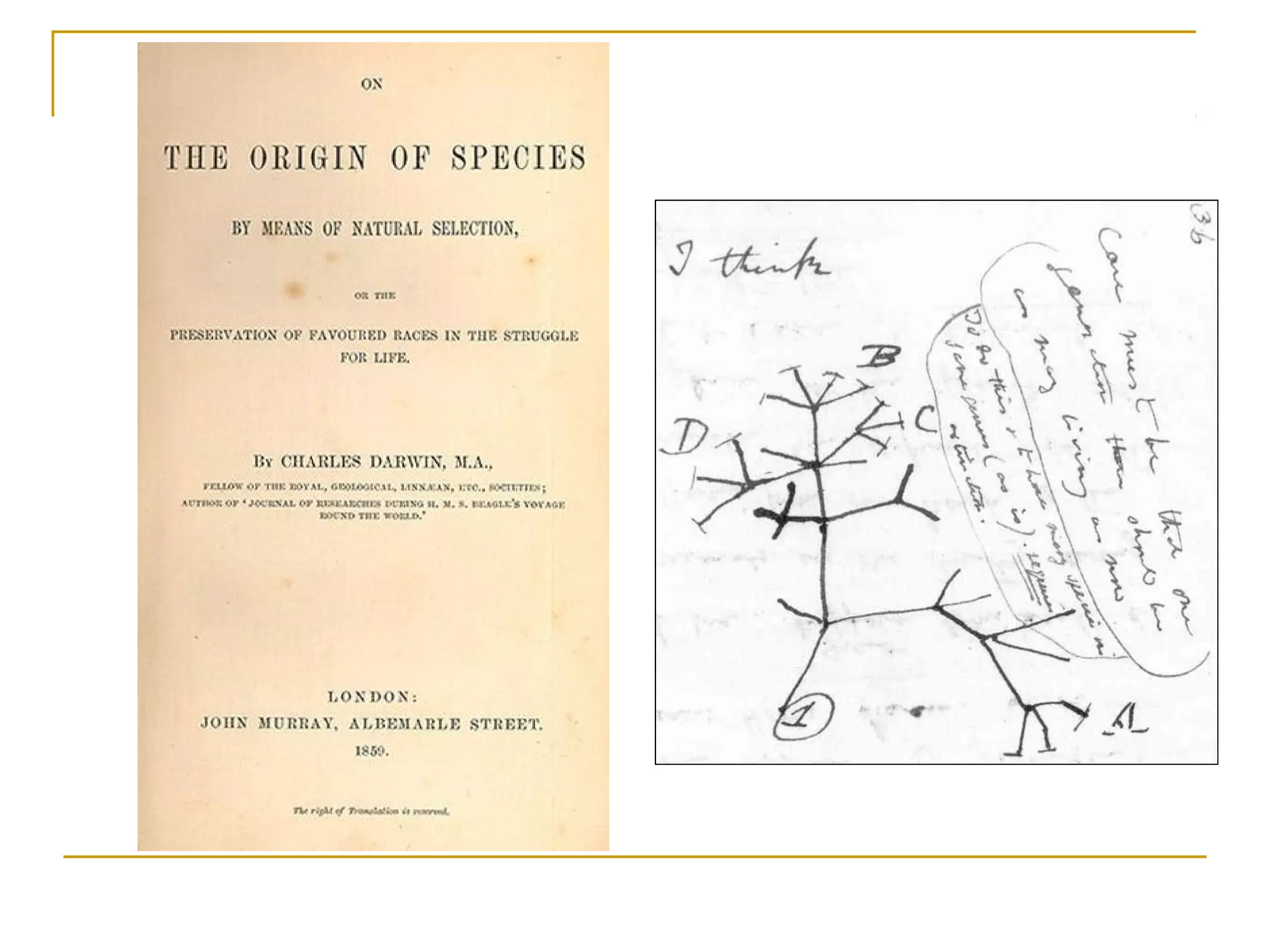
On the Origin of Species (1859)
 Caused controversy in religious and
scientific communities
 Darwin did not use the term “evolution”
and did not suggest humans descended
from apes
 Questions remained for Darwin… “The
eye to this day gives me a cold shudder...”
 Theory did not gain wide acceptance until
1930s-40s
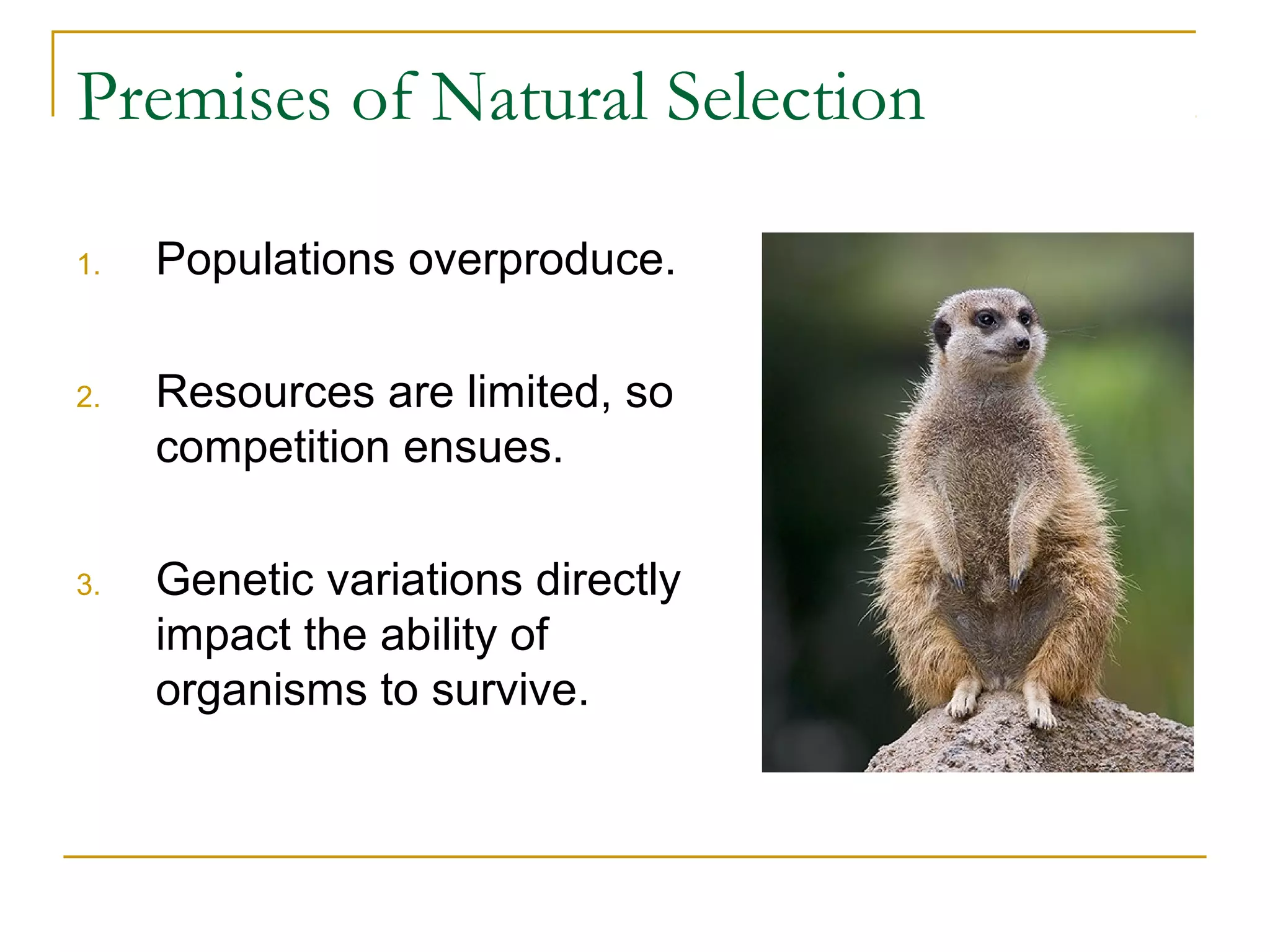
Premises of Natural Selection
1. Populations overproduce.
2. Resources are limited, so
competition ensues.
3. Genetic variations directly
impact the ability of
organisms to survive.
Premises of Natural Selection
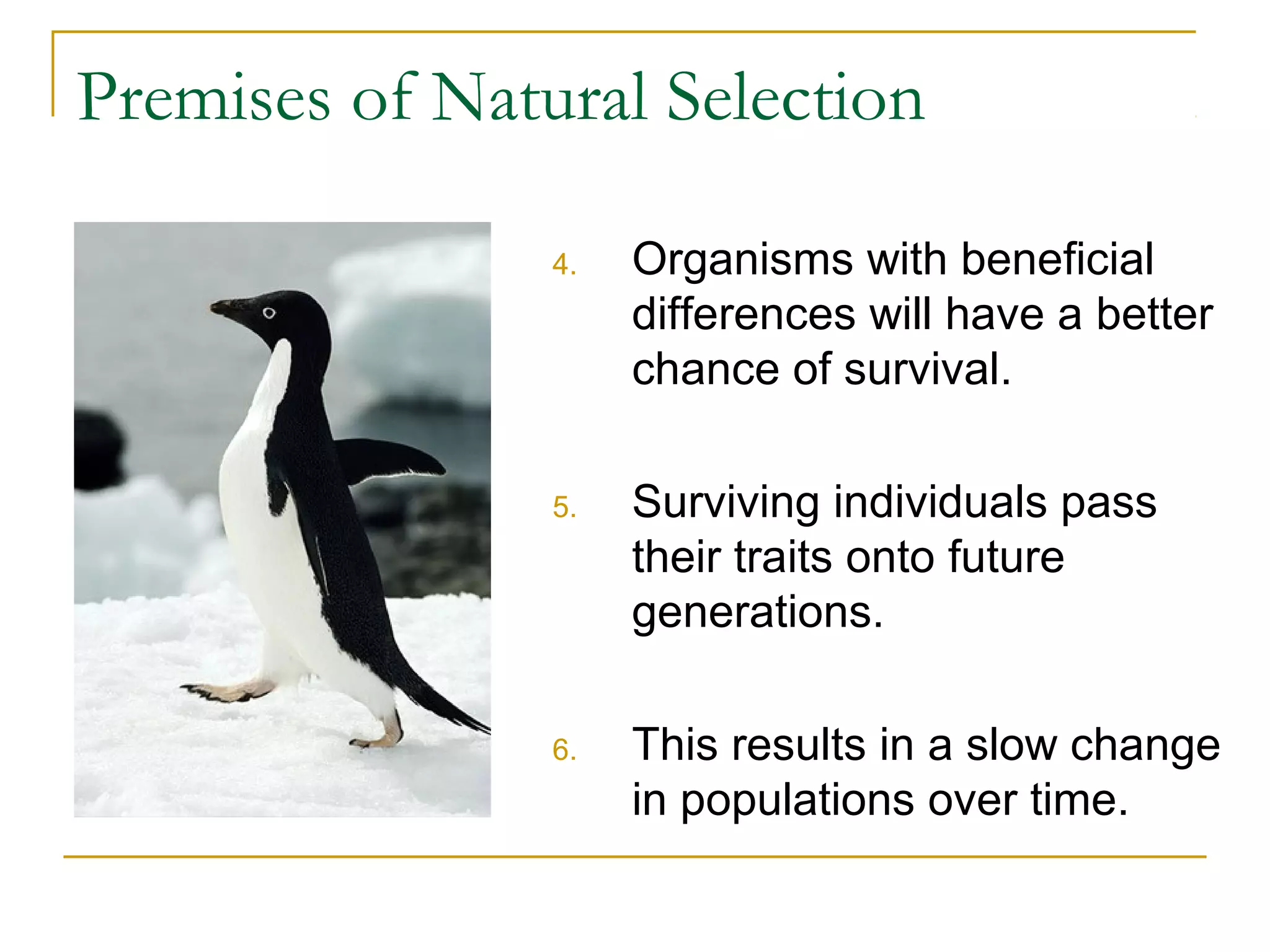
4. Organisms with beneficial
differences will have a better
chance of survival.
5. Surviving individuals pass
their traits onto future
generations.
6. This results in a slow change
in populations over time.
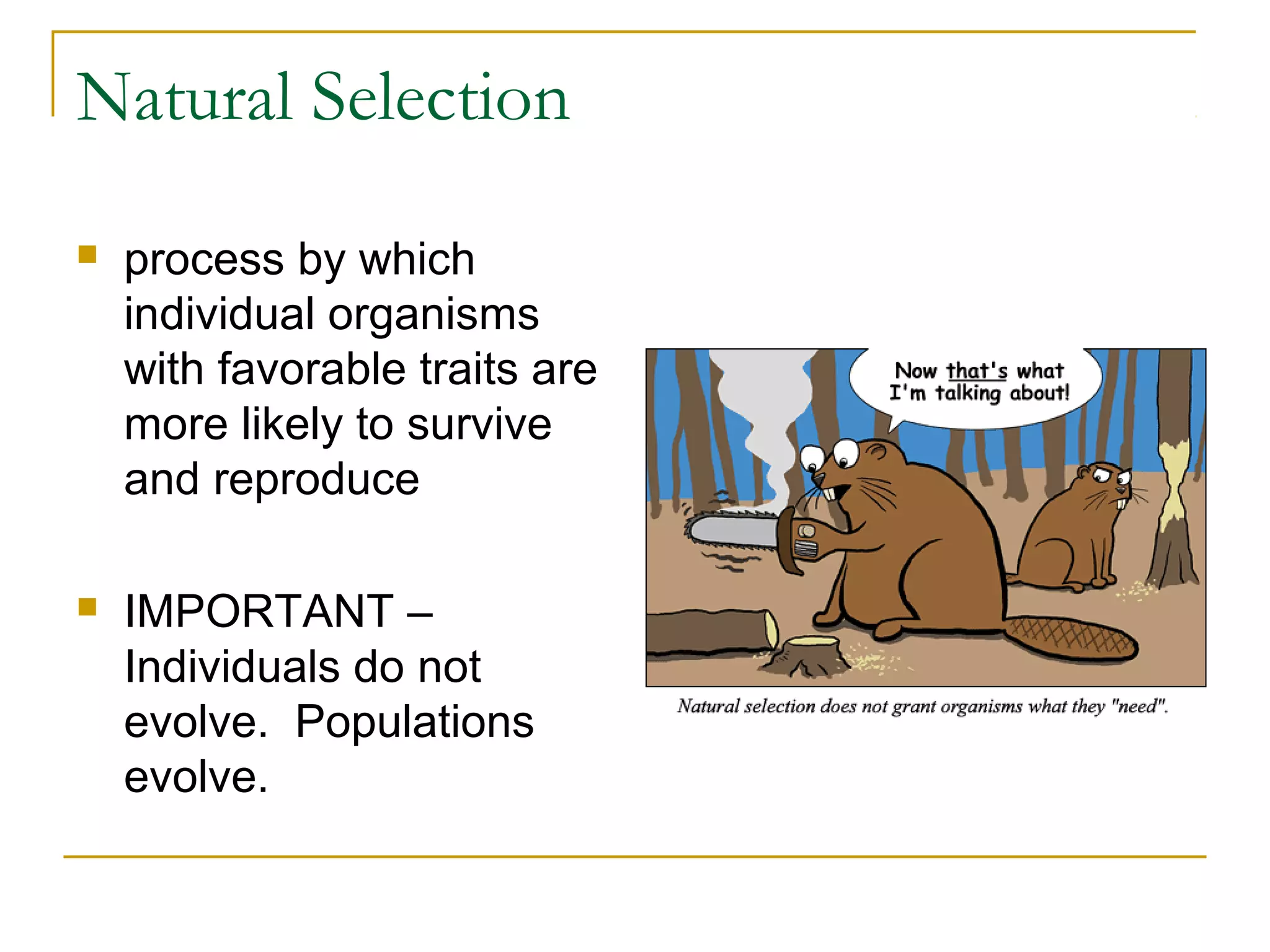
Natural Selection
 process by which
individual organisms
with favorable traits are
more likely to survive
and reproduce
 IMPORTANT –
Individuals do not
evolve. Populations
evolve.
KEY DEFINITIONS
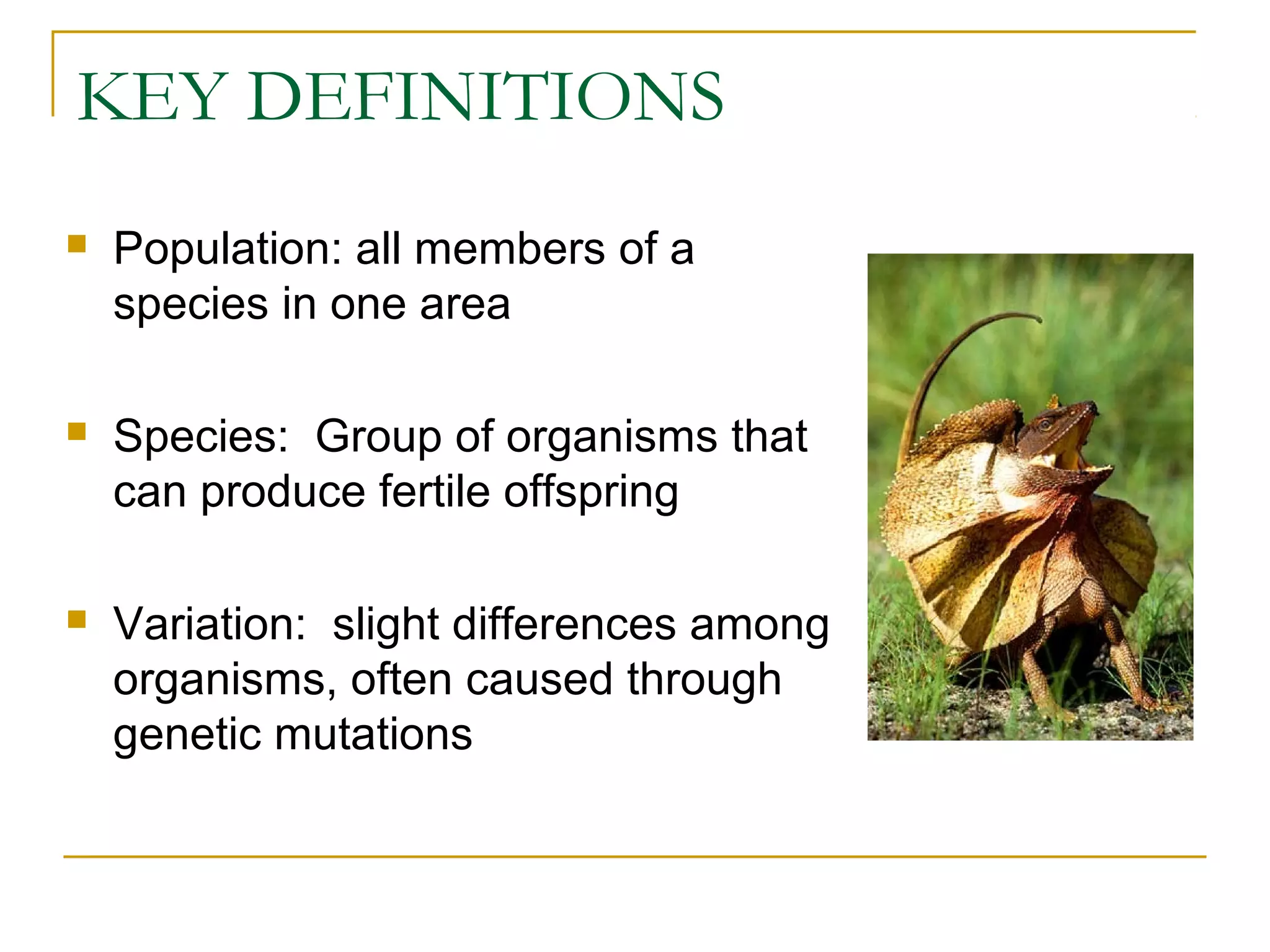
 Population: all members of a
species in one area
 Species: Group of organisms that
can produce fertile offspring
 Variation: slight differences among
organisms, often caused through
genetic mutations
KEY DEFINITIONS
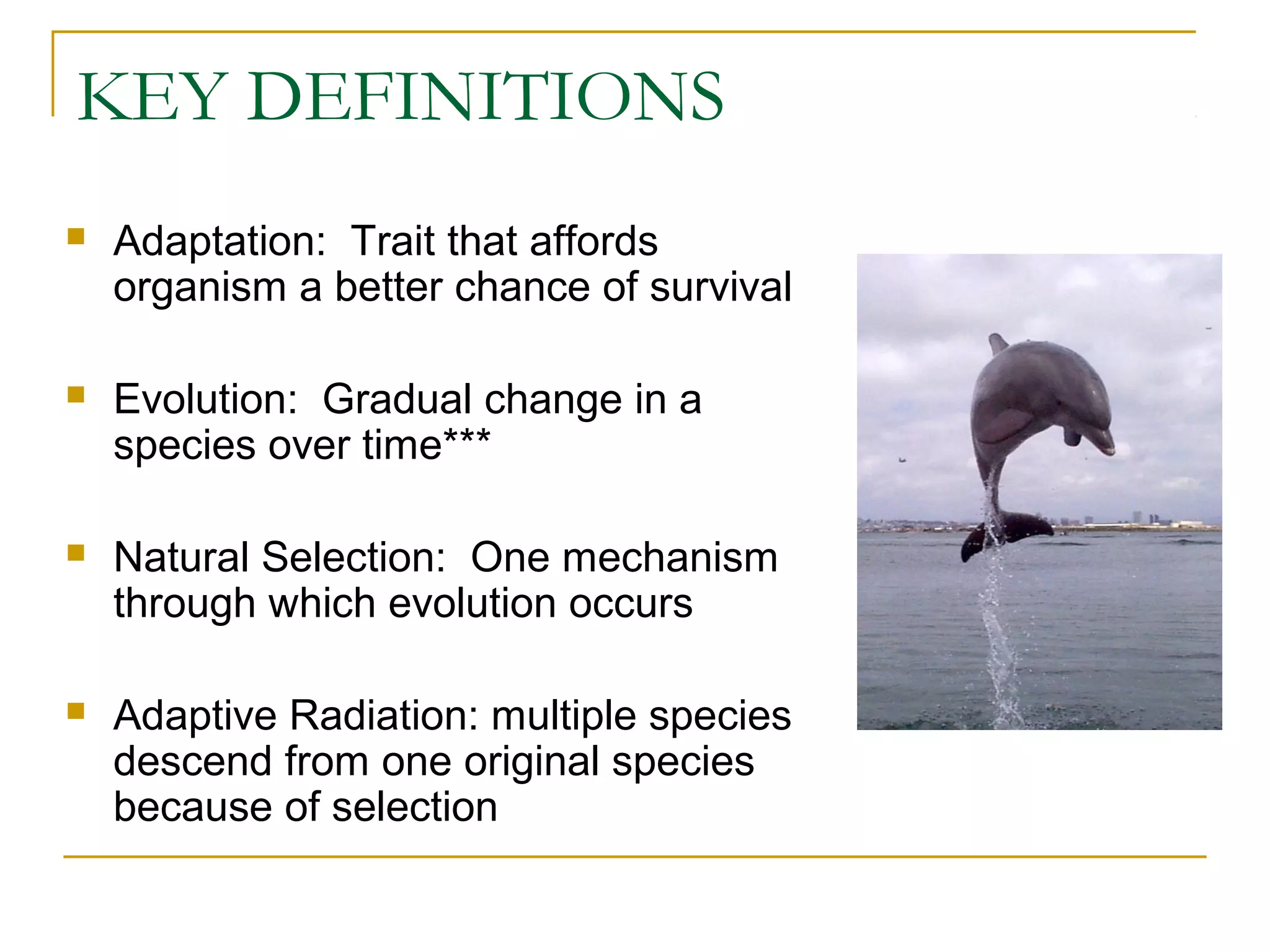
 Adaptation: Trait that affords
organism a better chance of survival
 Evolution: Gradual change in a
species over time***
 Natural Selection: One mechanism
through which evolution occurs
 Adaptive Radiation: multiple species
descend from one original species
because of selection
Darwin’s Mechanisms for Evolution
1. Natural Selection
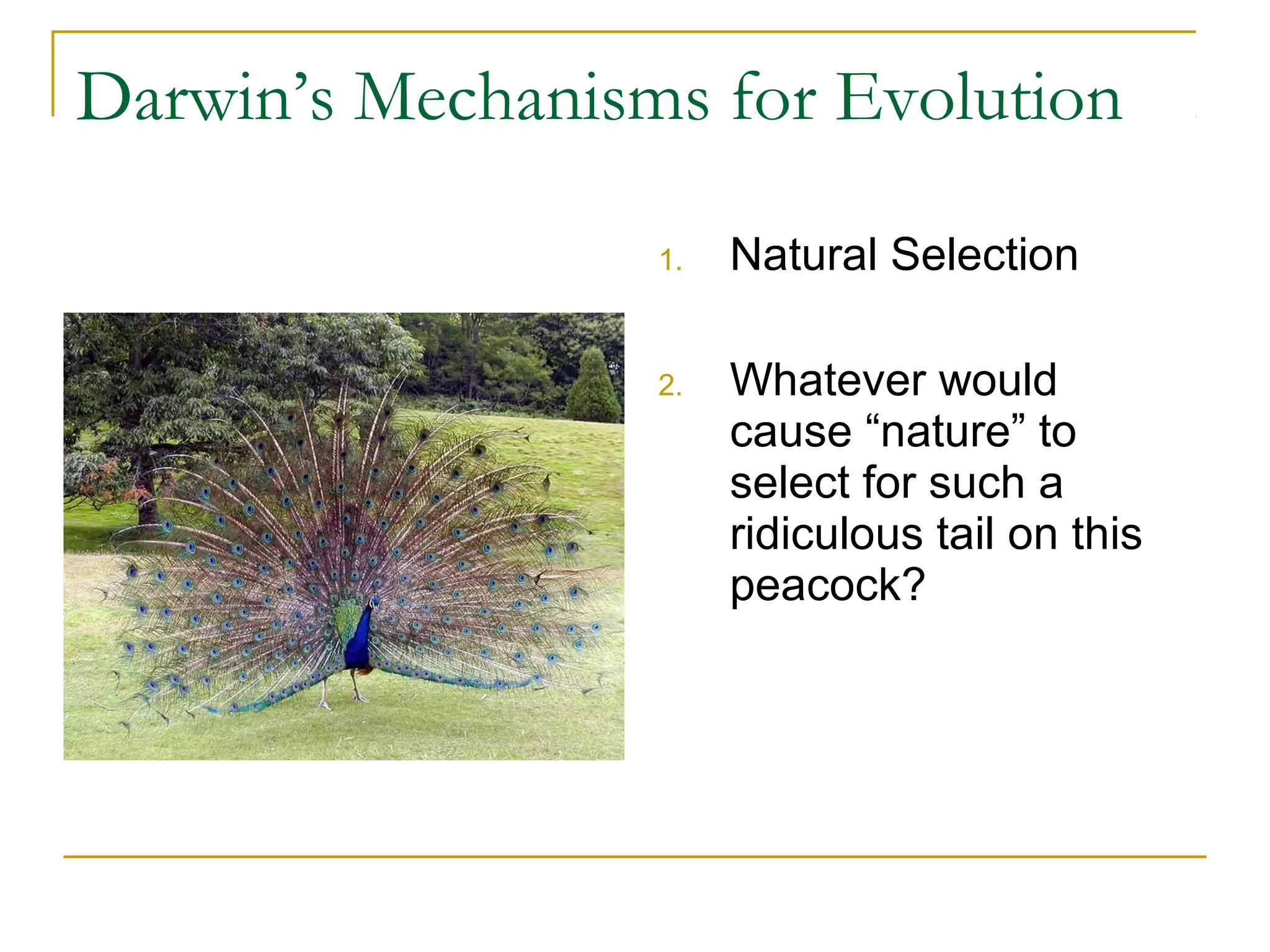
2. Whatever would
cause “nature” to
select for such a
ridiculous tail on this
peacock?

Evolution Part 1 - Darwin

  • 2.
    The True Storyof the Theory of Evolution Or Fitzroy, Fickle Fuegians, and Funny, Feathered Finches
  • 3.
    1973: “Nothing inbiology makes sense, except in the light of evolution.” -Theodosius Dobzhansky (1900-1975)
  • 4.
    Evolution, Pre-Darwin  Beginningsin Ancient Greece  Species are changeable… Variation occurs!  Selective breeding utilized already  “Artificial Selection”  Widely accepted in early-1800s: Lamarck’s Theory of Acquired Characteristics
  • 5.
    Jean-Baptiste de Lamarck 1744-1829  1. Individuals lose characteristics they do not require (or use) and develop characteristics that are useful  2. Individuals inherit the traits of their ancestors.
  • 6.
    Thomas Malthus  Malthus:An Essay on The Principles of Populations (1798)  Populations grow exponentially while food supply grows linearly.  Eventually population will outgrow food supply; life is a constant struggle  What keeps a population in check? War, pestilence, famine, competition, etc.
  • 7.
    Charles Lyell  Principlesof Geology (1830)  “The present is the key to the past.”  Geologic change is the steady accumulation of tiny changes over a lengthy period of time.
  • 9.
    Charles Robert Darwin Born in 1809, same day as Lincoln  Wealthy, upper-class  Father, Robert, was a physician and anti- evolutionist  Grandfather, Erasmus, was pro-evolutionist and gifted debater
  • 10.
    Darwin’s Career  Robert:“You will be a disgrace to yourself and all of your family”  Eventually earned a degree in divinity from Cambridge
  • 11.
    The HMS Beagle First voyage: May 22, 1826  Captain Pringle Stokes  Mission: survey coast of southern South America
  • 13.
    First Voyage ofthe Beagle  Stokes – suicide  Robert Fitzroy becomes captain: seeking a literal, biblical interpretation of creation  Boat stolen  Fuegians captured as hostages, then returned to England
  • 14.
    The Beagle’s SecondVoyage  Darwin – captain’s companion  Fitzroy and Darwin – devoted observers of the natural world  IMPORTANT – Darwin did not SET OUT to discover natural selection
  • 15.
    Darwin’s Finches  Galapagosislands (Pacific Ocean)  Finches uniquely related to the individual islands  Ornithologist John Gould helped Darwin make his…  HYPOTHESIS: Modification of original group of finches that colonized islands
  • 16.
  • 17.
    Darwin’s Later Life Returned to England in 1836 and never left again  Suffered frequent illnesses, probably tropical in nature  Married his cousin, Emma Wedgewood  Son Charles fell critically ill in June, 1858
  • 18.
    Evolution, Post-Darwin  Wallacesends his manuscript – 1858  Darwin faces pressing dilemma – to present or not to  Darwin and Wallace present together on July 1, 1858  Around 1900, Mendel’s papers were “re- discovered”, as many scientists attempted to merge the two theories.Alfred Russell Wallace
  • 19.
    On the Originof Species (1859)  Caused controversy in religious and scientific communities  Darwin did not use the term “evolution” and did not suggest humans descended from apes  Questions remained for Darwin… “The eye to this day gives me a cold shudder...”  Theory did not gain wide acceptance until 1930s-40s
  • 21.
    Premises of NaturalSelection 1. Populations overproduce. 2. Resources are limited, so competition ensues. 3. Genetic variations directly impact the ability of organisms to survive.
  • 22.
    Premises of NaturalSelection 4. Organisms with beneficial differences will have a better chance of survival. 5. Surviving individuals pass their traits onto future generations. 6. This results in a slow change in populations over time.
  • 23.
    Natural Selection  processby which individual organisms with favorable traits are more likely to survive and reproduce  IMPORTANT – Individuals do not evolve. Populations evolve.
  • 24.
    KEY DEFINITIONS  Population:all members of a species in one area  Species: Group of organisms that can produce fertile offspring  Variation: slight differences among organisms, often caused through genetic mutations
  • 25.
    KEY DEFINITIONS  Adaptation:Trait that affords organism a better chance of survival  Evolution: Gradual change in a species over time***  Natural Selection: One mechanism through which evolution occurs  Adaptive Radiation: multiple species descend from one original species because of selection
  • 26.
    Darwin’s Mechanisms forEvolution 1. Natural Selection 2. Whatever would cause “nature” to select for such a ridiculous tail on this peacock?