What have you learned
from your audience
feedback?
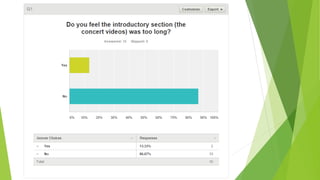
When creating the introduction section of the documentary- the
concert montage clips – I was wary of how long this section was
and between presenting my rough cut and final cut, I shortened it
down from a minute and a half to a minute long. However, when
gathering audience feedback, I found that only 2/15 thought that the
introduction was too long at the start. On reviewing the other
answers, I realised that the people who answered Yes to the
introduction being too long were actually both teenagers,
suggesting that the minute-long introduction may have made them
get easily distracted and bored. However, as my target audience
are adults and parents, of those that are adults that took part in the
survey, all agreed that the introduction wasn’t too long. Therefore
meaning that the “Yes” replies that I received can be disregarded
due to both not being the intended target audience.
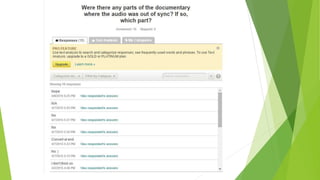
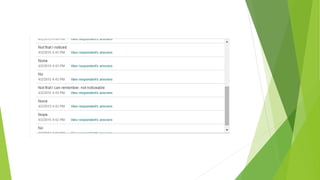
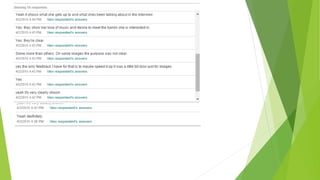
A large part of my time editing was making sure that the audio clips
were properly synced with the video clips. Because of this, I wanted
to get the opinions of others as it is likely that, by the end of making
the documentary, I would have stopped noticing so easily when
something is out of sync. From my audience feedback, there was
only one person who thought the audio was out of sync and that
was during the concert footage at the end. As it wasn’t any of the
interview sections, I felt that it could be disregarded more easily –
especially considering that it was extremely difficult to get the music
in sync with the concert footage (as the band play faster onstage
anyway) meaning I had to mess around with the speed of the
concert footage.
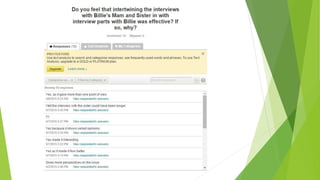
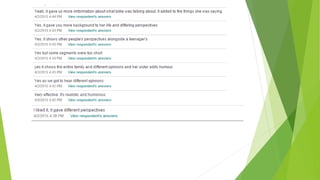
 For this question, I wanted to know whether having three
people’s points of view answering questions (such as how did
your family react….) was more effective than having one point of
view. Additionally, I wanted to see whether it was more effective
jumping from one to another instead of having block interview
sections with each person. Overall, the only criticism on this that
I got was that the section filmed with Billie’s younger sister,
Kelsey could have been longer and some interview sections
were overall short and also could have been longer – although,
due to time constraints, it was difficult in getting all family
member’s interviews to fit in with the 5 minutes and some had to
be shortened. I found that most of the positive feedback had
similar findings of it giving more than one perspective and
making it seem less boring and occasionally adding humour –
which was the intended purpose of having more than one
perspective.
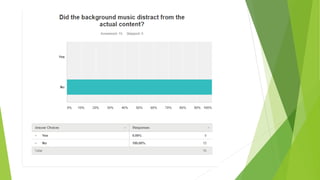
 When editing the footage, I became so familiar with it that even
without watching it I could recall what was said and where it was
said. Because of this, it was difficult understanding whether or
not the background music that played throughout was too
distracting or not- so I felt that it was important to see whether
other people found it distracting. Overall, everyone who took part
in the survey found the same findings as me, and the
background music wasn’t distracting enough to take away from
the actual content.
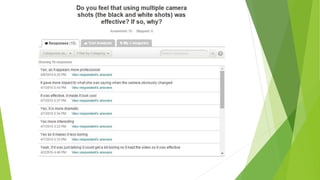
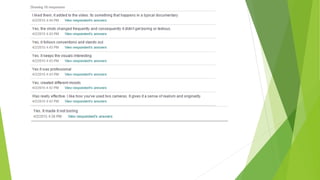
 Following the convention of using multiple camera shots found in
the Green Day: Cuatro documentary, I used two cameras to film
the interview sections – one filming in back and white and being
a close up shot of the person being interviewed. I asked the
audience whether they felt that doing so was effective and the
overall result was positive. Many people felt that doing so made it
seem more professional. Additionally, having one single camera
shot throughout would easily become boring and tedious, so
having a variety kept the audience interested, also adding
originality and realism to my documentary. This feedback shows,
that even with my target audience of adults, the black and white
shots were seen to keep the documentary interesting and less
tedious and didn’t become too repetitive and predictable.
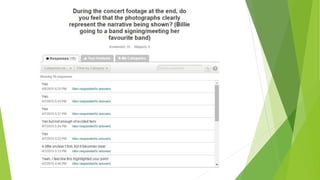
 This question was about the photographs at the end – accompanied
with the concert footage – and whether or not it was true to form as
showing a fan meeting her favourite band with the narrative being clear
enough. I got varying levels of advice and criticism for this section – the
most common being that at the start the images were unclear as to
show the narrative but it soon became clear, additionally, they felt that
the narrative didn’t show enough excitement. At the band signing event,
no videos were allowed to be taken, and therefore security were very
cautious about the use of cameras, meaning I had a limited amount of
time to get photographs of the event. This meant that, through the
images, I had to show the narrative of Billie and her friends going to
meet their favourite band. Although, many picked up on the fact that this
narrative section linked in with the interview section prior – when
analysing the results, it seemed that the adults that took part in this
section were the ones who noticed this more, meaning that the section
is appropriate for adults who are likely to take more notice at the minor
details.
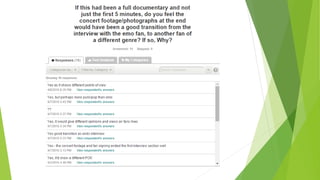
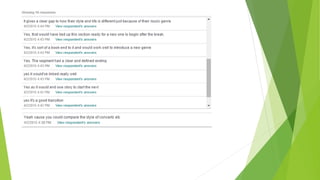
 For this question, many answered in a similar way. They felt that
having a different fan of a different genre would be good to
compare the lives and lifestyles which was useful to me.
Additionally, many – including the adults – agreed that ending
with the concert footage and photographs was a book-end to the
section on introducing the emo fan in preparation to be
introduced to a different fan after the break.
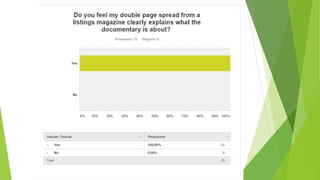
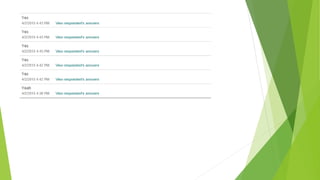
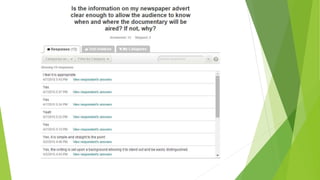
 Out of everyone who answered this question, they all agreed that
the information in the article about the documentary was clear
enough to tell the readers what the film is about without giving
away everything that happens in the film. This question was
important, as without an article that has clear and easily
understandable information about the documentary, there is no
point having an article.
 For this question, I wanted to find out if the format that I had
advertised the documentary was appropriate for what the
documentary about. In reply, everyone answered that the
information was clear enough and the layout was appropriate.
Everyone one agreed that the advert was straight to the point
and the background did not distract from the text.
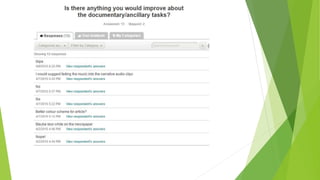
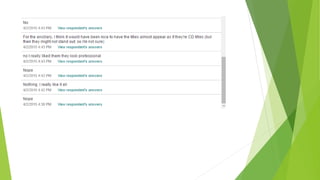
 For this question, I got 9 response that they wouldn’t change
anything and four giving suggestions on what could be changed.
For the suggestions, almost everyone agreed that the
advertisement’s colour scheme wasn’t as strong as it could have
been and therefore it became disjointed and unrecognizable
when linked with the documentary. Because of this, I altered the
colour scheme slightly to fit better with the emo fan in the
documentary.
 Overall, out of all the questions asked, most of the replies were
positive and praising my documentary and ancillary tasks. I found that
most of the criticism was from the younger audiences whereas the
adult audiences appeared to give positive feedback all around –
allowing me to understand that the way in which I have presented
information appeals to them, whereas the teenagers who answered
were more “picky” towards the content. This is an example of Stuart
Hall’s encoding and decoding theory. The information that I am
wanting to portray (music fans in a good light) in the documentary is
the encoding of information. How the audience portray this is the
decoding, in which there are three types : Dominant/hegemonic
position – the audience accept all of the information (similar to the
Hypodermic Syringe Model), negotiated position – the audience
accept and reject the information- and oppositional position – the
audience reject the information. From my audience feedback, I feel
that my intended audience will be in a negotiated position, as they are
likely to have been aware of the negative stereotypes of emo fans
which will stop them from accepting all of the information.

Evaluation 3

  • 1.
    What have youlearned from your audience feedback?
  • 3.
    When creating theintroduction section of the documentary- the concert montage clips – I was wary of how long this section was and between presenting my rough cut and final cut, I shortened it down from a minute and a half to a minute long. However, when gathering audience feedback, I found that only 2/15 thought that the introduction was too long at the start. On reviewing the other answers, I realised that the people who answered Yes to the introduction being too long were actually both teenagers, suggesting that the minute-long introduction may have made them get easily distracted and bored. However, as my target audience are adults and parents, of those that are adults that took part in the survey, all agreed that the introduction wasn’t too long. Therefore meaning that the “Yes” replies that I received can be disregarded due to both not being the intended target audience.
  • 6.
    A large partof my time editing was making sure that the audio clips were properly synced with the video clips. Because of this, I wanted to get the opinions of others as it is likely that, by the end of making the documentary, I would have stopped noticing so easily when something is out of sync. From my audience feedback, there was only one person who thought the audio was out of sync and that was during the concert footage at the end. As it wasn’t any of the interview sections, I felt that it could be disregarded more easily – especially considering that it was extremely difficult to get the music in sync with the concert footage (as the band play faster onstage anyway) meaning I had to mess around with the speed of the concert footage.
  • 9.
     For thisquestion, I wanted to know whether having three people’s points of view answering questions (such as how did your family react….) was more effective than having one point of view. Additionally, I wanted to see whether it was more effective jumping from one to another instead of having block interview sections with each person. Overall, the only criticism on this that I got was that the section filmed with Billie’s younger sister, Kelsey could have been longer and some interview sections were overall short and also could have been longer – although, due to time constraints, it was difficult in getting all family member’s interviews to fit in with the 5 minutes and some had to be shortened. I found that most of the positive feedback had similar findings of it giving more than one perspective and making it seem less boring and occasionally adding humour – which was the intended purpose of having more than one perspective.
  • 11.
     When editingthe footage, I became so familiar with it that even without watching it I could recall what was said and where it was said. Because of this, it was difficult understanding whether or not the background music that played throughout was too distracting or not- so I felt that it was important to see whether other people found it distracting. Overall, everyone who took part in the survey found the same findings as me, and the background music wasn’t distracting enough to take away from the actual content.
  • 14.
     Following theconvention of using multiple camera shots found in the Green Day: Cuatro documentary, I used two cameras to film the interview sections – one filming in back and white and being a close up shot of the person being interviewed. I asked the audience whether they felt that doing so was effective and the overall result was positive. Many people felt that doing so made it seem more professional. Additionally, having one single camera shot throughout would easily become boring and tedious, so having a variety kept the audience interested, also adding originality and realism to my documentary. This feedback shows, that even with my target audience of adults, the black and white shots were seen to keep the documentary interesting and less tedious and didn’t become too repetitive and predictable.
  • 17.
     This questionwas about the photographs at the end – accompanied with the concert footage – and whether or not it was true to form as showing a fan meeting her favourite band with the narrative being clear enough. I got varying levels of advice and criticism for this section – the most common being that at the start the images were unclear as to show the narrative but it soon became clear, additionally, they felt that the narrative didn’t show enough excitement. At the band signing event, no videos were allowed to be taken, and therefore security were very cautious about the use of cameras, meaning I had a limited amount of time to get photographs of the event. This meant that, through the images, I had to show the narrative of Billie and her friends going to meet their favourite band. Although, many picked up on the fact that this narrative section linked in with the interview section prior – when analysing the results, it seemed that the adults that took part in this section were the ones who noticed this more, meaning that the section is appropriate for adults who are likely to take more notice at the minor details.
  • 20.
     For thisquestion, many answered in a similar way. They felt that having a different fan of a different genre would be good to compare the lives and lifestyles which was useful to me. Additionally, many – including the adults – agreed that ending with the concert footage and photographs was a book-end to the section on introducing the emo fan in preparation to be introduced to a different fan after the break.
  • 22.
     Out ofeveryone who answered this question, they all agreed that the information in the article about the documentary was clear enough to tell the readers what the film is about without giving away everything that happens in the film. This question was important, as without an article that has clear and easily understandable information about the documentary, there is no point having an article.
  • 25.
     For thisquestion, I wanted to find out if the format that I had advertised the documentary was appropriate for what the documentary about. In reply, everyone answered that the information was clear enough and the layout was appropriate. Everyone one agreed that the advert was straight to the point and the background did not distract from the text.
  • 28.
     For thisquestion, I got 9 response that they wouldn’t change anything and four giving suggestions on what could be changed. For the suggestions, almost everyone agreed that the advertisement’s colour scheme wasn’t as strong as it could have been and therefore it became disjointed and unrecognizable when linked with the documentary. Because of this, I altered the colour scheme slightly to fit better with the emo fan in the documentary.
  • 29.
     Overall, outof all the questions asked, most of the replies were positive and praising my documentary and ancillary tasks. I found that most of the criticism was from the younger audiences whereas the adult audiences appeared to give positive feedback all around – allowing me to understand that the way in which I have presented information appeals to them, whereas the teenagers who answered were more “picky” towards the content. This is an example of Stuart Hall’s encoding and decoding theory. The information that I am wanting to portray (music fans in a good light) in the documentary is the encoding of information. How the audience portray this is the decoding, in which there are three types : Dominant/hegemonic position – the audience accept all of the information (similar to the Hypodermic Syringe Model), negotiated position – the audience accept and reject the information- and oppositional position – the audience reject the information. From my audience feedback, I feel that my intended audience will be in a negotiated position, as they are likely to have been aware of the negative stereotypes of emo fans which will stop them from accepting all of the information.