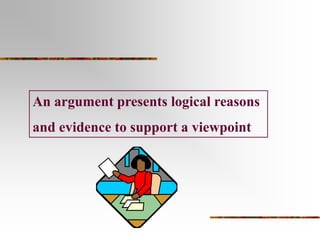
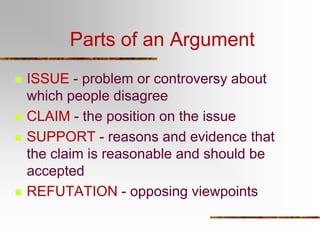
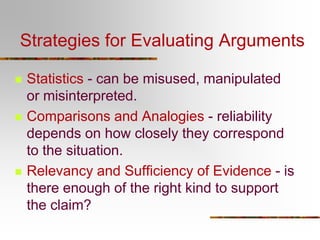
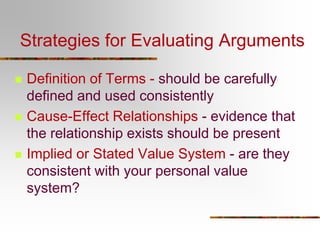
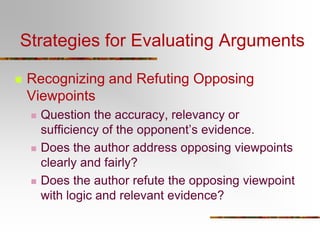
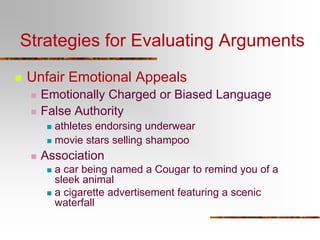
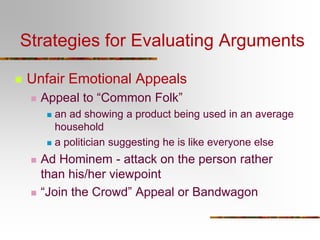
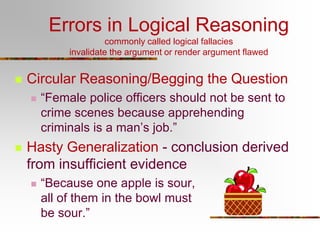
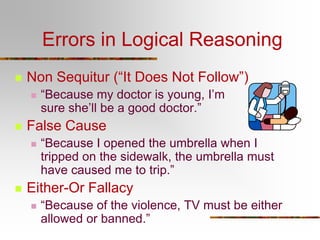
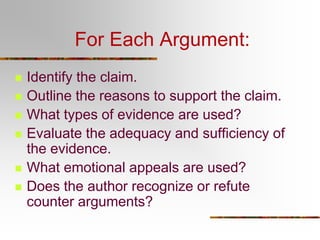
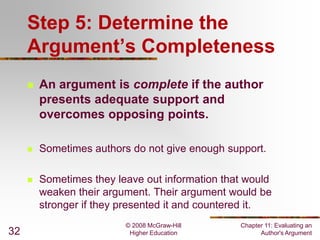
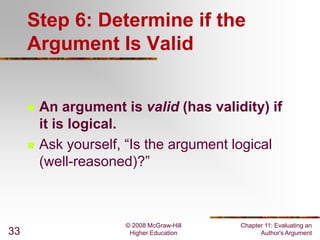
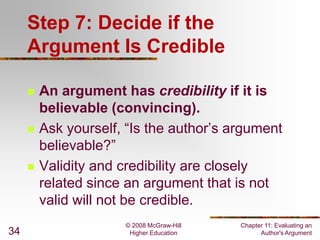
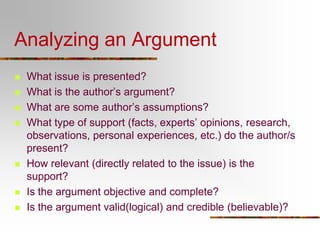
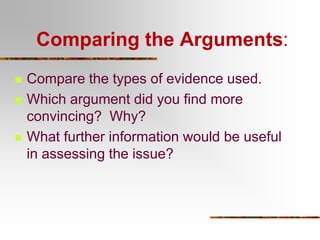
This document discusses strategies for reading and evaluating arguments. It begins by defining what an argument is and its key components, including the claim, reasons, evidence, and potential refutations. It then provides guidelines for analyzing an argument, such as identifying the author's assumptions, determining the relevance and objectivity of the support, and assessing whether the argument is complete, valid, and credible. Finally, it discusses how to compare multiple arguments on an issue by evaluating the evidence used and determining which one is more convincing.





![谷歌霸屏推广[ 𝙩𝙤𝙥 𝟮𝟯𝟯. 𝙘 𝙤𝙢 ]](https://cdn.slidesharecdn.com/ss_thumbnails/top233-260130171247-43791db0-thumbnail.jpg?width=640&height=640&fit=bounds)


