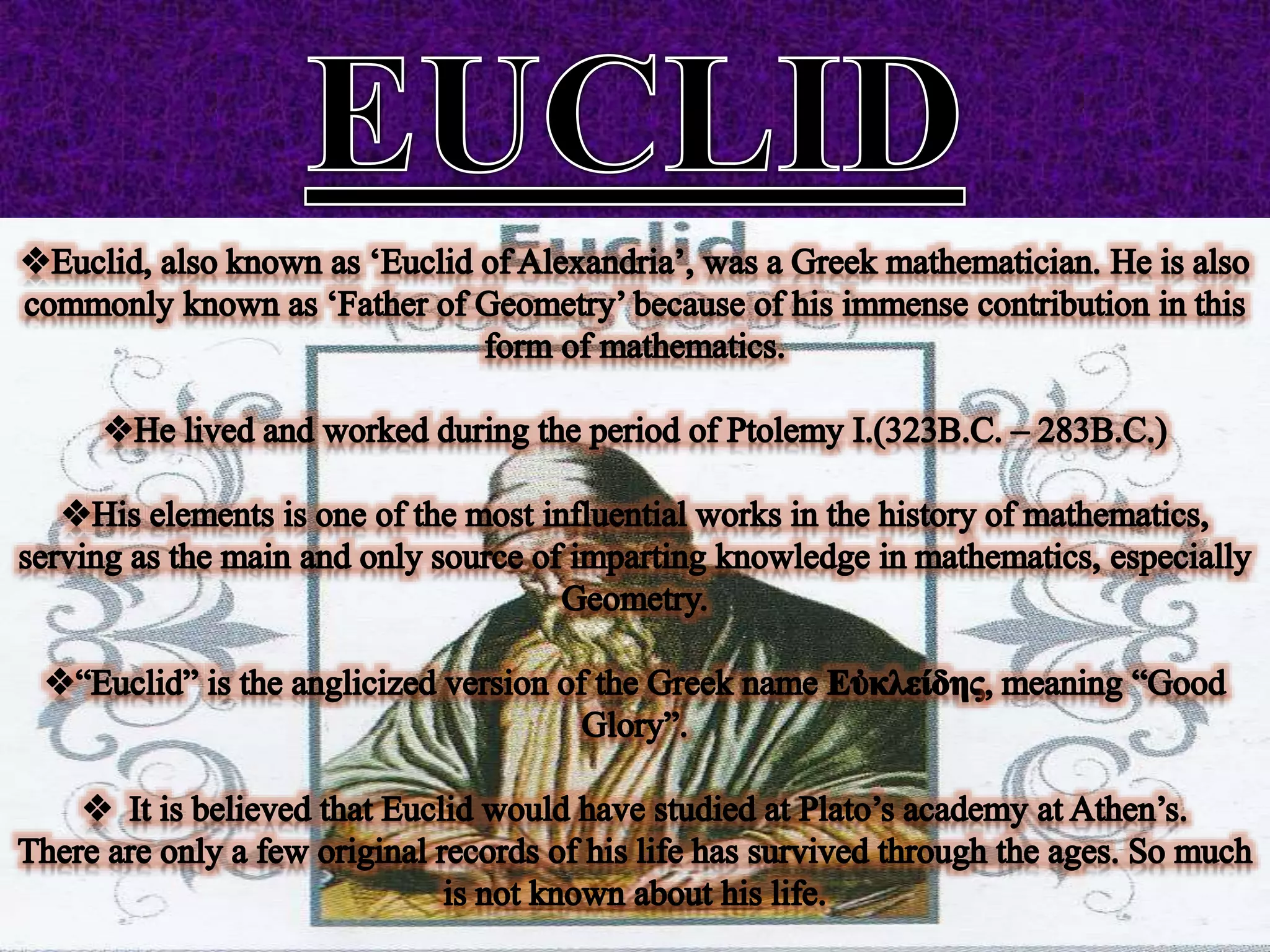
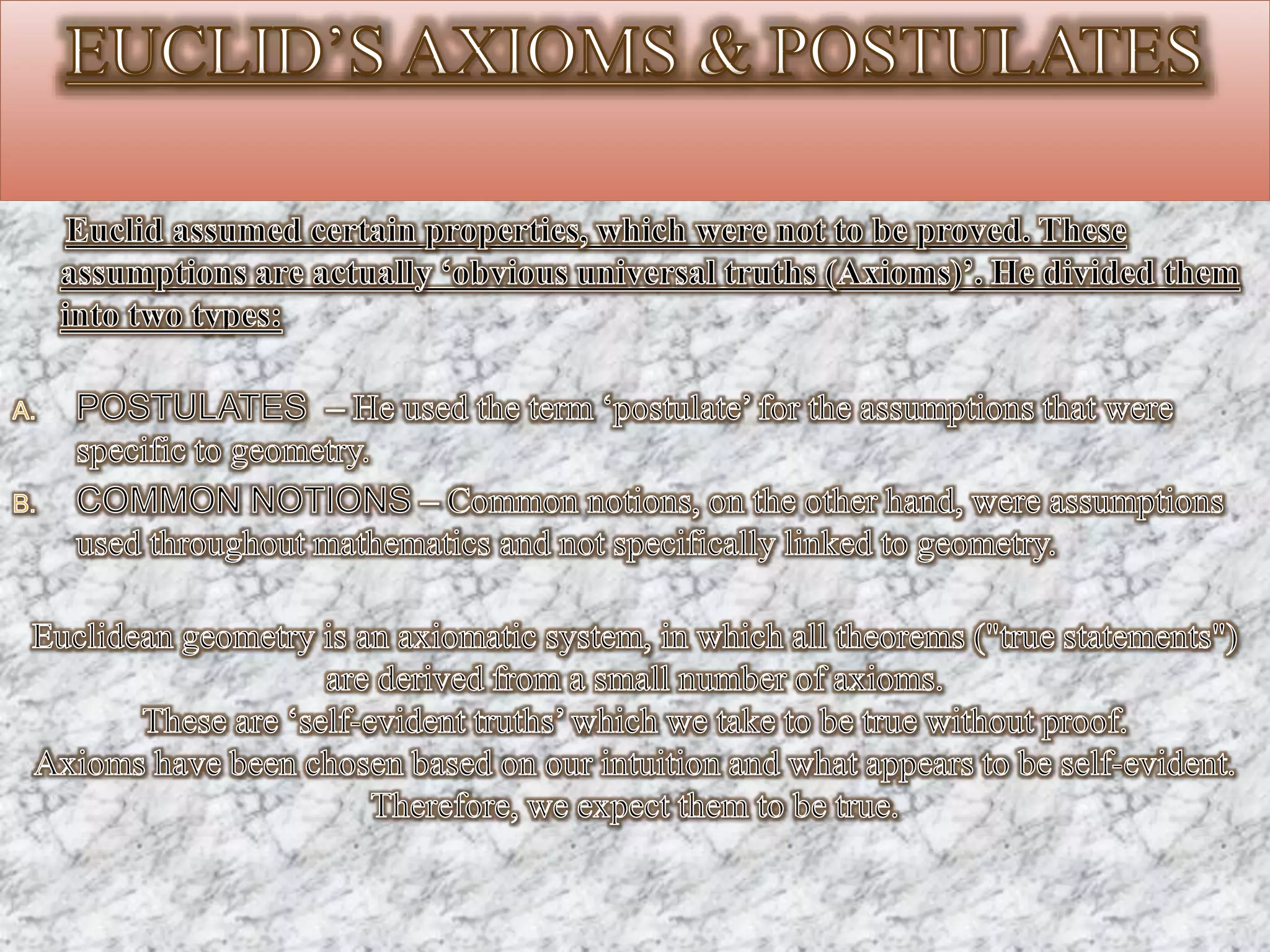
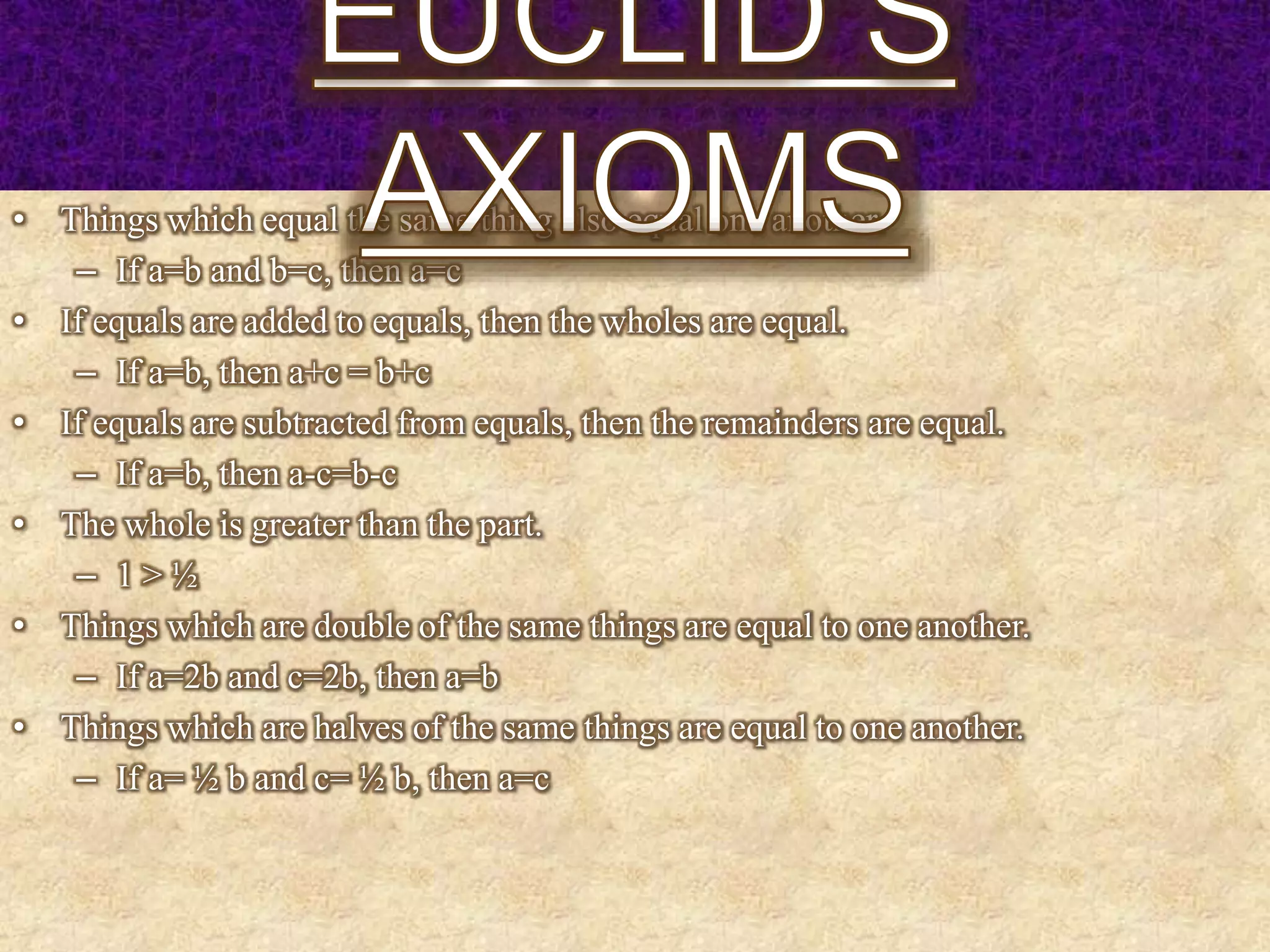
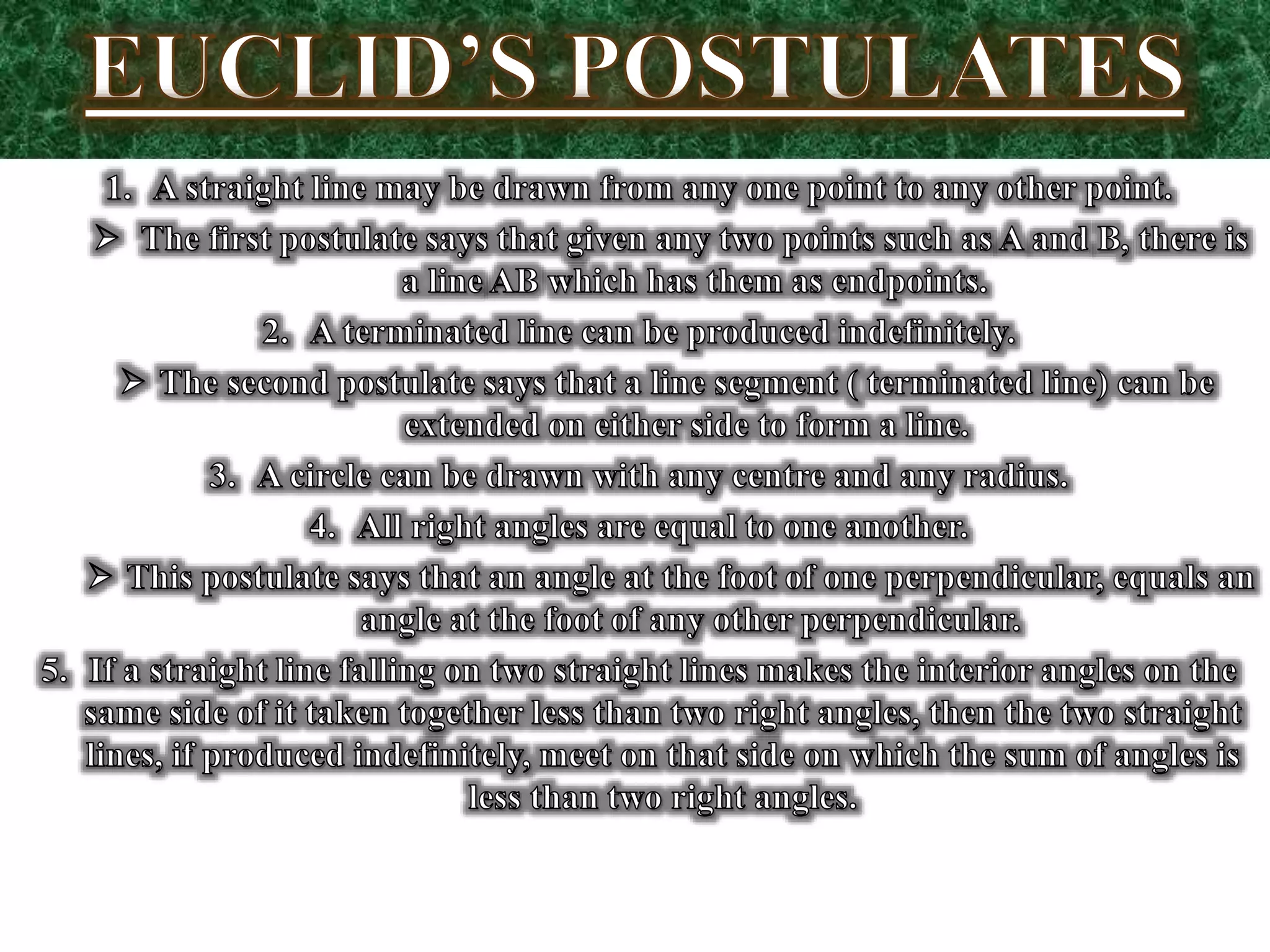
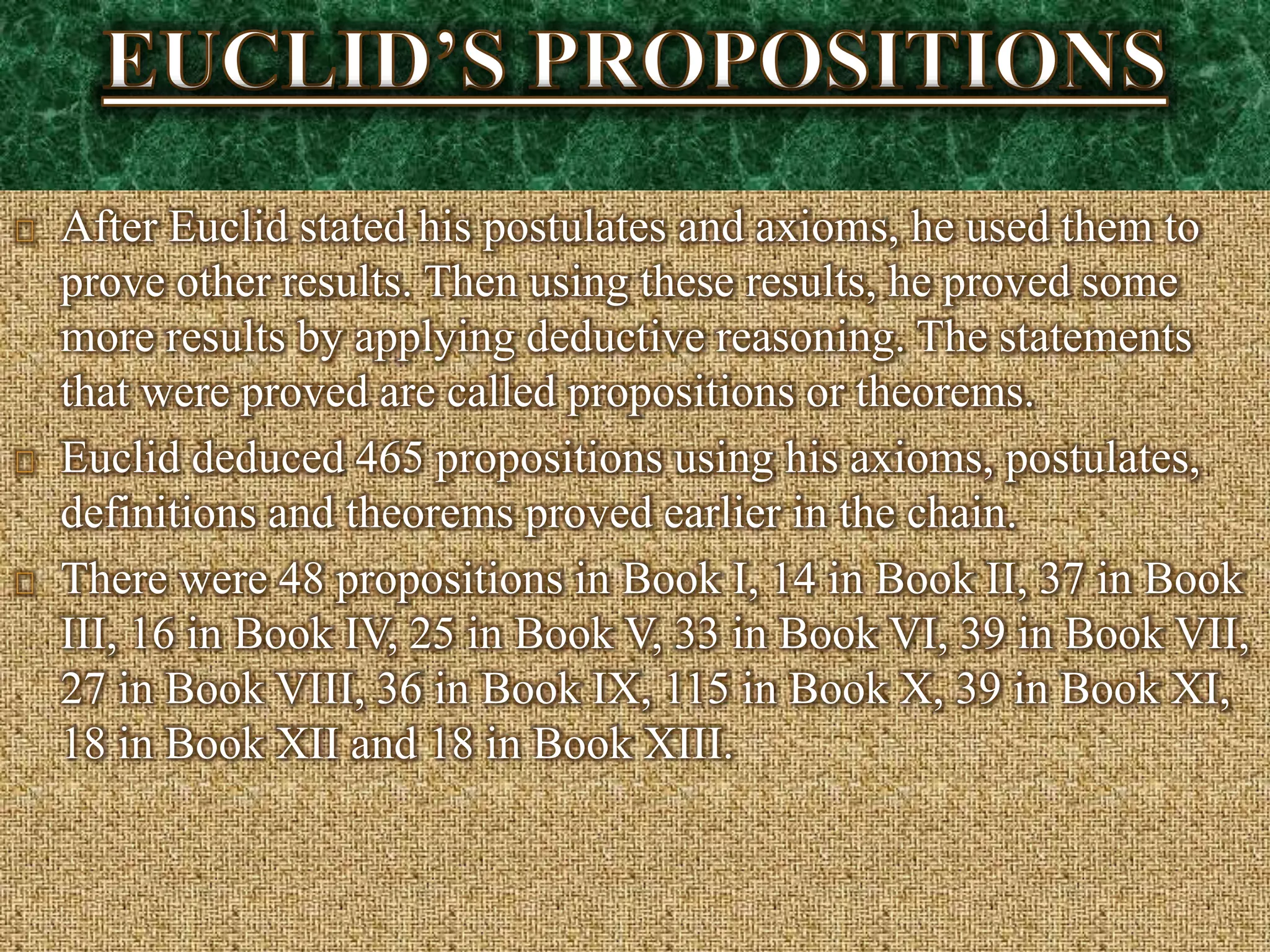
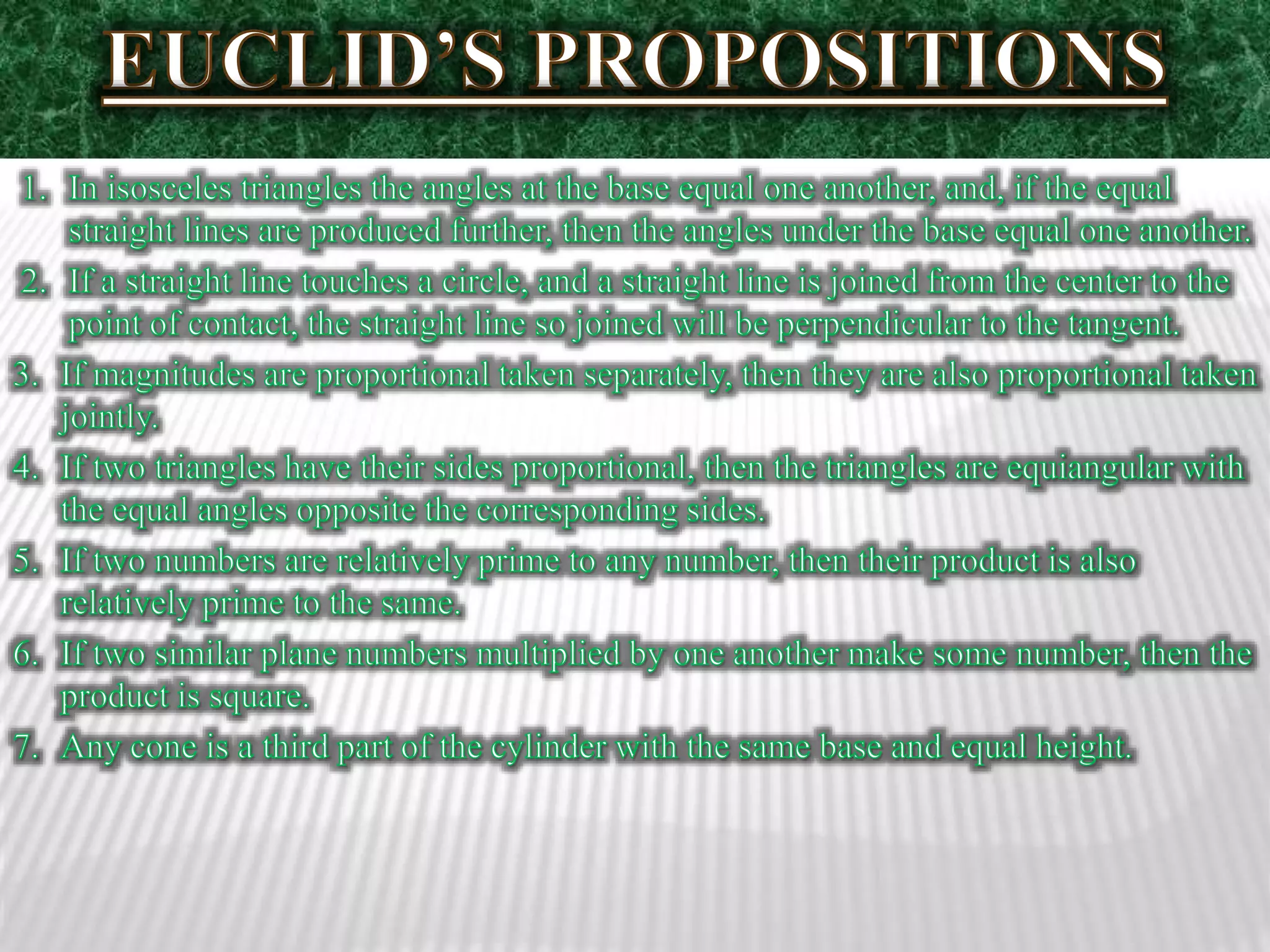
Euclidean geometry, founded by Euclid, is based on definitions, axioms, and theorems from which a systematic study of geometry emerged, notably in his text 'Elements'. The work includes 13 books covering plane geometry, number theory, and solid geometry, providing proofs for various propositions and theorems, including the Pythagorean theorem. Euclid's approach remained influential until the rise of non-Euclidean geometries in the 19th century, challenging previous assumptions about geometry's universality in describing physical space.