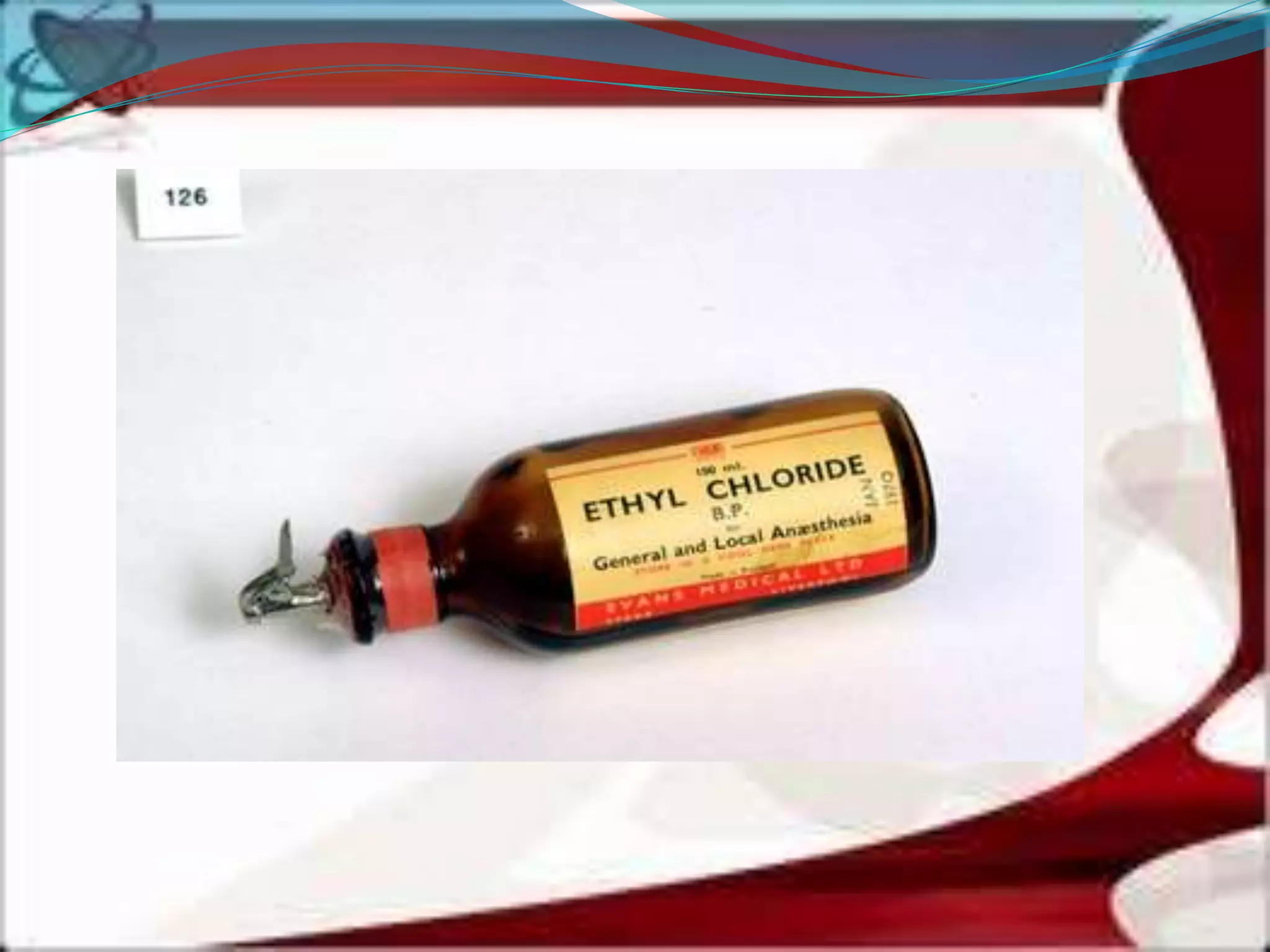
CONTENTS: Ethyl chloride
STORAGE: Store in a cool place. Do not store above
120°F (50°C). Do not use near fire or flame or place on
hot surfaces.
Chloroethane or monochloroethane, commonly known by its old
name ethyl chloride, is a chemical compound with chemical
formula C2H5Cl,
It is a colorless, flammable gas or refrigerated liquid with a
faintly sweet odour.
Physical and chemical properties of Ethyl
Chloride
Name: Ethyl Chloride
Description: Colorless Gas
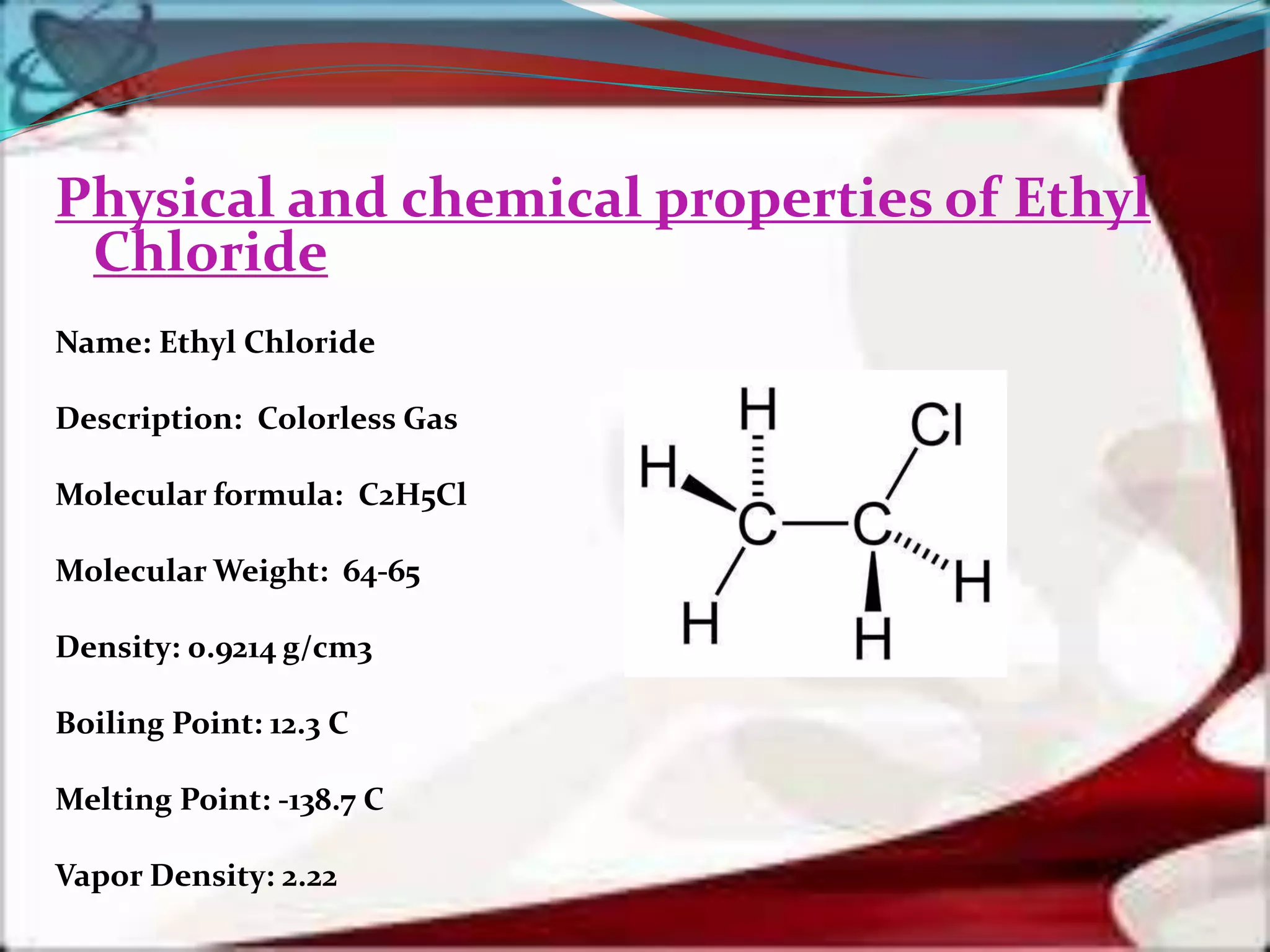
Molecular formula: C2H5Cl
Molecular Weight: 64-65
Density: 0.9214 g/cm3
Boiling Point: 12.3 C
Melting Point: -138.7 C
Vapor Density: 2.22
Common names:
 Ethyl Chloride, Chloroethane, monochlorethane,
chloroethyl, aethylis chloridum, ethrt chloratus,
ether chloratus, ether hydrochloric, ether muriatic,
Kelene, Chelen, Anodynon, Chloryl Anesthetic,
Narcolite
Ethyl chloride is produced by hydrochlorination of ethylene
C2H4 + HCl → C2H5Cl
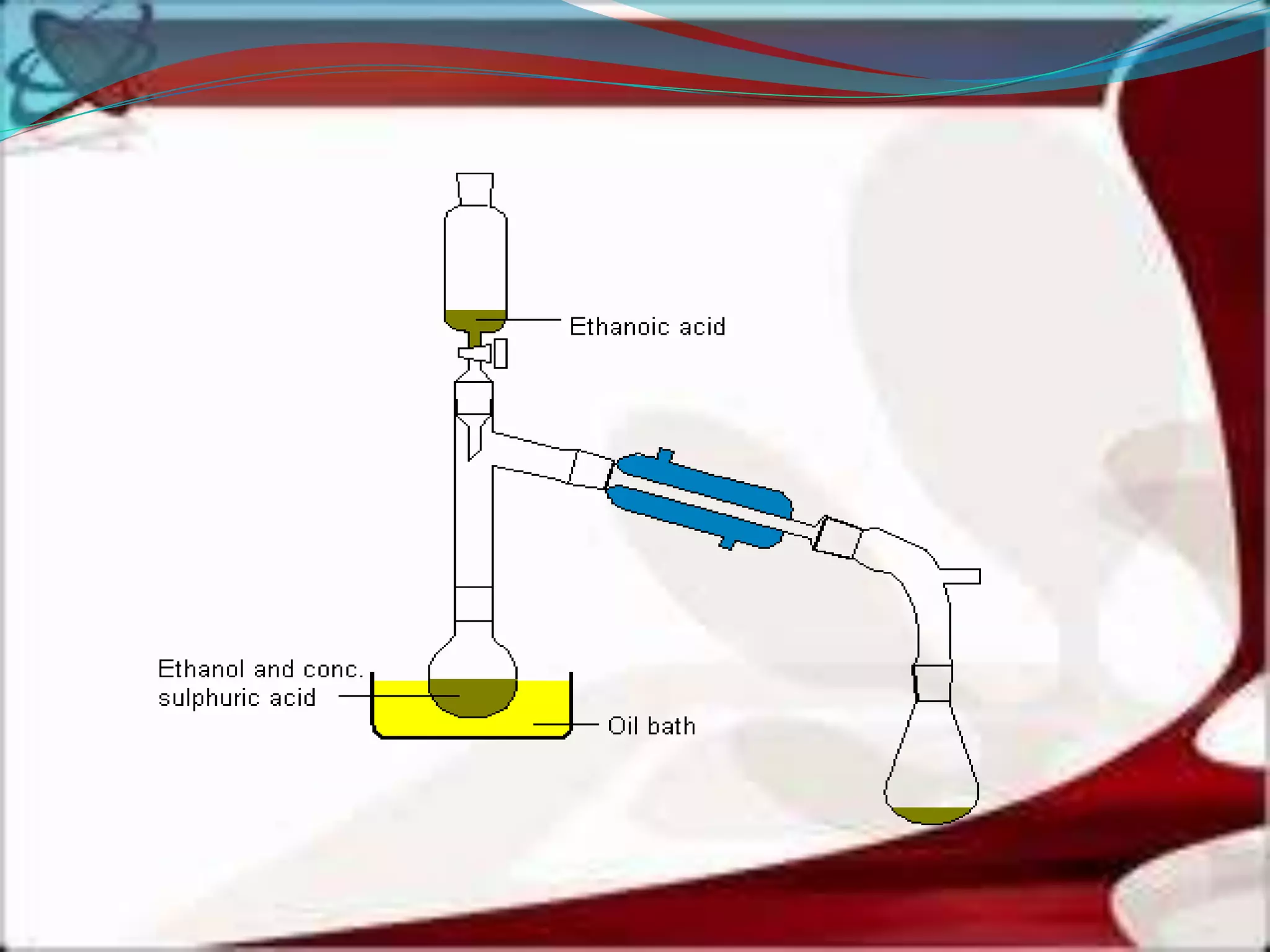
At various times in the past, ethyl chloride has also been produced
from ethanol and hydrochloric acid, or from ethane and chlorine, but
these routes are no longer economical. Ethyl chloride is generated as
a byproduct of polyvinyl chloride production.
PREPARATION
Uses
Ethyl chloride has been used as a refrigerant, an aerosol spray,
propellant, an anesthetic, and a blowing agent .
The only remaining industrially important use of ethyl chloride is
in treating cellulose to make ethylcellulose, a thickening agent and
binder in paints, cosmetics, and similar products.
It act as a central nervous system depressant
• It is also used for the temporary relief of minor sports
injuries.
• Ethyl chloride also helps to relieve deep muscle
pain when used with muscle stretchingtechniques.
• Ethyl chloride is a cooling substance that is applied to
the skin
• This medication is used to prevent pain caused by
injections and minor surgical procedures.
• Cutaneous sensitization may occur, but appears to be
extremely rare.
•Ethyl chloride is known as a liver and kidney toxin;
long-term exposure may cause liver or kidney damage.
•Inhalation of ethyl chloride should be avoided as it is
dangerous
•pr
Side affects
Do not in eyes
Precautions:
•Do not spray in eyes.
•Ethyl chloride is flamable and it should
not be used in presence of open flame.
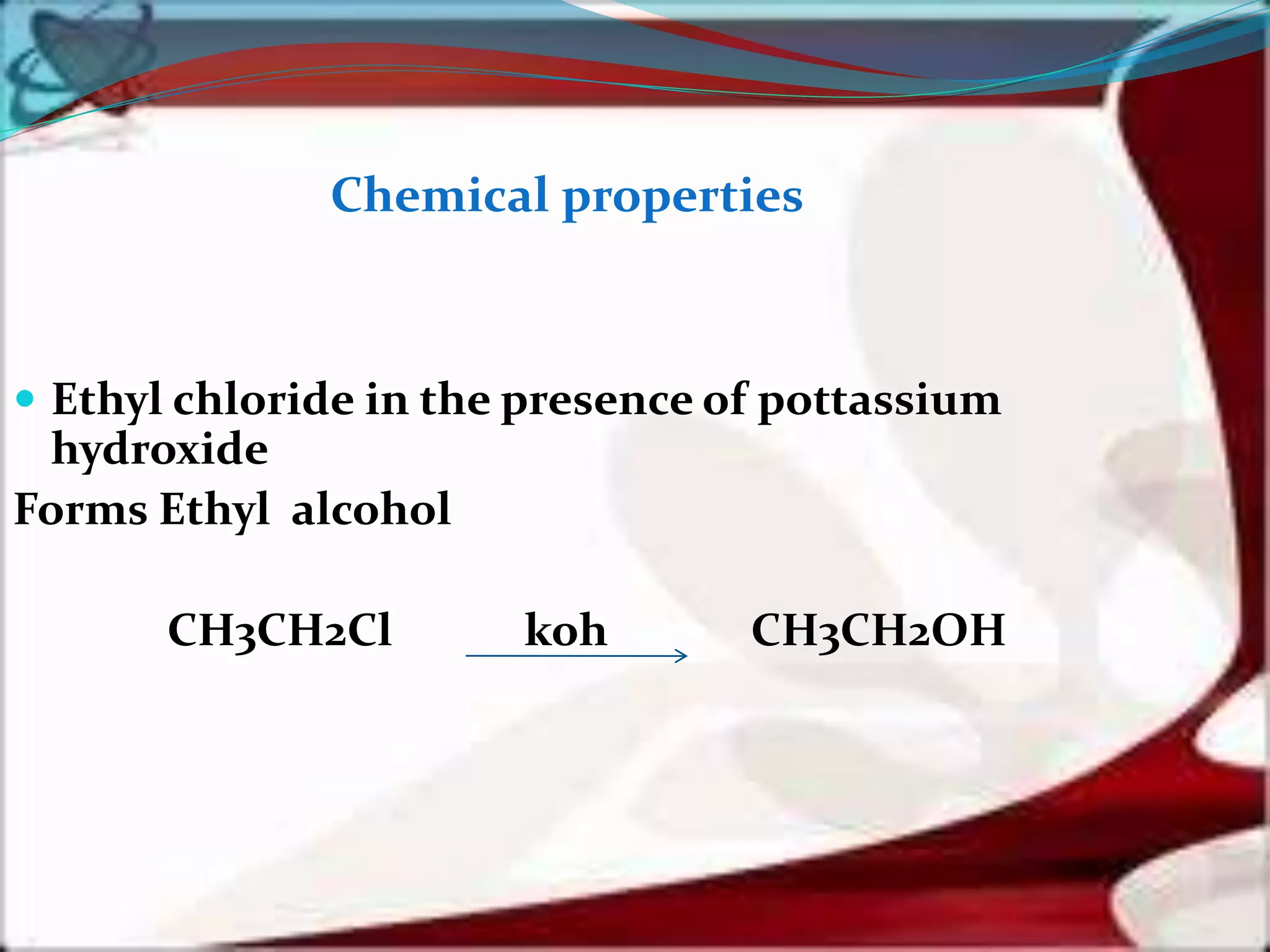
 Ethyl chloride in the presence of pottassium
hydroxide
Forms Ethyl alcohol
CH3CH2Cl koh CH3CH2OH
Chemical properties
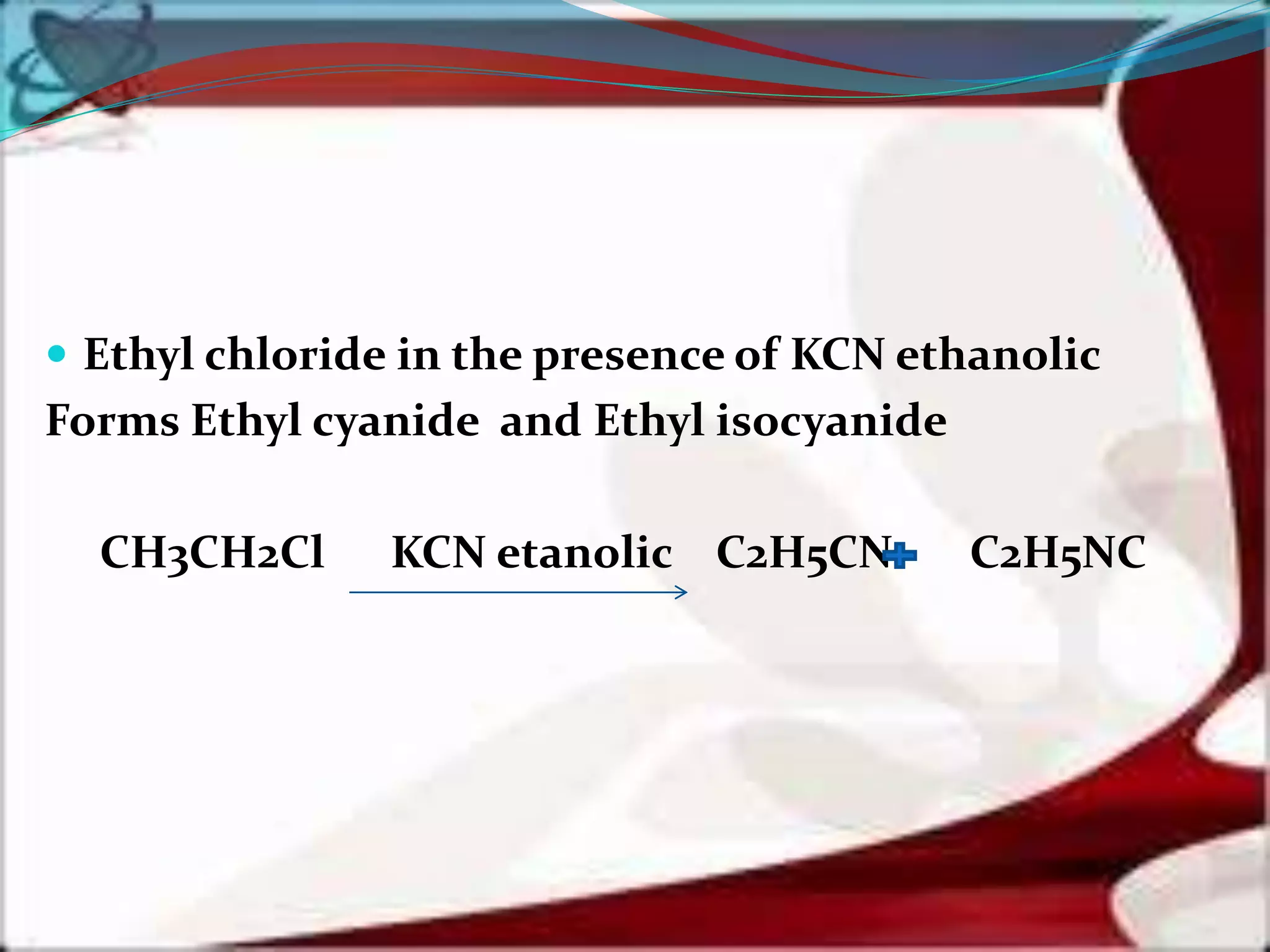
 Ethyl chloride in the presence of KCN ethanolic
Forms Ethyl cyanide and Ethyl isocyanide
CH3CH2Cl KCN etanolic C2H5CN C2H5NC

Ethyl chloride

  • 2.
    CONTENTS: Ethyl chloride STORAGE:Store in a cool place. Do not store above 120°F (50°C). Do not use near fire or flame or place on hot surfaces. Chloroethane or monochloroethane, commonly known by its old name ethyl chloride, is a chemical compound with chemical formula C2H5Cl, It is a colorless, flammable gas or refrigerated liquid with a faintly sweet odour.
  • 3.
    Physical and chemicalproperties of Ethyl Chloride Name: Ethyl Chloride Description: Colorless Gas Molecular formula: C2H5Cl Molecular Weight: 64-65 Density: 0.9214 g/cm3 Boiling Point: 12.3 C Melting Point: -138.7 C Vapor Density: 2.22
  • 4.
    Common names:  EthylChloride, Chloroethane, monochlorethane, chloroethyl, aethylis chloridum, ethrt chloratus, ether chloratus, ether hydrochloric, ether muriatic, Kelene, Chelen, Anodynon, Chloryl Anesthetic, Narcolite
  • 5.
    Ethyl chloride isproduced by hydrochlorination of ethylene C2H4 + HCl → C2H5Cl At various times in the past, ethyl chloride has also been produced from ethanol and hydrochloric acid, or from ethane and chlorine, but these routes are no longer economical. Ethyl chloride is generated as a byproduct of polyvinyl chloride production. PREPARATION
  • 7.
    Uses Ethyl chloride hasbeen used as a refrigerant, an aerosol spray, propellant, an anesthetic, and a blowing agent . The only remaining industrially important use of ethyl chloride is in treating cellulose to make ethylcellulose, a thickening agent and binder in paints, cosmetics, and similar products. It act as a central nervous system depressant
  • 8.
    • It isalso used for the temporary relief of minor sports injuries. • Ethyl chloride also helps to relieve deep muscle pain when used with muscle stretchingtechniques. • Ethyl chloride is a cooling substance that is applied to the skin • This medication is used to prevent pain caused by injections and minor surgical procedures.
  • 10.
    • Cutaneous sensitizationmay occur, but appears to be extremely rare. •Ethyl chloride is known as a liver and kidney toxin; long-term exposure may cause liver or kidney damage. •Inhalation of ethyl chloride should be avoided as it is dangerous •pr Side affects
  • 11.
    Do not ineyes Precautions: •Do not spray in eyes. •Ethyl chloride is flamable and it should not be used in presence of open flame.
  • 12.
     Ethyl chloridein the presence of pottassium hydroxide Forms Ethyl alcohol CH3CH2Cl koh CH3CH2OH Chemical properties
  • 13.
     Ethyl chloridein the presence of KCN ethanolic Forms Ethyl cyanide and Ethyl isocyanide CH3CH2Cl KCN etanolic C2H5CN C2H5NC