BRAND MANAGEMENT
PREPARED BY
Ms.C.JISSY
DEPARTMENT OF COMMERCE (IB)
Unit I
Introduction- Basic understanding of brands – concepts
and process – significance of a brand-brand mark and
trade mark – different types of brands – family brand,
individual brand, private brand – selecting a brand name
– functions of a brand – branding decisions – influencing
factors.
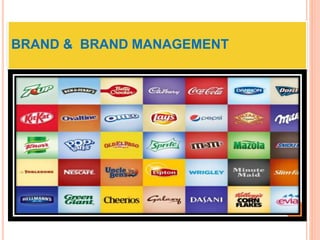
BRAND & BRAND MANAGEMENT
BRAND
 A Brand is a name, term, sign, symbol or design or a
combination of them, which is intended to identify the
goals or services of one seller or another seller and
differentiate them from other manufacturers
 The American Marketing Association defines ‘brand’ as
“a name, term, design, symbol, or any other feature that
identifies one seller's good or service as distinct from
those of other sellers…A brand may identify one item, a
family of items, or all items of that seller.
 BRAND FOR CONSUMER AND SELLER
CONSUMERS SELLER
i)SOURCE OF PRODUCT
ii)LOWER RISK
iii)LESS COST OF
SEARCHING FOR CHOICE
iv)SYMBOL OF QUALITY
V)SYMBOLIC DEVICE
i)MEANS OF
COMPETATIVE
ADVANTAGE
ii)LEGAL PROTECTION
OF PRODUCT FEATURES
iii)SATISFIED
CUSTOMERS
iv)MEANS OF PROFIT
OBJECTIVES OF BRAND
 To establish an identity for the product or a group of
products.
 To protect the product or service legally for its unique
features.
 To acquire place for the product in consumers’ minds
for high and consistent quality.
 To persuade the consumer to buy the product by
promising to serve their needs in a unique way.
 To create and send the message of strong reliable
business among consumers
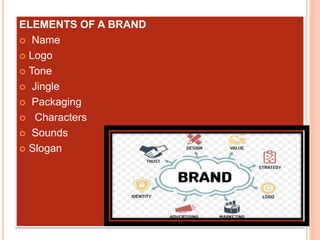
ELEMENTS OF A BRAND
 Name
 Logo
 Tone
 Jingle
 Packaging
 Characters
 Sounds
 Slogan
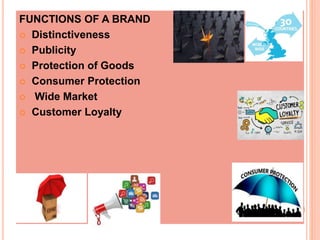
FUNCTIONS OF A BRAND
 Distinctiveness
 Publicity
 Protection of Goods
 Consumer Protection
 Wide Market
 Customer Loyalty
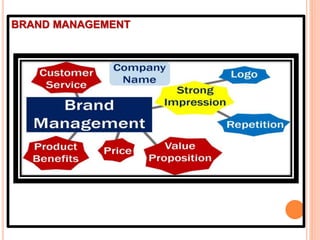
BRAND MANAGEMENT
BRAND MANAGEMENT
 Brand management is an art of creating a brand and
maintaining it. It is nothing but developing a promise to
the consumer, materializing that promise, and maintaining
the same for a product, a group of products, or services.
 Brand management helps to manage the tangible and
intangible characteristics of a brand. A competent Brand
Management includes building brand identity, launching
the brand, and maintaining the brand position in the
market. Brand management builds and maintains the
corporate image of a business.
ELEMENTS OF BRAND MANAGEMENT
 Brand Identity
 Brand Image
 Brand positioning
 Brand Personality
 Brand equity
 Brand Experience
 Brand Differentiation
 Brand Communication
 Brand Gap
 Brand Extension
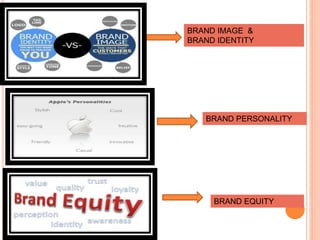
BRAND IMAGE &
BRAND IDENTITY
BRAND PERSONALITY
BRAND EQUITY
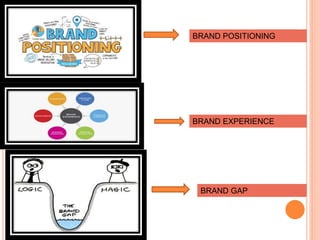
BRAND POSITIONING
BRAND EXPERIENCE
BRAND GAP
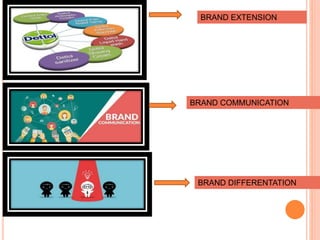
BRAND EXTENSION
BRAND COMMUNICATION
BRAND DIFFERENTATION
 BRAND MANAGEMENT PROCESS
 Identifying/defining your most important Customers
 Understanding what motivates your customers and what
could cause them to choose your brand over your
competitors’ brands
 Carefully selecting a brand position that could provide
your organization with marketplace advantages
 Translating that position to a strong and consistent brand
identity.
 Developing brand messaging including an elevator
speech
 Educating employees about the brand promise, elevator
speech and identity standards and giving them the
incentives, tools and training to become effective brand
champions
 Developing an integrated launch and ongoing marketing
plan
 Reinforcing your brand’s promise at each point
of customer contact
 Measuring the ongoing equity of the brand and making
adjustments as necessary
 BRAND MANAGEMENT RESPONSIBLITIES
 BRAND MANAGEMENT RESPONSABILTIES
 Monitor, measure and manage brand equity/strength
 Increase brand awareness, relevant differentiation, value,
accessibility and emotional connection
 Develop brand plan
 Monitor progress against brand plan
 Be responsible for results against brand plan
 Drive brand understanding and support throughout the
organization
 Champion/drive initiatives that support delivery of the
brand promise
 Brand messaging – elevator speech, tagline, campaign
themes, proof points, etc.
 Manage the brand architecture
 Maintain brand identity consistency
 Chair the brand identity council/team/board
 Help determine identities for new brands/sub-brands
 Anticipate and accommodate new brand identity needs
 BRAND MARK
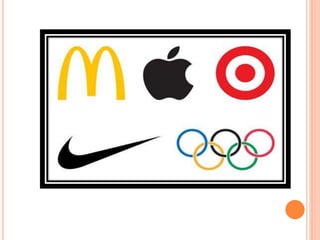
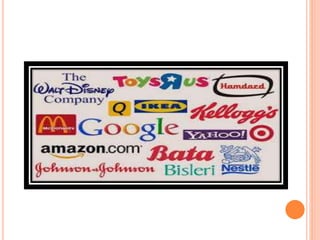
The brand mark is a design element, such as a symbol (e.g.,
Nike swoosh ), logo (e.g., Yahoo! graphic), a character
(e.g., Keebler elves) or even a sound (e.g., Intel inside
sound), that provides visual or auditory recognition for
Aspect or element (such as color, design, picture, symbol,
typeface) of a brand that cannot be expressed in words.
TRADE MARK
 It is a brand or a part of brand which is given legal
protection because it is capable of exclusive appropriation.
 The official definition of a trademark is “any word, name,
symbol or device including, but not limited to, a distinctive
package or container of any kind, or any combination of
these, used by a person to identify and distinguish the
goods of that person, including a unique product, from
those manufactured or sold by others, and to indicate the
source of the goods, even if that source is unknown
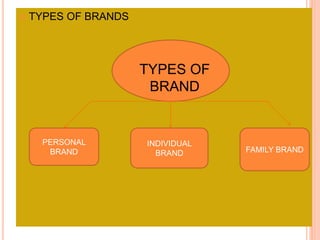
 TYPES OF BRANDS
TYPES OF
BRAND
PERSONAL
BRAND
INDIVIDUAL
BRAND FAMILY BRAND
PERSONAL BRAND
PERSONAL BRAND
 The personal brand attached with individual personality
 It explains the character of the particular popular celebrity
INDIVIDUAL BRAND
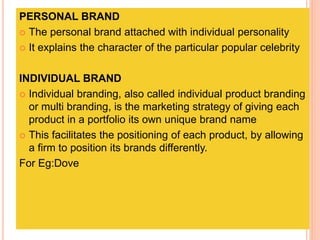
 Individual branding, also called individual product branding
or multi branding, is the marketing strategy of giving each
product in a portfolio its own unique brand name
 This facilitates the positioning of each product, by allowing
a firm to position its brands differently.
For Eg:Dove
FAMILY BRANDING
 Family branding is a marketing strategy that involves
selling several related products under one brand name.
Family branding is also known as umbrella branding.
 It contrasts with individual product branding, in which
each product in a portfolio is given a unique brand name
and identity.
For Eg: TATA CAR, SALT, DOCOMA(sim)
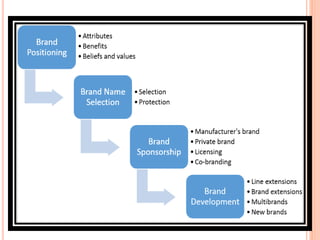
 BRANDING DECISIONS
A combination of Name, Term, Sign, Symbol or Design
Intended to identify the Goods, or Services of seller or
group of sellers and to differentiate them from the
competition. Branding consists of a set of complex

branding decisions. Major brand strategy decisions
involve brand positioning, brand name selection, brand
sponsorship and brand development.
WHEN?
WHERE ?
WHY?
WHO?
HOW ?
 SELECTING A BRAND NAME
 The brand name is a very important brand element,
and may heavily influence the way a brand perform.
 Brand Names are the key Brand Equity generators
because they affect recall and recognition
 Selecting a brand name is crucial part of branding
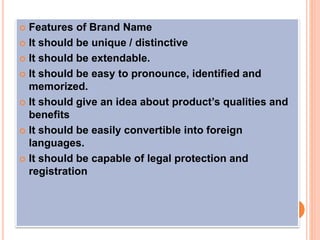
 Features of Brand Name
 It should be unique / distinctive
 It should be extendable.
 It should be easy to pronounce, identified and
memorized.
 It should give an idea about product’s qualities and
benefits
 It should be easily convertible into foreign
languages.
 It should be capable of legal protection and
registration
Brand Management

Brand Management

  • 1.
  • 2.
    Unit I Introduction- Basicunderstanding of brands – concepts and process – significance of a brand-brand mark and trade mark – different types of brands – family brand, individual brand, private brand – selecting a brand name – functions of a brand – branding decisions – influencing factors.
  • 3.
    BRAND & BRANDMANAGEMENT
  • 4.
    BRAND  A Brandis a name, term, sign, symbol or design or a combination of them, which is intended to identify the goals or services of one seller or another seller and differentiate them from other manufacturers  The American Marketing Association defines ‘brand’ as “a name, term, design, symbol, or any other feature that identifies one seller's good or service as distinct from those of other sellers…A brand may identify one item, a family of items, or all items of that seller.
  • 5.
     BRAND FORCONSUMER AND SELLER CONSUMERS SELLER i)SOURCE OF PRODUCT ii)LOWER RISK iii)LESS COST OF SEARCHING FOR CHOICE iv)SYMBOL OF QUALITY V)SYMBOLIC DEVICE i)MEANS OF COMPETATIVE ADVANTAGE ii)LEGAL PROTECTION OF PRODUCT FEATURES iii)SATISFIED CUSTOMERS iv)MEANS OF PROFIT
  • 6.
    OBJECTIVES OF BRAND To establish an identity for the product or a group of products.  To protect the product or service legally for its unique features.  To acquire place for the product in consumers’ minds for high and consistent quality.  To persuade the consumer to buy the product by promising to serve their needs in a unique way.  To create and send the message of strong reliable business among consumers
  • 7.
    ELEMENTS OF ABRAND  Name  Logo  Tone  Jingle  Packaging  Characters  Sounds  Slogan
  • 8.
    FUNCTIONS OF ABRAND  Distinctiveness  Publicity  Protection of Goods  Consumer Protection  Wide Market  Customer Loyalty
  • 9.
  • 10.
    BRAND MANAGEMENT  Brandmanagement is an art of creating a brand and maintaining it. It is nothing but developing a promise to the consumer, materializing that promise, and maintaining the same for a product, a group of products, or services.  Brand management helps to manage the tangible and intangible characteristics of a brand. A competent Brand Management includes building brand identity, launching the brand, and maintaining the brand position in the market. Brand management builds and maintains the corporate image of a business.
  • 11.
    ELEMENTS OF BRANDMANAGEMENT  Brand Identity  Brand Image  Brand positioning  Brand Personality  Brand equity  Brand Experience  Brand Differentiation  Brand Communication  Brand Gap  Brand Extension
  • 12.
    BRAND IMAGE & BRANDIDENTITY BRAND PERSONALITY BRAND EQUITY
  • 13.
  • 14.
  • 15.
  • 16.
     Identifying/defining yourmost important Customers  Understanding what motivates your customers and what could cause them to choose your brand over your competitors’ brands  Carefully selecting a brand position that could provide your organization with marketplace advantages  Translating that position to a strong and consistent brand identity.
  • 17.
     Developing brandmessaging including an elevator speech  Educating employees about the brand promise, elevator speech and identity standards and giving them the incentives, tools and training to become effective brand champions  Developing an integrated launch and ongoing marketing plan  Reinforcing your brand’s promise at each point of customer contact  Measuring the ongoing equity of the brand and making adjustments as necessary
  • 18.
     BRAND MANAGEMENTRESPONSIBLITIES
  • 19.
     BRAND MANAGEMENTRESPONSABILTIES  Monitor, measure and manage brand equity/strength  Increase brand awareness, relevant differentiation, value, accessibility and emotional connection  Develop brand plan  Monitor progress against brand plan  Be responsible for results against brand plan  Drive brand understanding and support throughout the organization
  • 20.
     Champion/drive initiativesthat support delivery of the brand promise  Brand messaging – elevator speech, tagline, campaign themes, proof points, etc.  Manage the brand architecture  Maintain brand identity consistency  Chair the brand identity council/team/board  Help determine identities for new brands/sub-brands  Anticipate and accommodate new brand identity needs
  • 22.
     BRAND MARK Thebrand mark is a design element, such as a symbol (e.g., Nike swoosh ), logo (e.g., Yahoo! graphic), a character (e.g., Keebler elves) or even a sound (e.g., Intel inside sound), that provides visual or auditory recognition for Aspect or element (such as color, design, picture, symbol, typeface) of a brand that cannot be expressed in words.
  • 24.
    TRADE MARK  Itis a brand or a part of brand which is given legal protection because it is capable of exclusive appropriation.  The official definition of a trademark is “any word, name, symbol or device including, but not limited to, a distinctive package or container of any kind, or any combination of these, used by a person to identify and distinguish the goods of that person, including a unique product, from those manufactured or sold by others, and to indicate the source of the goods, even if that source is unknown
  • 25.
     TYPES OFBRANDS TYPES OF BRAND PERSONAL BRAND INDIVIDUAL BRAND FAMILY BRAND
  • 26.
  • 27.
    PERSONAL BRAND  Thepersonal brand attached with individual personality  It explains the character of the particular popular celebrity INDIVIDUAL BRAND  Individual branding, also called individual product branding or multi branding, is the marketing strategy of giving each product in a portfolio its own unique brand name  This facilitates the positioning of each product, by allowing a firm to position its brands differently. For Eg:Dove
  • 28.
    FAMILY BRANDING  Familybranding is a marketing strategy that involves selling several related products under one brand name. Family branding is also known as umbrella branding.  It contrasts with individual product branding, in which each product in a portfolio is given a unique brand name and identity. For Eg: TATA CAR, SALT, DOCOMA(sim)
  • 29.
     BRANDING DECISIONS Acombination of Name, Term, Sign, Symbol or Design Intended to identify the Goods, or Services of seller or group of sellers and to differentiate them from the competition. Branding consists of a set of complex branding decisions. Major brand strategy decisions involve brand positioning, brand name selection, brand sponsorship and brand development. WHEN? WHERE ? WHY? WHO? HOW ?
  • 31.
     SELECTING ABRAND NAME  The brand name is a very important brand element, and may heavily influence the way a brand perform.  Brand Names are the key Brand Equity generators because they affect recall and recognition  Selecting a brand name is crucial part of branding
  • 32.
     Features ofBrand Name  It should be unique / distinctive  It should be extendable.  It should be easy to pronounce, identified and memorized.  It should give an idea about product’s qualities and benefits  It should be easily convertible into foreign languages.  It should be capable of legal protection and registration