Estimates
              in
Software Development/Testing


            Lviv, 2013
Agenda

• Level Measurements

• Software Estimation Approaches

• Approximating size techniques

• Five Steps to Bottom-up Estimating

• Quality vs Scope/Cost/Time
Level Measurements


• Project-level measurements
• Phase-level measurements
• Activity-level measurements
• Task-level measurements
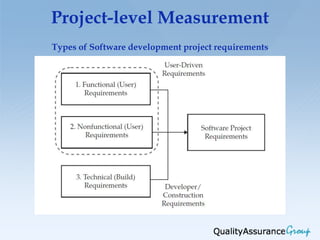
Project-level Measurement
Types of Software development project requirements
Types of Software development
    project requirements

Functional requirements
Nonfunctional requirements
Technical (build) requirements

   All three types of project requirements
are necessary to produce a realistic estimate
     of the total software project effort.
Functional project requirements

  Functional size is the total size of all functional
               requirements that are

 new

 renovated (changed)

 removed (deleted) from the software
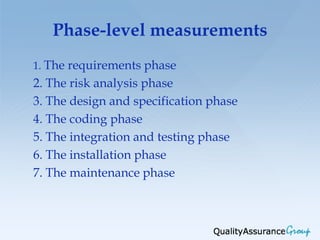
Phase-level measurements
1. The requirements phase
2. The risk analysis phase
3. The design and specification phase
4. The coding phase
5. The integration and testing phase
6. The installation phase
7. The maintenance phase
Phase-level measurements

Testing phase
    1.   New function testing
    2. Regression testing
    3. Component testing
    4. Integration testing
    5. Stress testing
    6. System testing
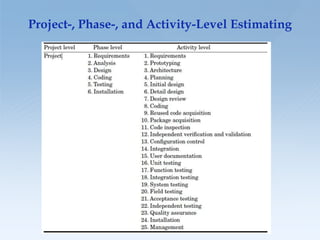
Project-, Phase-, and Activity-Level Estimating
Task-level measurements

Testing phase -> New function testing
     1.   Test Analysis
     2.   Test Design
     3.   Test Documentation
     4.   Review, Update
     5.   Test Execution
     6.   Bug Development
     7.   Test Results Validation
     8.   Test Reporting
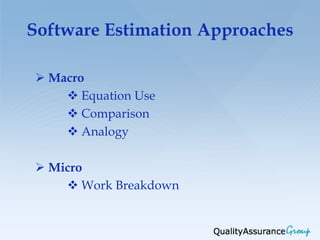
Software Estimation Approaches

 Macro
     Equation Use
     Comparison
     Analogy

 Micro
     Work Breakdown
Comparison
Project Work Effort and Duration Estimates
Macro -/Micro – Estimation
         Techniques
Where the macro- and micro-estimates vary by more than 10 to 15 percent,
           you should identify why and rework your estimates.
Accuracy
Approximating size techniques

              can be used when there is

insufficient opportunity, time, or perhaps information

      to perform a detailed size measurement.
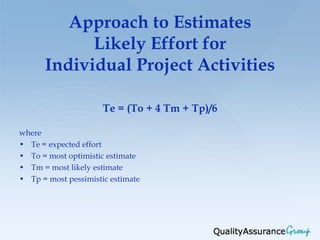
Approach to Estimates
            Likely Effort for
      Individual Project Activities

                      Te = (To + 4 Tm + Tp)/6

where
• Te = expected effort
• To = most optimistic estimate
• Tm = most likely estimate
• Tp = most pessimistic estimate
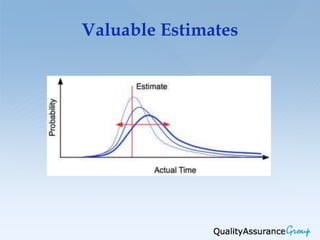
Valuable Estimates
Five Steps to
            Bottom-up Estimating

• Identify All Project Required Tasks
• Estimate All Tasks Identified in Your WBS or Project Activity
  Definition

• Identify Task Dependencies

• Identify the Resources Required to Complete All Tasks

• Determine When Resources Should Complete These Tasks
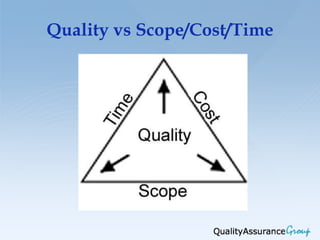
Quality vs Scope/Cost/Time
Thank you for Attention!
          

Estimates in Software Development and Testing

  • 1.
    Estimates in Software Development/Testing Lviv, 2013
  • 2.
    Agenda • Level Measurements •Software Estimation Approaches • Approximating size techniques • Five Steps to Bottom-up Estimating • Quality vs Scope/Cost/Time
  • 3.
    Level Measurements • Project-levelmeasurements • Phase-level measurements • Activity-level measurements • Task-level measurements
  • 4.
  • 5.
    Project-level Measurement Types ofSoftware development project requirements
  • 6.
    Types of Softwaredevelopment project requirements Functional requirements Nonfunctional requirements Technical (build) requirements All three types of project requirements are necessary to produce a realistic estimate of the total software project effort.
  • 7.
    Functional project requirements Functional size is the total size of all functional requirements that are  new  renovated (changed)  removed (deleted) from the software
  • 8.
    Phase-level measurements 1. Therequirements phase 2. The risk analysis phase 3. The design and specification phase 4. The coding phase 5. The integration and testing phase 6. The installation phase 7. The maintenance phase
  • 9.
    Phase-level measurements Testing phase 1. New function testing 2. Regression testing 3. Component testing 4. Integration testing 5. Stress testing 6. System testing
  • 10.
    Project-, Phase-, andActivity-Level Estimating
  • 11.
    Task-level measurements Testing phase-> New function testing 1. Test Analysis 2. Test Design 3. Test Documentation 4. Review, Update 5. Test Execution 6. Bug Development 7. Test Results Validation 8. Test Reporting
  • 12.
    Software Estimation Approaches Macro  Equation Use  Comparison  Analogy  Micro  Work Breakdown
  • 13.
    Comparison Project Work Effortand Duration Estimates
  • 14.
    Macro -/Micro –Estimation Techniques Where the macro- and micro-estimates vary by more than 10 to 15 percent, you should identify why and rework your estimates.
  • 15.
  • 16.
    Approximating size techniques can be used when there is insufficient opportunity, time, or perhaps information to perform a detailed size measurement.
  • 17.
    Approach to Estimates Likely Effort for Individual Project Activities Te = (To + 4 Tm + Tp)/6 where • Te = expected effort • To = most optimistic estimate • Tm = most likely estimate • Tp = most pessimistic estimate
  • 18.
  • 19.
    Five Steps to Bottom-up Estimating • Identify All Project Required Tasks • Estimate All Tasks Identified in Your WBS or Project Activity Definition • Identify Task Dependencies • Identify the Resources Required to Complete All Tasks • Determine When Resources Should Complete These Tasks
  • 20.
  • 21.
    Thank you forAttention! 