
Organization patterns
 Arranges information according to a progression of time.
 I. 1895 - 1920
Significant Event # 1
 Significant Event # 2
 II. 1920 - 1945
 Significant Event # 1
 Significant Event # 2
 Arranges information according to a step-by-step sequence that describes a
particular process.
 I. Step One: Harvest the grapes
Harvesting procedure number one
 Harvesting procedure number two
 II. Step Two: Prepare the grapes
 Preparation procedure number one
 Preparation procedure number two
 Arranges information according to how things fit together in physical space.
 I. Downtown Waterfront
Aquarium
 Pike Place Market
 II. Seattle Center
 Space Needle
 Pacific Science Center
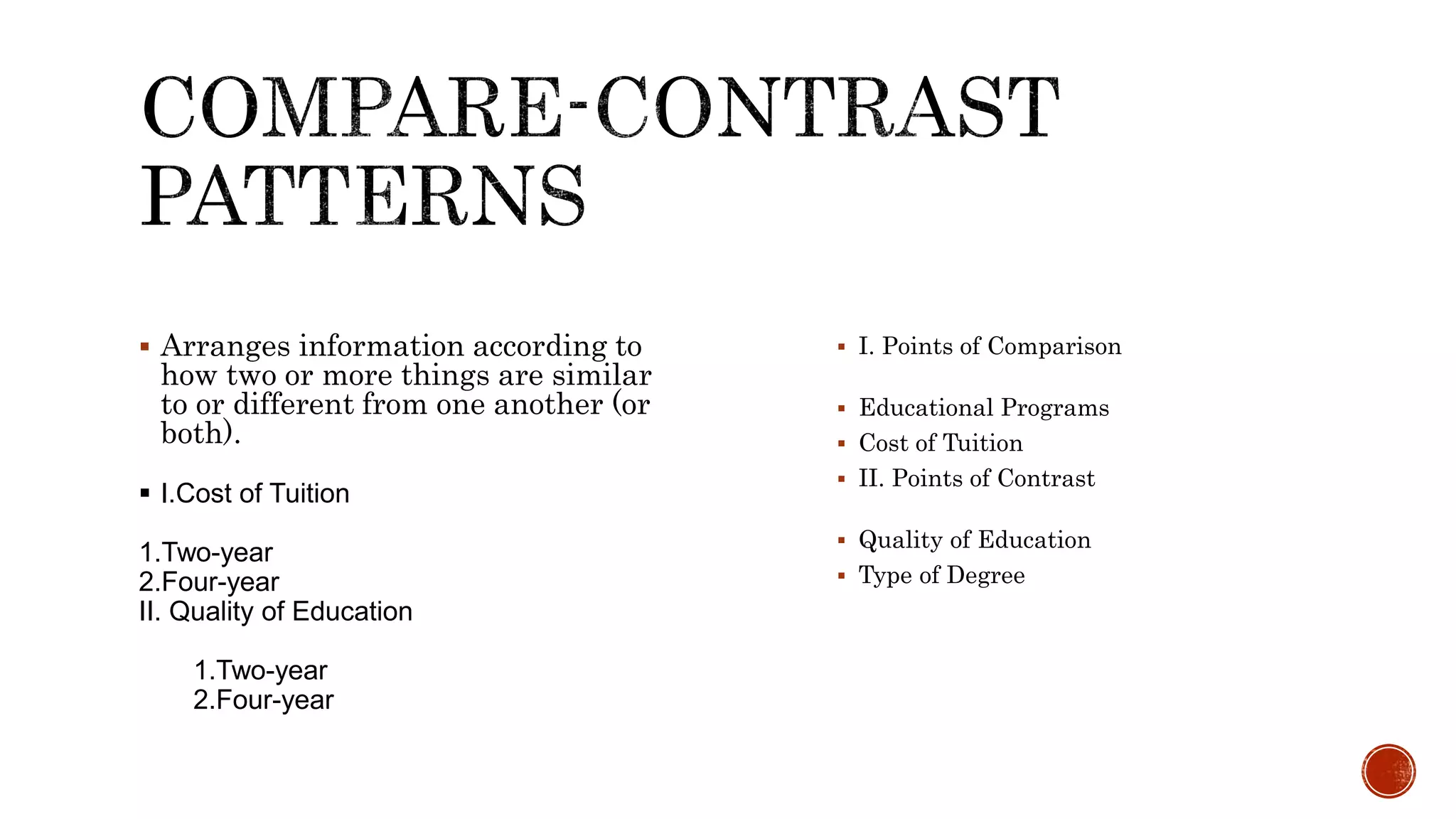
 Arranges information according to
how two or more things are similar
to or different from one another (or
both).
 I.Cost of Tuition
1.Two-year
2.Four-year
II. Quality of Education
1.Two-year
2.Four-year
 I. Points of Comparison
 Educational Programs
 Cost of Tuition
 II. Points of Contrast
 Quality of Education
 Type of Degree
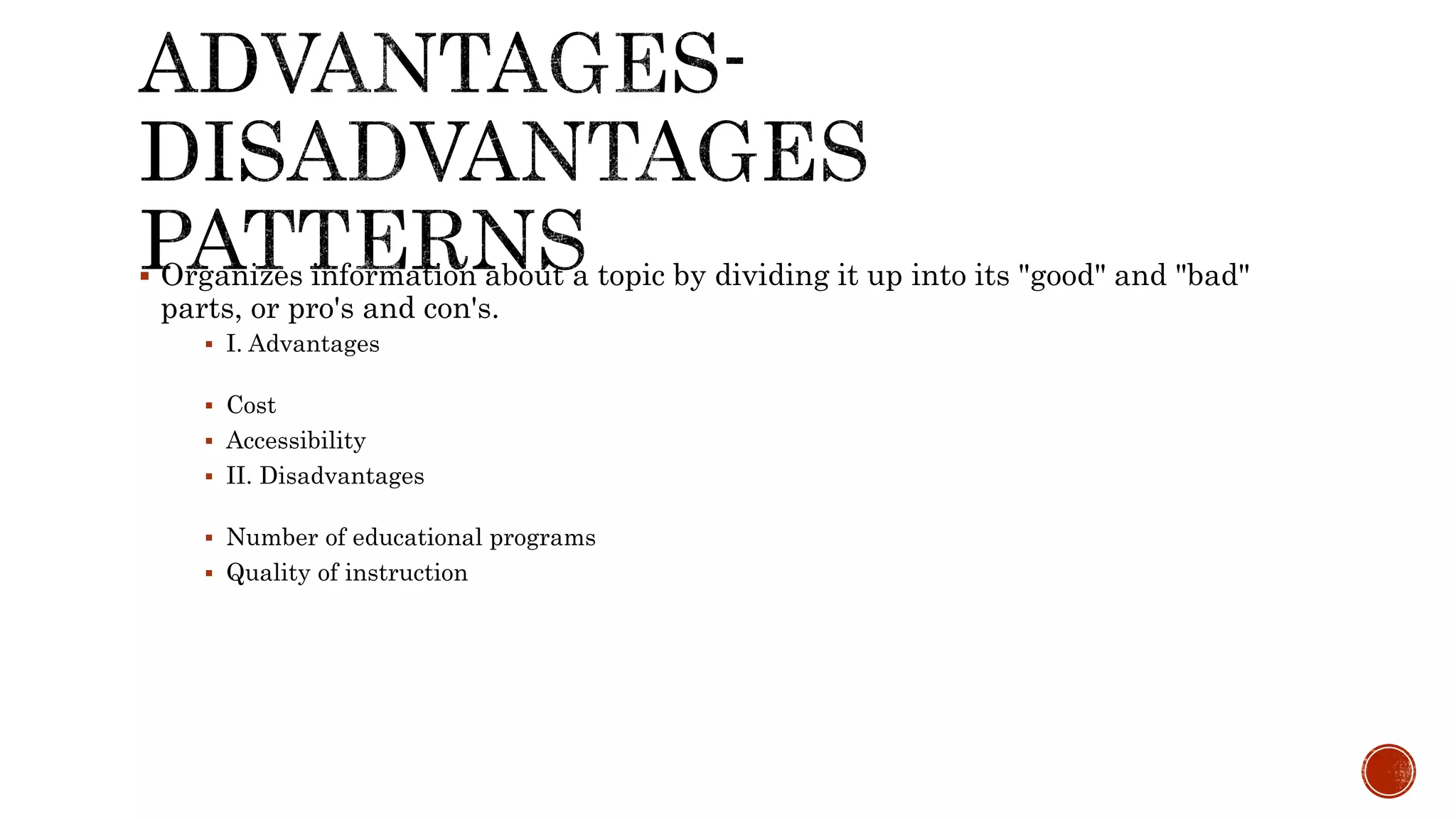
 Organizes information about a topic by dividing it up into its "good" and "bad"
parts, or pro's and con's.
 I. Advantages
 Cost
 Accessibility
 II. Disadvantages
 Number of educational programs
 Quality of instruction
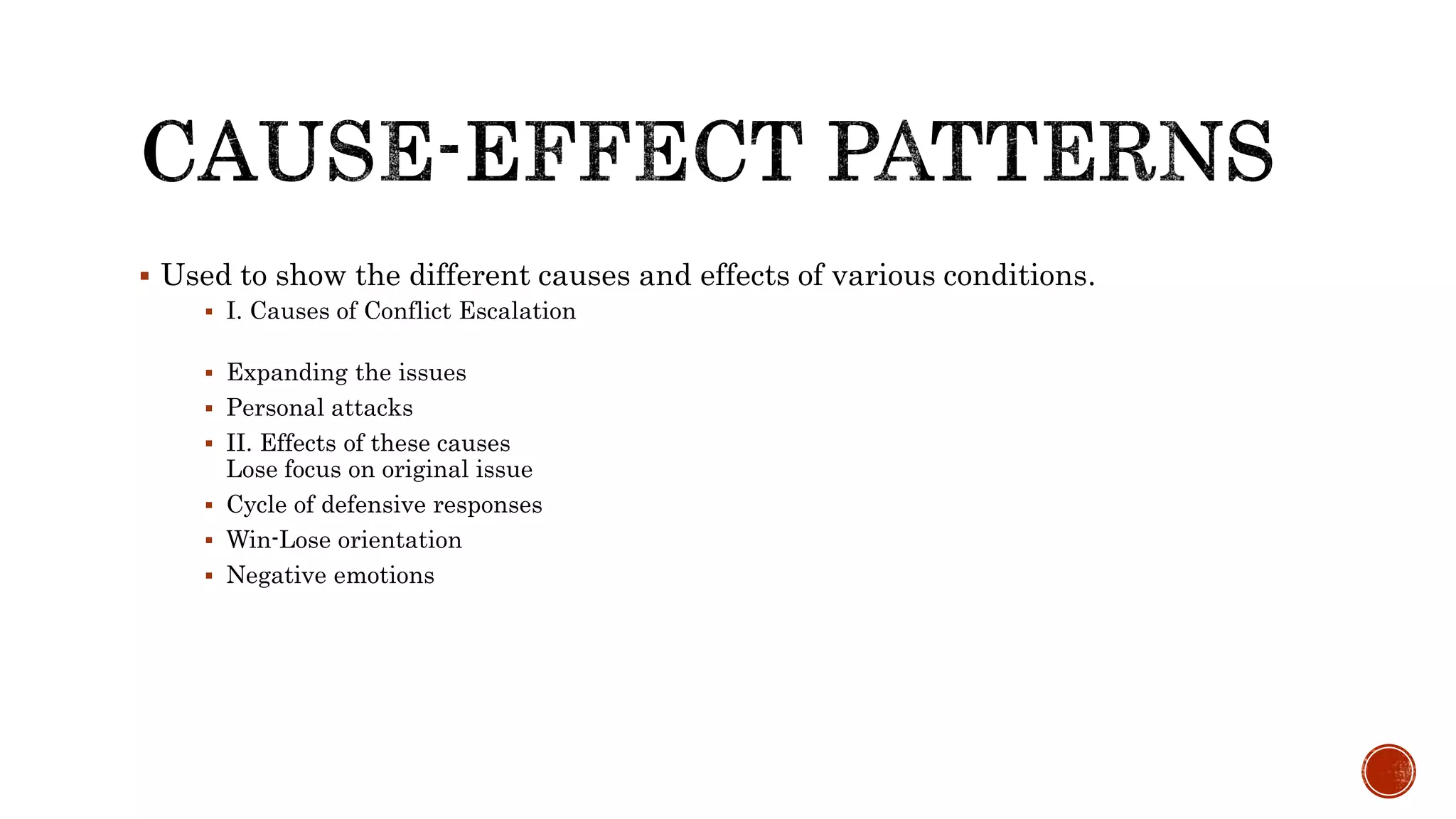
 Used to show the different causes and effects of various conditions.
 I. Causes of Conflict Escalation
 Expanding the issues
 Personal attacks
 II. Effects of these causes
Lose focus on original issue
 Cycle of defensive responses
 Win-Lose orientation
 Negative emotions
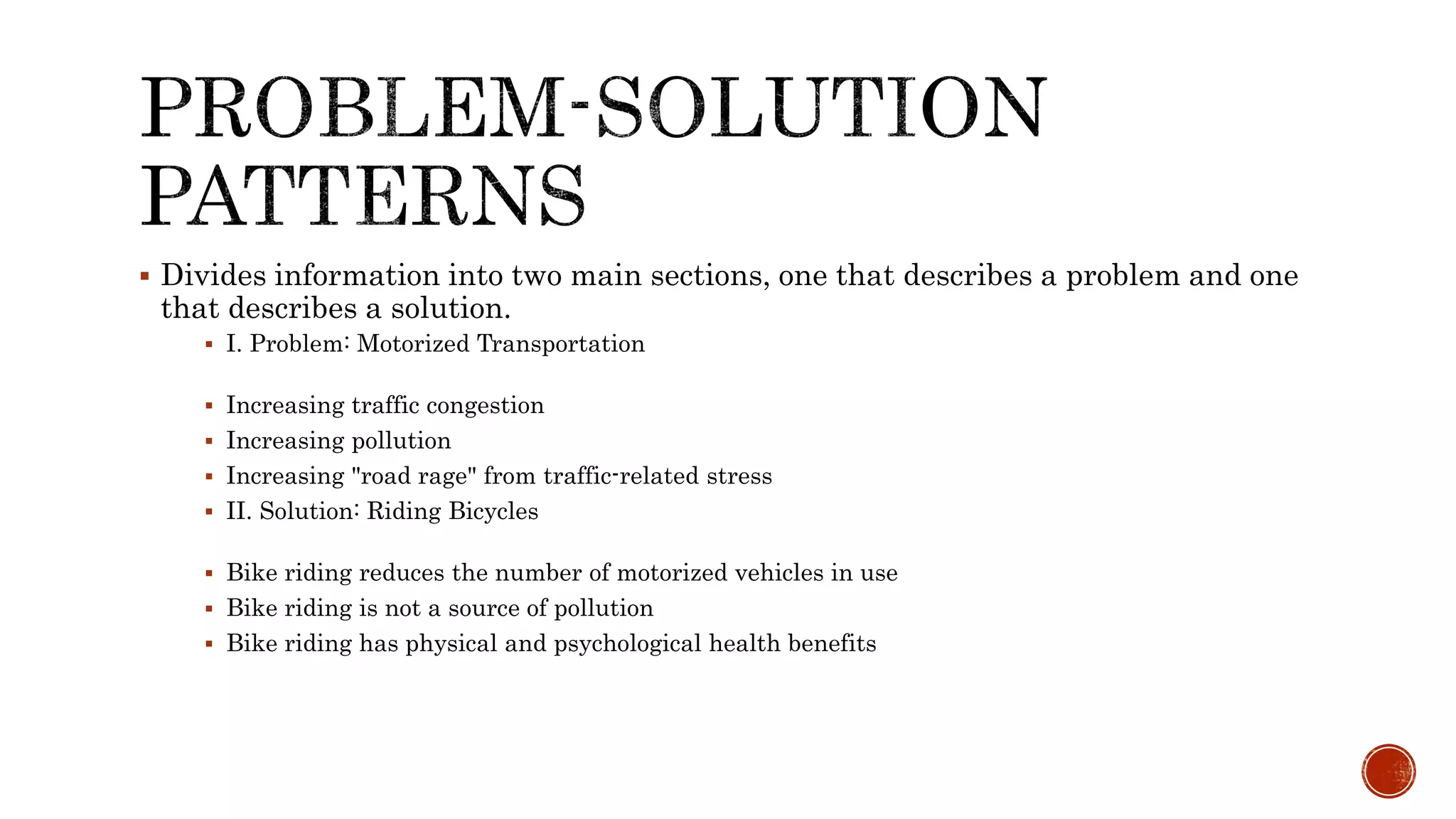
 Divides information into two main sections, one that describes a problem and one
that describes a solution.
 I. Problem: Motorized Transportation
 Increasing traffic congestion
 Increasing pollution
 Increasing "road rage" from traffic-related stress
 II. Solution: Riding Bicycles
 Bike riding reduces the number of motorized vehicles in use
 Bike riding is not a source of pollution
 Bike riding has physical and psychological health benefits
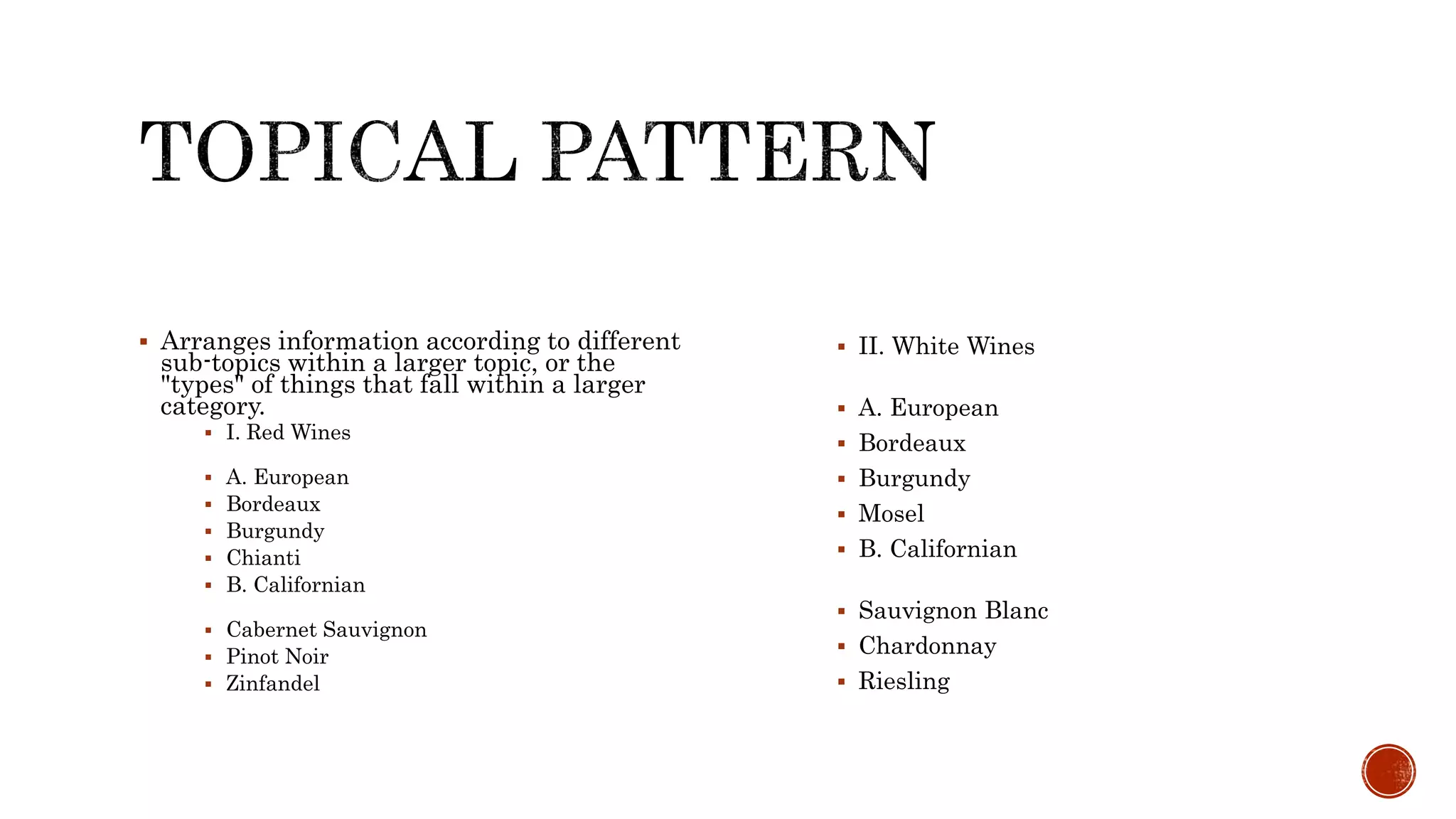
 Arranges information according to different
sub-topics within a larger topic, or the
"types" of things that fall within a larger
category.
 I. Red Wines
 A. European
 Bordeaux
 Burgundy
 Chianti
 B. Californian
 Cabernet Sauvignon
 Pinot Noir
 Zinfandel
 II. White Wines
 A. European
 Bordeaux
 Burgundy
 Mosel
 B. Californian
 Sauvignon Blanc
 Chardonnay
 Riesling
http://faculty.washington.edu/ezent/impo.htm
 Create your own 5 paragraph essay (free topic) applying any of the
patterns previously explained.

Essay organization patterns

  • 1.
  • 2.
     Arranges informationaccording to a progression of time.  I. 1895 - 1920 Significant Event # 1  Significant Event # 2  II. 1920 - 1945  Significant Event # 1  Significant Event # 2
  • 3.
     Arranges informationaccording to a step-by-step sequence that describes a particular process.  I. Step One: Harvest the grapes Harvesting procedure number one  Harvesting procedure number two  II. Step Two: Prepare the grapes  Preparation procedure number one  Preparation procedure number two
  • 4.
     Arranges informationaccording to how things fit together in physical space.  I. Downtown Waterfront Aquarium  Pike Place Market  II. Seattle Center  Space Needle  Pacific Science Center
  • 5.
     Arranges informationaccording to how two or more things are similar to or different from one another (or both).  I.Cost of Tuition 1.Two-year 2.Four-year II. Quality of Education 1.Two-year 2.Four-year  I. Points of Comparison  Educational Programs  Cost of Tuition  II. Points of Contrast  Quality of Education  Type of Degree
  • 6.
     Organizes informationabout a topic by dividing it up into its "good" and "bad" parts, or pro's and con's.  I. Advantages  Cost  Accessibility  II. Disadvantages  Number of educational programs  Quality of instruction
  • 7.
     Used toshow the different causes and effects of various conditions.  I. Causes of Conflict Escalation  Expanding the issues  Personal attacks  II. Effects of these causes Lose focus on original issue  Cycle of defensive responses  Win-Lose orientation  Negative emotions
  • 8.
     Divides informationinto two main sections, one that describes a problem and one that describes a solution.  I. Problem: Motorized Transportation  Increasing traffic congestion  Increasing pollution  Increasing "road rage" from traffic-related stress  II. Solution: Riding Bicycles  Bike riding reduces the number of motorized vehicles in use  Bike riding is not a source of pollution  Bike riding has physical and psychological health benefits
  • 9.
     Arranges informationaccording to different sub-topics within a larger topic, or the "types" of things that fall within a larger category.  I. Red Wines  A. European  Bordeaux  Burgundy  Chianti  B. Californian  Cabernet Sauvignon  Pinot Noir  Zinfandel  II. White Wines  A. European  Bordeaux  Burgundy  Mosel  B. Californian  Sauvignon Blanc  Chardonnay  Riesling
  • 10.
  • 11.
     Create yourown 5 paragraph essay (free topic) applying any of the patterns previously explained.