Capacity building for ecodesign in Wales – an innovation systems approach? Simon O’Rafferty why ecodesign? SMEs “don’t do” ecodesign should governments intervene? can we learn from Innovation Systems?
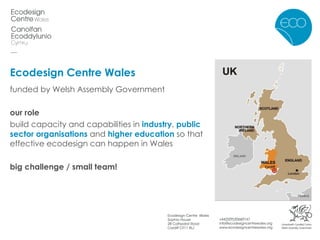
Ecodesign Centre Wales funded by Welsh Assembly Government our role  build capacity and capabilities in   industry ,  public sector organisations  and  higher education  so that effective ecodesign can happen in Wales big challenge / small team!
 
why ecodesign? potential to  drive innovation enhance  resource efficiency clean process that is  low-cost as %  of overall investment direct and indirect benefits  (competitiveness and ‘public good’) meeting expectations of  global consumer class potential to  improve communications  (branding, CSR, procurement etc) potential to  influence consumer behaviour  (SCP context)
SMEs “don’t do” ecodesign managerial, process and system barriers e.g. lack of  managerial and operational resources   lack of  awareness, training, and motivation  of employees failure of managers to harness the  strategic considerations actors “can’t or won’t act” - i.e.  uncertainty / poor appropriability   competing  policy rationales  (e.g. environment and innovation) BUT they have a large cumulative environmental impact and are significant contributors to national economies
previous interventions inspiring case examples but; low long-term retention or diffusion of ecodesign activities emphasis on managerial systems operational issues information services • demonstration projects • R&D financing • grants • ‘ brokering’ services
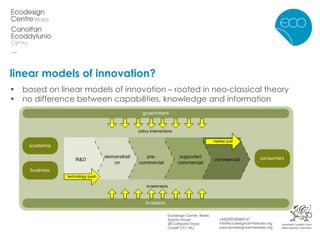
linear models of innovation? based on linear models of innovation – rooted in neo-classical theory no difference between capabilities, knowledge and information
innovation systems “ policy is no longer only about correcting imperfect incentives for private agents but rather about  facilitating the emergence  of new opportunities by  building innovation infrastructure ” (Norgen, L. Hauknes, J. 2000) policy and policy mechanisms should design institutional structures that stimulate and support sustainable innovation lessons for  to intervention
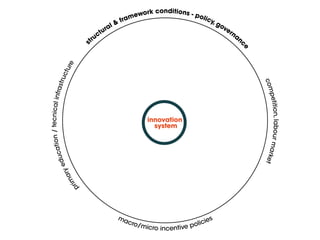
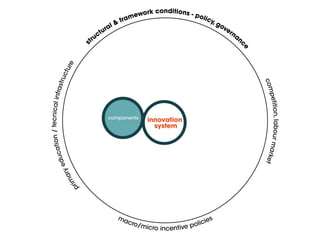
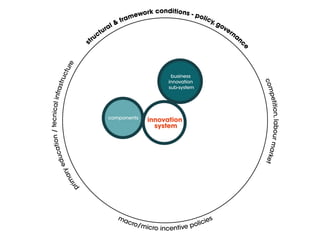
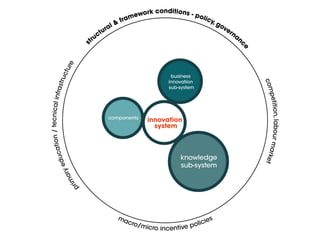
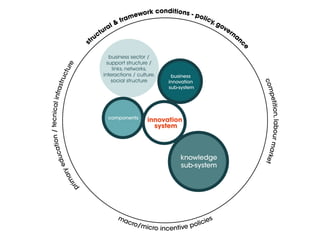
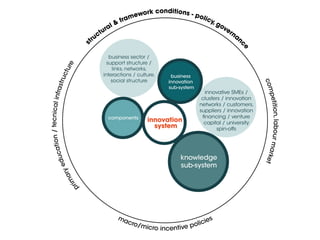
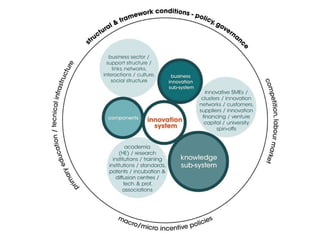
innovation systems “ the  network and interplay  of  public and private   institutions  in which  production, distribution and use  of new knowledge and technology take place” (Vinnova, 2006) interactive, non-linear and diffuse


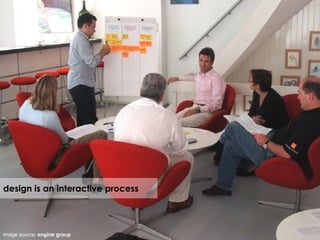
design is an interactive process image source:  engine group
 
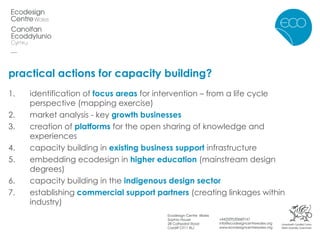
practical actions for capacity building? identification of  focus areas  for intervention – from a life cycle perspective (mapping exercise)  market analysis - key  growth businesses   creation of  platforms  for the open sharing of knowledge and experiences capacity building in  existing business support  infrastructure embedding ecodesign in  higher education  (mainstream design degrees) capacity building in the  indigenous design sector establishing  commercial support partners  (creating linkages within industry)
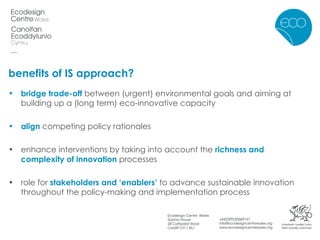
benefits of IS approach? bridge trade-off  between (urgent) environmental goals and aiming at building up a (long term) eco-innovative capacity align  competing policy rationales enhance interventions by taking into account the  richness and complexity of innovation  processes role for  stakeholders and ‘enablers’  to advance sustainable innovation throughout the policy-making and implementation process

Erscp07 Orafferty

  • 1.
    Capacity building forecodesign in Wales – an innovation systems approach? Simon O’Rafferty why ecodesign? SMEs “don’t do” ecodesign should governments intervene? can we learn from Innovation Systems?
  • 2.
    Ecodesign Centre Walesfunded by Welsh Assembly Government our role build capacity and capabilities in industry , public sector organisations and higher education so that effective ecodesign can happen in Wales big challenge / small team!
  • 3.
  • 4.
    why ecodesign? potentialto drive innovation enhance resource efficiency clean process that is low-cost as % of overall investment direct and indirect benefits (competitiveness and ‘public good’) meeting expectations of global consumer class potential to improve communications (branding, CSR, procurement etc) potential to influence consumer behaviour (SCP context)
  • 5.
    SMEs “don’t do”ecodesign managerial, process and system barriers e.g. lack of managerial and operational resources lack of awareness, training, and motivation of employees failure of managers to harness the strategic considerations actors “can’t or won’t act” - i.e. uncertainty / poor appropriability competing policy rationales (e.g. environment and innovation) BUT they have a large cumulative environmental impact and are significant contributors to national economies
  • 6.
    previous interventions inspiringcase examples but; low long-term retention or diffusion of ecodesign activities emphasis on managerial systems operational issues information services • demonstration projects • R&D financing • grants • ‘ brokering’ services
  • 7.
    linear models ofinnovation? based on linear models of innovation – rooted in neo-classical theory no difference between capabilities, knowledge and information
  • 8.
    innovation systems “policy is no longer only about correcting imperfect incentives for private agents but rather about facilitating the emergence of new opportunities by building innovation infrastructure ” (Norgen, L. Hauknes, J. 2000) policy and policy mechanisms should design institutional structures that stimulate and support sustainable innovation lessons for to intervention
  • 9.
    innovation systems “the network and interplay of public and private institutions in which production, distribution and use of new knowledge and technology take place” (Vinnova, 2006) interactive, non-linear and diffuse
  • 10.
  • 11.
  • 12.
  • 13.
  • 14.
  • 15.
  • 16.
  • 17.
    design is aninteractive process image source: engine group
  • 18.
  • 19.
    practical actions forcapacity building? identification of focus areas for intervention – from a life cycle perspective (mapping exercise) market analysis - key growth businesses creation of platforms for the open sharing of knowledge and experiences capacity building in existing business support infrastructure embedding ecodesign in higher education (mainstream design degrees) capacity building in the indigenous design sector establishing commercial support partners (creating linkages within industry)
  • 20.
    benefits of ISapproach? bridge trade-off between (urgent) environmental goals and aiming at building up a (long term) eco-innovative capacity align competing policy rationales enhance interventions by taking into account the richness and complexity of innovation processes role for stakeholders and ‘enablers’ to advance sustainable innovation throughout the policy-making and implementation process