Error Detection
George College Of Management & Science
Name-Md Abdulla Khan
Roll-16401216004
Sub-Advanced networking and
communication
Paper code-BCA-E-601-A
Assignment1
16/03/2019
Introduction
 Data can be corrupted during
transmission.
 Some applications require that error
be detected and corrected
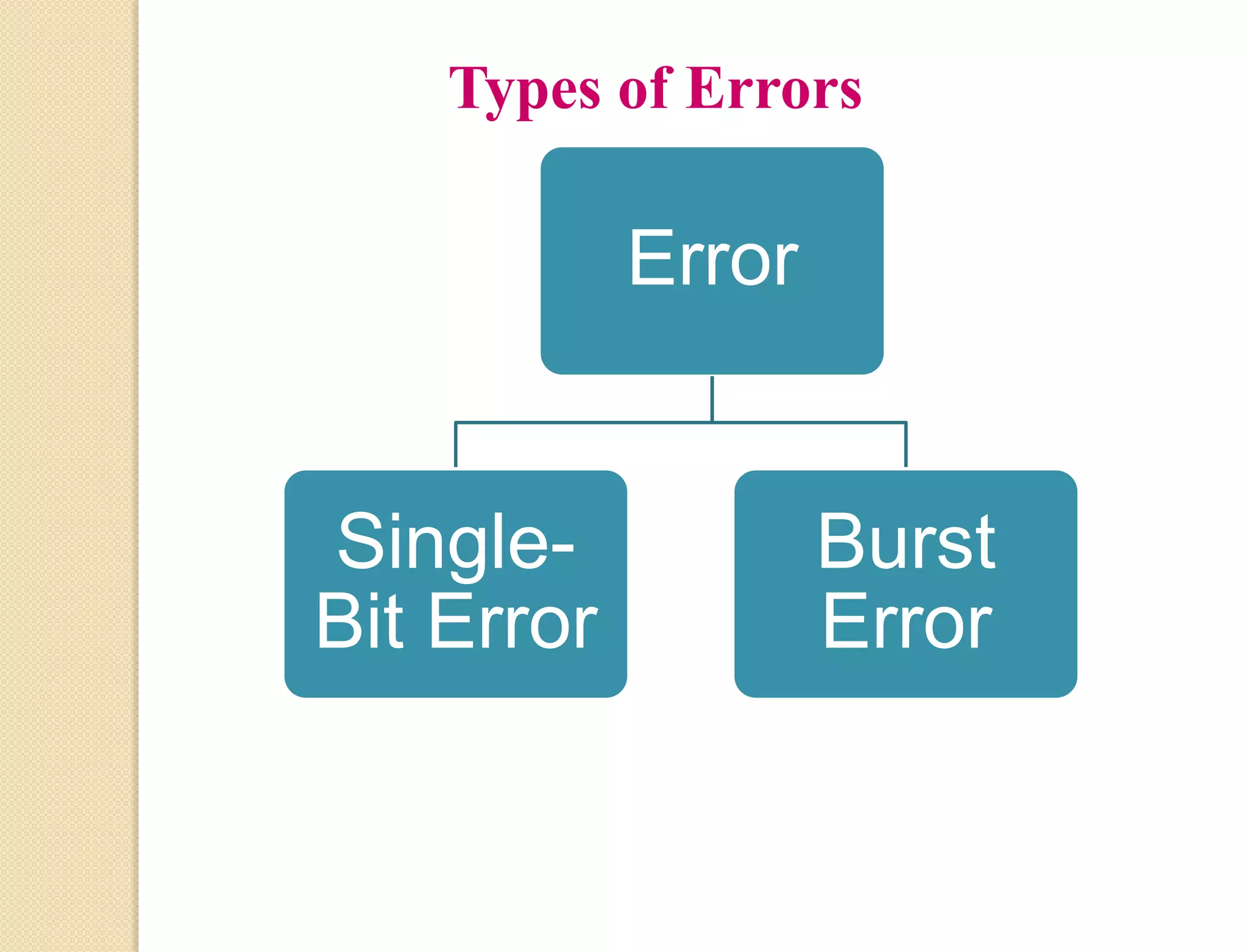
Types of Errors
Error
Single-
Bit Error
Burst
Error
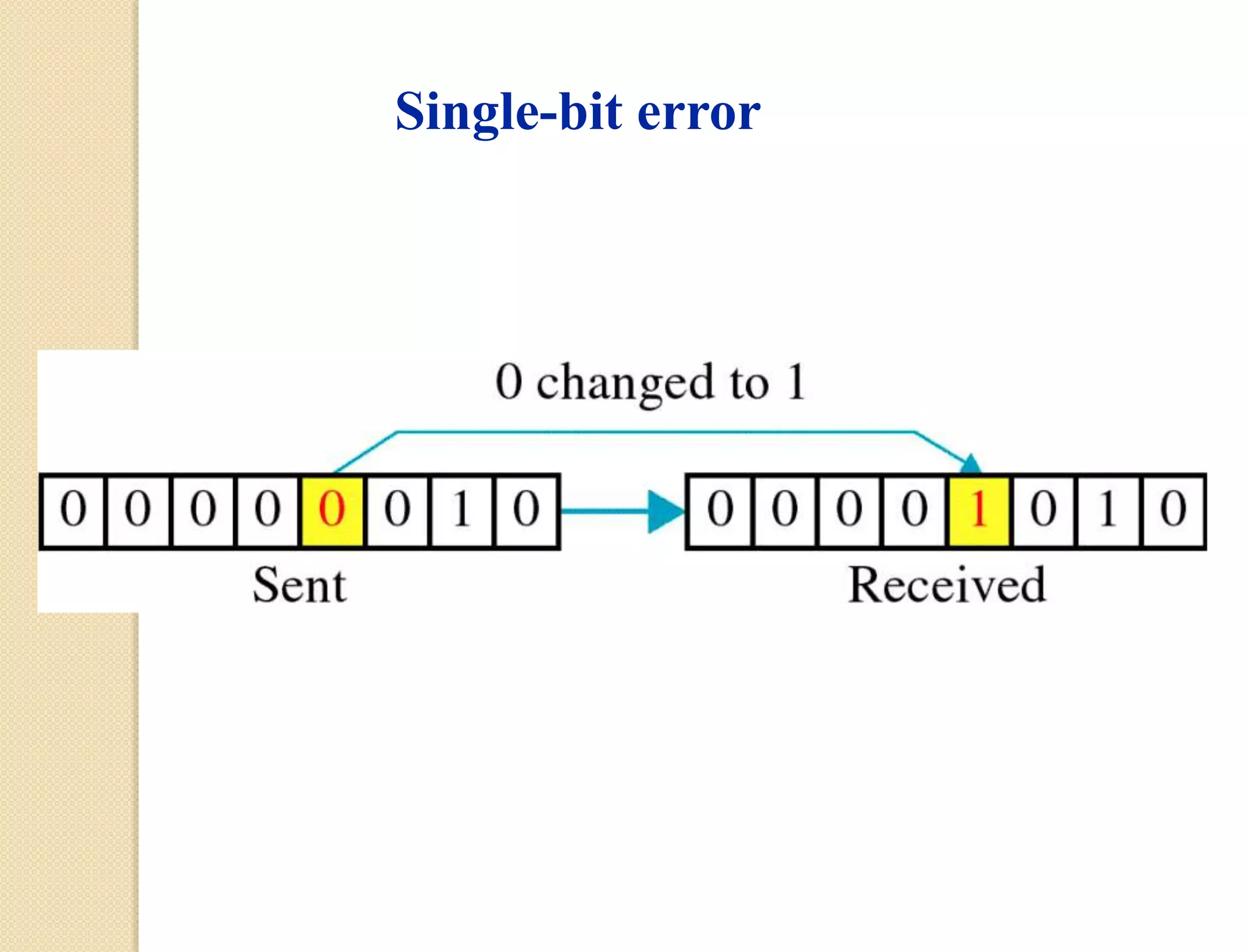
Single-bit error
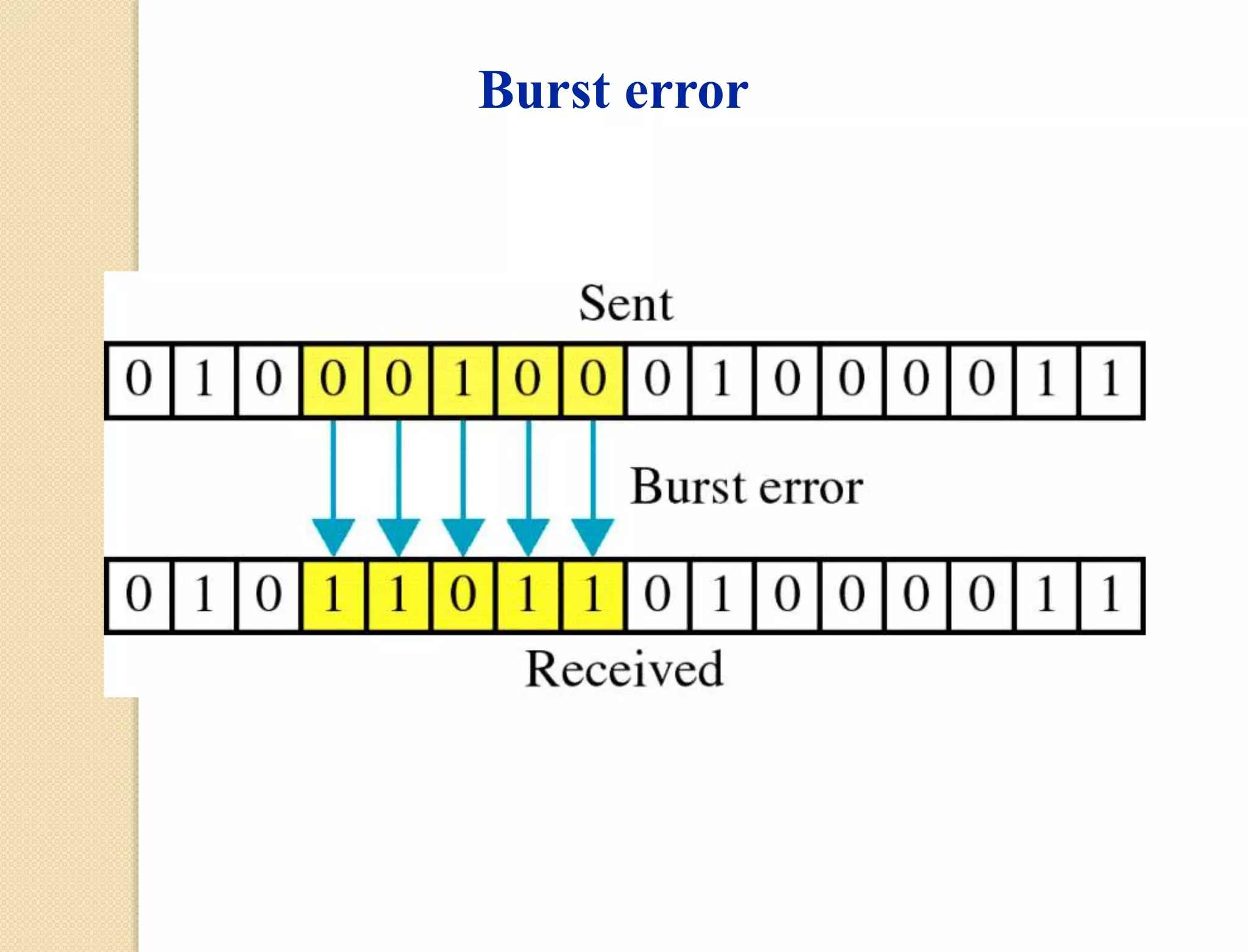
Burst error
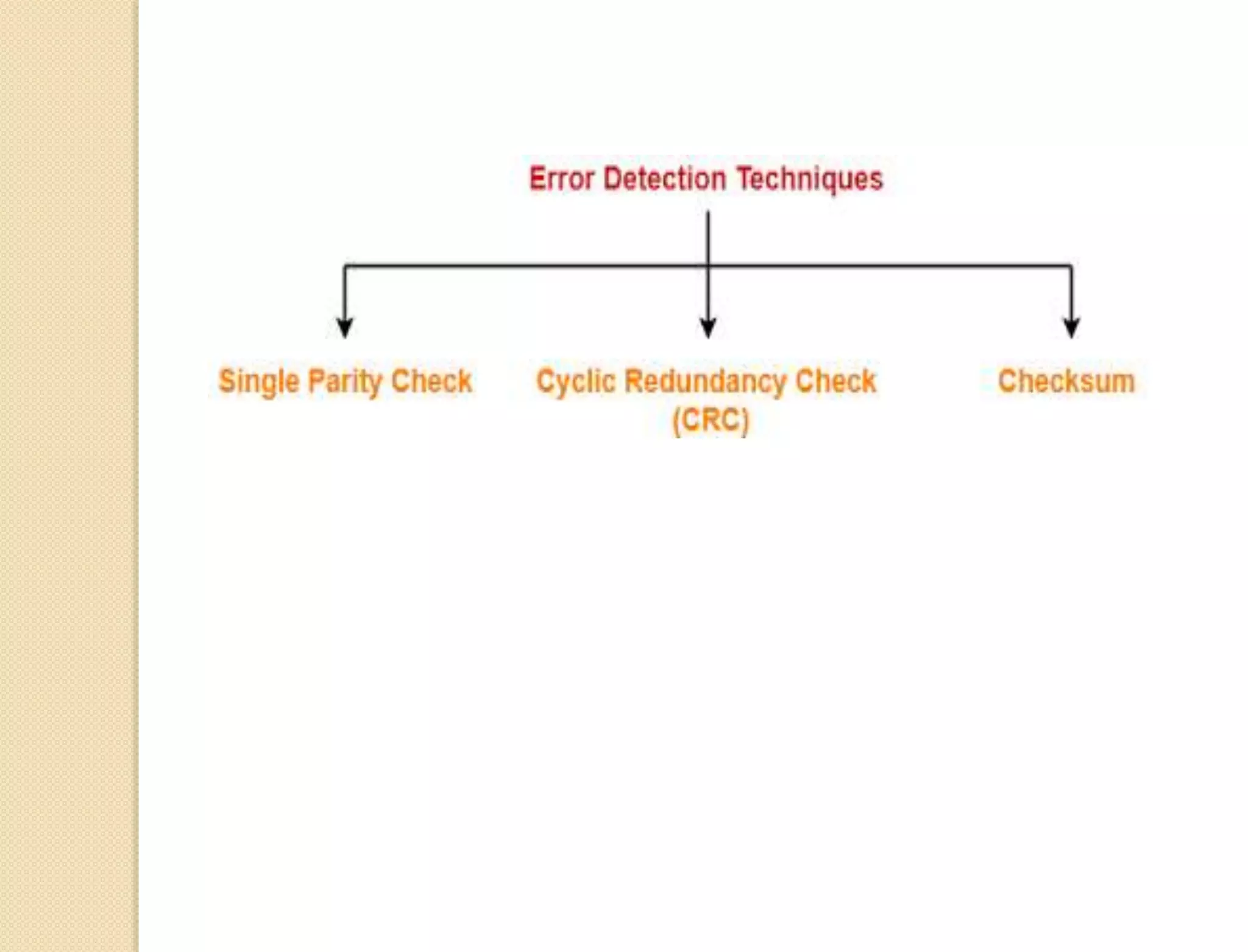
Error detection
Error detection means to decide whether the
received data is correct or not without having
a copy of the original message.
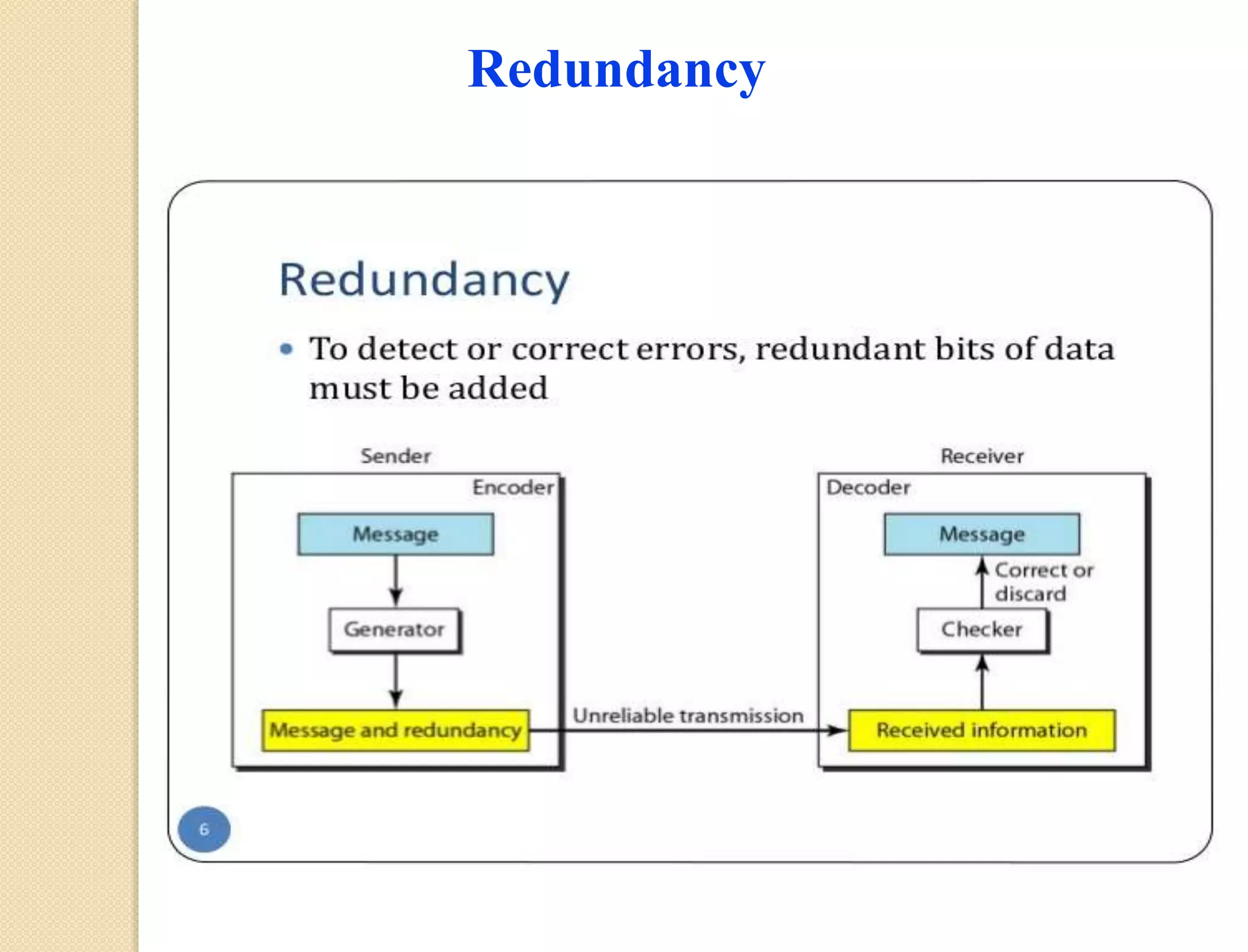
Error detection uses the concept of
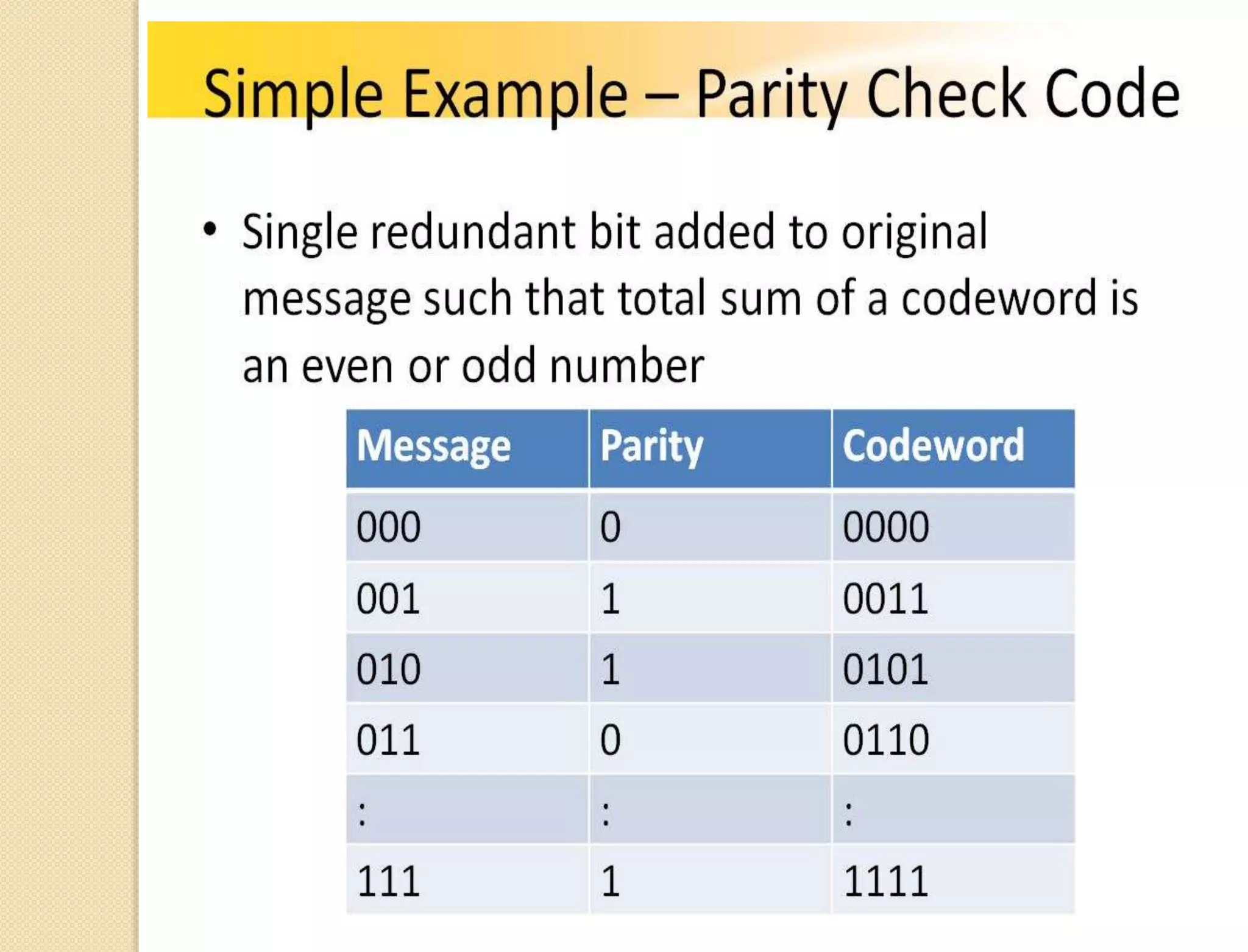
redundancy, which means adding extra bits
for detecting errors at the destination.
Redundancy
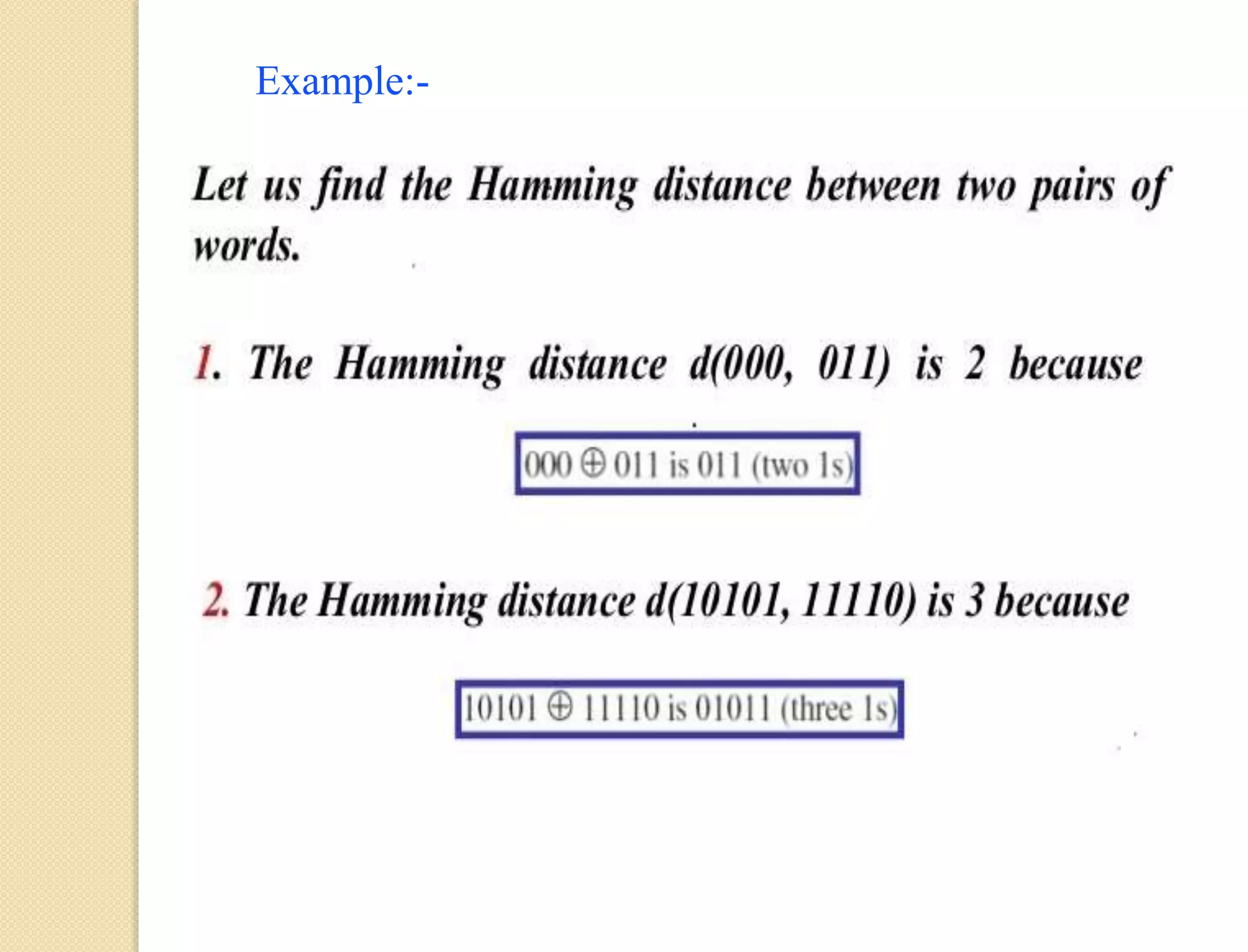
Hamming Distance:-
The maximum distance between two words is the
number of different between the corresponding bits.
The Hamming distance can easily be found if we
apply XOR operation on the two words and count
the number of 1s in the result.
Example:-
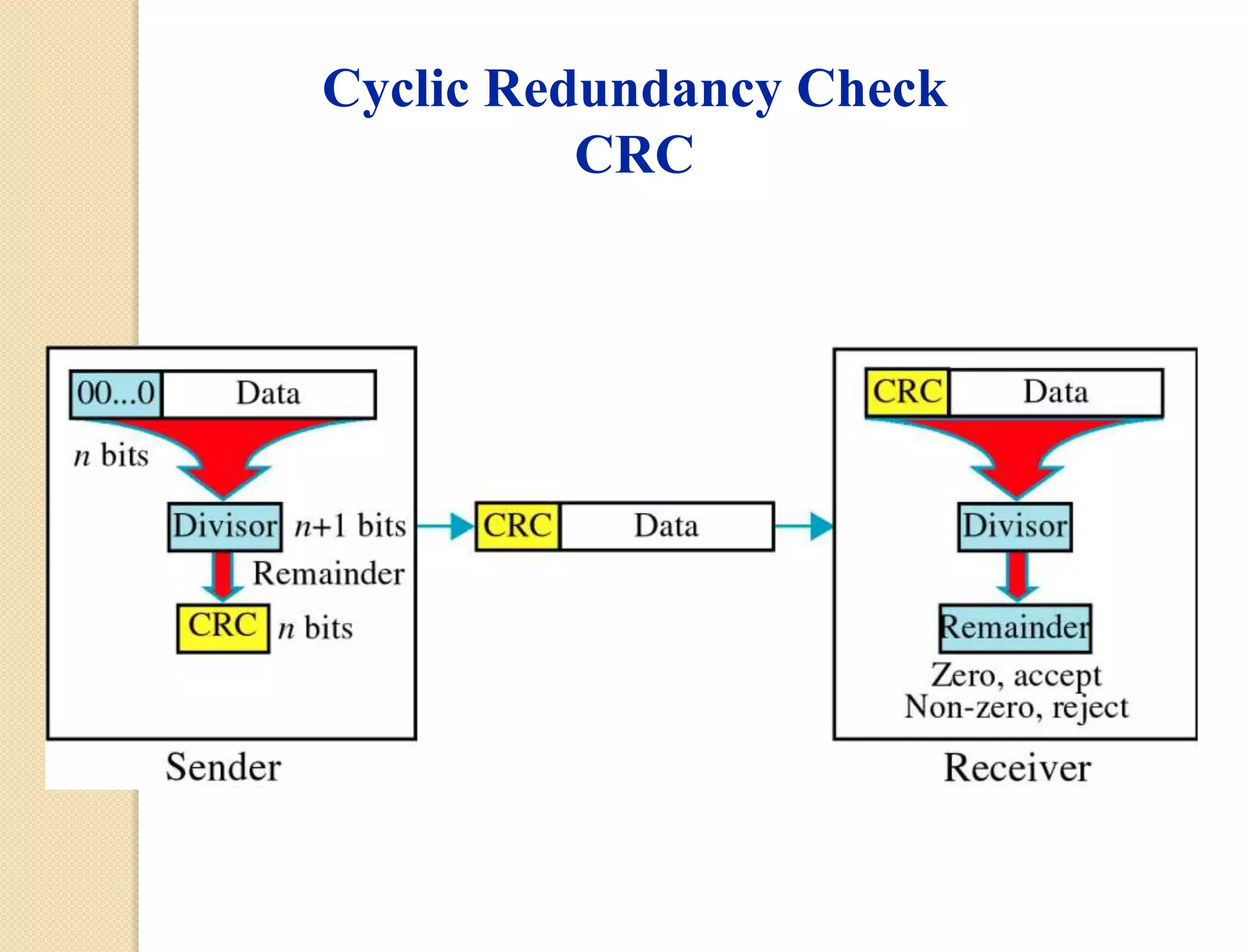
Cyclic Redundancy Check
CRC
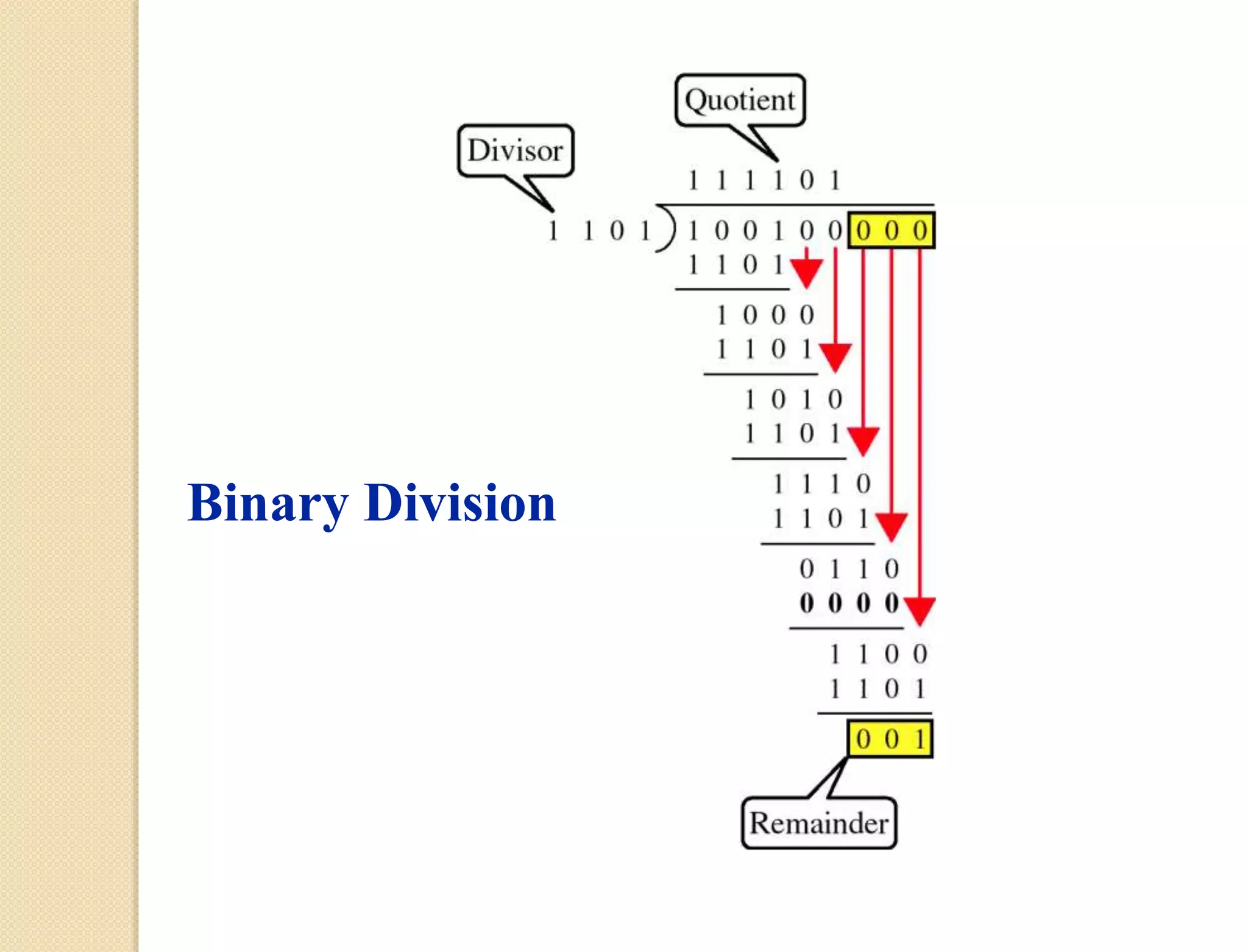
Cyclic Redundancy Check
 Given a k-bit frame or message, the
transmitter generates an n-bit
sequence, known as a frame check
sequence (FCS), so that the resulting
frame, consisting of (k+n) bits, is exactly
divisible by some predetermined
number.
 The receiver then divides the incoming
frame by the same number and, if there
is no remainder, assumes that there
was no error.
Binary Division
Checksum
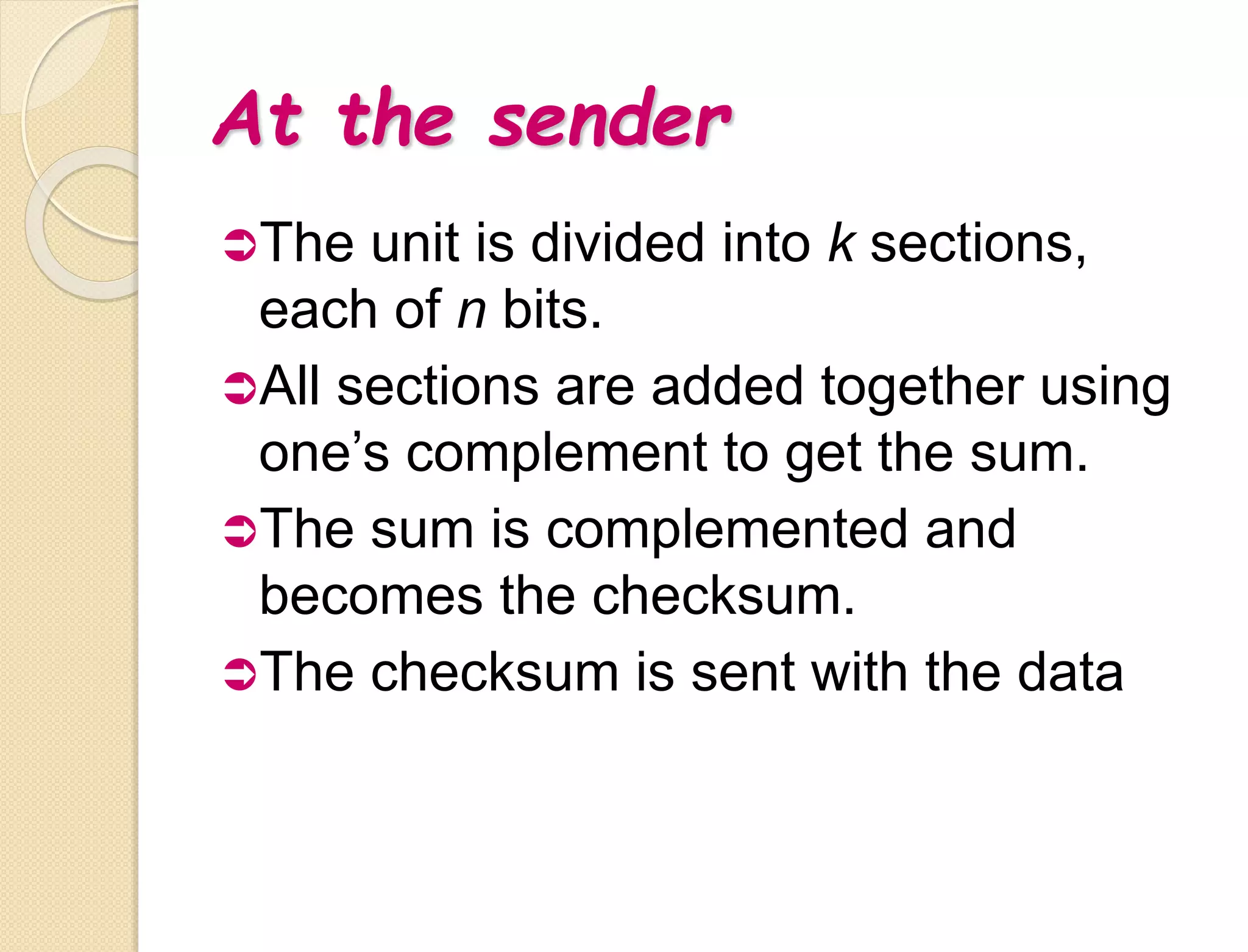
At the sender
The unit is divided into k sections,
each of n bits.
All sections are added together using
one’s complement to get the sum.
The sum is complemented and
becomes the checksum.
The checksum is sent with the data
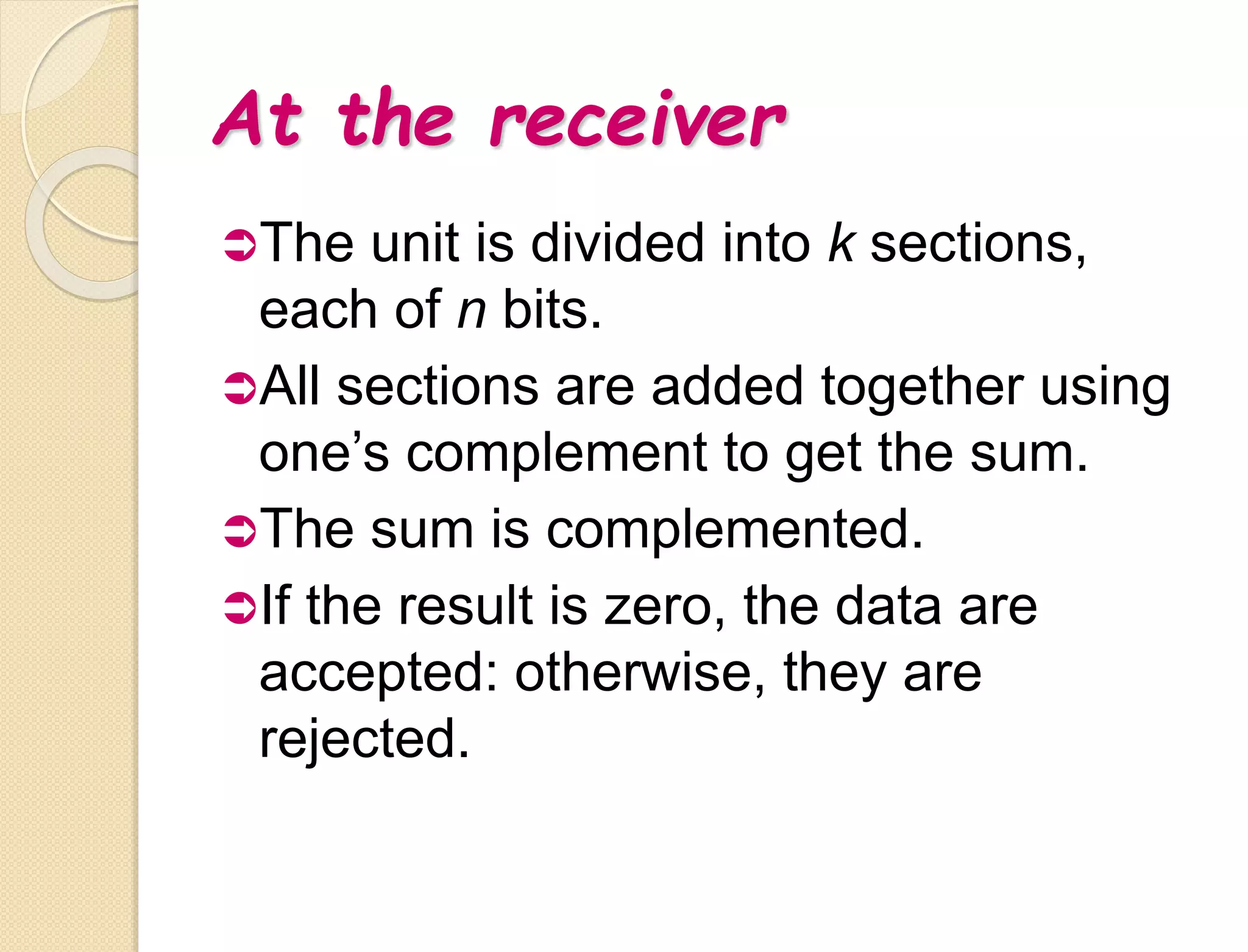
At the receiver
The unit is divided into k sections,
each of n bits.
All sections are added together using
one’s complement to get the sum.
The sum is complemented.
If the result is zero, the data are
accepted: otherwise, they are
rejected.
THANK YOU

Error detection

  • 1.
  • 2.
    George College OfManagement & Science Name-Md Abdulla Khan Roll-16401216004 Sub-Advanced networking and communication Paper code-BCA-E-601-A Assignment1 16/03/2019
  • 3.
    Introduction  Data canbe corrupted during transmission.  Some applications require that error be detected and corrected
  • 4.
  • 5.
  • 6.
  • 7.
    Error detection Error detectionmeans to decide whether the received data is correct or not without having a copy of the original message. Error detection uses the concept of redundancy, which means adding extra bits for detecting errors at the destination.
  • 8.
  • 9.
    Hamming Distance:- The maximumdistance between two words is the number of different between the corresponding bits. The Hamming distance can easily be found if we apply XOR operation on the two words and count the number of 1s in the result.
  • 10.
  • 12.
  • 13.
    Cyclic Redundancy Check Given a k-bit frame or message, the transmitter generates an n-bit sequence, known as a frame check sequence (FCS), so that the resulting frame, consisting of (k+n) bits, is exactly divisible by some predetermined number.  The receiver then divides the incoming frame by the same number and, if there is no remainder, assumes that there was no error.
  • 14.
  • 16.
  • 17.
    At the sender Theunit is divided into k sections, each of n bits. All sections are added together using one’s complement to get the sum. The sum is complemented and becomes the checksum. The checksum is sent with the data
  • 18.
    At the receiver Theunit is divided into k sections, each of n bits. All sections are added together using one’s complement to get the sum. The sum is complemented. If the result is zero, the data are accepted: otherwise, they are rejected.
  • 19.

Editor's Notes

  • #8 Make sense of message. Make sense of message.