Error Correction
Sheila Tamizrad
Banoo Amin Complex
Summer 2015
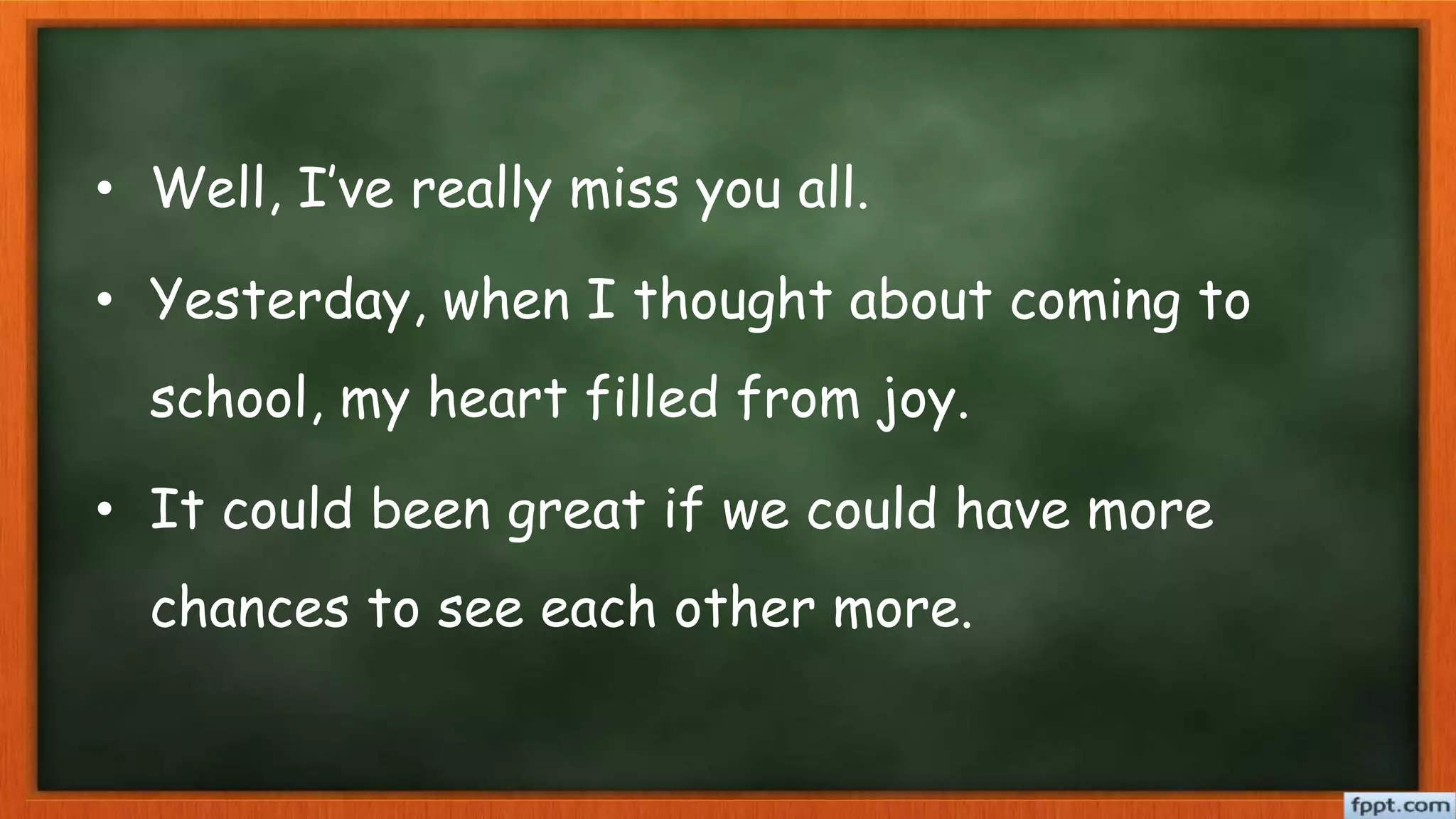
• Well, I’ve really miss you all.
• Yesterday, when I thought about coming to
school, my heart filled from joy.
• It could been great if we could have more
chances to see each other more.
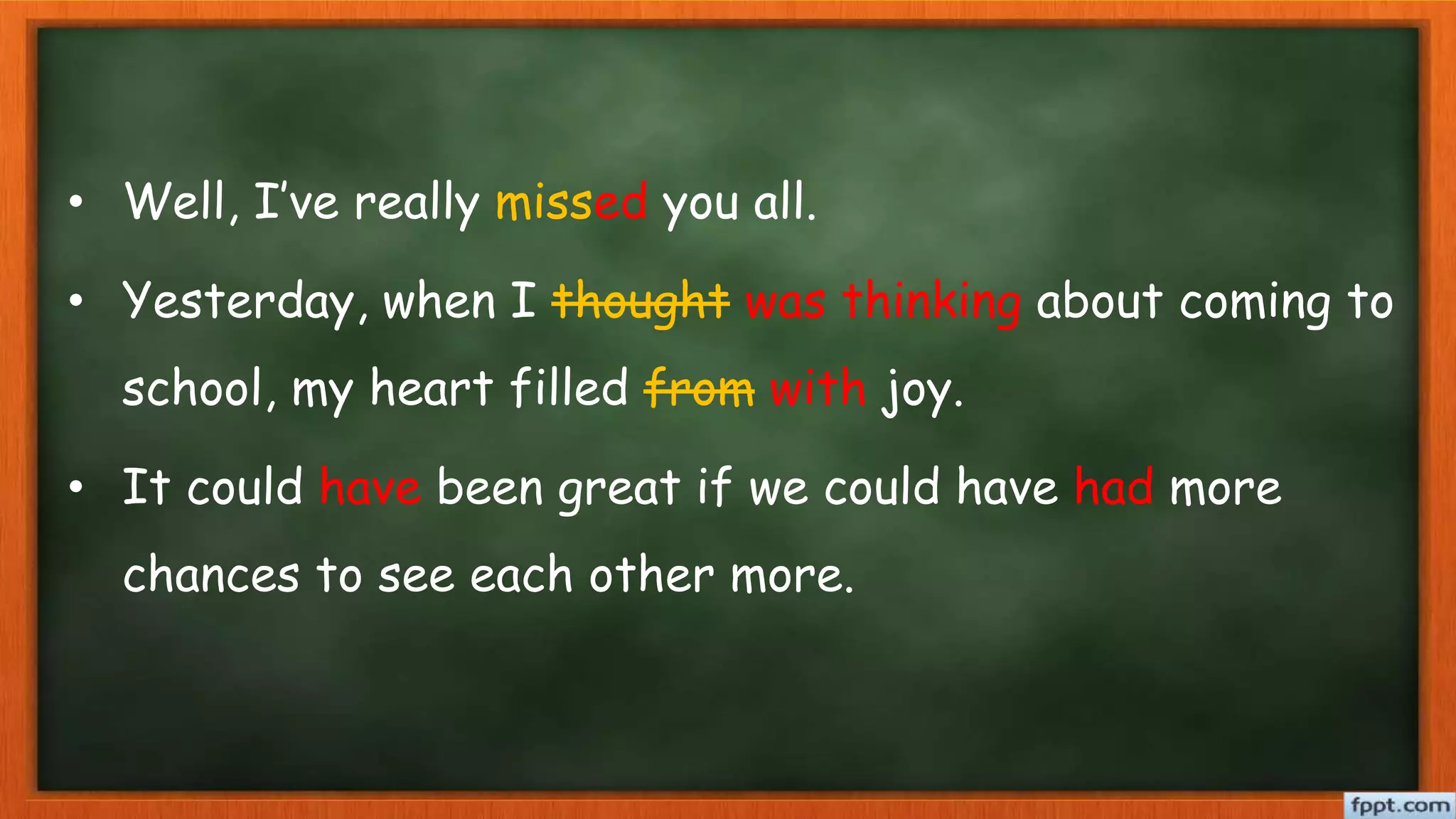
• Well, I’ve really missed you all.
• Yesterday, when I thought was thinking about coming to
school, my heart filled from with joy.
• It could have been great if we could have had more
chances to see each other more.
Error vs. Mistake
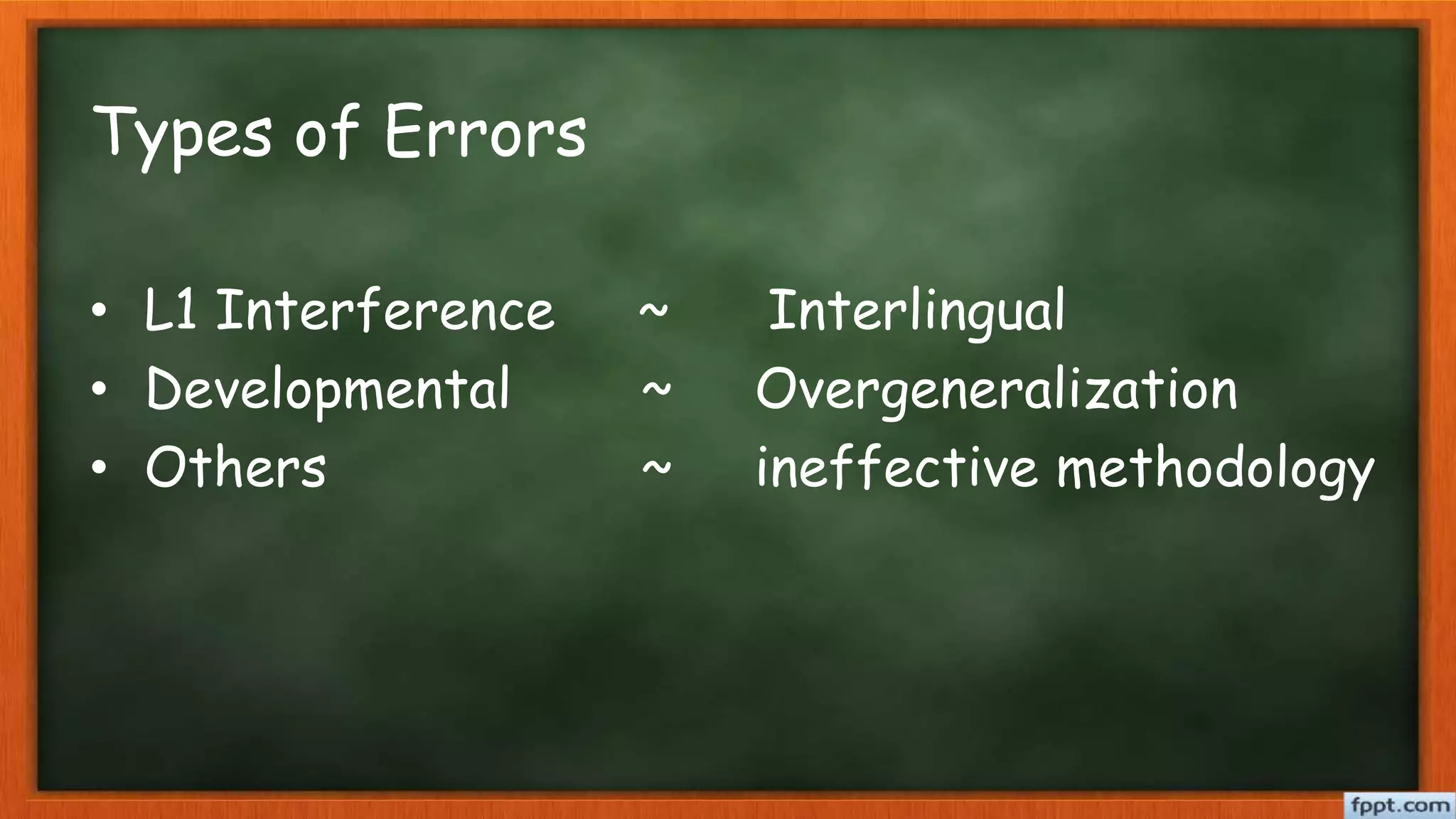
Types of Errors
• L1 Interference ~ Interlingual
• Developmental ~ Overgeneralization
• Others ~ ineffective methodology
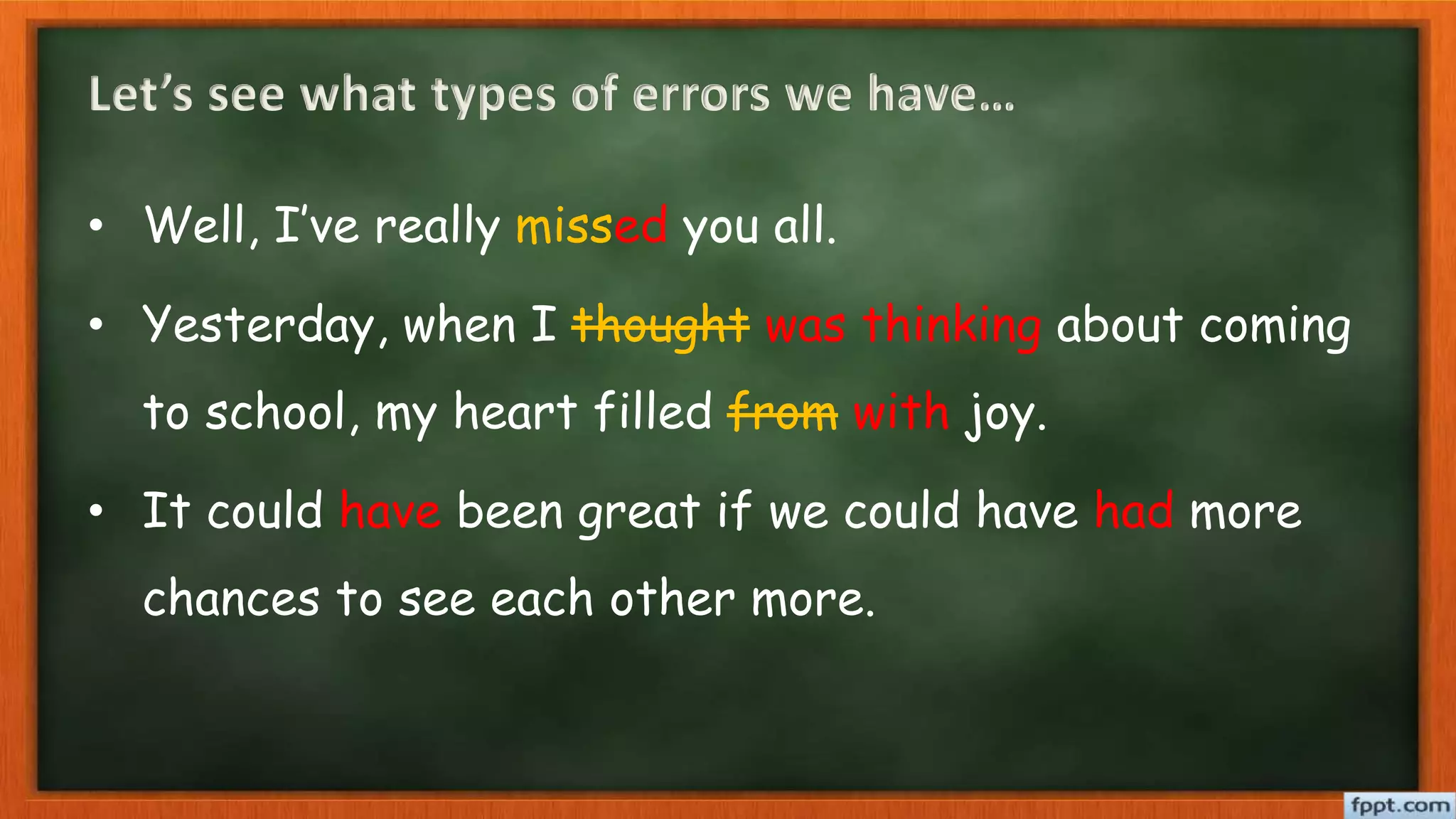
Let’s see what types of errors we have…
• Well, I’ve really missed you all.
• Yesterday, when I thought was thinking about coming
to school, my heart filled from with joy.
• It could have been great if we could have had more
chances to see each other more.
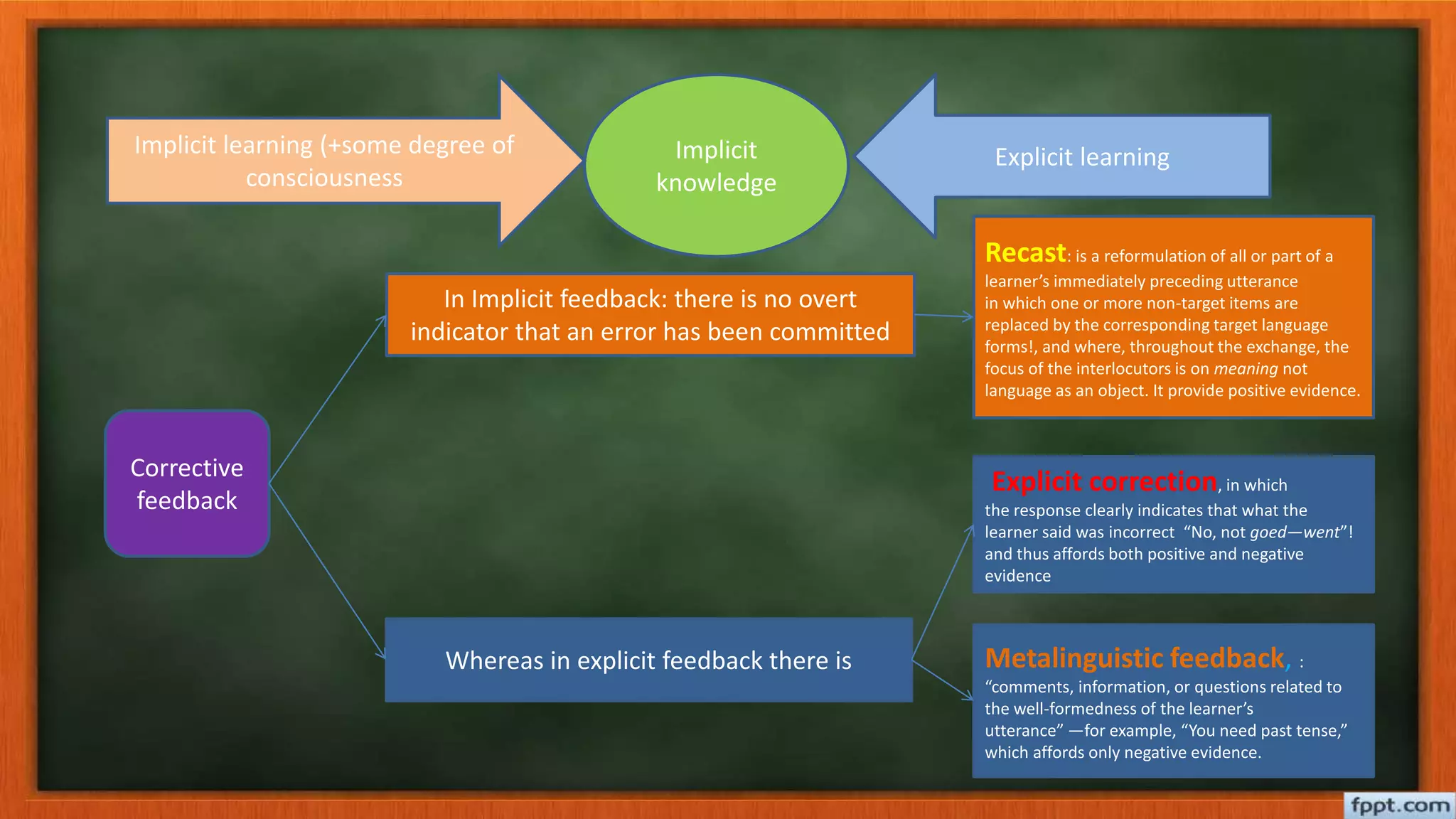
Implicit
knowledge
Implicit learning (+some degree of
consciousness
Explicit learning
Corrective
feedback
In Implicit feedback: there is no overt
indicator that an error has been committed
Whereas in explicit feedback there is
Recast: is a reformulation of all or part of a
learner’s immediately preceding utterance
in which one or more non-target items are
replaced by the corresponding target language
forms!, and where, throughout the exchange, the
focus of the interlocutors is on meaning not
language as an object. It provide positive evidence.
Explicit correction, in which
the response clearly indicates that what the
learner said was incorrect “No, not goed—went”!
and thus affords both positive and negative
evidence
Metalinguistic feedback, :
“comments, information, or questions related to
the well-formedness of the learner’s
utterance” —for example, “You need past tense,”
which affords only negative evidence.
Error Correction Methods
• Recast
• Elicitation
• Clarification Request
• Metalinguistic Feedback
• Explicit Correction
• Repetition
S
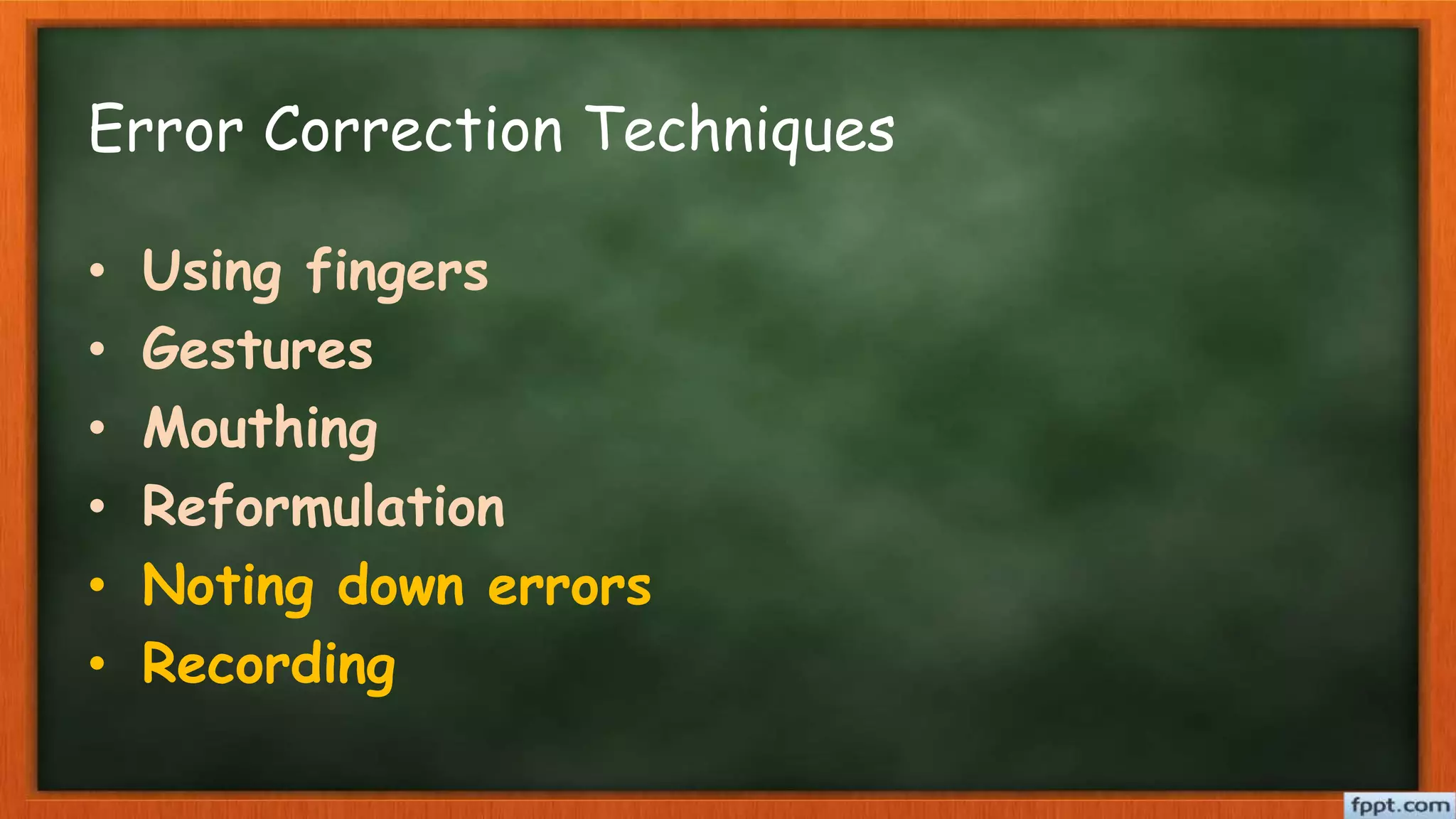
Error Correction Techniques
• Using fingers
• Gestures
• Mouthing
• Reformulation
• Noting down errors
• Recording
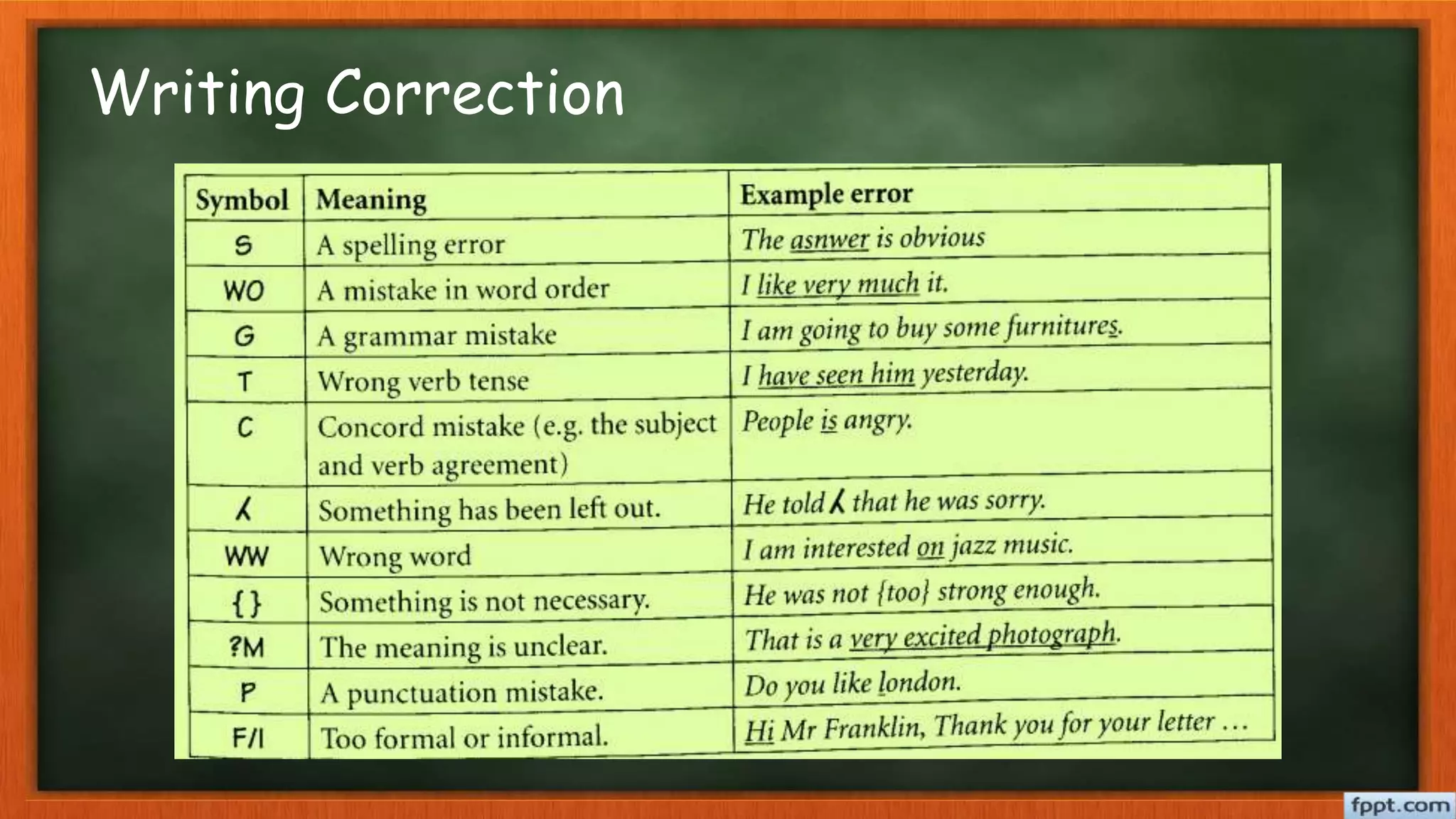
Writing Correction
Read the information about summer sports courses. You and a friend would like to do
a course. Write a letter
to the school secretary to:
• explain what type of course you would like and
• ask two questions about the content of the courses and
• ask one question about accommodation.
Write between 70 and 100 words. Do not write an address.
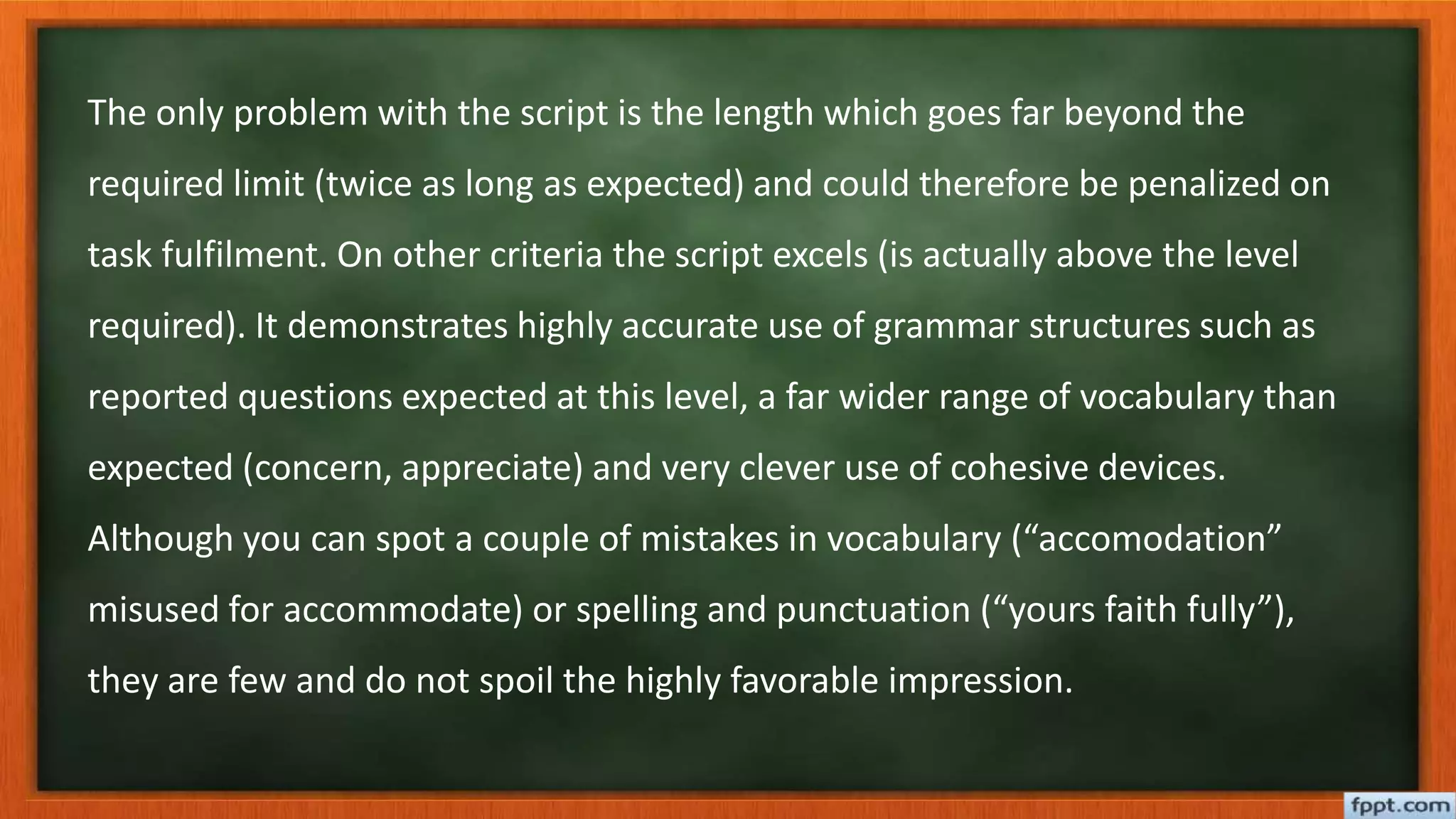
The only problem with the script is the length which goes far beyond the
required limit (twice as long as expected) and could therefore be penalized on
task fulfilment. On other criteria the script excels (is actually above the level
required). It demonstrates highly accurate use of grammar structures such as
reported questions expected at this level, a far wider range of vocabulary than
expected (concern, appreciate) and very clever use of cohesive devices.
Although you can spot a couple of mistakes in vocabulary (“accomodation”
misused for accommodate) or spelling and punctuation (“yours faith fully”),
they are few and do not spoil the highly favorable impression.
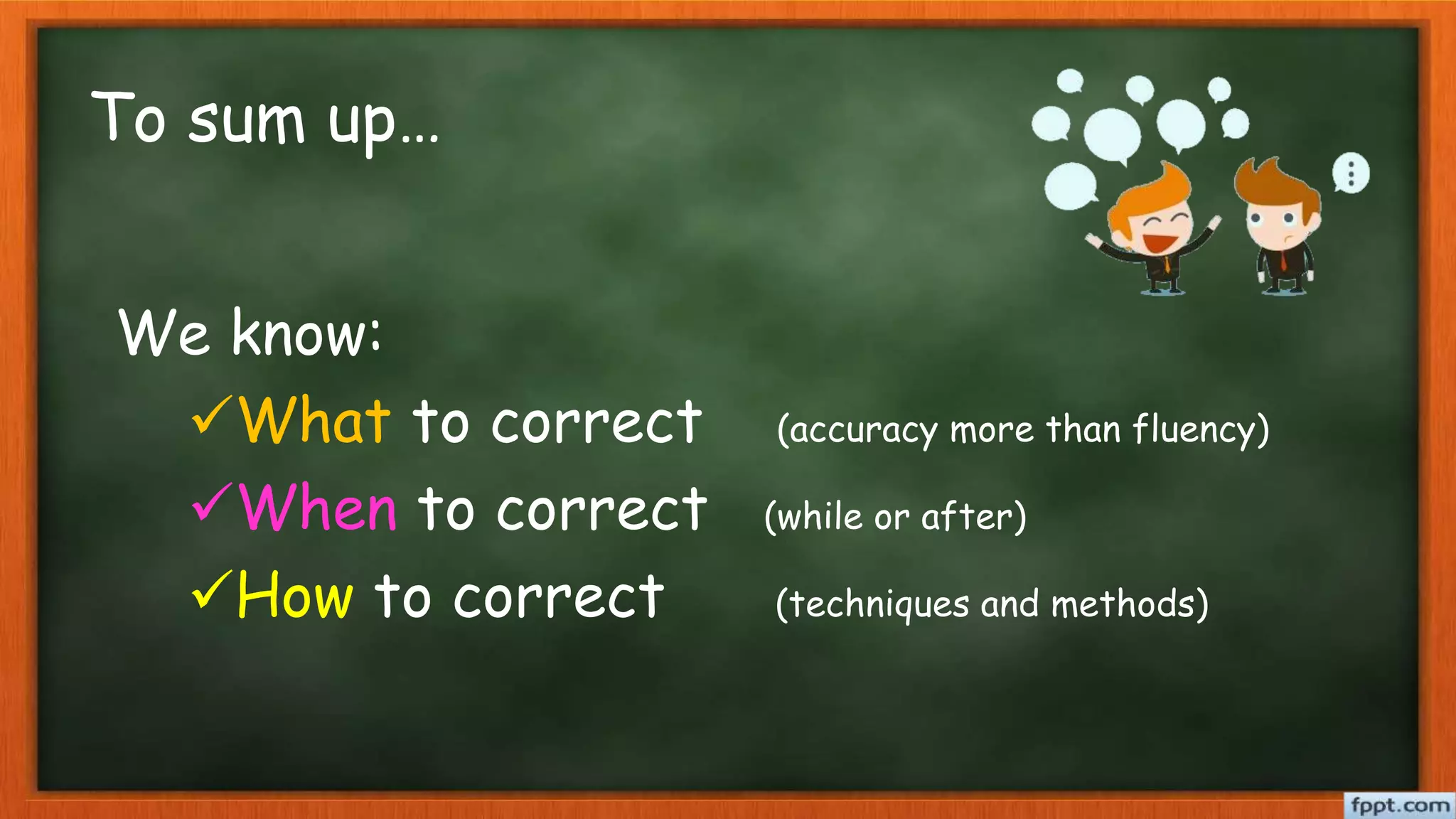
To sum up…
We know:
What to correct (accuracy more than fluency)
When to correct (while or after)
How to correct (techniques and methods)
• Any questions? • Thank you

Error correction

  • 2.
  • 3.
    • Well, I’vereally miss you all. • Yesterday, when I thought about coming to school, my heart filled from joy. • It could been great if we could have more chances to see each other more.
  • 4.
    • Well, I’vereally missed you all. • Yesterday, when I thought was thinking about coming to school, my heart filled from with joy. • It could have been great if we could have had more chances to see each other more.
  • 5.
  • 6.
    Types of Errors •L1 Interference ~ Interlingual • Developmental ~ Overgeneralization • Others ~ ineffective methodology
  • 7.
    Let’s see whattypes of errors we have… • Well, I’ve really missed you all. • Yesterday, when I thought was thinking about coming to school, my heart filled from with joy. • It could have been great if we could have had more chances to see each other more.
  • 8.
    Implicit knowledge Implicit learning (+somedegree of consciousness Explicit learning Corrective feedback In Implicit feedback: there is no overt indicator that an error has been committed Whereas in explicit feedback there is Recast: is a reformulation of all or part of a learner’s immediately preceding utterance in which one or more non-target items are replaced by the corresponding target language forms!, and where, throughout the exchange, the focus of the interlocutors is on meaning not language as an object. It provide positive evidence. Explicit correction, in which the response clearly indicates that what the learner said was incorrect “No, not goed—went”! and thus affords both positive and negative evidence Metalinguistic feedback, : “comments, information, or questions related to the well-formedness of the learner’s utterance” —for example, “You need past tense,” which affords only negative evidence.
  • 9.
    Error Correction Methods •Recast • Elicitation • Clarification Request • Metalinguistic Feedback • Explicit Correction • Repetition
  • 10.
  • 11.
    Error Correction Techniques •Using fingers • Gestures • Mouthing • Reformulation • Noting down errors • Recording
  • 12.
  • 13.
    Read the informationabout summer sports courses. You and a friend would like to do a course. Write a letter to the school secretary to: • explain what type of course you would like and • ask two questions about the content of the courses and • ask one question about accommodation. Write between 70 and 100 words. Do not write an address.
  • 14.
    The only problemwith the script is the length which goes far beyond the required limit (twice as long as expected) and could therefore be penalized on task fulfilment. On other criteria the script excels (is actually above the level required). It demonstrates highly accurate use of grammar structures such as reported questions expected at this level, a far wider range of vocabulary than expected (concern, appreciate) and very clever use of cohesive devices. Although you can spot a couple of mistakes in vocabulary (“accomodation” misused for accommodate) or spelling and punctuation (“yours faith fully”), they are few and do not spoil the highly favorable impression.
  • 16.
    To sum up… Weknow: What to correct (accuracy more than fluency) When to correct (while or after) How to correct (techniques and methods)
  • 17.
    • Any questions?• Thank you