Presented by
Farouq Umar Idris
 Definition;
An MIS is a computerized information-processing
system designed to support the activities and
functions of company management.
A computerized system that performs and records
daily routine transactions necessary to the conduct of
the business TPSs are information systems that process
data resulting from the occurrence of business
transactions.„
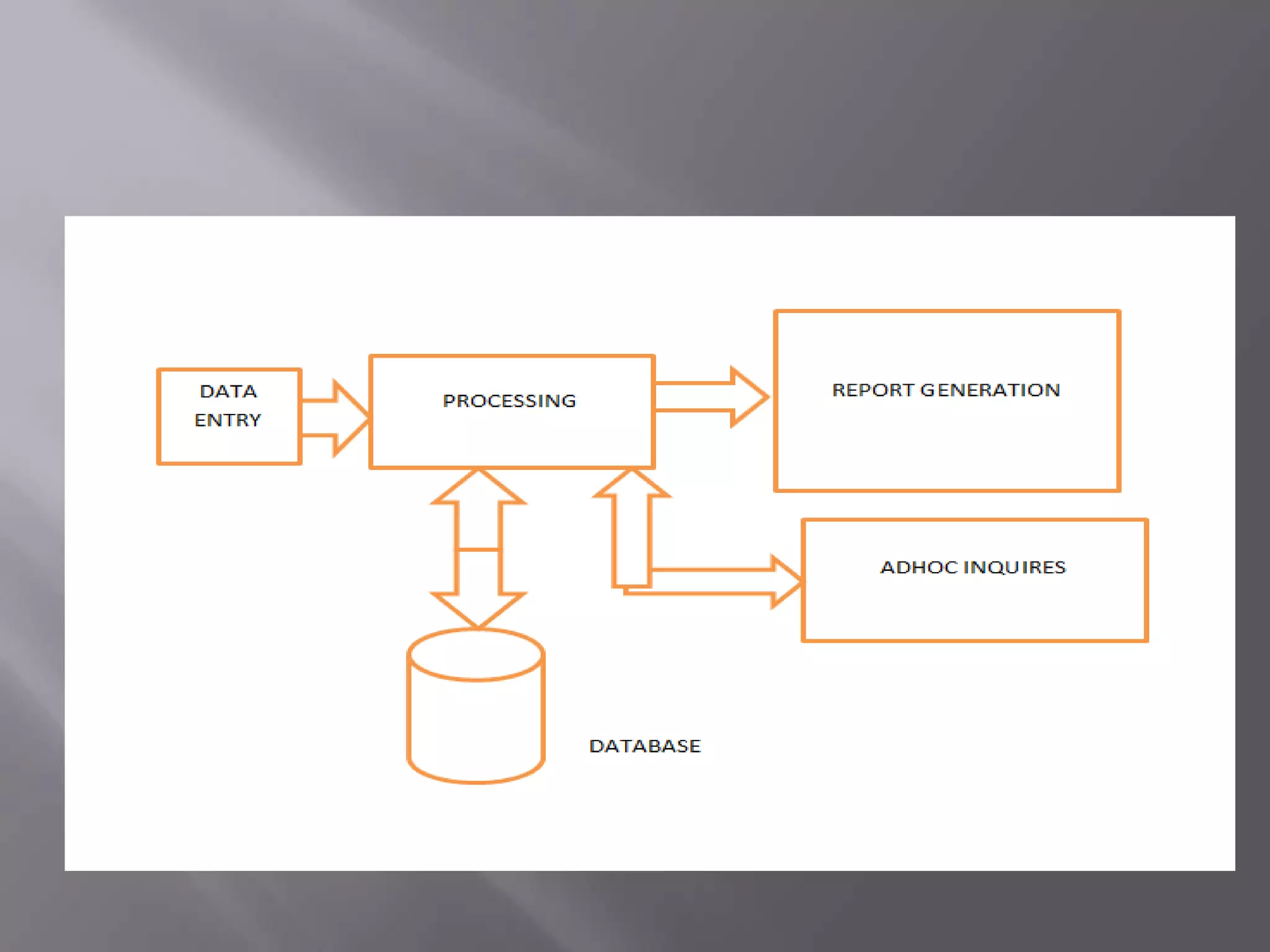
STAGES OF TRANSACTION PROCESSING
 Data Entry
 Processing
 Database Maintenance
 Document and Report Generation
 Inquiry Processing
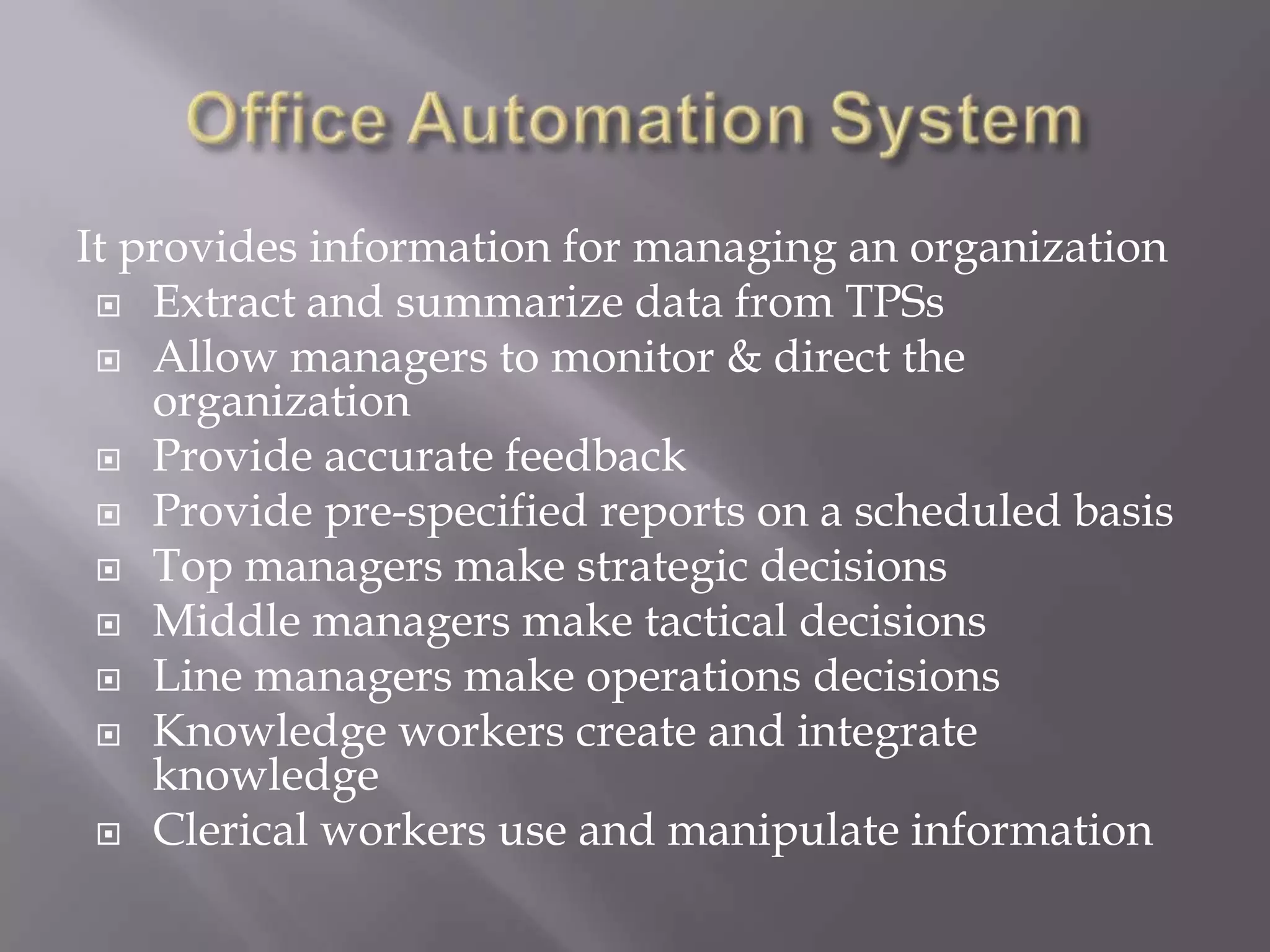
It provides information for managing an organization
 Extract and summarize data from TPSs
 Allow managers to monitor & direct the
organization
 Provide accurate feedback
 Provide pre-specified reports on a scheduled basis
 Top managers make strategic decisions
 Middle managers make tactical decisions
 Line managers make operations decisions
 Knowledge workers create and integrate
knowledge
 Clerical workers use and manipulate information
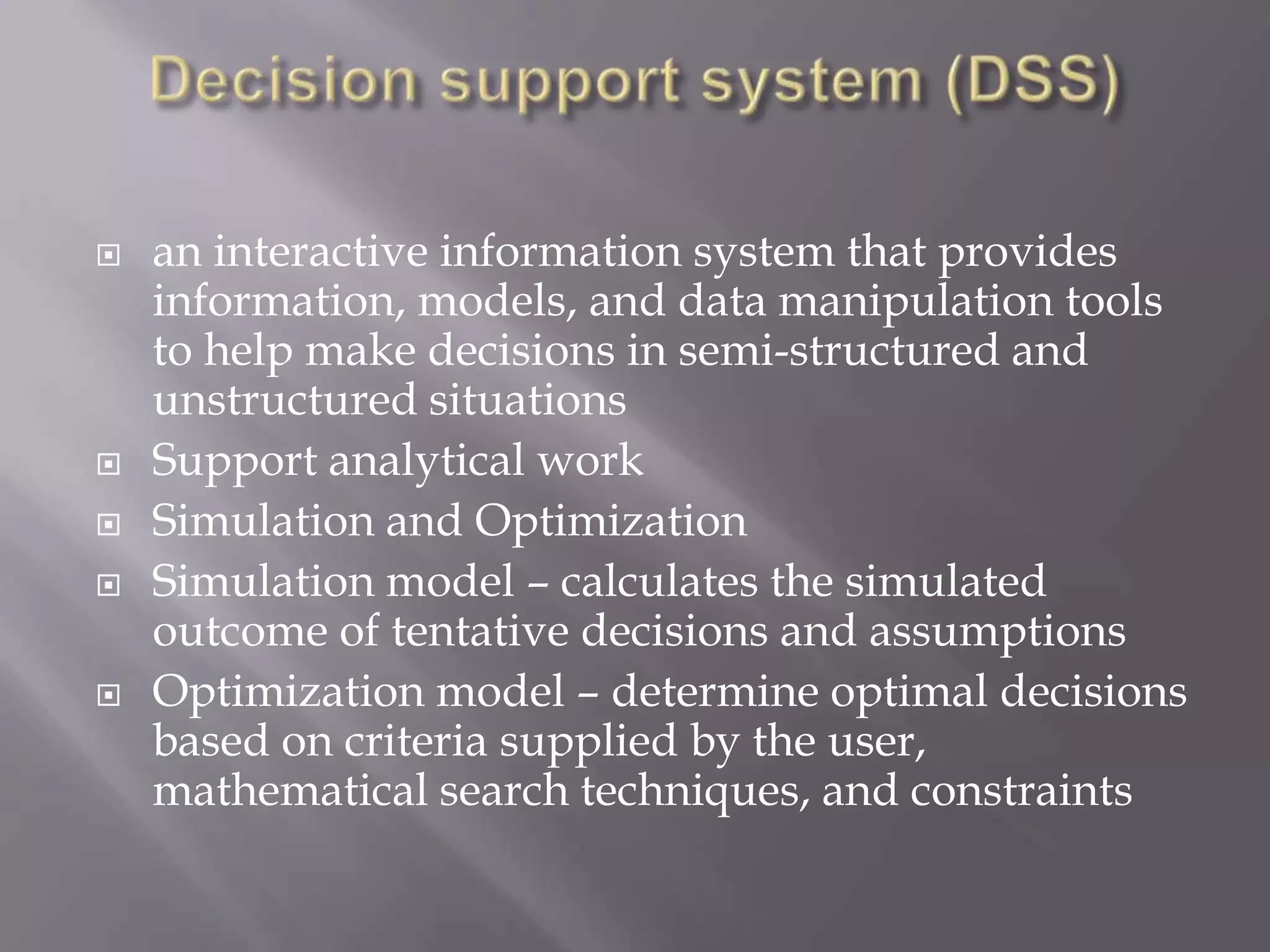
 an interactive information system that provides
information, models, and data manipulation tools
to help make decisions in semi-structured and
unstructured situations
 Support analytical work
 Simulation and Optimization
 Simulation model – calculates the simulated
outcome of tentative decisions and assumptions
 Optimization model – determine optimal decisions
based on criteria supplied by the user,
mathematical search techniques, and constraints
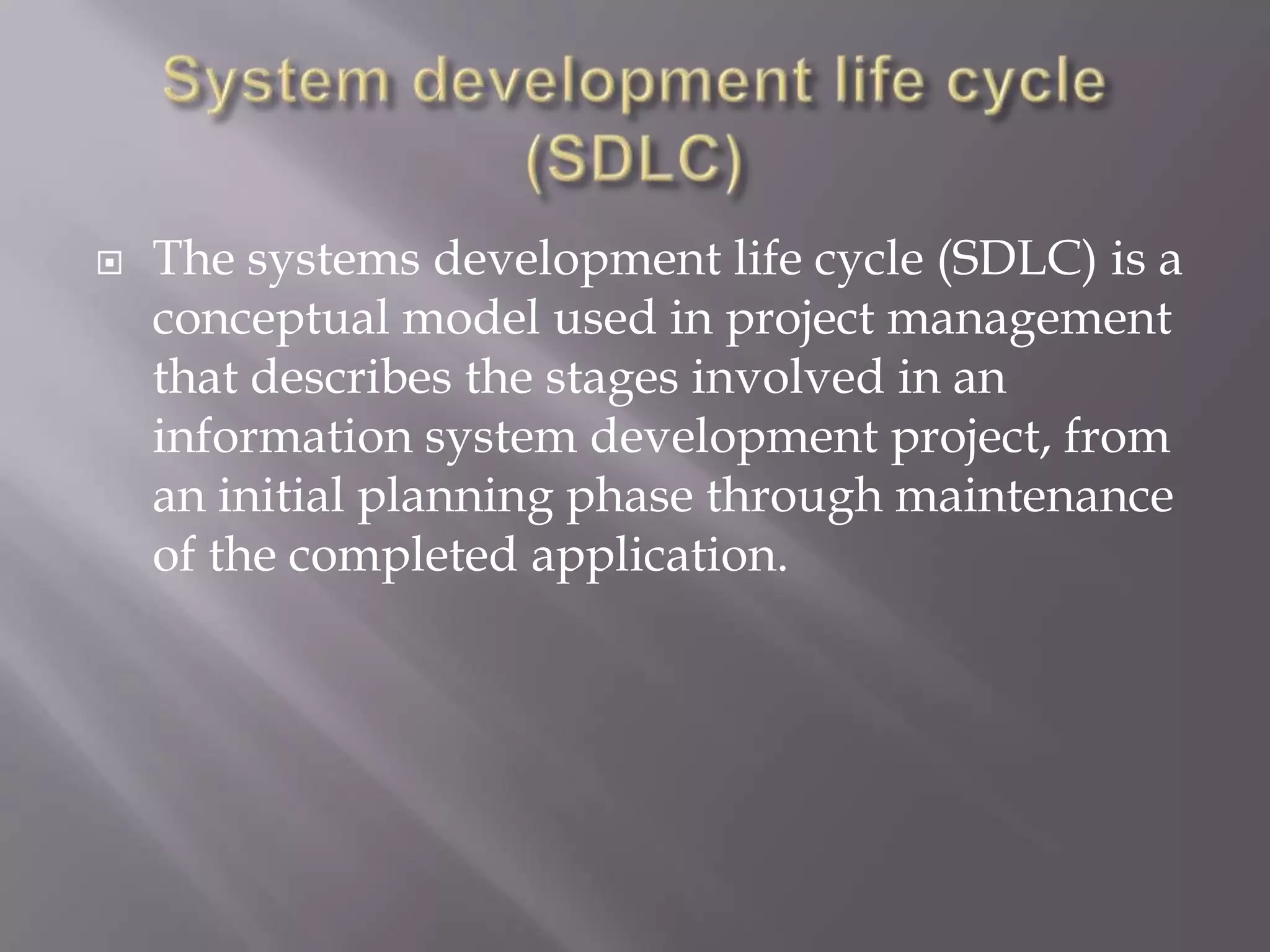
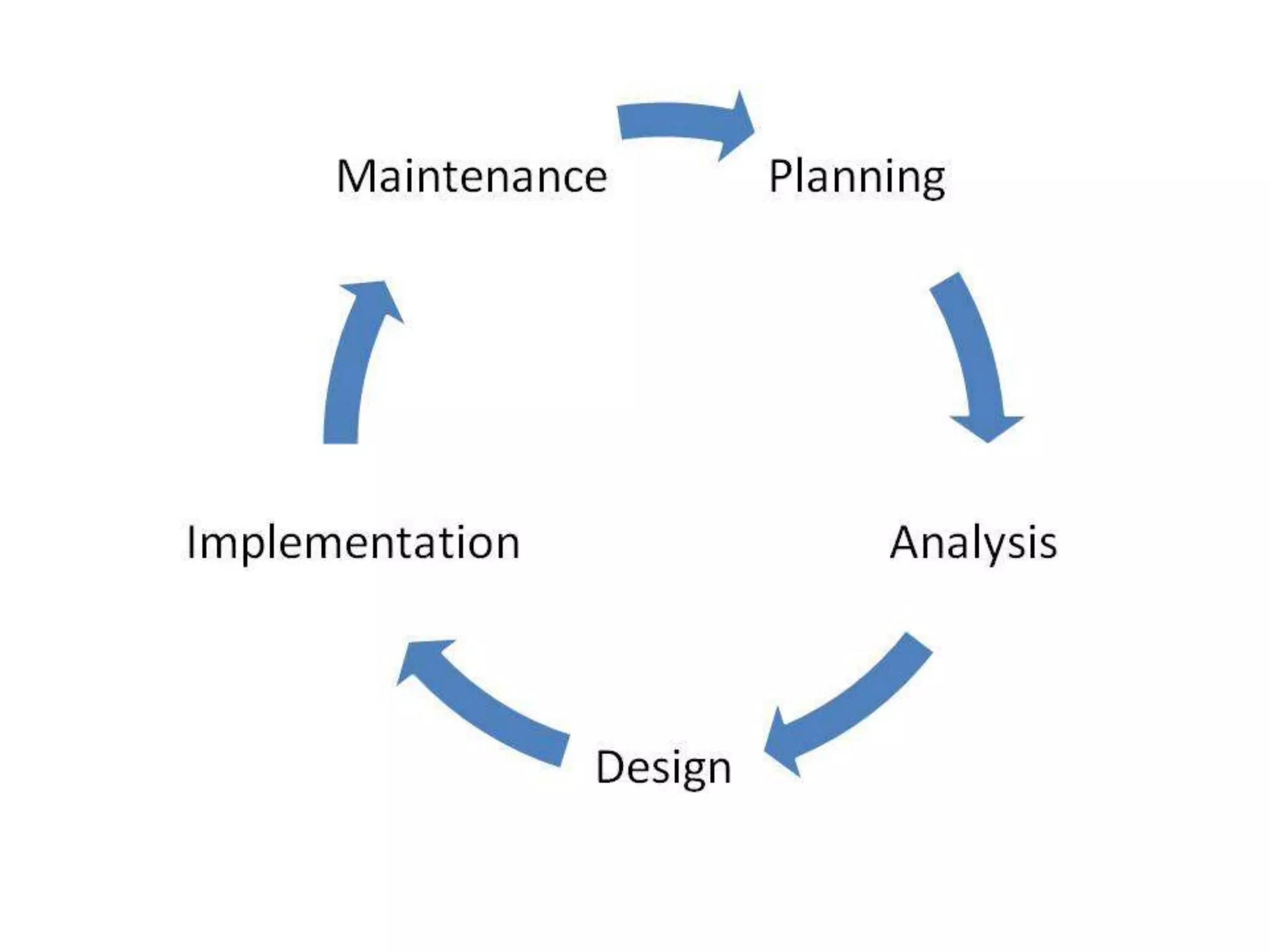
 The systems development life cycle (SDLC) is a
conceptual model used in project management
that describes the stages involved in an
information system development project, from
an initial planning phase through maintenance
of the completed application.
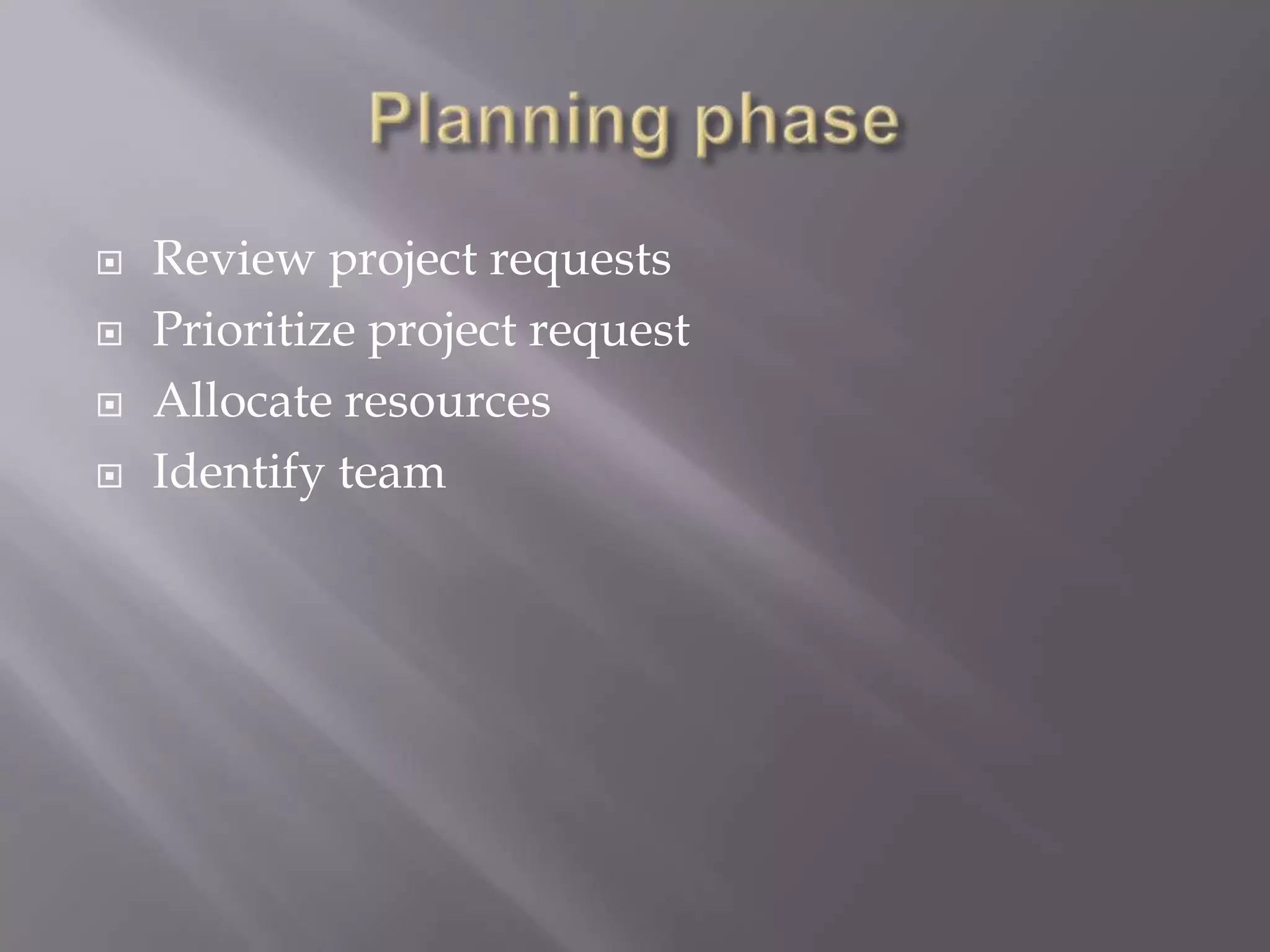
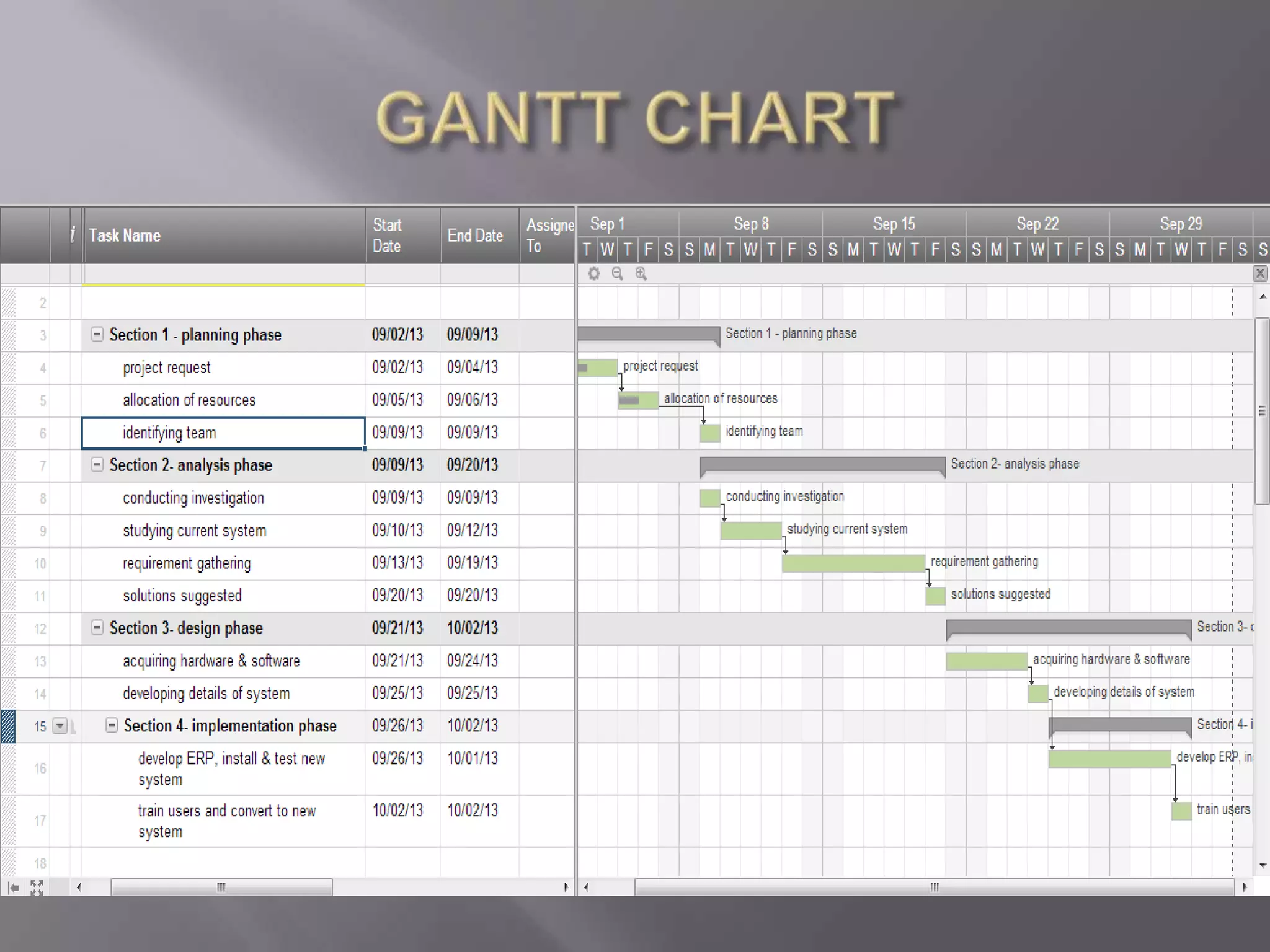
 Review project requests
 Prioritize project request
 Allocate resources
 Identify team
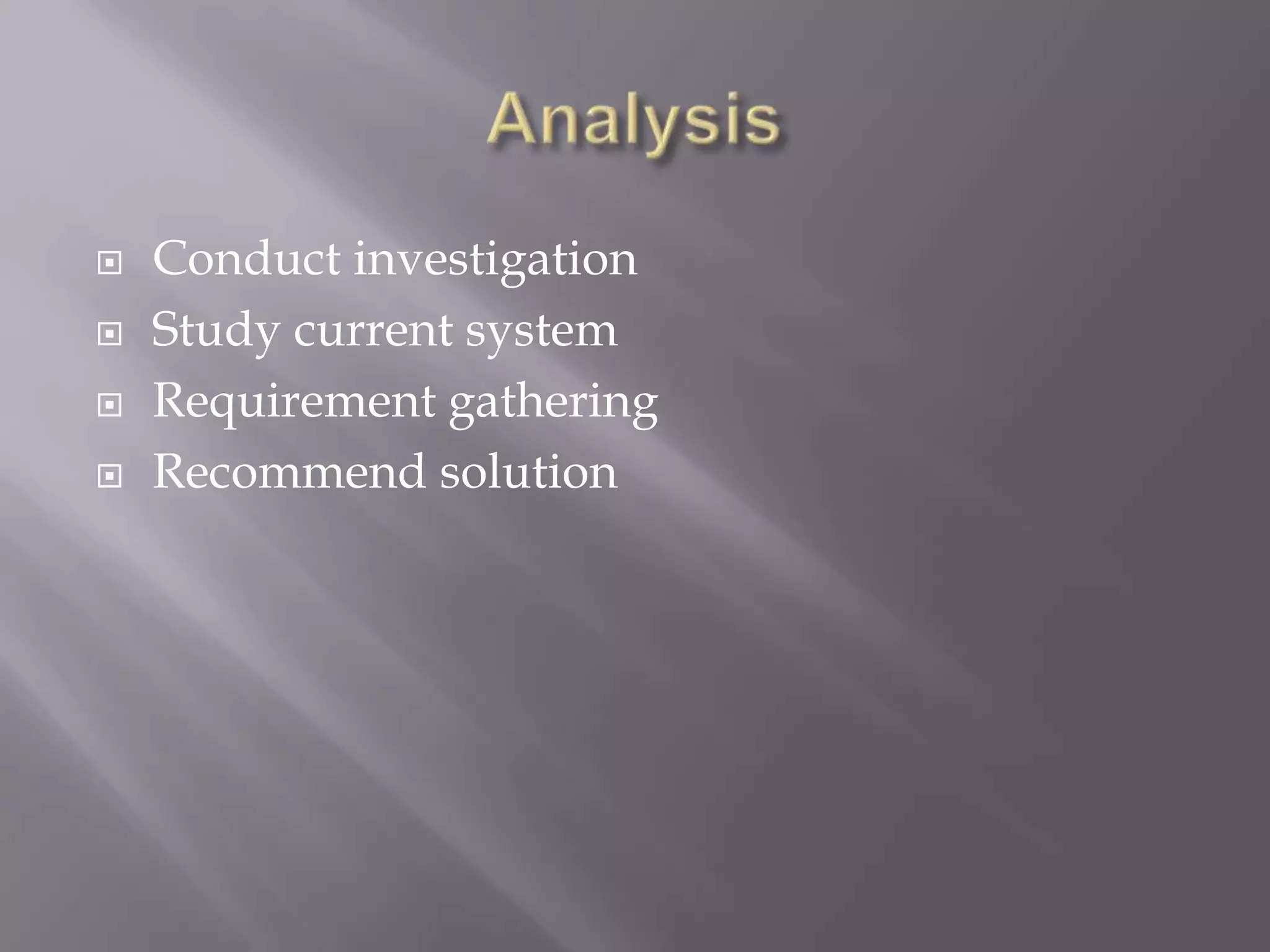
 Conduct investigation
 Study current system
 Requirement gathering
 Recommend solution
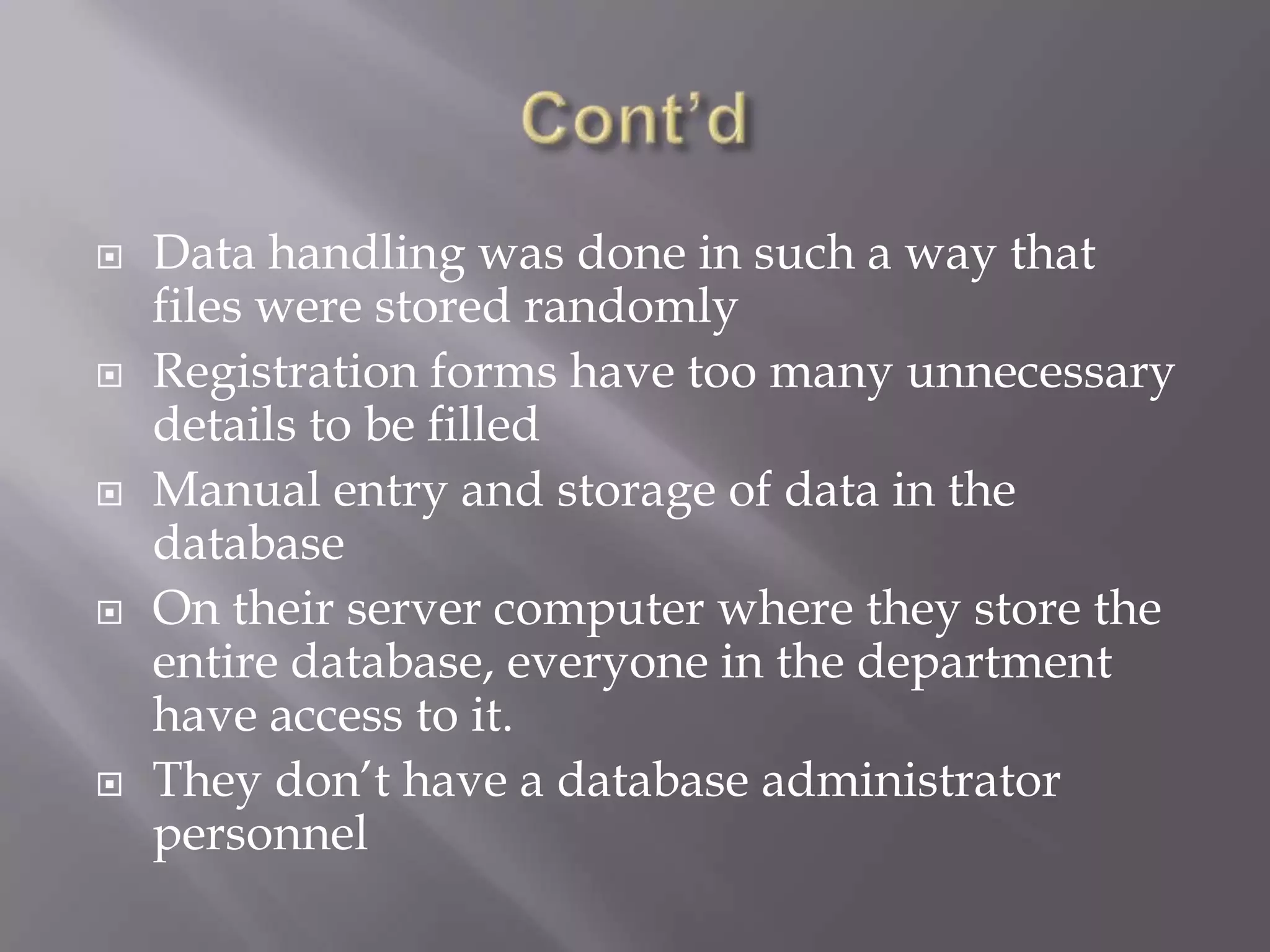
 Data handling was done in such a way that
files were stored randomly
 Registration forms have too many unnecessary
details to be filled
 Manual entry and storage of data in the
database
 On their server computer where they store the
entire database, everyone in the department
have access to it.
 They don’t have a database administrator
personnel
 The top management are complaining about
staff leaving their posts without any important
reason.
 The network the company operates on is an
open network which can be accessed by
competitors or hackers
 No specific database for new and existing
customers
 Call logs are done manually which leads to loss
of records
 Response to customer is too slow
 For the HR department, they lack a unified
system, that would incorporate all their
functions and processes
 there were so many front and back end
systems running separately
 Assign a database administrator
 The implementation of customer ID to
automatically update customer details.
 Install RFID system for marking attendance
and monitoring where about of the employees.
 A chat application within the ERP
 VPN for security reasons on the internet.
 Use of CRM
 Acquire hardware and software
 Develop details of system
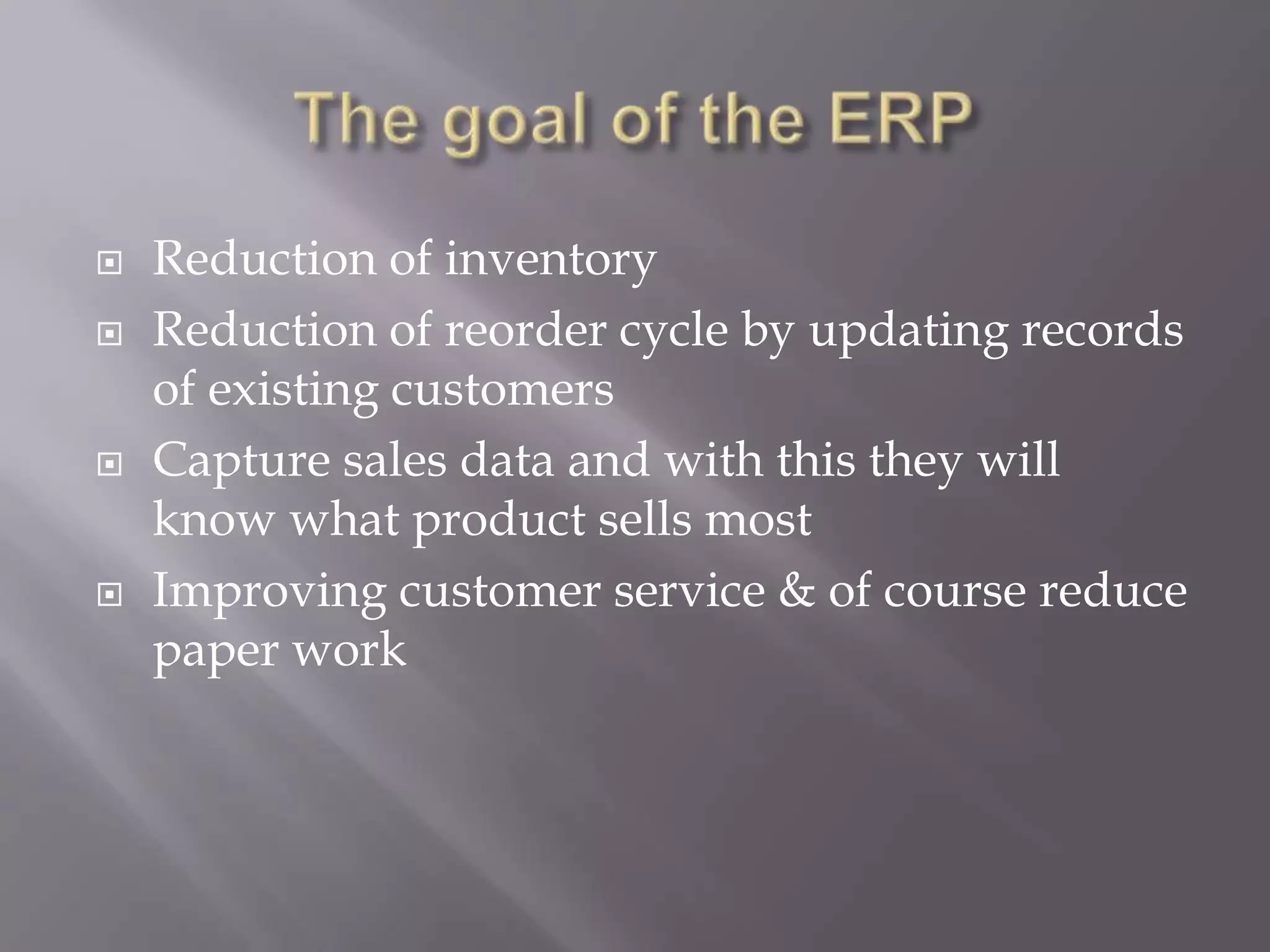
 Reduction of inventory
 Reduction of reorder cycle by updating records
of existing customers
 Capture sales data and with this they will
know what product sells most
 Improving customer service & of course reduce
paper work
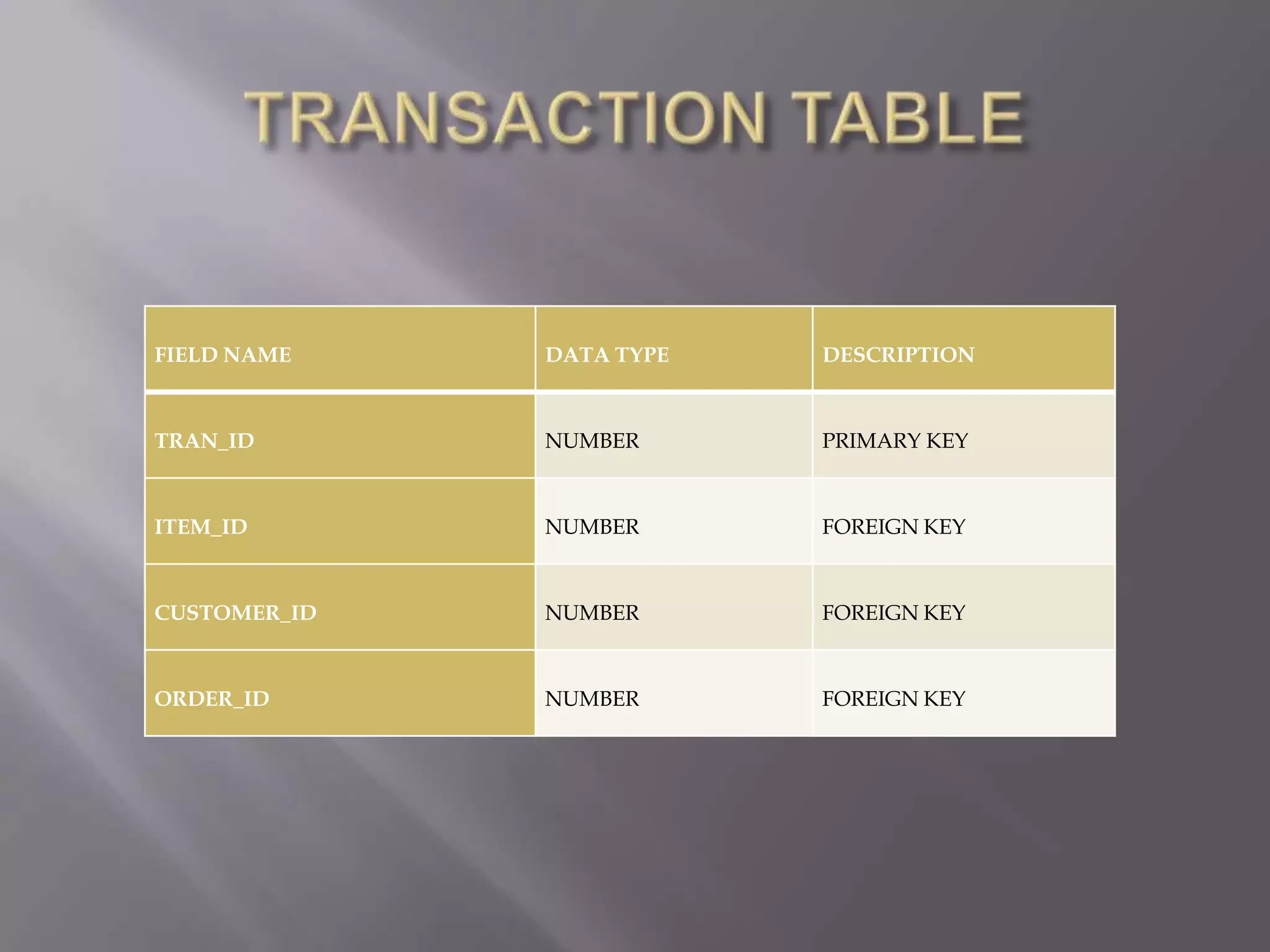
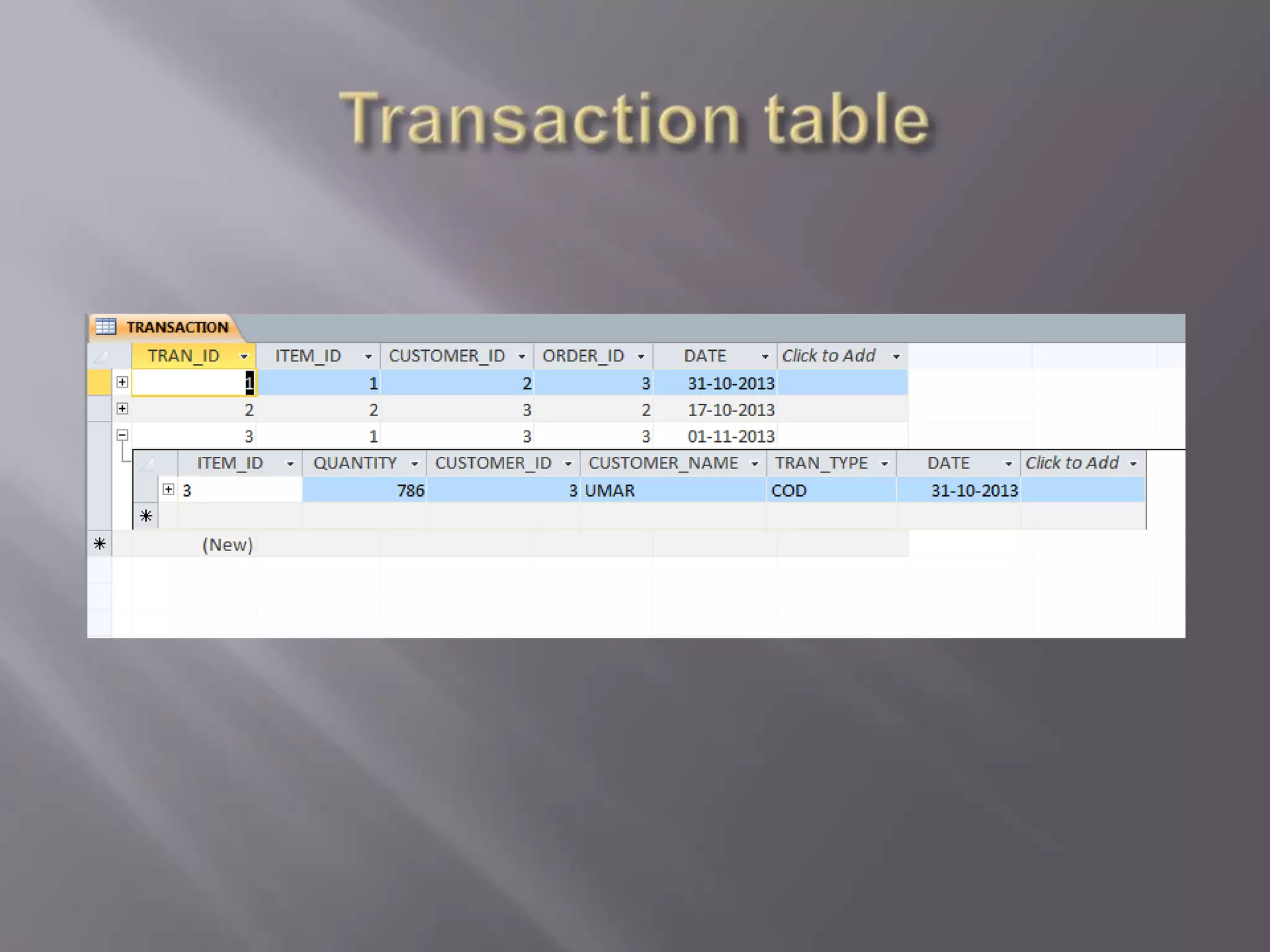
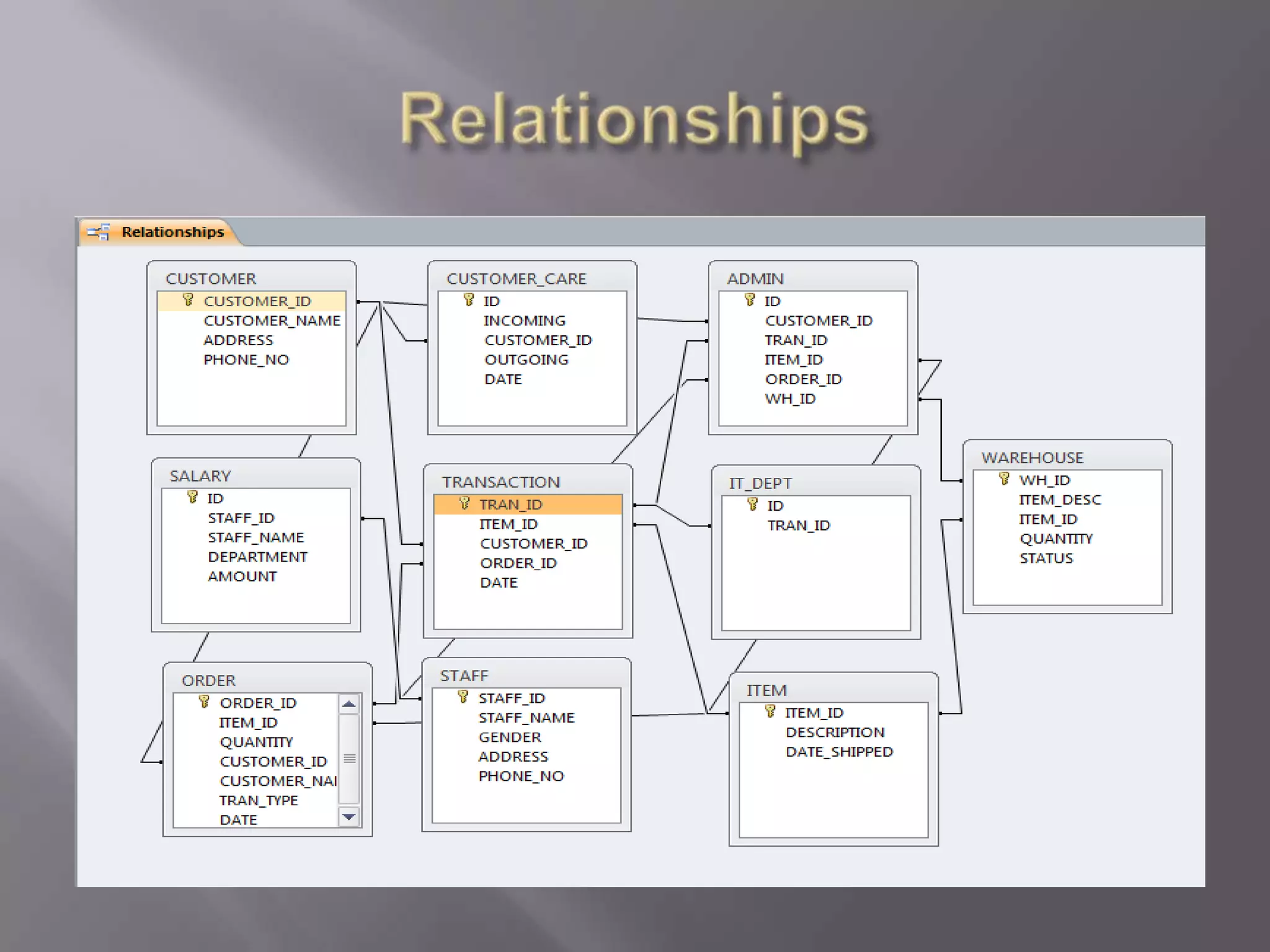
FIELD NAME DATA TYPE DESCRIPTION
TRAN_ID NUMBER PRIMARY KEY
ITEM_ID NUMBER FOREIGN KEY
CUSTOMER_ID NUMBER FOREIGN KEY
ORDER_ID NUMBER FOREIGN KEY
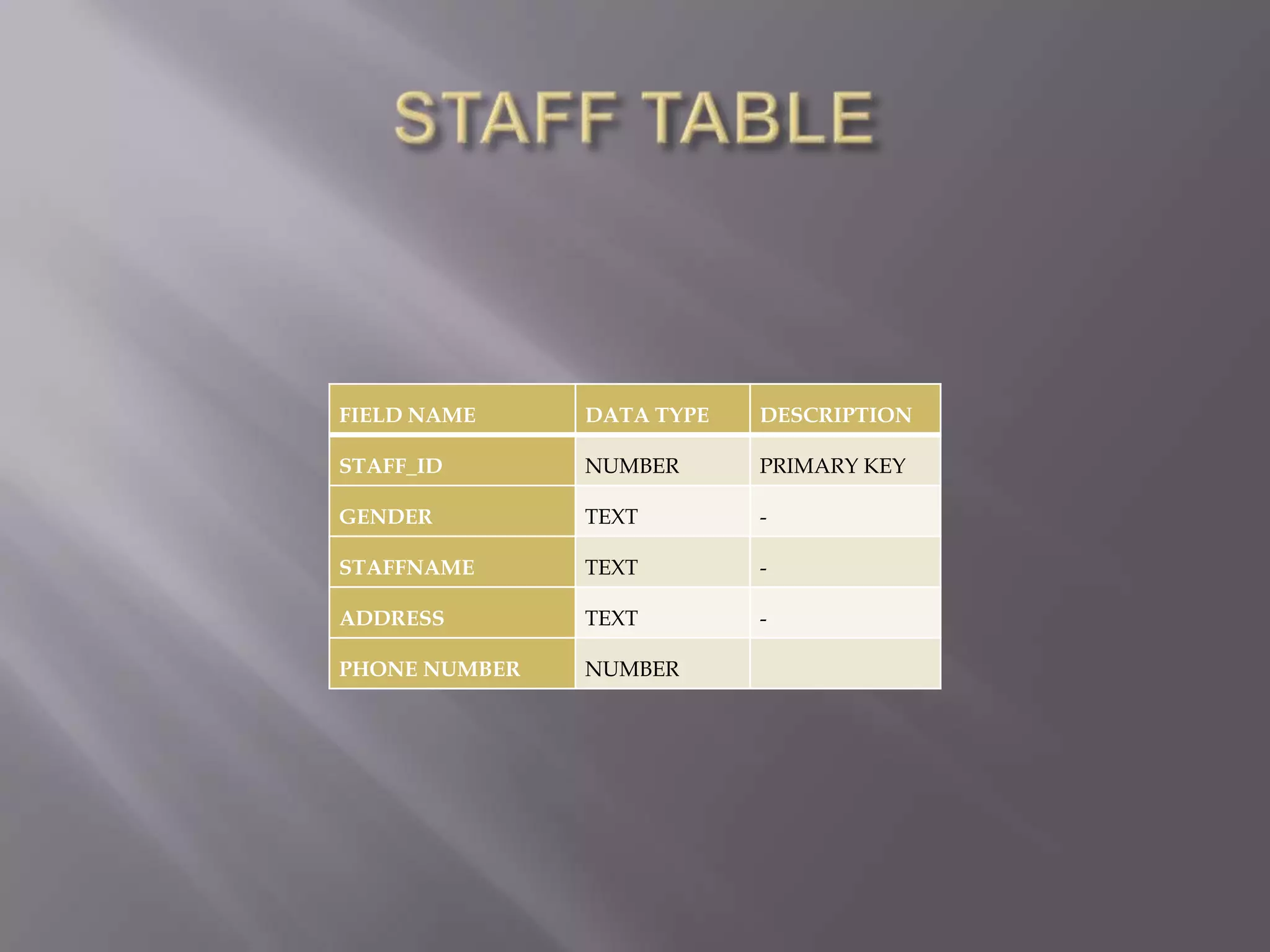
FIELD NAME DATA TYPE DESCRIPTION
STAFF_ID NUMBER PRIMARY KEY
GENDER TEXT -
STAFFNAME TEXT -
ADDRESS TEXT -
PHONE NUMBER NUMBER
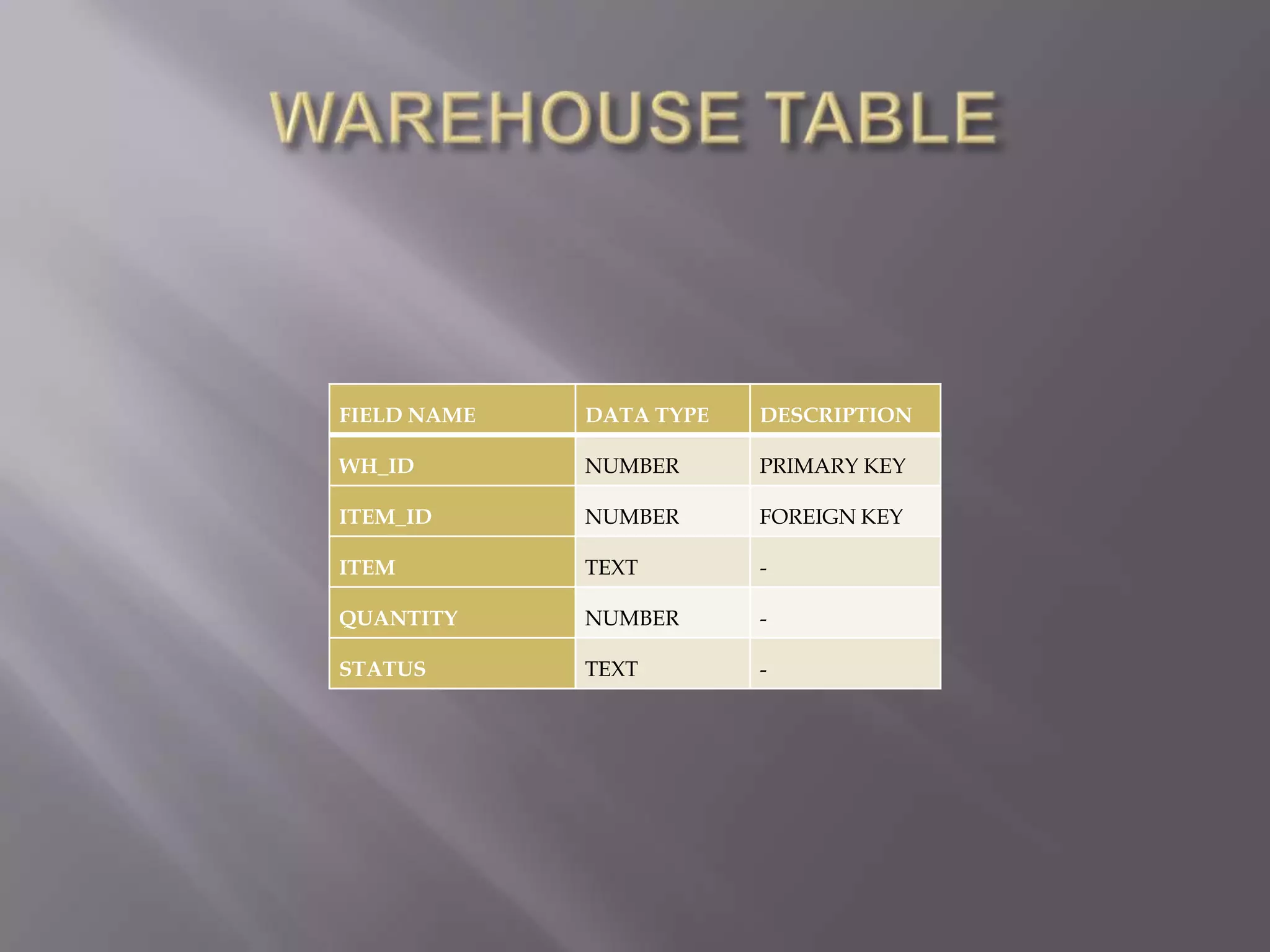
FIELD NAME DATA TYPE DESCRIPTION
WH_ID NUMBER PRIMARY KEY
ITEM_ID NUMBER FOREIGN KEY
ITEM TEXT -
QUANTITY NUMBER -
STATUS TEXT -
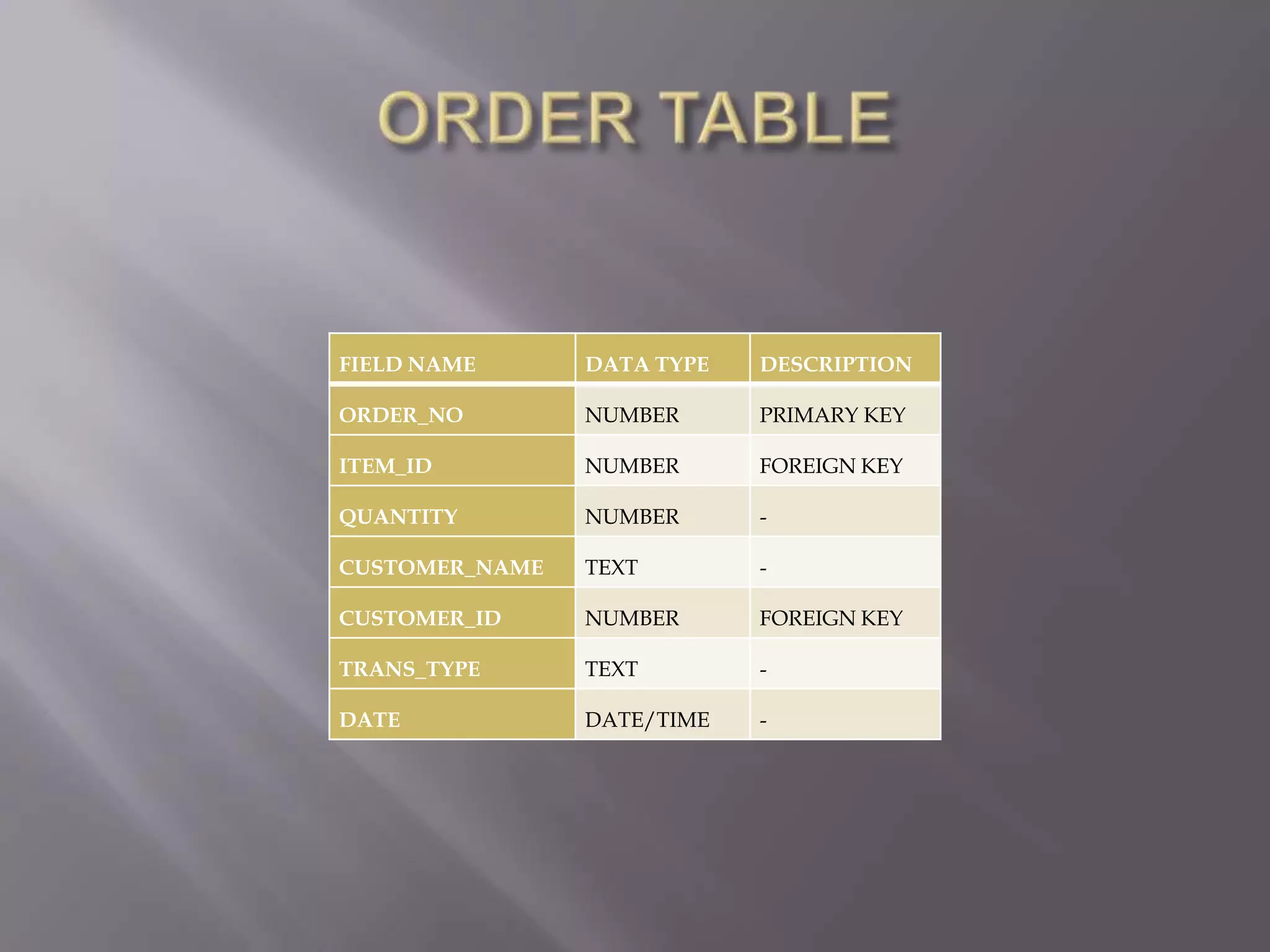
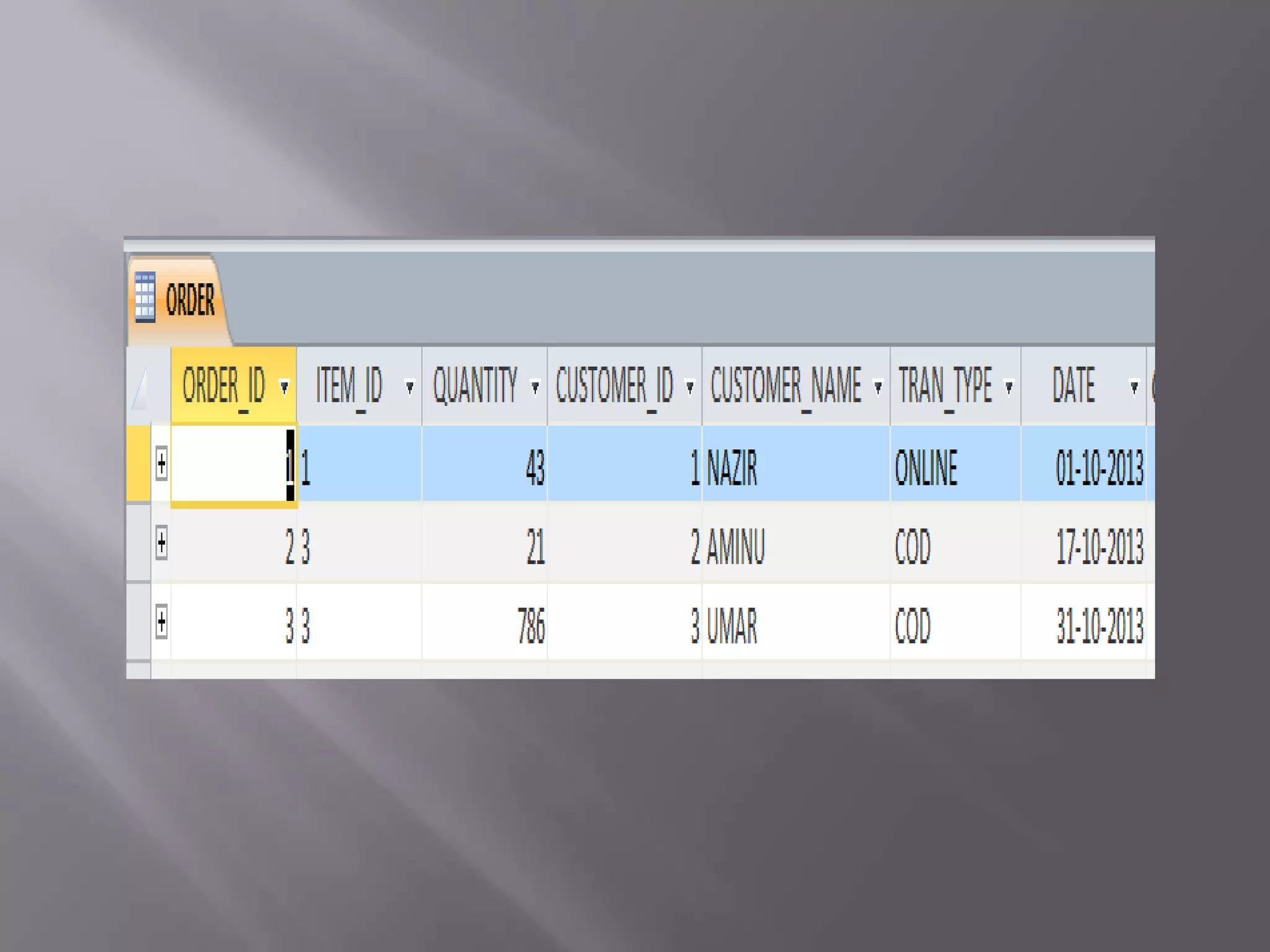
FIELD NAME DATA TYPE DESCRIPTION
ORDER_NO NUMBER PRIMARY KEY
ITEM_ID NUMBER FOREIGN KEY
QUANTITY NUMBER -
CUSTOMER_NAME TEXT -
CUSTOMER_ID NUMBER FOREIGN KEY
TRANS_TYPE TEXT -
DATE DATE/TIME -
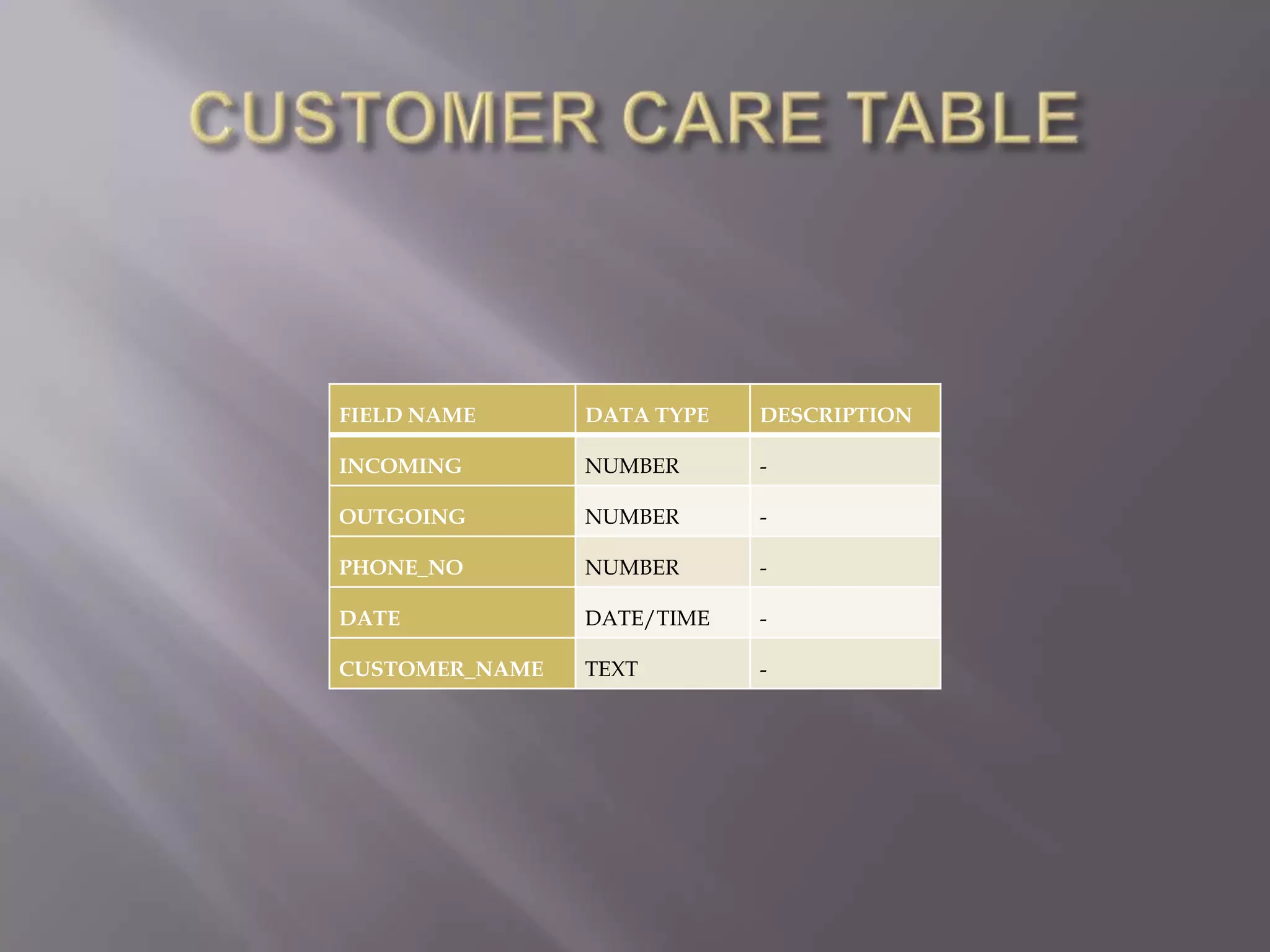
FIELD NAME DATA TYPE DESCRIPTION
INCOMING NUMBER -
OUTGOING NUMBER -
PHONE_NO NUMBER -
DATE DATE/TIME -
CUSTOMER_NAME TEXT -
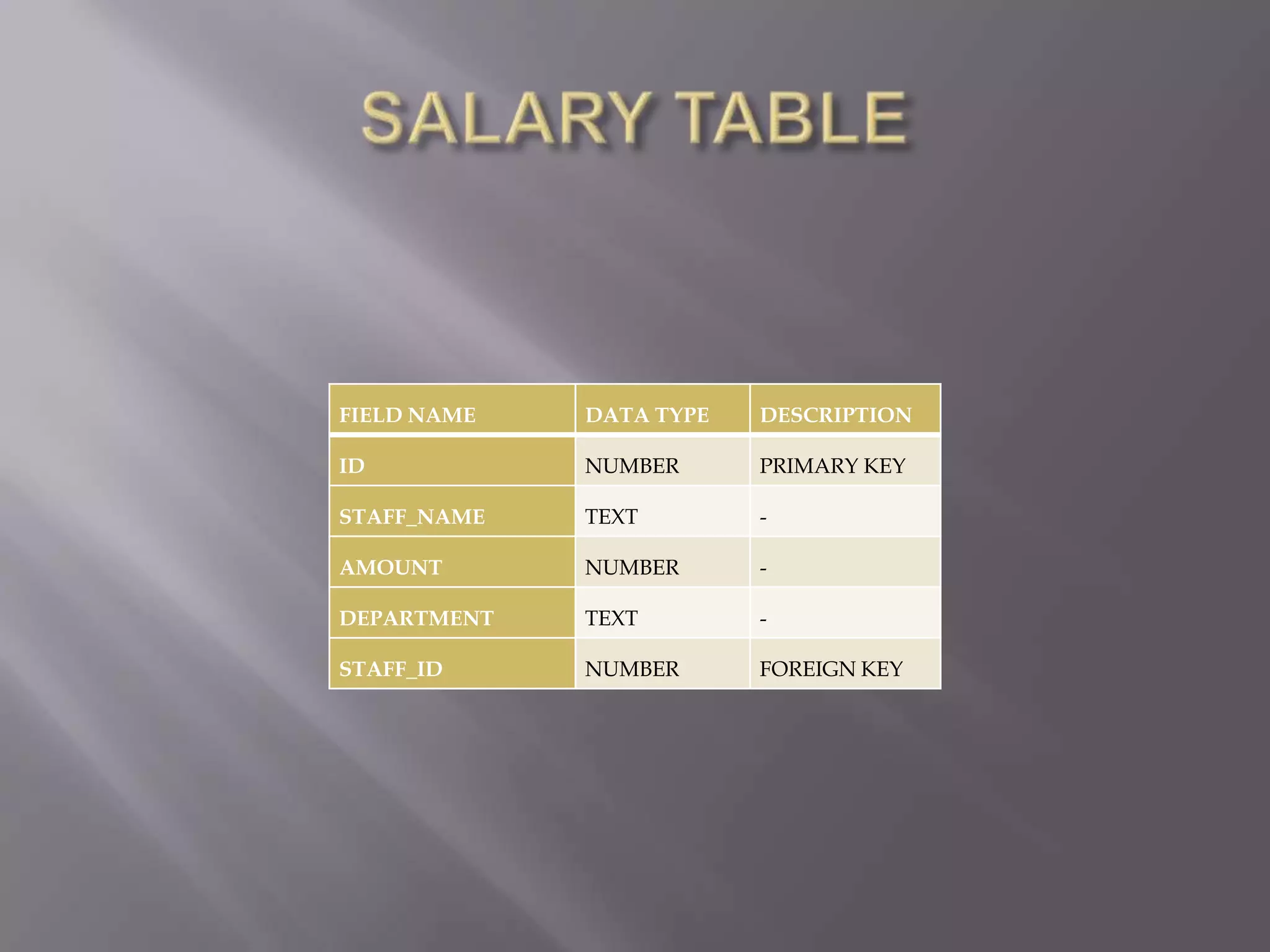
FIELD NAME DATA TYPE DESCRIPTION
ID NUMBER PRIMARY KEY
STAFF_NAME TEXT -
AMOUNT NUMBER -
DEPARTMENT TEXT -
STAFF_ID NUMBER FOREIGN KEY
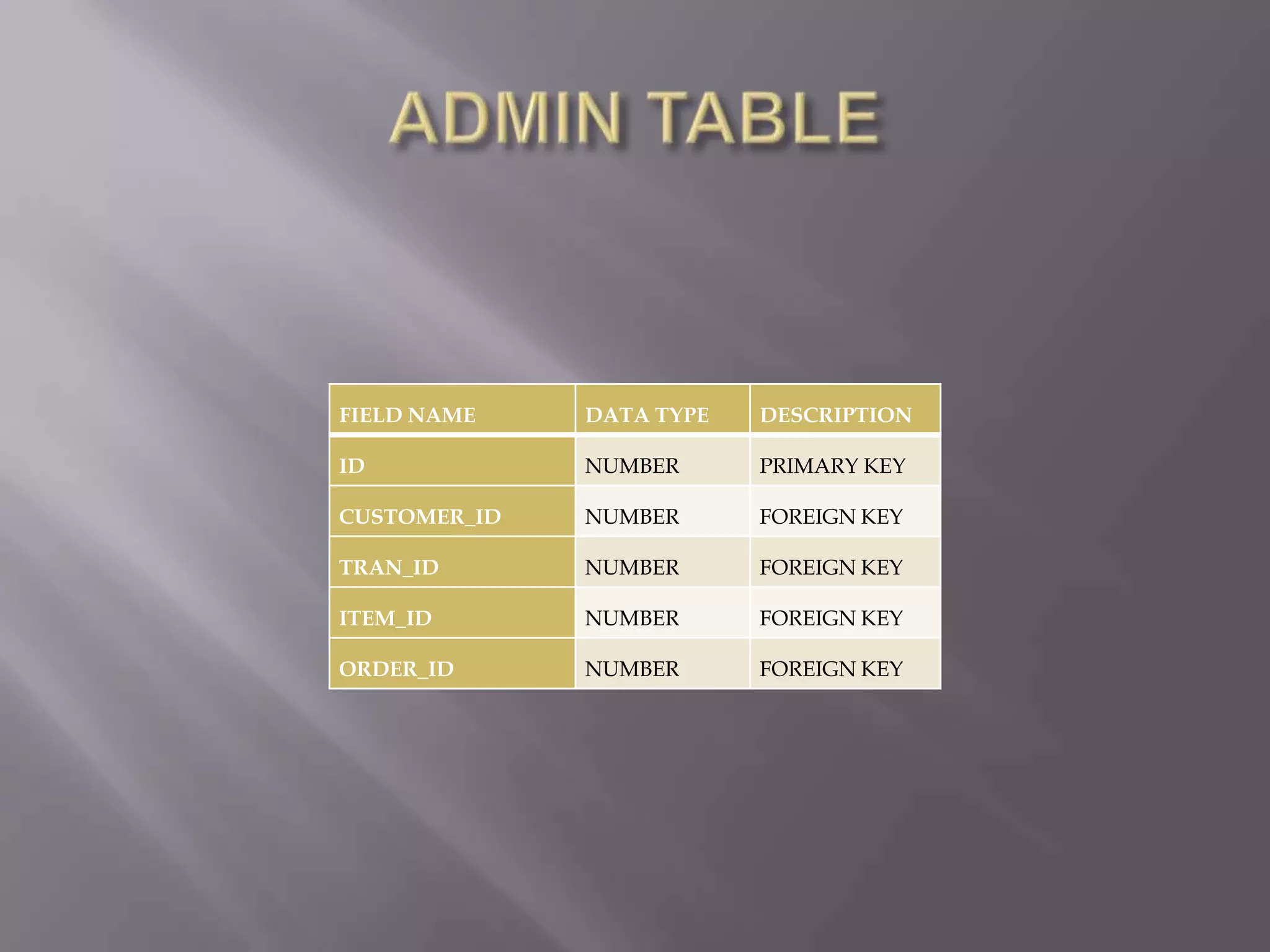
FIELD NAME DATA TYPE DESCRIPTION
ID NUMBER PRIMARY KEY
CUSTOMER_ID NUMBER FOREIGN KEY
TRAN_ID NUMBER FOREIGN KEY
ITEM_ID NUMBER FOREIGN KEY
ORDER_ID NUMBER FOREIGN KEY
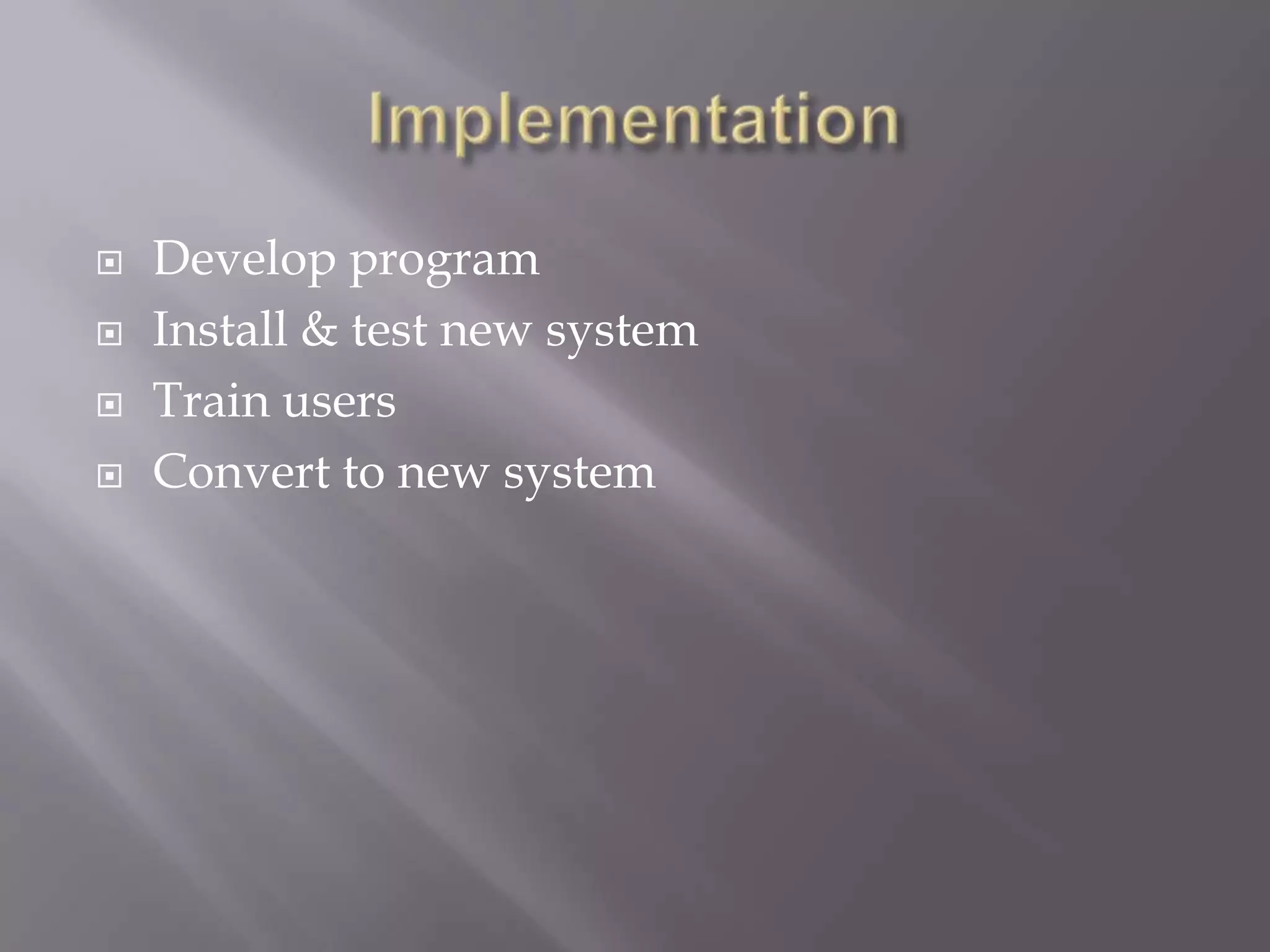
 Develop program
 Install & test new system
 Train users
 Convert to new system
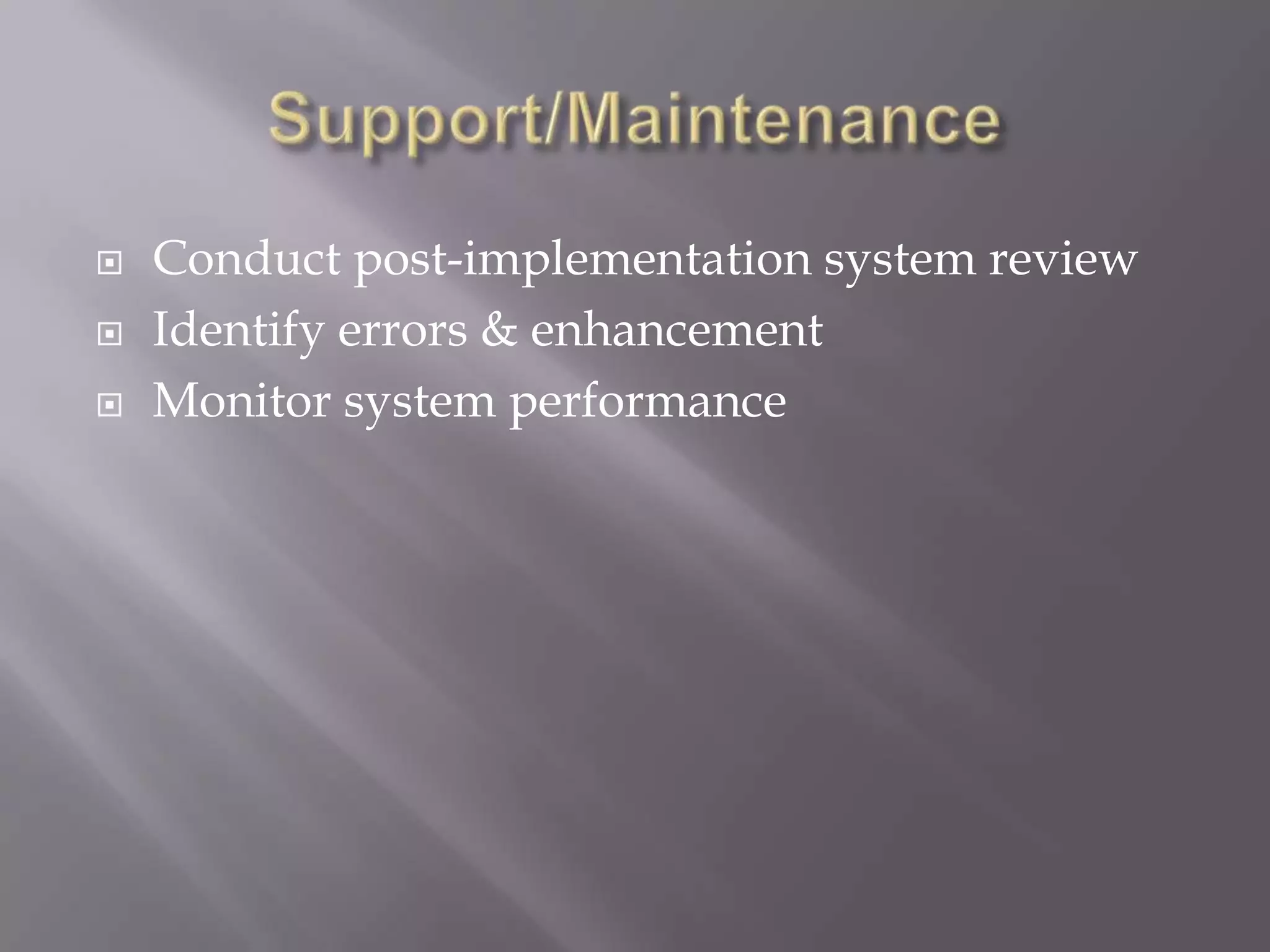
 Conduct post-implementation system review
 Identify errors & enhancement
 Monitor system performance
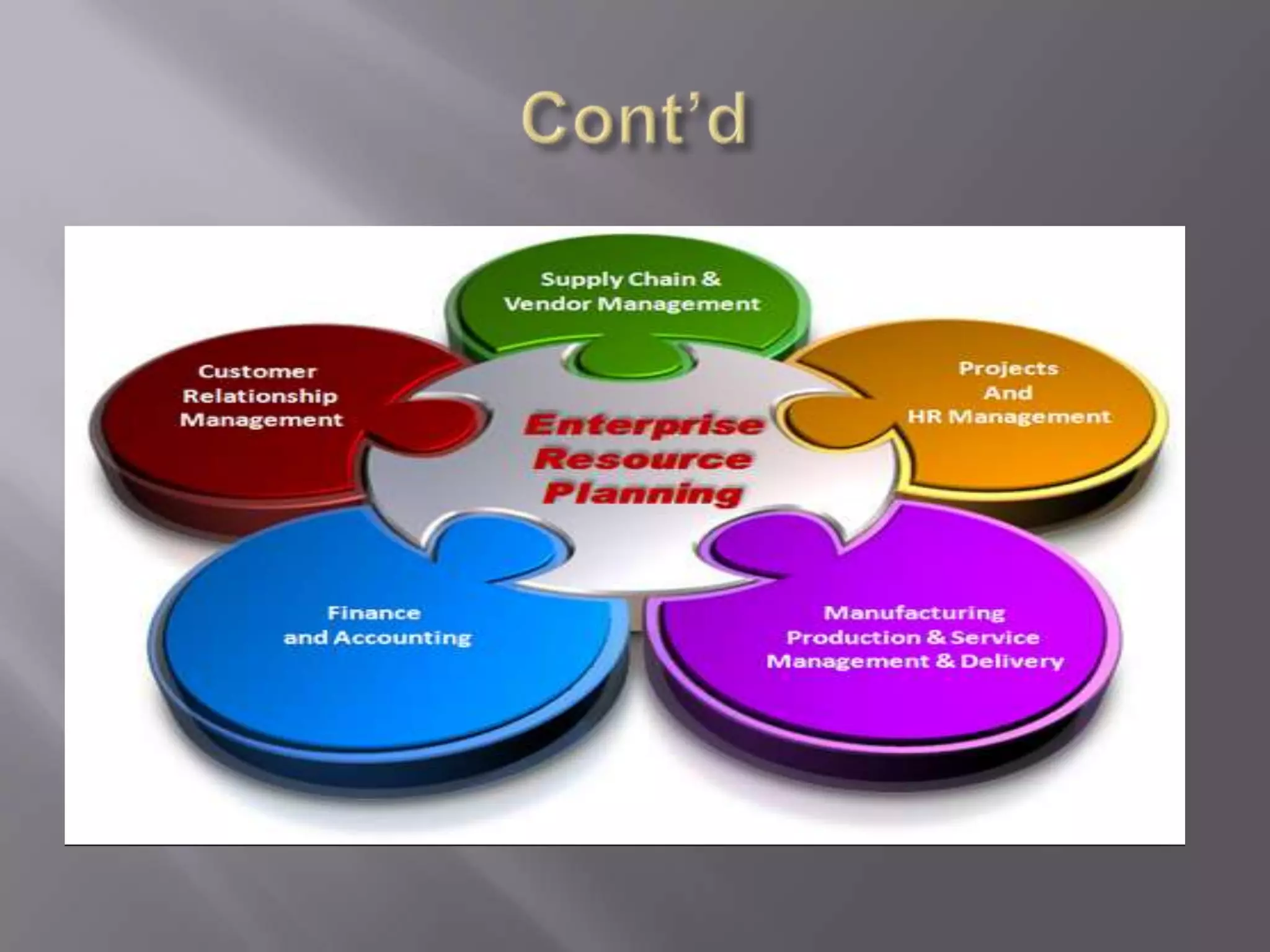
ERP IMPLEMENTATION

ERP IMPLEMENTATION

  • 1.
  • 2.
     Definition; An MISis a computerized information-processing system designed to support the activities and functions of company management.
  • 3.
    A computerized systemthat performs and records daily routine transactions necessary to the conduct of the business TPSs are information systems that process data resulting from the occurrence of business transactions.„ STAGES OF TRANSACTION PROCESSING  Data Entry  Processing  Database Maintenance  Document and Report Generation  Inquiry Processing
  • 5.
    It provides informationfor managing an organization  Extract and summarize data from TPSs  Allow managers to monitor & direct the organization  Provide accurate feedback  Provide pre-specified reports on a scheduled basis  Top managers make strategic decisions  Middle managers make tactical decisions  Line managers make operations decisions  Knowledge workers create and integrate knowledge  Clerical workers use and manipulate information
  • 6.
     an interactiveinformation system that provides information, models, and data manipulation tools to help make decisions in semi-structured and unstructured situations  Support analytical work  Simulation and Optimization  Simulation model – calculates the simulated outcome of tentative decisions and assumptions  Optimization model – determine optimal decisions based on criteria supplied by the user, mathematical search techniques, and constraints
  • 8.
     The systemsdevelopment life cycle (SDLC) is a conceptual model used in project management that describes the stages involved in an information system development project, from an initial planning phase through maintenance of the completed application.
  • 10.
     Review projectrequests  Prioritize project request  Allocate resources  Identify team
  • 11.
     Conduct investigation Study current system  Requirement gathering  Recommend solution
  • 12.
     Data handlingwas done in such a way that files were stored randomly  Registration forms have too many unnecessary details to be filled  Manual entry and storage of data in the database  On their server computer where they store the entire database, everyone in the department have access to it.  They don’t have a database administrator personnel
  • 13.
     The topmanagement are complaining about staff leaving their posts without any important reason.  The network the company operates on is an open network which can be accessed by competitors or hackers  No specific database for new and existing customers
  • 14.
     Call logsare done manually which leads to loss of records  Response to customer is too slow  For the HR department, they lack a unified system, that would incorporate all their functions and processes  there were so many front and back end systems running separately
  • 15.
     Assign adatabase administrator  The implementation of customer ID to automatically update customer details.  Install RFID system for marking attendance and monitoring where about of the employees.  A chat application within the ERP  VPN for security reasons on the internet.  Use of CRM
  • 16.
     Acquire hardwareand software  Develop details of system
  • 17.
     Reduction ofinventory  Reduction of reorder cycle by updating records of existing customers  Capture sales data and with this they will know what product sells most  Improving customer service & of course reduce paper work
  • 19.
    FIELD NAME DATATYPE DESCRIPTION TRAN_ID NUMBER PRIMARY KEY ITEM_ID NUMBER FOREIGN KEY CUSTOMER_ID NUMBER FOREIGN KEY ORDER_ID NUMBER FOREIGN KEY
  • 20.
    FIELD NAME DATATYPE DESCRIPTION STAFF_ID NUMBER PRIMARY KEY GENDER TEXT - STAFFNAME TEXT - ADDRESS TEXT - PHONE NUMBER NUMBER
  • 21.
    FIELD NAME DATATYPE DESCRIPTION WH_ID NUMBER PRIMARY KEY ITEM_ID NUMBER FOREIGN KEY ITEM TEXT - QUANTITY NUMBER - STATUS TEXT -
  • 22.
    FIELD NAME DATATYPE DESCRIPTION ORDER_NO NUMBER PRIMARY KEY ITEM_ID NUMBER FOREIGN KEY QUANTITY NUMBER - CUSTOMER_NAME TEXT - CUSTOMER_ID NUMBER FOREIGN KEY TRANS_TYPE TEXT - DATE DATE/TIME -
  • 23.
    FIELD NAME DATATYPE DESCRIPTION INCOMING NUMBER - OUTGOING NUMBER - PHONE_NO NUMBER - DATE DATE/TIME - CUSTOMER_NAME TEXT -
  • 24.
    FIELD NAME DATATYPE DESCRIPTION ID NUMBER PRIMARY KEY STAFF_NAME TEXT - AMOUNT NUMBER - DEPARTMENT TEXT - STAFF_ID NUMBER FOREIGN KEY
  • 25.
    FIELD NAME DATATYPE DESCRIPTION ID NUMBER PRIMARY KEY CUSTOMER_ID NUMBER FOREIGN KEY TRAN_ID NUMBER FOREIGN KEY ITEM_ID NUMBER FOREIGN KEY ORDER_ID NUMBER FOREIGN KEY
  • 30.
     Develop program Install & test new system  Train users  Convert to new system
  • 31.
     Conduct post-implementationsystem review  Identify errors & enhancement  Monitor system performance