Erin Gilmartin, BS
Prevention Coordinator
Chrissy Senior, BS
Prevention Educator
Sexual Assault Service Center
Guardian Angel Community Services
• Sexual Assault Service Center (SASC)
• Groundwork Domestic Violence Program
• Foster Care
• Suzy’s Caring Place
• Exchange Club Parenting Program
• Dillard Harris Educational Center
• Partner Abuse Intervention Program (PAIP)
• 24-Hour Hotline
• Medical Advocacy
• Legal Advocacy
• Counseling
• Victims
• Significant Others
• Prevention Education
• Professional Training
• Illinois Law requiring:
• Child sexual abuse and assault awareness
and prevention
• PreK-12th grade public school students
• Named after Erin Merryn
• The sexual exploitation or victimization of a child
by an adult or older child
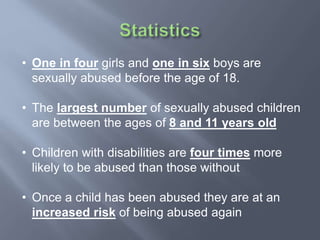
• One in four girls and one in six boys are
sexually abused before the age of 18.
• The largest number of sexually abused children
are between the ages of 8 and 11 years old
• Children with disabilities are four times more
likely to be abused than those without
• Once a child has been abused they are at an
increased risk of being abused again
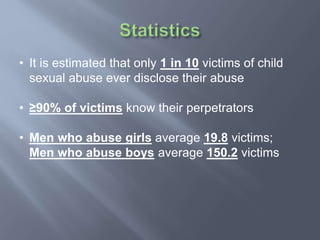
• It is estimated that only 1 in 10 victims of child
sexual abuse ever disclose their abuse
• ≥90% of victims know their perpetrators
• Men who abuse girls average 19.8 victims;
Men who abuse boys average 150.2 victims
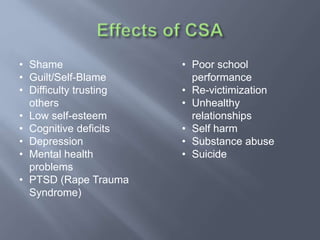
• Shame
• Guilt/Self-Blame
• Difficulty trusting
others
• Low self-esteem
• Cognitive deficits
• Depression
• Mental health
problems
• PTSD (Rape Trauma
Syndrome)
• Poor school
performance
• Re-victimization
• Unhealthy
relationships
• Self harm
• Substance abuse
• Suicide
Erin Gilmartin, BS
Chrissy Senior, BS
Sexual Assault Service Center
Guardian Angel Community Services
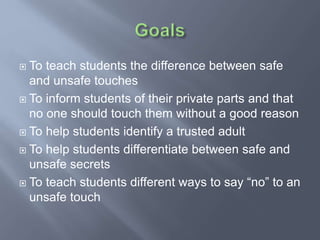
 To teach students the difference between safe
and unsafe touches
 To inform students of their private parts and that
no one should touch them without a good reason
 To help students identify a trusted adult
 To help students differentiate between safe and
unsafe secrets
 To teach students different ways to say “no” to an
unsafe touch
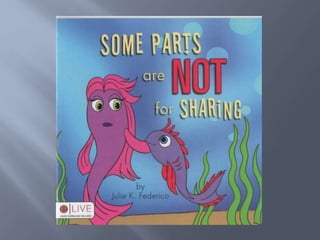
The following book is only used in the
preK-1st grade presentations. The
remaining presentation will be given all
to students, with the exception of one
slide that is noted.
 Safe touches are wanted
 Safe touches can be a way to share feelings
 Safe touches come from someone you love
and trust
 Safe touches make you feel:
 Happy
 Comfortable
 Loved
 Important
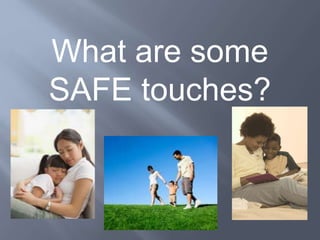
What are some
SAFE touches?
 Unsafe touches are unwanted
 Unsafe touches can make you feel like
something is wrong
 They make you feel:
 Confused
 Sad
 Scared
 Angry
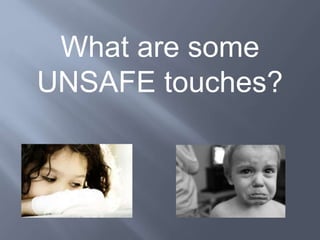
What are some
UNSAFE touches?
 Unsafe touches are NEVER your
fault
 You are in charge of your body
 Your body belongs to you
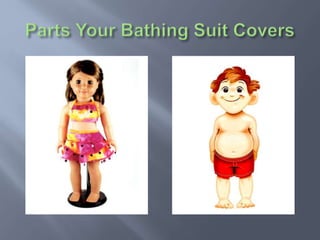
 Your body has private parts. These are the
parts that your bathing suit covers.
****THIS SLIDE WILL BE USED WITH
5th GRADERS ONLY****
 Your body has private parts. These are the
parts that your bathing suit covers.
 Does anybody know the names of these
private parts?
 Male = ?
 Female = ?
 It is sometimes OK for a parent, doctor or a nurse
to look at or touch your private parts to:
 Change a baby’s diaper
 Wash and dry a baby
 Take care of a sick child
 Give a child a checkup
 NO ONE else should ask to look at or try touch
your private parts
 NO ONE should ask you look at or touch their
private parts
 NOT EVEN SOMEONE WHO LOVES YOU
 Someone you can tell secrets to
 Someone you can talk to if you are scared,
sad, or uncomfortable
 Ex:
 Parent
 Grandparent
 Teacher
 Principal
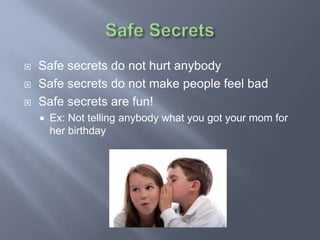
 Safe secrets do not hurt anybody
 Safe secrets do not make people feel bad
 Safe secrets are fun!
 Ex: Not telling anybody what you got your mom for
her birthday
 Unsafe secrets hurt people
 Unsafe secrets make people feel bad
 If a person says to keep a secret about an
unsafe look or touch: DO NOT DO IT!
 A person may try to trick you into keeping an
unsafe secret
 They may say:
 If you tell, you will get in trouble
 I will not like you if you tell
 If you tell, your pet will get hurt
 I will give you a toy to keep our secret
 You liked it.
 You wanted to do it
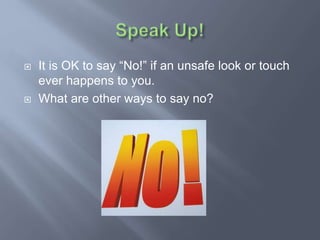
 It is OK to say “No!” if an unsafe look or touch
ever happens to you.
 What are other ways to say no?
NO!
STOP IT!
I DO NOT LIKE THAT!
I AM GOING TO TELL!
 TELL, TELL, TELL until believed
 Tell more than one trusted adult
 Remember: UNSAFE TOUCHES ARE NEVER
YOUR FAULT
DO YOU
HAVE ANY
QUESTIONS?
There will be an opportunity at the end of
the presentation, as students return to
their classrooms, for individual students to
talk with the presenter or school social
worker if they have any individual
questions.
 Children need to know:
 They are in charge of their own bodies
 “This is MY body”
 Body parts are not dirty or something to be
embarrassed about
 The right words in case of disclosure of sexual abuse
 Contact Information:
 SASC 24-Hour Hotline
 815-730-8984
 Erin Gilmartin, BS
 815-729-0930, ext 536
 egilmartin@gacsprograms.org
 Chrissy Senior, BS
 815-729-0930, ext. 524
 csenior@gacsprograms.org

Erin's law parent presentation English

  • 2.
    Erin Gilmartin, BS PreventionCoordinator Chrissy Senior, BS Prevention Educator Sexual Assault Service Center Guardian Angel Community Services
  • 3.
    • Sexual AssaultService Center (SASC) • Groundwork Domestic Violence Program • Foster Care • Suzy’s Caring Place • Exchange Club Parenting Program • Dillard Harris Educational Center • Partner Abuse Intervention Program (PAIP)
  • 4.
    • 24-Hour Hotline •Medical Advocacy • Legal Advocacy • Counseling • Victims • Significant Others • Prevention Education • Professional Training
  • 5.
    • Illinois Lawrequiring: • Child sexual abuse and assault awareness and prevention • PreK-12th grade public school students • Named after Erin Merryn
  • 6.
    • The sexualexploitation or victimization of a child by an adult or older child
  • 7.
    • One infour girls and one in six boys are sexually abused before the age of 18. • The largest number of sexually abused children are between the ages of 8 and 11 years old • Children with disabilities are four times more likely to be abused than those without • Once a child has been abused they are at an increased risk of being abused again
  • 8.
    • It isestimated that only 1 in 10 victims of child sexual abuse ever disclose their abuse • ≥90% of victims know their perpetrators • Men who abuse girls average 19.8 victims; Men who abuse boys average 150.2 victims
  • 9.
    • Shame • Guilt/Self-Blame •Difficulty trusting others • Low self-esteem • Cognitive deficits • Depression • Mental health problems • PTSD (Rape Trauma Syndrome) • Poor school performance • Re-victimization • Unhealthy relationships • Self harm • Substance abuse • Suicide
  • 11.
    Erin Gilmartin, BS ChrissySenior, BS Sexual Assault Service Center Guardian Angel Community Services
  • 12.
     To teachstudents the difference between safe and unsafe touches  To inform students of their private parts and that no one should touch them without a good reason  To help students identify a trusted adult  To help students differentiate between safe and unsafe secrets  To teach students different ways to say “no” to an unsafe touch
  • 13.
    The following bookis only used in the preK-1st grade presentations. The remaining presentation will be given all to students, with the exception of one slide that is noted.
  • 16.
     Safe touchesare wanted  Safe touches can be a way to share feelings  Safe touches come from someone you love and trust  Safe touches make you feel:  Happy  Comfortable  Loved  Important
  • 17.
  • 18.
     Unsafe touchesare unwanted  Unsafe touches can make you feel like something is wrong  They make you feel:  Confused  Sad  Scared  Angry
  • 19.
  • 20.
     Unsafe touchesare NEVER your fault  You are in charge of your body  Your body belongs to you
  • 21.
     Your bodyhas private parts. These are the parts that your bathing suit covers.
  • 23.
    ****THIS SLIDE WILLBE USED WITH 5th GRADERS ONLY****  Your body has private parts. These are the parts that your bathing suit covers.  Does anybody know the names of these private parts?  Male = ?  Female = ?
  • 24.
     It issometimes OK for a parent, doctor or a nurse to look at or touch your private parts to:  Change a baby’s diaper  Wash and dry a baby  Take care of a sick child  Give a child a checkup  NO ONE else should ask to look at or try touch your private parts  NO ONE should ask you look at or touch their private parts  NOT EVEN SOMEONE WHO LOVES YOU
  • 25.
     Someone youcan tell secrets to  Someone you can talk to if you are scared, sad, or uncomfortable  Ex:  Parent  Grandparent  Teacher  Principal
  • 26.
     Safe secretsdo not hurt anybody  Safe secrets do not make people feel bad  Safe secrets are fun!  Ex: Not telling anybody what you got your mom for her birthday
  • 27.
     Unsafe secretshurt people  Unsafe secrets make people feel bad  If a person says to keep a secret about an unsafe look or touch: DO NOT DO IT!
  • 28.
     A personmay try to trick you into keeping an unsafe secret  They may say:  If you tell, you will get in trouble  I will not like you if you tell  If you tell, your pet will get hurt  I will give you a toy to keep our secret  You liked it.  You wanted to do it
  • 29.
     It isOK to say “No!” if an unsafe look or touch ever happens to you.  What are other ways to say no?
  • 30.
    NO! STOP IT! I DONOT LIKE THAT! I AM GOING TO TELL!
  • 31.
     TELL, TELL,TELL until believed  Tell more than one trusted adult  Remember: UNSAFE TOUCHES ARE NEVER YOUR FAULT
  • 32.
  • 33.
    There will bean opportunity at the end of the presentation, as students return to their classrooms, for individual students to talk with the presenter or school social worker if they have any individual questions.
  • 34.
     Children needto know:  They are in charge of their own bodies  “This is MY body”  Body parts are not dirty or something to be embarrassed about  The right words in case of disclosure of sexual abuse
  • 35.
     Contact Information: SASC 24-Hour Hotline  815-730-8984  Erin Gilmartin, BS  815-729-0930, ext 536  egilmartin@gacsprograms.org  Chrissy Senior, BS  815-729-0930, ext. 524  csenior@gacsprograms.org