Real prevention means that adults stop
offenders from having any access to
children.
The reason we have to teach children personal
safety is because we as adults are failing in our
responsibility to protect our children.
One major gap in child protection is teaching
adults how to recognize early warning signs and talk
with the adult those behaviors.

Fears of
Disclosure
Of
Remembering
Sexually abused children often cope by
pushing the experience as far back in
their minds as they can, to “forget” and
avoid feeling hurt again.
Of Losing Love
Abuse makes most victims feel “dirty”.
Child victims often feel responsible for what
happened to them. Because of these, they
worry that their parents and friends will stop
loving them once they know about the
abuse. They fear the separation from loved
ones that could result from their telling.
Of Shame & Guilt
Children either know or can sense that
their sexual experiences with adults are
wrong. This makes telling someone and
acknowledging it occurred shameful.
Older children have also been known to
suffer more from a sense of guilt than
younger children.
Of Further Harm
Offenders often threaten their victims
and their families as a means of
maintaining control. Victims then carry
the burden of keeping their families
safe by not telling.
Of Being Blamed
Children fear that they will be blamed for the
sexual touches and that they somehow wanted
it. People tend to believe adults more than they
would believe children.
Offenders also often make the excuse that their
victims “asked” to be touched sexually. Children
ask for affection and attention, which is their right,
and not for sex about which they do not as yet have
appropriate context for consent.***
Types
of
Disclosure
Children will communicate
to you in several ways. One way
is through their behavior, they
symptoms that they have a
problem. This was discussed in
the presentation on the effects of
child sexual abuse.
-the child will tell you that she/he was
hurt in some way. Take what the child
tells you seriously and respond
appropriately.
Other Types of Disclosure
include:
Direct Disclosure
Indirect Disclosure
- the child will tell you that it was a friend who
was hurt. Take this disclosure seriously, as well as
take the fact that the child does not yet feel safe
enough to make a direct disclosure seriously.
- in this case, help the child find alternatives for
the “friend”, such as how to say NO, how and
who to tell, & even get details about what is
happening and give advice for the “friend” as you
get information.
Strings Attached
-this is when the child tries to extract a
promise from you before they will tell
you something, such as requesting that
you keep what they tell you a secret.
-You cannot keep a disclosure a secret, so
it is important that you not make a
promise that you cannot keep. Victims of
sexual abuse have been given promises
that are not kept, and it is time for the
child to be able to trust again.
Handling
Disclosure
14
Handling Disclosures of Abuse
• “Grooming” – a term that describes the
process by which sex offenders initiate
and maintain sexually abusive
relationships with children.
–Targeting/selection;
–Strategies;
–Maintenance.
Reasons for not talking
about their
victimization:Liking a sexual relationship with the
father.
Shame on behalf of their parents.
Feeling guilt that they deserve to be
“punished”
They will not be believed
Thinking nobody else experiences
this and thus will not understand.
“How do I
respond to
child’s disclosure
of abuse?”
BELIEVE THE CHILD
Believing the child is a
major step in helping
her/him overcome the
trauma from the abuse.
BE CALM
Remaining calm will help
minimize the child’s
tendency to feel
“different” as a result to
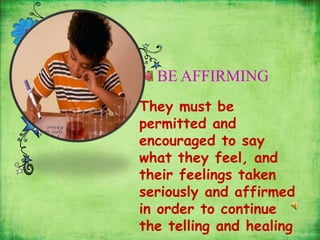
BE AFFIRMING
They must be
permitted and
encouraged to say
what they feel, and
their feelings taken
seriously and affirmed
in order to continue
the telling and healing
PREPARE THE CHILD FOR
WHAT WILL HAPPEN NEXT
Children who have been
abused feel helpless. They
need to know that the
consequences of sexual abuse
cannot be overcome alone,
that other people must be
allowed to help.
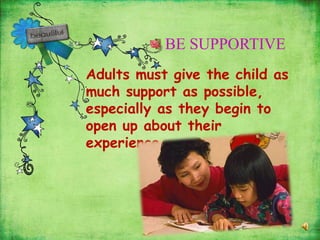
Adults must give the child as
much support as possible,
especially as they begin to
open up about their
experience.
BE SUPPORTIVE
REPORT THE ABUSE
Remember that reporting is a request for an
investigation into a suspected case of abuse.
Let the child know that you must tell
authorities to get help.
Understand the importance of early
reporting.
Remember that an educator who
reports in good faith is protected
from civil liability.
“How do I respond to
a child’s disclosure of
abuse?”
Reassure the child that it is okay to tell what
happened.
Tell the child what to expect. If you don’t
know, say so, but let the child know s/he can be
supported by you.
Call the Support Team if you need help in
determining “reasonable cause”
Project a calm understanding and supportive
attitude to the child.
Avoid having the child repeat his explanation to
different staff.
Let the child know that you must tell
authorities to get help.
Reassure the student that it is not her/his fault.
Understand the importance of early reporting.
Remember that an educator who reports in
good faith is protected from civil liability.
Respect the child’s privacy by not discussing
the situation out of school.
Remember that reporting is a request for an
investigation into a suspected case of abuse.
After reporting, it is important to maintain a
supportive presence for the child.
27
Handling Disclosures of Abuse
• Practical Tips:
• Go Slowly
• Allow the child to explain as much as he/she can
• Do not make suggestions. We do not want the child to
recant.
• Explain, in age appropriate language, that the law
requires you to make a report and that the law is there
to protect them
• Multiple interviews should be avoided
• Resist the temptation to share information with non-
supervisory personnel
• Reassure the child that it is the right thing to do.
• Let the child know what you will do next.
• Do not confront the perpetrator.
COMMON RESPONSES FROM
ADULTS WHEN A CHILD TELLS
ABOUT BEING HURT:
You do not believe the child
You believe but blame the
child.
You believe and tell the child to
keep it quiet.
You believe and your
subsequent actions make matters even
worse.
You believe and respond
appropriately.
“If I see an adult with
inappropriate behaviors
or warning signs, what
would I do and why?”
“How can you talk with
adults with these
particular behaviors?”
Make sure that it is safe to talk. That is,
if the individual has a history of anger of
violence consider not being alone when
talking with that person.
Seeking other outside resources for
help.
Once you feel it is safe to talk:
Some adults aren’t open for
the talk. You may have to
stop by saying something
like, “Okay, let’s talk about
this at another time”. If the
adult is open to talk, then
you can continue.
1. Begin The Conversation
2. Explore the situation
without accusation.
Remember to confront the behavior
and not the person.
Ask clear and direct, simple questions.
Name the specific behavior & your
feelings, reactions to those behaviors.

Follow-up with more questions if the
answer are not clear .
Don’t jump to conclusions.
Don’t generalize or use general labels.
Don’t accept an answer until they give
you the information you need.
3. End the first
talk.
This needs to be an
ongoing conversation.
4. Debrief with an
ally.Call a professional
resource, such as
CPTCSA, if you
need support.
Thank
You !!

Disclosure

  • 1.
    Real prevention meansthat adults stop offenders from having any access to children. The reason we have to teach children personal safety is because we as adults are failing in our responsibility to protect our children. One major gap in child protection is teaching adults how to recognize early warning signs and talk with the adult those behaviors.

  • 2.
  • 3.
    Of Remembering Sexually abused childrenoften cope by pushing the experience as far back in their minds as they can, to “forget” and avoid feeling hurt again.
  • 4.
    Of Losing Love Abusemakes most victims feel “dirty”. Child victims often feel responsible for what happened to them. Because of these, they worry that their parents and friends will stop loving them once they know about the abuse. They fear the separation from loved ones that could result from their telling.
  • 5.
    Of Shame &Guilt Children either know or can sense that their sexual experiences with adults are wrong. This makes telling someone and acknowledging it occurred shameful. Older children have also been known to suffer more from a sense of guilt than younger children.
  • 6.
    Of Further Harm Offendersoften threaten their victims and their families as a means of maintaining control. Victims then carry the burden of keeping their families safe by not telling.
  • 7.
    Of Being Blamed Childrenfear that they will be blamed for the sexual touches and that they somehow wanted it. People tend to believe adults more than they would believe children. Offenders also often make the excuse that their victims “asked” to be touched sexually. Children ask for affection and attention, which is their right, and not for sex about which they do not as yet have appropriate context for consent.***
  • 8.
  • 9.
    Children will communicate toyou in several ways. One way is through their behavior, they symptoms that they have a problem. This was discussed in the presentation on the effects of child sexual abuse.
  • 10.
    -the child willtell you that she/he was hurt in some way. Take what the child tells you seriously and respond appropriately. Other Types of Disclosure include: Direct Disclosure
  • 11.
    Indirect Disclosure - thechild will tell you that it was a friend who was hurt. Take this disclosure seriously, as well as take the fact that the child does not yet feel safe enough to make a direct disclosure seriously. - in this case, help the child find alternatives for the “friend”, such as how to say NO, how and who to tell, & even get details about what is happening and give advice for the “friend” as you get information.
  • 12.
    Strings Attached -this iswhen the child tries to extract a promise from you before they will tell you something, such as requesting that you keep what they tell you a secret. -You cannot keep a disclosure a secret, so it is important that you not make a promise that you cannot keep. Victims of sexual abuse have been given promises that are not kept, and it is time for the child to be able to trust again.
  • 13.
  • 14.
    14 Handling Disclosures ofAbuse • “Grooming” – a term that describes the process by which sex offenders initiate and maintain sexually abusive relationships with children. –Targeting/selection; –Strategies; –Maintenance.
  • 16.
    Reasons for nottalking about their victimization:Liking a sexual relationship with the father. Shame on behalf of their parents. Feeling guilt that they deserve to be “punished” They will not be believed Thinking nobody else experiences this and thus will not understand.
  • 17.
    “How do I respondto child’s disclosure of abuse?”
  • 18.
    BELIEVE THE CHILD Believingthe child is a major step in helping her/him overcome the trauma from the abuse. BE CALM Remaining calm will help minimize the child’s tendency to feel “different” as a result to
  • 19.
    BE AFFIRMING They mustbe permitted and encouraged to say what they feel, and their feelings taken seriously and affirmed in order to continue the telling and healing
  • 20.
    PREPARE THE CHILDFOR WHAT WILL HAPPEN NEXT Children who have been abused feel helpless. They need to know that the consequences of sexual abuse cannot be overcome alone, that other people must be allowed to help.
  • 21.
    Adults must givethe child as much support as possible, especially as they begin to open up about their experience. BE SUPPORTIVE
  • 22.
    REPORT THE ABUSE Rememberthat reporting is a request for an investigation into a suspected case of abuse. Let the child know that you must tell authorities to get help. Understand the importance of early reporting. Remember that an educator who reports in good faith is protected from civil liability.
  • 23.
    “How do Irespond to a child’s disclosure of abuse?”
  • 24.
    Reassure the childthat it is okay to tell what happened. Tell the child what to expect. If you don’t know, say so, but let the child know s/he can be supported by you. Call the Support Team if you need help in determining “reasonable cause” Project a calm understanding and supportive attitude to the child.
  • 25.
    Avoid having thechild repeat his explanation to different staff. Let the child know that you must tell authorities to get help. Reassure the student that it is not her/his fault. Understand the importance of early reporting.
  • 26.
    Remember that aneducator who reports in good faith is protected from civil liability. Respect the child’s privacy by not discussing the situation out of school. Remember that reporting is a request for an investigation into a suspected case of abuse. After reporting, it is important to maintain a supportive presence for the child.
  • 27.
    27 Handling Disclosures ofAbuse • Practical Tips: • Go Slowly • Allow the child to explain as much as he/she can • Do not make suggestions. We do not want the child to recant. • Explain, in age appropriate language, that the law requires you to make a report and that the law is there to protect them • Multiple interviews should be avoided • Resist the temptation to share information with non- supervisory personnel • Reassure the child that it is the right thing to do. • Let the child know what you will do next. • Do not confront the perpetrator.
  • 28.
    COMMON RESPONSES FROM ADULTSWHEN A CHILD TELLS ABOUT BEING HURT: You do not believe the child
  • 29.
    You believe butblame the child.
  • 30.
    You believe andtell the child to keep it quiet.
  • 31.
    You believe andyour subsequent actions make matters even worse.
  • 32.
    You believe andrespond appropriately.
  • 34.
    “If I seean adult with inappropriate behaviors or warning signs, what would I do and why?”
  • 35.
    “How can youtalk with adults with these particular behaviors?”
  • 36.
    Make sure thatit is safe to talk. That is, if the individual has a history of anger of violence consider not being alone when talking with that person. Seeking other outside resources for help.
  • 37.
    Once you feelit is safe to talk: Some adults aren’t open for the talk. You may have to stop by saying something like, “Okay, let’s talk about this at another time”. If the adult is open to talk, then you can continue. 1. Begin The Conversation
  • 38.
    2. Explore thesituation without accusation. Remember to confront the behavior and not the person. Ask clear and direct, simple questions. Name the specific behavior & your feelings, reactions to those behaviors. Follow-up with more questions if the answer are not clear . Don’t jump to conclusions. Don’t generalize or use general labels. Don’t accept an answer until they give you the information you need.


  • 39.
    3. End thefirst talk. This needs to be an ongoing conversation.
  • 40.
    4. Debrief withan ally.Call a professional resource, such as CPTCSA, if you need support.
  • 41.