By –Sahil Suleman
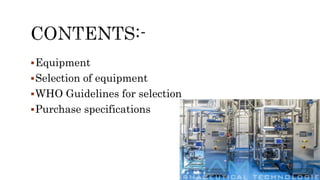
Equipment
Selection of equipment
WHO Guidelines for selection
Purchase specifications
Equipments are defined as “a physically entity
which is used to carry out a general or specific
activity in the pharmaceutical plant”.
It can be a single machine for example tablet
compression machine,weighing balance
The quality of the manufactured product much
depends on the suitability and the level of
technology used in the equipment.
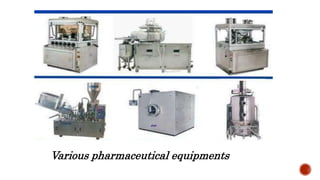
Various pharmaceutical equipments
The equipment selection process is considered in the
early stage of the design process
Equipment selection process decides the quality, cost,
and reliability, which are important for customer
satisfaction
Selection of equipments has direct financial impact on
the company.
Equipments affects the cost,quality, environmental
hazards and safety of personnels as well
Availability of spares and servicing
Frequency and ease of maintenance
Equipment strength
Operating criteria
Should be Environmental friendly
Construction material and design
Cost
Equipment must be constructed,located, designed,
adapted and maintained to suit the operation to be
carried out
The kayout and design of the equipment must aim
to minimize the risk of error and permit effective
cleaning and maintenance
Equipment should be installed in such a way to
minimize the any roak of error or of contamination
Production equipment should be designed,
designed and maintained to serve its intended
purpose
The first step in selecting and purchasing an
equipment is the clear identification of the need
Question should arise such as :-
Will the business profit more from the fulfillment of
this need compared to the other needs?
How will this item fit in with, or satisfy future
needs?
Does the need satisfy a safety or regulatory
requirement?
Will the end result improve product quality?
Following points are considered while
purchasing:-
Right source
Right quality
Right quantity
Right price
Right time
Right mode of transportation
Thank You

Equipment selection and purchase specification

  • 1.
  • 2.
    Equipment Selection of equipment WHOGuidelines for selection Purchase specifications
  • 3.
    Equipments are definedas “a physically entity which is used to carry out a general or specific activity in the pharmaceutical plant”. It can be a single machine for example tablet compression machine,weighing balance The quality of the manufactured product much depends on the suitability and the level of technology used in the equipment.
  • 4.
  • 5.
    The equipment selectionprocess is considered in the early stage of the design process Equipment selection process decides the quality, cost, and reliability, which are important for customer satisfaction Selection of equipments has direct financial impact on the company. Equipments affects the cost,quality, environmental hazards and safety of personnels as well
  • 6.
    Availability of sparesand servicing Frequency and ease of maintenance Equipment strength Operating criteria Should be Environmental friendly Construction material and design Cost
  • 7.
    Equipment must beconstructed,located, designed, adapted and maintained to suit the operation to be carried out The kayout and design of the equipment must aim to minimize the risk of error and permit effective cleaning and maintenance
  • 8.
    Equipment should beinstalled in such a way to minimize the any roak of error or of contamination Production equipment should be designed, designed and maintained to serve its intended purpose
  • 9.
    The first stepin selecting and purchasing an equipment is the clear identification of the need Question should arise such as :- Will the business profit more from the fulfillment of this need compared to the other needs? How will this item fit in with, or satisfy future needs? Does the need satisfy a safety or regulatory requirement? Will the end result improve product quality?
  • 10.
    Following points areconsidered while purchasing:- Right source Right quality Right quantity Right price Right time Right mode of transportation
  • 11.