EQUIPMENT MAINTENANCE
Sudip chemjong
Ragavendra K M
CONTENTS
Ø DEFINITION
Ø OBJECTIVES
Ø SCOPES
Ø METHODS
DEFINITION
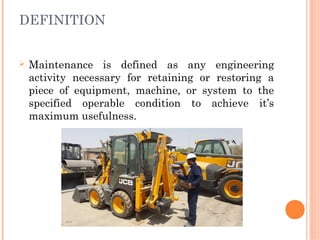
Ø Maintenance is defined as any engineering
activity necessary for retaining or restoring a
piece of equipment, machine, or system to the
specified operable condition to achieve it’s
maximum usefulness.
OBJECTIVES
Ø OPTIMIZE UTILIZATION
Ø COST EFFECTIVENESS
Ø TO MINIMIZE ACCIDENTS THROUGH
REGULAR INSPECTION AND REPAIR OF
SAFETY DEVICES
Ø PROLONGING THE LIFE OF EQUIPMENT
Ø EFFICIENT USE OF MAINTAINENCE
PERSONNEL
SCOPES
Ø ENSURING OPTIMUM OPERATIONAL
EFFICIENCY
Ø MAINTAINING AN UP-TO-DATE OF
EQIPMENTS
Ø ANTICIPATING THE REQUIREMENT
OF COMMONLY REQUIRED SPARES
Ø BREAK DOWN MAINTENANCE IS
PROMPT ENOUGH TO ENSURE
UNINTERUPTED SERVICES
Ø ENSURING THE FACILITIES TO BE
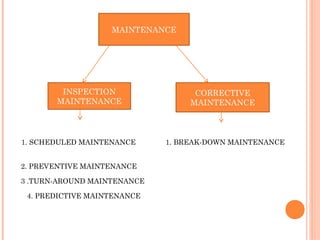
1. SCHEDULED MAINTENANCE 1. BREAK-DOWN MAINTENANCE
2. PREVENTIVE MAINTENANCE
3 .TURN-AROUND MAINTENANCE
4. PREDICTIVE MAINTENANCE
MAINTENANCE
INSPECTION
MAINTENANCE
CORRECTIVE
MAINTENANCE
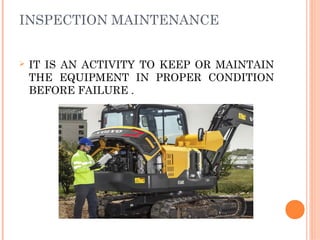
INSPECTION MAINTENANCE
Ø IT IS AN ACTIVITY TO KEEP OR MAINTAIN
THE EQUIPMENT IN PROPER CONDITION
BEFORE FAILURE .
1.SCHEDULED MAINTENANCE
Ø It is defined as the significant activities carried
out regularly according to predetermined
schedule.
Ø Some systems in the equipment or machine
requires attention after a specific time or period
in term of the number of hours the equipment
has worked or the months that it has being put
in to use or the speed it has cover in distance.
Ø ADVANTAGES
ü EASIER PLANNING OF MAINTENANCE AND
ORDERING SPARES
ü NO INITIAL COST FOR INSTRUMENT USED
FOR SUPERVISION OF EQUIPMENTS
Ø DISADVANTAGES
ü MORE EXPENSIVE DUE TO MORE
FREQUENT CHANGE OF PARTS
ü IT REQUIRES ON-GOING LABOUR COST
2.PREVENTIVE MAINTENANCE
Ø It is defined as an art or method of carrying out
maintenance work on equipment to prevent
breakdown of the equipment and cause down
time.
Ø It is a systematic inspection, detection, correction
and prevention of incipient failures before they
become actual or major failures.
Ø ADVANTAGES
ü Less risk factor
ü Longer equipment life
ü Money saving
ü Less disruptions
Ø DISADVANTAGES
ü Over maintenance
ü More workers
3.TURN-AROUND MAINTENANCE
Ø It is a planned periodic shut-down either partial
or total of process plant or machine in an outfit to
perform maintenance, repair and overhaul
operations and to inspect, test and replace
process materials and equipment for effective
performance.
Ø It is planned one or two years ahead to allow for
adequate preparations because of the fund
involved in carrying it out.
4.PREDCTIVE MAINTENENCE
Ø It is an activity to predict when equipment
failure might happen and then perform
maintenance to keep machines in operation.
Ø It uses a process known as condition monitoring
to check the status of equipments on a regular
basis.
Ø ADVANTAGES
ü Cost and time of machine downtime is kept to a
minimum
ü Likelihood of failure is reduced and reliability
improved
Ø DISADVANTAGES
ü Higher upfront cost than more basic maintenance
strategies.
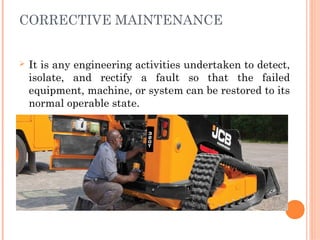
CORRECTIVE MAINTENANCE
Ø It is any engineering activities undertaken to detect,
isolate, and rectify a fault so that the failed
equipment, machine, or system can be restored to its
normal operable state.
1.BREAK-DOWN MAINTENANCE
Ø It is defined as the repairs or replacement
process carried out on a failed machine.
Ø It is an activity usually carried out in order to
bring the machine back to its functional state or
working order.
Ø ADVANTAGES
ü Minimal planning is required
ü Less labour is required
Ø DISADVANTAGES
ü Failure is highly unpredictable
ü It can be extremely costly
ü The process poses a safety risk to employees and
equipments.
THANK YOU

Equipment maintenance

  • 1.
  • 2.
  • 3.
    DEFINITION Ø Maintenance isdefined as any engineering activity necessary for retaining or restoring a piece of equipment, machine, or system to the specified operable condition to achieve it’s maximum usefulness.
  • 4.
    OBJECTIVES Ø OPTIMIZE UTILIZATION ØCOST EFFECTIVENESS Ø TO MINIMIZE ACCIDENTS THROUGH REGULAR INSPECTION AND REPAIR OF SAFETY DEVICES Ø PROLONGING THE LIFE OF EQUIPMENT Ø EFFICIENT USE OF MAINTAINENCE PERSONNEL
  • 5.
    SCOPES Ø ENSURING OPTIMUMOPERATIONAL EFFICIENCY Ø MAINTAINING AN UP-TO-DATE OF EQIPMENTS Ø ANTICIPATING THE REQUIREMENT OF COMMONLY REQUIRED SPARES Ø BREAK DOWN MAINTENANCE IS PROMPT ENOUGH TO ENSURE UNINTERUPTED SERVICES Ø ENSURING THE FACILITIES TO BE
  • 6.
    1. SCHEDULED MAINTENANCE1. BREAK-DOWN MAINTENANCE 2. PREVENTIVE MAINTENANCE 3 .TURN-AROUND MAINTENANCE 4. PREDICTIVE MAINTENANCE MAINTENANCE INSPECTION MAINTENANCE CORRECTIVE MAINTENANCE
  • 7.
    INSPECTION MAINTENANCE Ø ITIS AN ACTIVITY TO KEEP OR MAINTAIN THE EQUIPMENT IN PROPER CONDITION BEFORE FAILURE .
  • 8.
    1.SCHEDULED MAINTENANCE Ø Itis defined as the significant activities carried out regularly according to predetermined schedule. Ø Some systems in the equipment or machine requires attention after a specific time or period in term of the number of hours the equipment has worked or the months that it has being put in to use or the speed it has cover in distance.
  • 9.
    Ø ADVANTAGES ü EASIERPLANNING OF MAINTENANCE AND ORDERING SPARES ü NO INITIAL COST FOR INSTRUMENT USED FOR SUPERVISION OF EQUIPMENTS Ø DISADVANTAGES ü MORE EXPENSIVE DUE TO MORE FREQUENT CHANGE OF PARTS ü IT REQUIRES ON-GOING LABOUR COST
  • 10.
    2.PREVENTIVE MAINTENANCE Ø Itis defined as an art or method of carrying out maintenance work on equipment to prevent breakdown of the equipment and cause down time. Ø It is a systematic inspection, detection, correction and prevention of incipient failures before they become actual or major failures.
  • 11.
    Ø ADVANTAGES ü Lessrisk factor ü Longer equipment life ü Money saving ü Less disruptions Ø DISADVANTAGES ü Over maintenance ü More workers
  • 12.
    3.TURN-AROUND MAINTENANCE Ø Itis a planned periodic shut-down either partial or total of process plant or machine in an outfit to perform maintenance, repair and overhaul operations and to inspect, test and replace process materials and equipment for effective performance. Ø It is planned one or two years ahead to allow for adequate preparations because of the fund involved in carrying it out.
  • 13.
    4.PREDCTIVE MAINTENENCE Ø Itis an activity to predict when equipment failure might happen and then perform maintenance to keep machines in operation. Ø It uses a process known as condition monitoring to check the status of equipments on a regular basis.
  • 14.
    Ø ADVANTAGES ü Costand time of machine downtime is kept to a minimum ü Likelihood of failure is reduced and reliability improved Ø DISADVANTAGES ü Higher upfront cost than more basic maintenance strategies.
  • 15.
    CORRECTIVE MAINTENANCE Ø Itis any engineering activities undertaken to detect, isolate, and rectify a fault so that the failed equipment, machine, or system can be restored to its normal operable state.
  • 16.
    1.BREAK-DOWN MAINTENANCE Ø Itis defined as the repairs or replacement process carried out on a failed machine. Ø It is an activity usually carried out in order to bring the machine back to its functional state or working order.
  • 17.
    Ø ADVANTAGES ü Minimalplanning is required ü Less labour is required Ø DISADVANTAGES ü Failure is highly unpredictable ü It can be extremely costly ü The process poses a safety risk to employees and equipments.
  • 18.