Equine Coat
Color Genetics
Genetics Terms Types of Pigments
Dominant: one allele will overshadow the other
Recessive: one allele cannot overshadow the other
Homozygous: two of the same alleles at a locus
Heterozygous: two different alleles at a locus
Melanin: black or brown color
Pheomelanin: red or yellow color
Basic
Genetics
Appearance
determined by genes
at specific locations
(loci)
Alleles are
alternate
forms of genes
Each gene
has two
alleles at a
locus
Equine Coat Colors
T h e B a s e C o l o r s
D i l u t i o n G e n e s
W h i t e P a t t e r n s
Article Cited: Julie Ann Luiz Adrian DVM (2013) Equine Color Genetics and
Deoxyribonucleic Acid Testing. J Veterinar Sci Technol 4: 134.
Infographic Design and Artwork: Nicole Lehman
G e n e t i c T e s t i n g
Black Bay Chestnut
Bay Buckskin Perlino
CremelloPalominoChestnut
Overo Tobiano Sabino
Extension (E)
Locus controls
Agouti (A)
Locus controls
even
distribution of
black color
limitation of
black color
distribution
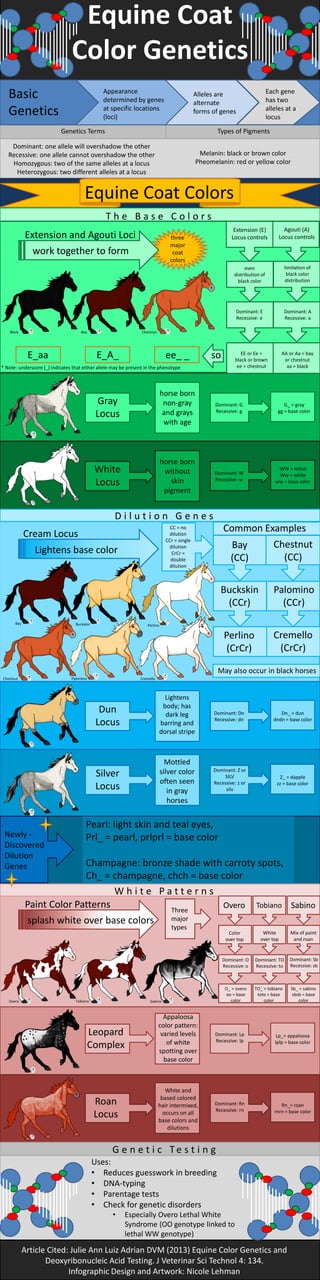
Extension and Agouti Loci
work together to form
three
major
coat
colors
Dominant: E
Recessive: e
Dominant: A
Recessive: a
EE or Ee =
black or brown
ee = chestnut
AA or Aa = bay
or chestnut
aa = black
soE_aa E_A_ ee_ _
* Note: underscore (_) indicates that either allele may be present in the phenotype
Gray
Locus
horse born
non-gray
and grays
with age
Dominant: G
Recessive: g
G_ = gray
gg = base color
White
Locus
horse born
without
skin
pigment
Dominant: W
Recessive: w
WW = lethal
Ww = white
ww = base color
Cream Locus
Lightens base color
CC = no
dilution
CCr = single
dilution
CrCr =
double
dilution
Common Examples
Bay
(CC)
Buckskin
(CCr)
Palomino
(CCr)
Chestnut
(CC)
Perlino
(CrCr)
Cremello
(CrCr)
May also occur in black horses
Dun
Locus
Lightens
body; has
dark leg
barring and
dorsal stripe
Dominant: Dn
Recessive: dn
Dn_ = dun
dndn = base color
Silver
Locus
Mottled
silver color
often seen
in gray
horses
Dominant: Z or
SILV
Recessive: z or
silv
Z_ = dapple
zz = base color
Newly -
Discovered
Dilution
Genes
Pearl: light skin and teal eyes,
Prl_ = pearl, prlprl = base color
Champagne: bronze shade with carroty spots,
Ch_ = champagne, chch = base color
Paint Color Patterns
splash white over base colors
Three
major
types
Overo Tobiano Sabino
Color
over top
White
over top
Mix of paint
and roan
Dominant: O
Recessive: o
Dominant: TO
Recessive: to
Dominant: Sb
Recessive: sb
O_ = overo
oo = base
color
TO_ = tobiano
toto = base
color
Sb_ = sabino
sbsb = base
color
Leopard
Complex
Appaloosa
color pattern:
varied levels
of white
spotting over
base color
Dominant: Lp
Recessive: lp
Lp_= appaloosa
lplp = base color
Roan
Locus
White and
based colored
hair intermixed,
occurs on all
base colors and
dilutions
Dominant: Rn
Recessive: rn
Rn_= roan
rnrn = base color
Uses:
• Reduces guesswork in breeding
• DNA-typing
• Parentage tests
• Check for genetic disorders
• Especially Overo Lethal White
Syndrome (OO genotype linked to
lethal WW genotype)

Equine Coat Color Genetics

  • 1.
    Equine Coat Color Genetics GeneticsTerms Types of Pigments Dominant: one allele will overshadow the other Recessive: one allele cannot overshadow the other Homozygous: two of the same alleles at a locus Heterozygous: two different alleles at a locus Melanin: black or brown color Pheomelanin: red or yellow color Basic Genetics Appearance determined by genes at specific locations (loci) Alleles are alternate forms of genes Each gene has two alleles at a locus Equine Coat Colors T h e B a s e C o l o r s D i l u t i o n G e n e s W h i t e P a t t e r n s Article Cited: Julie Ann Luiz Adrian DVM (2013) Equine Color Genetics and Deoxyribonucleic Acid Testing. J Veterinar Sci Technol 4: 134. Infographic Design and Artwork: Nicole Lehman G e n e t i c T e s t i n g Black Bay Chestnut Bay Buckskin Perlino CremelloPalominoChestnut Overo Tobiano Sabino Extension (E) Locus controls Agouti (A) Locus controls even distribution of black color limitation of black color distribution Extension and Agouti Loci work together to form three major coat colors Dominant: E Recessive: e Dominant: A Recessive: a EE or Ee = black or brown ee = chestnut AA or Aa = bay or chestnut aa = black soE_aa E_A_ ee_ _ * Note: underscore (_) indicates that either allele may be present in the phenotype Gray Locus horse born non-gray and grays with age Dominant: G Recessive: g G_ = gray gg = base color White Locus horse born without skin pigment Dominant: W Recessive: w WW = lethal Ww = white ww = base color Cream Locus Lightens base color CC = no dilution CCr = single dilution CrCr = double dilution Common Examples Bay (CC) Buckskin (CCr) Palomino (CCr) Chestnut (CC) Perlino (CrCr) Cremello (CrCr) May also occur in black horses Dun Locus Lightens body; has dark leg barring and dorsal stripe Dominant: Dn Recessive: dn Dn_ = dun dndn = base color Silver Locus Mottled silver color often seen in gray horses Dominant: Z or SILV Recessive: z or silv Z_ = dapple zz = base color Newly - Discovered Dilution Genes Pearl: light skin and teal eyes, Prl_ = pearl, prlprl = base color Champagne: bronze shade with carroty spots, Ch_ = champagne, chch = base color Paint Color Patterns splash white over base colors Three major types Overo Tobiano Sabino Color over top White over top Mix of paint and roan Dominant: O Recessive: o Dominant: TO Recessive: to Dominant: Sb Recessive: sb O_ = overo oo = base color TO_ = tobiano toto = base color Sb_ = sabino sbsb = base color Leopard Complex Appaloosa color pattern: varied levels of white spotting over base color Dominant: Lp Recessive: lp Lp_= appaloosa lplp = base color Roan Locus White and based colored hair intermixed, occurs on all base colors and dilutions Dominant: Rn Recessive: rn Rn_= roan rnrn = base color Uses: • Reduces guesswork in breeding • DNA-typing • Parentage tests • Check for genetic disorders • Especially Overo Lethal White Syndrome (OO genotype linked to lethal WW genotype)