INFRARED
TO DETECT
CORNEAL
&EXTREMITY
TEMPERATURE
THERMOGRAPHY
Israel Journal of Veterinary
Medicine. 69:1. March 2014
Yanmaz,L.E.andOkumus,Z.
DIAGNOSIS OF ORTHOPEDIC
PROBLEMS:
PREVENTION OF
SERIOUS INJURY
Lameness
&
Signs of Inflammation
USE
EQUINE
SCIENCE
CURRENT
THE STUDY:
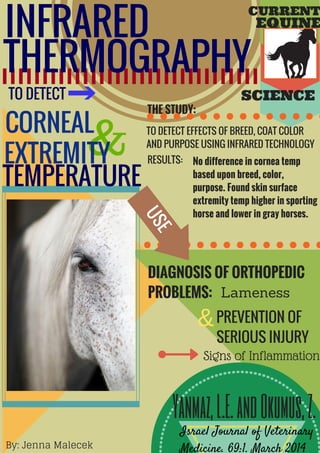
No difference in cornea temp
based upon breed, color,
purpose. Found skin surface
extremity temp higher in sporting
horse and lower in gray horses.
TO DETECT EFFECTS OF BREED, COAT COLOR
AND PURPOSE USING INFRARED TECHNOLOGY
RESULTS:
By: Jenna Malecek
DEPARTMENT OF SURGERY
Faculty of Veterinary Medicine
Atatürk University, Erzurum 25240, Turkey
Turkey
INFRARED
THERMOGRAPHY
ADVANTAGES
Alternative to Rectal Temp.
Clinician Safety
25
Healthy Horses
19
6
6
19
11
6
8
6
19
Arabian
Male
MORE on the
STUDY
T H E L O W - D O W N
Thoroughbred
Female
Chestnut
Bay
Gray
Stallions
Sporting
The highest skin
temperature point on the
horses was at the heel bulb.
Coronary corium was the
second highest point. All
measures on the forelegs
were 1°C warmer than the
hindlegs.

Infrared Thermography in Horses

  • 1.
    INFRARED TO DETECT CORNEAL &EXTREMITY TEMPERATURE THERMOGRAPHY Israel Journalof Veterinary Medicine. 69:1. March 2014 Yanmaz,L.E.andOkumus,Z. DIAGNOSIS OF ORTHOPEDIC PROBLEMS: PREVENTION OF SERIOUS INJURY Lameness & Signs of Inflammation USE EQUINE SCIENCE CURRENT THE STUDY: No difference in cornea temp based upon breed, color, purpose. Found skin surface extremity temp higher in sporting horse and lower in gray horses. TO DETECT EFFECTS OF BREED, COAT COLOR AND PURPOSE USING INFRARED TECHNOLOGY RESULTS: By: Jenna Malecek
  • 2.
    DEPARTMENT OF SURGERY Facultyof Veterinary Medicine Atatürk University, Erzurum 25240, Turkey Turkey INFRARED THERMOGRAPHY ADVANTAGES Alternative to Rectal Temp. Clinician Safety 25 Healthy Horses 19 6 6 19 11 6 8 6 19 Arabian Male MORE on the STUDY T H E L O W - D O W N Thoroughbred Female Chestnut Bay Gray Stallions Sporting The highest skin temperature point on the horses was at the heel bulb. Coronary corium was the second highest point. All measures on the forelegs were 1°C warmer than the hindlegs.