Gemma Aguado Elena Barberà Magí Almirall Ana Rodera José Mora Eva Loste 1 THE PRACTICAL APPLICATION OF E-PORTFOLIO AT THE OPEN UNIVERSITY OF CATALONIA: Assessment of Competence Learning
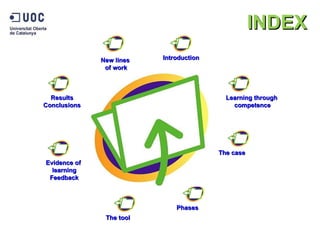
1 INDEX Introduction Learning through  competence The case Phases The tool Evidence of  learning Feedback Results Conclusions New lines  of work
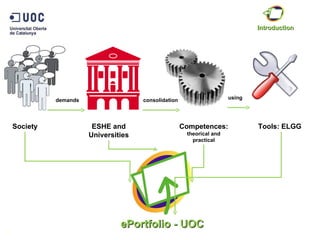
2 Society demands ESHE and Universities consolidation Competences:  theorical and practical using Tools: ELGG Introduction ePortfolio - UOC
Competence 3 Represent a dynamic combination of attributes, in relation to knowledge, abilities, attitudes, and responsibilities, that describe to the results of learning of an educative program or the one that the students are able to demonstrate at the end of an educative process Learning through  competence
Competence-based learning 3 The learning based of competence involves a  variety of different dimensions: Complex level of knowledge, linking it in practice with the overall capacites displayed by a person in a specific environment.  Learning through  competence
3 It is composed of a collection of evidence that the student chooses, analyzes and presents in order to expose or show the levels of realization reached as for process and with product The assessment of competence-based  learning using e-Portfolio Learning through  competence
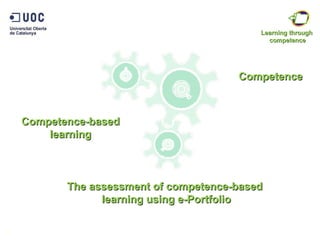
Competence Competence-based learning 3 The assessment of competence-based  learning using e-Portfolio Learning through  competence
Pilot test in a virtual classroom 2007-2008 Academic year  Doctorate in Information Society Course: Virtual Contexts of  Learnings 27 students  4 The case
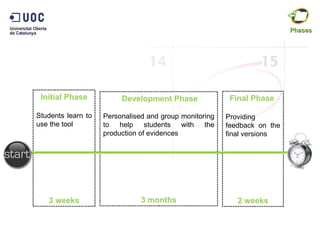
Initial Phase  Students learn to use the tool 3 weeks Development Phase Personalised and group monitoring to help students with the production of evidences 3 months Final Phase  Providing feedback on the final versions 2 weeks 5 Phases
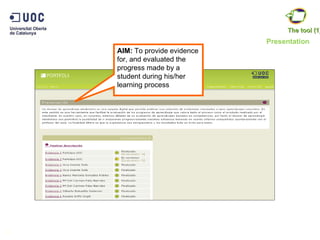
Presentation 6 AIM:  To provide evidence for, and evaluated the progress made by a student during his/her learning process The tool (1)
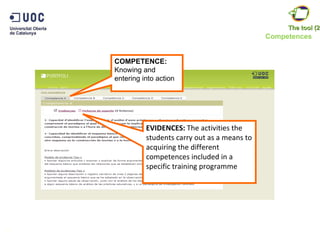
Competences 7 COMPETENCE:  Knowing and entering into action EVIDENCES:  The activities the students carry out as a means to acquiring the different competences included in a specific training programme  The tool (2)
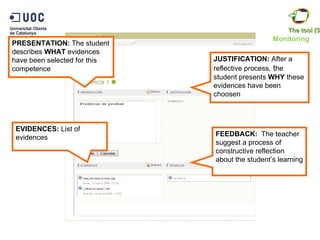
Monitoring 8 JUSTIFICATION:  After a reflective process,  t he student presents  WHY  these evidences have been choosen PRESENTATION:  The student describes  WHAT  evidences have been selected for this competence FEEDBACK:   The teacher suggest a process of constructive reflection about the student’s learning EVIDENCES:  List of evidences The tool (3)
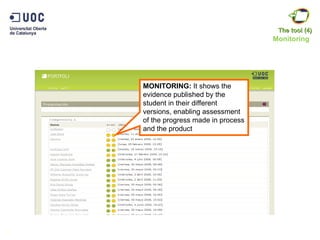
Monitoring 8 MONITORING:  It shows the evidence published by the student in their different versions, enabling assessment of the progress made in process and the product The tool (4)
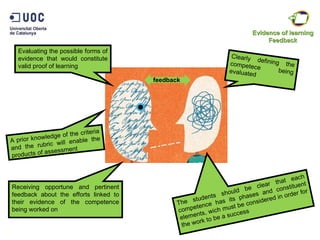
9 Clearly defining the competece being evaluated Evaluating the possible forms of evidence that would constitute valid proof of learning A prior knowledge of the criteria and the rubric will enable the products of assessment Receiving opportune and pertinent feedback about the efforts linked to their evidence of the competence being worked on The students should be clear that each competence has its phases and constituent elements, wich must be considered in order for the work to be a success feedback Evidence of learning Feedback
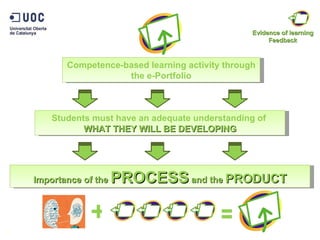
9 Importance of the  PROCESS  and the  PRODUCT Students must have an adequate understanding of  WHAT THEY WILL BE DEVELOPING Competence-based learning activity through the e-Portfolio + = Evidence of learning Feedback
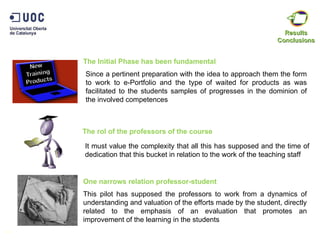
The Initial Phase has been fundamental The rol of the professors of the course One narrows relation professor-student 10 It must value the complexity that all this has supposed and the time of dedication that this bucket in relation to the work of the teaching staff Since a pertinent preparation with the idea to approach them the form to work to e-Portfolio and the type of waited for products as was facilitated to the students samples of progresses in the dominion of the involved competences This pilot has supposed the professors to work from a dynamics of understanding and valuation of the efforts made by the student, directly related to the emphasis of an evaluation that promotes an improvement of the learning in the students Results Conclusions
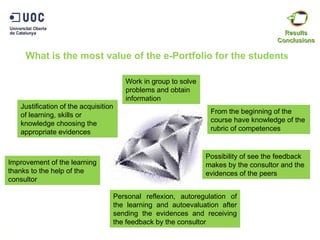
What is the most value of the e-Portfolio for the studen ts 10 Work in group to solve problems and obtain information Possibility of see the feedback makes by the consultor and the evidences of the peers Personal reflexion, autoregulation of the learning and autoevaluation after sending the evidences and receiving the feedback by the consultor Improvement of the learning thanks to the help of the consultor Justification of the acquisition of learning, skills or knowledge choosing the appropriate evidences From the beginning of the course have knowledge of the rubric of competences Results Conclusions
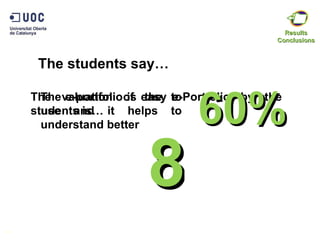
10 The valuation of the e-Portfolio by the students is… 8 60% The e-portfolio is easy to use and it helps to understand better The students say… Results Conclusions
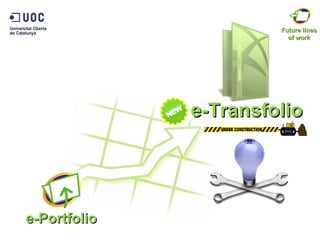
New roles for student and teacher The challenge of redisigning the pedagogic act, based on competence The inclusion of new strategies and demands of assessment when considering learning achievements based on competence 11 Future lines of work
11 Future lines of work e-Portfolio e-Transfolio
Thanks!

e-portfolio

  • 1.
    Gemma Aguado ElenaBarberà Magí Almirall Ana Rodera José Mora Eva Loste 1 THE PRACTICAL APPLICATION OF E-PORTFOLIO AT THE OPEN UNIVERSITY OF CATALONIA: Assessment of Competence Learning
  • 2.
    1 INDEX IntroductionLearning through competence The case Phases The tool Evidence of learning Feedback Results Conclusions New lines of work
  • 3.
    2 Society demandsESHE and Universities consolidation Competences: theorical and practical using Tools: ELGG Introduction ePortfolio - UOC
  • 4.
    Competence 3 Representa dynamic combination of attributes, in relation to knowledge, abilities, attitudes, and responsibilities, that describe to the results of learning of an educative program or the one that the students are able to demonstrate at the end of an educative process Learning through competence
  • 5.
    Competence-based learning 3The learning based of competence involves a variety of different dimensions: Complex level of knowledge, linking it in practice with the overall capacites displayed by a person in a specific environment. Learning through competence
  • 6.
    3 It iscomposed of a collection of evidence that the student chooses, analyzes and presents in order to expose or show the levels of realization reached as for process and with product The assessment of competence-based learning using e-Portfolio Learning through competence
  • 7.
    Competence Competence-based learning3 The assessment of competence-based learning using e-Portfolio Learning through competence
  • 8.
    Pilot test ina virtual classroom 2007-2008 Academic year Doctorate in Information Society Course: Virtual Contexts of Learnings 27 students 4 The case
  • 9.
    Initial Phase Students learn to use the tool 3 weeks Development Phase Personalised and group monitoring to help students with the production of evidences 3 months Final Phase Providing feedback on the final versions 2 weeks 5 Phases
  • 10.
    Presentation 6 AIM: To provide evidence for, and evaluated the progress made by a student during his/her learning process The tool (1)
  • 11.
    Competences 7 COMPETENCE: Knowing and entering into action EVIDENCES: The activities the students carry out as a means to acquiring the different competences included in a specific training programme The tool (2)
  • 12.
    Monitoring 8 JUSTIFICATION: After a reflective process, t he student presents WHY these evidences have been choosen PRESENTATION: The student describes WHAT evidences have been selected for this competence FEEDBACK: The teacher suggest a process of constructive reflection about the student’s learning EVIDENCES: List of evidences The tool (3)
  • 13.
    Monitoring 8 MONITORING: It shows the evidence published by the student in their different versions, enabling assessment of the progress made in process and the product The tool (4)
  • 14.
    9 Clearly definingthe competece being evaluated Evaluating the possible forms of evidence that would constitute valid proof of learning A prior knowledge of the criteria and the rubric will enable the products of assessment Receiving opportune and pertinent feedback about the efforts linked to their evidence of the competence being worked on The students should be clear that each competence has its phases and constituent elements, wich must be considered in order for the work to be a success feedback Evidence of learning Feedback
  • 15.
    9 Importance ofthe PROCESS and the PRODUCT Students must have an adequate understanding of WHAT THEY WILL BE DEVELOPING Competence-based learning activity through the e-Portfolio + = Evidence of learning Feedback
  • 16.
    The Initial Phasehas been fundamental The rol of the professors of the course One narrows relation professor-student 10 It must value the complexity that all this has supposed and the time of dedication that this bucket in relation to the work of the teaching staff Since a pertinent preparation with the idea to approach them the form to work to e-Portfolio and the type of waited for products as was facilitated to the students samples of progresses in the dominion of the involved competences This pilot has supposed the professors to work from a dynamics of understanding and valuation of the efforts made by the student, directly related to the emphasis of an evaluation that promotes an improvement of the learning in the students Results Conclusions
  • 17.
    What is themost value of the e-Portfolio for the studen ts 10 Work in group to solve problems and obtain information Possibility of see the feedback makes by the consultor and the evidences of the peers Personal reflexion, autoregulation of the learning and autoevaluation after sending the evidences and receiving the feedback by the consultor Improvement of the learning thanks to the help of the consultor Justification of the acquisition of learning, skills or knowledge choosing the appropriate evidences From the beginning of the course have knowledge of the rubric of competences Results Conclusions
  • 18.
    10 The valuationof the e-Portfolio by the students is… 8 60% The e-portfolio is easy to use and it helps to understand better The students say… Results Conclusions
  • 19.
    New roles forstudent and teacher The challenge of redisigning the pedagogic act, based on competence The inclusion of new strategies and demands of assessment when considering learning achievements based on competence 11 Future lines of work
  • 20.
    11 Future linesof work e-Portfolio e-Transfolio
  • 21.