Towards sustainable symbiosis of man, nature and architecture
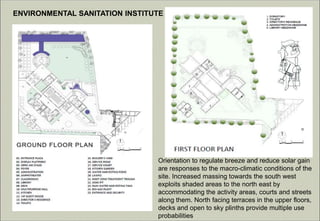
ENVIRONMENTAL SANITATION INSTITUTE
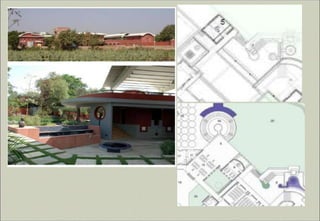
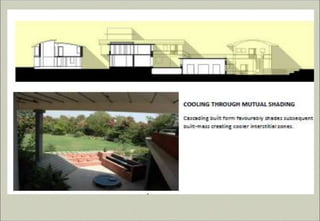
Orientation to regulate breeze and reduce solar gain
are responses to the macro-climatic conditions of the
site. Increased massing towards the south west
exploits shaded areas to the north east by
accommodating the activity areas, courts and streets
along them. North facing terraces in the upper floors,
decks and open to sky plinths provide multiple use
probabilities
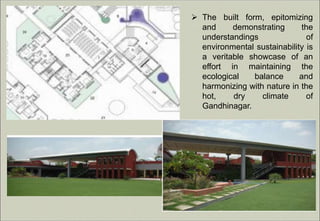
 The built form, epitomizing
and demonstrating the
understandings of
environmental sustainability is
a veritable showcase of an
effort in maintaining the
ecological balance and
harmonizing with nature in the
hot, dry climate of
Gandhinagar.
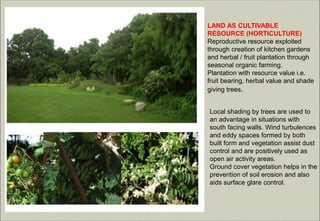
LAND AS CULTIVABLE
RESOURCE (HORTICULTURE)
Reproductive resource exploited
through creation of kitchen gardens
and herbal / fruit plantation through
seasonal organic farming.
Plantation with resource value i.e.
fruit bearing, herbal value and shade
giving trees.
Local shading by trees are used to
an advantage in situations with
south facing walls. Wind turbulences
and eddy spaces formed by both
built form and vegetation assist dust
control and are positively used as
open air activity areas.
Ground cover vegetation helps in the
prevention of soil erosion and also
aids surface glare control.
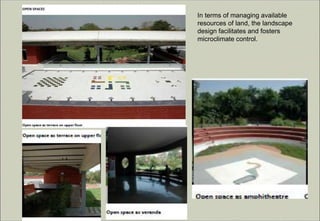
In terms of managing available
resources of land, the landscape
design facilitates and fosters
microclimate control.
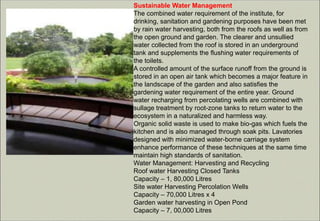
Sustainable Water Management
The combined water requirement of the institute, for
drinking, sanitation and gardening purposes have been met
by rain water harvesting, both from the roofs as well as from
the open ground and garden. The clearer and unsullied
water collected from the roof is stored in an underground
tank and supplements the flushing water requirements of
the toilets.
A controlled amount of the surface runoff from the ground is
stored in an open air tank which becomes a major feature in
the landscape of the garden and also satisfies the
gardening water requirement of the entire year. Ground
water recharging from percolating wells are combined with
sullage treatment by root-zone tanks to return water to the
ecosystem in a naturalized and harmless way.
Organic solid waste is used to make bio-gas which fuels the
kitchen and is also managed through soak pits. Lavatories
designed with minimized water-borne carriage system
enhance performance of these techniques at the same time
maintain high standards of sanitation.
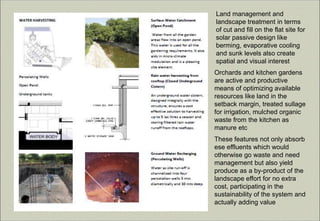
Water Management: Harvesting and Recycling
Roof water Harvesting Closed Tanks
Capacity – 1, 80,000 Litres
Site water Harvesting Percolation Wells
Capacity – 70,000 Litres x 4
Garden water harvesting in Open Pond
Capacity – 7, 00,000 Litres
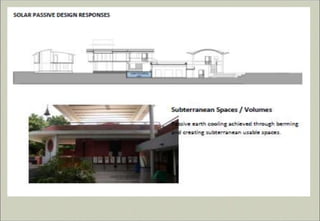
Land management and
landscape treatment in terms
of cut and fill on the flat site for
solar passive design like
berming, evaporative cooling
and sunk levels also create
spatial and visual interest
Orchards and kitchen gardens
are active and productive
means of optimizing available
resources like land in the
setback margin, treated sullage
for irrigation, mulched organic
waste from the kitchen as
manure etc
These features not only absorb
ese effluents which would
otherwise go waste and need
management but also yield
produce as a by-product of the
landscape effort for no extra
cost, participating in the
sustainability of the system and
actually adding value
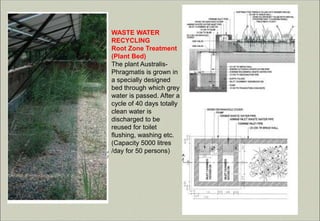
WASTE WATER
RECYCLING
Root Zone Treatment
(Plant Bed)
The plant Australis-
Phragmatis is grown in
a specially designed
bed through which grey
water is passed. After a
cycle of 40 days totally
clean water is
discharged to be
reused for toilet
flushing, washing etc.
(Capacity 5000 litres
/day for 50 persons)
.
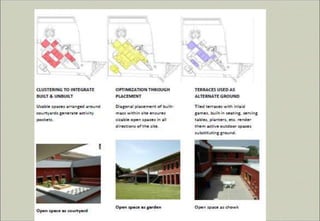
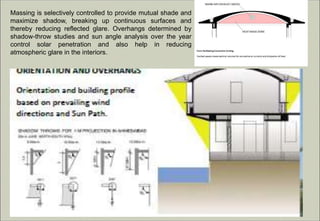
Massing is selectively controlled to provide mutual shade and
maximize shadow, breaking up continuous surfaces and
thereby reducing reflected glare. Overhangs determined by
shadow-throw studies and sun angle analysis over the year
control solar penetration and also help in reducing
atmospheric glare in the interiors.
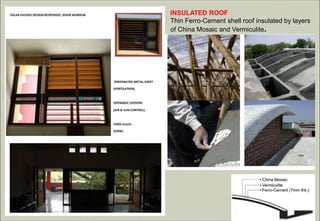
INSULATED ROOF
Thin Ferro-Cement shell roof insulated by layers
of China Mosaic and Vermiculite.
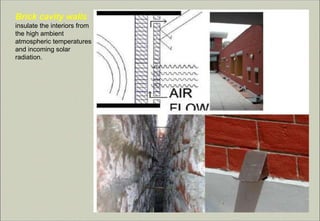
Brick cavity walls
insulate the interiors from
the high ambient
atmospheric temperatures
and incoming solar
radiation.
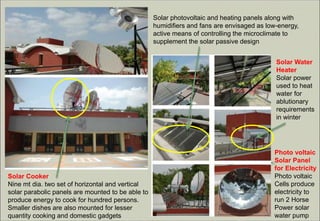
Solar photovoltaic and heating panels along with
humidifiers and fans are envisaged as low-energy,
active means of controlling the microclimate to
supplement the solar passive design
Photo voltaic
Solar Panel
for Electricity
Photo voltaic
Cells produce
electricity to
run 2 Horse
Power solar
water pump
Solar Water
Heater
Solar power
used to heat
water for
ablutionary
requirements
in winter
Solar Cooker
Nine mt dia. two set of horizontal and vertical
solar parabolic panels are mounted to be able to
produce energy to cook for hundred persons.
Smaller dishes are also mounted for lesser
quantity cooking and domestic gadgets

environmental sanitation institute.ppt

  • 1.
    Towards sustainable symbiosisof man, nature and architecture
  • 2.
    ENVIRONMENTAL SANITATION INSTITUTE Orientationto regulate breeze and reduce solar gain are responses to the macro-climatic conditions of the site. Increased massing towards the south west exploits shaded areas to the north east by accommodating the activity areas, courts and streets along them. North facing terraces in the upper floors, decks and open to sky plinths provide multiple use probabilities
  • 4.
     The builtform, epitomizing and demonstrating the understandings of environmental sustainability is a veritable showcase of an effort in maintaining the ecological balance and harmonizing with nature in the hot, dry climate of Gandhinagar.
  • 6.
    LAND AS CULTIVABLE RESOURCE(HORTICULTURE) Reproductive resource exploited through creation of kitchen gardens and herbal / fruit plantation through seasonal organic farming. Plantation with resource value i.e. fruit bearing, herbal value and shade giving trees. Local shading by trees are used to an advantage in situations with south facing walls. Wind turbulences and eddy spaces formed by both built form and vegetation assist dust control and are positively used as open air activity areas. Ground cover vegetation helps in the prevention of soil erosion and also aids surface glare control.
  • 8.
    In terms ofmanaging available resources of land, the landscape design facilitates and fosters microclimate control.
  • 9.
    Sustainable Water Management Thecombined water requirement of the institute, for drinking, sanitation and gardening purposes have been met by rain water harvesting, both from the roofs as well as from the open ground and garden. The clearer and unsullied water collected from the roof is stored in an underground tank and supplements the flushing water requirements of the toilets. A controlled amount of the surface runoff from the ground is stored in an open air tank which becomes a major feature in the landscape of the garden and also satisfies the gardening water requirement of the entire year. Ground water recharging from percolating wells are combined with sullage treatment by root-zone tanks to return water to the ecosystem in a naturalized and harmless way. Organic solid waste is used to make bio-gas which fuels the kitchen and is also managed through soak pits. Lavatories designed with minimized water-borne carriage system enhance performance of these techniques at the same time maintain high standards of sanitation. Water Management: Harvesting and Recycling Roof water Harvesting Closed Tanks Capacity – 1, 80,000 Litres Site water Harvesting Percolation Wells Capacity – 70,000 Litres x 4 Garden water harvesting in Open Pond Capacity – 7, 00,000 Litres
  • 10.
    Land management and landscapetreatment in terms of cut and fill on the flat site for solar passive design like berming, evaporative cooling and sunk levels also create spatial and visual interest Orchards and kitchen gardens are active and productive means of optimizing available resources like land in the setback margin, treated sullage for irrigation, mulched organic waste from the kitchen as manure etc These features not only absorb ese effluents which would otherwise go waste and need management but also yield produce as a by-product of the landscape effort for no extra cost, participating in the sustainability of the system and actually adding value
  • 11.
    WASTE WATER RECYCLING Root ZoneTreatment (Plant Bed) The plant Australis- Phragmatis is grown in a specially designed bed through which grey water is passed. After a cycle of 40 days totally clean water is discharged to be reused for toilet flushing, washing etc. (Capacity 5000 litres /day for 50 persons)
  • 13.
  • 15.
    Massing is selectivelycontrolled to provide mutual shade and maximize shadow, breaking up continuous surfaces and thereby reducing reflected glare. Overhangs determined by shadow-throw studies and sun angle analysis over the year control solar penetration and also help in reducing atmospheric glare in the interiors.
  • 16.
    INSULATED ROOF Thin Ferro-Cementshell roof insulated by layers of China Mosaic and Vermiculite.
  • 17.
    Brick cavity walls insulatethe interiors from the high ambient atmospheric temperatures and incoming solar radiation.
  • 18.
    Solar photovoltaic andheating panels along with humidifiers and fans are envisaged as low-energy, active means of controlling the microclimate to supplement the solar passive design Photo voltaic Solar Panel for Electricity Photo voltaic Cells produce electricity to run 2 Horse Power solar water pump Solar Water Heater Solar power used to heat water for ablutionary requirements in winter Solar Cooker Nine mt dia. two set of horizontal and vertical solar parabolic panels are mounted to be able to produce energy to cook for hundred persons. Smaller dishes are also mounted for lesser quantity cooking and domestic gadgets