z
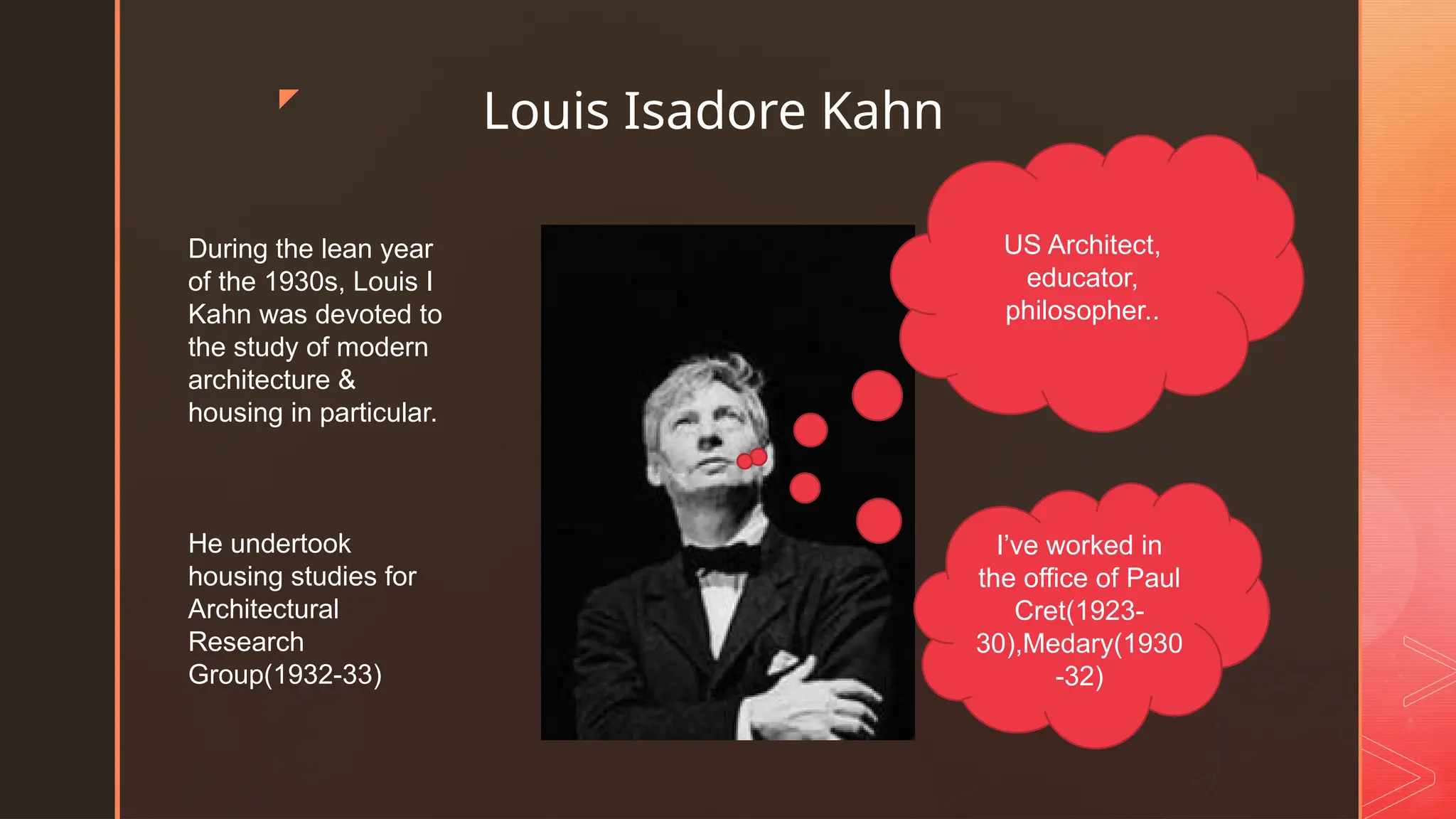
Louis Isadore Kahn
USArchitect,
educator,
philosopher..
I’ve worked in
the office of Paul
Cret(1923-
30),Medary(1930
-32)
During the lean year
of the 1930s, Louis I
Kahn was devoted to
the study of modern
architecture &
housing in particular.
He undertook
housing studies for
Architectural
Research
Group(1932-33)
z
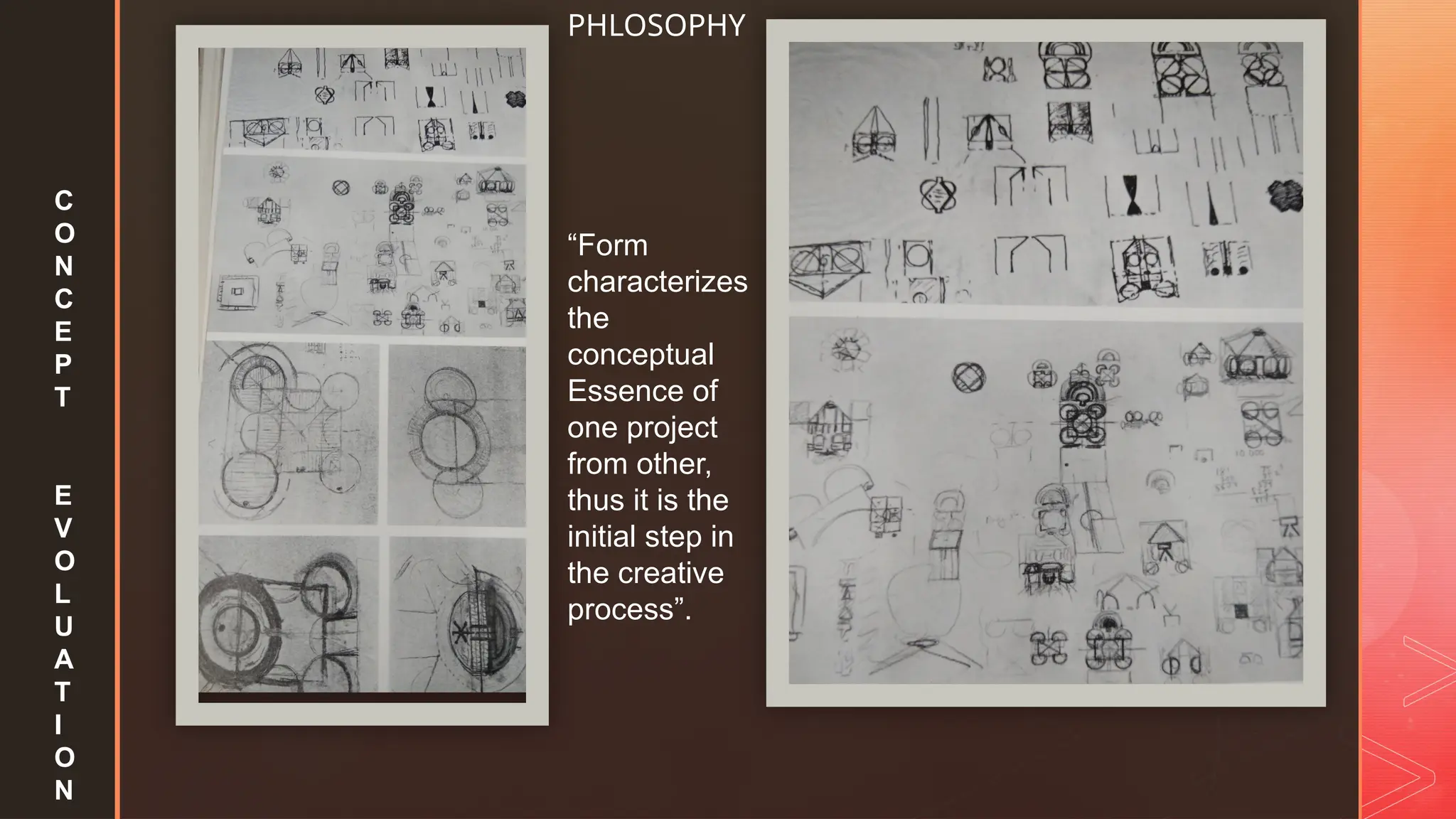
“THE ROOM ISTHE BEGINNING OF ARCHITECTURE”
- LOUIS I. KAHN
KAHN IS OFTEN QUOTED AS FIRST ASKING, “WHAT DOES
THIS BUILDING WANT TO BE?”
7.
z
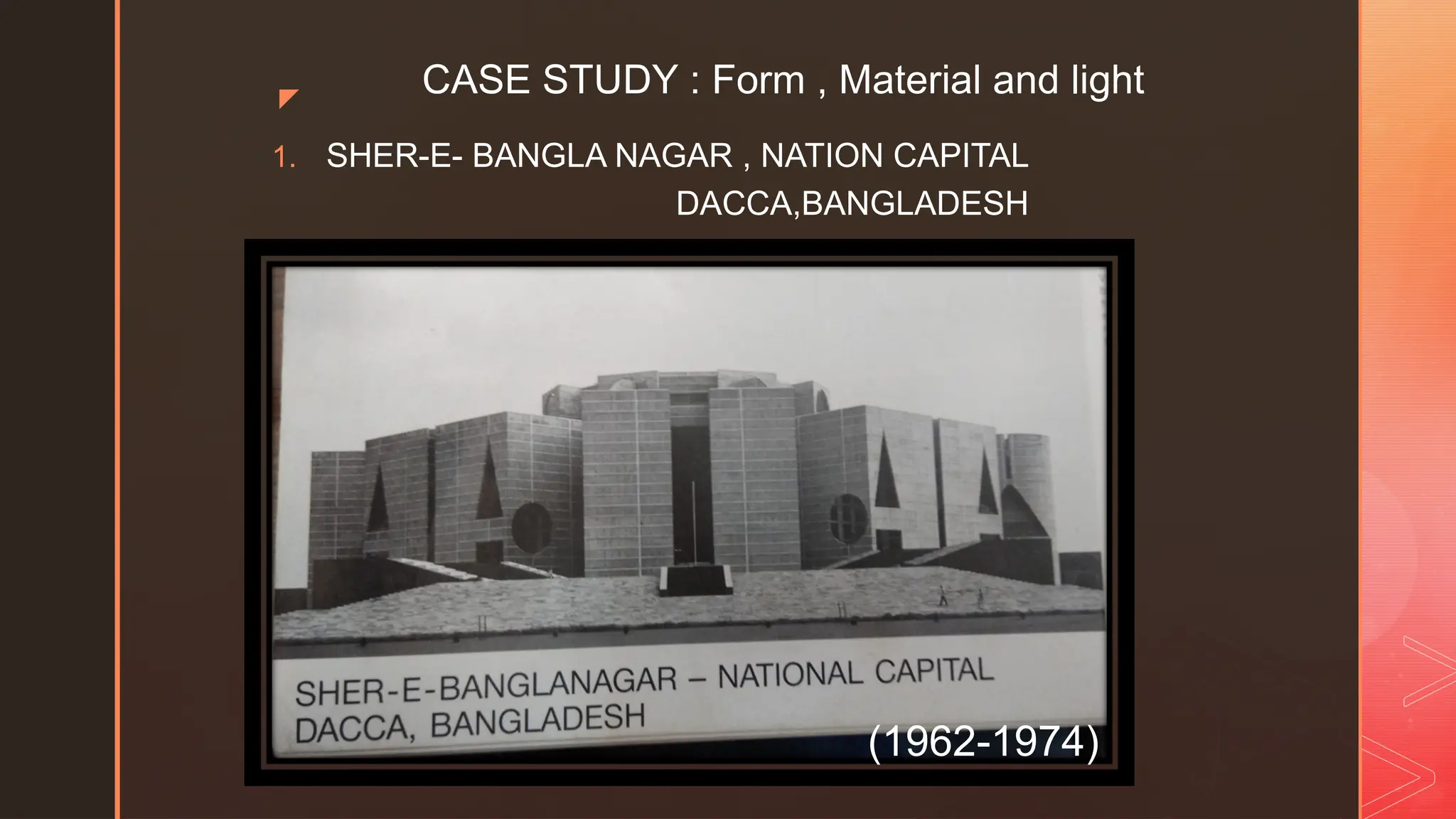
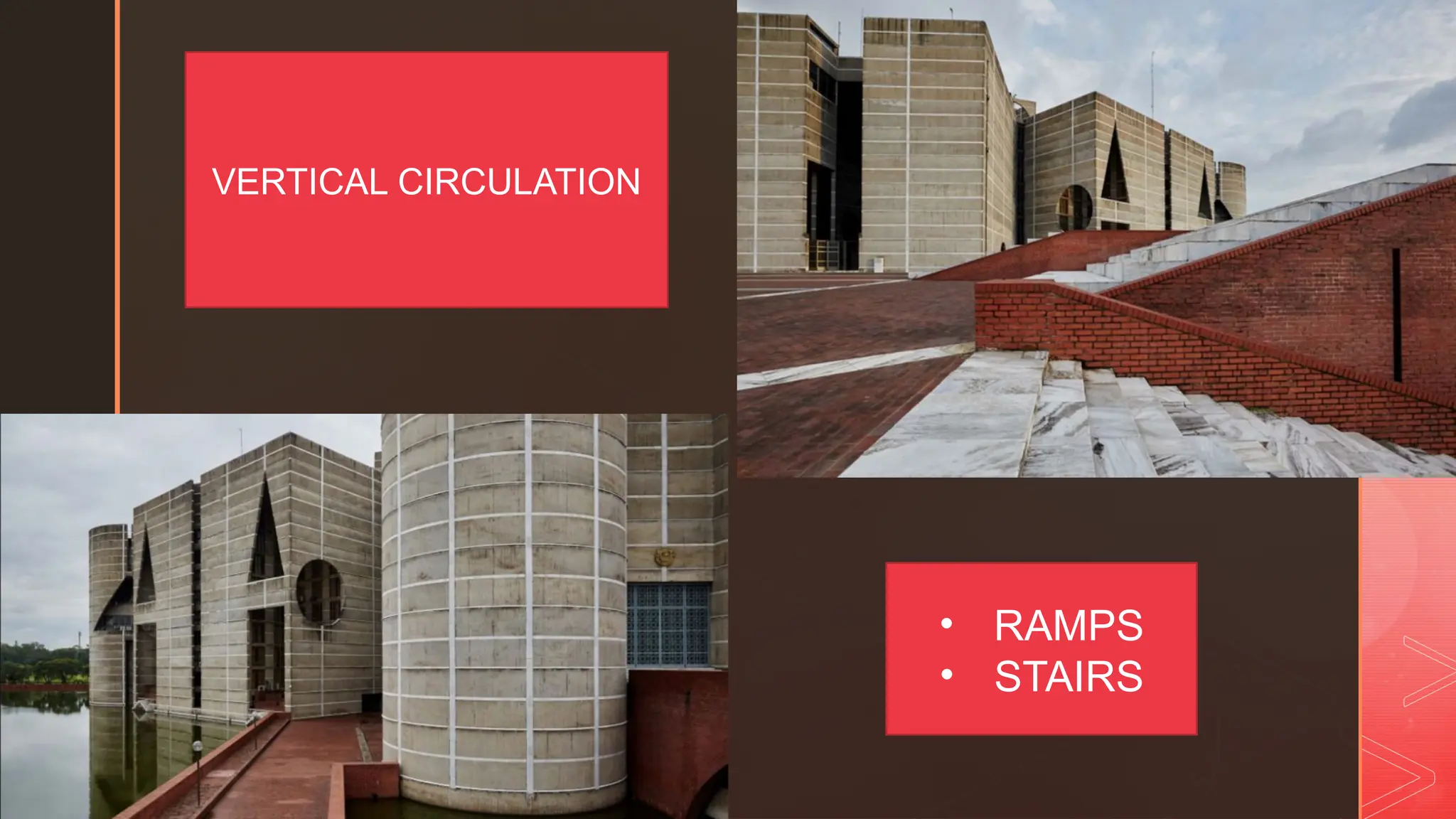
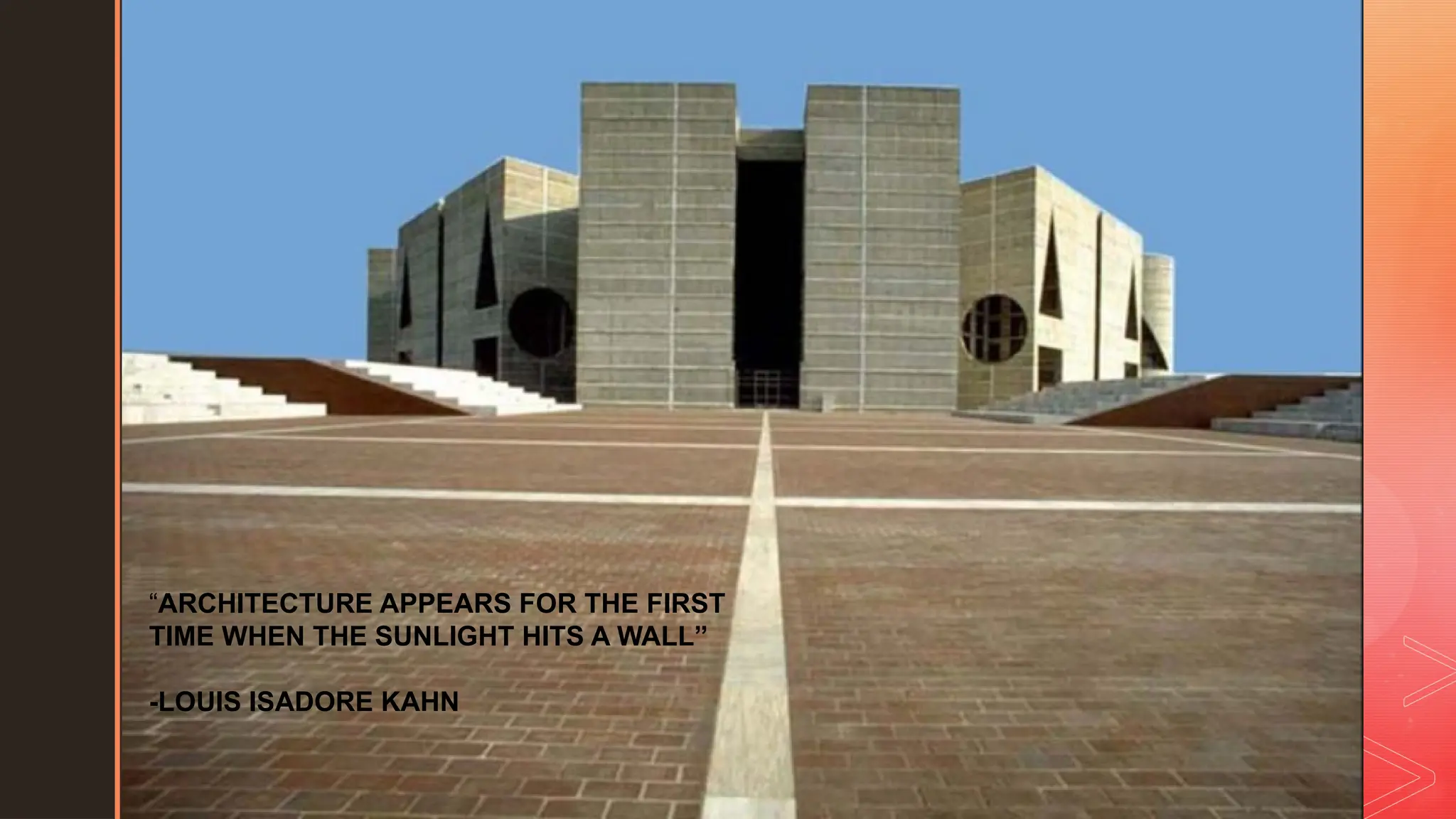
1. SHER-E- BANGLANAGAR , NATION CAPITAL
DACCA,BANGLADESH
CASE STUDY : Form , Material and light
(1962-1974)
8.
z
BRIE
F:
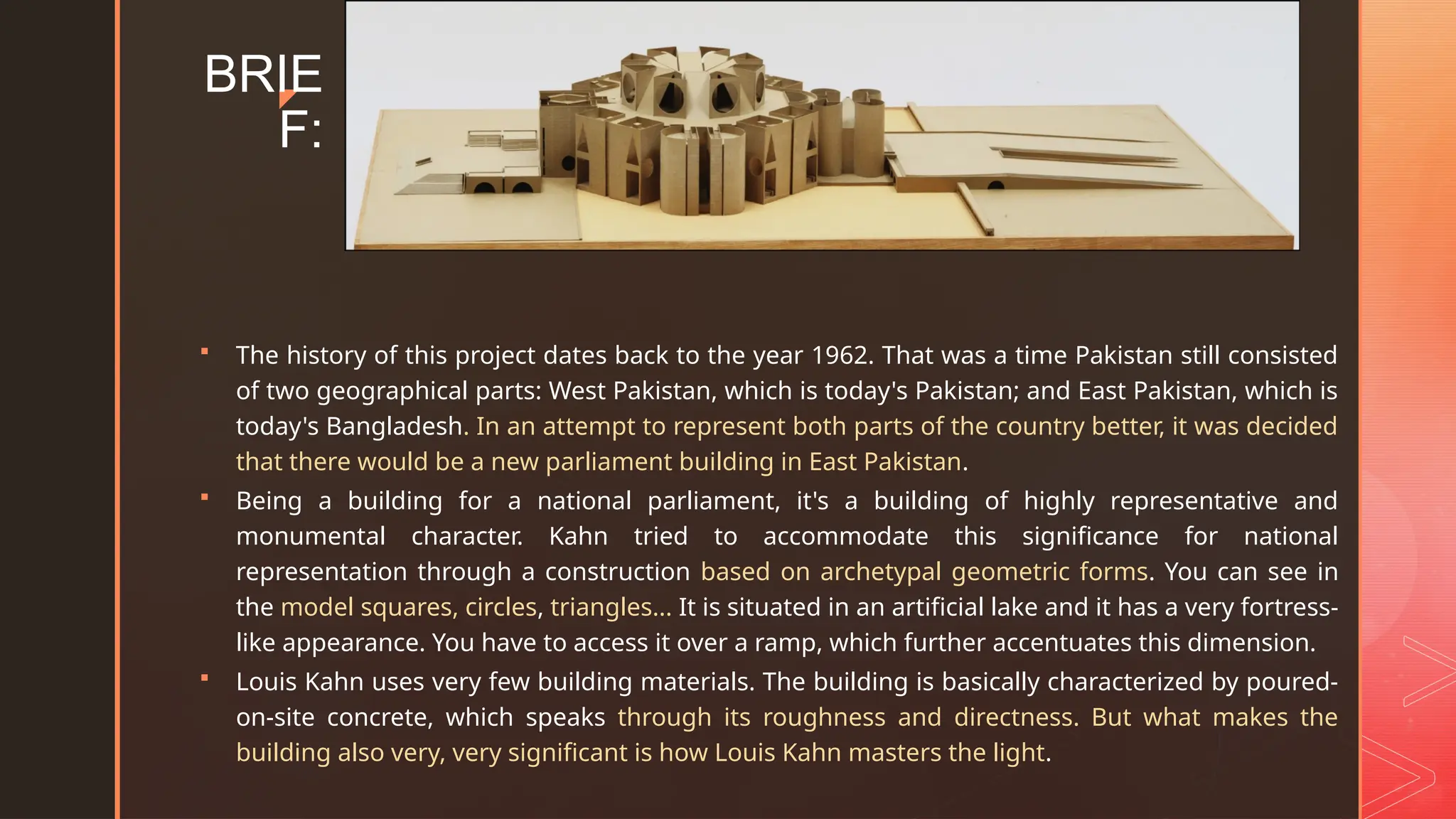
The historyof this project dates back to the year 1962. That was a time Pakistan still consisted
of two geographical parts: West Pakistan, which is today's Pakistan; and East Pakistan, which is
today's Bangladesh. In an attempt to represent both parts of the country better, it was decided
that there would be a new parliament building in East Pakistan.
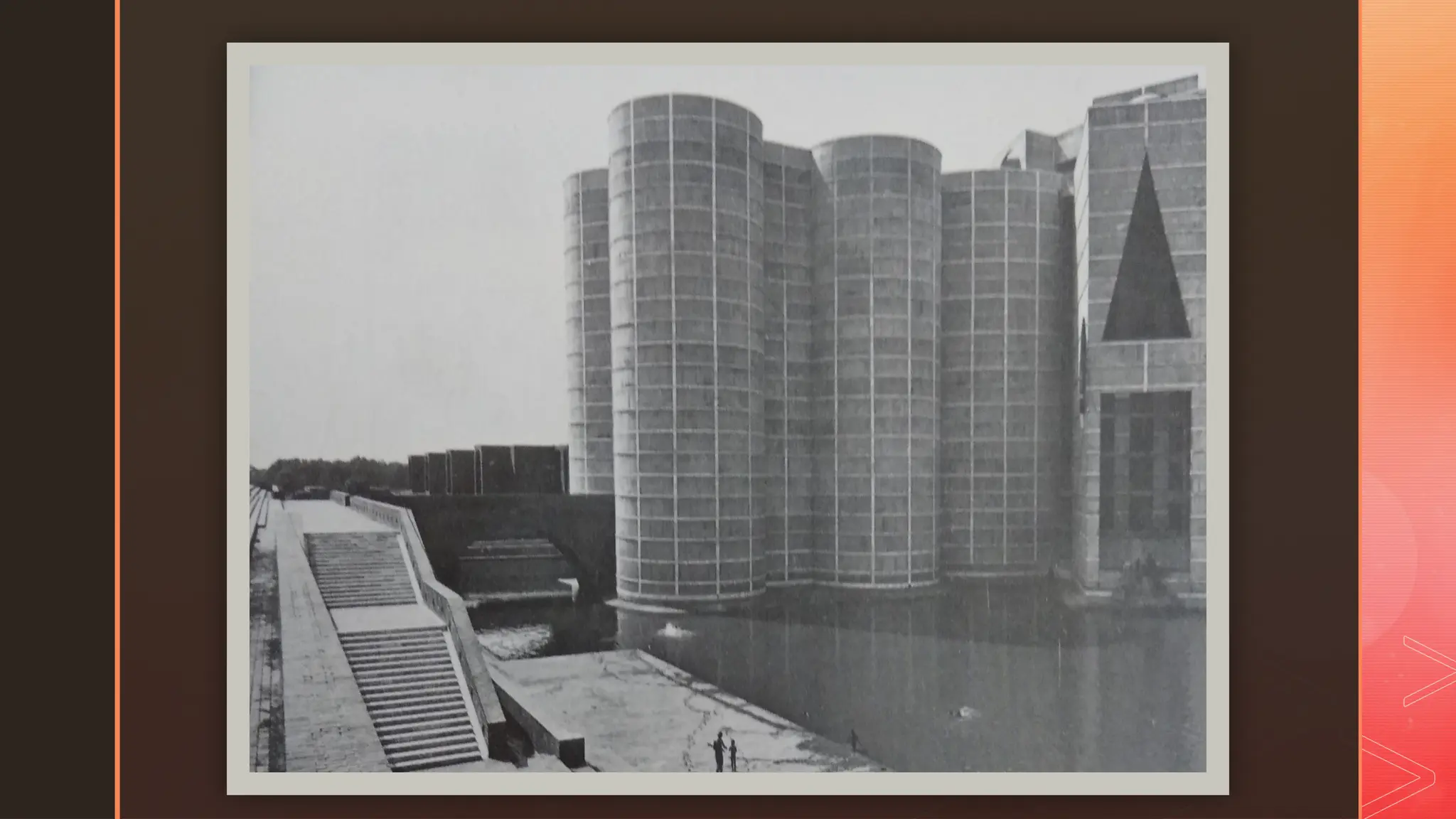
Being a building for a national parliament, it's a building of highly representative and
monumental character. Kahn tried to accommodate this significance for national
representation through a construction based on archetypal geometric forms. You can see in
the model squares, circles, triangles... It is situated in an artificial lake and it has a very fortress-
like appearance. You have to access it over a ramp, which further accentuates this dimension.
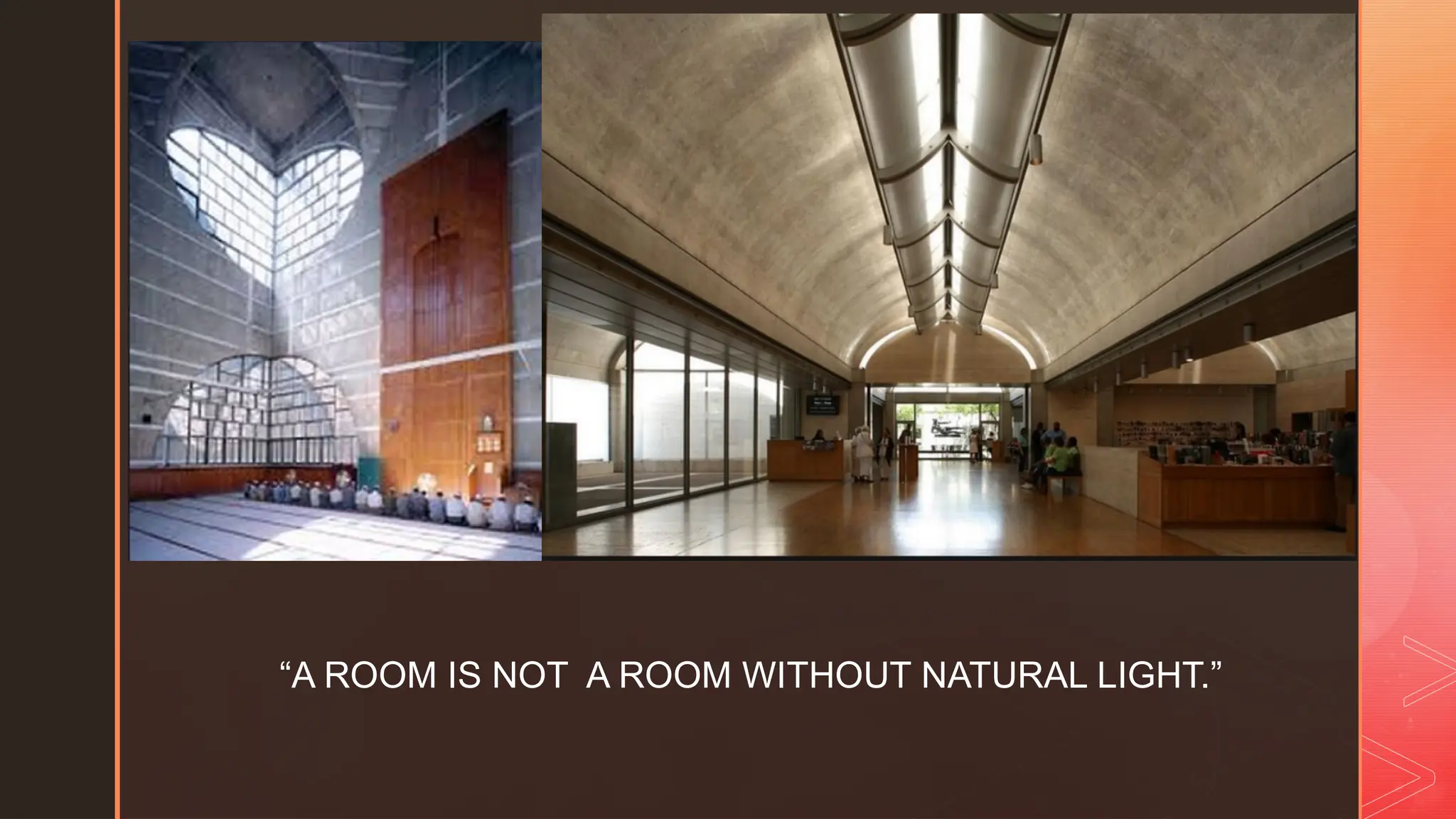
Louis Kahn uses very few building materials. The building is basically characterized by poured-
on-site concrete, which speaks through its roughness and directness. But what makes the
building also very, very significant is how Louis Kahn masters the light.
z
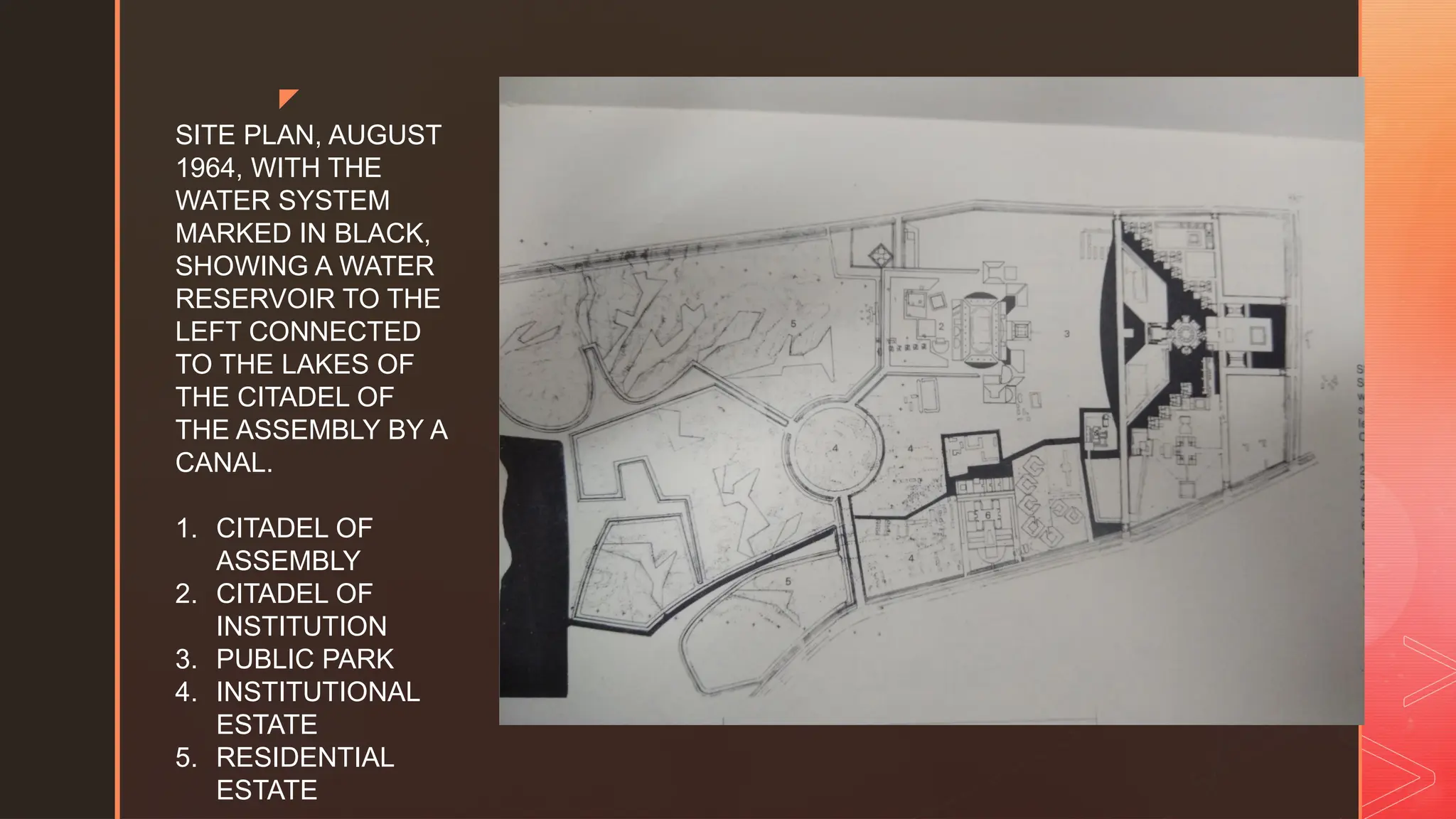
SITE PLAN, AUGUST
1964,WITH THE
WATER SYSTEM
MARKED IN BLACK,
SHOWING A WATER
RESERVOIR TO THE
LEFT CONNECTED
TO THE LAKES OF
THE CITADEL OF
THE ASSEMBLY BY A
CANAL.
1. CITADEL OF
ASSEMBLY
2. CITADEL OF
INSTITUTION
3. PUBLIC PARK
4. INSTITUTIONAL
ESTATE
5. RESIDENTIAL
ESTATE
12.
z
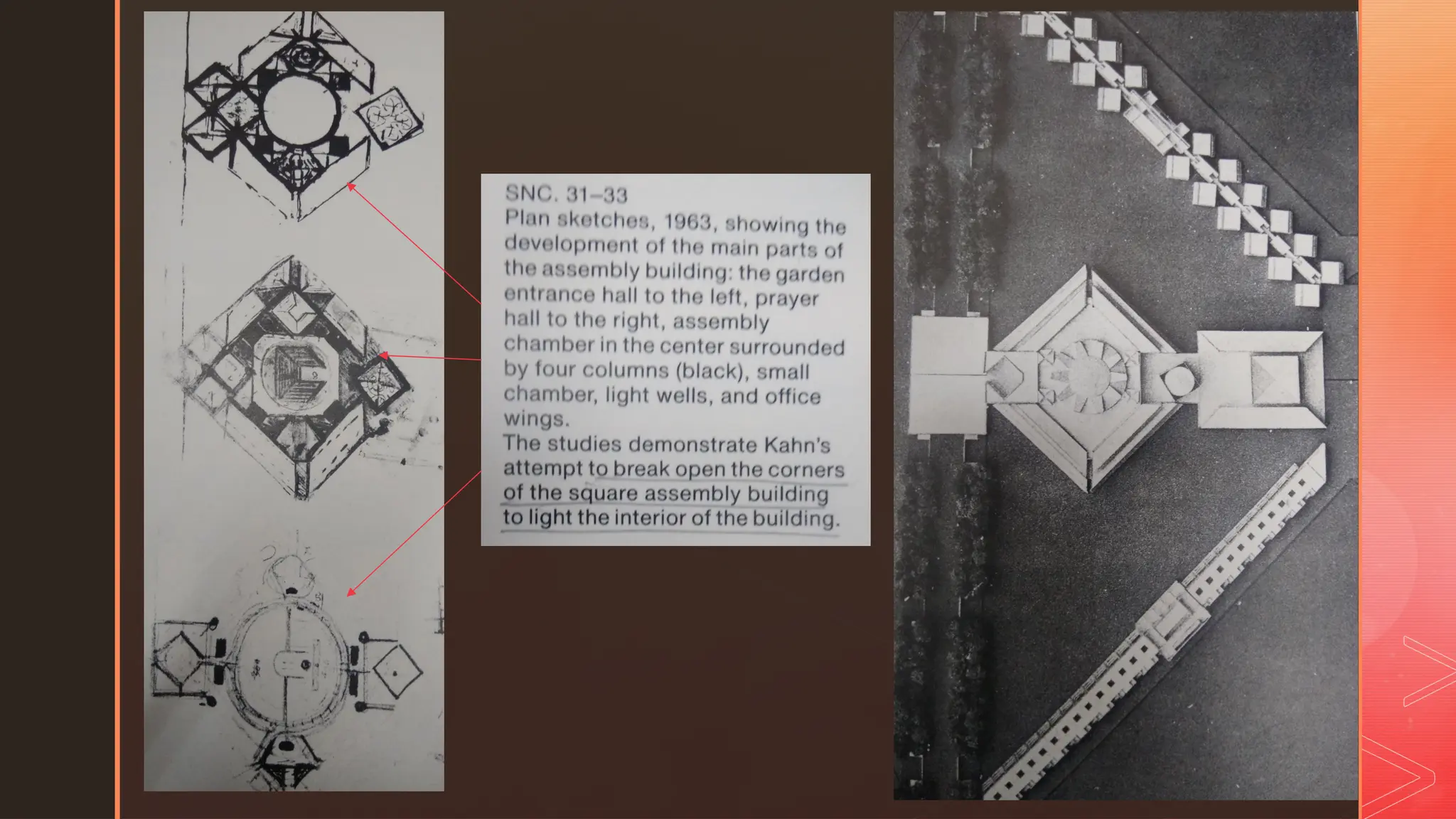
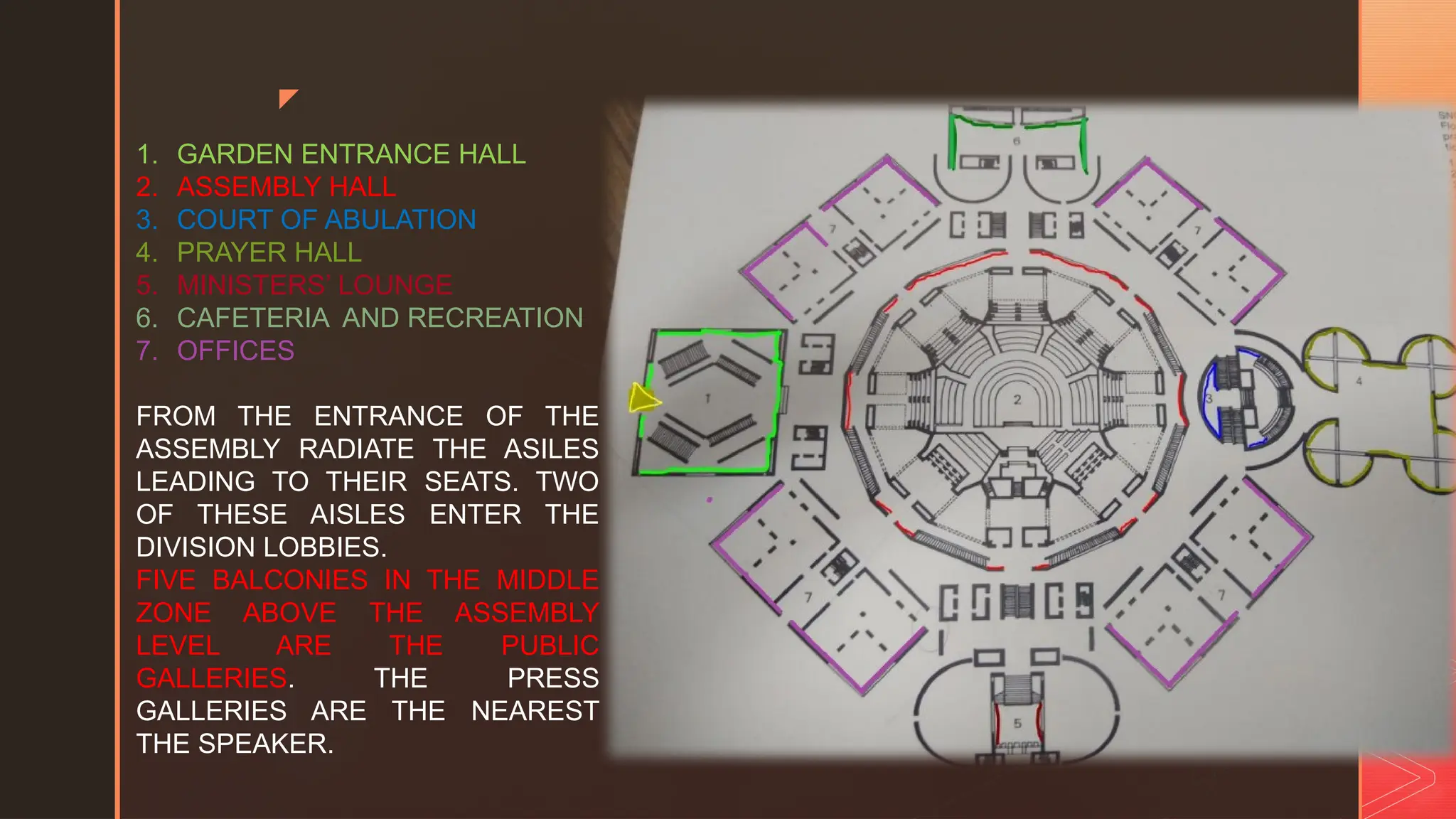
1. GARDEN ENTRANCEHALL
2. ASSEMBLY HALL
3. COURT OF ABULATION
4. PRAYER HALL
5. MINISTERS’ LOUNGE
6. CAFETERIA AND RECREATION
7. OFFICES
FROM THE ENTRANCE OF THE
ASSEMBLY RADIATE THE ASILES
LEADING TO THEIR SEATS. TWO
OF THESE AISLES ENTER THE
DIVISION LOBBIES.
FIVE BALCONIES IN THE MIDDLE
ZONE ABOVE THE ASSEMBLY
LEVEL ARE THE PUBLIC
GALLERIES. THE PRESS
GALLERIES ARE THE NEAREST
THE SPEAKER.
13.
z
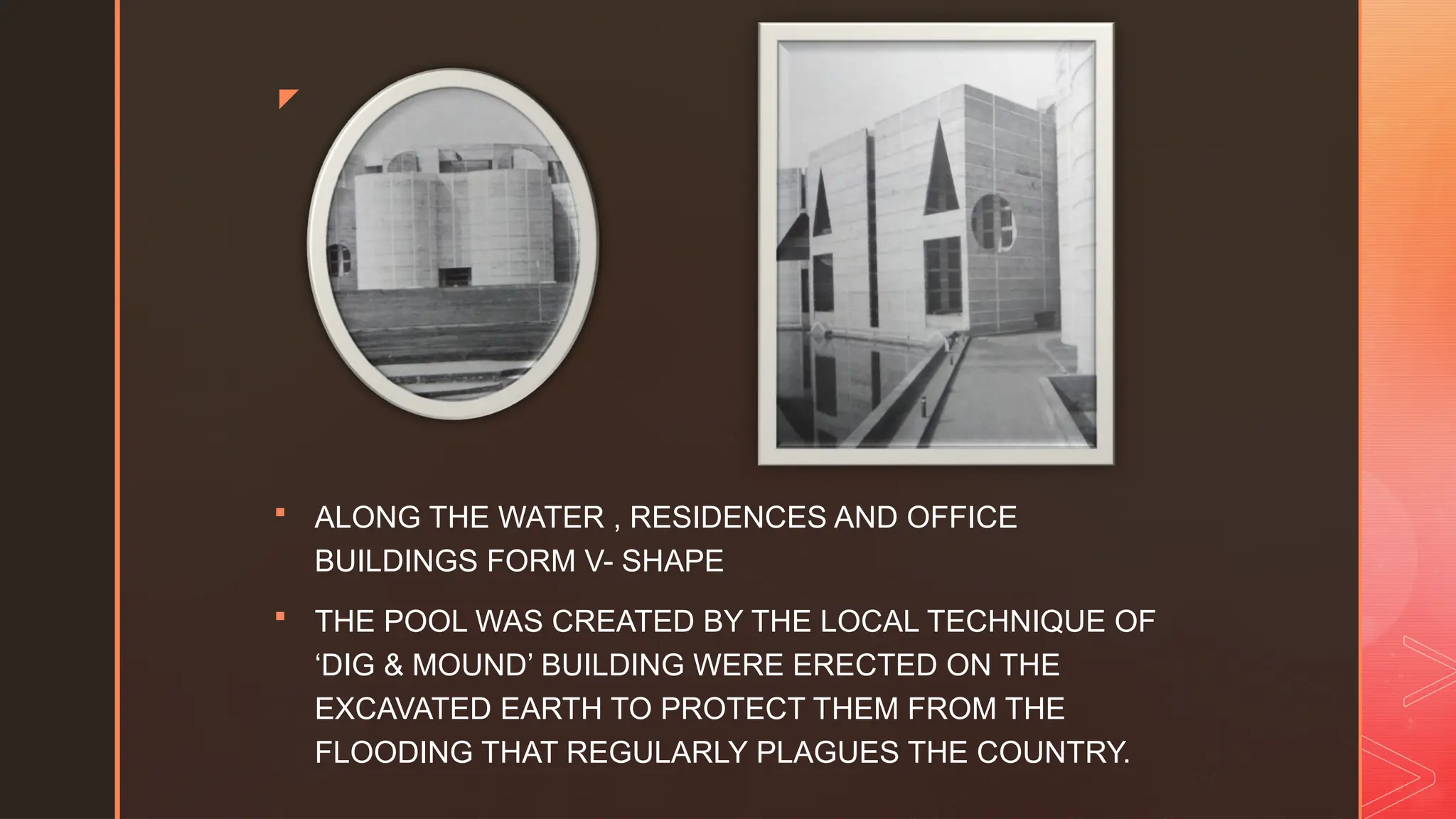
ALONG THEWATER , RESIDENCES AND OFFICE
BUILDINGS FORM V- SHAPE
THE POOL WAS CREATED BY THE LOCAL TECHNIQUE OF
‘DIG & MOUND’ BUILDING WERE ERECTED ON THE
EXCAVATED EARTH TO PROTECT THEM FROM THE
FLOODING THAT REGULARLY PLAGUES THE COUNTRY.
z
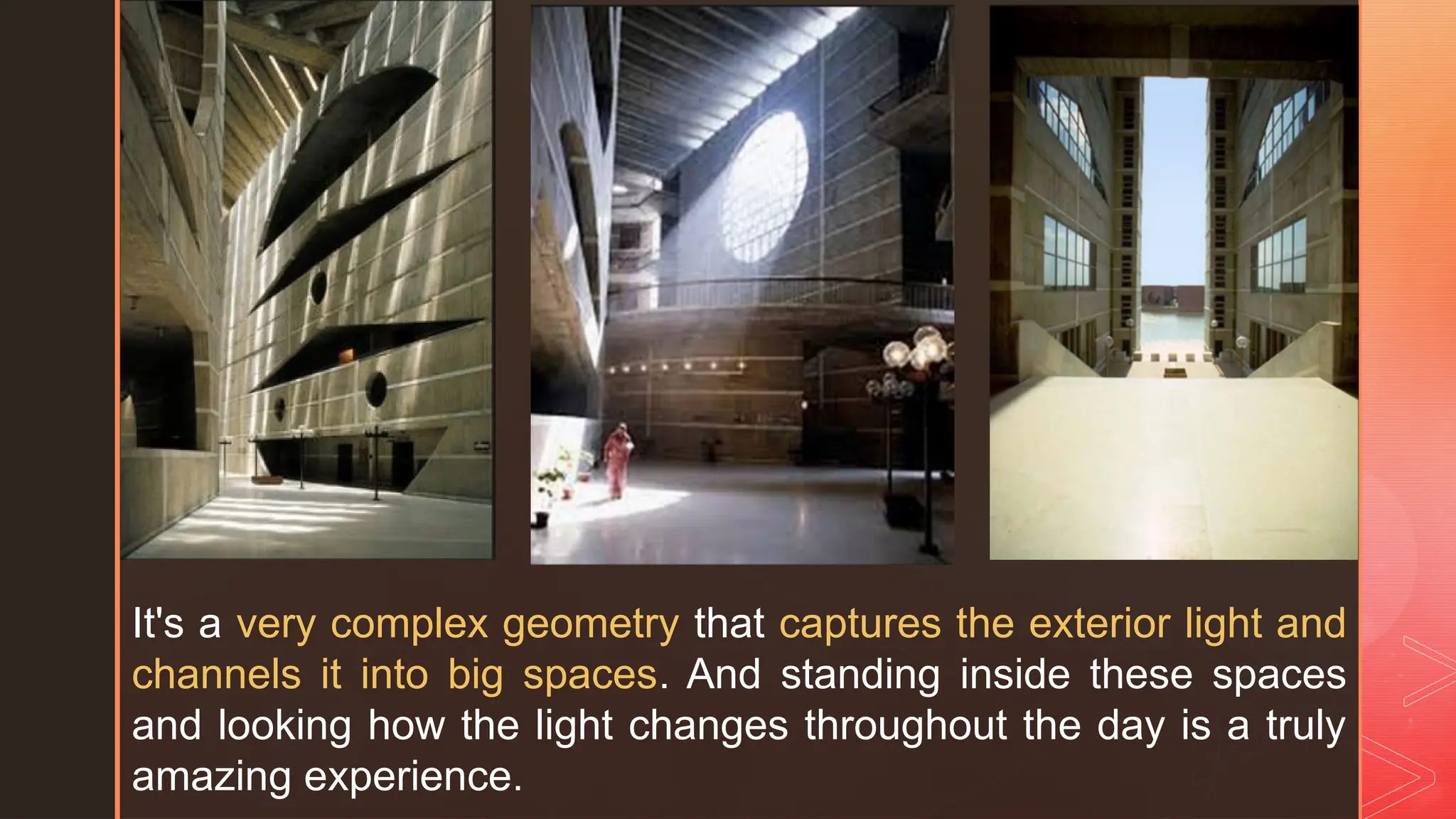
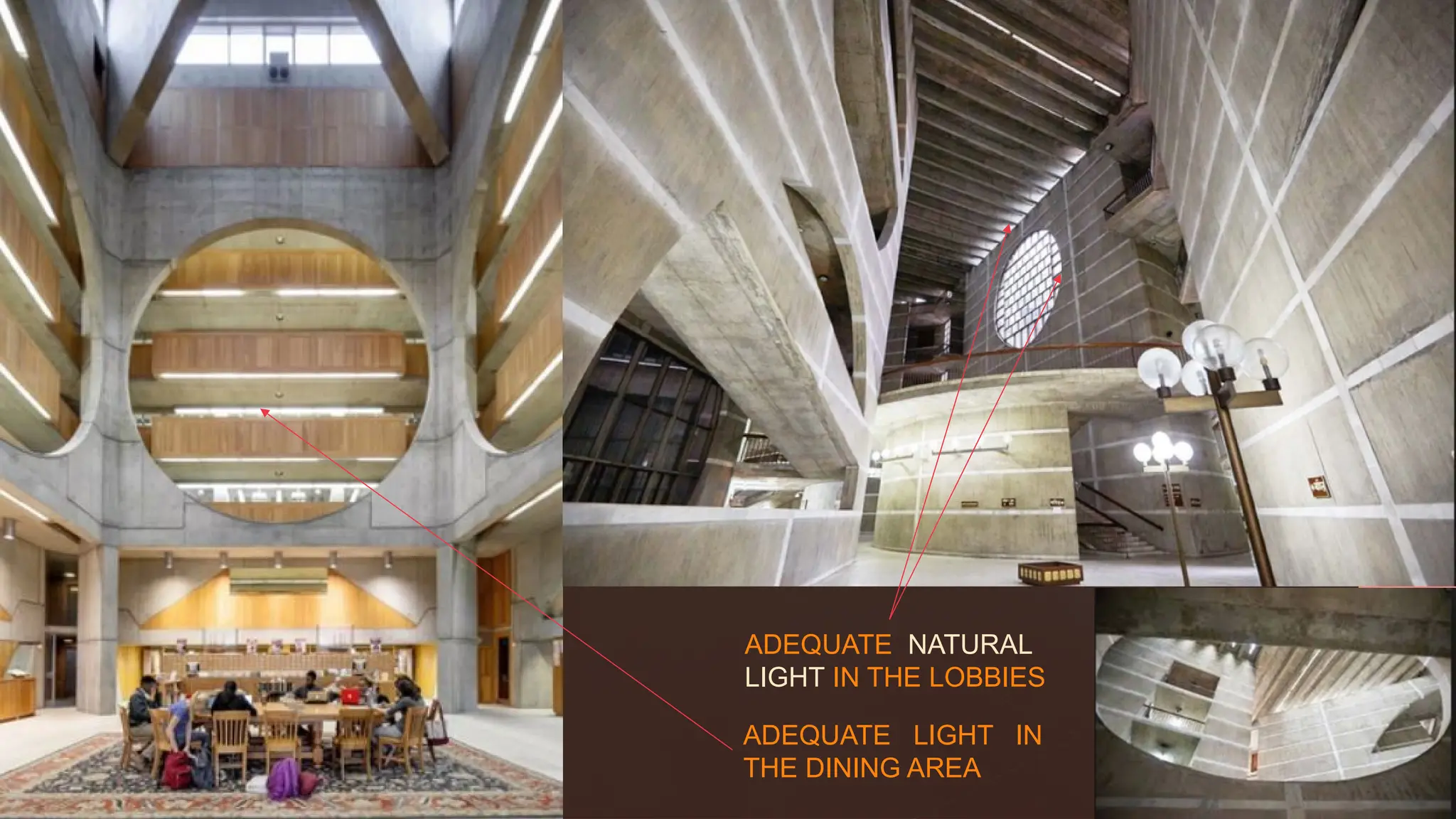
It's a verycomplex geometry that captures the exterior light and
channels it into big spaces. And standing inside these spaces
and looking how the light changes throughout the day is a truly
amazing experience.
z
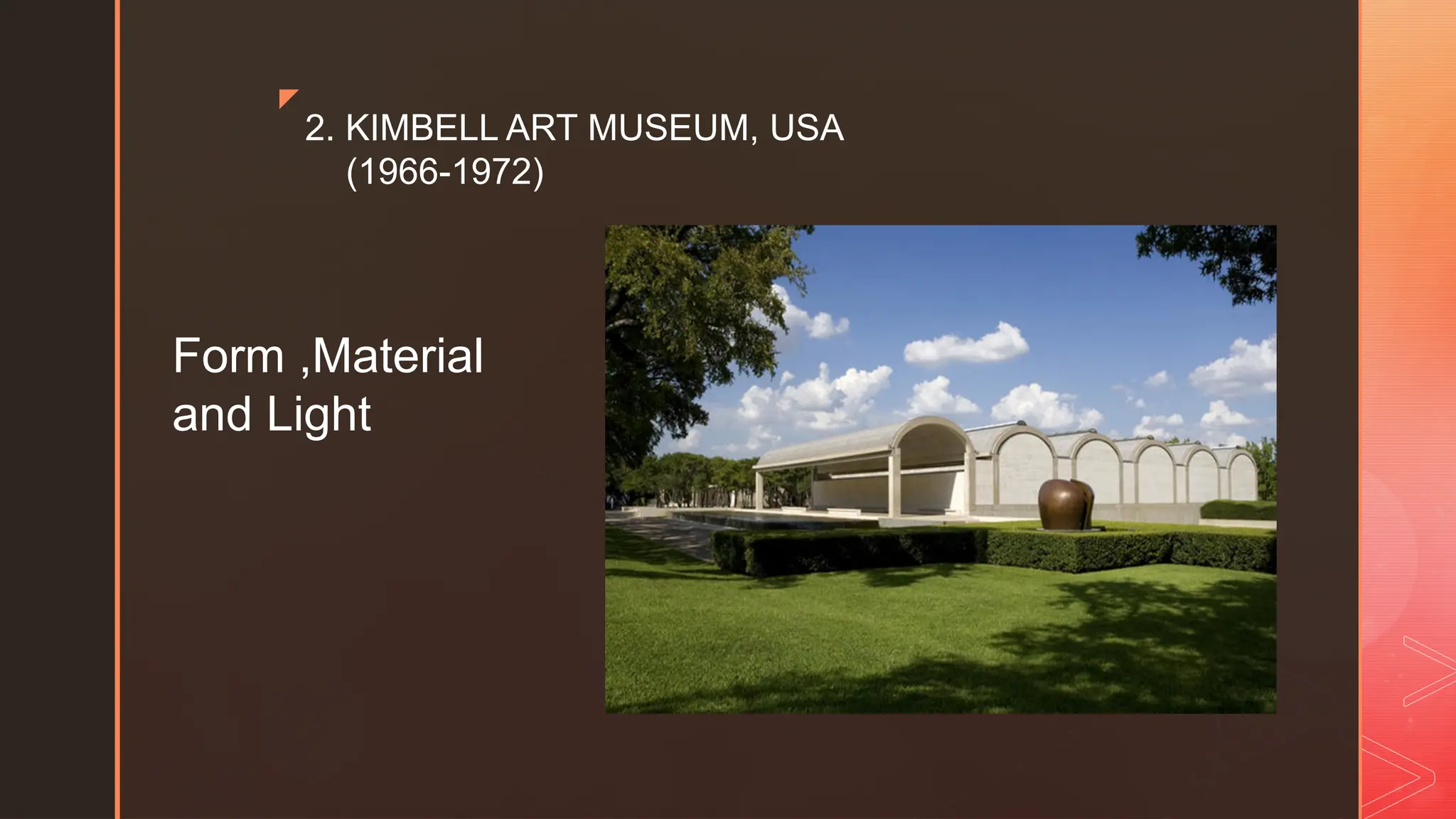
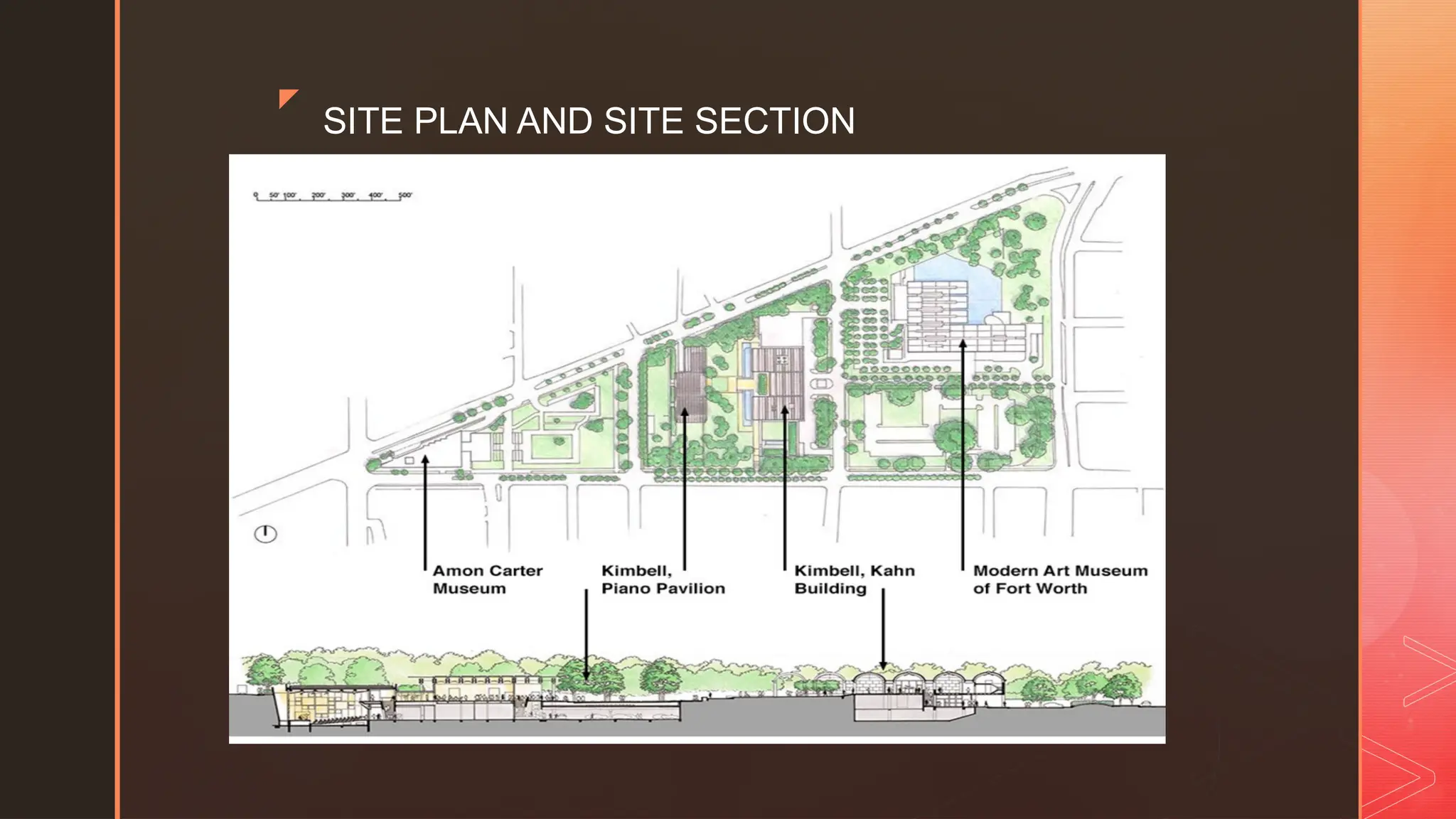
2. KIMBELL ARTMUSEUM, USA
(1966-1972)
Form ,Material
and Light
22.
z
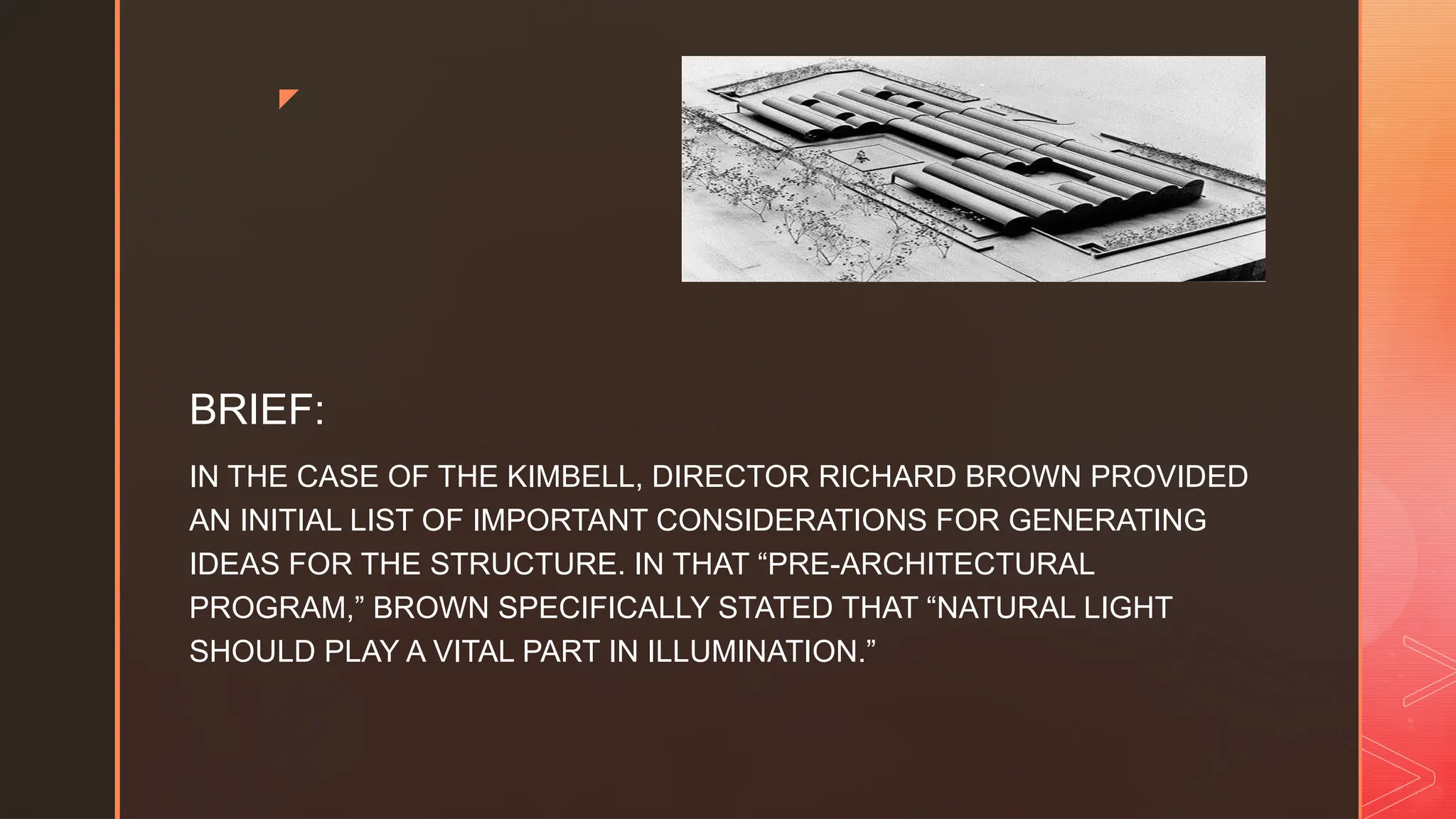
BRIEF:
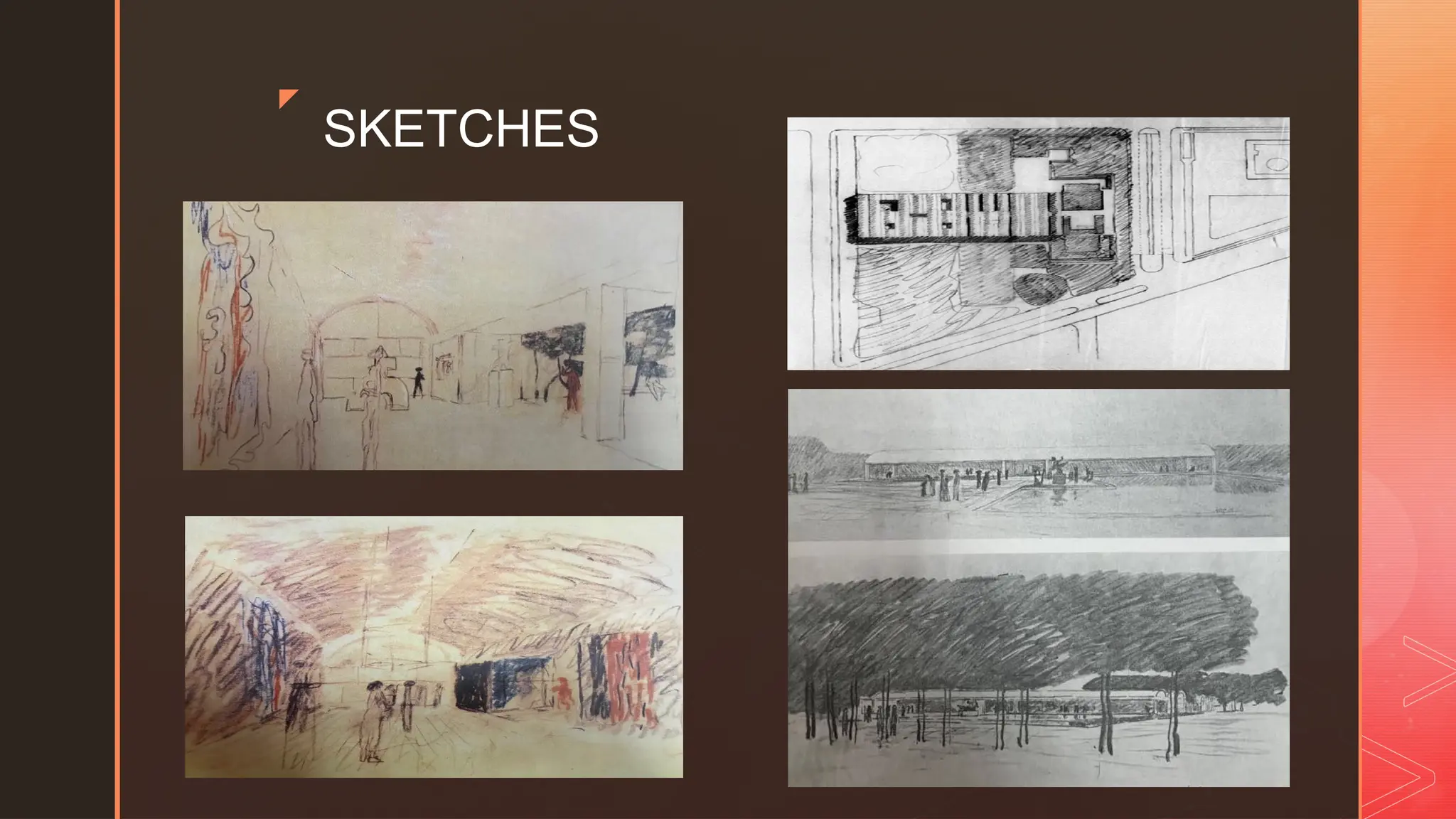
IN THE CASEOF THE KIMBELL, DIRECTOR RICHARD BROWN PROVIDED
AN INITIAL LIST OF IMPORTANT CONSIDERATIONS FOR GENERATING
IDEAS FOR THE STRUCTURE. IN THAT “PRE-ARCHITECTURAL
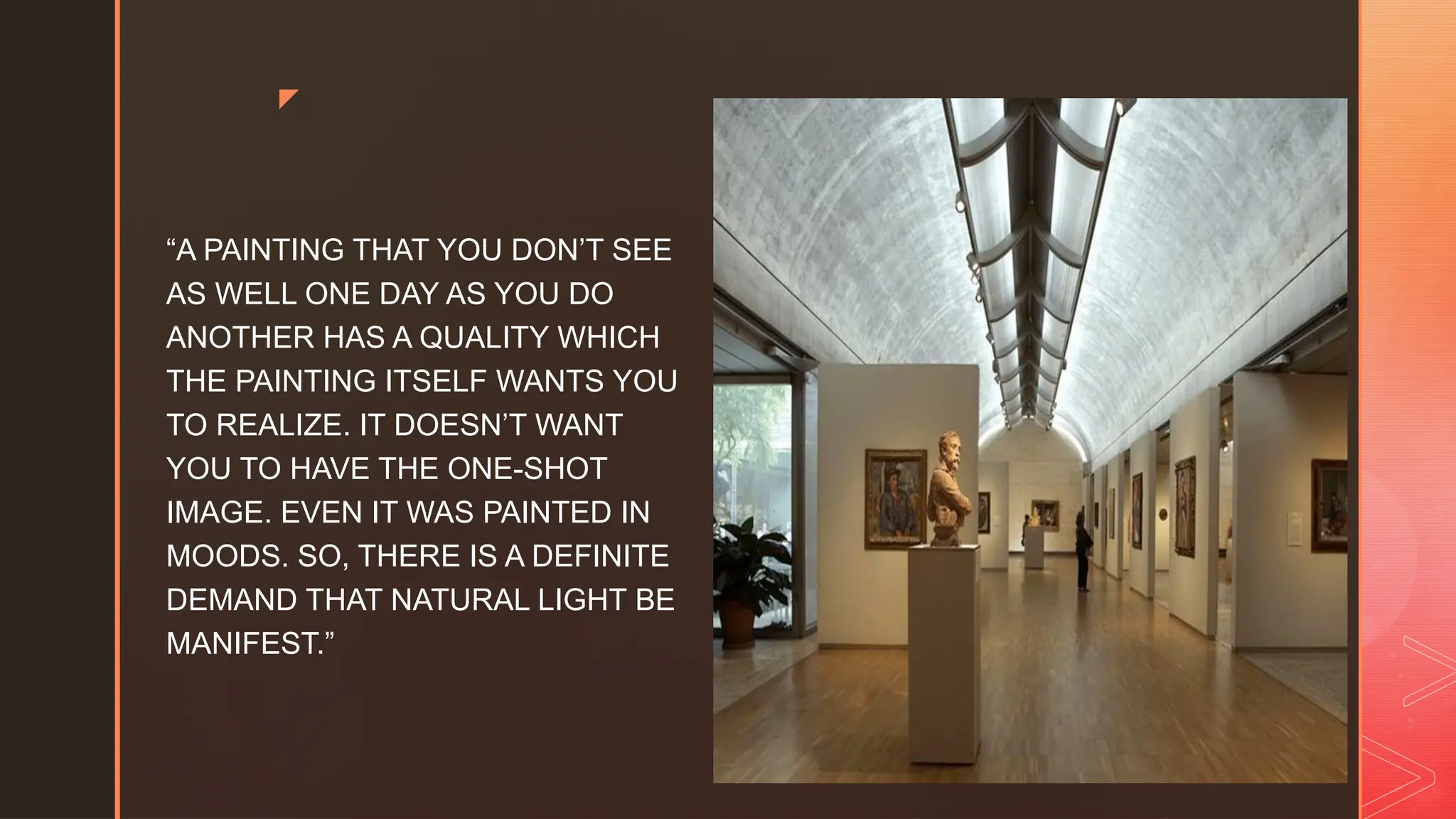
PROGRAM,” BROWN SPECIFICALLY STATED THAT “NATURAL LIGHT
SHOULD PLAY A VITAL PART IN ILLUMINATION.”
23.
z
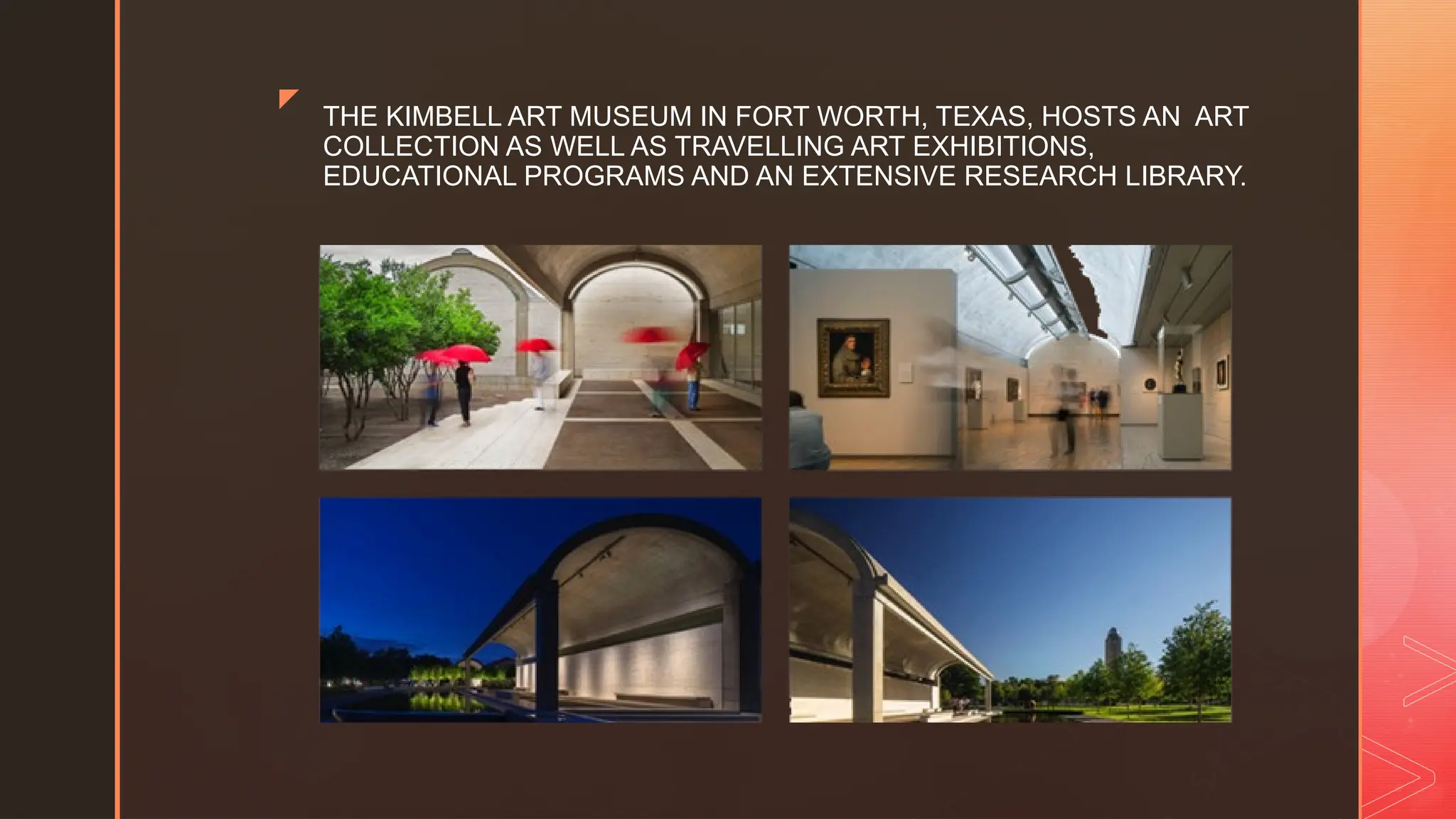
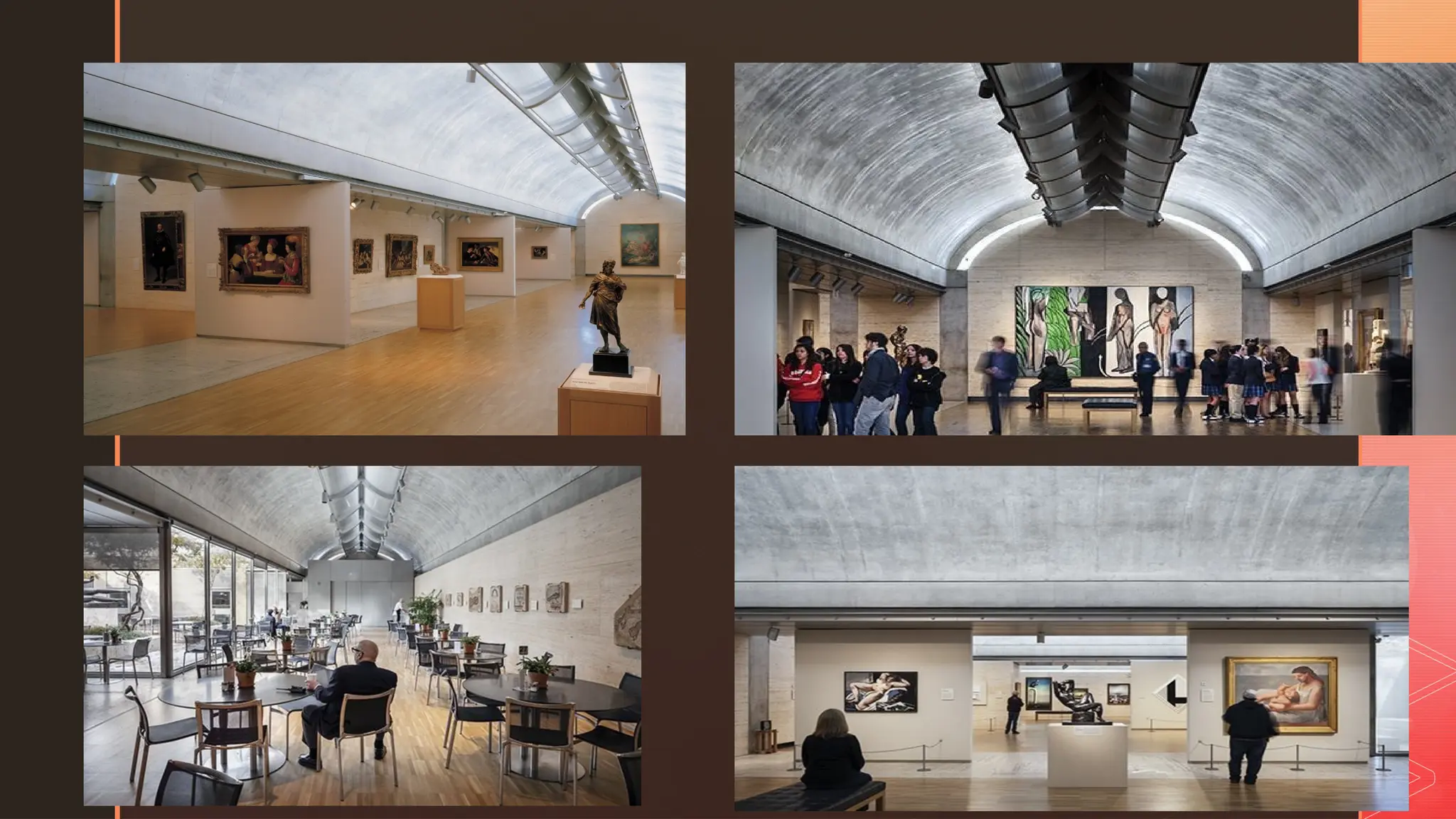
THE KIMBELL ARTMUSEUM IN FORT WORTH, TEXAS, HOSTS AN ART
COLLECTION AS WELL AS TRAVELLING ART EXHIBITIONS,
EDUCATIONAL PROGRAMS AND AN EXTENSIVE RESEARCH LIBRARY.
z
“A PAINTING THATYOU DON’T SEE
AS WELL ONE DAY AS YOU DO
ANOTHER HAS A QUALITY WHICH
THE PAINTING ITSELF WANTS YOU
TO REALIZE. IT DOESN’T WANT
YOU TO HAVE THE ONE-SHOT
IMAGE. EVEN IT WAS PAINTED IN
MOODS. SO, THERE IS A DEFINITE
DEMAND THAT NATURAL LIGHT BE
MANIFEST.”
28.
z
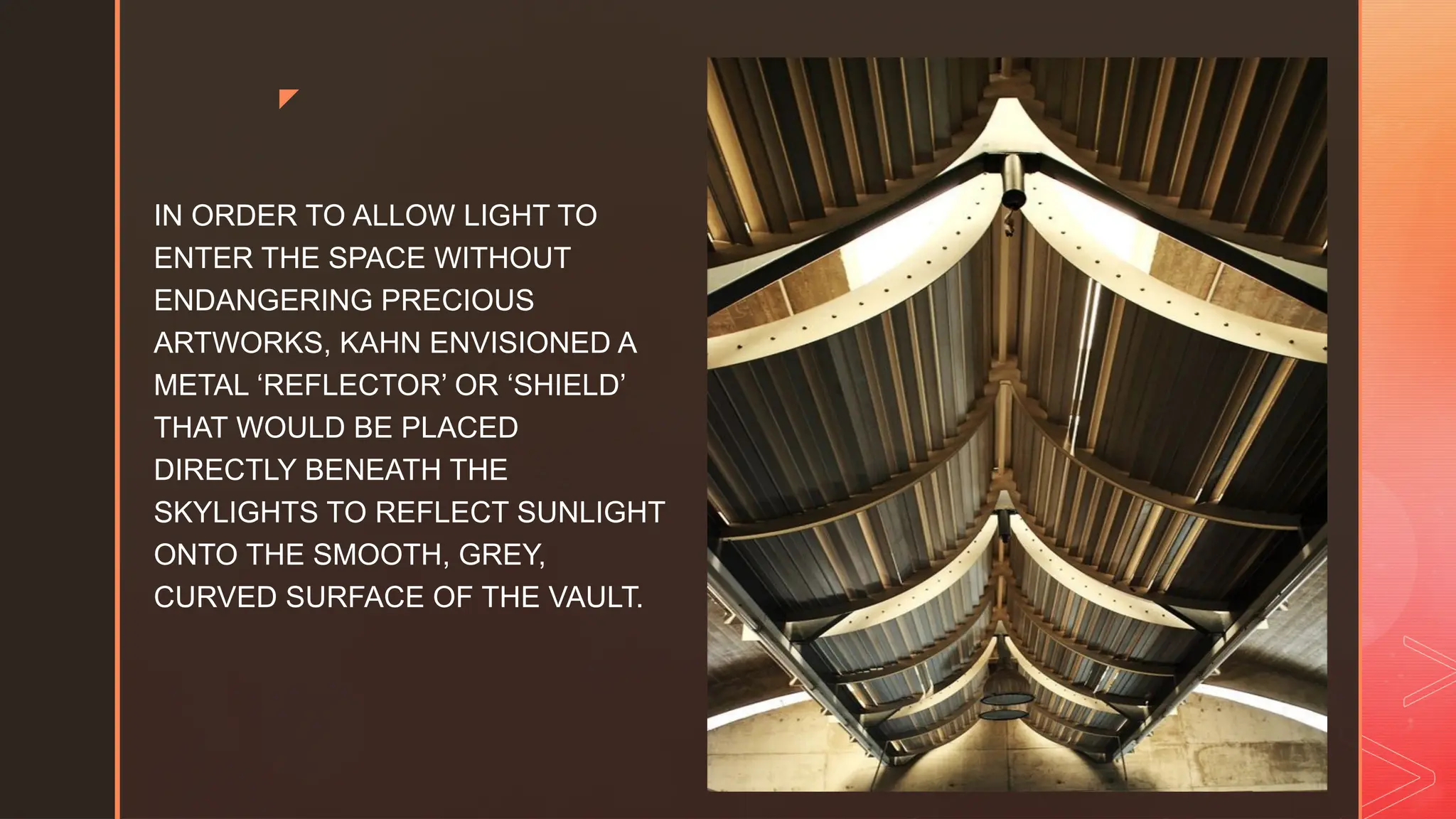
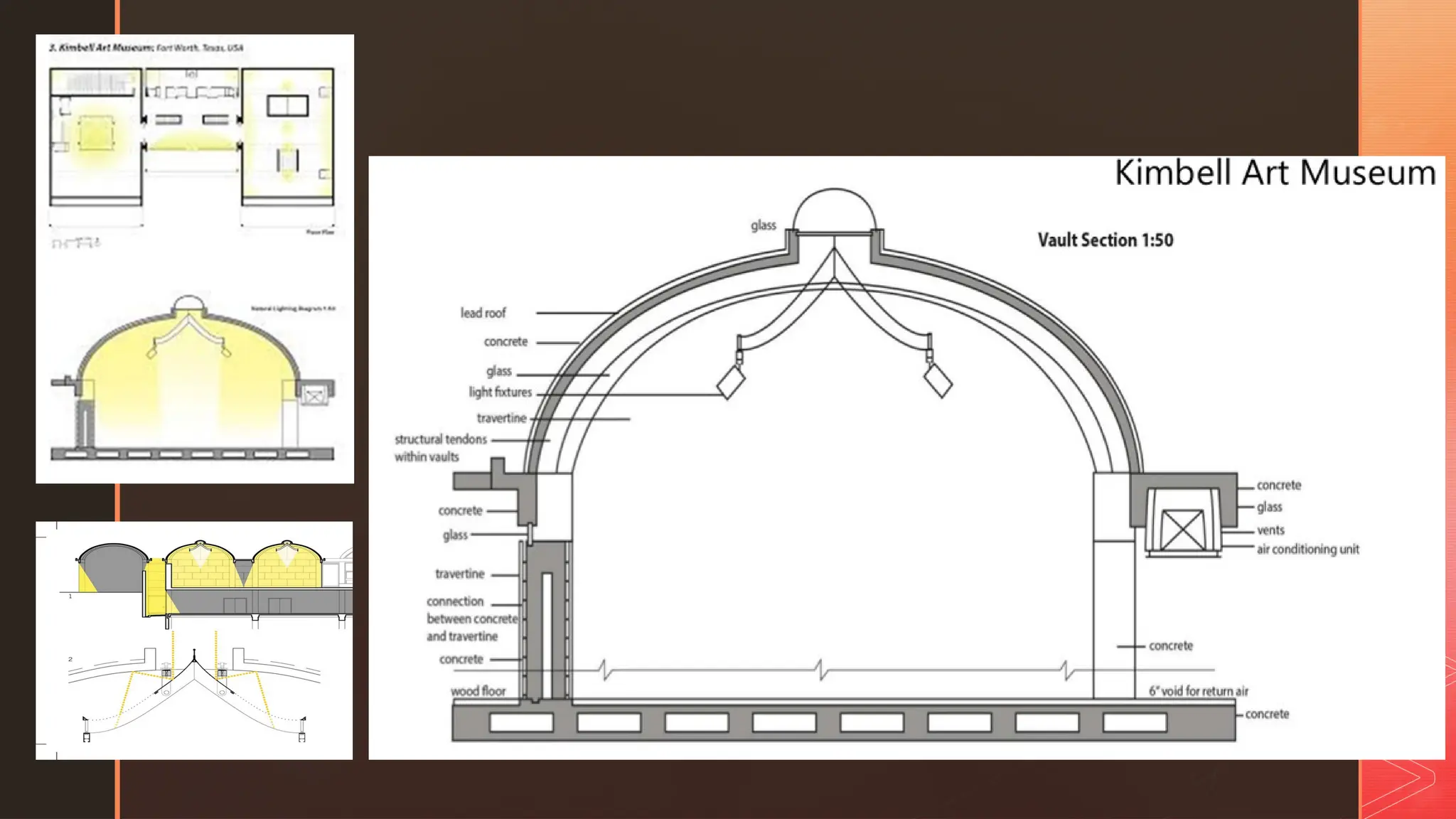
IN ORDER TOALLOW LIGHT TO
ENTER THE SPACE WITHOUT
ENDANGERING PRECIOUS
ARTWORKS, KAHN ENVISIONED A
METAL ‘REFLECTOR’ OR ‘SHIELD’
THAT WOULD BE PLACED
DIRECTLY BENEATH THE
SKYLIGHTS TO REFLECT SUNLIGHT
ONTO THE SMOOTH, GREY,
CURVED SURFACE OF THE VAULT.
29.
z
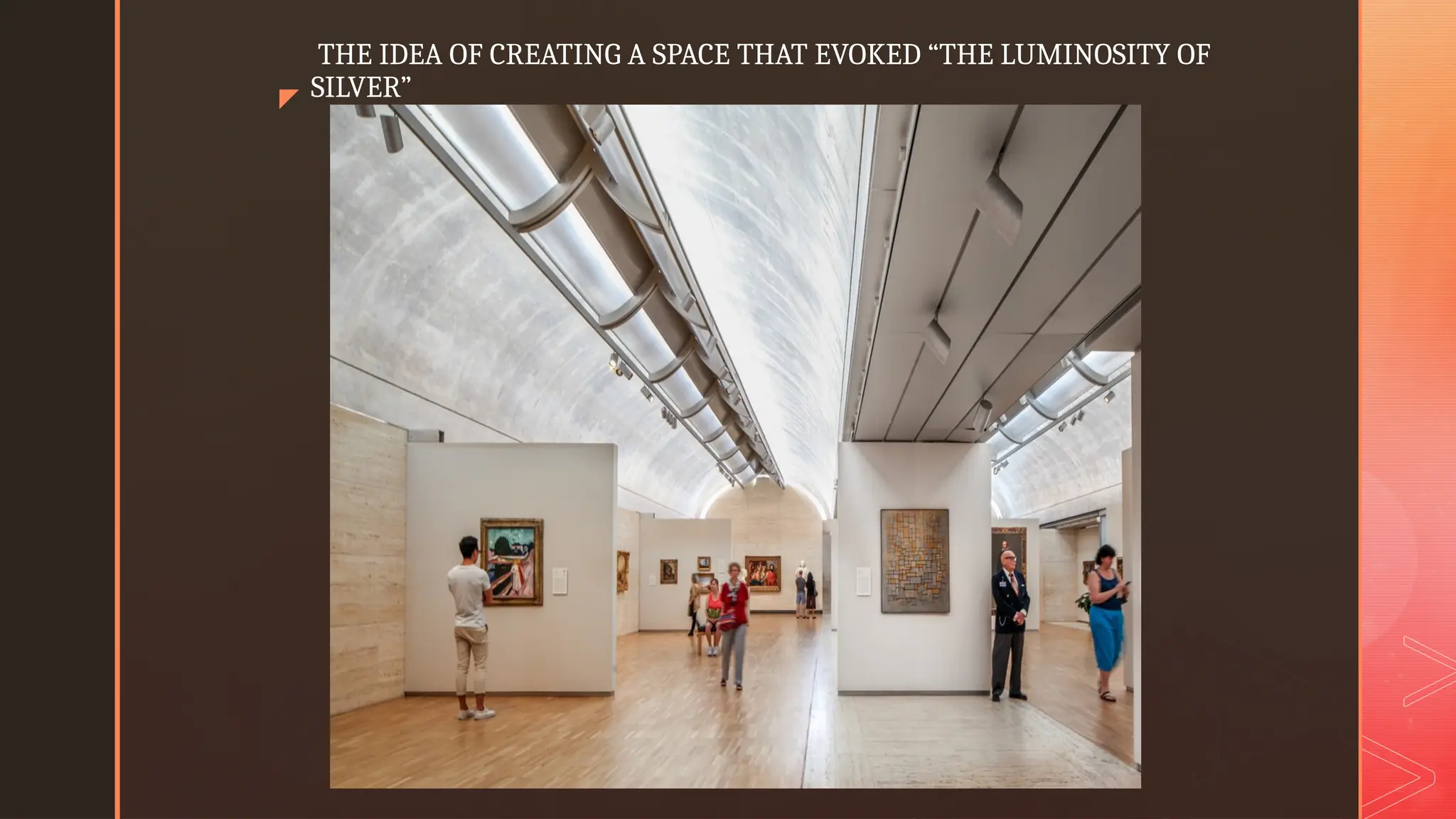
THE IDEA OFCREATING A SPACE THAT EVOKED “THE LUMINOSITY OF
SILVER”
30.
z
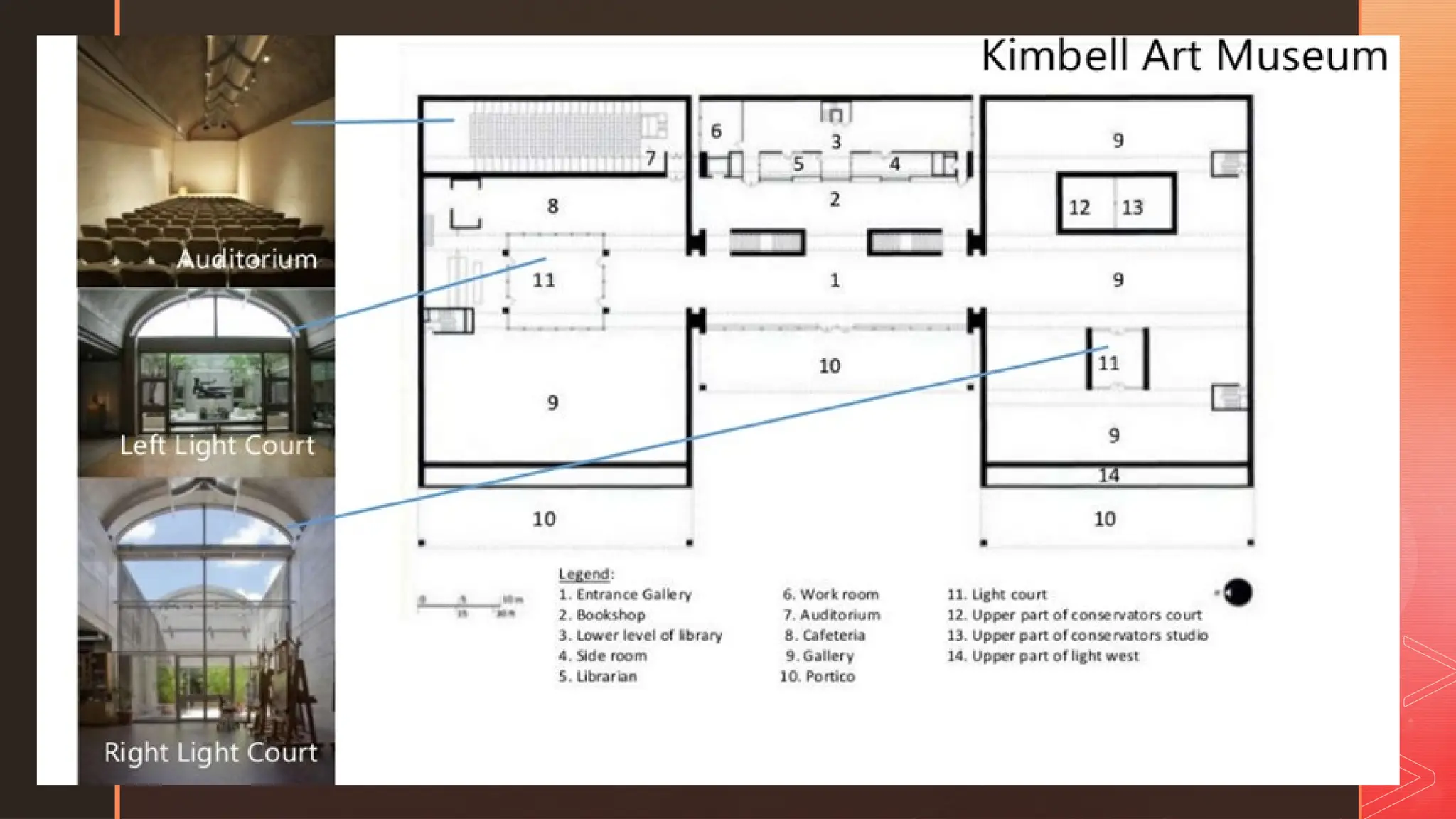
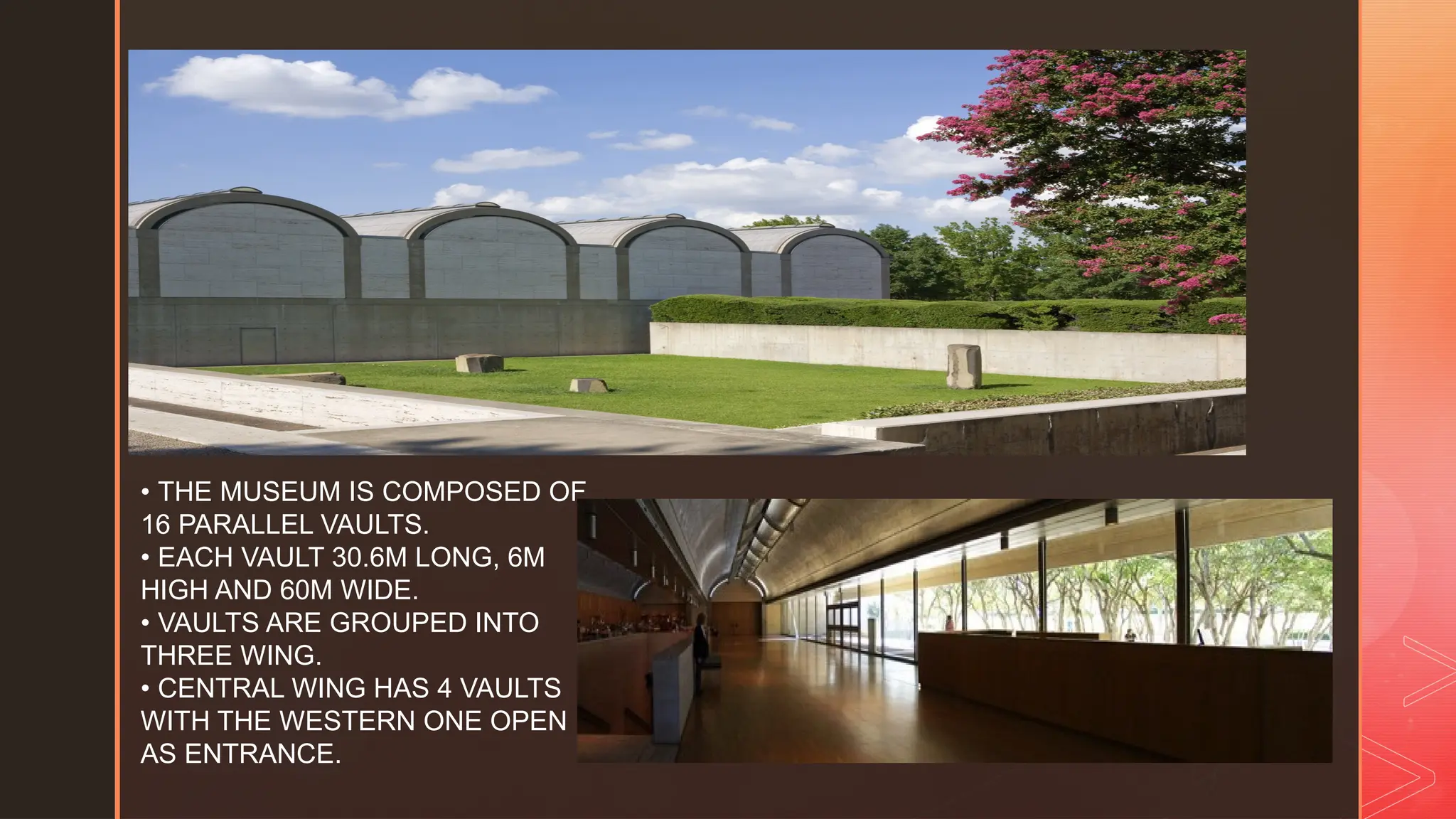
• THE MUSEUMIS COMPOSED OF
16 PARALLEL VAULTS.
• EACH VAULT 30.6M LONG, 6M
HIGH AND 60M WIDE.
• VAULTS ARE GROUPED INTO
THREE WING.
• CENTRAL WING HAS 4 VAULTS
WITH THE WESTERN ONE OPEN
AS ENTRANCE.
31.
z
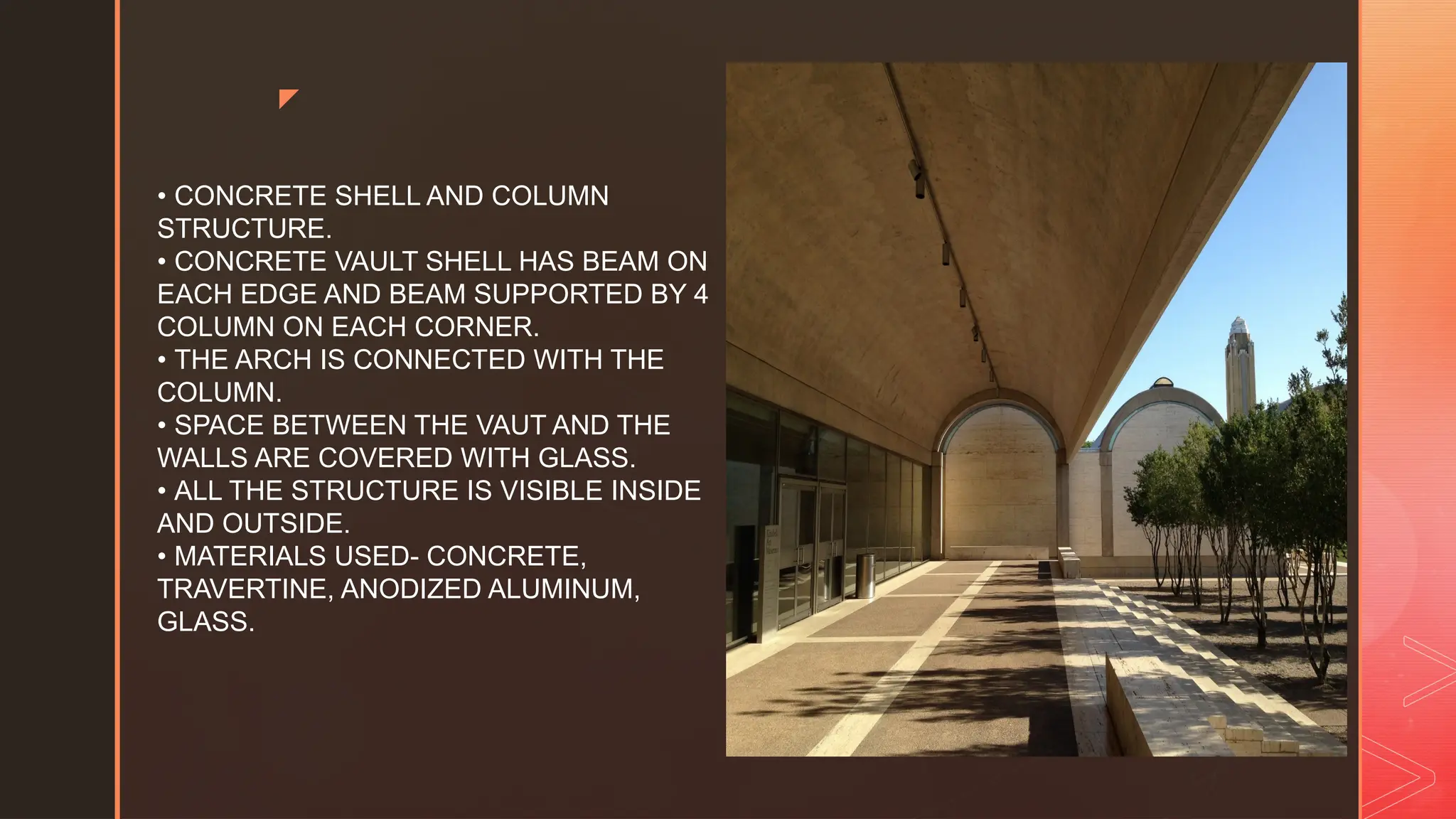
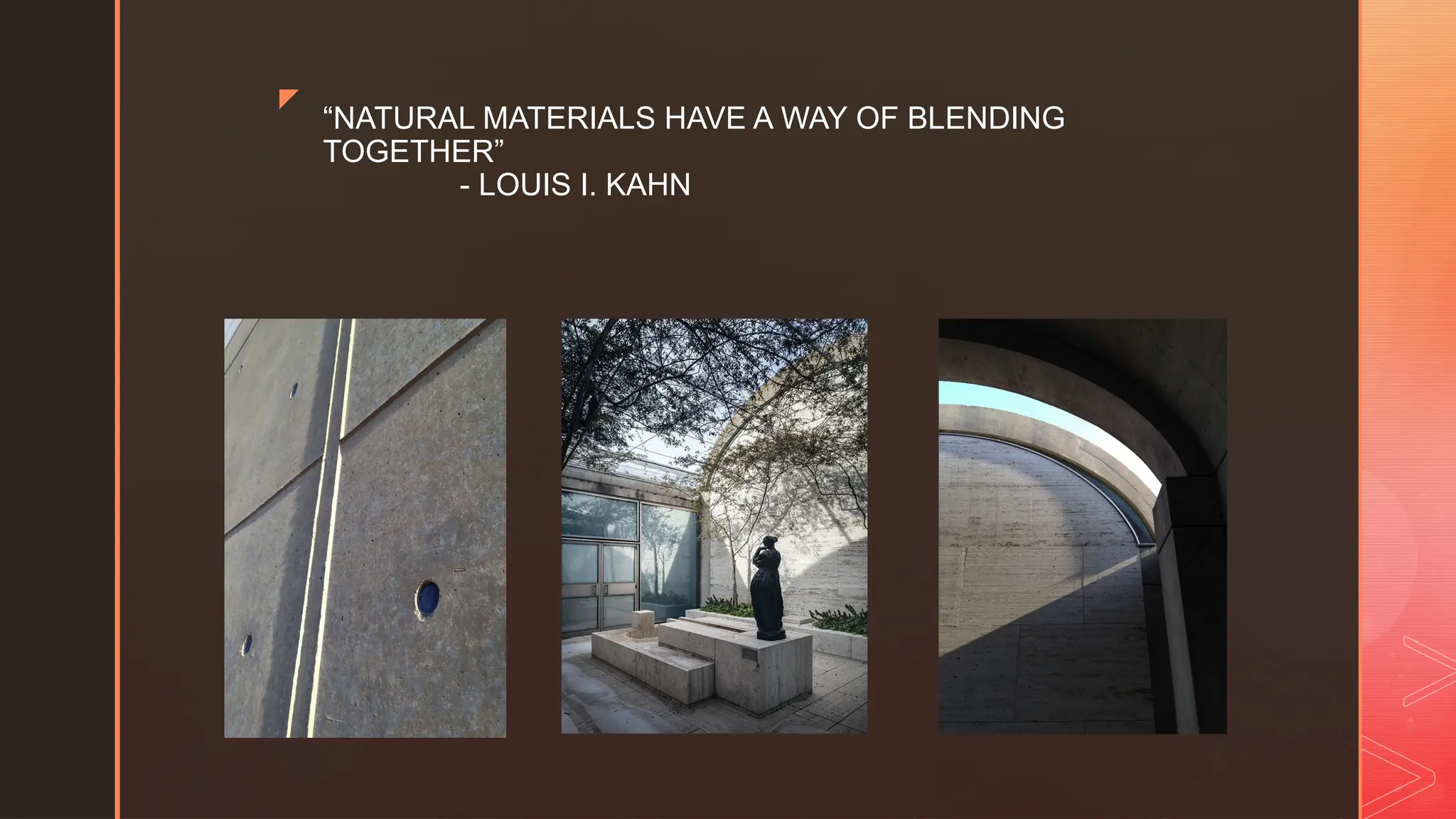
• CONCRETE SHELLAND COLUMN
STRUCTURE.
• CONCRETE VAULT SHELL HAS BEAM ON
EACH EDGE AND BEAM SUPPORTED BY 4
COLUMN ON EACH CORNER.
• THE ARCH IS CONNECTED WITH THE
COLUMN.
• SPACE BETWEEN THE VAUT AND THE
WALLS ARE COVERED WITH GLASS.
• ALL THE STRUCTURE IS VISIBLE INSIDE
AND OUTSIDE.
• MATERIALS USED- CONCRETE,
TRAVERTINE, ANODIZED ALUMINUM,
GLASS.
z
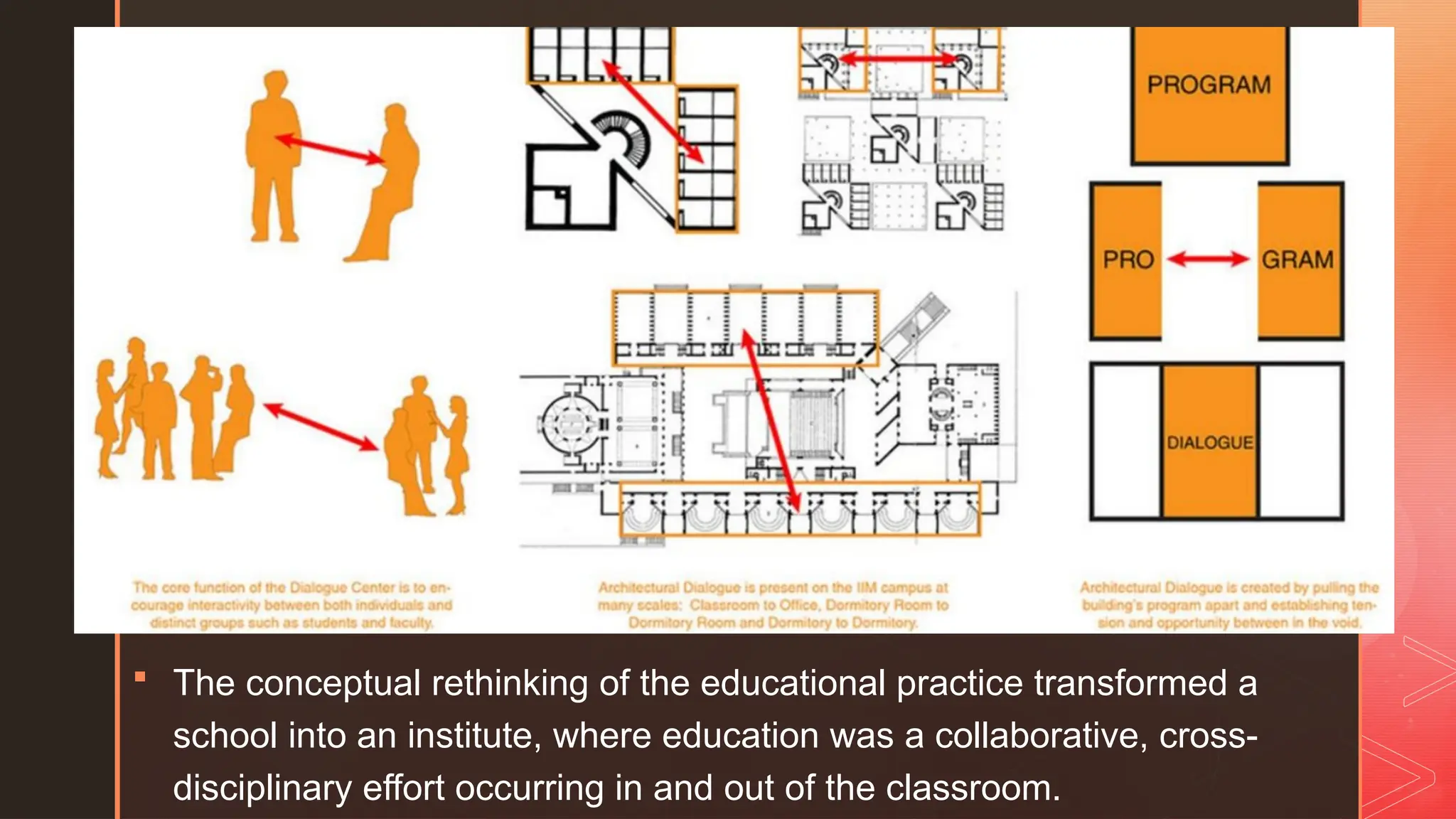
The conceptualrethinking of the educational practice transformed a
school into an institute, where education was a collaborative, cross-
disciplinary effort occurring in and out of the classroom.
37.
z
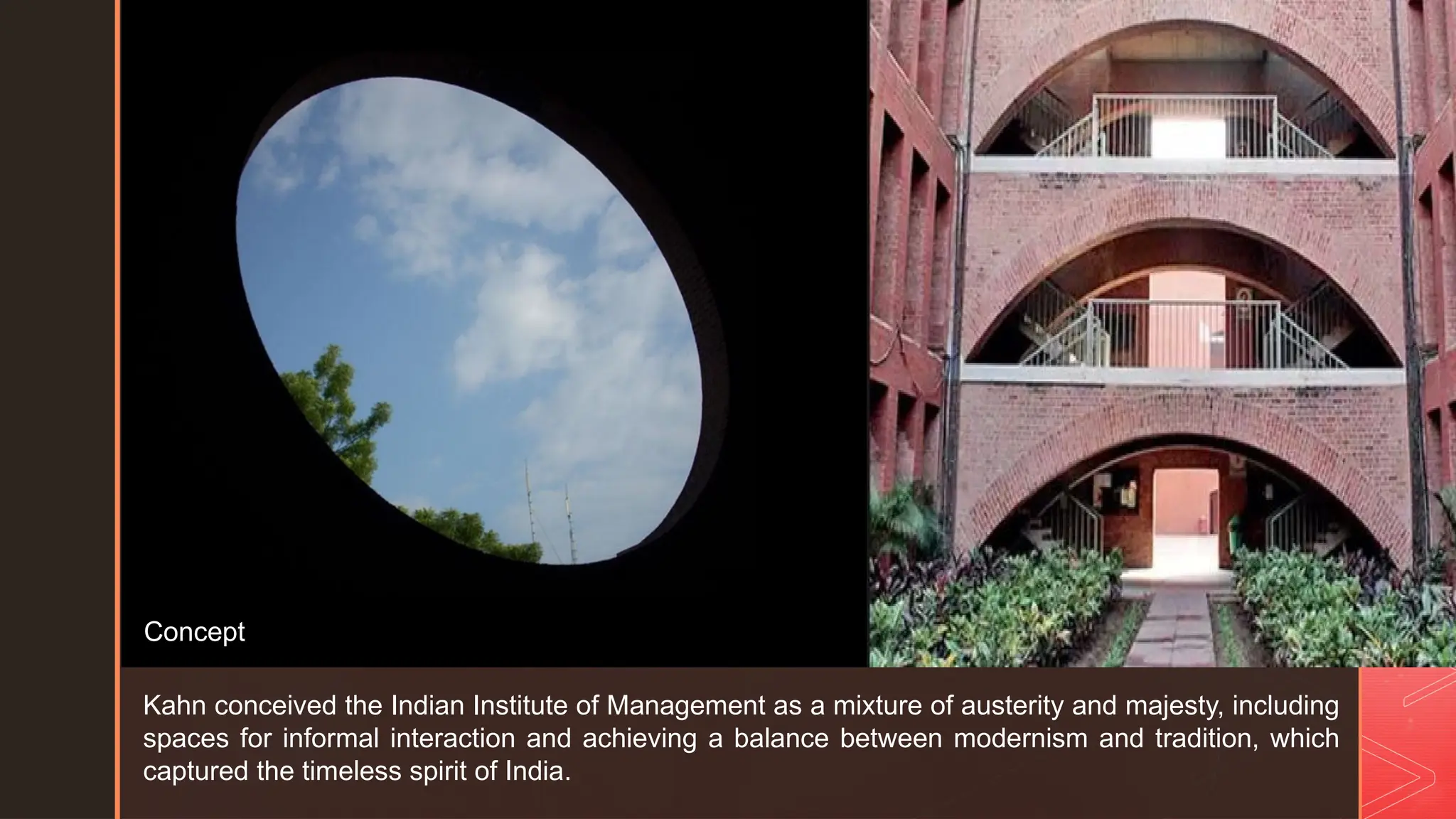
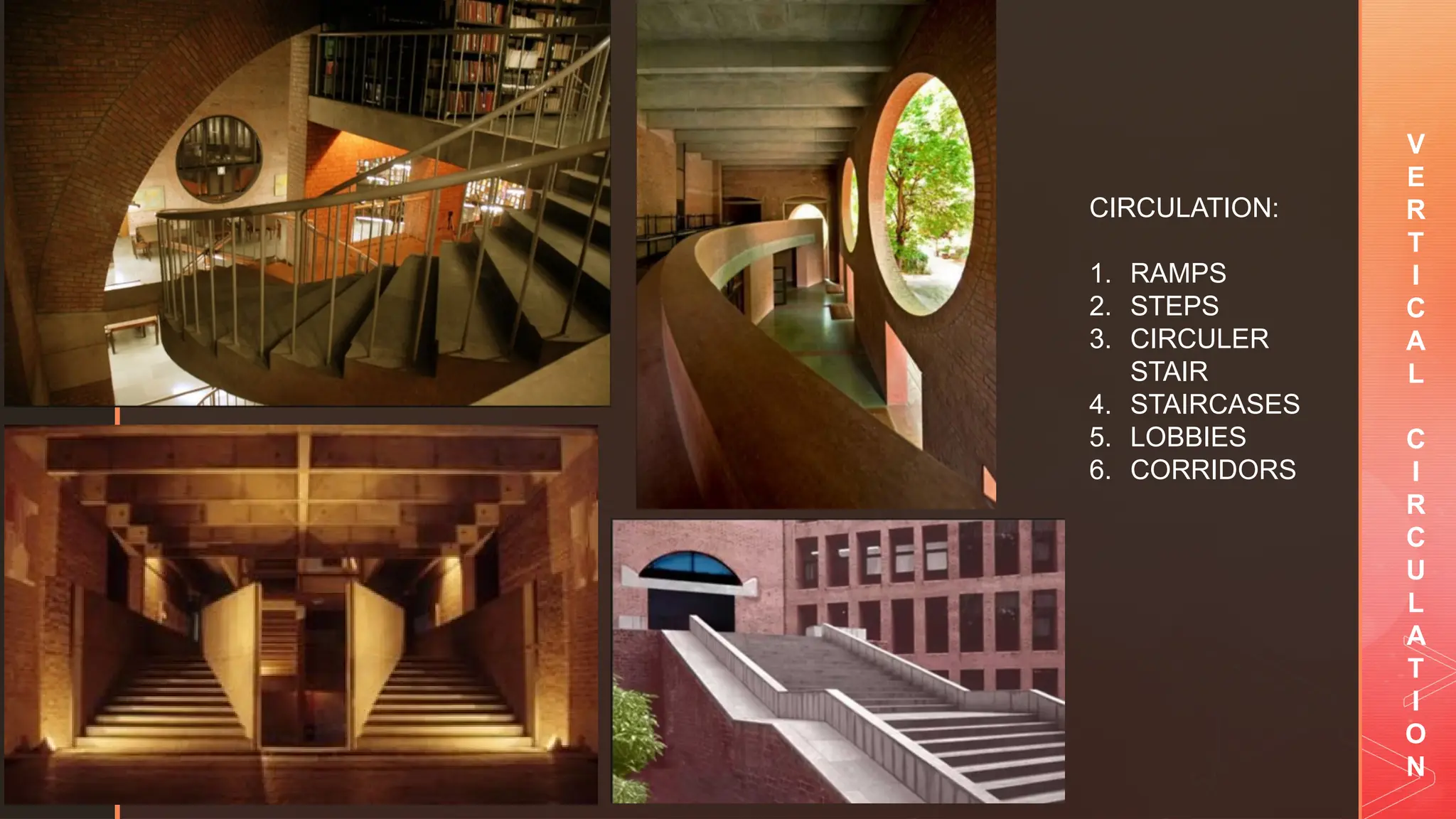
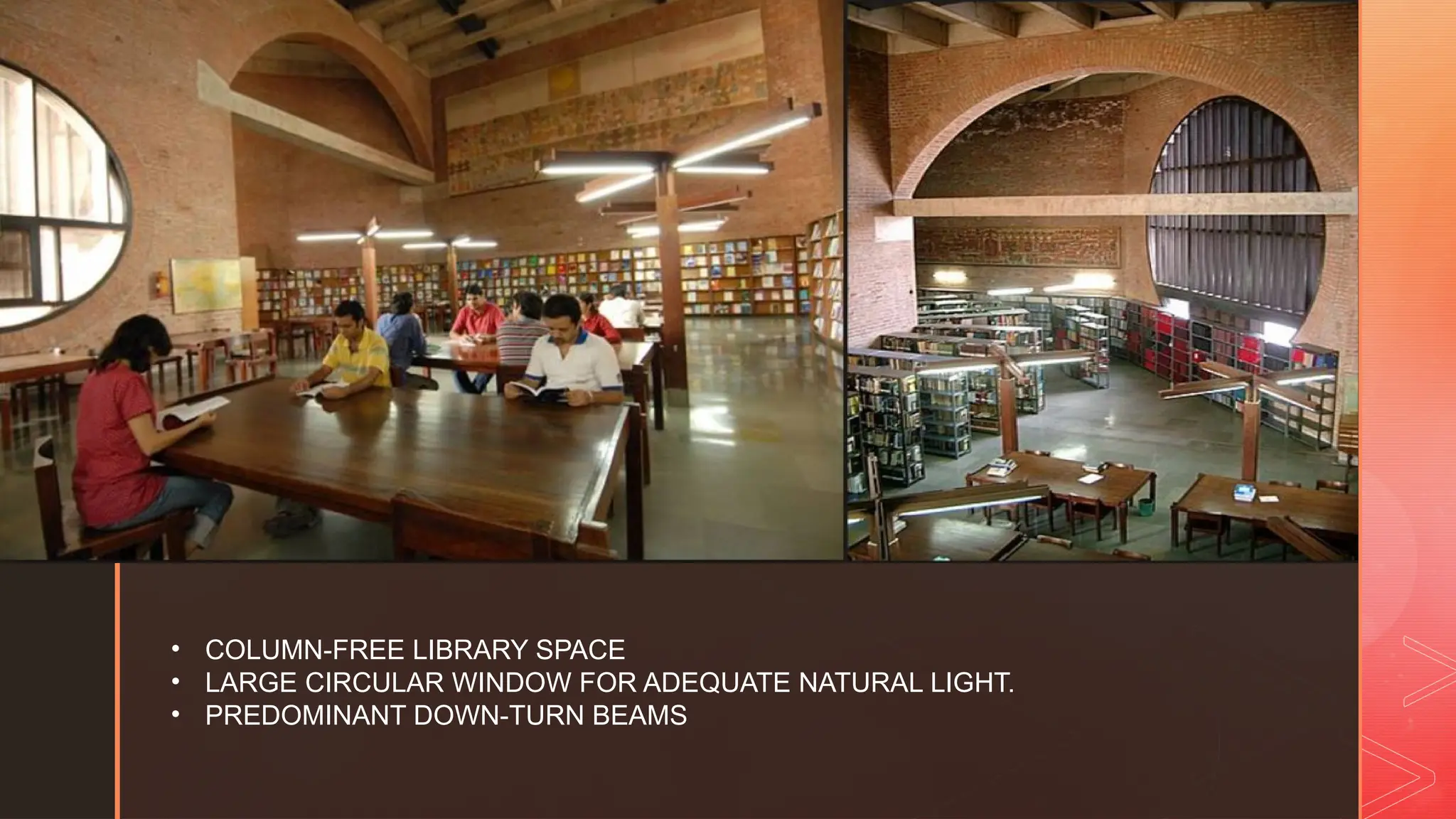
Kahn conceived theIndian Institute of Management as a mixture of austerity and majesty, including
spaces for informal interaction and achieving a balance between modernism and tradition, which
captured the timeless spirit of India.
Concept
38.
z
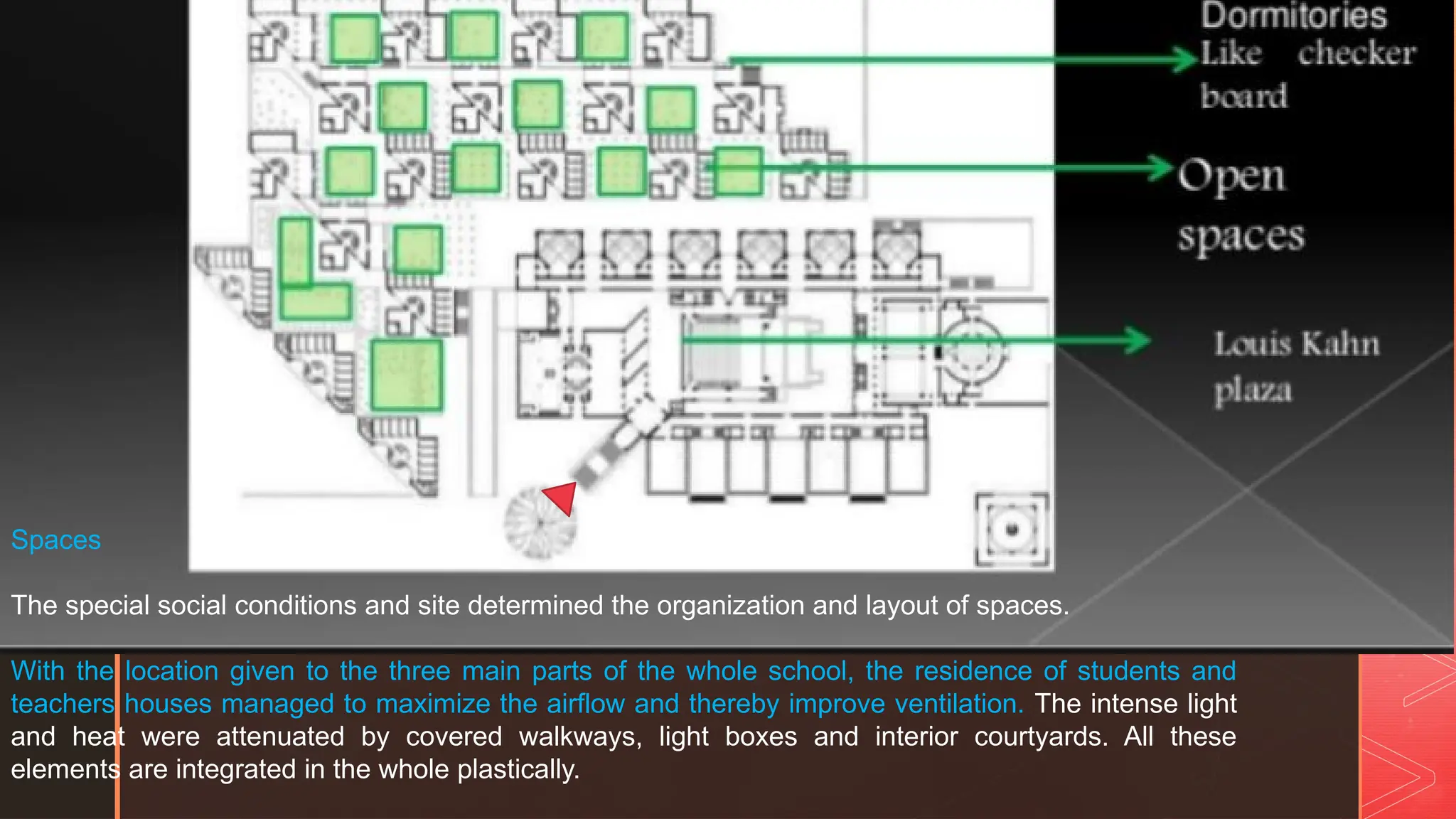
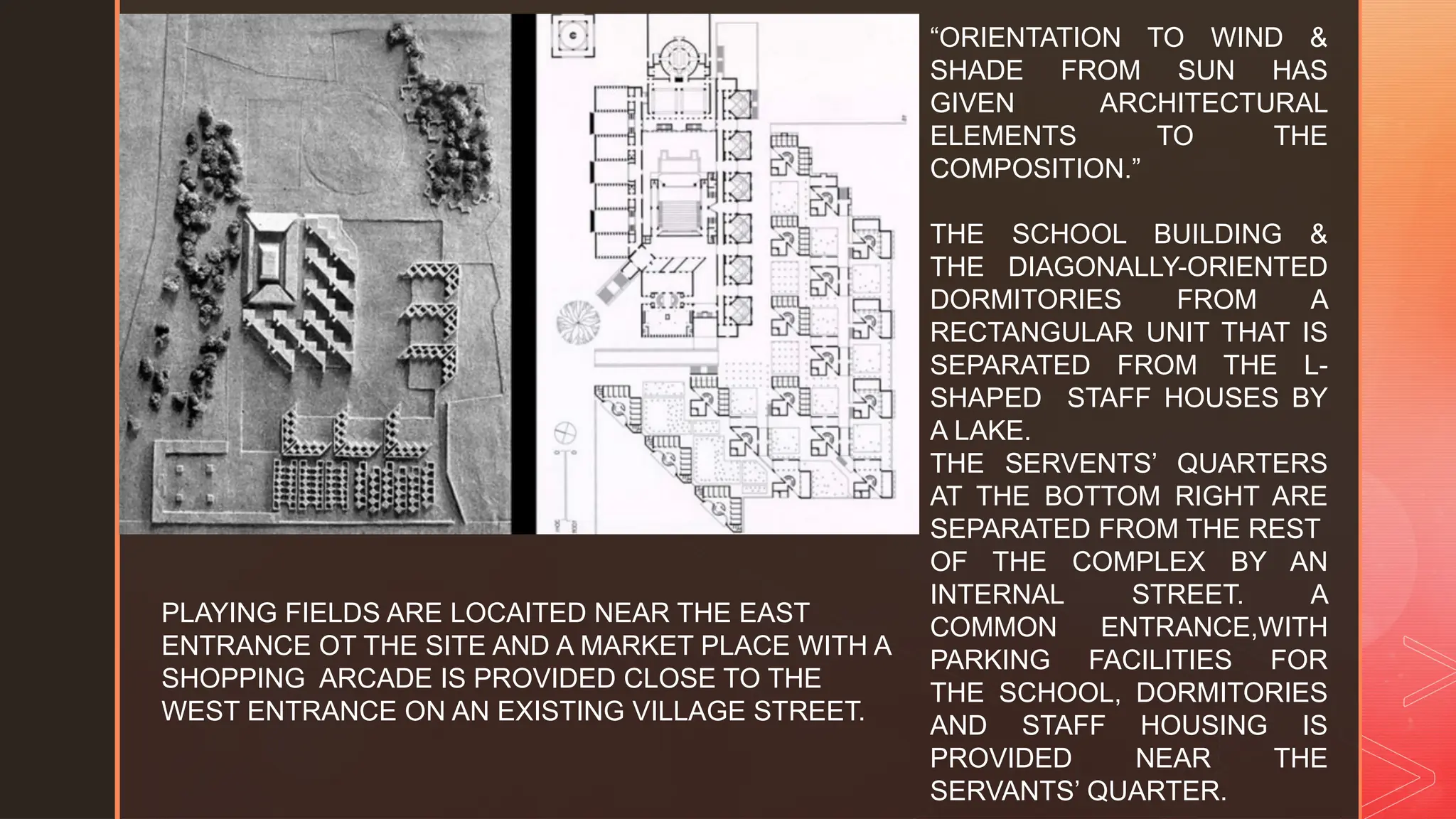
Spaces
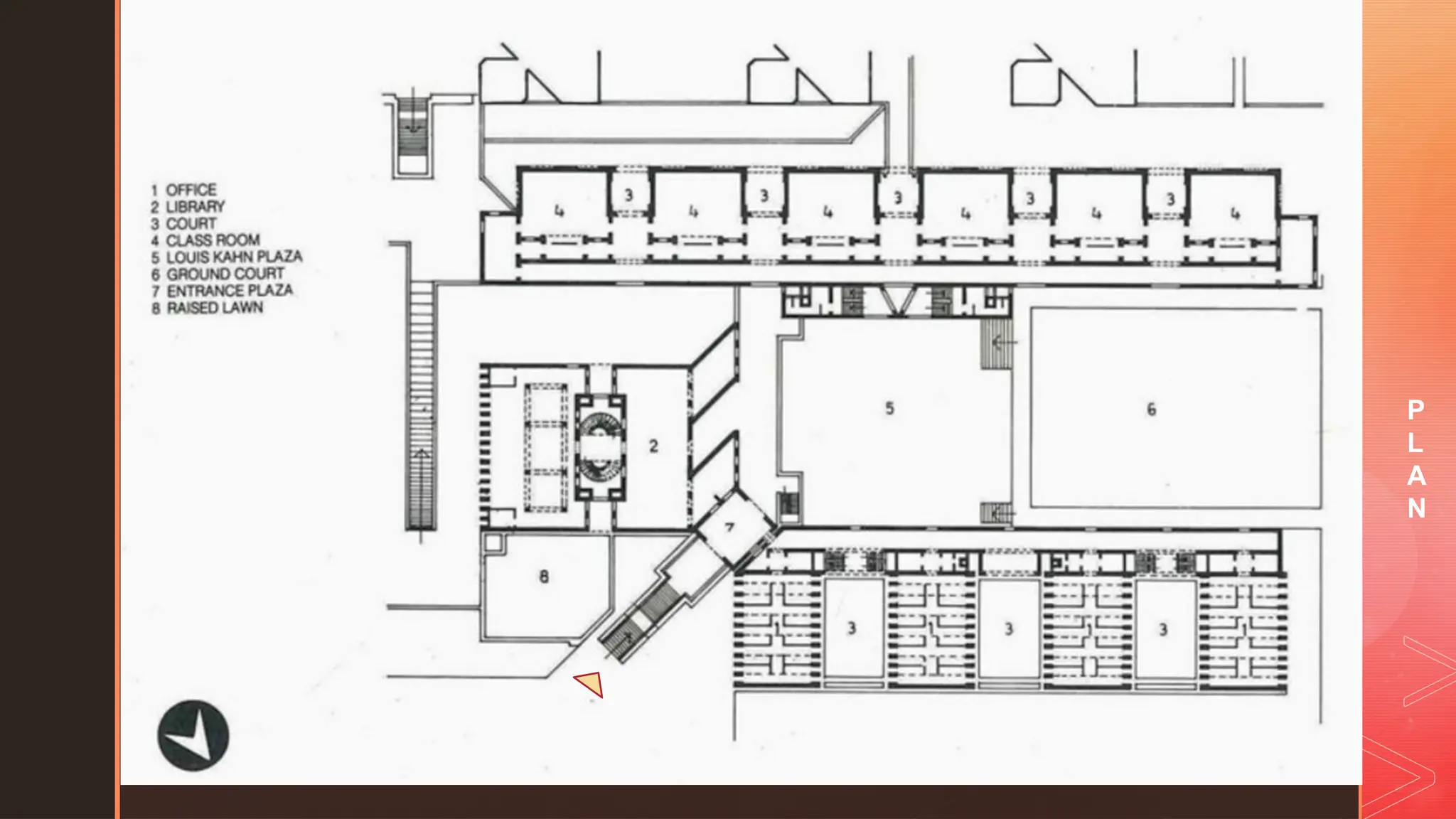
The special socialconditions and site determined the organization and layout of spaces.
With the location given to the three main parts of the whole school, the residence of students and
teachers houses managed to maximize the airflow and thereby improve ventilation. The intense light
and heat were attenuated by covered walkways, light boxes and interior courtyards. All these
elements are integrated in the whole plastically.
39.
z
“ORIENTATION TO WIND&
SHADE FROM SUN HAS
GIVEN ARCHITECTURAL
ELEMENTS TO THE
COMPOSITION.”
THE SCHOOL BUILDING &
THE DIAGONALLY-ORIENTED
DORMITORIES FROM A
RECTANGULAR UNIT THAT IS
SEPARATED FROM THE L-
SHAPED STAFF HOUSES BY
A LAKE.
THE SERVENTS’ QUARTERS
AT THE BOTTOM RIGHT ARE
SEPARATED FROM THE REST
OF THE COMPLEX BY AN
INTERNAL STREET. A
COMMON ENTRANCE,WITH
PARKING FACILITIES FOR
THE SCHOOL, DORMITORIES
AND STAFF HOUSING IS
PROVIDED NEAR THE
SERVANTS’ QUARTER.
PLAYING FIELDS ARE LOCAITED NEAR THE EAST
ENTRANCE OT THE SITE AND A MARKET PLACE WITH A
SHOPPING ARCADE IS PROVIDED CLOSE TO THE
WEST ENTRANCE ON AN EXISTING VILLAGE STREET.
z
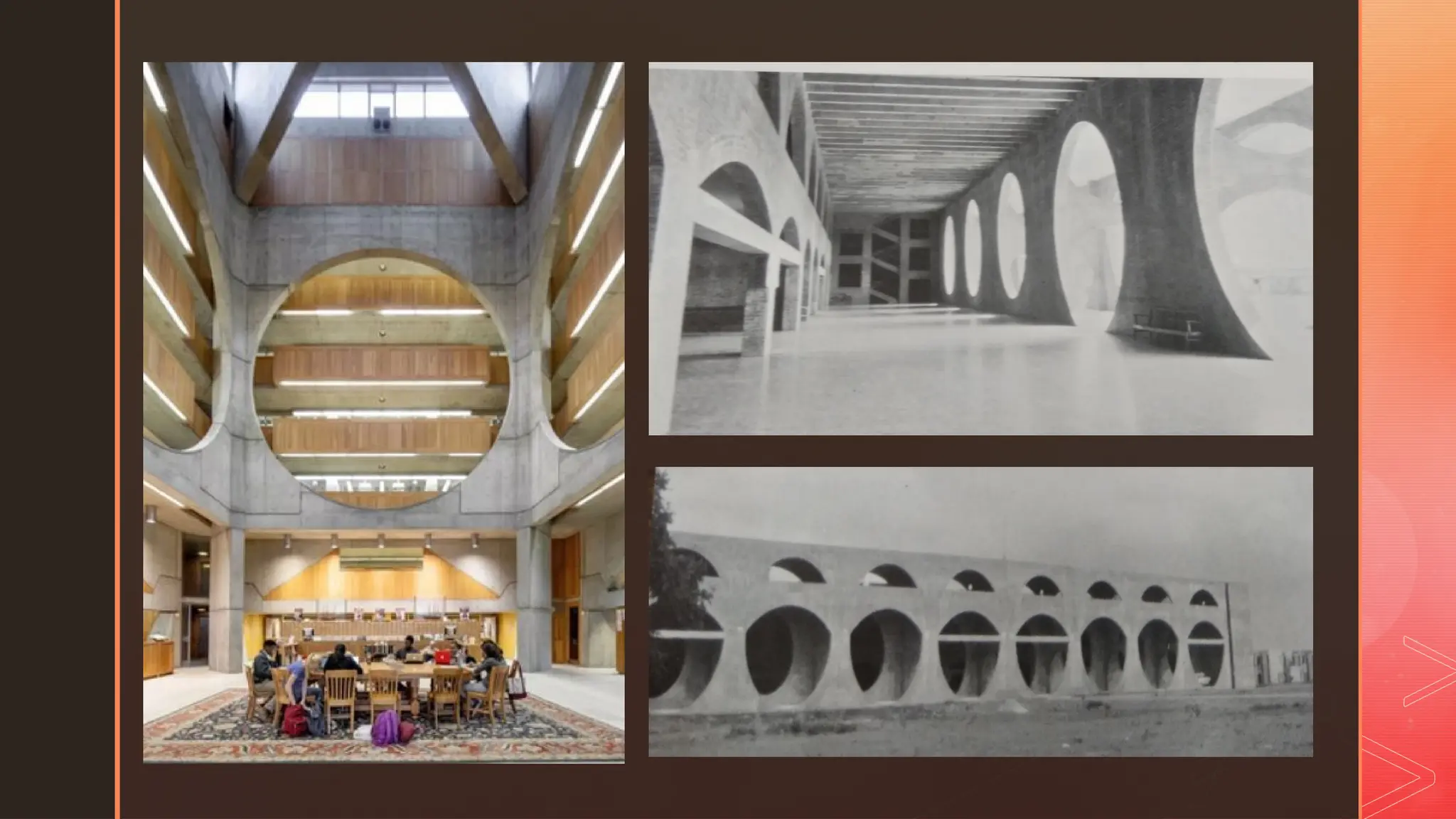
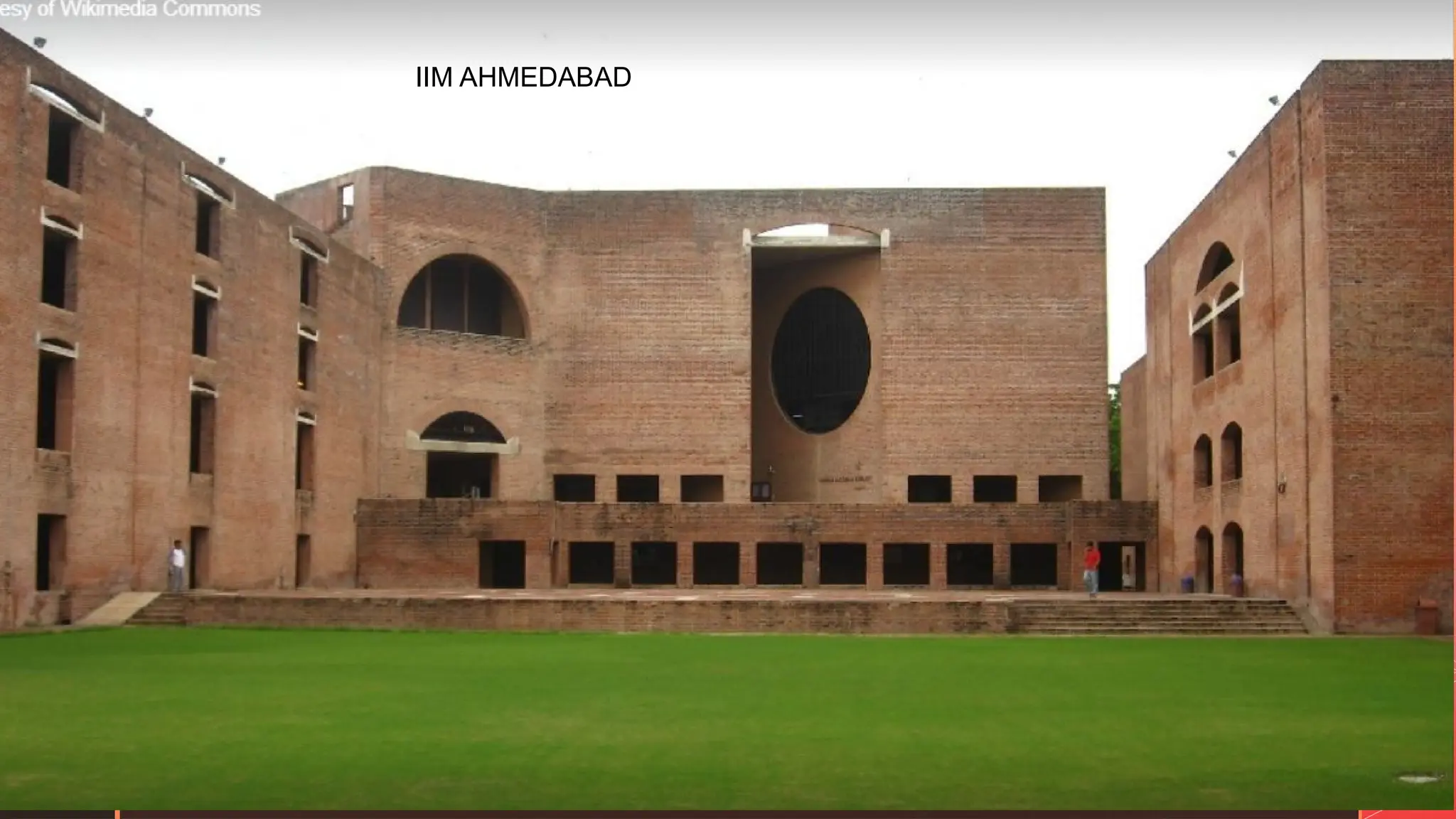
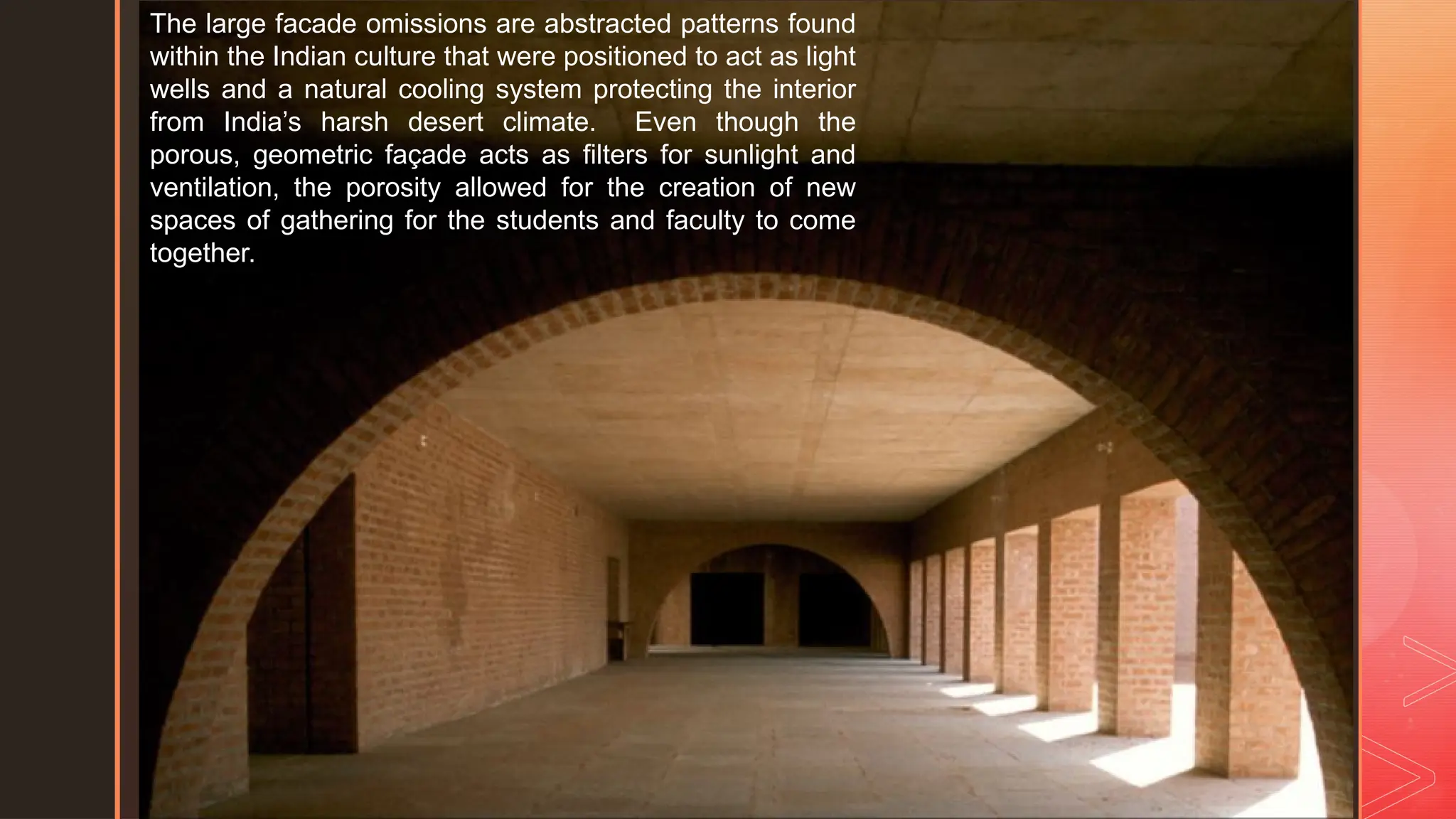
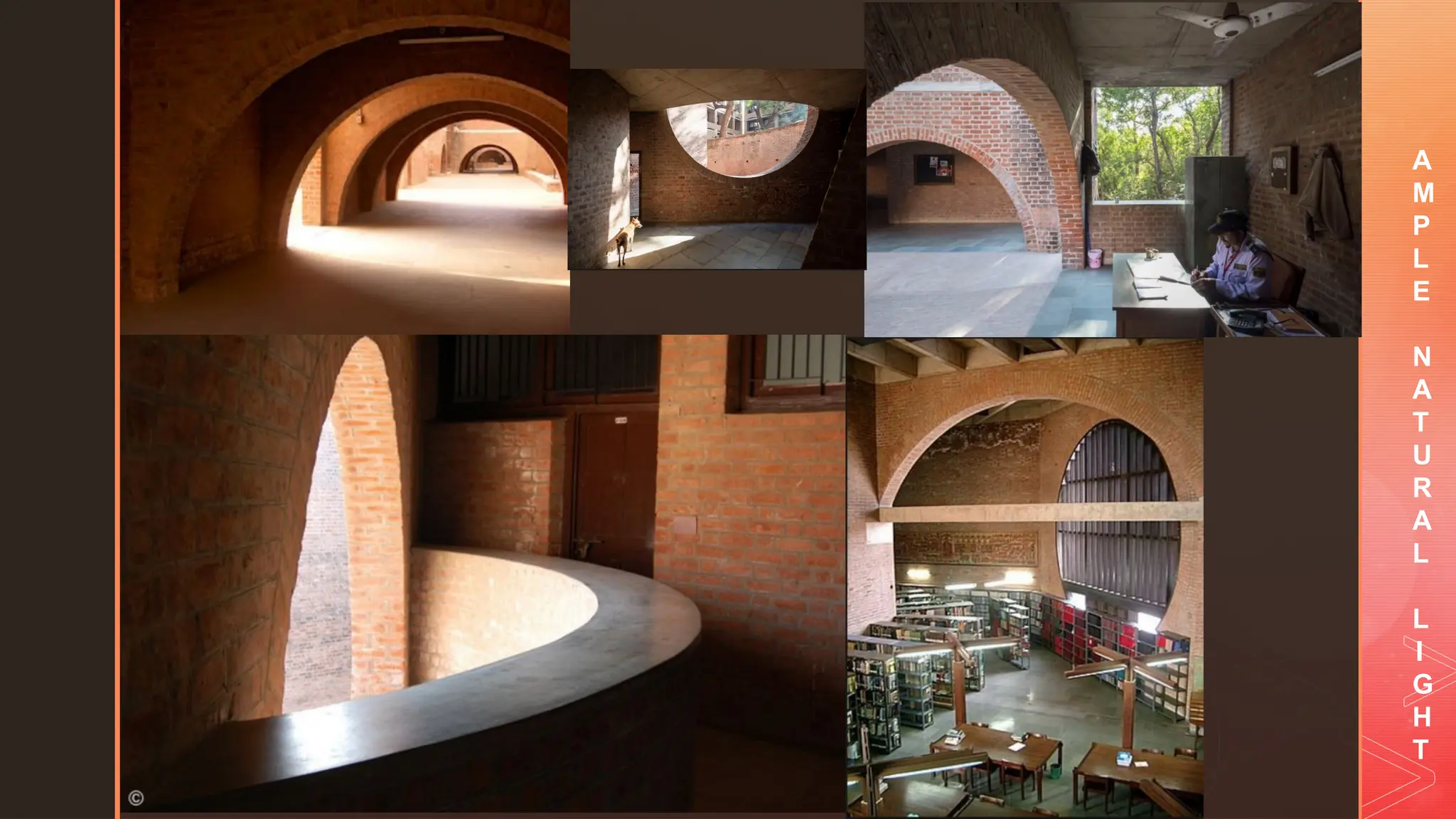
The large facadeomissions are abstracted patterns found
within the Indian culture that were positioned to act as light
wells and a natural cooling system protecting the interior
from India’s harsh desert climate. Even though the
porous, geometric façade acts as filters for sunlight and
ventilation, the porosity allowed for the creation of new
spaces of gathering for the students and faculty to come
together.
42.
z
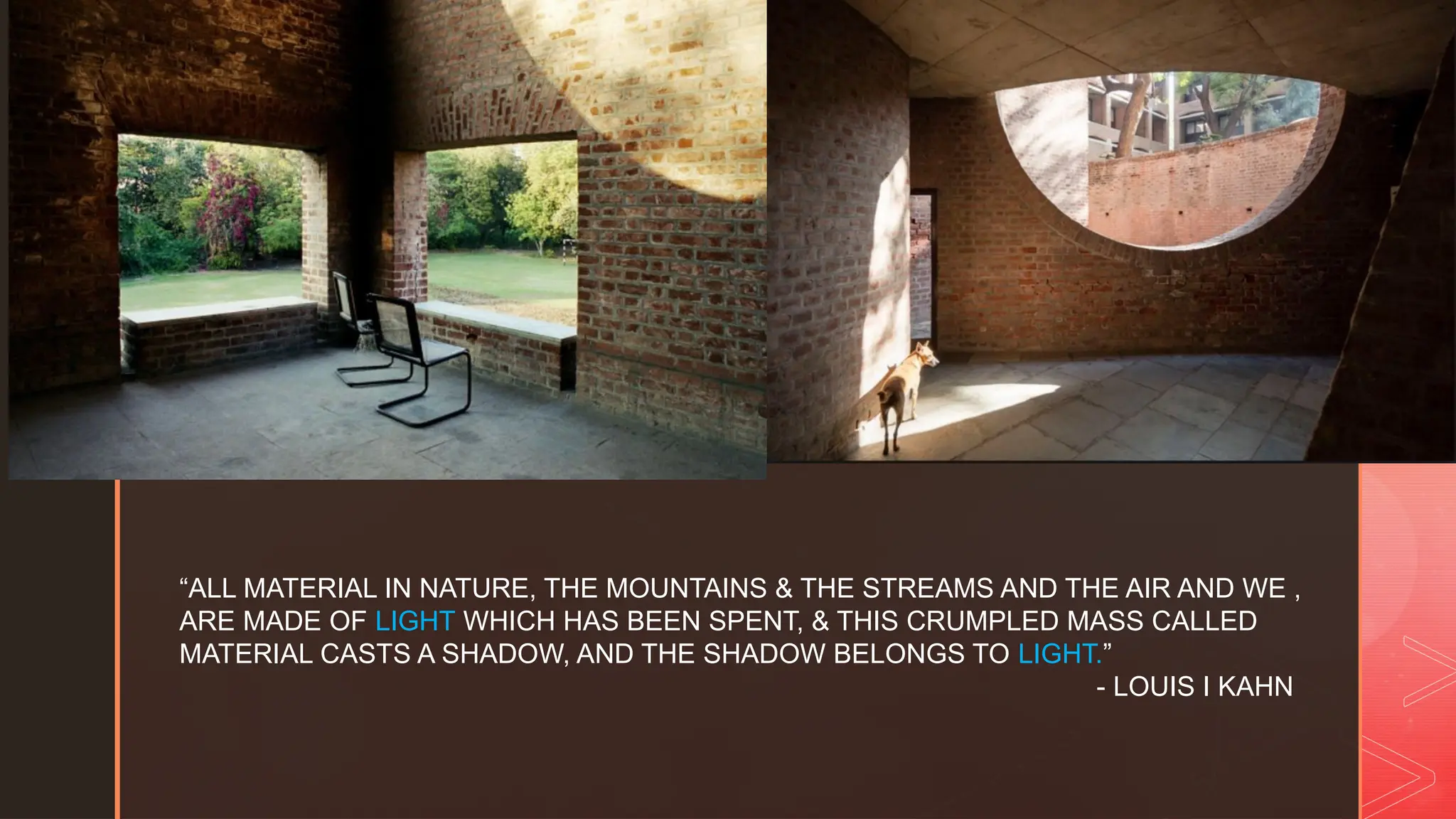
“ALL MATERIAL INNATURE, THE MOUNTAINS & THE STREAMS AND THE AIR AND WE ,
ARE MADE OF LIGHT WHICH HAS BEEN SPENT, & THIS CRUMPLED MASS CALLED
MATERIAL CASTS A SHADOW, AND THE SHADOW BELONGS TO LIGHT.”
- LOUIS I KAHN
![z
LOUIS I KAHN
[1901-1974]](https://image.slidesharecdn.com/designprocessbygreatarchitects-250807084936-84a2fb6b/75/design-process-by-great-architects-work-in-architectue-2-2048.jpg)