Environmental
Pollution
Water Pollution
By: Joshua
Baptiste
What isWater Pollution?
Environmental; Pollution.-Water
Definition ofWater Pollution
Water pollution is the contamination of water bodies (e.g. lakes,
rivers, oceans, aquifers and groundwater), very often by human
activities.Water pollution occur when pollutants (particles,
chemicals or substances that make water contaminated) are
discharged directly or indirectly into water bodies without enough
treatment to get rid of harmful compounds. Pollutants get into
water mainly by human causes or human factors.
Types ofWater Pollution
There are three direct types of water pollution with sub-
pollutions under each:
 Physical- solid waste, garbage, plastics
 Chemicals- chemicals such as fertilizers, oils, sewage
 Biologicals- infectious disease, oxygen-demading waste
4
Causes and Effects of PhysicalWater
Pollution
This is the most visible form of pollution and we can see it floating on
our waters in lakes, streams, and oceans.Trash from human
consumption, such as water bottles, plastics and other waste
products, is most often evident on water surfaces.This type of
pollution gravely endangers sea wildlife.
5
Causes and Effects of ChemicalWater
Pollution
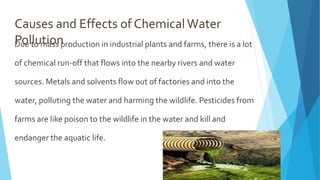
Due to mass production in industrial plants and farms, there is a lot
of chemical run-off that flows into the nearby rivers and water
sources. Metals and solvents flow out of factories and into the
water, polluting the water and harming the wildlife. Pesticides from
farms are like poison to the wildlife in the water and kill and
endanger the aquatic life.
Causes and Effects of Biological Water
Pollution
Microbiological pollution is the natural form of water pollution that is
caused by microorganisms in uncured water. Most of these organisms are
harmless but some bacteria, viruses, and protozoa can cause serious
diseases such as cholera and typhoid. This is a significant problem for
people in third world countries who have no clean drinking water and/or
facilities to cure the water.
7
OtherTypes of Water Pollution
 Oil Spillage
Oil spills usually have only a localized effect on wildlife but can spread for
miles.The oil can cause the death to many fish and get stuck to the feathers of
seabirds causing them to lose their ability to fly.
 Nutrients Pollution
Some wastewater, fertilizers and sewage contain high levels of nutrients. If
they end up in water bodies, they encourage algae and weed growth in the
water.This will make the water undrinkable, and even clog filters.Too much
algae will also use up all the oxygen in the water, and other water organisms in
the water will die out of oxygen starvation.
8
Other Causes and Effects ofWater
Pollution
 Disruption of food-chains
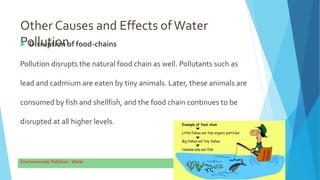
Pollution disrupts the natural food chain as well. Pollutants such as
lead and cadmium are eaten by tiny animals. Later, these animals are
consumed by fish and shellfish, and the food chain continues to be
disrupted at all higher levels.
9
Other Causes and Effects ofWater
Pollution cont. Destruction of ecosystems
Ecosystems (the interaction of living things in a place, depending on each other for life)
can be severely changed or destroyed by water pollution. Many areas are now being
affected by careless human pollution, and this pollution is coming back to hurt humans in
many ways.
 Underground storage and tube leakages
Many liquid products (petroleum products) are stored in metal and steel tubes
underground. Other sewage systems run in underground tubes. Over time, they rust and
begin to leak. If that happens, they contaminate the soils, and the liquids in them end up
in many nearby water bodies.
10
11
Questions ?
12
ThankYou
13

Environmental pollution

  • 1.
  • 2.
  • 3.
    Definition ofWater Pollution Waterpollution is the contamination of water bodies (e.g. lakes, rivers, oceans, aquifers and groundwater), very often by human activities.Water pollution occur when pollutants (particles, chemicals or substances that make water contaminated) are discharged directly or indirectly into water bodies without enough treatment to get rid of harmful compounds. Pollutants get into water mainly by human causes or human factors.
  • 4.
    Types ofWater Pollution Thereare three direct types of water pollution with sub- pollutions under each:  Physical- solid waste, garbage, plastics  Chemicals- chemicals such as fertilizers, oils, sewage  Biologicals- infectious disease, oxygen-demading waste 4
  • 5.
    Causes and Effectsof PhysicalWater Pollution This is the most visible form of pollution and we can see it floating on our waters in lakes, streams, and oceans.Trash from human consumption, such as water bottles, plastics and other waste products, is most often evident on water surfaces.This type of pollution gravely endangers sea wildlife. 5
  • 6.
    Causes and Effectsof ChemicalWater Pollution Due to mass production in industrial plants and farms, there is a lot of chemical run-off that flows into the nearby rivers and water sources. Metals and solvents flow out of factories and into the water, polluting the water and harming the wildlife. Pesticides from farms are like poison to the wildlife in the water and kill and endanger the aquatic life.
  • 7.
    Causes and Effectsof Biological Water Pollution Microbiological pollution is the natural form of water pollution that is caused by microorganisms in uncured water. Most of these organisms are harmless but some bacteria, viruses, and protozoa can cause serious diseases such as cholera and typhoid. This is a significant problem for people in third world countries who have no clean drinking water and/or facilities to cure the water. 7
  • 8.
    OtherTypes of WaterPollution  Oil Spillage Oil spills usually have only a localized effect on wildlife but can spread for miles.The oil can cause the death to many fish and get stuck to the feathers of seabirds causing them to lose their ability to fly.  Nutrients Pollution Some wastewater, fertilizers and sewage contain high levels of nutrients. If they end up in water bodies, they encourage algae and weed growth in the water.This will make the water undrinkable, and even clog filters.Too much algae will also use up all the oxygen in the water, and other water organisms in the water will die out of oxygen starvation. 8
  • 9.
    Other Causes andEffects ofWater Pollution  Disruption of food-chains Pollution disrupts the natural food chain as well. Pollutants such as lead and cadmium are eaten by tiny animals. Later, these animals are consumed by fish and shellfish, and the food chain continues to be disrupted at all higher levels. 9
  • 10.
    Other Causes andEffects ofWater Pollution cont. Destruction of ecosystems Ecosystems (the interaction of living things in a place, depending on each other for life) can be severely changed or destroyed by water pollution. Many areas are now being affected by careless human pollution, and this pollution is coming back to hurt humans in many ways.  Underground storage and tube leakages Many liquid products (petroleum products) are stored in metal and steel tubes underground. Other sewage systems run in underground tubes. Over time, they rust and begin to leak. If that happens, they contaminate the soils, and the liquids in them end up in many nearby water bodies. 10
  • 11.
  • 12.
  • 13.