ENVIRONMENT
POLLUTION
CAUSES AND PREVENTION
Name:- Shivam Kumar
Class:- B.Tech (EEE)
Roll No:- 1704357
Semester:- 2nd
Submitted To:- Dr. Mandeep Kaur. .
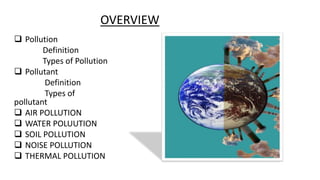
OVERVIEW
 Pollution
Definition
Types of Pollution
 Pollutant
Definition
Types of
pollutant
 AIR POLLUTION
 WATER POLUUTION
 SOIL POLLUTION
 NOISE POLLUTION
 THERMAL POLLUTION
POLLUTION:-
“Pollution is defined as the presence of
impurities or pollutant substances in
sufficient concentration levels, causing,
harmfull effect on human beings,
animals, plant life or material resources
when exposed for a sufficient duration of
time, thus reducing the quality of life in
the Environment.”
Types of pollutions
Various types of pollutions are:
 AIR POLLUTION
 WATER POLLUTION
 SOIL POLLUTION
 NOISE POLLUTION
 THERMAL
POLLUTION
Every Thing Beyond The permissible Limit
Is Called “POLLUTION.”
POLLUTANTS
“Any changes in the
environment which results in its
harmful effect is called pollution
of the environment and the
agents which causes the
pollution is called Pollutants ”
TYPES OF POLLUTANTS
BASED ON THE STATE POLLUTANTS CAN CLASSIFIED INTO THREE CATEGORIES:
• SOLID
• LIQUID
• GASEOUS
AND BASED ON DEGRADABILITY:
• DEGRADABLE POLLUTANTS ( EXAMPLE: DOMESTIC SEWAGE)
• SEMI DEGRADABLE POLLUTANTS( EXAMPLE : PLASTIC,DDT)
• NON DEGRADABLE POLLUTANTS( EXAMPLE : LEAD AND MERCURY)
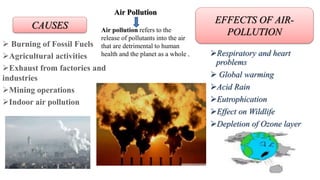
Air Pollution
Air pollution refers to the
release of pollutants into the air
that are detrimental to human
health and the planet as a whole .
 Burning of Fossil Fuels
Agricultural activities
Exhaust from factories and
industries
Mining operations
Indoor air pollution
CAUSES
EFFECTS OF AIR-
POLLUTION
Respiratory and heart
problems
 Global warming
Acid Rain
Eutrophication
Effect on Wildlife
Depletion of Ozone layer
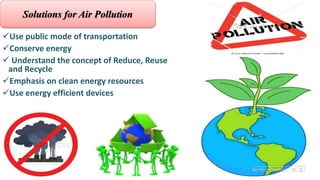
Use public mode of transportation
Conserve energy
 Understand the concept of Reduce, Reuse
and Recycle
Emphasis on clean energy resources
Use energy efficient devices
Solutions for Air Pollution
Water-pollution
Water pollution is any
chemical, physical or
biological change in the
quality of water that has
a harmful effect on any
living thing that drinks
or uses or lives (in) it.
Industrial waste
Sewage and waste water
Mining activities
Marine dumping
Accidental Oil leakage
Burning of fossil fuels
Chemical fertilizers and
pesticides
Water becomes dangerous to
drink
Less clean water for agriculture
Change in water color
Water-borne diseases
Acidic rain
Genetic mutations
Acid oceans
Damage to the ecosystems
Causes of Water Pollution
Effects of water pollution.
Stop using harmful chemicals at home
opt for environmentally friendly household cleaners.
Prevent industrial waste reaching water
Sewage treatment:
Treatment of industrial wastes before discharge
Recycle
Go organic
Adherence to water laws
Avoid using paper bags
Improve oil tanker safety
Routine cleaning
Solutions to water pollution
Soil pollution is defined as the presence of
toxic chemicals (pollutants or
contaminants) in soil, in high enough
concentrations to pose a risk to human
health and/or the ecosystem. In the case of
contaminants which occur naturally in
soil, even when their levels are not high
enough to pose a risk, soil pollution is still
said to occur if the levels of the
contaminants in soil exceed the levels that
should naturally be present.
 Industrial Activity
 Agricultural Activities
 Waste Disposal
 Accidental Oil Spills
 Acid Rain
 Effect on Health of Humans
 Effect on Growth of Plants
 Decreased Soil Fertility
 Toxic Dust
 Changes in Soil Structure
SOIL-POLLUTION
Effects of Soil Pollution
Causes of Soil Pollution
 AFFORESTATION
 Proper dumping of unwanted materials
 Production of natural fertilizers
 Proper hygienic condition
 Public awareness
 Recycling and Reuse of wastes
 Ban on Toxic chemicals
Solutions to Soil pollution
NOISE POLLUTION
Noise pollution means an unwanted or
undesirable sound that leads to physical
and mental problems. Noise pollution is
dependent on the loudness and frequency
of the sound. In fact, when the sound
exceeds its limit, it becomes fatal for
human and other organisms
 Industrialization
 Poor Urban Planning
 Social Events
 Transportation
 Construction Activities
 Household Chores
 Hearing Problems
 Health Issues
 Sleeping Disorders
 Cardiovascular Issues
 Trouble
Communicating
Causes of Noise Pollution
Effects of Noise Pollution
 Turn off the electronic or reduce the volume
 Plant trees
 Cancel or mask the noise
 Replacement of old automobiles with new ones
 Creating awareness and education on the
consequences of noise pollution
 Declaring a “no horn zone” in hospital, school and
residential areas
Solutions to Noise pollution
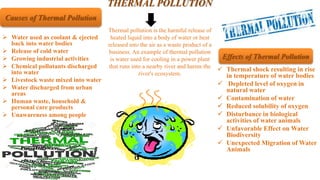
THERMAL POLLUTION
Thermal pollution is the harmful release of
heated liquid into a body of water or heat
released into the air as a waste product of a
business. An example of thermal pollution
is water used for cooling in a power plant
that runs into a nearby river and harms the
river's ecosystem.
 Water used as coolant & ejected
back into water bodies
 Release of cold water
 Growing industrial activities
 Chemical pollutants discharged
into water
 Livestock waste mixed into water
 Water discharged from urban
areas
 Human waste, household &
personal care products
 Unawareness among people
 Thermal shock resulting in rise
in temperature of water bodies
 Depleted level of oxygen in
natural water
 Contamination of water
 Reduced solubility of oxygen
 Disturbance in biological
activities of water animals
 Unfavorable Effect on Water
Biodiversity
 Unexpected Migration of Water
Animals
Causes of Thermal Pollution
Effects of Thermal Pollution
 Use less electricity
 Use of Better Technologies
 Holding back the water for good
 Plantation of more trees upon the banks of rivers,
seas & other water bodies
 Recycling used water
 Spreading awareness among people
 Cooling towers
Solutions to Thermal pollution
Questions
Environmental pollution ppt

Environmental pollution ppt

  • 1.
    ENVIRONMENT POLLUTION CAUSES AND PREVENTION Name:-Shivam Kumar Class:- B.Tech (EEE) Roll No:- 1704357 Semester:- 2nd Submitted To:- Dr. Mandeep Kaur. .
  • 2.
    OVERVIEW  Pollution Definition Types ofPollution  Pollutant Definition Types of pollutant  AIR POLLUTION  WATER POLUUTION  SOIL POLLUTION  NOISE POLLUTION  THERMAL POLLUTION
  • 3.
    POLLUTION:- “Pollution is definedas the presence of impurities or pollutant substances in sufficient concentration levels, causing, harmfull effect on human beings, animals, plant life or material resources when exposed for a sufficient duration of time, thus reducing the quality of life in the Environment.” Types of pollutions Various types of pollutions are:  AIR POLLUTION  WATER POLLUTION  SOIL POLLUTION  NOISE POLLUTION  THERMAL POLLUTION Every Thing Beyond The permissible Limit Is Called “POLLUTION.”
  • 4.
    POLLUTANTS “Any changes inthe environment which results in its harmful effect is called pollution of the environment and the agents which causes the pollution is called Pollutants ” TYPES OF POLLUTANTS BASED ON THE STATE POLLUTANTS CAN CLASSIFIED INTO THREE CATEGORIES: • SOLID • LIQUID • GASEOUS AND BASED ON DEGRADABILITY: • DEGRADABLE POLLUTANTS ( EXAMPLE: DOMESTIC SEWAGE) • SEMI DEGRADABLE POLLUTANTS( EXAMPLE : PLASTIC,DDT) • NON DEGRADABLE POLLUTANTS( EXAMPLE : LEAD AND MERCURY)
  • 5.
    Air Pollution Air pollutionrefers to the release of pollutants into the air that are detrimental to human health and the planet as a whole .  Burning of Fossil Fuels Agricultural activities Exhaust from factories and industries Mining operations Indoor air pollution CAUSES EFFECTS OF AIR- POLLUTION Respiratory and heart problems  Global warming Acid Rain Eutrophication Effect on Wildlife Depletion of Ozone layer
  • 6.
    Use public modeof transportation Conserve energy  Understand the concept of Reduce, Reuse and Recycle Emphasis on clean energy resources Use energy efficient devices Solutions for Air Pollution
  • 7.
    Water-pollution Water pollution isany chemical, physical or biological change in the quality of water that has a harmful effect on any living thing that drinks or uses or lives (in) it. Industrial waste Sewage and waste water Mining activities Marine dumping Accidental Oil leakage Burning of fossil fuels Chemical fertilizers and pesticides Water becomes dangerous to drink Less clean water for agriculture Change in water color Water-borne diseases Acidic rain Genetic mutations Acid oceans Damage to the ecosystems Causes of Water Pollution Effects of water pollution.
  • 8.
    Stop using harmfulchemicals at home opt for environmentally friendly household cleaners. Prevent industrial waste reaching water Sewage treatment: Treatment of industrial wastes before discharge Recycle Go organic Adherence to water laws Avoid using paper bags Improve oil tanker safety Routine cleaning Solutions to water pollution
  • 9.
    Soil pollution isdefined as the presence of toxic chemicals (pollutants or contaminants) in soil, in high enough concentrations to pose a risk to human health and/or the ecosystem. In the case of contaminants which occur naturally in soil, even when their levels are not high enough to pose a risk, soil pollution is still said to occur if the levels of the contaminants in soil exceed the levels that should naturally be present.  Industrial Activity  Agricultural Activities  Waste Disposal  Accidental Oil Spills  Acid Rain  Effect on Health of Humans  Effect on Growth of Plants  Decreased Soil Fertility  Toxic Dust  Changes in Soil Structure SOIL-POLLUTION Effects of Soil Pollution Causes of Soil Pollution
  • 10.
     AFFORESTATION  Properdumping of unwanted materials  Production of natural fertilizers  Proper hygienic condition  Public awareness  Recycling and Reuse of wastes  Ban on Toxic chemicals Solutions to Soil pollution
  • 11.
    NOISE POLLUTION Noise pollutionmeans an unwanted or undesirable sound that leads to physical and mental problems. Noise pollution is dependent on the loudness and frequency of the sound. In fact, when the sound exceeds its limit, it becomes fatal for human and other organisms  Industrialization  Poor Urban Planning  Social Events  Transportation  Construction Activities  Household Chores  Hearing Problems  Health Issues  Sleeping Disorders  Cardiovascular Issues  Trouble Communicating Causes of Noise Pollution Effects of Noise Pollution
  • 12.
     Turn offthe electronic or reduce the volume  Plant trees  Cancel or mask the noise  Replacement of old automobiles with new ones  Creating awareness and education on the consequences of noise pollution  Declaring a “no horn zone” in hospital, school and residential areas Solutions to Noise pollution
  • 13.
    THERMAL POLLUTION Thermal pollutionis the harmful release of heated liquid into a body of water or heat released into the air as a waste product of a business. An example of thermal pollution is water used for cooling in a power plant that runs into a nearby river and harms the river's ecosystem.  Water used as coolant & ejected back into water bodies  Release of cold water  Growing industrial activities  Chemical pollutants discharged into water  Livestock waste mixed into water  Water discharged from urban areas  Human waste, household & personal care products  Unawareness among people  Thermal shock resulting in rise in temperature of water bodies  Depleted level of oxygen in natural water  Contamination of water  Reduced solubility of oxygen  Disturbance in biological activities of water animals  Unfavorable Effect on Water Biodiversity  Unexpected Migration of Water Animals Causes of Thermal Pollution Effects of Thermal Pollution
  • 14.
     Use lesselectricity  Use of Better Technologies  Holding back the water for good  Plantation of more trees upon the banks of rivers, seas & other water bodies  Recycling used water  Spreading awareness among people  Cooling towers Solutions to Thermal pollution
  • 15.