Pollution has been found to be present widely in
the environment. There are a number of effects of
this:
Human overpopulation
Nuclear issues
Climate change
Water pollution
Environmental issues with war
Environmental issues with energy
Environmental health
In 1800 lived in cities only 3% of the world
population. By the end of the 20th century, 47% did
so. In 1950, the 83 cities with populations exceeding
one million; but by 2007 their number increased to
468, about more than one million.
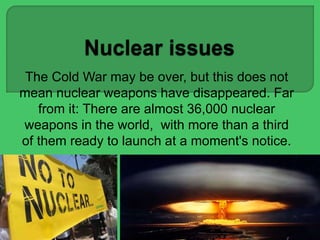
The Cold War may be over, but this does not
mean nuclear weapons have disappeared. Far
from it: There are almost 36,000 nuclear
weapons in the world, with more than a third
of them ready to launch at a moment's notice.
Climate change is caused by factors such as
biotic processes, changes in solar radiation
received by Earth, plate tectonics and volcanic
eruptions. Some human activities have also
been identified as major causes of recent
climate change, often referred to as "global
warming".
Water pollution affects the entire biosphere – plants
and organisms living in the water. In almost all cases
the effect is damaging not only to
individual species and population, but also to the
natural biological communities.
The impact of the wars can be seen not only in the
social, economic and political situations of these areas
but also in the environments in which these wars have
been waged. The long years of war have resulted in a
radical destruction of forest cover and an increase in
carbon emissions and the water supply has been
contaminated by oil from military vehicles.
Originally it was used for fire, for light, heat, cooking
and for safety. Consumption of fossil fuel resources
leads to global warming and climate change. In most
parts of the world little change is being made to slow
these changes.
Environmental health has been defined in a 1999
document by the World Health Organization as:
Those aspects of the human health and disease that
are determined by factors in the environment. It also
refers to the theory and practice of controlling factors
in the environment that can potentially affect health.
Environmental health professionals may be known
as environmental health officers, public health
inspectors, environmental health specialists, or
sanitarians.
Environment

Environment

  • 1.
    Pollution has beenfound to be present widely in the environment. There are a number of effects of this: Human overpopulation Nuclear issues Climate change Water pollution Environmental issues with war Environmental issues with energy Environmental health
  • 2.
    In 1800 livedin cities only 3% of the world population. By the end of the 20th century, 47% did so. In 1950, the 83 cities with populations exceeding one million; but by 2007 their number increased to 468, about more than one million.
  • 3.
    The Cold Warmay be over, but this does not mean nuclear weapons have disappeared. Far from it: There are almost 36,000 nuclear weapons in the world, with more than a third of them ready to launch at a moment's notice.
  • 4.
    Climate change iscaused by factors such as biotic processes, changes in solar radiation received by Earth, plate tectonics and volcanic eruptions. Some human activities have also been identified as major causes of recent climate change, often referred to as "global warming".
  • 5.
    Water pollution affectsthe entire biosphere – plants and organisms living in the water. In almost all cases the effect is damaging not only to individual species and population, but also to the natural biological communities.
  • 6.
    The impact ofthe wars can be seen not only in the social, economic and political situations of these areas but also in the environments in which these wars have been waged. The long years of war have resulted in a radical destruction of forest cover and an increase in carbon emissions and the water supply has been contaminated by oil from military vehicles.
  • 7.
    Originally it wasused for fire, for light, heat, cooking and for safety. Consumption of fossil fuel resources leads to global warming and climate change. In most parts of the world little change is being made to slow these changes.
  • 8.
    Environmental health hasbeen defined in a 1999 document by the World Health Organization as: Those aspects of the human health and disease that are determined by factors in the environment. It also refers to the theory and practice of controlling factors in the environment that can potentially affect health. Environmental health professionals may be known as environmental health officers, public health inspectors, environmental health specialists, or sanitarians.