MC SCHOOL LIBRARY
Elizabeth Gartley
7 January 2015
Resources and Services:
Middle and High School
PART I RESOURCES
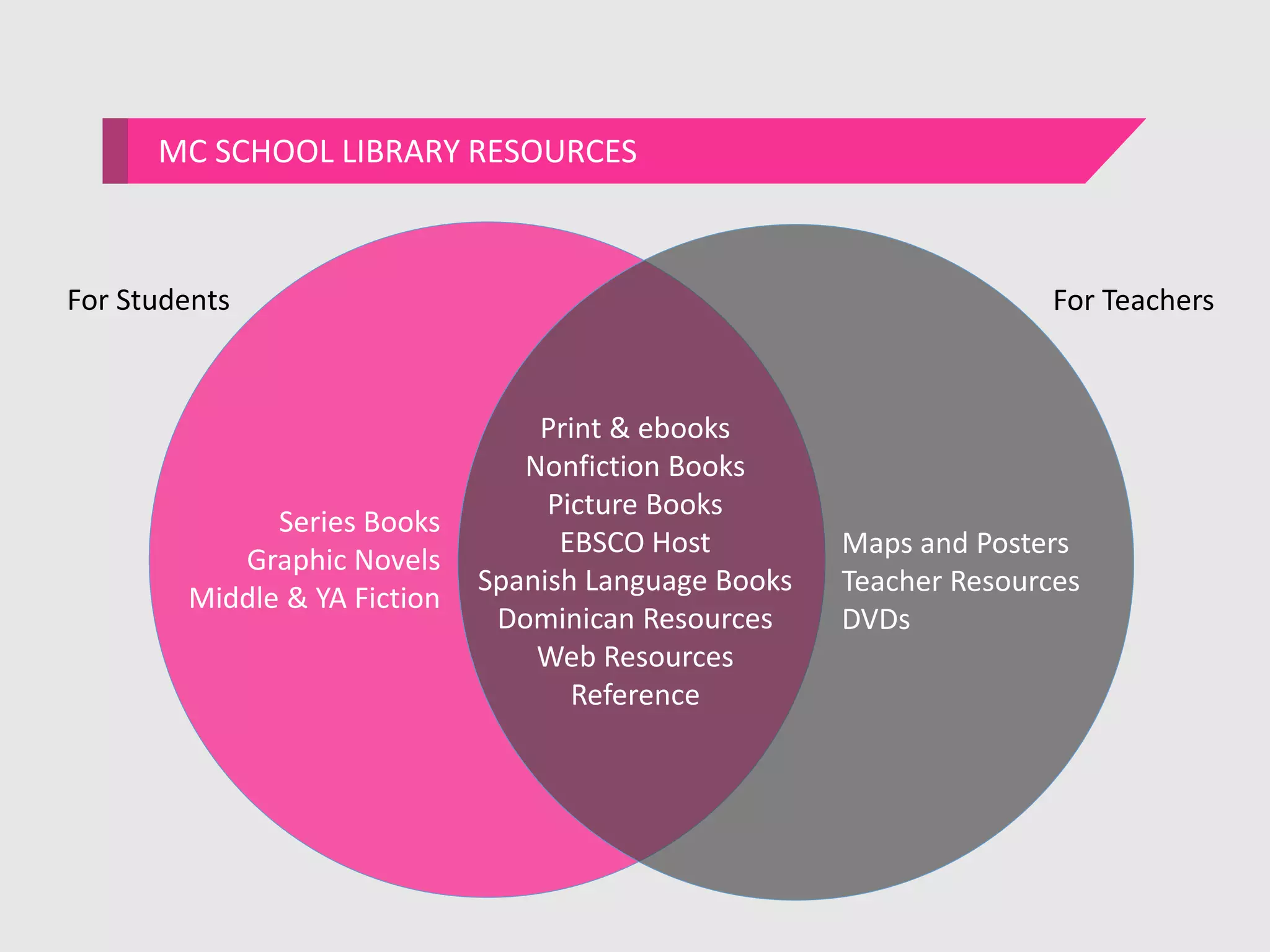
MC SCHOOL LIBRARY RESOURCES
Print & ebooks
Nonfiction Books
Picture Books
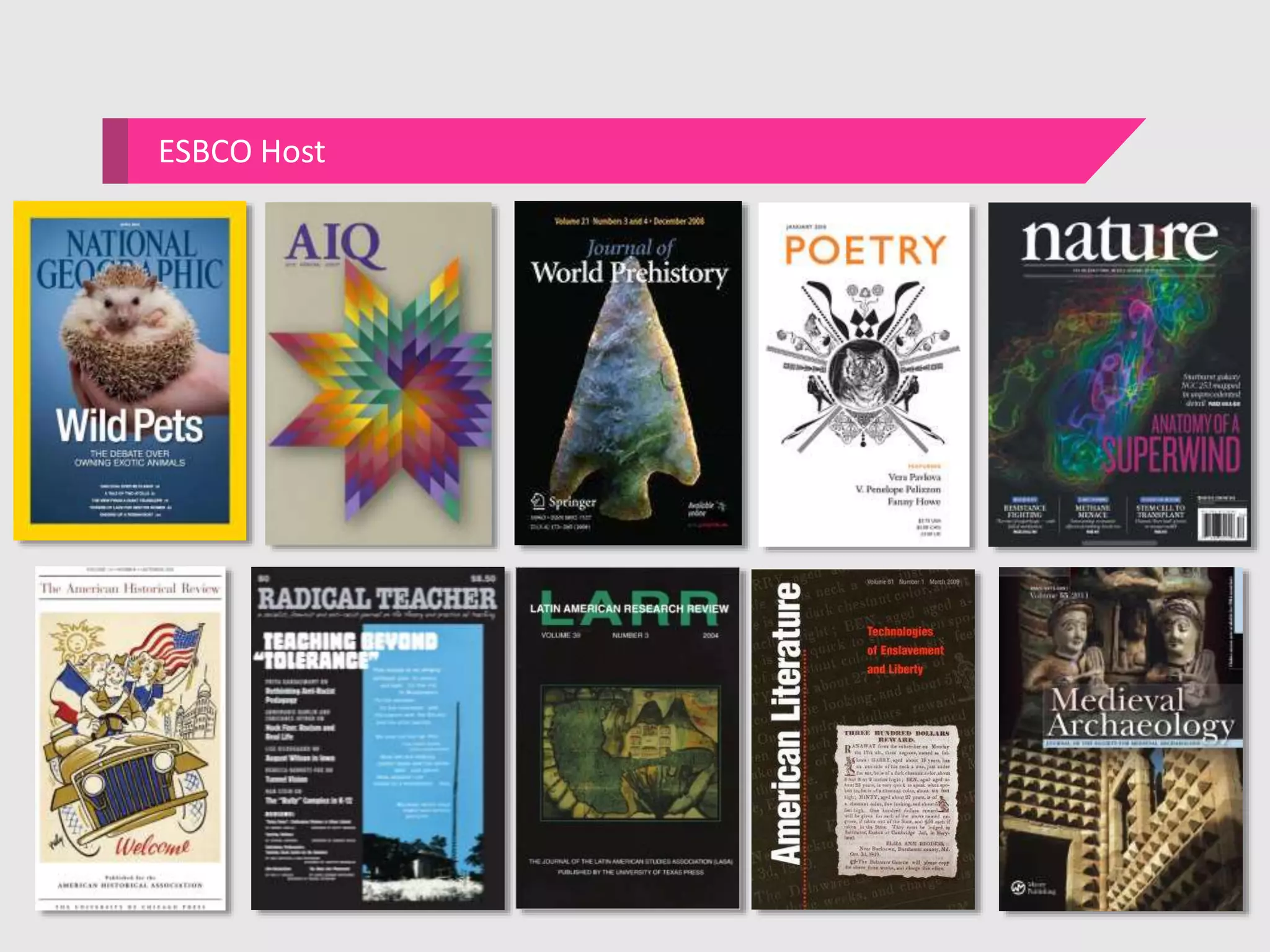
EBSCO Host
Spanish Language Books
Dominican Resources
Web Resources
Reference
Series Books
Graphic Novels
Middle & YA Fiction
Maps and Posters
Teacher Resources
DVDs
For Students For Teachers
ESBCO Host
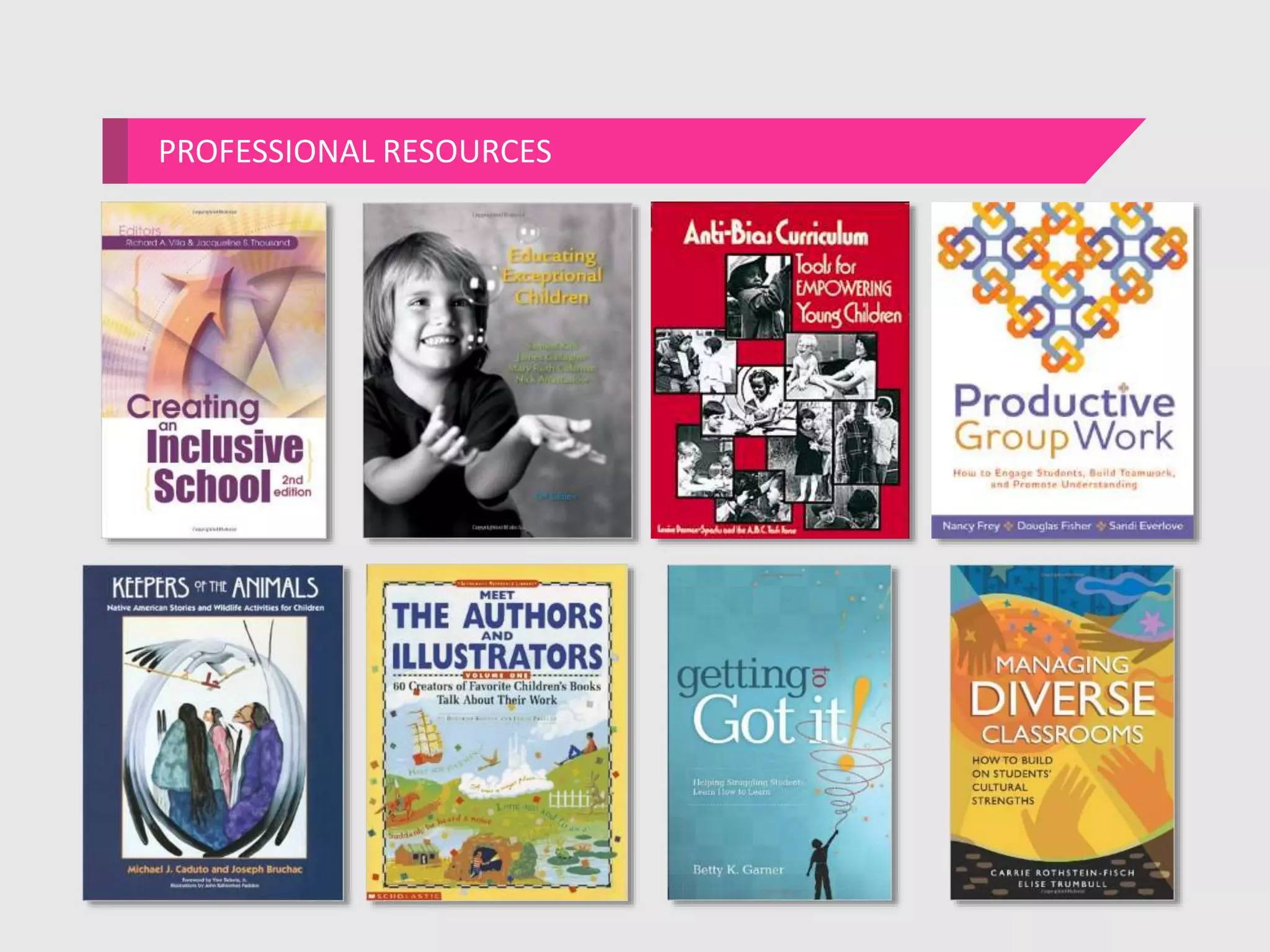
PROFESSIONAL RESOURCES
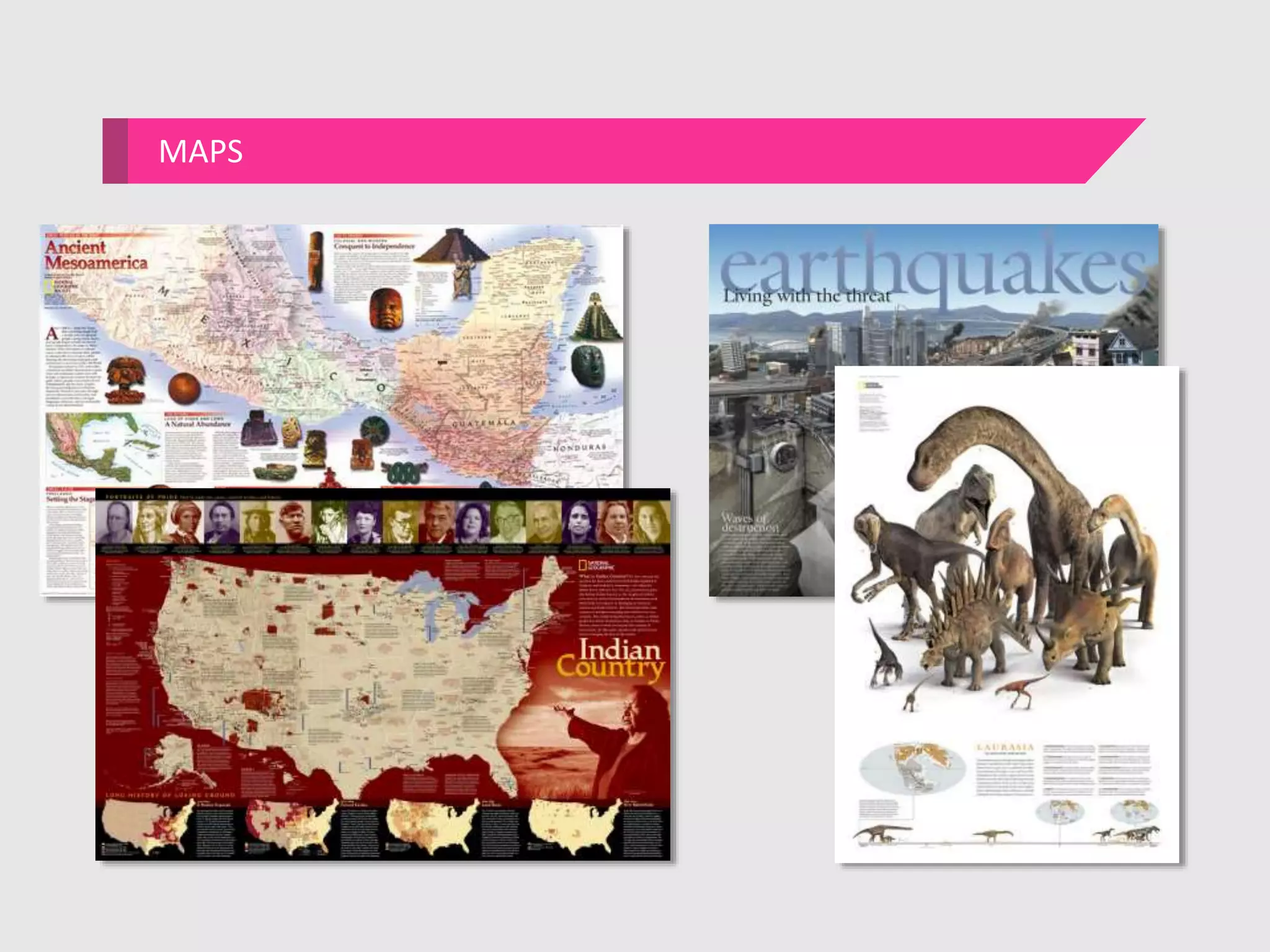
MAPS
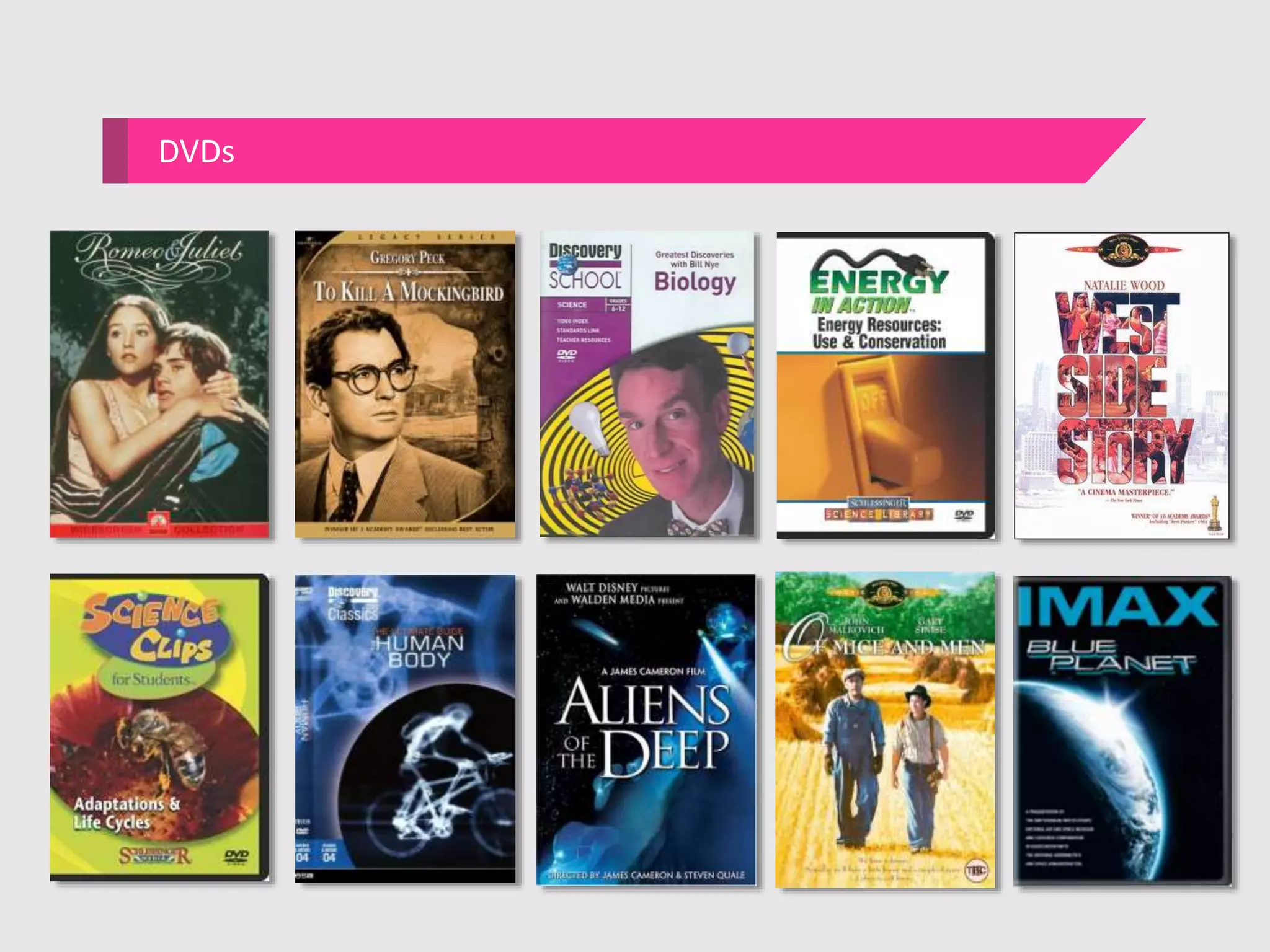
DVDs
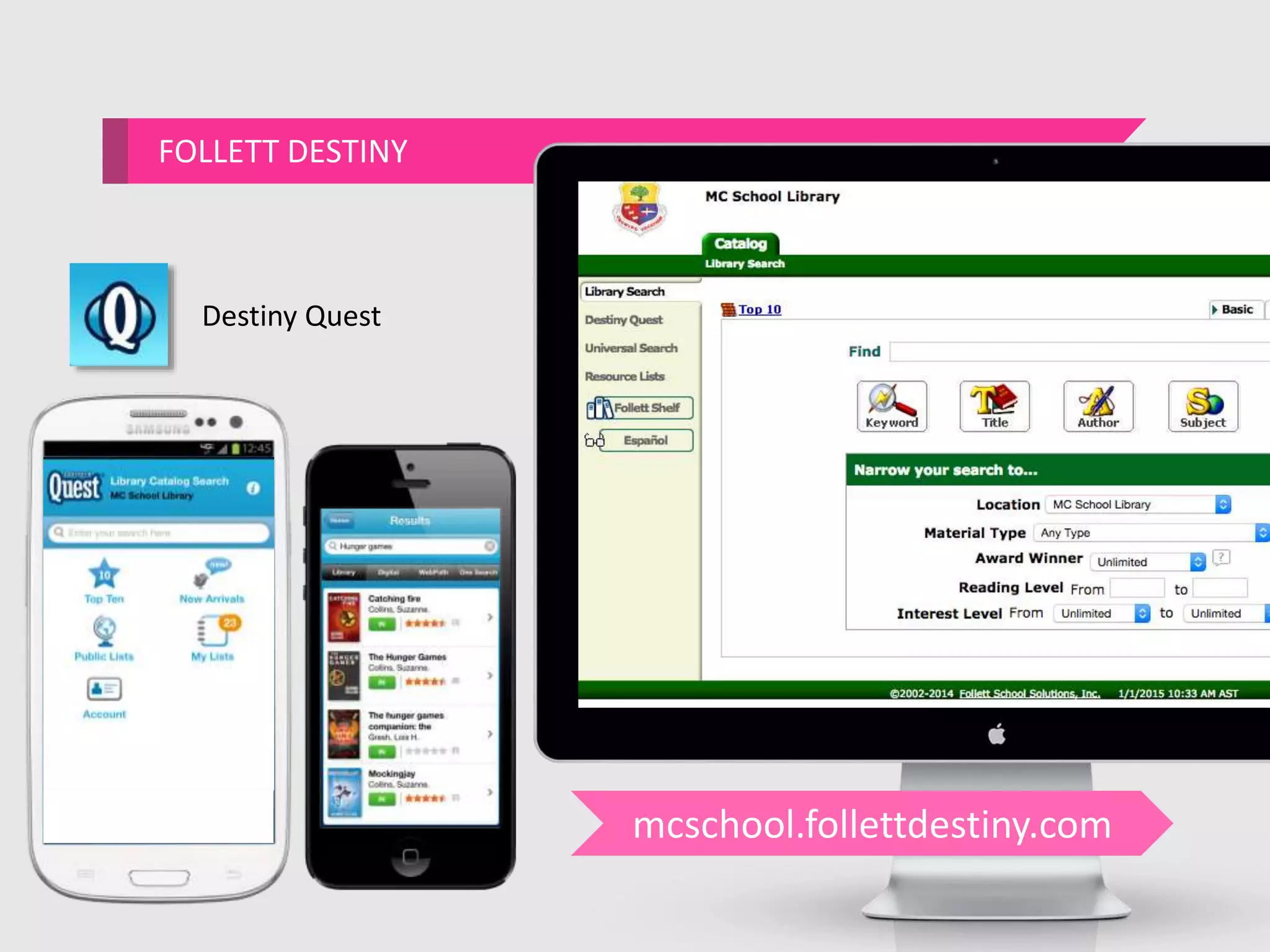
FOLLETT DESTINY
Destiny Quest
mcschool.follettdestiny.com
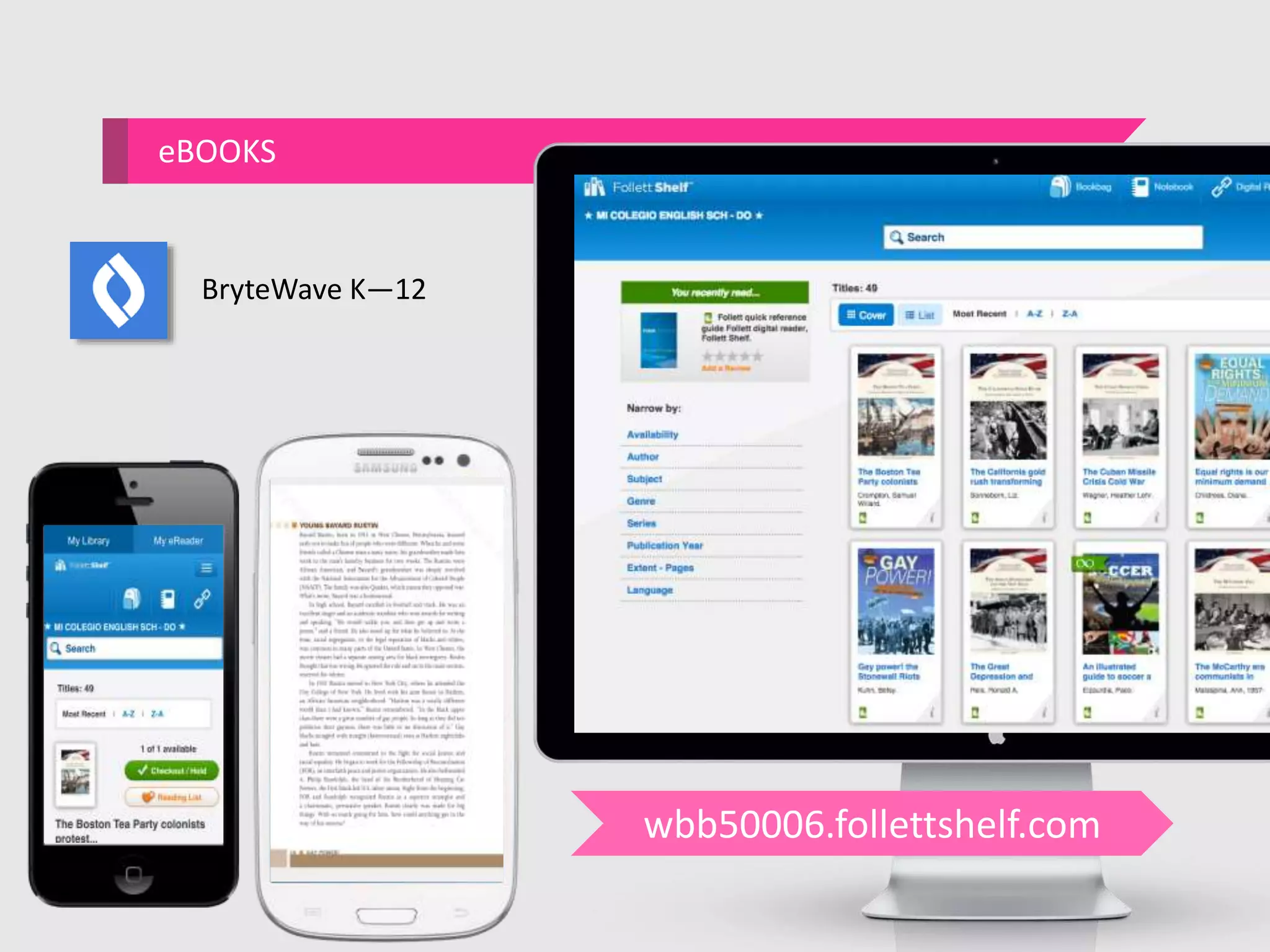
eBOOKS
wbb50006.follettshelf.com
BryteWave K—12
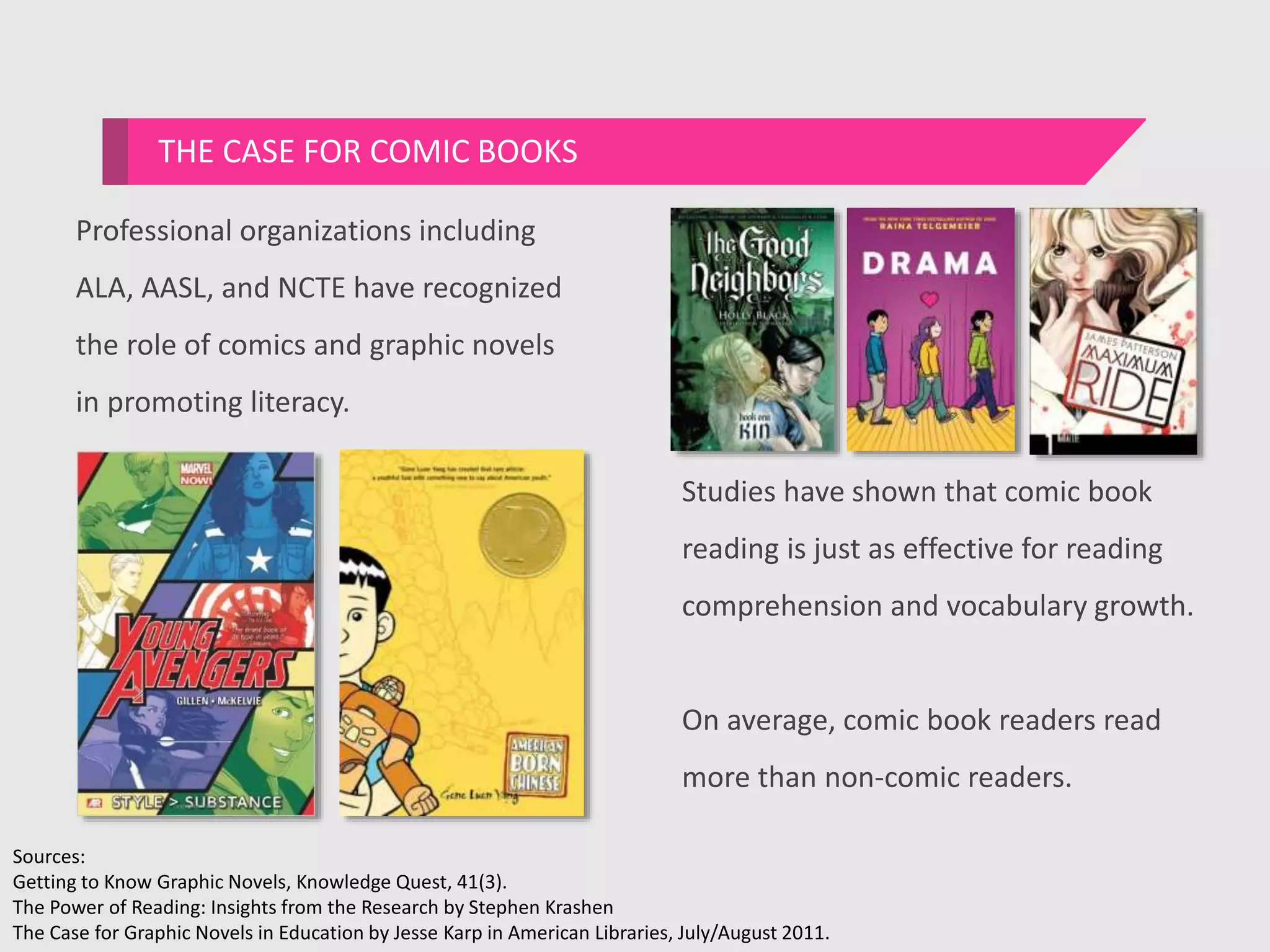
THE CASE FOR COMIC BOOKS
Professional organizations including
ALA, AASL, and NCTE have recognized
the role of comics and graphic novels
in promoting literacy.
Studies have shown that comic book
reading is just as effective for reading
comprehension and vocabulary growth.
On average, comic book readers read
more than non-comic readers.
Sources:
Getting to Know Graphic Novels, Knowledge Quest, 41(3).
The Power of Reading: Insights from the Research by Stephen Krashen
The Case for Graphic Novels in Education by Jesse Karp in American Libraries, July/August 2011.
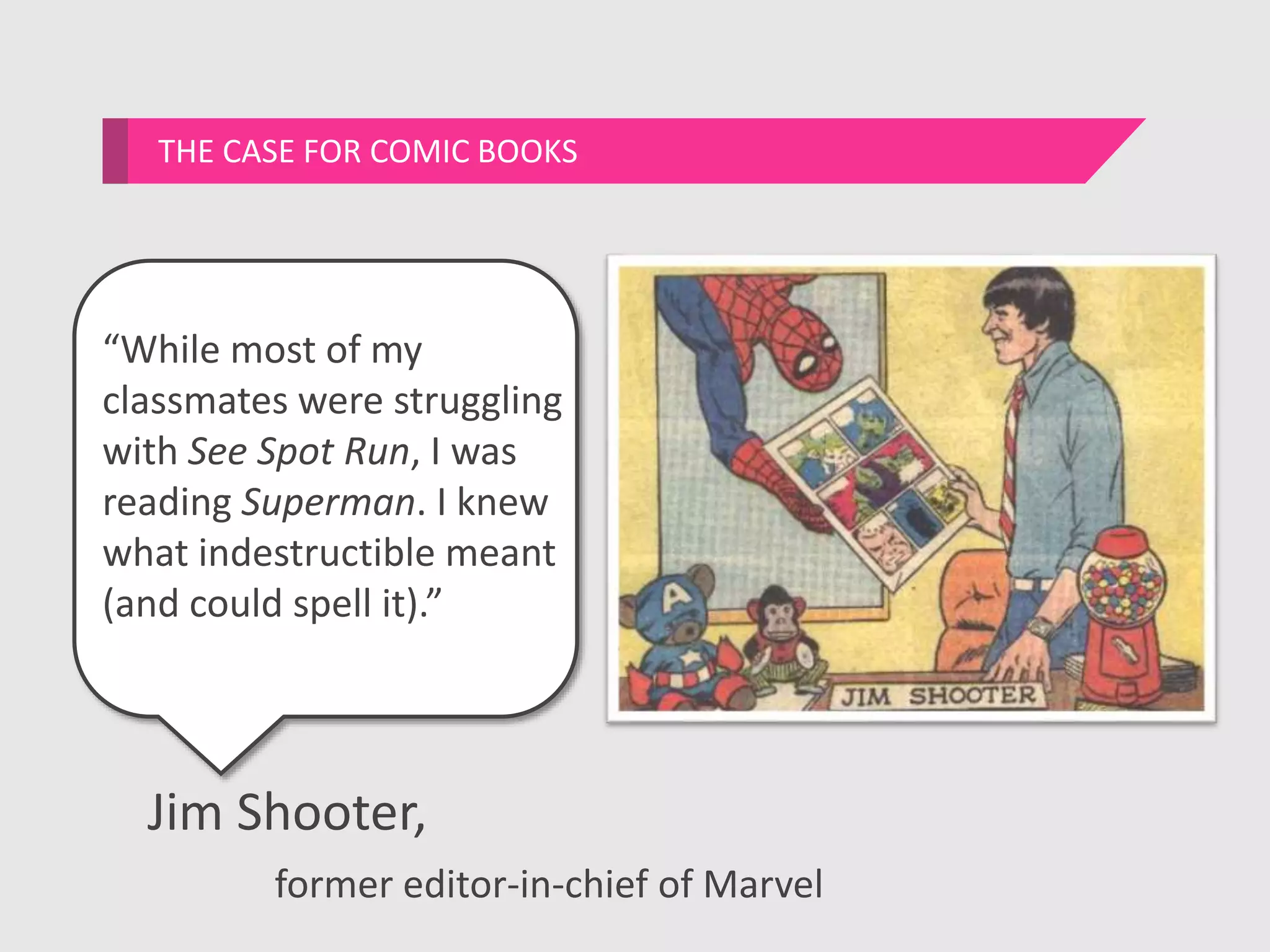
“While most of my
classmates were struggling
with See Spot Run, I was
reading Superman. I knew
what indestructible meant
(and could spell it).”
THE CASE FOR COMIC BOOKS
Jim Shooter,
former editor-in-chief of Marvel
THE CASE FOR COMIC BOOKS
PART II SERVICES
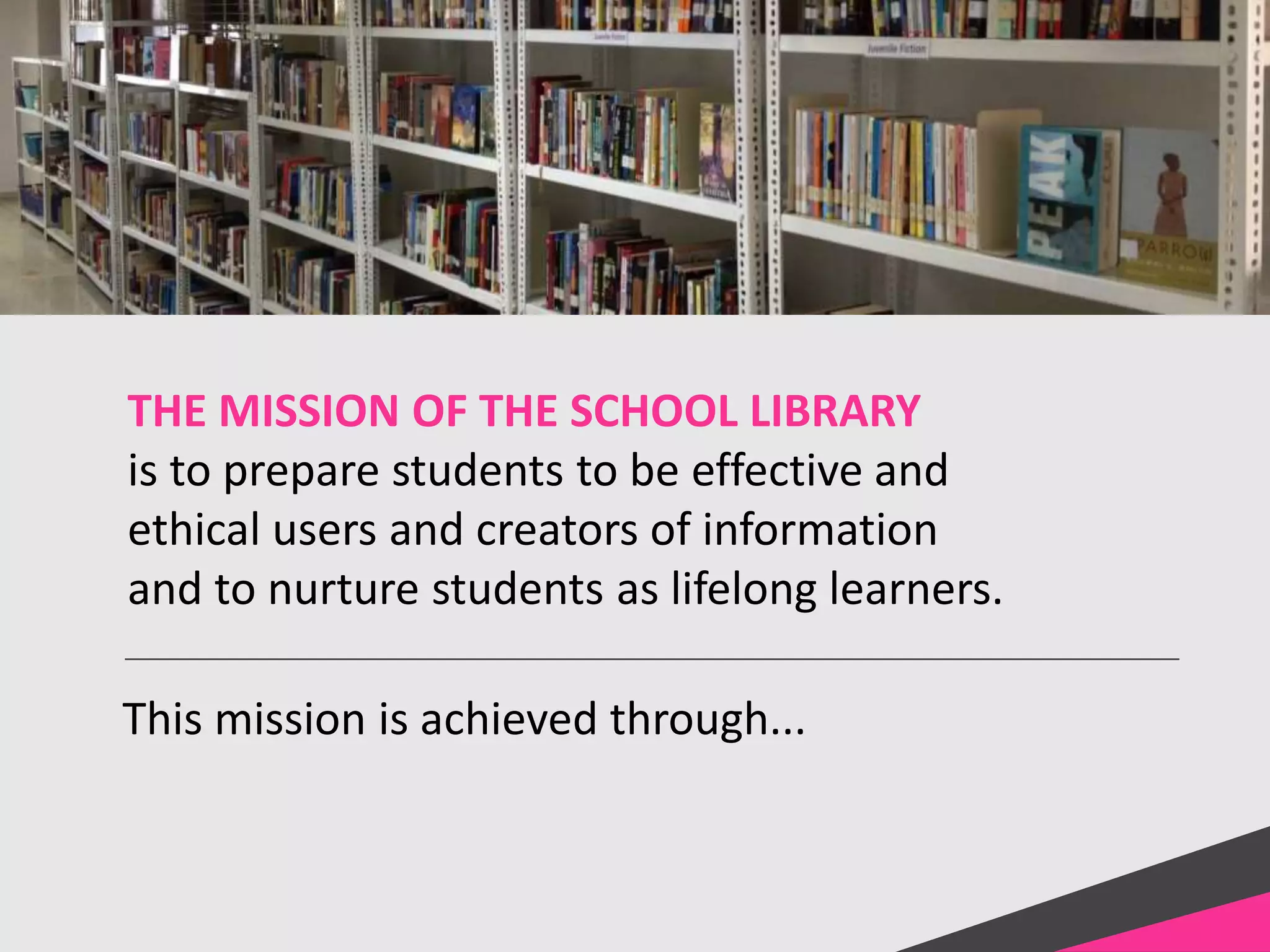
THE MISSION OF THE SCHOOL LIBRARY
is to prepare students to be effective and
ethical users and creators of information
and to nurture students as lifelong learners.
This mission is achieved through...
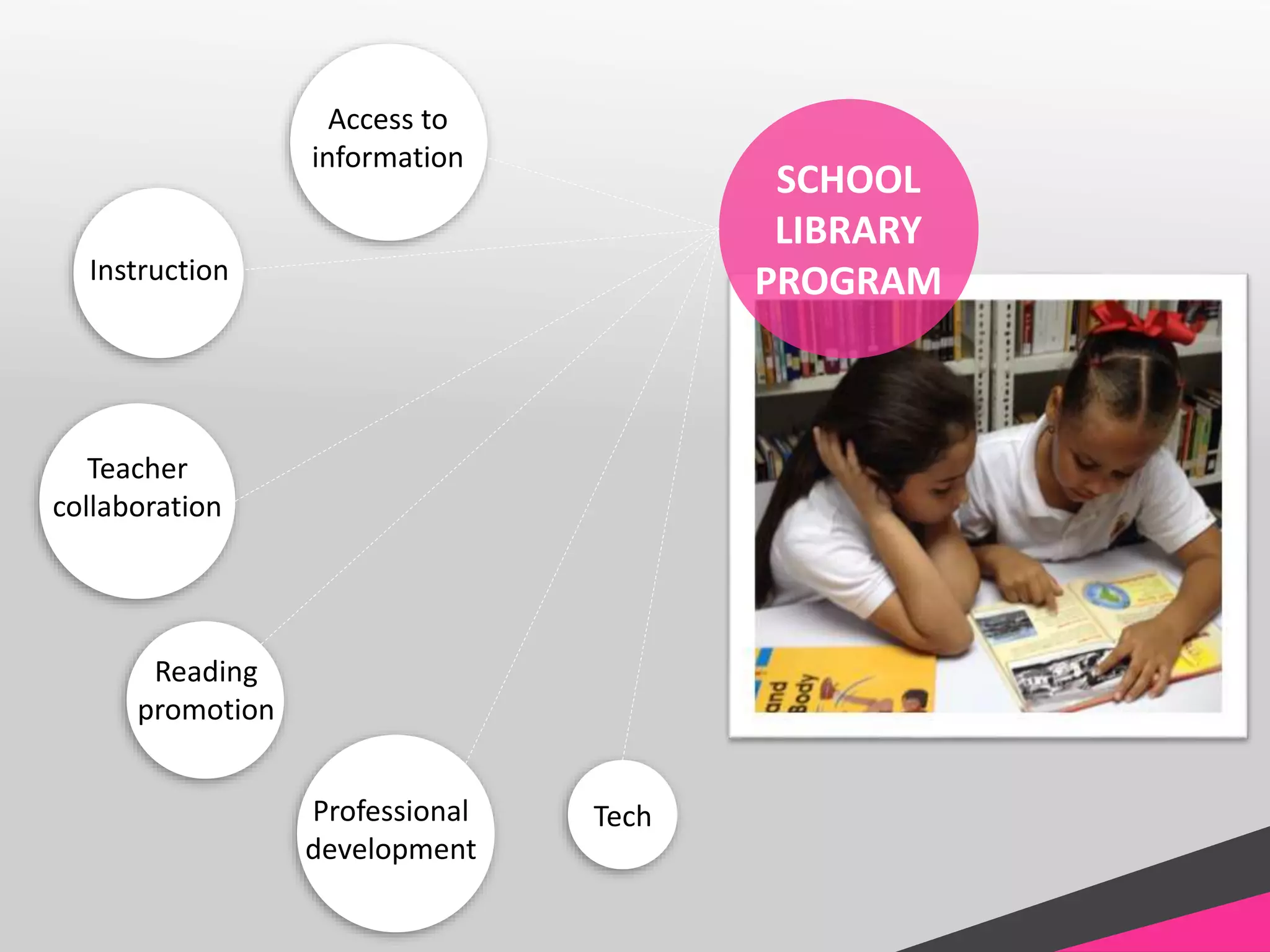
SCHOOL
LIBRARY
PROGRAM
Access to
information
Instruction
Teacher
collaboration
Professional
development
Tech
Reading
promotion
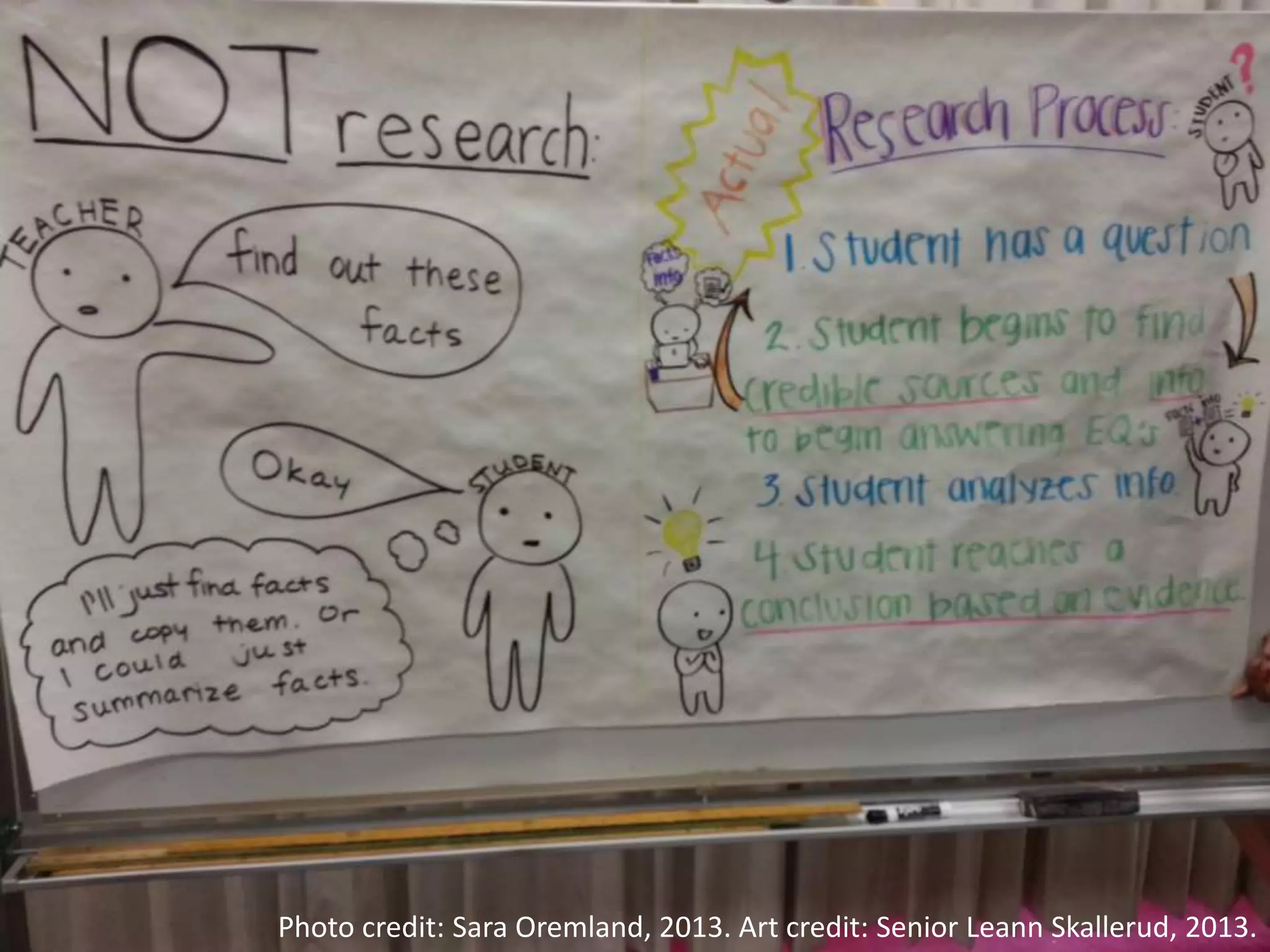
Why do we have students “do” research?
INFORMATION LITERACY
is knowing when and why you need information,
where to find it, and how to evaluate, use and
communicate it in an ethical manner.
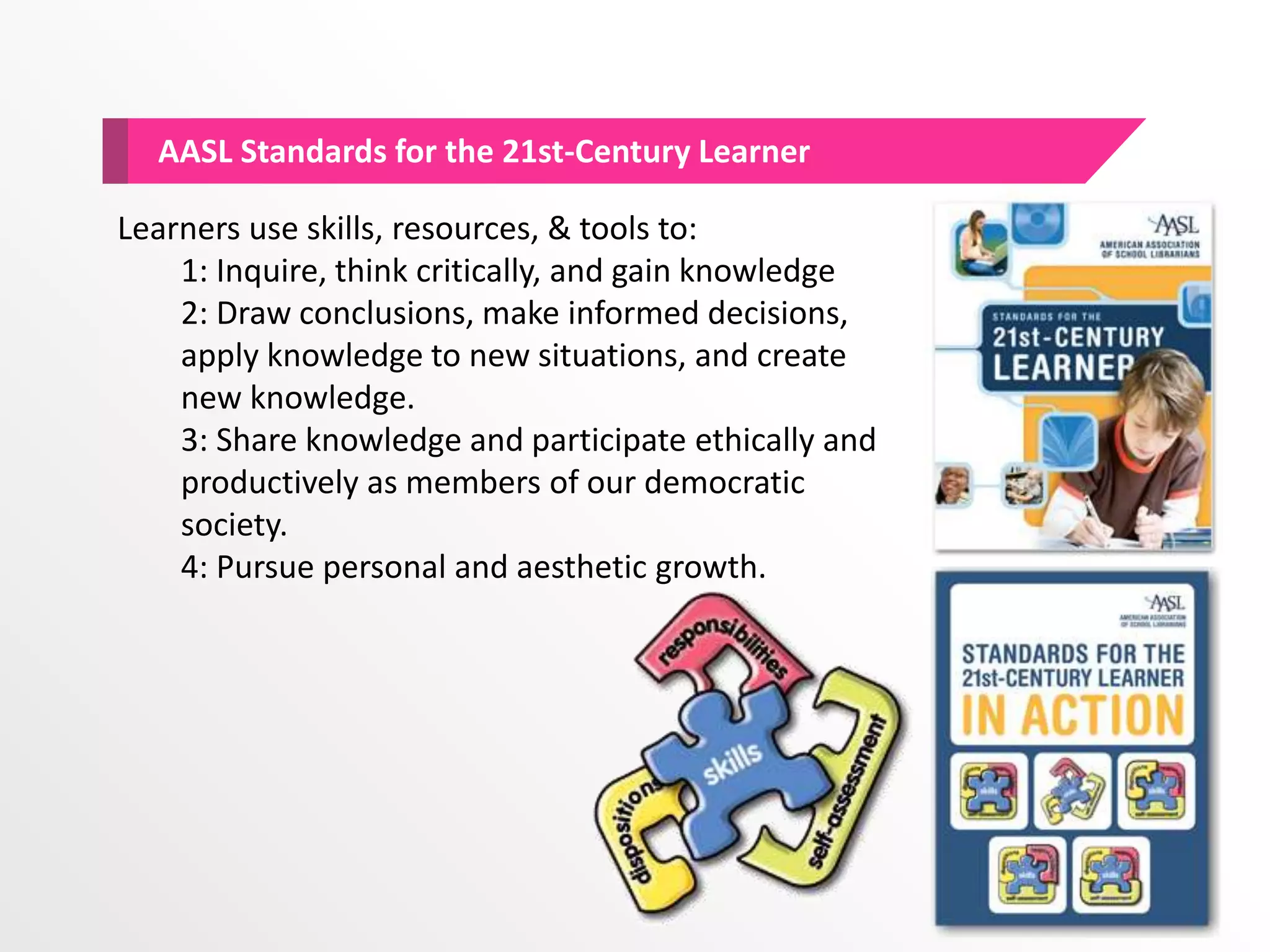
AASL Standards for the 21st-Century Learner
Learners use skills, resources, & tools to:
1: Inquire, think critically, and gain knowledge
2: Draw conclusions, make informed decisions,
apply knowledge to new situations, and create
new knowledge.
3: Share knowledge and participate ethically and
productively as members of our democratic
society.
4: Pursue personal and aesthetic growth.
Photo credit: Sara Oremland, 2013. Art credit: Senior Leann Skallerud, 2013.
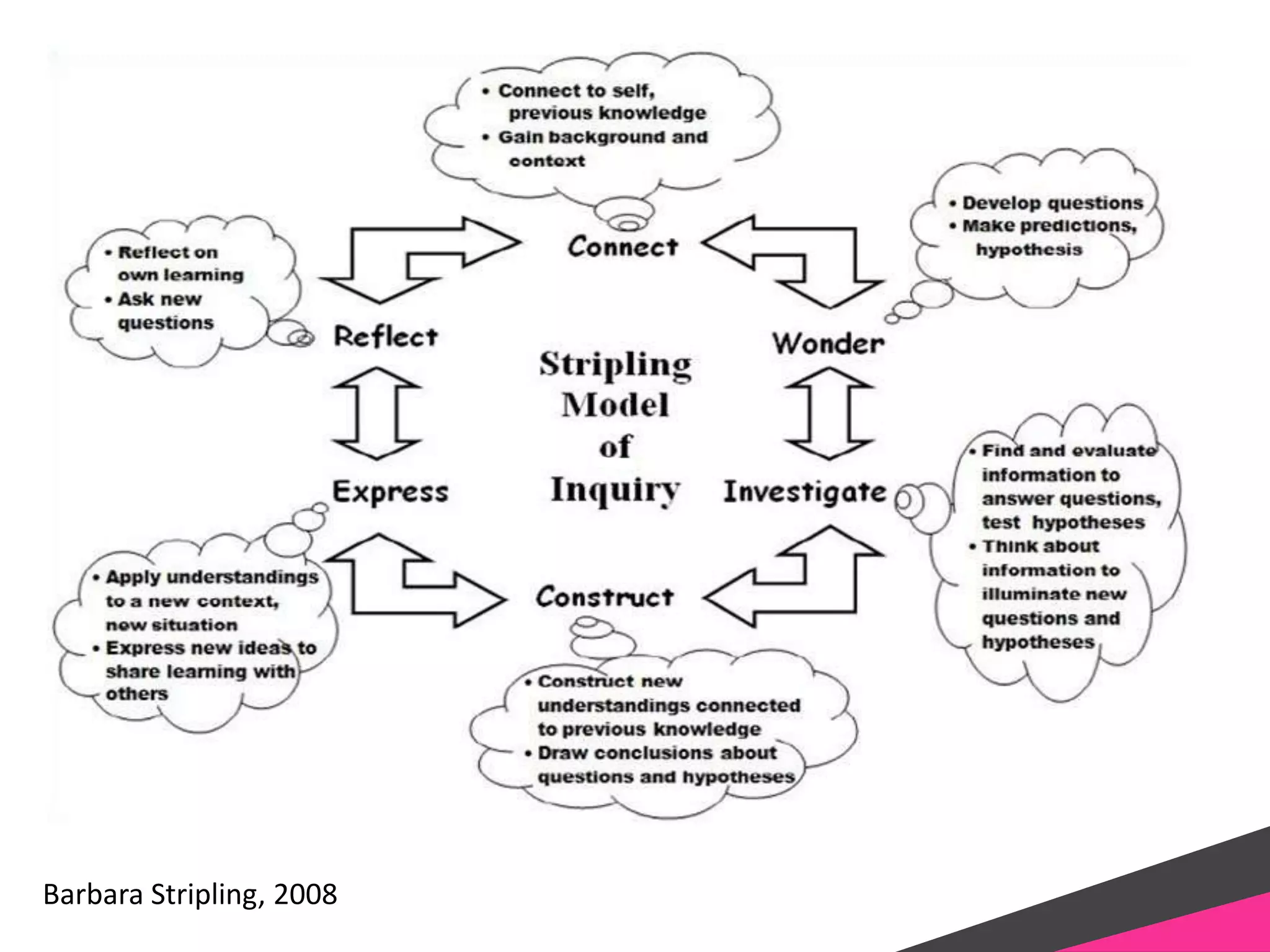
Barbara Stripling, 2008
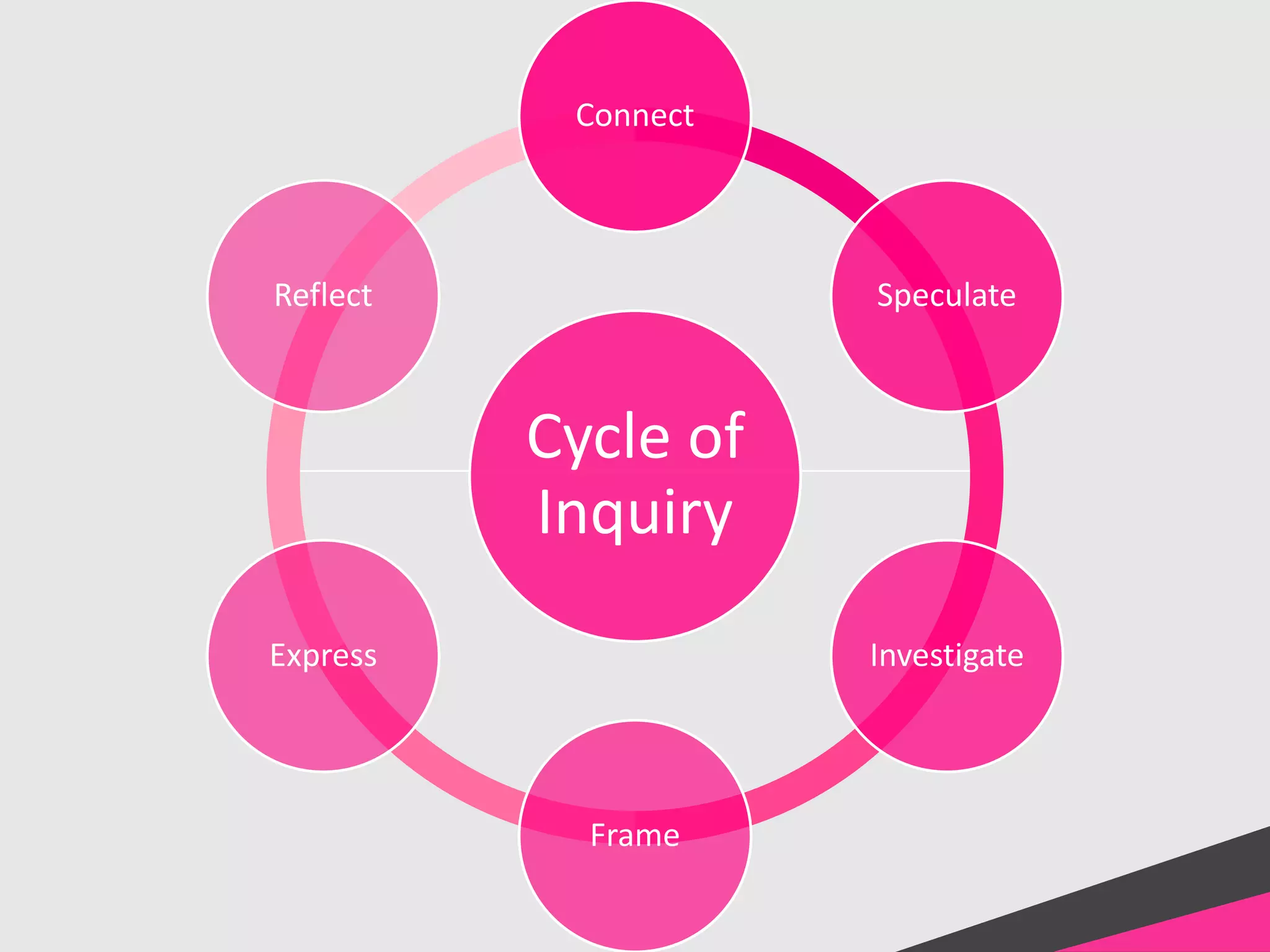
Cycle of
Inquiry
Connect
Speculate
Investigate
Frame
Express
Reflect
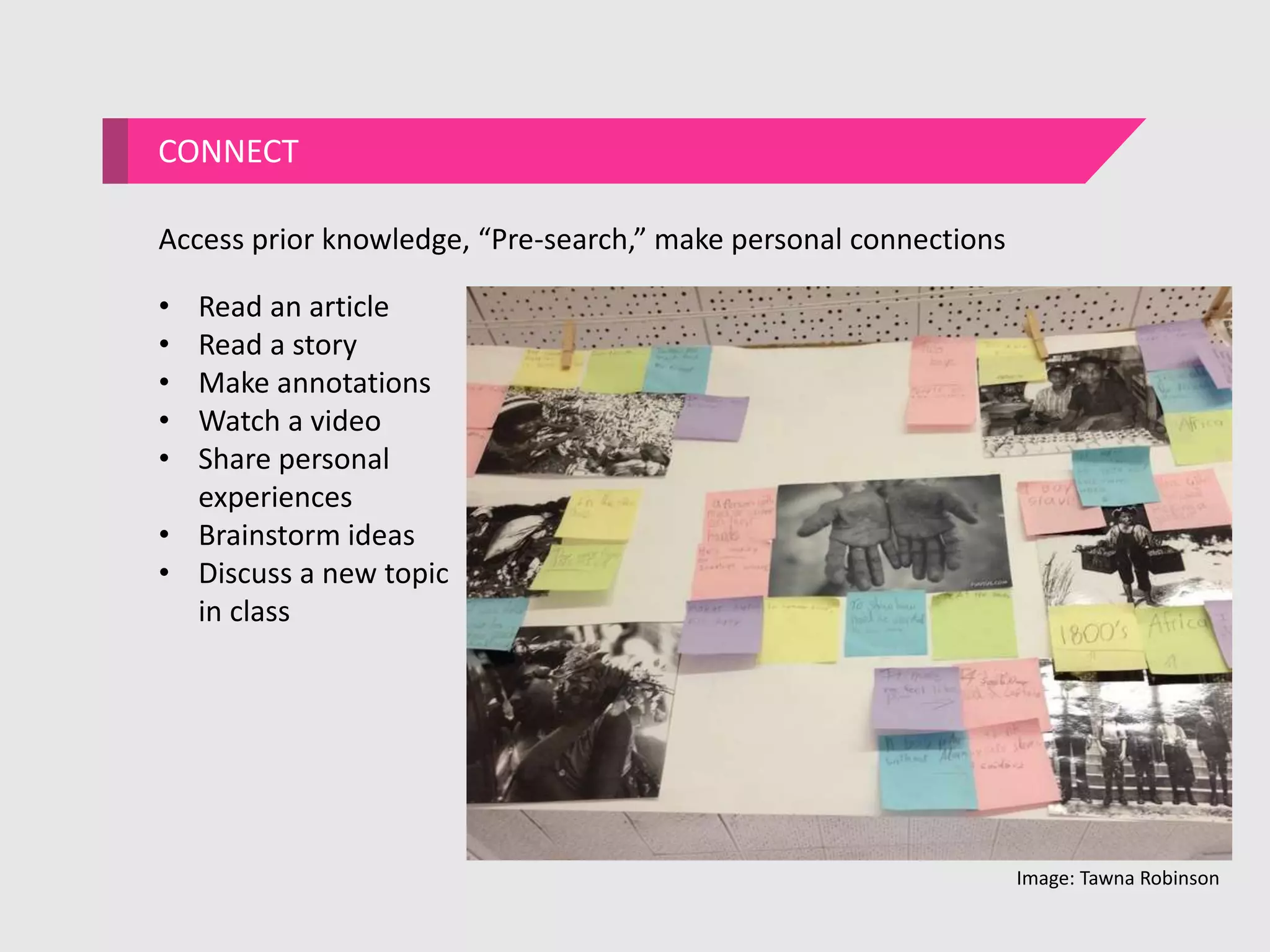
CONNECT
Access prior knowledge, “Pre-search,” make personal connections
• Read an article
• Read a story
• Make annotations
• Watch a video
• Share personal
experiences
• Brainstorm ideas
• Discuss a new topic
in class
Image: Tawna Robinson
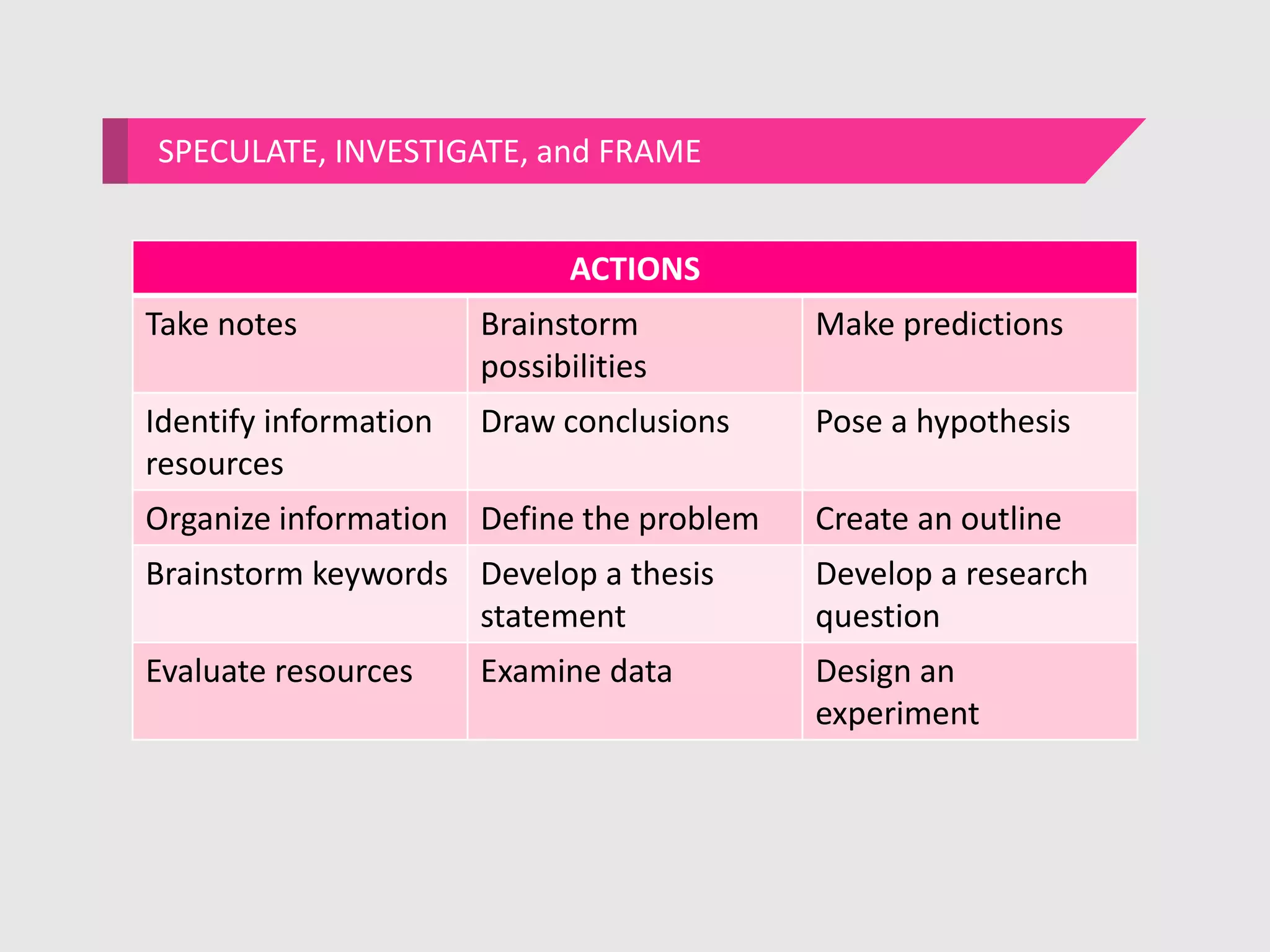
SPECULATE, INVESTIGATE, and FRAME
ACTIONS
Take notes Brainstorm
possibilities
Make predictions
Identify information
resources
Draw conclusions Pose a hypothesis
Organize information Define the problem Create an outline
Brainstorm keywords Develop a thesis
statement
Develop a research
question
Evaluate resources Examine data Design an
experiment
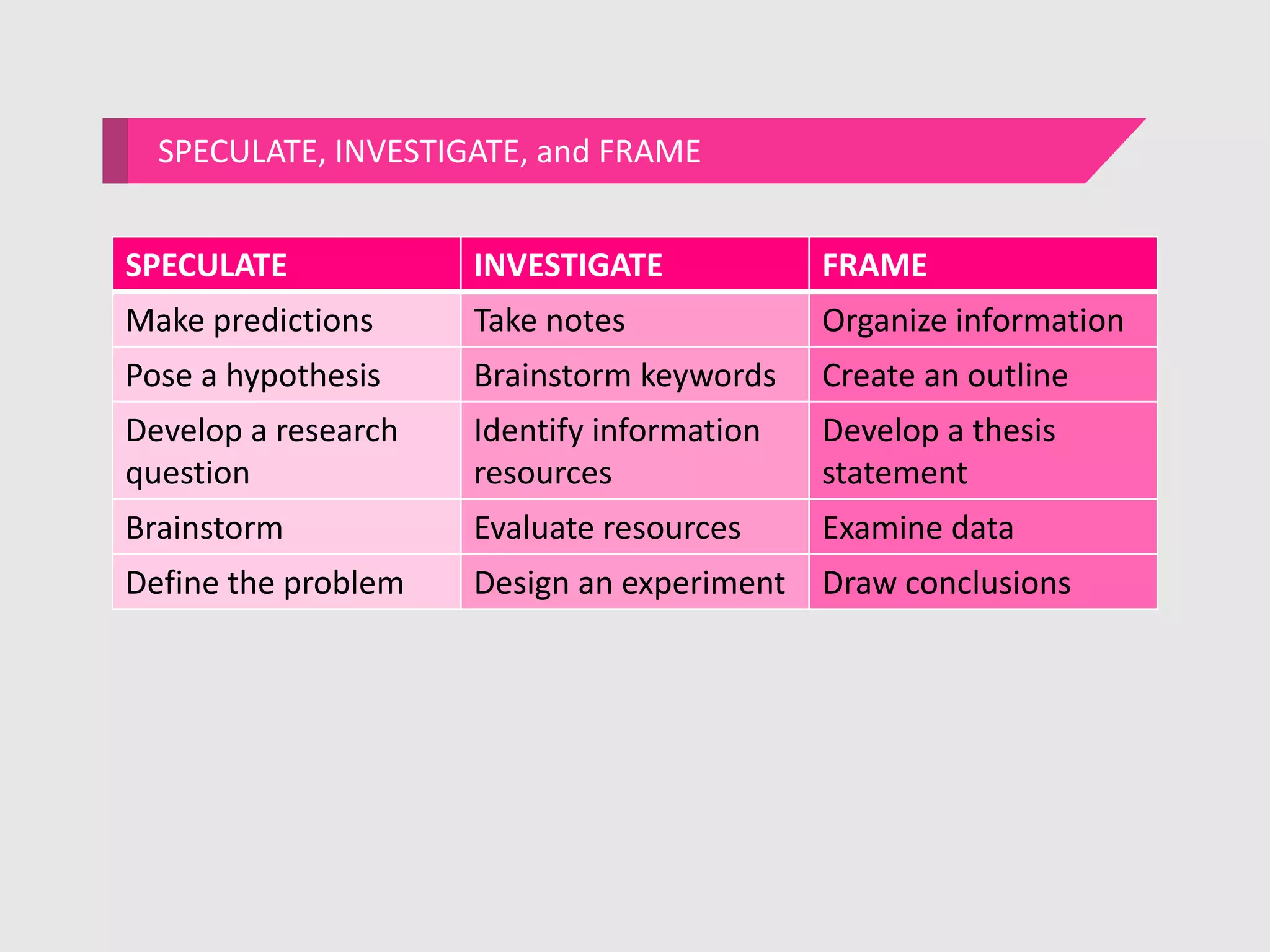
SPECULATE, INVESTIGATE, and FRAME
SPECULATE INVESTIGATE FRAME
Make predictions Take notes Organize information
Pose a hypothesis Brainstorm keywords Create an outline
Develop a research
question
Identify information
resources
Develop a thesis
statement
Brainstorm Evaluate resources Examine data
Define the problem Design an experiment Draw conclusions
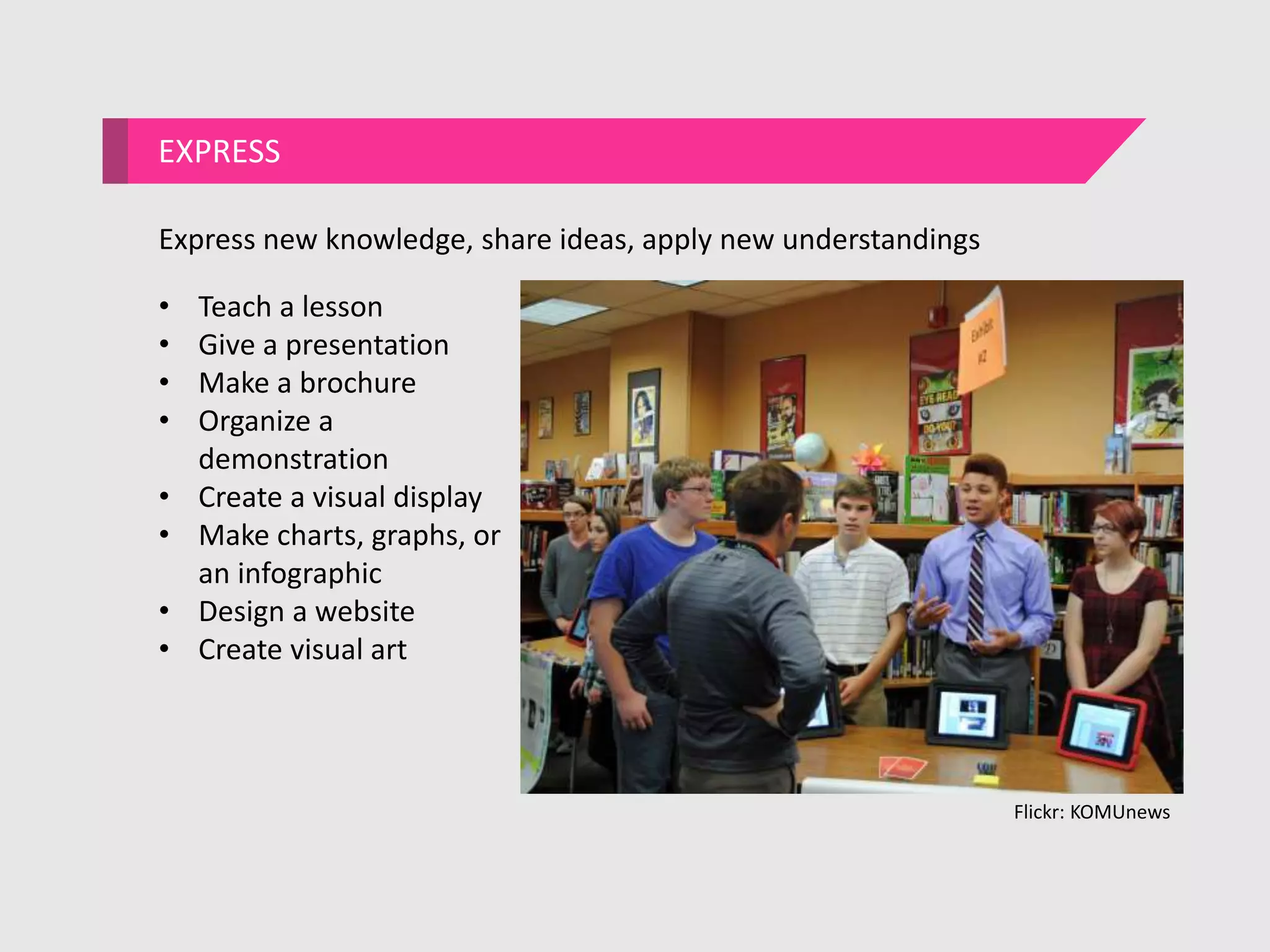
EXPRESS
• Teach a lesson
• Give a presentation
• Make a brochure
• Organize a
demonstration
• Create a visual display
• Make charts, graphs, or
an infographic
• Design a website
• Create visual art
Express new knowledge, share ideas, apply new understandings
Flickr: KOMUnews
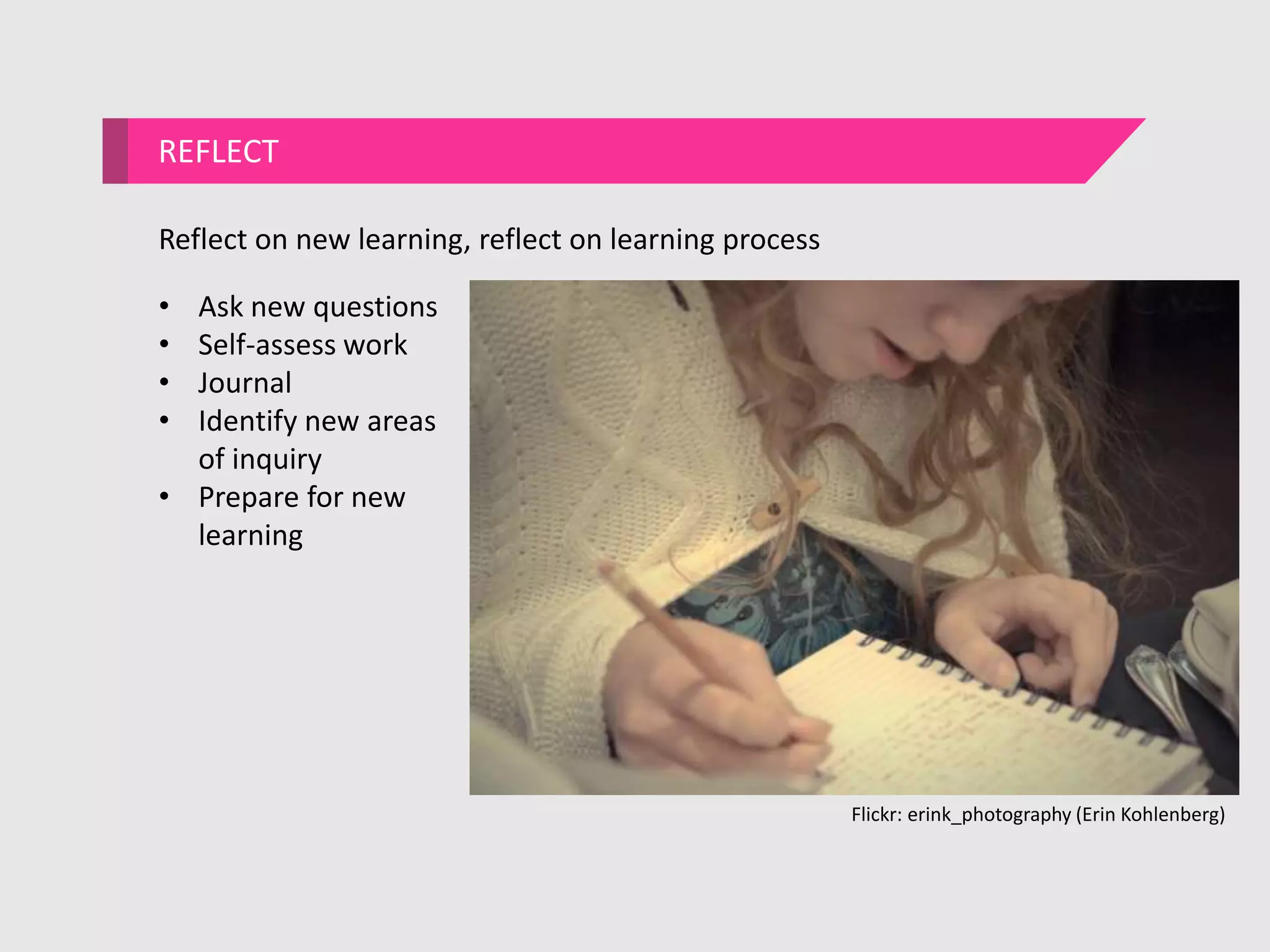
REFLECT
Reflect on new learning, reflect on learning process
• Ask new questions
• Self-assess work
• Journal
• Identify new areas
of inquiry
• Prepare for new
learning
Flickr: erink_photography (Erin Kohlenberg)
QUESTIONS?
THANK YOU

MC School Library (Middle/High School)

  • 1.
    MC SCHOOL LIBRARY ElizabethGartley 7 January 2015 Resources and Services: Middle and High School
  • 2.
  • 3.
    MC SCHOOL LIBRARYRESOURCES Print & ebooks Nonfiction Books Picture Books EBSCO Host Spanish Language Books Dominican Resources Web Resources Reference Series Books Graphic Novels Middle & YA Fiction Maps and Posters Teacher Resources DVDs For Students For Teachers
  • 4.
  • 5.
  • 6.
  • 7.
  • 8.
  • 9.
  • 10.
    THE CASE FORCOMIC BOOKS Professional organizations including ALA, AASL, and NCTE have recognized the role of comics and graphic novels in promoting literacy. Studies have shown that comic book reading is just as effective for reading comprehension and vocabulary growth. On average, comic book readers read more than non-comic readers. Sources: Getting to Know Graphic Novels, Knowledge Quest, 41(3). The Power of Reading: Insights from the Research by Stephen Krashen The Case for Graphic Novels in Education by Jesse Karp in American Libraries, July/August 2011.
  • 11.
    “While most ofmy classmates were struggling with See Spot Run, I was reading Superman. I knew what indestructible meant (and could spell it).” THE CASE FOR COMIC BOOKS Jim Shooter, former editor-in-chief of Marvel
  • 12.
    THE CASE FORCOMIC BOOKS
  • 13.
  • 14.
    THE MISSION OFTHE SCHOOL LIBRARY is to prepare students to be effective and ethical users and creators of information and to nurture students as lifelong learners. This mission is achieved through...
  • 15.
  • 16.
    Why do wehave students “do” research?
  • 17.
    INFORMATION LITERACY is knowingwhen and why you need information, where to find it, and how to evaluate, use and communicate it in an ethical manner.
  • 18.
    AASL Standards forthe 21st-Century Learner Learners use skills, resources, & tools to: 1: Inquire, think critically, and gain knowledge 2: Draw conclusions, make informed decisions, apply knowledge to new situations, and create new knowledge. 3: Share knowledge and participate ethically and productively as members of our democratic society. 4: Pursue personal and aesthetic growth.
  • 19.
    Photo credit: SaraOremland, 2013. Art credit: Senior Leann Skallerud, 2013.
  • 20.
  • 21.
  • 22.
    CONNECT Access prior knowledge,“Pre-search,” make personal connections • Read an article • Read a story • Make annotations • Watch a video • Share personal experiences • Brainstorm ideas • Discuss a new topic in class Image: Tawna Robinson
  • 23.
    SPECULATE, INVESTIGATE, andFRAME ACTIONS Take notes Brainstorm possibilities Make predictions Identify information resources Draw conclusions Pose a hypothesis Organize information Define the problem Create an outline Brainstorm keywords Develop a thesis statement Develop a research question Evaluate resources Examine data Design an experiment
  • 24.
    SPECULATE, INVESTIGATE, andFRAME SPECULATE INVESTIGATE FRAME Make predictions Take notes Organize information Pose a hypothesis Brainstorm keywords Create an outline Develop a research question Identify information resources Develop a thesis statement Brainstorm Evaluate resources Examine data Define the problem Design an experiment Draw conclusions
  • 25.
    EXPRESS • Teach alesson • Give a presentation • Make a brochure • Organize a demonstration • Create a visual display • Make charts, graphs, or an infographic • Design a website • Create visual art Express new knowledge, share ideas, apply new understandings Flickr: KOMUnews
  • 26.
    REFLECT Reflect on newlearning, reflect on learning process • Ask new questions • Self-assess work • Journal • Identify new areas of inquiry • Prepare for new learning Flickr: erink_photography (Erin Kohlenberg)
  • 27.
  • 28.