What is Halloween?


Halloween is a yearly celebration in
many countries on October 31st.



It is also called All Hallows Eve, when
we remember the dead and the saints.
Origins


Straddling the line between fall and
winter, plenty and paucity, life and
death, Halloween is a time of celebration
and superstition. It is thought to have
originated with the ancient Celtic festival
of Samhain, when people would light
bonfires and wear costumes to ward off
roaming ghosts.
In the eighth century, Pope Gregory III
designated November 1 as a time to honor all
saints and martyrs; the holiday, All Saints’
Day, incorporated some of the traditions of
Samhain, such as to dress up as scary
ghosts, ghouls, make jack o’lanterns and
make bonfires
 The evening before was known as All
Hallows’ Eve and later Halloween.

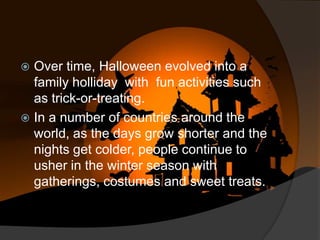
Over time, Halloween evolved into a
family holliday with fun activities such
as trick-or-treating.
 In a number of countries around the
world, as the days grow shorter and the
nights get colder, people continue to
usher in the winter season with
gatherings, costumes and sweet treats.

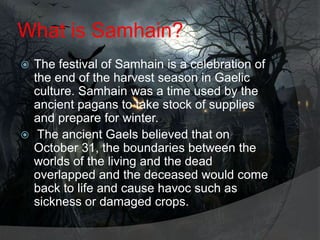
What is Samhain?
The festival of Samhain is a celebration of
the end of the harvest season in Gaelic
culture. Samhain was a time used by the
ancient pagans to take stock of supplies
and prepare for winter.
 The ancient Gaels believed that on
October 31, the boundaries between the
worlds of the living and the dead
overlapped and the deceased would come
back to life and cause havoc such as
sickness or damaged crops.

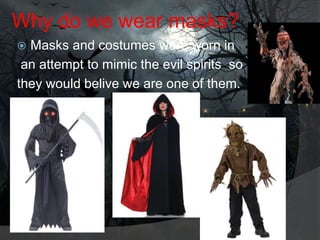
Why do we wear masks?
Masks and costumes were worn in
an attempt to mimic the evil spirits so
they would belive we are one of them.

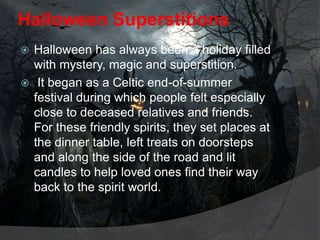
Halloween Superstitions
Halloween has always been a holiday filled
with mystery, magic and superstition.
 It began as a Celtic end-of-summer
festival during which people felt especially
close to deceased relatives and friends.
For these friendly spirits, they set places at
the dinner table, left treats on doorsteps
and along the side of the road and lit
candles to help loved ones find their way
back to the spirit world.



Today's Halloween ghosts are often
depicted as more fearsome and
malevolent, and our customs and
superstitions are scarier too. We avoid
crossing paths with black cats, afraid
that they might bring us bad luck.

And around Halloween,
especially, we try to
avoid breaking mirrors,
stepping on cracks in the
road or spilling salt.

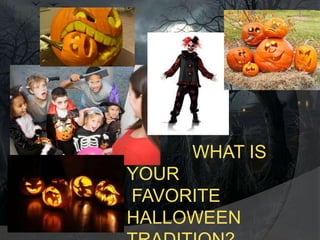
WHAT IS

YOUR
FAVORITE
HALLOWEEN

Happy halloween

  • 2.
    What is Halloween?  Halloweenis a yearly celebration in many countries on October 31st.  It is also called All Hallows Eve, when we remember the dead and the saints.
  • 3.
    Origins  Straddling the linebetween fall and winter, plenty and paucity, life and death, Halloween is a time of celebration and superstition. It is thought to have originated with the ancient Celtic festival of Samhain, when people would light bonfires and wear costumes to ward off roaming ghosts.
  • 4.
    In the eighthcentury, Pope Gregory III designated November 1 as a time to honor all saints and martyrs; the holiday, All Saints’ Day, incorporated some of the traditions of Samhain, such as to dress up as scary ghosts, ghouls, make jack o’lanterns and make bonfires  The evening before was known as All Hallows’ Eve and later Halloween. 
  • 5.
    Over time, Halloweenevolved into a family holliday with fun activities such as trick-or-treating.  In a number of countries around the world, as the days grow shorter and the nights get colder, people continue to usher in the winter season with gatherings, costumes and sweet treats. 
  • 6.
    What is Samhain? Thefestival of Samhain is a celebration of the end of the harvest season in Gaelic culture. Samhain was a time used by the ancient pagans to take stock of supplies and prepare for winter.  The ancient Gaels believed that on October 31, the boundaries between the worlds of the living and the dead overlapped and the deceased would come back to life and cause havoc such as sickness or damaged crops. 
  • 7.
    Why do wewear masks? Masks and costumes were worn in an attempt to mimic the evil spirits so they would belive we are one of them. 
  • 8.
    Halloween Superstitions Halloween hasalways been a holiday filled with mystery, magic and superstition.  It began as a Celtic end-of-summer festival during which people felt especially close to deceased relatives and friends. For these friendly spirits, they set places at the dinner table, left treats on doorsteps and along the side of the road and lit candles to help loved ones find their way back to the spirit world. 
  • 9.
     Today's Halloween ghostsare often depicted as more fearsome and malevolent, and our customs and superstitions are scarier too. We avoid crossing paths with black cats, afraid that they might bring us bad luck. And around Halloween, especially, we try to avoid breaking mirrors, stepping on cracks in the road or spilling salt. 
  • 10.