


ENTREPRENEURSHIP
Presented by
Simran Kaur
MBA 2nd year
IGICM
Syllabus
Meaning, Definition and Concept of Enterprise, Entrepreneurship and
Entrepreneurship Development, Evolution of Entrepreneurship, Theories of
Entrepreneurship, Characteristics and Skills of Entrepreneurship, Concepts of
Intrapreneurship, Entrepreneur vs Intrapreneur, Entrepreneur vs
Entrepreneurship, Entrepreneur vs Manager, Role of Entrepreneurship in
Economic Development, Factors affecting Entrepreneurship, Problems of
Entrepreneurship
Enterprise
• Organization of group of people working in different fields with a common
objective to achieve an innovative goal.
• Can be called “Start-up”.
• Here the term “innovative” may either mean to be a new idea or a new way
of implementing the on-going idea.
Entrepreneurship
• Practice of acting of entrepreneur to start economical activities.
• Process of creating something new of value of devoting(giving) the
necessary time and efforts.
Entrepreneur
• Person who is in effective control, putting ventures to maximize profit.
• Person needs to be innovative within himself/herself and ready to frame
strategies.
• Person should come up with new idea and at the same time be ready to incur
high risk.
Characteristics of Entrepreneur
• Self employed
• Independent
• Initiative
• Analytical ability
• Risk taker
• Innovative
Characteristics of Entrepreneur(contd.)
• Persistent
• Hard working
• Imaginative
Intrapreneurs
• People who put new ideas into action within established businesses.
• A person within a large corporation who takes direct personal responsibility
for turning idea into a profitable, finished product through assertive risk
taking and innovation.
Entrepreneurship vs Intrapreneurship
• Entrepreneurship includes entrepreneurs whereas Intrapreneurship includes
intrapreneurs.
• Entrepreneurship includes co-founders whereas Intrapreneurship includes
core cross-functional team that shares vision.
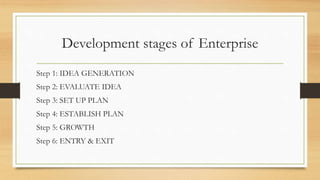
Development stages of Enterprise
Step 1: IDEA GENERATION
Step 2: EVALUATE IDEA
Step 3: SET UP PLAN
Step 4: ESTABLISH PLAN
Step 5: GROWTH
Step 6: ENTRY & EXIT
Entrepreneur vs Manager
• Entrepreneur is the act of own goal orientation whereas Managers are
usually below entrepreneurs.
• Entrepreneur has his/her own plan whereas Managers inherits planning
from the Head of the Organization(or Entrepreneur).
• Entrepreneur is wholly dependent on his/her own capabilities whereas
Managers are dependent on the resources of the organization to achieve
short-term and long-term goals.
Entrepreneur vs Manager(contd.)
• Entrepreneur has his/her own targets whereas Managers inherit targets from
the Head of the Organization.
• Entrepreneur is specialized in all fields whereas Managers are majorly
specialized in a single field.
Economic Development of Entrepreneurship
• Increases National Income through Exports and Imports
• Huge foreign currency intake
• Entrepreneurs help in contribution to cross boundary trade
• As number of enterprise increases, GDP of the nation increases.
• Large scale growth in international business
• Attracts new marketing techniques
Problems of Entrepreneurship
• Insufficient capital
• Weak management
• Ineffective marketing
• Addressing the problems
THANK YOU!!!

Entrepreneurship

  • 1.
  • 2.
    Syllabus Meaning, Definition andConcept of Enterprise, Entrepreneurship and Entrepreneurship Development, Evolution of Entrepreneurship, Theories of Entrepreneurship, Characteristics and Skills of Entrepreneurship, Concepts of Intrapreneurship, Entrepreneur vs Intrapreneur, Entrepreneur vs Entrepreneurship, Entrepreneur vs Manager, Role of Entrepreneurship in Economic Development, Factors affecting Entrepreneurship, Problems of Entrepreneurship
  • 3.
    Enterprise • Organization ofgroup of people working in different fields with a common objective to achieve an innovative goal. • Can be called “Start-up”. • Here the term “innovative” may either mean to be a new idea or a new way of implementing the on-going idea.
  • 4.
    Entrepreneurship • Practice ofacting of entrepreneur to start economical activities. • Process of creating something new of value of devoting(giving) the necessary time and efforts.
  • 5.
    Entrepreneur • Person whois in effective control, putting ventures to maximize profit. • Person needs to be innovative within himself/herself and ready to frame strategies. • Person should come up with new idea and at the same time be ready to incur high risk.
  • 6.
    Characteristics of Entrepreneur •Self employed • Independent • Initiative • Analytical ability • Risk taker • Innovative
  • 7.
    Characteristics of Entrepreneur(contd.) •Persistent • Hard working • Imaginative
  • 8.
    Intrapreneurs • People whoput new ideas into action within established businesses. • A person within a large corporation who takes direct personal responsibility for turning idea into a profitable, finished product through assertive risk taking and innovation.
  • 9.
    Entrepreneurship vs Intrapreneurship •Entrepreneurship includes entrepreneurs whereas Intrapreneurship includes intrapreneurs. • Entrepreneurship includes co-founders whereas Intrapreneurship includes core cross-functional team that shares vision.
  • 10.
    Development stages ofEnterprise Step 1: IDEA GENERATION Step 2: EVALUATE IDEA Step 3: SET UP PLAN Step 4: ESTABLISH PLAN Step 5: GROWTH Step 6: ENTRY & EXIT
  • 11.
    Entrepreneur vs Manager •Entrepreneur is the act of own goal orientation whereas Managers are usually below entrepreneurs. • Entrepreneur has his/her own plan whereas Managers inherits planning from the Head of the Organization(or Entrepreneur). • Entrepreneur is wholly dependent on his/her own capabilities whereas Managers are dependent on the resources of the organization to achieve short-term and long-term goals.
  • 12.
    Entrepreneur vs Manager(contd.) •Entrepreneur has his/her own targets whereas Managers inherit targets from the Head of the Organization. • Entrepreneur is specialized in all fields whereas Managers are majorly specialized in a single field.
  • 13.
    Economic Development ofEntrepreneurship • Increases National Income through Exports and Imports • Huge foreign currency intake • Entrepreneurs help in contribution to cross boundary trade • As number of enterprise increases, GDP of the nation increases. • Large scale growth in international business • Attracts new marketing techniques
  • 14.
    Problems of Entrepreneurship •Insufficient capital • Weak management • Ineffective marketing • Addressing the problems
  • 15.