
<Insert Picture Here>


Enterprise 2.0: Culture. Strategy. Software.
Emiliano Pecis
Principal Sales Consulant
Culture.
Strategy.
Software.
Enterprise 2.0. Tony’s problem


“Tomorrow, Tony will have
to explain the new features
of a new product (never
seen before), to a new
customer (never seen
before).
Enterprise 2.0. Tony queries…
• He connects to his E20 console and queries his
  Social Search Engine using the customer’s name as a
  single keyword.

• The social search engine returns results categorized
  by tags, sources, etc). This special engine uses:

  • recommendation engine: aggregating bookmarks and tags
    of all colleagues to maximize the collective intelligence
    knowledge
  • reputation engine: privileging most authoritative sources
Enterprise 2.0. Tony receives…
• The social search engine understands (from the tags)
  that Tony is searching for a “customer”, so it queries
  just the customer database (e.g. CRM)

• This database contains several info added directly by
  the colleagues (who have a “karma” or “reputation”
  greater than or lesser than others)

  • From the recommentation engine it takes informations more
    bookmarked by the colleagues
  • From the reputation engine it understands who are the
    most authoritative colleagues who are related to
    that customer
Enterprise 2.0. Tony thanks…
• If the results coming from the social search engine
  were useful, Tony thanks the system with a “I like it”
  to make the search engine more intelligent

• The E20 console checks if the expert is online, if so
  allows Tony to chat with him with a simple click

• If Tony is satisfied with the expert’s answers, he gives
  a Kudos to him/her in order to increase his/her
  “reputation”
Enterprise 2.0. The luck of Tony…


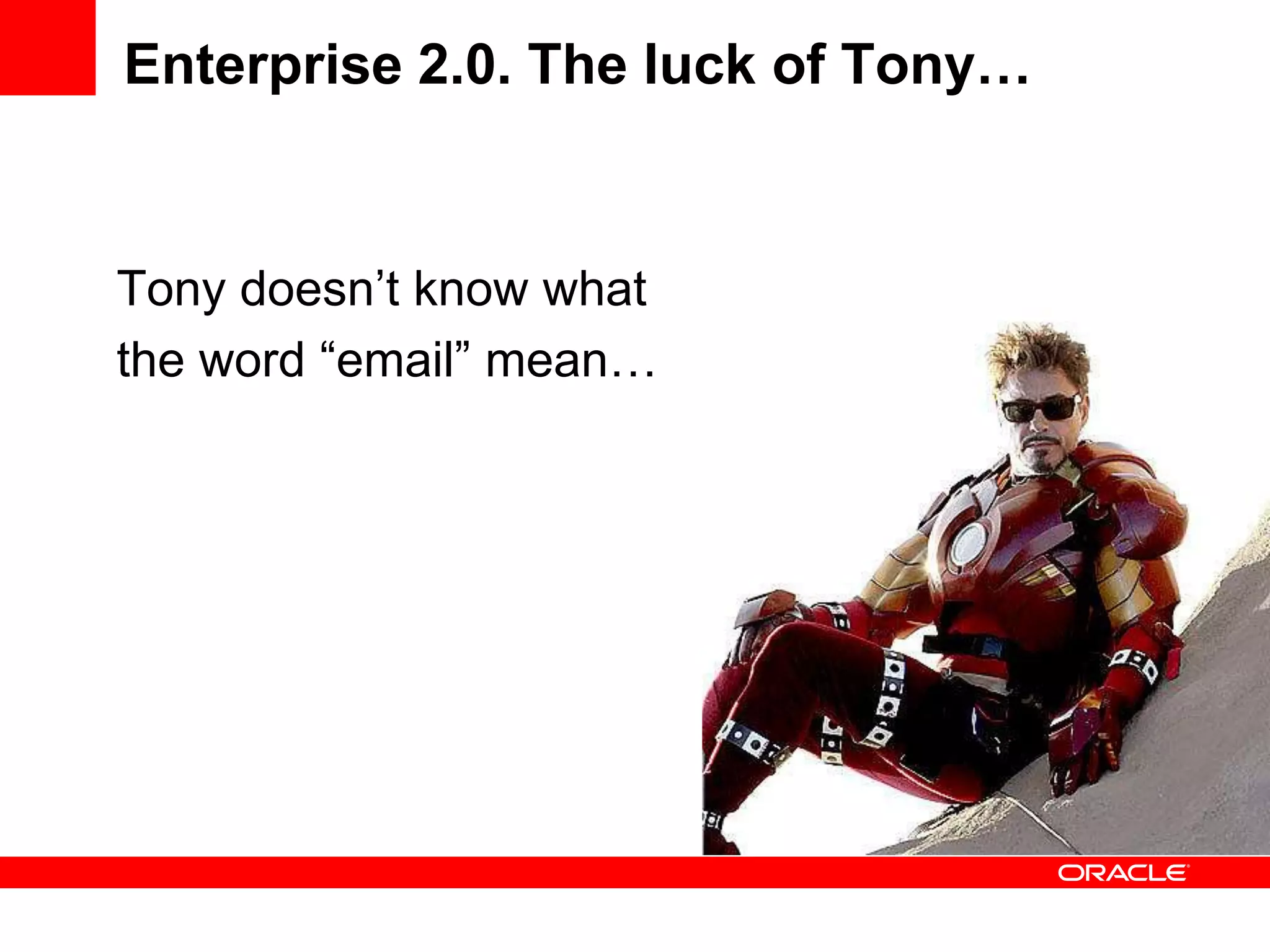
Tony doesn’t know what
the word “email” mean…
Enterprise 2.0. Post debate film…

• A new company culture is needed. A culture based
  on both the importance of a effective knowledge
  sharing, and meritocracy

• A new company strategy is needed. A company must
  believe in their employees, making them fundumental
  nodes of their network

• The software must be able to see and orchestrate all
  needed processes
Culture.
Strategy.
The Culture. The barriers to overcome…


• Information sharing is more productive

• Endowment effect: people place a higher value on
  objects they own than objects that they do not (e.g.
  email)

• 1% rule: more people will lurk in a virtual community
  than will participate
The strategy. The company must…


• To base everything on meritocracy (kudos, karma,
  rating, voting, answers)

• Stimulate serendipity (mashup towards external and
  internal resources)

• Facilitate “aha moments” (problem solving, BI,
  aggregating contents)
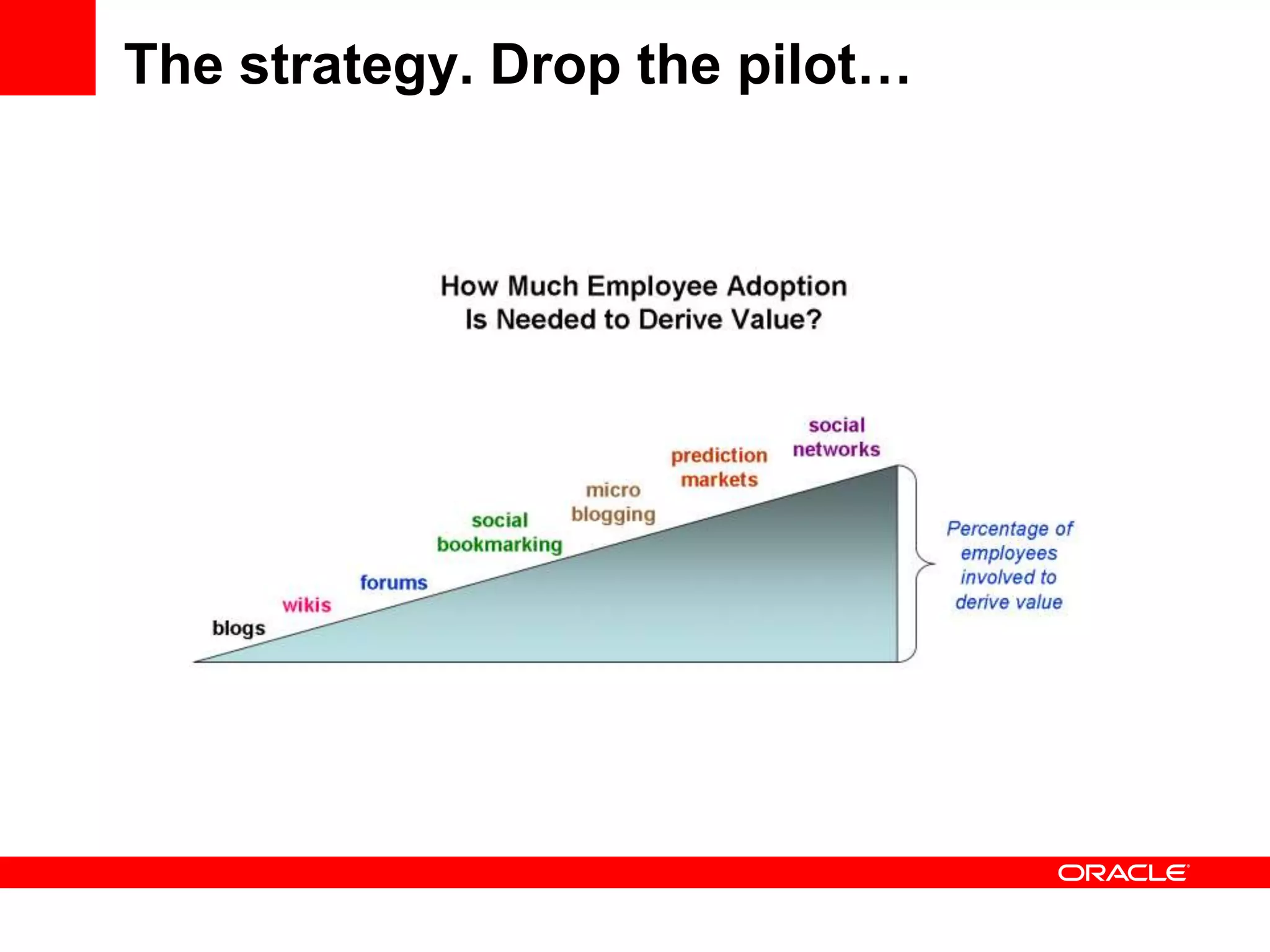
The strategy. Drop the pilot…


         From Hutch Carpenter’s blog
The strategy. The company must convey
new ideas (please, not by email :)
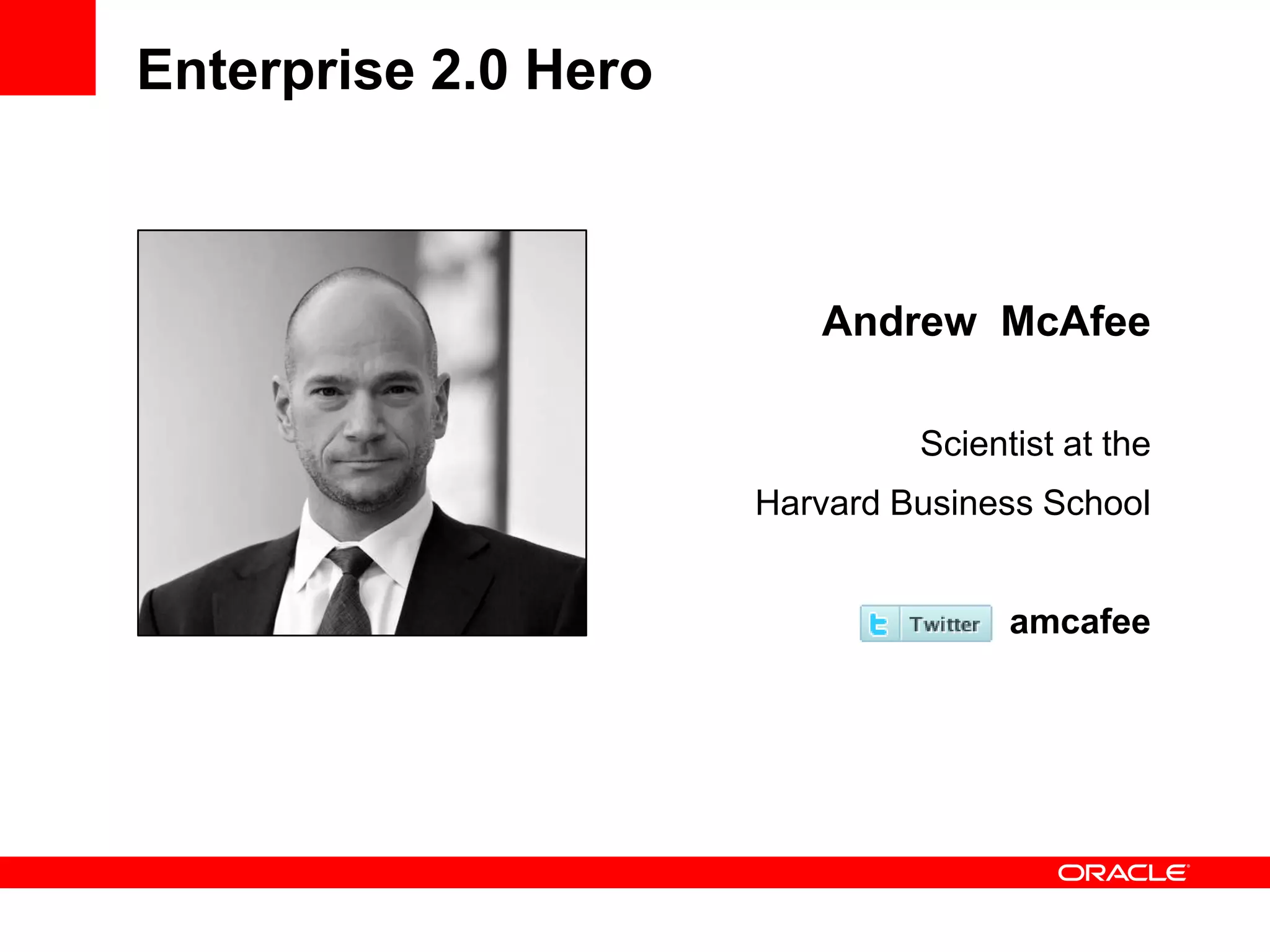
Enterprise 2.0 Hero


                         Andrew McAfee

                               Scientist at the
                      Harvard Business School


                                     amcafee
A software Enterprise 2.0 must be:
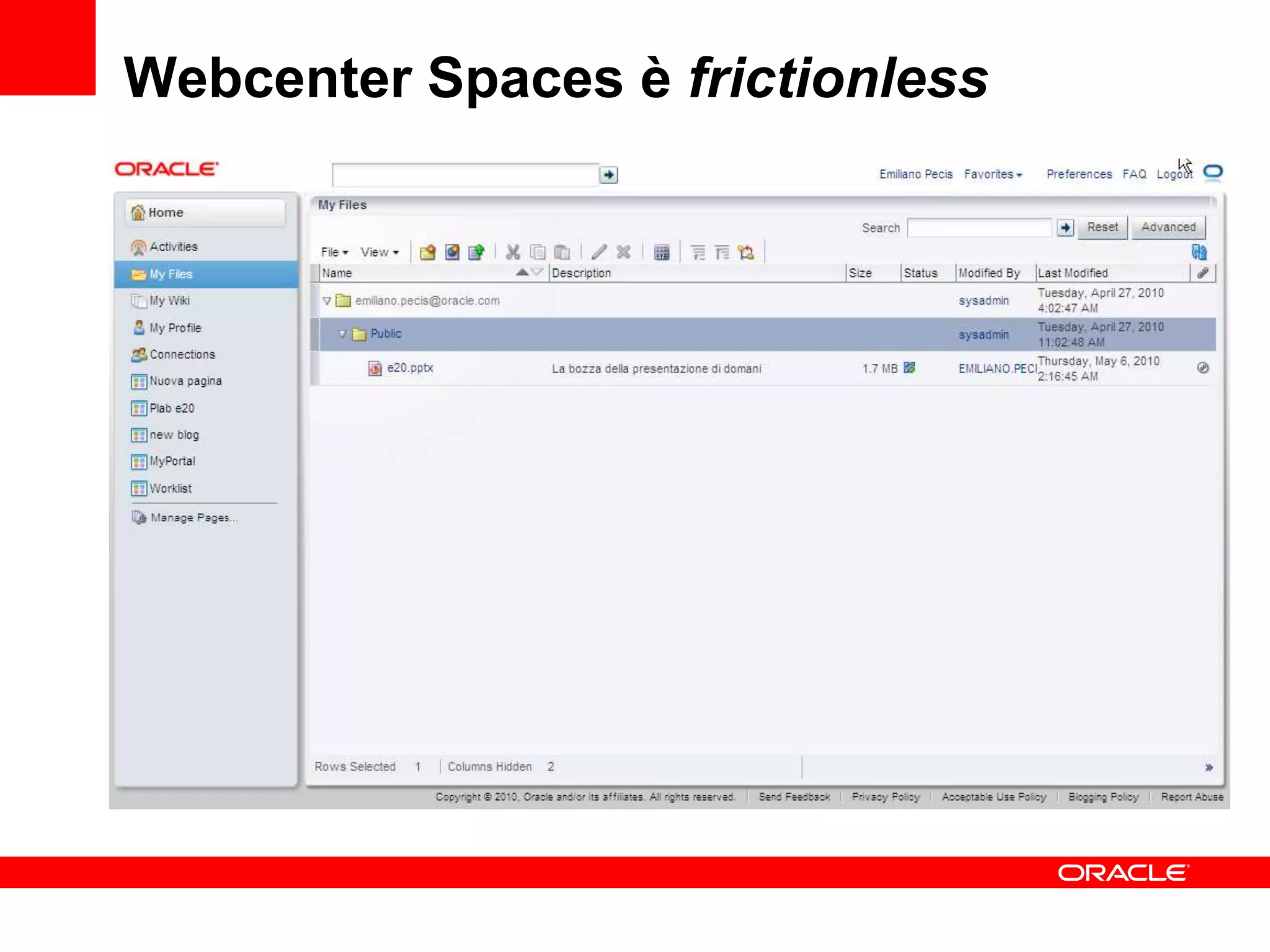
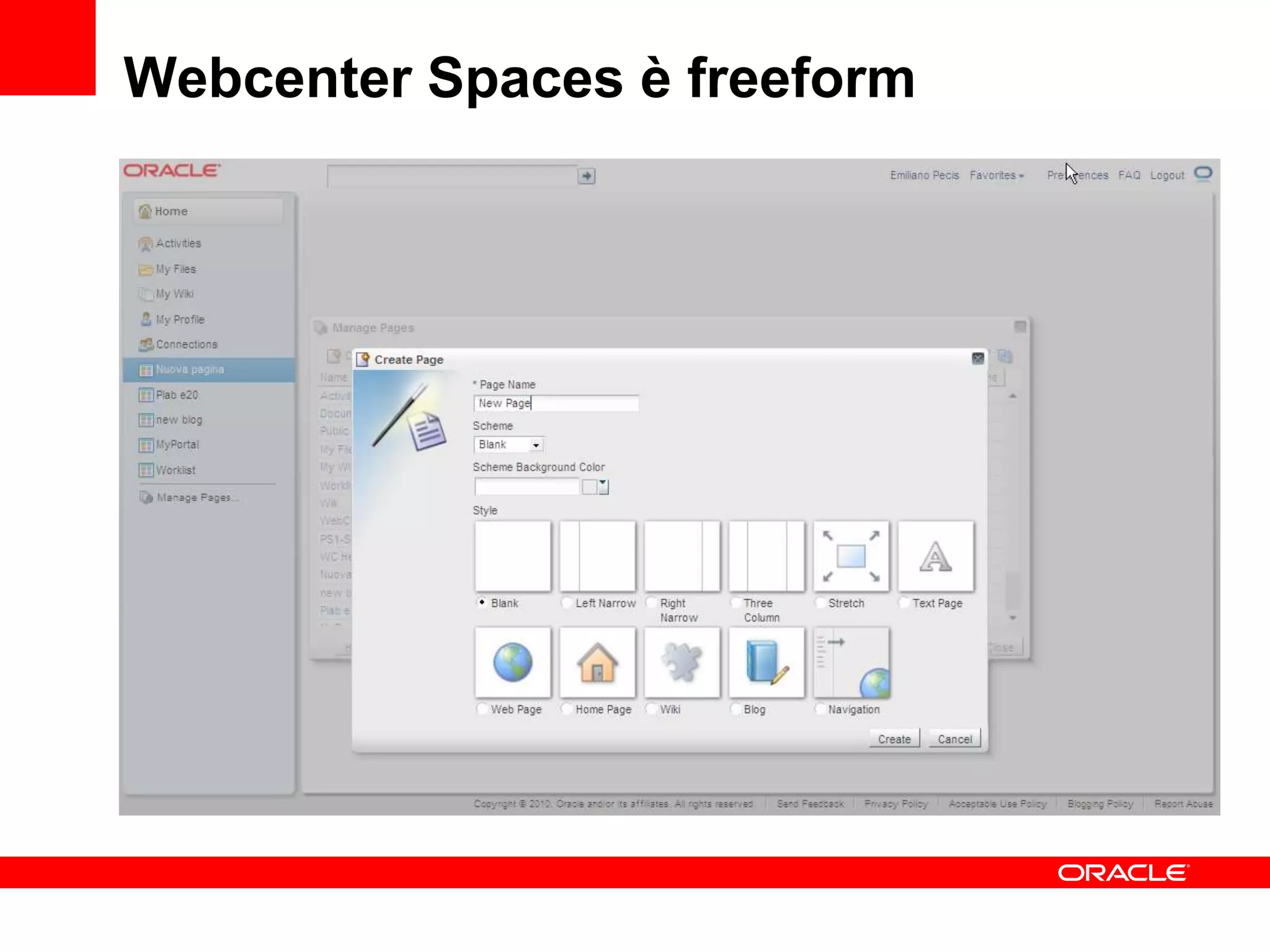
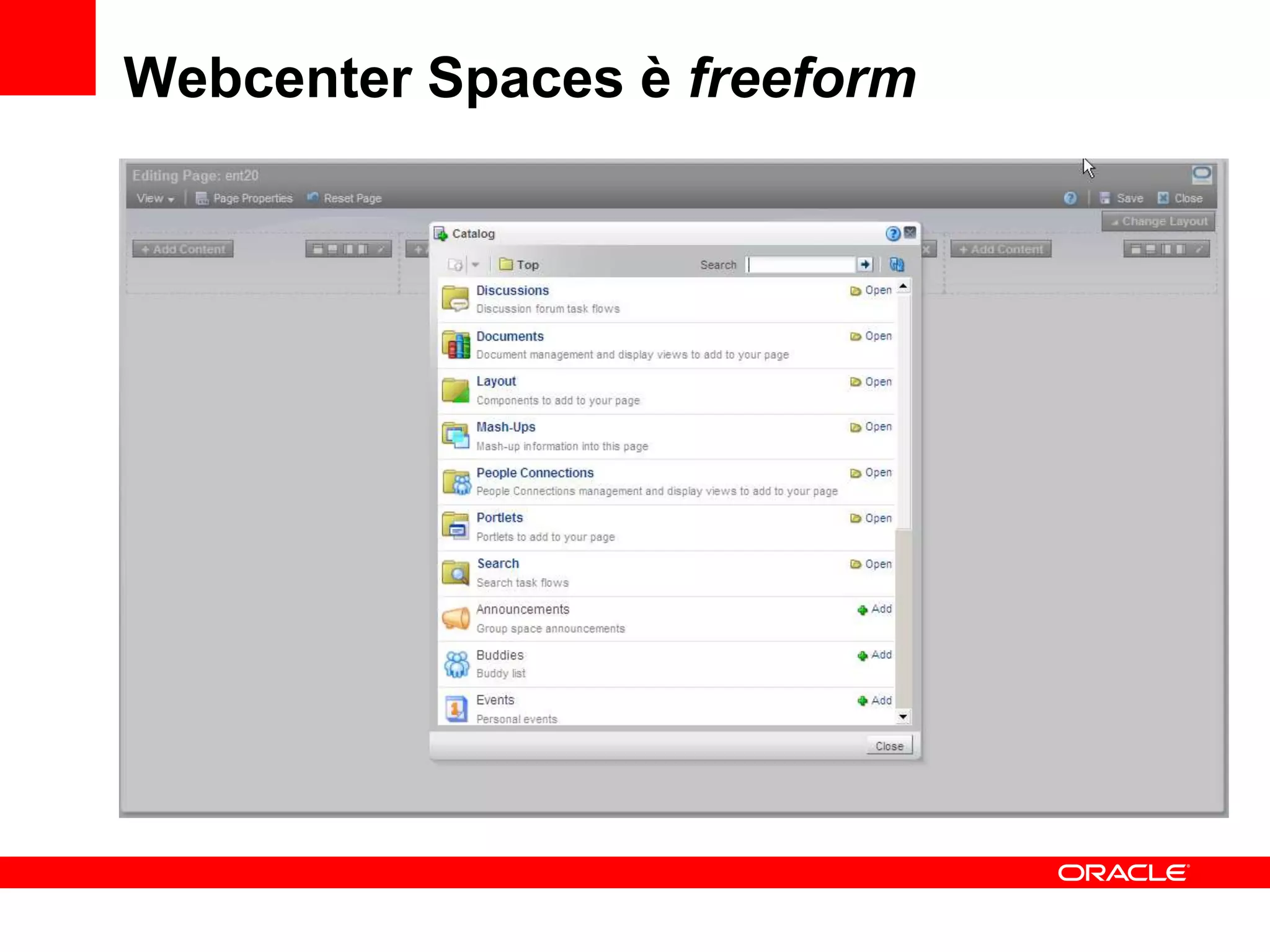
• Freeform. The technology does not in any meaningful
  way impose, hardwire or make and enforce
  assumptions about workflows, roles, privileges, content
  and decision-right allocations (groupware like
  LotusNotes are NOT freeform)

• Frictionless. Users perceive it to be easy to
  participate in the platform, and can do so with very little
  time or effort

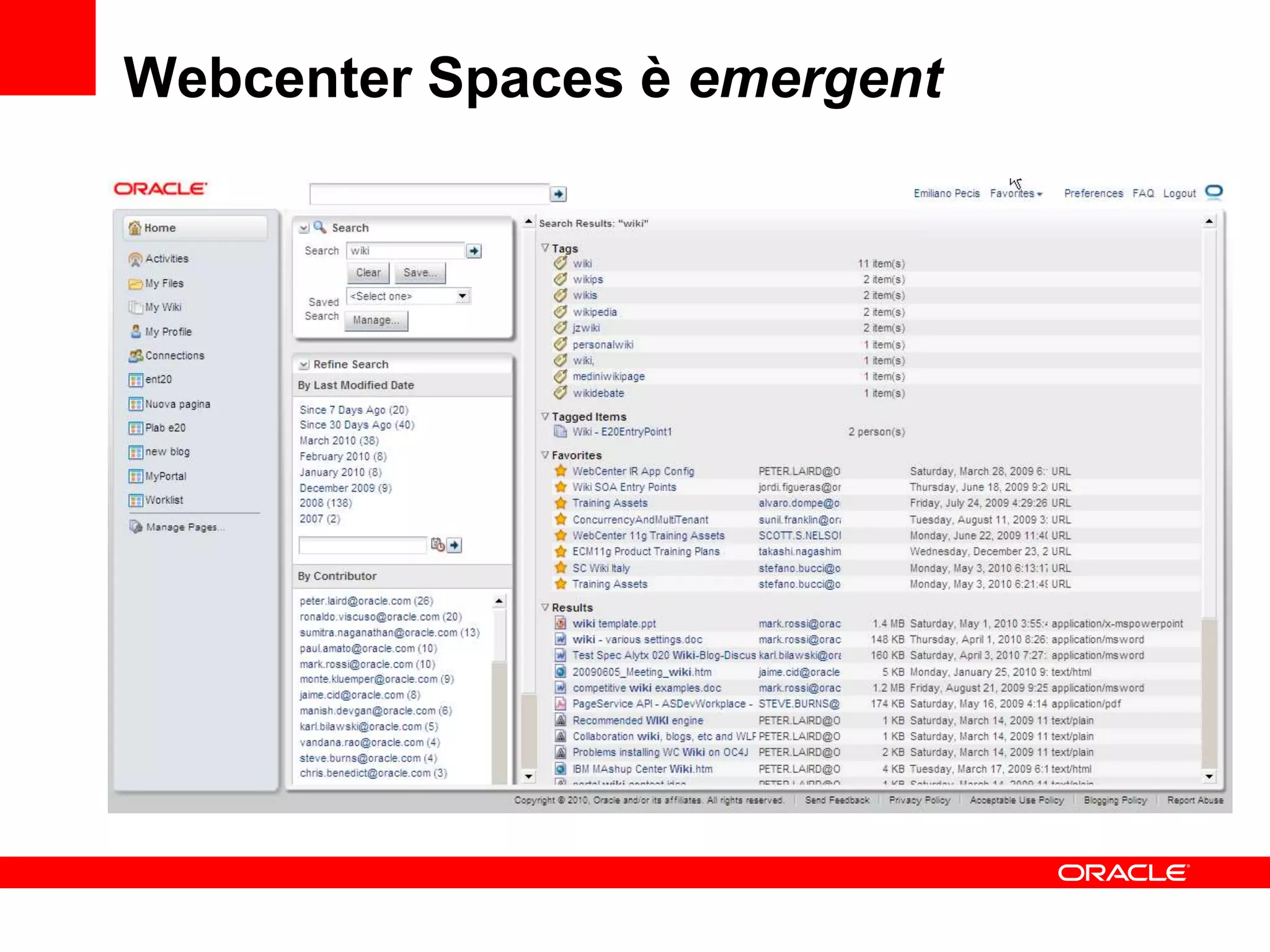
• Emergent. Mechanisms of online emergence are:
  linking, tagging, following, etc
The software must be based on WOA
 (ReST ready) in order to…

• enable the integration using mashup

• take advantage of cloud computing

• facilitate the cooperation between different company
  invoking remote API
The software must be complete

• Must be “technology aware” to recognize all involved
  environments: from applications (crm, erp, etc) to
  custom applications

• Enterprise 2.0 use all systems/tools that are below
  the portals (collaboration, BI, adapters, integration)

• Integrating all “the best of breed” (open source?)
  could be too expensive
<Insert Picture Here>


Webcenter 11g
The overview
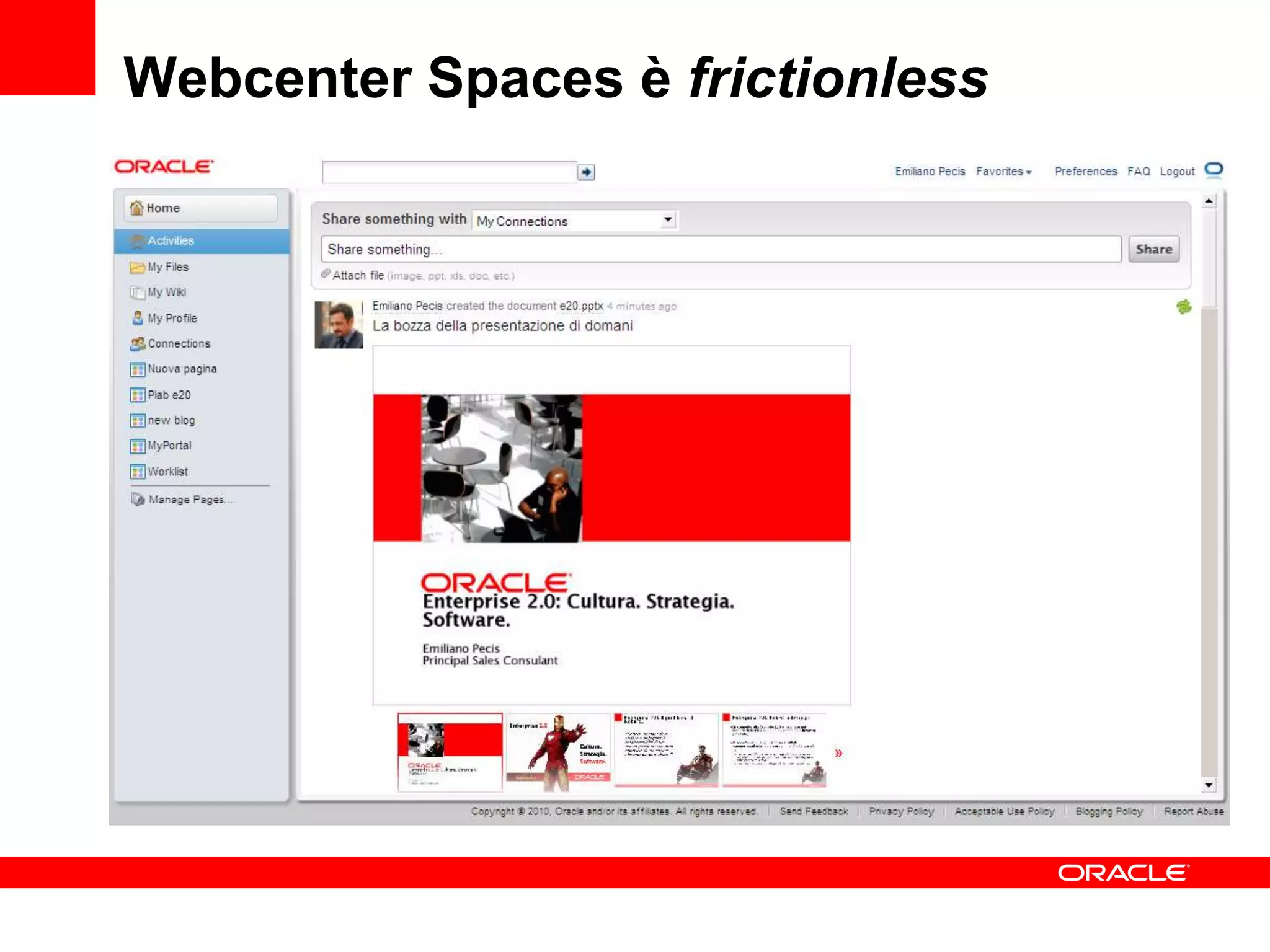
Webcenter Spaces is frictionless
Webcenter Spaces is freeform
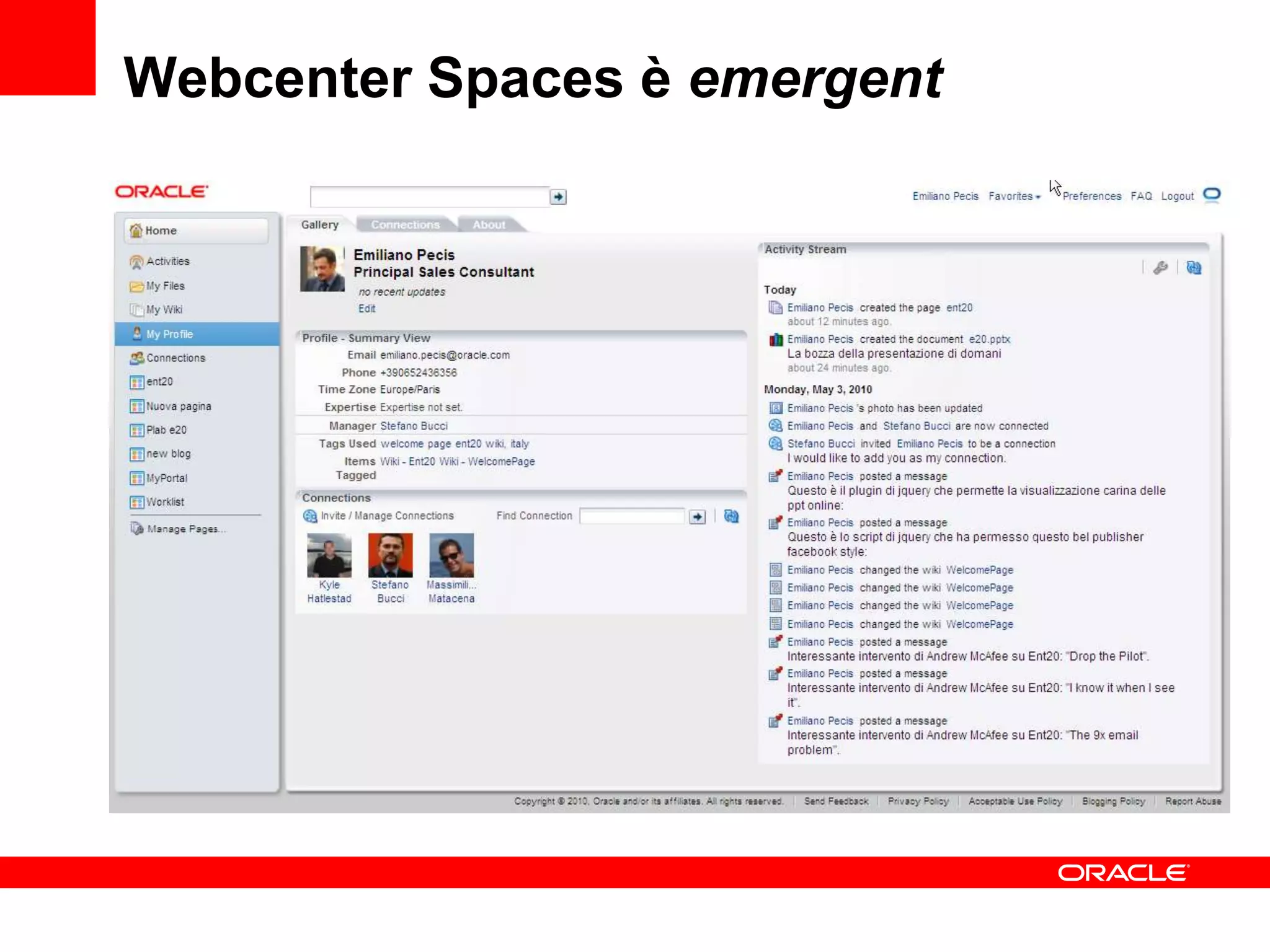
Webcenter Spaces is emergent
Q&A
Enterprise 2.0. How Iron Man would work...

Enterprise 2.0. How Iron Man would work...

  • 1.
    <Insert Picture Here> Enterprise2.0: Culture. Strategy. Software. Emiliano Pecis Principal Sales Consulant
  • 2.
  • 3.
    Enterprise 2.0. Tony’sproblem “Tomorrow, Tony will have to explain the new features of a new product (never seen before), to a new customer (never seen before).
  • 4.
    Enterprise 2.0. Tonyqueries… • He connects to his E20 console and queries his Social Search Engine using the customer’s name as a single keyword. • The social search engine returns results categorized by tags, sources, etc). This special engine uses: • recommendation engine: aggregating bookmarks and tags of all colleagues to maximize the collective intelligence knowledge • reputation engine: privileging most authoritative sources
  • 5.
    Enterprise 2.0. Tonyreceives… • The social search engine understands (from the tags) that Tony is searching for a “customer”, so it queries just the customer database (e.g. CRM) • This database contains several info added directly by the colleagues (who have a “karma” or “reputation” greater than or lesser than others) • From the recommentation engine it takes informations more bookmarked by the colleagues • From the reputation engine it understands who are the most authoritative colleagues who are related to that customer
  • 6.
    Enterprise 2.0. Tonythanks… • If the results coming from the social search engine were useful, Tony thanks the system with a “I like it” to make the search engine more intelligent • The E20 console checks if the expert is online, if so allows Tony to chat with him with a simple click • If Tony is satisfied with the expert’s answers, he gives a Kudos to him/her in order to increase his/her “reputation”
  • 7.
    Enterprise 2.0. Theluck of Tony… Tony doesn’t know what the word “email” mean…
  • 8.
    Enterprise 2.0. Postdebate film… • A new company culture is needed. A culture based on both the importance of a effective knowledge sharing, and meritocracy • A new company strategy is needed. A company must believe in their employees, making them fundumental nodes of their network • The software must be able to see and orchestrate all needed processes
  • 9.
  • 10.
    The Culture. Thebarriers to overcome… • Information sharing is more productive • Endowment effect: people place a higher value on objects they own than objects that they do not (e.g. email) • 1% rule: more people will lurk in a virtual community than will participate
  • 11.
    The strategy. Thecompany must… • To base everything on meritocracy (kudos, karma, rating, voting, answers) • Stimulate serendipity (mashup towards external and internal resources) • Facilitate “aha moments” (problem solving, BI, aggregating contents)
  • 12.
    The strategy. Dropthe pilot… From Hutch Carpenter’s blog
  • 13.
    The strategy. Thecompany must convey new ideas (please, not by email :)
  • 15.
    Enterprise 2.0 Hero Andrew McAfee Scientist at the Harvard Business School amcafee
  • 16.
    A software Enterprise2.0 must be: • Freeform. The technology does not in any meaningful way impose, hardwire or make and enforce assumptions about workflows, roles, privileges, content and decision-right allocations (groupware like LotusNotes are NOT freeform) • Frictionless. Users perceive it to be easy to participate in the platform, and can do so with very little time or effort • Emergent. Mechanisms of online emergence are: linking, tagging, following, etc
  • 17.
    The software mustbe based on WOA (ReST ready) in order to… • enable the integration using mashup • take advantage of cloud computing • facilitate the cooperation between different company invoking remote API
  • 18.
    The software mustbe complete • Must be “technology aware” to recognize all involved environments: from applications (crm, erp, etc) to custom applications • Enterprise 2.0 use all systems/tools that are below the portals (collaboration, BI, adapters, integration) • Integrating all “the best of breed” (open source?) could be too expensive
  • 19.
  • 20.
    Webcenter Spaces isfrictionless
  • 21.
    Webcenter Spaces isfrictionless
  • 22.
  • 23.
  • 24.
  • 25.
  • 26.