
![References
• Clark, J-P., Bennett, D., Elmer, K., Firth, J., Hilb, R., Ho, N., Johnson, S., Lau, S., Ren, L., Senechal, D., Sizov, N.,
Slattery, R., Tong, K., Walton, J., Willgruber, A., Williams, D. (2006). Development, Design, and Flight Test
Evaluation of a Continuous Descent Approach Procedure for Nighttime Operation at Louisville International
Airport
• Koeslag, M. F., (1999) Advanced Continuous Descent Approaches –An algorithm design for the Flight
Management System-.
• Moore, S. (2009). Benefits of Highly Predictable Flight Trajectories in Performing Routine Optimized Profile
Descents: Current and Recommended Research. Environmental Working Group Operations Standing Committee
2009 Annual Workshop, NASA Ames.
• Williams, D. (2008). Flight Deck Merging and Spacing and Advanced FMS Operations. EWG Operations
Standing Committee Meeting.
• Coppenbarger, R., Mead, R., Sweet, D., (2009). Field Evaluation of the Tailored Arrivals Concept for Datalink-
Enabled Continuous Descent Approach. Journal of Aircraft, 46(4), July–August 2009
• Global Aviation Navigation, Inc., (2009). Retrieved May 2009, from http://www.globalair.com/d-
TPP_pdf/00239IL17R.PDF
• Thomas, L. & Wickens, C. (2006). Individual Effects of Battlefield Display Frames of Reference on Navigation
Tasks, Spatial Judgments, and Change Detection. Ergonomics, 49, 154-1173.
• Cowen, M., John, M., Oonk, H., & Smallman, H. (2001). The Use of 2D and 3D Displays for Shape-Understanding
versus Relative-Position Tasks. Human Factors, 43(1), 79-98.
• Symmes, D., & Pella, J. (2005). Three-Dimensional Image. Microsoft® Encarta® 2006 [CD]. Redmond, WA:
Microsoft Corporation, 2005.
• Prevot, T., (1998). A Display for Managing the Vertical Flight Path - an Appropriate Task with Inappropriate
Feedback-. International Conference on Human-Computer Interaction in Aeronautics Montreal, Canada, 1998
24](https://image.slidesharecdn.com/michaellamarrfinalthesispresentation-13019812814168-phpapp01/85/Enhancing-Pilot-Ability-to-Perform-Continuous-Descent-Approach-with-Descriptive-Waypoints-24-320.jpg)

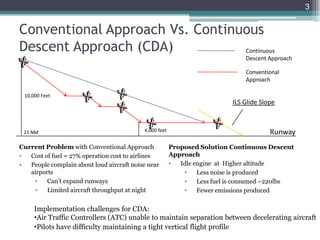
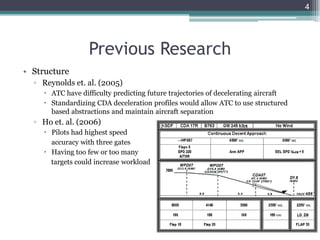
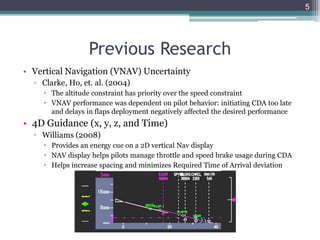
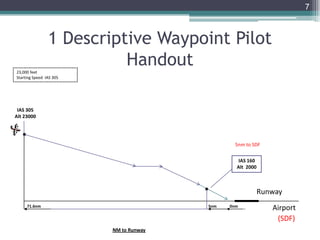
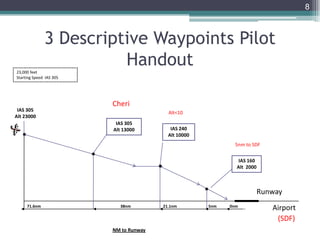
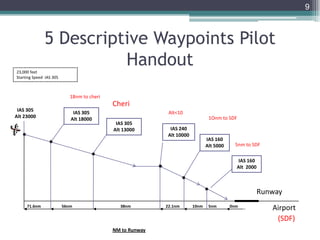
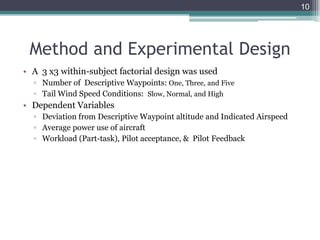
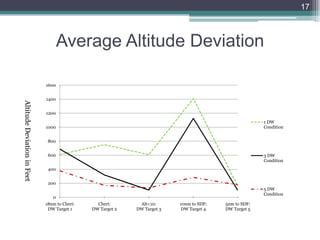
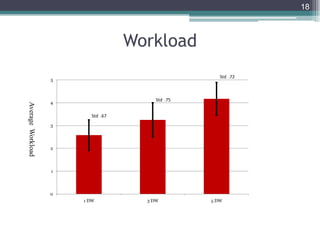
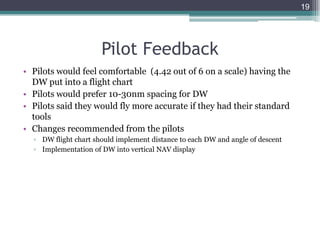
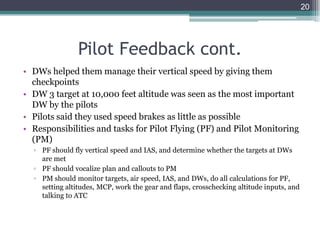
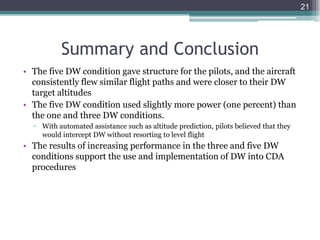
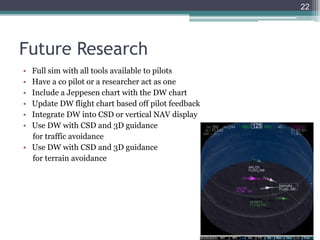
This document summarizes research on using descriptive waypoints to help pilots perform continuous descent approaches more accurately. It describes a study that tested different numbers of descriptive waypoints under varying wind conditions. The results showed that using five descriptive waypoints provided the most structure for pilots and kept aircraft closest to their altitude and speed targets at each waypoint. Pilots also provided feedback that integrating descriptive waypoints into charts and displays could help them manage vertical speed and intercept targets more easily. Future research areas include integrating descriptive waypoints with advanced cockpit systems and using them for traffic and terrain avoidance.


![[Estácio] Trabalho de Comunicação Institucional](https://cdn.slidesharecdn.com/ss_thumbnails/teste-130813002925-phpapp02-thumbnail.jpg?width=640&height=640&fit=bounds)


