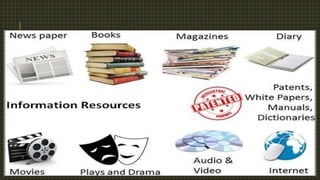
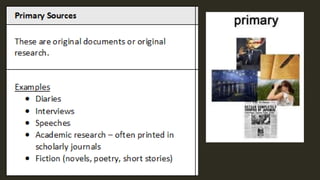
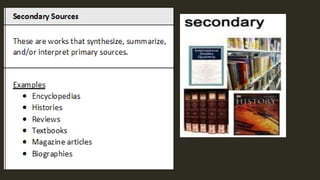
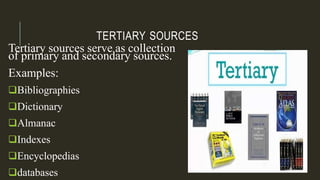
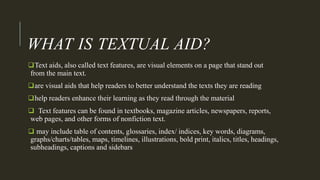
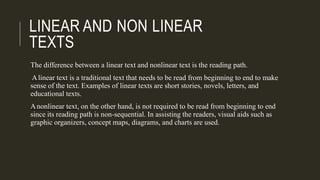
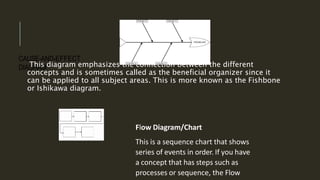
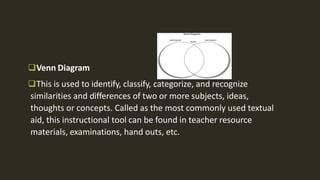
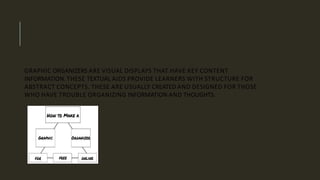
This document provides information about sources of information and textual aids for understanding texts. It discusses primary, secondary, and tertiary sources and gives examples of each. It also identifies six characteristics that information should have: accuracy, completeness, timeliness, consistency, relevance, and uniqueness. The document describes different types of textual aids like tables of contents, glossaries, indexes, diagrams, graphs, and maps. It explains the differences between linear and nonlinear texts and textual versus non-textual information. Various graphic organizers are presented like cause-and-effect diagrams, flow charts, and Venn diagrams. Overall, the document covers key concepts about obtaining and understanding information from different sources.



![Lesson1[1] [Autosaved].pptx](https://cdn.slidesharecdn.com/ss_thumbnails/lesson11autosaved-230828140452-2b0ec227-thumbnail.jpg?width=640&height=640&fit=bounds)


