English grammar modal verbs:
 We are going to see some modal verbs to
    express possibility and permission:
   Can.
   Could.
   May.
   Might.
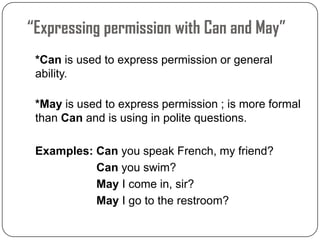
“Expressing permission with Can and May”
 *Can is used to express permission or general
 ability.

 *May is used to express permission ; is more formal
 than Can and is using in polite questions.

 Examples: Can you speak French, my friend?
           Can you swim?
           May I come in, sir?
           May I go to the restroom?
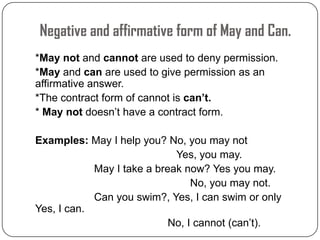
Negative and affirmative form of May and Can.
*May not and cannot are used to deny permission.
*May and can are used to give permission as an
affirmative answer.
*The contract form of cannot is can’t.
* May not doesn’t have a contract form.

Examples: May I help you? No, you may not
                             Yes, you may.
            May I take a break now? Yes you may.
                                 No, you may not.
            Can you swim?, Yes, I can swim or only
Yes, I can.
                            No, I cannot (can’t).
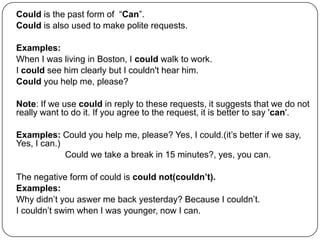
Could is the past form of “Can”.
Could is also used to make polite requests.

Examples:
When I was living in Boston, I could walk to work.
I could see him clearly but I couldn't hear him.
Could you help me, please?

Note: If we use could in reply to these requests, it suggests that we do not
really want to do it. If you agree to the request, it is better to say 'can'.

Examples: Could you help me, please? Yes, I could.(it’s better if we say,
Yes, I can.)
             Could we take a break in 15 minutes?, yes, you can.

The negative form of could is could not(couldn’t).
Examples:
Why didn’t you aswer me back yesterday? Because I couldn’t.
I couldn’t swim when I was younger, now I can.
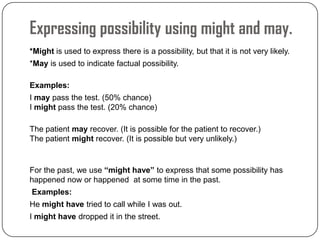
Expressing possibility using might and may.
*Might is used to express there is a possibility, but that it is not very likely.
*May is used to indicate factual possibility.

Examples:
I may pass the test. (50% chance)
I might pass the test. (20% chance)

The patient may recover. (It is possible for the patient to recover.)
The patient might recover. (It is possible but very unlikely.)


For the past, we use “might have” to express that some possibility has
happened now or happened at some time in the past.
Examples:
He might have tried to call while I was out.
I might have dropped it in the street.

English grammar modal verbs.

  • 1.
    English grammar modalverbs:  We are going to see some modal verbs to express possibility and permission:  Can.  Could.  May.  Might.
  • 2.
    “Expressing permission withCan and May” *Can is used to express permission or general ability. *May is used to express permission ; is more formal than Can and is using in polite questions. Examples: Can you speak French, my friend? Can you swim? May I come in, sir? May I go to the restroom?
  • 3.
    Negative and affirmativeform of May and Can. *May not and cannot are used to deny permission. *May and can are used to give permission as an affirmative answer. *The contract form of cannot is can’t. * May not doesn’t have a contract form. Examples: May I help you? No, you may not Yes, you may. May I take a break now? Yes you may. No, you may not. Can you swim?, Yes, I can swim or only Yes, I can. No, I cannot (can’t).
  • 4.
    Could is thepast form of “Can”. Could is also used to make polite requests. Examples: When I was living in Boston, I could walk to work. I could see him clearly but I couldn't hear him. Could you help me, please? Note: If we use could in reply to these requests, it suggests that we do not really want to do it. If you agree to the request, it is better to say 'can'. Examples: Could you help me, please? Yes, I could.(it’s better if we say, Yes, I can.) Could we take a break in 15 minutes?, yes, you can. The negative form of could is could not(couldn’t). Examples: Why didn’t you aswer me back yesterday? Because I couldn’t. I couldn’t swim when I was younger, now I can.
  • 5.
    Expressing possibility usingmight and may. *Might is used to express there is a possibility, but that it is not very likely. *May is used to indicate factual possibility. Examples: I may pass the test. (50% chance) I might pass the test. (20% chance) The patient may recover. (It is possible for the patient to recover.) The patient might recover. (It is possible but very unlikely.) For the past, we use “might have” to express that some possibility has happened now or happened at some time in the past. Examples: He might have tried to call while I was out. I might have dropped it in the street.