English Absolutism
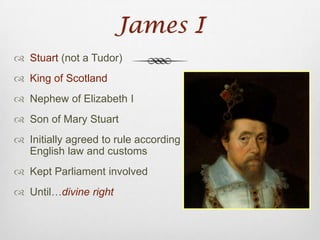
James IStuart (not a Tudor)King of ScotlandNephew of Elizabeth ISon of Mary StuartInitially agreed to rule according to English law and customsKept Parliament involvedUntil…divine right
Tensions with ParliamentDisagreements about moneyLavish lifestyleWarsTaxesDisagreements about foreign policyJames’ solution  dissolve Parliament
Religious TensionsThe Puritans wanted:To “purify” the Church of England of Catholic practicesSimpler servicesMore democratic church with no powerful bishopsJames rejected their demandsChased them out of England
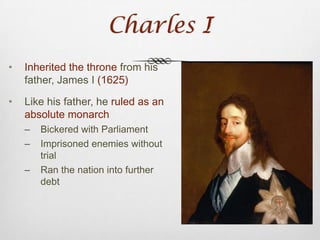
Charles IInherited the throne from his father, James I (1625)
Like his father, he ruled as an absolute monarch
Bickered with Parliament
Imprisoned enemies without trial
Ran the nation into further debtPetition of RightDebt from:Super-luxurious lifestyleWar with FranceNeeded money  called for Parliament to convene Parliament refused to fork over any money until Charles I signed the Petition of Right
Petition of RightNo funds could be borrowed or raised through taxes & tariffs without the explicit approval of Parliament
Petition of Right2. No free person (Britain had slavery at this time) could be imprisoned without a reason
The DealCharles I signed the Petition, thereby agreeing to its terms (and getting his $$)Did Charles have any intention of keeping his word?
Dissolution of ParliamentCharles immediately broke his word To avoid a confrontation with Parliament, he dissolved it (would stay dissolved for 12 years)Now on his own…with no funds from Parliament
Charles’ Budget CutsMade peace with enemies (peace is cheaper than war)Downsized government administration Innovative tax increasesOne goal in mind rule without Parliament
Charles and ReligionMuch like his father, Charlespersecuted the PuritansAllowed the Archbishop of Canterbury (William Laud) to freely take any measures to stifle the Puritans
Puritans Under Charles IForbidden to publish or preachScottish Puritans were forced to use the Church of England’s prayer books, rituals, hierarchy, etcRebellion occurred, thus forcing Charles to reconvene Parliament
Twelve Years to StewParliament had 12 years to stew and were ready to show Charles no mercyRefused Charles any money until he addressed a very long list of complaintsWhat do you think Charles did??
Buh-Bye ParliamentCharles refused their demands and dismissed them (known as “The Short Parliament”)Still, he was without moneyReconvened Parliament again, but this time agreed to their demands
Parliament’s DemandsIllegal to raise taxes without Parliament okayWilliam Laud – impeached & executedCharles’ centralized bureaucracy – abolishedLaw that only Parliament could dismiss itselfLaw that Parliament had to meet every 3 years
Rebellion in IrelandReligious radicals in Ireland rebelledCharles wanted funds for an army to go inParliament did not trust Charles with an armyProposal from radicals in Parliament – the army should be under Parliament’s control
One Angry KingCharles not very happy about thisStormed Parliament with his own armyBold, yet foolish moveParliament issued Militia Ordinance which officially declared the army under Parliament’s controlThe result????
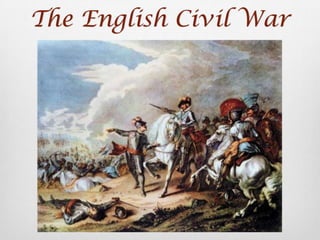
The English Civil War
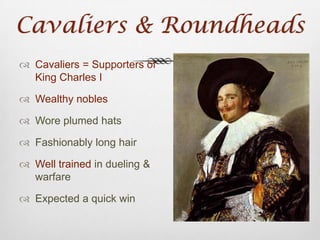
Cavaliers & RoundheadsCavaliers = Supporters of King Charles IWealthy noblesWore plumed hatsFashionably long hairWell trained in dueling & warfareExpected a quick win
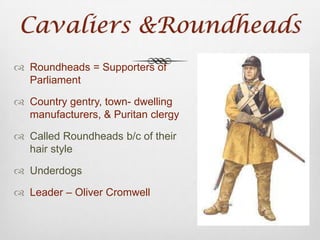
Cavaliers & RoundheadsRoundheads = Supporters of ParliamentCountry gentry, town- dwelling manufacturers, & Puritan clergyCalled Roundheads b/c of their hair styleUnderdogsLeader – Oliver Cromwell
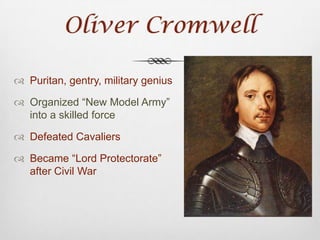
Oliver CromwellPuritan, gentry, military geniusOrganized “New Model Army” into a skilled forceDefeated CavaliersBecame “Lord Protectorate” after Civil War
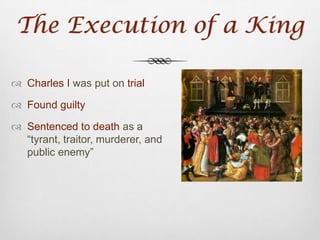
The Execution of a KingCharles I was put on trial Found guiltySentenced to death as a “tyrant, traitor, murderer, and public enemy”
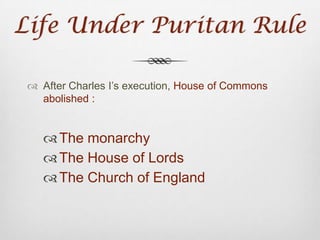
Life Under Puritan RuleAfter Charles I’s execution, House of Commons abolished :The monarchyThe House of LordsThe Church of England
England a Republic?England declared republicNot all agree – Charles II is the heirRebellions broke out (Ireland)Oliver Cromwellcrushed thempersecuted Catholicsexiled Catholics to remote parts of Ireland
End of the CommonwealthAfter Cromwell’s death (1658) Puritans lost control of EnglandNew Parliament invited Charles II back as KingCharles II met with cheering crowds
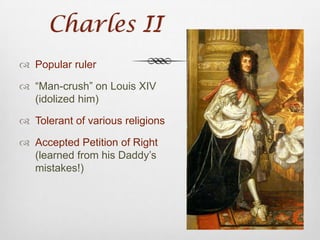
Charles IIPopular ruler“Man-crush” on Louis XIV (idolized him)Tolerant of various religionsAccepted Petition of Right (learned from his Daddy’s mistakes!)
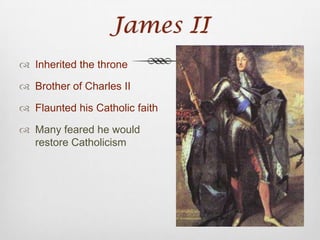
James IIInherited the throne Brother of Charles II Flaunted his Catholic faithMany feared he would restore Catholicism

English Absolutism

  • 1.
  • 2.
    James IStuart (nota Tudor)King of ScotlandNephew of Elizabeth ISon of Mary StuartInitially agreed to rule according to English law and customsKept Parliament involvedUntil…divine right
  • 3.
    Tensions with ParliamentDisagreementsabout moneyLavish lifestyleWarsTaxesDisagreements about foreign policyJames’ solution  dissolve Parliament
  • 4.
    Religious TensionsThe Puritanswanted:To “purify” the Church of England of Catholic practicesSimpler servicesMore democratic church with no powerful bishopsJames rejected their demandsChased them out of England
  • 5.
    Charles IInherited thethrone from his father, James I (1625)
  • 6.
    Like his father,he ruled as an absolute monarch
  • 7.
  • 8.
  • 9.
    Ran the nationinto further debtPetition of RightDebt from:Super-luxurious lifestyleWar with FranceNeeded money  called for Parliament to convene Parliament refused to fork over any money until Charles I signed the Petition of Right
  • 10.
    Petition of RightNofunds could be borrowed or raised through taxes & tariffs without the explicit approval of Parliament
  • 11.
    Petition of Right2.No free person (Britain had slavery at this time) could be imprisoned without a reason
  • 12.
    The DealCharles Isigned the Petition, thereby agreeing to its terms (and getting his $$)Did Charles have any intention of keeping his word?
  • 13.
    Dissolution of ParliamentCharlesimmediately broke his word To avoid a confrontation with Parliament, he dissolved it (would stay dissolved for 12 years)Now on his own…with no funds from Parliament
  • 14.
    Charles’ Budget CutsMadepeace with enemies (peace is cheaper than war)Downsized government administration Innovative tax increasesOne goal in mind rule without Parliament
  • 15.
    Charles and ReligionMuchlike his father, Charlespersecuted the PuritansAllowed the Archbishop of Canterbury (William Laud) to freely take any measures to stifle the Puritans
  • 16.
    Puritans Under CharlesIForbidden to publish or preachScottish Puritans were forced to use the Church of England’s prayer books, rituals, hierarchy, etcRebellion occurred, thus forcing Charles to reconvene Parliament
  • 17.
    Twelve Years toStewParliament had 12 years to stew and were ready to show Charles no mercyRefused Charles any money until he addressed a very long list of complaintsWhat do you think Charles did??
  • 18.
    Buh-Bye ParliamentCharles refusedtheir demands and dismissed them (known as “The Short Parliament”)Still, he was without moneyReconvened Parliament again, but this time agreed to their demands
  • 19.
    Parliament’s DemandsIllegal toraise taxes without Parliament okayWilliam Laud – impeached & executedCharles’ centralized bureaucracy – abolishedLaw that only Parliament could dismiss itselfLaw that Parliament had to meet every 3 years
  • 20.
    Rebellion in IrelandReligiousradicals in Ireland rebelledCharles wanted funds for an army to go inParliament did not trust Charles with an armyProposal from radicals in Parliament – the army should be under Parliament’s control
  • 21.
    One Angry KingCharlesnot very happy about thisStormed Parliament with his own armyBold, yet foolish moveParliament issued Militia Ordinance which officially declared the army under Parliament’s controlThe result????
  • 22.
  • 23.
    Cavaliers & RoundheadsCavaliers= Supporters of King Charles IWealthy noblesWore plumed hatsFashionably long hairWell trained in dueling & warfareExpected a quick win
  • 24.
    Cavaliers & RoundheadsRoundheads= Supporters of ParliamentCountry gentry, town- dwelling manufacturers, & Puritan clergyCalled Roundheads b/c of their hair styleUnderdogsLeader – Oliver Cromwell
  • 25.
    Oliver CromwellPuritan, gentry,military geniusOrganized “New Model Army” into a skilled forceDefeated CavaliersBecame “Lord Protectorate” after Civil War
  • 26.
    The Execution ofa KingCharles I was put on trial Found guiltySentenced to death as a “tyrant, traitor, murderer, and public enemy”
  • 27.
    Life Under PuritanRuleAfter Charles I’s execution, House of Commons abolished :The monarchyThe House of LordsThe Church of England
  • 28.
    England a Republic?Englanddeclared republicNot all agree – Charles II is the heirRebellions broke out (Ireland)Oliver Cromwellcrushed thempersecuted Catholicsexiled Catholics to remote parts of Ireland
  • 29.
    End of theCommonwealthAfter Cromwell’s death (1658) Puritans lost control of EnglandNew Parliament invited Charles II back as KingCharles II met with cheering crowds
  • 30.
    Charles IIPopular ruler“Man-crush”on Louis XIV (idolized him)Tolerant of various religionsAccepted Petition of Right (learned from his Daddy’s mistakes!)
  • 31.
    James IIInherited thethrone Brother of Charles II Flaunted his Catholic faithMany feared he would restore Catholicism