Engaging strategically with Social Media
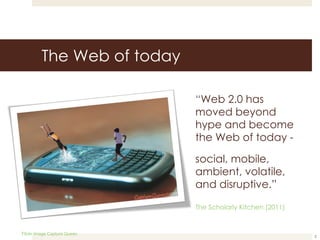
The Web of today “ Web 2.0 has moved beyond hype and become the Web of today - social, mobile, ambient, volatile, and disruptive.” The Scholarly Kitchen (2011) Flickr Image Capture Queen
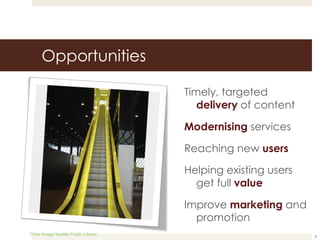
Opportunities Timely, targeted  delivery  of content Modernising  services Reaching new  users Helping existing users get full  value Improve  marketing  and promotion Flickr Image Seattle Public Library
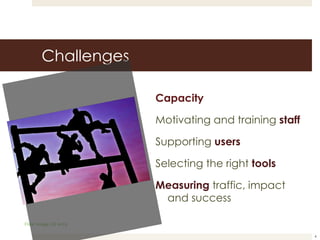
Challenges Capacity Motivating and training  staff Supporting  users Selecting the right  tools Measuring  traffic, impact and success Flickr Image US Army
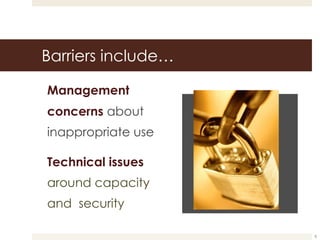
Barriers include… Management concerns  about inappropriate use Technical issues  around capacit y  and  security
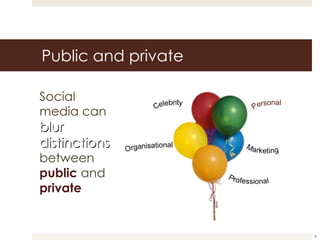
Public and private Social media can  blur  distinctions  between   public   and   private
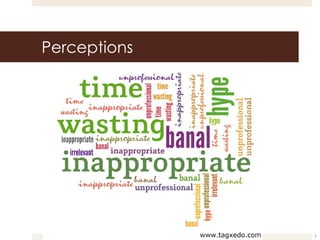
Perceptions Hype
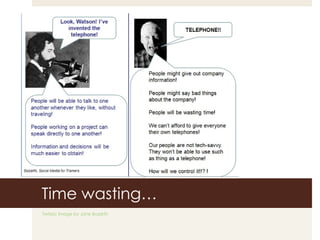
Time wasting… Twitpic Image by Jane Bozarth
Banal…. Some content is  banal  and   inappropriate  (just like other media) But some of it is  really, really useful  (just like other media) Flickr image Jeremy Brooks
First thoughts Where’s the  added value ? Any  current use  inhouse ? What are the  barriers   to getting started?  What can you  learn  from other libraries? What does  success  look like?
Implementation Managing and resourcing Choosing tools Supporting staff and users Measuring Evaluating progress
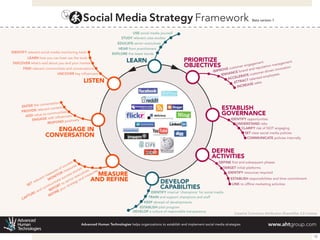
Listen and learn Research  your sector Identify  good practice Become a  digital   resident
Objectives Spread the word? Share information? Shape the debate? Call to action? Educate? Raise money ?
Audience Who   are they? Where  are they on the web? What  do they talk about? How  do you add value?
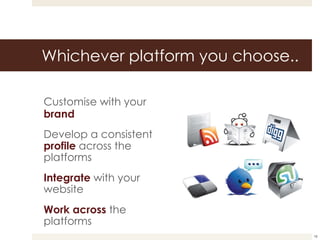
Whichever platform you choose.. Customise with your  brand Develop a consistent  profile  across the platforms Integrate   with your website Work across  the platforms
Management Finding the  capacity Managing  risk Roles  and  responsibilities
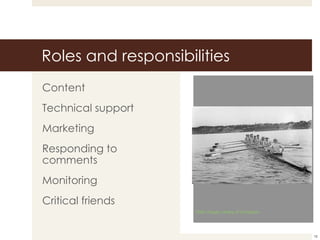
Roles and responsibilities Content Technical support Marketing Responding to comments Monitoring Critical friends Flickr Image Library of Congress
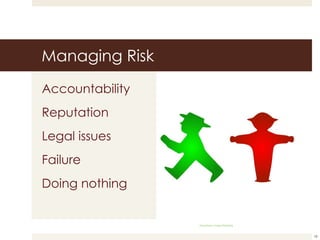
Managing Risk Accountability Reputation Legal issues Failure Doing nothing Ampelmann Image Wikipedia
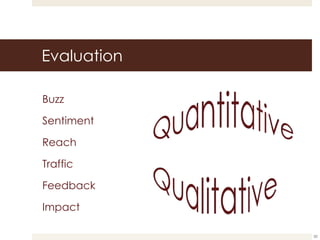
Evaluation Buzz Sentiment Reach Traffic Feedback Impact
Do you need a policy? Yes! A good policy will fit with your organisational  goals ,  culture  and attitude to  risk Online database of Social Media policies Sample Social Media policies for the public sector
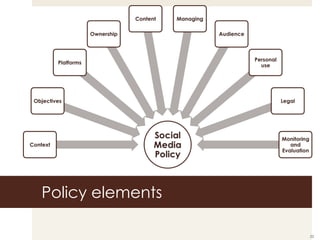
Policy elements
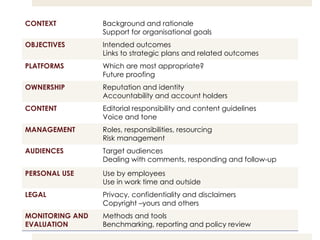
CONTEXT Background and rationale Support for organisational goals OBJECTIVES Intended outcomes Links to strategic plans and related outcomes PLATFORMS Which are most appropriate? Future proofing OWNERSHIP Reputation and identity Accountability and account holders CONTENT Editorial responsibility and content guidelines Voice and tone MANAGEMENT Roles, responsibilities, resourcing Risk management AUDIENCES Target audiences Dealing with comments, responding and follow-up PERSONAL USE Use by employees Use in work time and outside LEGAL Privacy, confidentiality and disclaimers Copyright –yours and others MONITORING AND EVALUATION Methods and tools Benchmarking, reporting and policy review
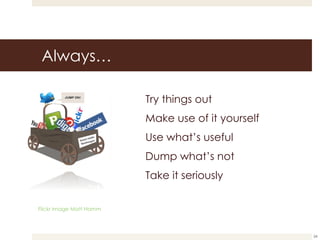
Always… Try things out Make use of it yourself Use what’s useful Dump what’s not Take it seriously Flickr image Matt Hamm
Last but not least …
Attribution – Share Alike License This presentation is available to reuse or adapt as long as  credit is given to the author. http://creativecommons.org/licenses/by-sa/3.0/

Engaging strategically with Social Media 2011 revised

  • 1.
  • 2.
    The Web oftoday “ Web 2.0 has moved beyond hype and become the Web of today - social, mobile, ambient, volatile, and disruptive.” The Scholarly Kitchen (2011) Flickr Image Capture Queen
  • 3.
    Opportunities Timely, targeted delivery of content Modernising services Reaching new users Helping existing users get full value Improve marketing and promotion Flickr Image Seattle Public Library
  • 4.
    Challenges Capacity Motivatingand training staff Supporting users Selecting the right tools Measuring traffic, impact and success Flickr Image US Army
  • 5.
    Barriers include… Managementconcerns about inappropriate use Technical issues around capacit y and security
  • 6.
    Public and privateSocial media can blur distinctions between public and private
  • 7.
  • 8.
    Time wasting… TwitpicImage by Jane Bozarth
  • 9.
    Banal…. Some contentis banal and inappropriate (just like other media) But some of it is really, really useful (just like other media) Flickr image Jeremy Brooks
  • 10.
    First thoughts Where’sthe added value ? Any current use inhouse ? What are the barriers to getting started? What can you learn from other libraries? What does success look like?
  • 11.
    Implementation Managing andresourcing Choosing tools Supporting staff and users Measuring Evaluating progress
  • 13.
    Listen and learnResearch your sector Identify good practice Become a digital resident
  • 14.
    Objectives Spread theword? Share information? Shape the debate? Call to action? Educate? Raise money ?
  • 15.
    Audience Who are they? Where are they on the web? What do they talk about? How do you add value?
  • 16.
    Whichever platform youchoose.. Customise with your brand Develop a consistent profile across the platforms Integrate with your website Work across the platforms
  • 17.
    Management Finding the capacity Managing risk Roles and responsibilities
  • 18.
    Roles and responsibilitiesContent Technical support Marketing Responding to comments Monitoring Critical friends Flickr Image Library of Congress
  • 19.
    Managing Risk AccountabilityReputation Legal issues Failure Doing nothing Ampelmann Image Wikipedia
  • 20.
    Evaluation Buzz SentimentReach Traffic Feedback Impact
  • 21.
    Do you needa policy? Yes! A good policy will fit with your organisational goals , culture and attitude to risk Online database of Social Media policies Sample Social Media policies for the public sector
  • 22.
  • 23.
    CONTEXT Background andrationale Support for organisational goals OBJECTIVES Intended outcomes Links to strategic plans and related outcomes PLATFORMS Which are most appropriate? Future proofing OWNERSHIP Reputation and identity Accountability and account holders CONTENT Editorial responsibility and content guidelines Voice and tone MANAGEMENT Roles, responsibilities, resourcing Risk management AUDIENCES Target audiences Dealing with comments, responding and follow-up PERSONAL USE Use by employees Use in work time and outside LEGAL Privacy, confidentiality and disclaimers Copyright –yours and others MONITORING AND EVALUATION Methods and tools Benchmarking, reporting and policy review
  • 24.
    Always… Try thingsout Make use of it yourself Use what’s useful Dump what’s not Take it seriously Flickr image Matt Hamm
  • 25.
    Last but notleast …
  • 26.
    Attribution – ShareAlike License This presentation is available to reuse or adapt as long as credit is given to the author. http://creativecommons.org/licenses/by-sa/3.0/